The Seth MacFarlane Approach To Politics

Taylor Bigler of The Daily Callerreports” that potential Senate candidate Ashley Judd has done various nude scenes as an actress. Alyssa pounces:

Attacking Judd for her nude scenes is part and parcel of the right’s current strategy to discredit promising female advocates. Like Rush Limbaugh’s attacks on Sandra Fluke, the Caller’s attempts to impugn Judd as an exhibitionist are an attempt to make her seem less serious by impugning her sexual chastity (that this tactic remains in the playbook is a whole other world of crazy). But the evidence is even more specious and pathetic here. Fluke, who became engaged shortly after enduring nationally-broadcast attacks on her character, stumped for birth control access in the real world. Judd took her clothes off as part of fiction. The Daily Caller may not know the difference, but voters do. And Judd, who already knows a thing or two about the insanity of media scrutiny, is getting a real, and sadly valuable education in what you have to be willing to take if you want to be active in American public life as a woman.

Alex Pappas of the Caller claims that the Judd hit-piece was simply “entertainment.” Alyssa goes another round:

[T]he tittering assertion that the Caller’s stories about Judd’s entertainment career are just for Monday afternoon giggles is an idea belied by the Daily Caller’s very site structure, which is using stories about the fact that she’s done on-screen nudity and dated Michael Bolton to drive coverage to more substantive—though I hesitate to dignify it with that term—reporting about Judd’s political positioning for a potential race.

“Never Forget That They Were All Wrong”

(FILES) US President Bill Clinton (L) is

TNC reflects on his initial response to the Iraq War:

[I]f I regret anything it is my pose of powerlessness — my lack of faith in American democracy, my belief that the war didn’t deserve my hard thinking or hard acting, my cynicism. I am not a radical. But more than anything the Iraq War taught me the folly of mocking radicalism. It seemed, back then, that every “sensible” and “serious” person you knew — left or right — was for the war. And they were all wrong. Never forget that they were all wrong. And never forget that the radicals with their drum circles and their wild hair were right.

Since I’ve been airing some of my own delusions about the Iraq war ten years’ ago, it’s worth recalling that TNC was right. Perhaps one of the most critical pro-war opinion-leaders was Bill Clinton (even though he supported more time for diplomacy in the run-up to the war). In 1998, it was Clinton who made removal of Saddam official US policy. Here is Bill Clinton on the Letterman show ten years ago this month, predicting a cake-walk and assuming the presence of WMDs:

“[Saddam] is a threat. He’s a murderer and a thug. There’s no doubt we can do this. We’re stronger; he’s weaker. You’re looking at a couple weeks of bombing and then I’d be astonished if this campaign took more than a week. Astonished.”

One more Clinton quote from that March:

“[I]f we leave Iraq with chemical and biological weapons, after 12 years of defiance, there is a considerable risk that one day these weapons will fall into the wrong hands and put many more lives at risk than will be lost in overthrowing Saddam… In the post-cold war world, America and Britain have been in tough positions before: in 1998, when others wanted to lift sanctions on Iraq and we said no; in 1999 when we went into Kosovo to stop ethnic cleansing. In each case, there were voices of dissent. But the British-American partnership and the progress of the world were preserved. Now in another difficult spot, Blair will have to do what he believes to be right. I trust him to do that and hope the British people will too.”

But what would happen then? Even Clinton, who made it formal US policy to remove Saddam, hadn’t thought that much about that. Neither had I. To my eternal shame.

(Photo: US President Bill Clinton (L) is introduced by British Prime Minister Tony Blair during a ground-breaking ceremony for Springvale Educational Village in Belfast, Northern Ireland, on May 10, 2007. By Joyce Naltchayan/AFP/Getty.)

Jeb’s Pre-Flip-Flop-Flip

Not exactly a great start for Brand Jeb. Elise Foley summarizes the policy described in Jeb Bush and Clint Bolick’s forthcoming book on immigration, calling it a reversal from Bush:

Bush and Bolick write that there should be “two penalties for illegal entry: fines and/or community service and ineligibility for citizenship.” They don’t fully rule out citizenship, however, despite what that sentence implies. Although Bush and Bolick state there should be no special pathway, they say undocumented immigrants should be allowed to go through normal channels to naturalize by going to their native country to apply. That process currently requires three- or 10-year bars and no guarantee of return, making it untenable to many undocumented immigrants.

Benjy Sarlin thinks Bush may be trying to out-conservative other 2016 contenders, while Beth Reinhard notes that Team Jeb is now backtracking on the book-stance, and with a novel excuse:

When Bush and coauthor Clint Bolick were writing the book during the 2012 presidential campaign, the GOP was veering far to the right. Republican nominee Mitt Romney had staked out a hard-line position against illegal immigration, blasting his primary rivals as pro-amnesty and promoting “self-deportation” for undocumented workers. Bush sent the book to the printer before Christmas – weeks before a handful of Senate Republicans embraced a sweeping overhaul that, like the proposals backed by Bush’s brother, former President George W. Bush, would allow illegal immigrants to earn citizenship. In other words, Bush’s party moved a lot faster than the book-publishing world.

What doesn’t? Reinhard adds that “the bottom line is that in Bush’s zeal to kick-start an immigration reform debate in the GOP, he apparently laid the groundwork for his own flip-flop.” Weigel points out that “this argues for politicians writing e-books or pamphlets that they can update quickly, not writing hardcover tomes that will be mulched unless they become president.” Meanwhile, Reihan focuses on the policy in the book, which he thinks is fair:

This strikes me as entirely appropriate. Unauthorized immigrants who are eligible (i.e., who have resided in the U.S. for a sufficient period) can choose to accept permanent non-citizen resident status and continue to have access to the U.S. labor market or they can leave the country and go through the formal process of becoming authorized immigrants. Many will still have a leg up in the process over other potential immigrants, due to family ties in the U.S., English language proficiency or skills acquired while in the U.S., etc. Yet taking this path will entail taking a serious risk for the unauthorized immigrants who choose it — the opportunity cost of foregone U.S. wages and the very real possibility that they won’t be accepted. That seems like a fair trade.

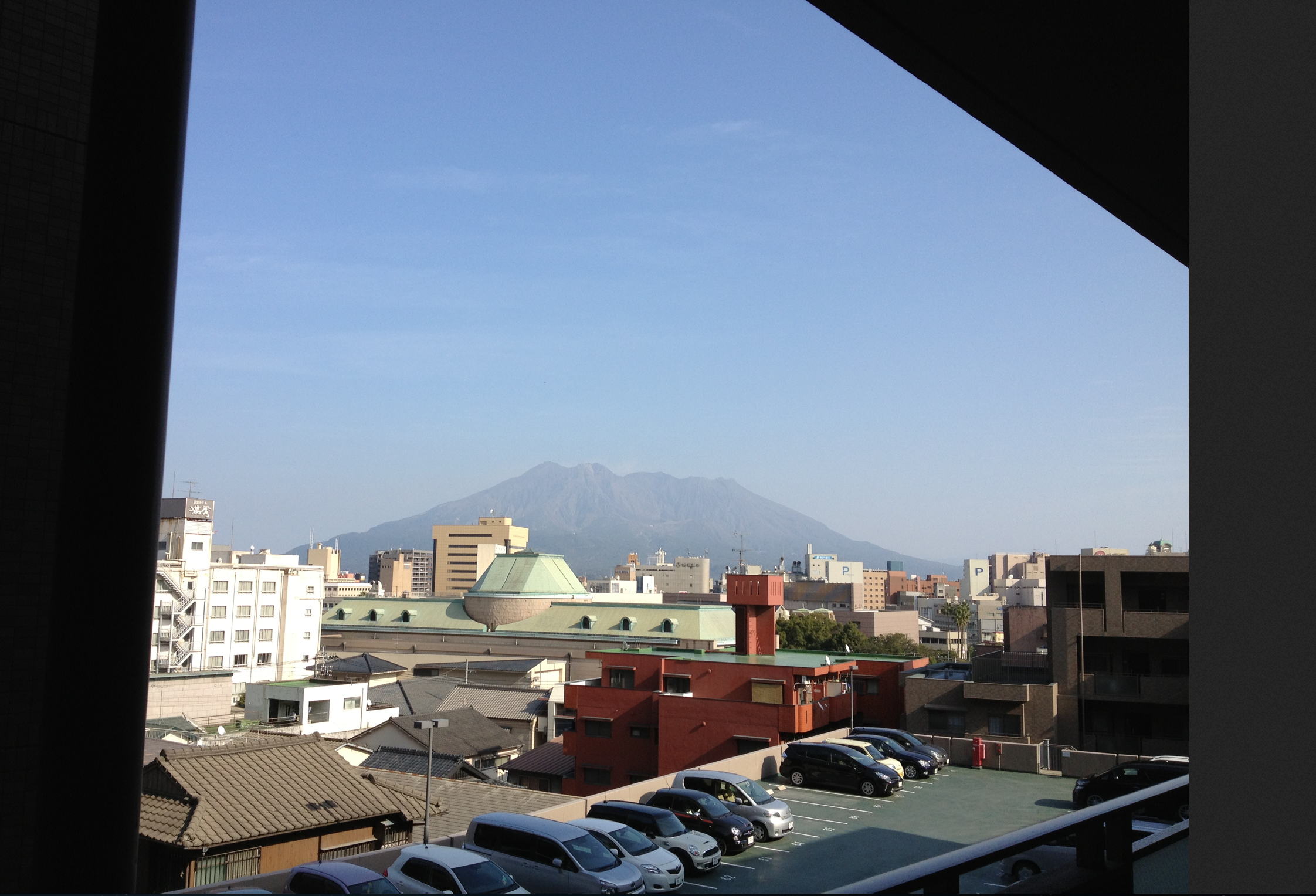
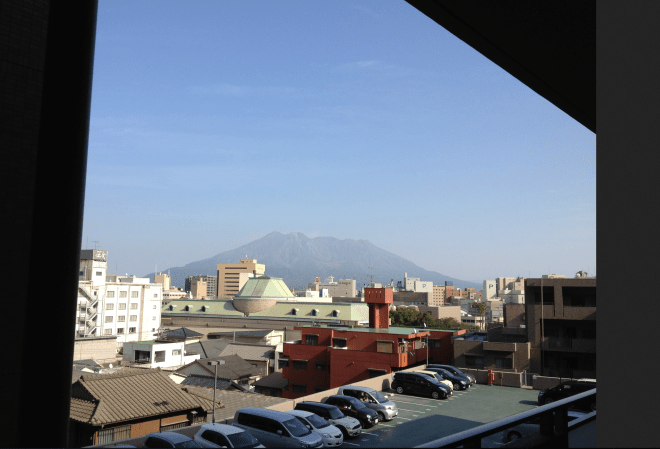
The View From Your Window Contest: Winner #143

vfyw-contest_3-2

A reader writes:

Perhaps its something like familiarity bias, but I’m always struck by how many images look like my own locale, Southern California.  This view with the large grey mountain in the background, the cars in the foreground, the palm trees in the mid-view, could be a suburb of Los Angeles.  But there is a pagoda-like roof to the left, and a Islamic looking tower in the mid-ground, and I’m going to go with Tehran, Iran.

Another:

I’ve never put in a guess on one of these before, but I just passed through Puebla, Mexico the other day and it has a volcano similar (indeed, identical, hopefully) to the one in the picture.

Another:

Olympia, Washington? I couldn’t find the exact house, but isn’t that Mt St Helens?  With no snow?

Another:

If not Naples itself it is one of the surrounding cities. The mountain in the background is Vesuvius, unless of course I am wrong. I spent a day at Pompei and saw it from many views. It wasn’t until later in the day that I realized the peak I’d been centering in my photos was only the far right side of what was left of the mountain. It was with that realization that the full magnitude of the event hit home as you could see there was a huge piece of the mountain that is missing.

Another is on the right track:

This has to be Japan.  There’s the characteristically roofed building in the lower left hand corner, the boring modern sameness of all of the building you see in the skyline, the cars all small, sleek and new.  I looked at a topographic map of Japan to see which cities would be surrounded by nearby visible mountains.  After guessing around a bit I found a photo of Fukuoka which seemed to match the flatter topped mountain in the background.

Another:

It’s 1:05 a.m. after a birthday party in Montreal, and I should know better than to take a crack at a VFYW contest on a hunch, but here goes. The clay tiled roofs and right-hand drive cars suggest Japan. The palm trees and exposed staircases suggest a southern climate. The urban density says a large city on a southern Japanese island, and that suggests Naha, Okinawa. And now I’m going for some poutine (cheese-curds, gravy and French-fries – renowned Canadian hangover cure!)

Another:

Here’s why I love this stupid, awful contest.

Since Saturday I’ve learned that the ugly institutional Soviet-style architecture I’ve hated my whole life is called Brutalism, I’ve learned that the Scion line is only sold in North America, that Grupo Bimbo has opened two two bakery facilities on the outskirts of China, and I’ve dusted off some pretty dormant geographic knowledge I once knew by heart and clearly took for granted.  I feel smarter for having searched.

Here’s why I hate this fun, stimulating contest.  None of the above mattered much in my search, and I’m still left without even being 100% certain of the right continent.  My answer may as well be Pangea.

This view is insanely frustrating.  It is a terribly ugly city.  There are no people in the view.  The city is almost entirely bereft of notable signage or advertising.  There are cars, but they are all backed into a deck.  The roof tiles suggest Asia, as do the few visible characters, but I eventually went crazy and at moments thought those were red herrings too.  I have image searched things as varied as Nigeria, East Timor, the suburbs of Beijing, and seemingly every stray corner of Oceania.  My wife was convinced one of those horrible buildings was a hospital based on the size of the rooftop access doors, and was Googling things like “asia hospital helipad”.

I’m saying Akita, Japan, or someplace near.  I have my reasons but they’re all terrible, and this guess is also I’m convinced.  I’m only sending this in because after my wife and I spent most of two evenings on it, I feel I owe it to myself to enter a guess, any guess.  I have a list of about 12 questions I need to have resolved about this view, and I’ve probably never anticipated an answer this much.

And somebody was there last week or was best man in a wedding on top of that stupid TV network building looking thing with hardly any windows.  Or some other bullshit.  I hate that person.

Another:

Fuji-san!! That was my first thought when I first saw the picture.  I have seen it from a speeding Shinkansen several times. I knew it was Japan – the cars in the parking spaces looked right – and the vague lettering on the signs too.  But the longer I looked the less and less it looked like Mt. Fuji, which is more conical and would certainly have snow on the summit this time of year.

I looked at other mountains … Mount Haruna?  No, too flat. Maybe Mount Ontake in Nagano?  I looked at a lot of mountains. Then I looked some more, and wondered if maybe it wasn’t Mount Fuji after all.  I can find some images that look a little like that.  So … I’m sticking with a view of Mt. Fuji, from the city of Fujinomiya.

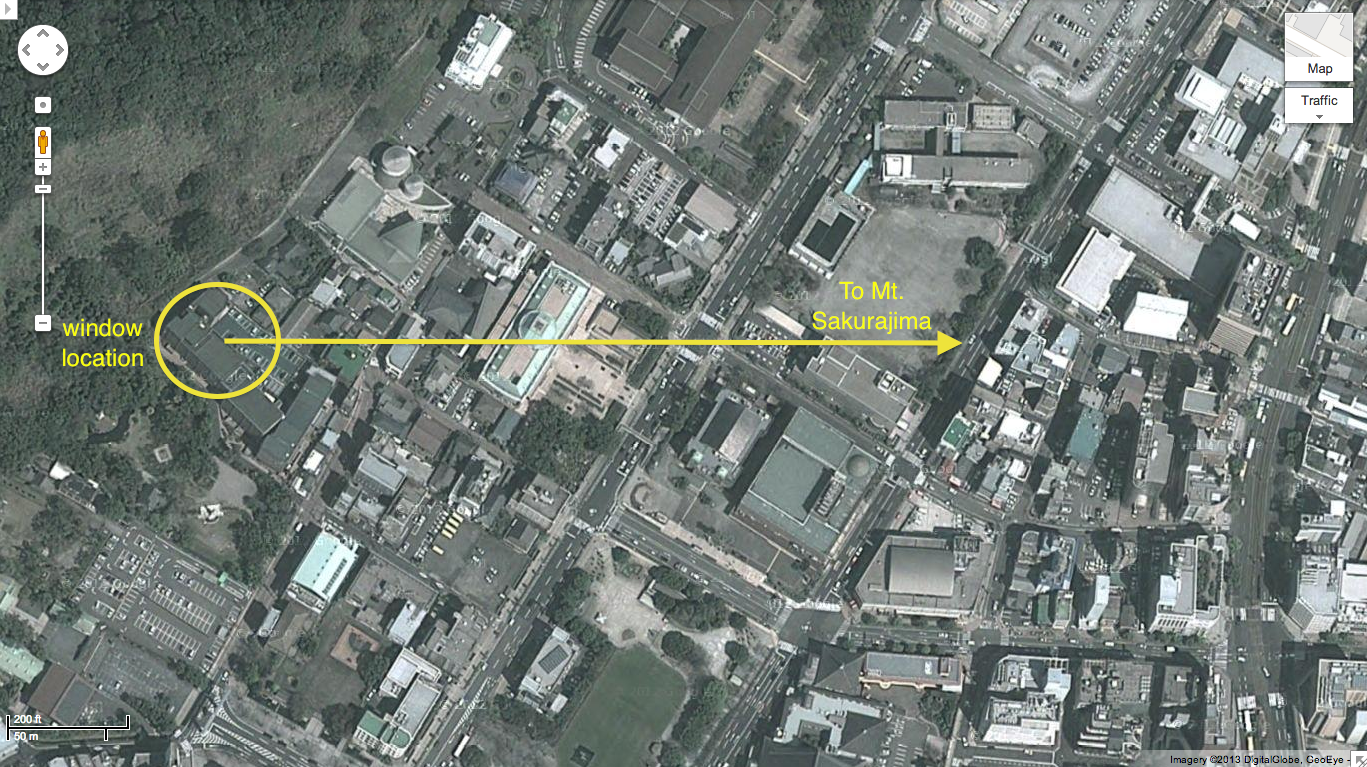
Another sends a view of the right mountain:
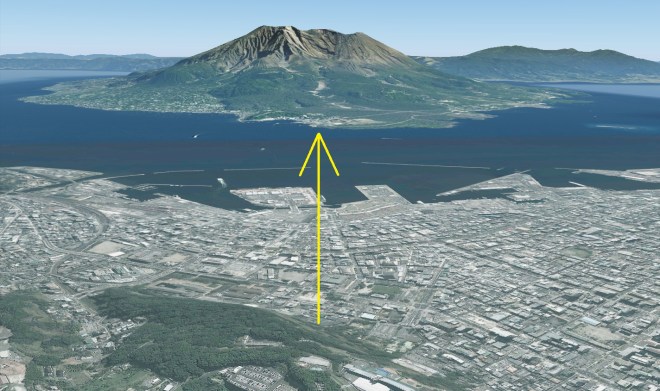
Kagoshima City VFYW Volcano Bird's Eye3 Marked - Copy

Another identifies the right city:

This is the first time I have ever attempted a VFYW. To be honest I never really understood the appeal of internet searching as a form of fun. I always just want to find something, the searching part is actually kind of annoying. However, there were many clues in this view that led me to believe I could be victorious. The lettering on the buildings, the foliage and the FREAKING VOLCANO!

Because of the clues I’m sure someone has already beat me to the location as Kagoshima, Japan. The characters on the sides of the building are nice and friendly, indicating Japanese  The right side steering is another giveaway, that and the cars are all new and spotless. I first thought Okinawa Prefecture. Some of these islands are volcanic, but none of the mountains I could find were near city big enough to have multiple tall buildings. I was searching for photos of Okinawa and I stumbled on a blog in English about someone who lives on Okinawa and bam! There is that volcano! The particular post was about a trip to Kagoshima and from there it was easy to locate. The weird green roofed?(color blind) building in the foreground is pretty unique and is the Kagoshima City Museum. There is only one tall building behind it that is either a hotel or apartment building, I’m not sure. When I click on the building in Google maps its says “Kagoshima-ken, Kagoshima-shi, Shiroyamachō.” Whatever that means.

It was a thrill to find it, thanks bunches!

Another:

I think this is my fastest ever, less than ten minutes from seeing the contest photo to finding the building from which the photo was taken. I don’t have a story or anything to go along with the guess, but the photo was taken in Kagoshima, Kagoshima Prefecture, Japan, facing east towards Mt. Sakurajima:

sakurajimia

Another:

I had a feeling that if I could figure out what the stylized kanji on the left said that it would lead me to the window and I was right! My other Japanese friend and I were able to correctly piece together than the kanji are

満秀

which leads immediately to the hotel Manshu in Kagoshima, Japan!

Another:

Kagoshima is the hometown of Heihachiro Togo, the great Japanese admiral who humiliated the Russian navy at Tsushima. Sakurajima sits due east of the city across a narrow stretch of Kagoshima Bay. Since the view is to the east, we are looking for a part of the city with streets running southwest-to-northeast. A quick aerial tour shows that the oldest part of the city – bombarded by the British in 1863 – fits the bill. The copper-roofed building is the Kagoshima City Museum of Art, and the green-surfaced parking deck in the VFYW’s foreground is plainly visible as part of a large apartment complex to the west. Its address is Shiroyamacho 3-35; Google translates the name of the building as “Surpass Shiroyama Park City.” I’ll say it’s a view from the top floor, about a quarter of the way along the northeast side of the third building up the hill.

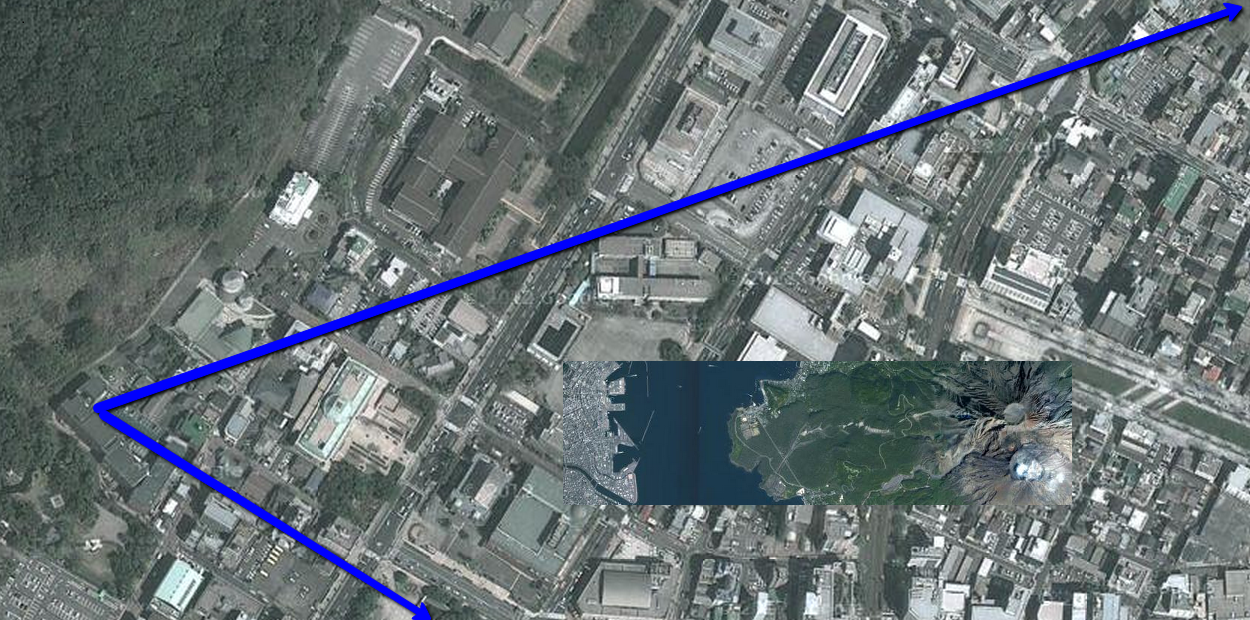
Another sends an image of the building:

kagoshima

This one was really easy so I’m sure there will be a lot of correct responses given the amount of signage in Japanese.  The photo looks like it was taken from the Surpass City Shiroyama Park apartment building in the Shiroyama-cho district of Kagoshima Japan.  Probably from the 5th or 6th floor of the main building or one of the units right above the parking lot. I’ve attached a fun rendering of the building which overlooks the active volcano on Sakurajima.

Another adds:

These are “manshon” or condominiums, one of which seems to be for sale right now for about $226,000. Looks like a lovely spot, and the statue of Saigo Takamori (The “last” Samurai) right across the street adds interest. Somehow I wouldn’t want to test my luck that close to an active volcano, though.

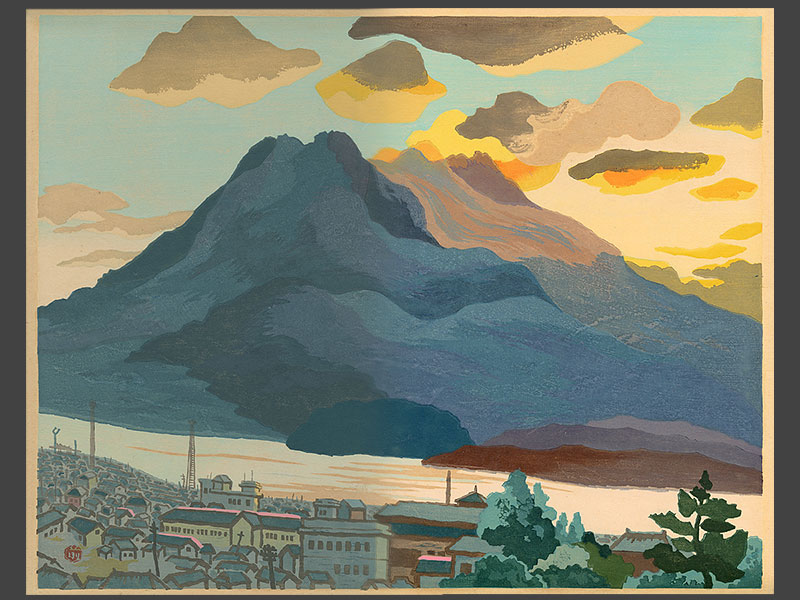
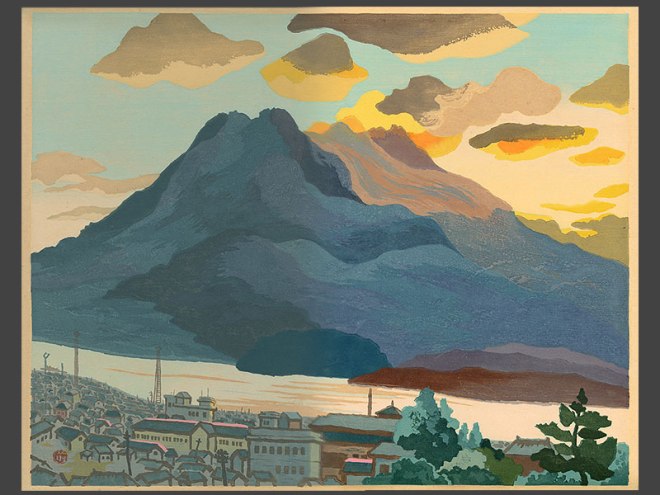
Another sends a painting of the volcano:
05123742

Sakurajima in Morning Light, Kagoshima, Kyushu by Toshiro Maeda

Close to 250 readers correctly answered Kagoshima, and a dozen of those have correctly guessed difficult views in the past without yet winning, so determining a winner this week is extremely difficult, especially without knowing the exact floor or unit from which the photo was taken. One Kagoshima guesser goes for bribery:

If I win I will subscribe!

No pay-for-play on the Dish. So to break the tough tie this week, we found the reader among the aforementioned dozen who has entered the most contests overall. The image from that reader’s Kagoshima entry:
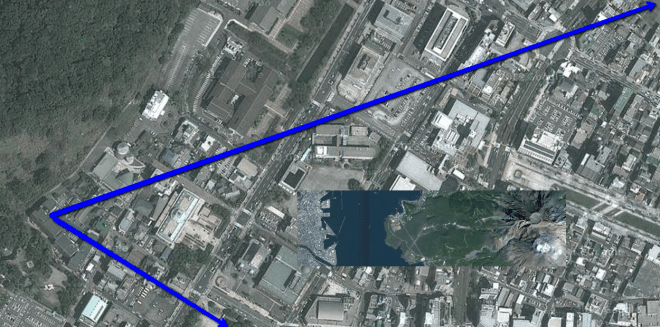
Kagoshima

Congrats to that reader on the close win. From the photo’s submitter:

My daughter took this picture on February 3 at 2:30 PM. The view is the city of Kagoshima, Japan, looking across the bay to the active volcano Sakurajima, which is only about five miles away. The exact address is 701 Surpass City Shiroyamakouen, 3-35 Shiroyama-cho, Kagoshima. I have no idea what all that means, unfortunately,although the neighborhood is called Shiroyama-cho. People should notice the nearby mountain that is recognizable as a volcano, and the roof in the foreground looks very Asian so I think people may get to Japan quickly, but Kagoshima, onthe southern island of Kyushu, is pretty off the beaten track.
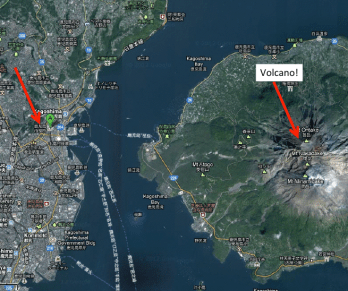
viewer (1)She is studying in Tokyo for her junior year abroad, and is doing an internship for a month between semesters as a distillery in Kagoshima. She likes to look at the VFYW and is always sending me photos asking if this would be a good one, and I finally think she got it right.

Love the contest and the Dish! Of course I’m a subscriber. Also sent you your contest view of Waterton Lake last summer, which thrilled me to see on the blog. Keep it going everyone!

He follows up:

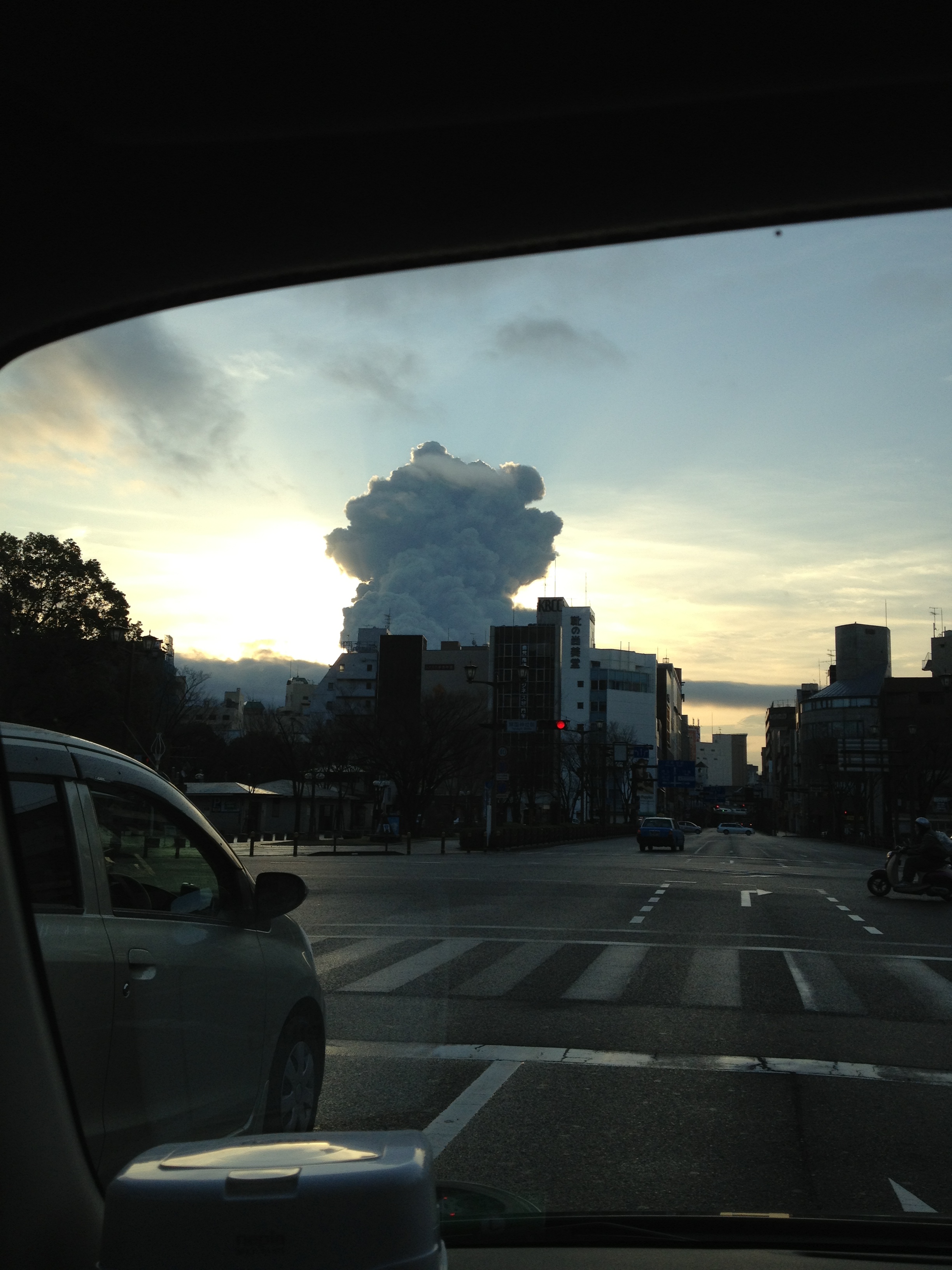
Awesome to see my daughter’s picture of Mt Sakurajima from Kagoshima as this weeks puzzle entry! I thought I’d pass along a new picture she sent me (a view from your car window) of the mountain in a big ashy eruption the other day, taken from the streets of Kagoshima:
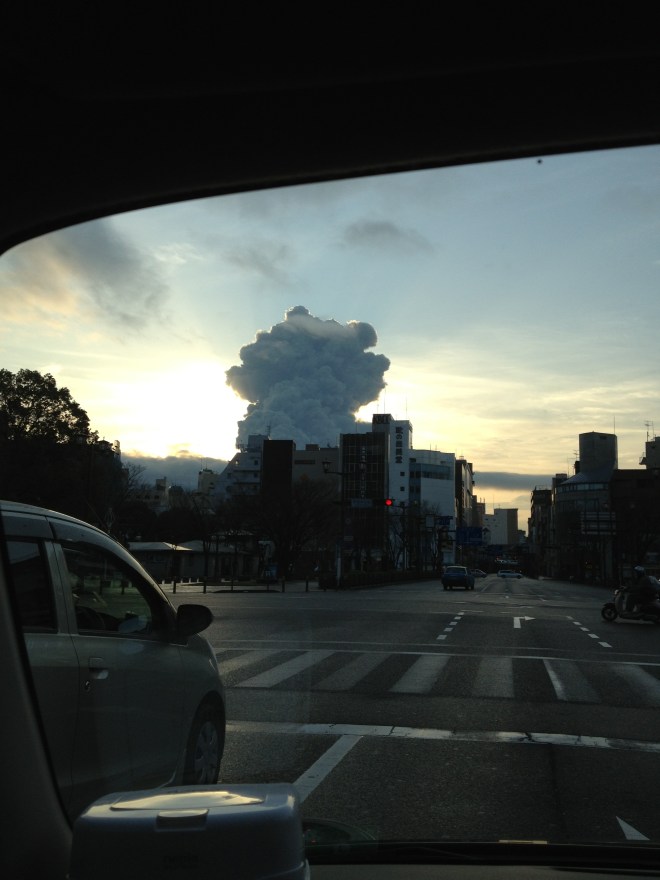
BIIIIIIG ASH CLOUD

(Archive)

Spot The Sponsored Content, Ctd

Buzzfeed’s Rosie Gray uncovers a more clear-cut and troubling example of paid content (without even Buzzfeed’s and the Atlantic’s fig-leaf disclosures) masquerading as editorial:

A range of mainstream American publications printed paid propaganda for the government of Malaysia, much of it focused on the campaign against a pro-democracy figure there. The payments to conservative American opinion writers — whose work appeared in outlets from the Huffington Post and San Francisco Examiner to the Washington Times to National Review and RedState — emerged in a filing this week to the Department of Justice. The filing under the Foreign Agent Registration Act outlines a campaign spanning May 2008 to April 2011 and led by Joshua Trevino, a conservative pundit, who received $389,724.70 under the contract and paid smaller sums to a series of conservative writers.

Let’s name the offenders, shall we?

Trevino’s subcontractors included conservative writer Ben Domenech, who made $36,000 from the arrangement, and Rachel Ehrenfeld, the director of the American Center for Democracy, who made $30,000. Seth Mandel, an editor at Commentary, made $5,500 (his byline is attached to the National Review item linked to above). Brad Jackson, writing at the time for RedState, made $24,700. Overall, 10 writers were part of the arrangement.

Treviño, amazingly, maintains he did not cross any lines:

“It was actually a fairly standard PR operation,” Trevino told BuzzFeed Friday. “To be blunt with you, and I think the filing is clear about this, it was a lot looser than a typical PR operation. I wanted to respect these guys’ independence and not have them be placement machines.”

Rich Abdill pushes back:

If “a fairly standard PR operation” involves paying off columnists to write about certain things, it seems journalists at every other publication ever were just misinformed about what was “ethical.” Jayson Blair stole quotes, made up stories, reported on events he never went to, then put it all in the New York Times, and he still did not take any bribes.

Joyner takes a similarly skeptical approach:

I’m more than a little leery of a pay-for-play arrangement. It’s hard for opinion writers, even good ones, to get paid. So I’m not four-square against bloggers taking money for writing posts supporting causes they already agree with. But it’s problematic, not to mention rather weird, for writers to suddenly start crusading on an issue they never cared about previously and which seems remote to their natural interest.

This is bribery and unethical journalism in my book. It also raises questions about the good faith of other work by the journalists involved. When there is no disclosure we can never know what is paid propaganda and what is actual journalism. Which, of course, is the point.

Are Doctors Overpaid? Ctd

More readers join the conversation:

I suppose I should be moved to pity by the reader whose physician husband works 55 hours a week and “cracks the six-figure mark”, but somehow the tears don’t flow. I’m a US-trained scientist, working at a leading UK university. My training wasn’t as expensive as a medical training, but it lasted longer. I feel privileged to be able to earn a good living doing the work I do, though I earn less than any physician I know. Sure, I could be earning many times my current salary on Wall Street. So what? People may choose their careers at the margins based on earnings, but it’s only one of many factors.

I’m certain that there are some brilliant potential surgeons who would rather work in a bank if we cut surgeons’ salaries, but there are surely plenty of others who now don’t go into medicine because they can’t afford the upfront costs of the education, or they are frightened of the debt burden.

That’s why the proposal to combine a cut in salaries with government subsidy of medical education is so important. (My doctoral studies, and those of a large number of scientists, were paid for by fellowships.) Another reader suggests that only stupid people would practice medicine if their salaries were moved closer to that of an average person. This is where the experience of other countries becomes relevant, though your reader chooses to ignore it, and retreat into American exceptionalism. Does he or she think that there are no jobs in IT or finance in Europe? (I’m a little mystified by this readers claim that the physicians elsewhere are earning $60k, when hardly any number on the chart – which is nearly 10 years old anyway – is that low.) The GPs I have seen in the UK have seemed every bit as intelligent and well trained as those I’ve seen in the US. And it’s much easier to get an appointment.

The real point is, no one gets paid what they “deserve”, but what those who employ them need or want to pay them for their services. So why is it that medical consumers in the US are so much worse than their counterparts in other advanced economies at negotiating a good price for competent medical service?

Another is even less sympathetic:

Your reader wrote:

I was in school (paying tuition) or in training (earning $20-$30K per year) for 12 years after college and collecting more than $150K in debt at a public medical school while others my age and background were moving up in their careers, earning increasingly higher wages (some made millions in the Internet bubble), increasing their retirement nest egg, buying houses, etc. I made my first paycheck from “overpaid” reimbursement at the ripe age of 33.

Cry me a frickin’ river. I’m a teacher. My training period (student teaching) was beyond full time hours and paid $0 a year. In fact, I had to pay tuition for the privilege of working 70 hours a week for no pay.  After completing my student teaching I found I was totally unemployable straight out of college – due to lack of experience – and had to embark on several years of substituting to burnish my resume.  Last year I was lucky to spend most of the year in long-term substituting (jobs lasting more than a month, which pays more than regular substituting).

I made $10,500 last year.  This year I am a first-year teacher with my own classroom, and I will make about $30k. If I max out my educational level, get rave performance reviews, and stay in the same school district for the next 20 years, I’ll max out at about $50k/year.  All the while I’m required to spend more money on education to keep my teaching certificate current.

My path through college was slower because I had to work while going to school. Even still I have about $80k in student loans.  I’m currently 35 and I will NEVER get the “overpaid” reimbursement paycheck this guy talks about.

I don’t particularly mind that my doctor’s overpaid, and I don’t expect sympathy for my low wages (I picked this career knowing what it entailed). But I’d rather my overpaid doctor not whine about the fact that he isn’t overpaid enough.

More perspective on the subject:

I’m a 30-year-old medical student and son of a highly-paid specialized physician. I am well aware of the opportunity costs involved in pursuing a career in medicine that your reader speaks of, and know well the debt burden faced by new physicians ($170,000 is the median indebtedness of medical school graduates). Assuming one has $25,000 in undergraduate debt (about the median), the monthly loan costs are about $2,250, or about $27,000 per year.

The median physician’s salary varies by specialty, but ranges from $350,000 (orthopedic surgery) to $150,000 (pediatrics) per year, after taxes, this is $250,000 to $115,000, respectively.  This leaves you with an after-tax, after-loan income of $223,000 to $88,000 assuming a one-income household.

I didn’t decide to enter this field to make money. It is a privilege to be studying medicine, and a privilege to be present in those intimate moments that are often the most critical moments in a human life. The fact that I can do all of this, and still be in the top 95%-75% of all disposable incomes in this country is nothing short of a blessing. Physician incomes aren’t the sole or primary cause of inflated health spending, but it certainly is part of the picture. I’m quite honestly disgusted at the self righteousness with which this particular reader writes, and hope that I never lose sight of the privilege that I have been granted.

A doctor gets the last word:

Medicine is a very rewarding career.  It pays fairly well.  For most doctors, not enough to make it into the 1%, but pretty close.  More importantly, it provides a lot of flexibility; you can get a job as a doctor nearly anywhere.  A friend of mine from residency went to work in Hawaii; how many auto plant workers can say that?  It has excellent job security.  Though I am sure there must be unemployed doctors, that number is quite small.  And it provides the opportunity to pursue a rewarding career.

On the other hand, it is a lot of work.  It is a lot of work, being paid fairly little, during a long training period.  It is a lot of nights away from family.  It is not a low stress occupation.  And although it pays comfortably, the upside financial reward is limited.  There aren’t multi-million dollar bonuses for doctors.  You aren’t going to take your company public and make a boatload from stock options.

Are doctors overpaid?  I don’t know.  I think we’re paid enough.  I didn’t go into medicine for the money, but it wasn’t a disincentive, either.  I’m happy with my choice, and I think most of your physician readers are too.  Which suggests that we aren’t underpaid.

Can The Sequester Be Undone?

Cohn expects it to do real harm:

[T]he sequestration cuts are likely to damage the economy even if Congress ends up repealing them outright. In fact, they are probably damaging the economy already. Furlough notices started going out to some federal workers on Friday, according to news accounts. People who get them are going to react. Some will take the threat more seriously than others, obviously, but given the uncertainty—not to mention the real possibility that some cuts stay in place—some people are likely to change their financial behavior. Maybe they’ll rethink a major purchase or delay maintenance that can wait a few more weeks. And what’s true of individuals is even truer of large organizations, including those in government and those outside.

Cassidy doesn’t foresee a deal any time soon: 

How likely do you think it is that, between now and March 31st, the Republicans will soften their stance on raising taxes by eliminating some loopholes and deductions? And if they stick to their hardline position, how likely do you think President Obama is to drop his calls for a “balanced” approach to replacing the sequester, and to agree to a package of spending cuts without any revenue increases? In my view, the only plausible answers to these questions range from “not very likely” to “not a snowball’s chance in hell.”

How Stan Collender understands the sequester fight:

It was never about cutting spending or reducing the deficit; the fight always was about keeping or winning control of the House of Representatives in the next election. It wasn’t about dueling economic philosophies and it definitely wasn’t about the deficit.

Rummaging For A Living

After watching Redemption, an Oscar-nominated HBO documentary on New York’s “canners,” Nicola Twilley considers state cash incentives for recycling, known as Bottle Bills:

Various studies have shown that they do increase recycling rates dramatically: the United States’ overall beverage container recycling rate is estimated at thirty-three percent, while states with container deposit laws have an average rate of seventy percent. As watching a documentary like Redemption makes clear, however, a lot of this extra recycling and sorting is not being done by the consumers of canned or bottled beverages; instead, the state has outsourced its acts of environmental virtue, at far below minimum wage ($2.50 an hour at best, by my rough calculations), to some of its most marginalised populations.

Financial incentives to recycle bottles and cans don’t always work this way: in Germany, my friends and hosts have always been religious about returning bottles to the shop to claim their Pfand,” and I, who have never pursued a single cent of redemption value in California or New York, have happily followed their lead. Of course, in Germany, the standard deposit amount is €0.25, which is quite a bit more than a nickel.

Finn Arne Jørgensen notes how little has changed in the US:

 As early as 1953, Vermont introduced a bottle bill banning non-refillable bottles, but the law lasted only four years due to heavy lobbying from the beer industry. In 1971, Oregon implemented the first bottle bill requiring a deposit. This deposit was five cents, just like it is today. How many other prices have remained the same over 42 years? Vermont followed in 1973, and Connecticut, Delaware, Iowa, Massachusetts, Maine, Michigan, and New York had followed by the early 1980s. A number of proposed bottle bills in other states had been struck down by industry opposition. The beverage industry fought the new bottle bills tooth and claw, seeing them as a “direct and politically motivated infringement on the free market and a threat to profits,” as geographer Matthew Gandy wrote in Recycling and the Politics of Urban Waste.

Co-director Jon Alpert reveals what he learned from following canners around – upending his expectations:

I think some of the stereotypes that were upturned for me, and are upturned in the film, is that I thought most people collecting bottles and cans were going to homeless, wrestling with mental illness or drug addiction, or that kind of archetype of a bum. But the truth and the reality, is that in this economy these are working New Yorkers. They’re the marginalized working poor. There’s a lot of ink being spilled and breath being spent on the middle class, in political conversations right now and in newspaper columns, but nobody is talking about the large population below the middle class. These are the people who are living on the absolute edge of society. What impressed me was that they’re not asking for a hand out and they’re not looking for anybody to give them anything. They want to work.

Escalating The War On Whistleblowers, Ctd

An Army officer writes:

Benkler’s piece about Bradley Manning is deceptive. Manning is being charged under the Uniform Code of Military Justice because he is an American soldier who was entrusted with dealing with American intelligence. He’s not being punished as a whistleblower. Do we really want to empower soldiers and intelligence analysts with personal or institutional grudges (as Manning admits he had) with unleashing hordes of classified material that can damage the United States?

It should be noted that the UCMJ’s secondary purpose, in addition to providing a system of justice in the unique jurisdiction that is the military, is to uphold good order and discipline among the troops. As a commanding officer, you can’t uphold good order and discipline in a military intelligence unit, such as Manning’s, if you’re constantly on the lookout for potential ‘whistleblowers’ among your soldiers who’ve been entrusted with national or operational secrets, as Manning was. He should not be compared to a Wal Mart manager who deplores her inequitable salary and job prospects due to her gender and blows the whistle on corporate misbehavior.

I agree. Another reader goes further:

Bradley Manning is not a whistleblower.  Whistleblowers expose illegal activities that would otherwise be covered up.  Manning is a political activist who went too far.

Even taking him on his word that he reached out mainstream American media to no avail, he still had 500+ plus members of Congress from which to pick any number of whom would have jumped at the chance to properly expose some of what was leaked in order to affect policy change.  And had Manning never heard of the Justice Department?  If there was a cover-up of illegal activities, the DoJ is the proper authority to investigate and prosecute.  What Manning did instead was send bulk US secrets to an organization known for virtual hostage taking – making demands of governments in exchange for the safe keeping of such information.

No matter one’s distaste for our government’s actions in the Middle East, we still have to adhere to some basic rules.  For people like Manning and organizations like Wikileaks, there are no ground rules.  They make up the rules as they go along.  Despite all of its faults, our democracy is still intact.  Defending Manning and allowing him to get away with such reckless acts only invites more of the Wikileaks attitude of deciding that “Only we are the supreme moral arbiters and custodians of justice in the world!” Start multiplying that out, and anarchy follows shortly thereafter.

Manning is a traitor not only by rule of law, but to the very notion of democratic and representative government.  He should be convicted of these serious crimes and spend a significant amount time in prison for what he did.

The Dish Experiment, Ctd

Amanda Palmer gives a really smart talk on funding the arts and on the intimacy between creators and fans:

Felix Salmon uses the talk to discuss the Dish’s [tinypass_offer text=”economic model”] and paywalls more generally (fresh Dish data after the jump):

[T]he more formidable the paywall, the more money you might generate in the short term, but the less likely it is that new readers are going to discover your content and want to subscribe to you in the future.

Amazing offline resources like the Oxford English Dictionary and the Encylopedia Britannica are facing existential threats not only because their paywalls are too high for people to feel that they’re worth subscribing to, but also because their audiences are not being replaced at nearly the rate at which they’re dying off. The FT, for instance, has discovered that its current subscriber base is pretty price-insensitive, and has taken the opportunity to raise its subscription prices aggressively. That makes perfect sense if Pearson, the FT’s parent, is looking to maximize short term cashflows, especially if it’s going to sell off the FT sooner rather than later anyway. But if you’re trying to build a brand which will flourish over the long term, it’s important to make that brand as discoverable as possible.

I’ve found Felix’s analysis of the question of how to get content paid for has been extremely clarifying. One small point. He writes:

If you look at the $611,000 that Sullivan has raised to date, essentially none of it has come from people who feel forced to cough up $20 per year in order to be able to read his website. To a first approximation, all of that money has come from supporters: people who want Sullivan, and the Dish, to continue.

That’s not entirely accurate. We started selling pre-subscriptions without the meter running because of time constraints between announcing our shift (early January) and implementing it (early February). But in the last 30 days, with the meter running for only 28 of them, we raised just over $100K. That’s one fifth of what might be called the kickstarter period.

Here are the sales of subs for the past 30 days:

Screen shot 2013-03-04 at 1.21.16 PM

Of course, we don’t know what will happen in the next thirty days. But the weekly waves of new subscribers does show the meter working at the margins. If it were to keep up this pace – which, of course, I doubt because I am a pessimist – we’d bring in $1.2 million a year from the meter alone. As for the meter, we now have 14,500 readers at their maximum 6 or 7 clicks and about to hit the meter request. If they all decided to sign up, we’d instantly have close to $300,000 more and hit our target for the year in keeping the Dish viable within its previous budget.

We have eleven more months to get there. You can help us – and help pioneer the simplest, clearest model for supporting online journalism – by subscribing [tinypass_offer text=”here”].