Obama’s Exquisite Balance On Marriage, Ctd

[youtube http://youtu.be/apQt4xGzvKw ]

The president says rather more dispassionately what I believe. I believe the right to marry is vested in the very Declaration of Independence, and that gay people have as deep a right to it as straights as it is currently composed. But I don’t want that view to be forced, rushed or coerced into action by the Supreme Court, especially when America, and so many states are moving so fast toward equality anyway. Why not keep the judicial decisions limited so as to make the political victories more profound? If there was no way a tiny minority could win th democratic argument, it would be one thing. But in a matter of a decade or so, we have persuaded over half the country and a huge majority of the next generation. Why would I want to give the religious right the satisfaction of saying it was forced on people by unelected judges? Why not get the results of a Roe v Wade without a Roe vs Wade?

Marty Lederman outlines five ways SCOTUS could rule on Prop 8. Part of his analysis focuses on the “eight-state solution,” supported by the Obama DOJ, “which would directly affect only those states (California, Delaware, Hawaii, Illinois, Nevada, New Jersey, Oregon, and Rhode Island) that already treat same-sex couples the same as opposite-sex couples in virtually all ways” but refuse to call their unions “marriage”:

As I noted yesterday, in a rather remarkable development, four of the eight states that provide same-sex couples with virtually all incidents of marriage–Delaware, Illinois and Oregon, in addition to California itself–have filed amicus briefs urging the Court to affirm the judgment of the court of appeals declaring that Proposition 8 is invalid, and making an argument that would, if accepted, appear to seal the fate of their own laws, as well.

The eight-state holding would permit the Court to avoid for now any decision on whether some other states might have a sufficient justification for denying same-sex couples substantial benefits and privileges that they offer to opposite-sex couples.  As Lyle notes, such a holding would of course make it much more difficult for the remaining 33 states to sustain their marriage laws against constitutional challenge.  But the ultimate fate of such statutes would depend on future litigation and/or on political developments.  That is to say, the Court would cast a shadow over the laws of the other thirty-three states, without resolving just yet whether they are constitutional.

Ari Ezra Waldman thinks “there is reason to believe that [the eight state solution] makes strategic sense”:

First, the President knows that Justice Kennedy is the likely swing vote in this case and Justice Kennedy is a cautious, conservative jurist. He has a history of respecting states’ rights above all else and often rejects sweeping policies that reek of overreach. Incremental change, if any change at all, seems to be his mantra, as Professor Kenji Yoshino has argued many times before. The compromise position may be aimed at Justice Kennedy’s cautious nature, giving him room to support gay rights without undermining the driving force of his judicial career.

Second, step-by-step progress may aggravate those of us who want to marry, but can’t, but slow progress denies our opponents fodder to foment backlash.

Mark Tushnet ponders the consequences of such a ruling on future state legislation:

[T]he eight-state solution would force legislators in other states to an all-or-nothing choice. Is that a perverse incentive, or more like holding legislators’ feet to the fire? The eight-state solution tells legislators that, despite what they might prefer, they can’t avoid confronting the issue of marriage equality by adopting something just a bit short of that. (Presumably, even were the eight-state solution to become the law of the land, legislators could avoid enacting full marriage equality by going less far than California and Illinois did in equalizing the rights available to straight and gay/lesbian couples.)

Guess Which Buzzfeed Piece Is An Ad, Ctd

This embed is invalid

A bunch of readers are still sounding off:

Thought I’d bring this to your attention, vis-a-vis your back-and-forth with Buzzfeed: the Native Advertising Summit, “The first conference dedicated to defining and discussing the future of native advertising.” Unfortunately, the summit is mostly over, but I’m hoping there’s a stream of it. I know a lot of these people. They mean well, but try as one might, they have trouble understanding what the problem is with Native Advertising, starting with that atrocious name.

Another points to a troubling detail:

One big difference with Buzzfeed’s sponsored articles is that they appear in searches and are, still, undifferentiated from “real” articles. What other sites show the ads along with the editorial content? Up until now ads were ephemeral. They appeared on a site and were clearly ads. When the site is archived the ads were not (though the archives may also display ads). This extends the confusion far down the road. With sponsored content that is archived the ad, and any bias, extends well into the future. I am not sure what the consequences are but I doubt they are good.

Another reader isn’t too concerned:

Buzzfeed’s convolution of content and advertising seems like a pretty minor sin in the grand scheme of our modern media. Our media has been replete with sponsored content for decades in the form of DC elites leaking information and using journalist mouth pieces to win political arguments. The articles that Judith Miller wrote in the run up to the Iraq war are sponsored content, just not in the way we typically think about it. That kind of sponsorship is far more insidious than an advertisement made to look like content.

Another goes in depth with a helpful and revealing screenshot below:

Nobody expects BuzzFeed to be the standard bearer of modern journalism. But I think most people would want them to be honest brokers of their product.

If their product is cool stuff they found on the internet, then that should be presented as such. And unlike The Atlantic, almost nothing on BuzzFeed is original content – and that’s okay (kind of) because they almost always point that out and provide a link to the original source. Think of BuzzFeed as the Huffington Post of cat videos (it’s no coincidence that they both have the same founder – Jonah Peretti). But the problem is that BuzzFeed is scraping content from other sites and then using it to promote their sponsor’s products and they are doing so without sharing revenue with the actual creator of the content. Perhaps the content creator may get a ‘bump’ in internet traffic, but that’s all they’re ever going to get.

To illustrate the point (problem?) I took a screenshot of BuzzFeed today (February 22, 2013). In those spaces you can explicitly see the words “partner” or “featured partner” and brands that you recognize like Honda, Fuze, IFC and The Daily Beast. These are obviously ads. Maybe the content looks just like all the other stuff, but they aren’t fooling anyone.

But that is not all of the sponsored content on your screen. Not even a little bit. Most of the sponsored content is BF_022213_SC_ADS_Yellowhidden. Look at the posts I’ve highlighted in orange. The ‘Hot on the Web’ section is simply a collection of links to partner sites like The Onion, People Magazine and The Atlantic. The story about cyberbullying is an excerpt from a book by Emily Bazelon and sponsored by Random House – but you don’t find out about that until after you’ve read the whole article. That picture of Bert down at the bottom is an ad for Halls lozenges and the article about some guy selling his socks on ebay is just some guy pushing his own webpage. The music section is brought to you by streaming music company radio and the FTW badge is brought to you by Fuze – a registered trademark of Coca-Cola.  But I think the greatest offender is the headline story about Best Picture nominees which is brought to you by (Dunh! Dunh! Dunh!) The Academy Awards.

But on top of the ads marked as ads and the ads masquerading as content there are some gray areas where scraped content and advertising cross paths again, but the content isn’t necessarily sponsored by anyone. In these situations I’ve marked the content yellow.  In this grey area (yellow area?) we have Andrew Kacynski “writing” what is simply a repurposed press release from the WWE, another repurposed press release from Billboard magazine and another glorified press release about an innovative use of the White Album from website Dust and Grooves. There’s a suspiciously in depth description of an incident on the Kathy Griffin show, as well as posts which are lifted almost verbatim from their sources – a liquor infographic taken in its whole from an artist on the Behance network and a video of some kid dissing the NBA that’s been lifted from Los That Sports.

BuzzFeed’s problem isn’t that there’s an unmarked article here or there that’s just a glorified advertorial, like The Atlantic. BuzzFeed’s problem is that it’s all glorified advertorials, with the occasional piece of ‘original’ content (and by ‘original’ content, I mean something they scrape from somewhere else and only casually make reference to the actual original, if they make mention at all).

Update from a reader who objects to the problematic previous entry:

The reader may take offense with the re-appropriation of content on BuzzFeed found on other websites, but the posts marked in orange and yellow are not sponsored stories. That is to say, BuzzFeed received no compensation from any of the so-called “sponsors” of any of those stories. Every piece marked in orange or yellow was either written independently by editorial staff at BuzzFeed or, in the case of the stories from other publishers in the “Big Stories” column or the row of thumbnails on top, link directly to those publisher’s websites.

Suggesting that these are “ads” or toeing the line into advertising is a fairly ridiculous standard – the cover story that is supposedly “sponsored by the Academy Awards” is a timeline of each Best Picture nominee’s path from conception to actually being made, written by Richard Rushfield, a veteran entertainment reporter formerly of the LA Times. “Copyranter” is a paid blogger at BuzzFeed (his writing is no more sponsored than your “Cool Ad Watch”), and since when is publishing book excerpts or covering press releases considered advertising? Held to this standard, much of the entire blogosphere would be considered advertising, including the Dish.

I work in the business department at BuzzFeed and spent most of the day following your talk defending the valid points I thought you made. But do please try to avoid publishing unfounded accusations (like the suggestion that the writer of the Sony ad wrote its subsequent product review on the site). It hurts your credibility and takes attention away from the much more pertinent, and important, criticisms you have to make.

Another reader:

Longtime reader, new subscriber to the Dish. Like you, I am also suspicious of the sponsored posts on Buzzfeed, but I’m not sure it’s unprecedented. My mother spent many years working at Newsweek in charge of producing the magazine’s special sections.  These sections were written in a different font than the magazine, but were in center of the book and were essentially advertorials.  Special sections were on subjects as varied as heart health, fall fashion, the national parks, etc.  My mother got writers who were experts on these subjects to write articles, and the sections drew in advertisers who wouldn’t normally buy ads in a general interest publication.

The articles in these special sections was not written by the advertisers per se, but they definitely were not written by Newsweek’s journalists.  The purpose of the special sections was too draw ad dollars, so they usually weren’t hard hitting,  And there’s no question that they emerged from the business side of the magazine. It’s not an exact analogue to what Buzzfeed is doing, but it isn’t that much of a departure either.

Another:

This blurred line isn’t new; it’s just new to the Internet. Radio announcers have been doing it for nearly a century. You listen to local DJs with a wide audience, and in between jokes and gags they launch into a 3-minute soliloquy about the newest Italian joint in town, live on air as part of the “show”. At no point do they reference that it’s sponsored content or an advertisement. But regular fans of the show catch on mostly due to repetition and the fact that the content slides into an “uncanny valley” of entertainment. Buzzfeed readers will figure out the cues too. I’ve already begun to.

Update from a reader, who counters the previous one:

This may have been true a century ago, but for decades it has been illegal.  Fine-and-imprisonment illegal.  A sponsored mention must be identified as such, as part of the mention itself.  Radio staff must not only sign affidavits saying they understand this policy, they also must annually view presentations about the policy and pass an exam about it.  That’s how illegal it is.

Are there still blurred lines?  Yes; you’ll still hear a DJ thank Taco Bell for dropping off samples of that new item on their menu, it tasted great.  But that will last 15 seconds or less, it will be recorded and logged.  3-minute soliloquies about ANYTHING on a music radio station are the kiss of death anyway.

Another on radio ads:

I had an interesting realization this morning on the way to work: I listen to moderately disguised sponsored content on the radio all the time. I love Philly Sports radio and tune in any time I’m in a car. Their ad model includes their popular personalities endorsing products in their own voice without a clear delineation between content and ads. The ads are unmistakeably about products, but sometimes are so woven into the discussion at hand and so tonally similar that it’s hard to tell.

The interesting realization, given my general agreement with you on the issue, is that in that context I honestly don’t mind at all and – egad! – I’ve actually purchased some products that were advertised. I can’t recall ever buying anything because of a web ad, but our mortgage, wedding rings, and some home electronics are all from “sponsored content” I heard. Sure, radio is a totally different medium, but I now find myself much less offended by sponsored ads in general. My only remaining caveat (and The Atlantic’s giant screw up) is that the editors need to have no problem associating their good name with the product at hand.

One more:

As a paid up Dish-head, I wanted to email in about my total boredom with your series on Buzzfeed. Every time I read one of your pieces, I want to scream the same thing over and over again: If anyone is unhappy with what Buzzfeed (and the like) is doing, don’t bloody read it! No one is holding a gun to your head.

Like many Internet users, I occasionally visit Buzzfeed. There’s the decent item here and there, they do a mean gif round-up and their reactions to big events always give me a minute or two of amusement. As a user of a free site, obviously you expect ads, and if they happen to be a bit more clever than the usual dirge offering pills, penis enhancements and amazing ways to make money, in the grand scheme of things, who gives a damn? No one who visits Buzzfeed is going there for thought-provoking, independent journalism – they do some decent political titbits, but titbits are all they are.

Why the hell are you taking it so seriously? The market will soon sort them out if their advertising strategy turns out to be be a sea of deep, insidious evil. Please drop this silly subject – there’s far more important things going on that we want your insight and input on.

Scouting For Straights

This embed is invalid

Visit NBCNews.com for breaking news, world news, and news about the economy

A reader writes:

You’re usually the last person I’d send a Sports Illustrated article, but this one’s too important to pass up. I don’t know if you’ve been following the story about Nick Kasa, but essentially, this is a college kid, ready for the NFL, and he got caught telling the truth about the interview process teams do before the NFL Draft. Namely, teams are asking potential players, both directly and indirectly, if they’re gay.

So Ed Schultz, of whom I must admit to being no big fan, interviewed one of my favorite players, Brendon Ayanbadejo, a recent Super Bowl champion who used to play for my hometown Chicago Bears. Ayanbadejo, as you know, has been an outspoken advocate of LGBT rights, one of the few NFL players to do so. But he went on Schultz’s show and encouraged rookies, for the sake of their own personal careers, to, if they are gay, lie about their sexuality, since it could be the difference between getting picked higher and getting picked lower, along with the obvious salary differences.

While I find it refreshing to hear someone tell the truth for a change – that players interested in their own careers need to do what’s best for them – this just makes me more and more frustrated with my favorite sport.

I can deal with the homophobes in the locker room; I’ve met enough of them in the real world to know that they’re usually all talk and often are converted to being lesser douchebags as they have their worlds opened up to new ideas. But that NFL scouts and executives, the most powerful people in their leagues, would be asking these kinds of questions … that’s what I find truly depressing. Most of these aren’t people with deep-seated religious or ethical beliefs; they’re just worried about having the next PR story be about “their gay.” How thoroughly disgusting that they’d pick THIS to focus on.

The best player to ever play for my Bears is named Brian Urlacher. He was dumb enough to impregnate a woman who had already been convicted stalking Michael Flatley – yes, the Lord of the Dance himself – much to the consternation of Urlacher’s wife. How is that somehow more moral, more Christian, or less of a PR crisis than simply being attracted to other dudes?

Ugh. Sorry for the vent. This shit just drives me bonkers.

By the way, Ayanbadejo, along with fellow NFL player Chris Kluwe, just filed a joint Supreme Court brief in support of overturning Prop 8.

Obama’s Exquisite Balance On Marriage

As regular readers know, I have always been a federalist when it comes to marriage equality, and have long preferred legislative decision-making to judicial intervention on the matter. That was one of the core disagreements between me and Evan Wolfson many many years ago when we were both devoting much of our lives to the project. I did not want one state’s decision – back then it was Hawaii’s court – to apply to every other one. And indeed, as we have seen, that hasn’t happened, and wouldn’t have happened even if DOMA had remained just a gleam in the GOP’s id. It never happened for over a century of different marriage laws in America with respect to race, age and consanguinity.

And I confessed recently that if we got a gay Loving vs Virginia this June, I would certainly weep for joy. But in a country still divided 50 – 50 on the issue, I think my tears can wait. And that’s why I think the Obama DOJ has taken exactly the right approach in both joining the Supreme Court suits over Prop 8 [PDF] and DOMA [PDF] and in making the simple and modest arguments they have. They both understand and express for the first time the systemic discrimination gay Americans have lived under for centuries, and they are small-c conservative, in that they stop short of a full-scale federal equal protection argument that would mandate marriage equality across the entire country at once.

Lyle Denniston, as usual, has a superb analysis. On Prop 8, Obama has not changed his moderate ways (and we’re told he was engaged in this brief). Money quote:

The Court can resolve this case by focusing on the particular circumstances presented by California law and the recognition it gives to committed same-sex relationships, rather than addressing the equal protection issue under circumstances not present here.

I agree. Basically, the administration is arguing that if you give gay couples all the rights and responsibilities of marriage, but withhold the name, you are discriminating less rationally than those who refuse to give gay couples any rights at all. You are legislating only stigma. And on the DOMA question, the brief argues that if a state recognizes a marriage, the federal government should defer to the state, as was the case throughout American history until 1996.
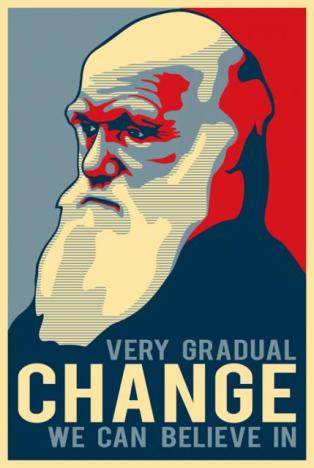
very-gradual-change

I just came from Idaho, debating a fundamentalist Christian writer and pastor, Douglas Wilson. The crowd of over 800 at the University of Idaho was full of members of his congregation, as well as students, and we debated civilly if passionately, and at the end of the debate a huge majority sided with him over me. Maybe over time, some of the points I made will resonate. Maybe they won’t. But what I do know, from my own experience, is that people can change their minds in a short period of time.

Only a short drive away from where I was speaking is Washington State, where marriage equality is legal. You can see this border – where I was instantly re-married as we drove in a pick-up truck across the border – as bizarre and incoherent (which, of course, it is), but you can also see this as something worth celebrating about such a vast and diverse country as this one. Opinion in those states differ widely – and in a democracy public opinion must count. Before Idaho, I was in Oregon, speaking on the same issue. Next year, that state looks likely to be the first one to overturn a constitutional ban on marriage equality at the ballot box. You want proof that argument and reason and time can work in a democracy? The marriage equality movement is Exhibit A: person by person, generation by generation, state by state.

Not only has federalism allowed those of us in favor of marriage equality to demonstrate that no bad consequences will come by giving gays the right to marry (Washington State’s divorce rate is lower than Idaho’s; divorce rates across the country have fallen in the decade when marriage equality became a burning issue; the first gay marriage state, Massachusetts, has the lowest divorce rate in the country); it prevents the imposition of an institution on people who do not want it or believe in it. This is what makes me a conservative, I suppose. Toleration is a two-way street. I loathe the idea of coercing anyone’s conscience, or allowing any one, central institution to enforce a one-size-fits-all solution on a diverse country, where conscience is at stake, where religious freedom matters, and where public opinion remains deeply divided.

I can see and appreciate the full liberal argument that Obama has not fully embraced. Couldn’t my gradualist, federalist, democratic argument, after all, have been made of the anti-miscegenation laws that once desecrated this country?

And the answer is yes. But mores evolve in a society; change occurs in the conscience and consciousness over time. The job of a conservative is to argue the case, when she sees fit, for change – but only when change is designed to retain the coherence of a society, not to do damage to its sense and understanding of itself. The Christian witness of Martin Luther King Jr and the simple dignity of Rosa Parks and the organizational genius of Bayard Rustin and the moral witness of so many, black and white, is what made the Voting Rights Act possible. Was America before that an unjust society? Yes. But by embracing that change, America became, in my view, more true to its founding documents, to its essential nature, than it was before. A conservative seeks to balance justice with the dispersal of power, the coherence of a culture, and the common, contingent meaning of a polity, its traditions and customs.
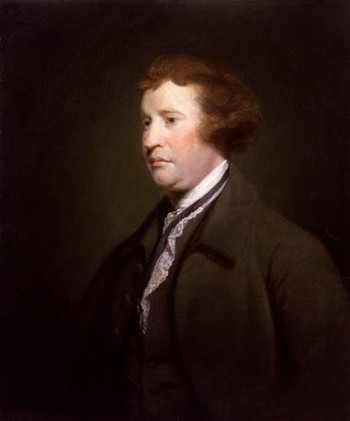
NPG 655,Edmund Burke,studio of Sir Joshua ReynoldsBut sometimes – in fact, often – you have to change an institution in order for it to stay the same. That was Burke’s insight, not Mill’s. And that’s why I have always held that marriage equality is as conservative a cause as it is a liberal one. Once gay people fully and finally owned their own equality in their own families, and their own families responded, once centuries of internalized self-hatred and oppression and criminalization gave way to self-worth and pride and freedom, keeping gay people out of their own families became, in fact, an attack on the family as it had actually evolved in this country. The humanity of gay people – intensely proven in the crucible of the plague – won out both within our own souls and the souls of others. And it was that shift in consciousness and culture that prompted legal reform. I think in a democracy, you change hearts and minds first if possible; then you change the law. And when you change it, you do so with caution, especially with a vital social institution like civil marriage.

That’s why DOMA was so pernicious. It made the federal government the sole arbiter of civil marriage when that judgment had always been left to the states. DOMA pre-empted the national debate and tried to shut it down. Mercifully, it did not prevent any states from embracing marriage equality if they wanted to; but for the first time in history, it said the federal government would not simply recognize the states’ decisions. That was wrong on conservative and federalist grounds. It was a key moment in the take-over of conservatism by religious fundamentalism. It was a declaration of war by a government on its own citizens. It was a mile-stone in the degeneracy of American conservatism.

The second argument the Obama brief makes in the Prop 8 case is neither conservative nor liberal. It assumes that if you oppose marriage equality in a democracy, you have to do so for a substantive reason, because the minority involved has been the object of such discrimination in the past. For the first time, the American government acknowledged that centuries of criminalization, stigma, cruelty and forced invisibility, and declared that “the undisputed twentieth-century discrimination has lasted long enough.”Hence the embrace of the judicial notion of “heightened scrutiny” when assessing laws that single out this minority for further discrimination by their own government.

If the reason is that the rights and responsibilities of marriage are inherently heterosexual, because of procreation, you have a very weak case, given what civil marriage now is for straights, and after the ubiquity of contraception, weddingaislebut you have a case. But if you have conceded the substance of the argument and granted gay couples all the rights and responsibilities of civil marriage – but denied them the symbolism of the the name – you are creating a separate but equal form of legal segregation that does nothing and can do nothing but express animus toward a minority or the need to segregate them from a common, binding institution. That simple segregation – without an argument – violates core civil equality. And there are eight states – California, Delaware, Hawaii, Illinois, Nevada, New Jersey, Oregon, and Rhode Island – that have laws that can only be understood as expressing the civil inferiority of gay couples. That must, in my view, end. And it can end without a resort to a sweeping federal decision across all 50 states.

What must also end is the federal government’s unconstitutional decision to distinguish between the marriage licenses in any given state where it is the law on the basis of gender. My marriage license in Massachusetts, New York and DC is indistinguishable in every respect from my heterosexual peers. The federal government has no business getting involved and creating a distinction. In fact, it has no way of actually telling from the licenses themselves which are gay and which are straight. It must infer that merely from our first names. When the feds are poring over a state’s marriage license to analyze the first names of the couple, it is way over the line. On almost any other issue, federalist conservatives would agree with that.

Which is why Obama is both advancing a liberal goal of equality with a small-c conservative concern for gradual change based on moral, empirical and spiritual evolution. He leads, like every Tory should, from behind the people he represents.

No More Phoning It In, Ctd

Readers sound off on Yahoo’s new policy:

I am a software developer at an interactive agency, I work from home, and I have two insights on Mayer’s decision to eliminate telecommuting. First, our company employs talented people all over the world, because it is very difficult to find enough skilled technology workers; to insist that they also physically live in the same vicinity as your company headquarters is a certain kind of madness. This is slightly less of a problem for companies headquartered in technology hubs like SV or major cities, but it’s a problem nonetheless, so it’s not uncommon to see companies in smaller markets who welcome telecommuters. (As an aside, the synergistic effects of physical interaction and “water cooler time” is offset by all manner of unproductive office distractions. Have you ever been to a meeting? They’re awful.)

Second, I’ve interviewed at Yahoo’s Silicon Valley campus recently.

What I observed was surprising (to me): there are a relatively small number of engineers and designers among an ocean of employees. What do these non-technical people do for Yahoo? I’m not really sure. But there are crowds of them, and Yahoo could probably cut their numbers by a third and never notice the difference. It may be that Mayer is trying to do just that.

Another elaborates on that theory:

Have folks considered that this is just a layoff by another name? Of course Mayer knows that great things are possible with remote workers, and that many Yahoo employees were hired with the understanding of various levels of flexibility. And of course there were alternative approaches of having leaders ask individual teams to come together when brainstorming on new product ideas. But certainly a result of this move is some will leave Yahoo. And maybe that’s needed. Compare it to a conventional layoff, which has some negative publicity (fear of a ‘downward spiral’ of future rounds) but managers get to get rid of the less productive workers (in their eyes). In this case it is likely that some of the more creative folks may attrit.

The Dish of course no longer has an office, but even when we did, we only occasionally went into it. The intense editing of the site is actually far more efficient when we are solo in our blog caves or coffee shops. And naturally the new Dish’s uncertain budget greatly benefits from not having to pay for office space.

Fascist Fashion

original (2)

Annalee Newitz digs up a bizarre relic:

In the late 1920s, a peculiar confluence of fashion and fascism came together in England. The Men’s Dress Reform Party, an outgrowth of the eugenics movement, agitated for men to dress in more beautiful, flowing clothing reminiscent of what they wore during the Elizabethan era. Mostly, this seemed to mean wearing shorts and kilts.

Simon Carter has more:

Today it might seem comical that the MDRP urged men to adopt a more feminine style of clothing.  However the underlying project was more sinister in its efforts to interweave masculinity with the social hygiene and eugenic movements.  Articles supporting dress reform in the New Health Society journal argued that changes in men’s fashion would bring out a male beauty – one that celebrated masculine grace and physique.  The idea was that if middle class men could, through reformed clothing, become more beautiful then they would inevitably also be more attractive to women (i.e. potential mothers) and thus reverse the perceived evolutionary decline of the middle classes:

…a renaissance of beauty for men – true masculine beauty of the body and mind, the bloom of a joyful spirit – might mean happier marriages, well-born and beautiful children, a healthier and more beautiful race (Dion Byngham, New Health Journal, 1932).

(Dress reformers on their way to the MDRP Coronation competition in 1937, via Carter)

The Slow Sequester

David Dayen expects the sequester to phase in gradually:

The problem for the White House, despite outward projections of confidence, is that the sequester simply won’t spool out in spectacular fashion. The biggest near-term hits will be to areas largely invisible to the public, like scientific research or military readiness, or to low-income populations that have scarce political power. Events harming the broad mass of consumers, like airport chaos, mass teacher layoffs or shuttered national parks, won’t kick in for a month or more, whether the administration likes it or not. The President himself admitted this week that the impacts “will not all be felt on day one.”

TNR asked various economists, “Will the sequester start another recession?” Alan Blinder’s response:

I certainly wouldn’t expect the sequester to cause a recession—it’s not big enough. A reasonable guess is that it takes about 0.6 of a percentage point off the 2013 growth rate. That’s based on the amount of spending that would be cut, and a ‘multiplier’ around one. Now, when the economy is struggling to make 2 percent growth, losing about 0.6 percent is hardly welcome. But it’s not a recession. The possible downside, and the hardest part to figure out, is how badly the sequester will dent confidence—creating the feeling that our government is losing its mind—and what that might do to spending. I’ve estimated that as negligible—and I hope that’s right!

Should Trans Surgery Be Covered?

Gender reassignment surgery just got an unlikely advocate in Emerson College’s Phi Alpha Tau fraternity, which is raising money for one of its own, Donnie Collins, to receive female-to-male breast augmentation. Emerson’s insurance won’t cover the procedure, as it is “common practice for insurance companies to deem female-to-male breast augmentation—or top surgery—as a cosmetic plastic surgery rather than a necessity.” But that tide is starting to turn, as “many of the top American universities” are changing their insurance coverage to include gender reassignment surgery. Julie Hollar puts that progress in context:

Only those transgender youth privileged enough to get into schools like Princeton or Stanford will have access to full health coverage that will enable them to align their gender presentation with their gender identity–which can have important reverberations down the line for their job and life prospects. Not all transgender people want to take hormones or undergo surgery, but for many it is a medical necessity–something both the American Medical Association and the American Psychiatric Association have recognized. …

The real story here is that so many transgender people–those without access to elite higher education or certain Fortune 500 jobs–face serious health care discrimination that puts them at an even greater disadvantage than they already face. If we had a single-payer system, where your health insurance didn’t depend on where you go to school or if you have a certain kind of job, it would still be a struggle to get these things covered, no doubt. But it would be one unified struggle, instead of thousands of disparate ones.

Update from a reader:

I hate to do this, but speaking as an alumnus of Emerson (’08), and an alumnus who transferred from a big state school, I have to throw a bit of water on this “unlikely” development.

For starters, Phi Alpha Tau is not a national fraternity, but one local to the college, and one that is not recognized by any major national organization related to Greek life. Secondly, and more importantly, Greek life at Emerson, a small arts school with a relatively low number of students living on-campus, is pretty minimal in comparison to a big school, like Boston University or Northeastern nearby (I myself recall only ever meeting one person living in a frat, and he was a pledge who bailed after initiation). That, in combination with a higher-than-average percentage of LGBT students, makes this less unlikely and more an outlier to the rest of collegiate Greek life. This is still a positive development, but it would actually bear some weight if, say, this was Chi Phi at BU.

Giving Up Gluten

Darshak Sanghavi senses a fad:

According to USA Today, up to one-quarter of all consumers now want gluten-free food, even though only one person in 100 has celiac disease, the autoimmune disorder worsened by gluten ingestion. Going gluten-free seems somewhat faddish. The roster of celebrities who’ve gone temporarily or permanently off it includes Chelsea Clinton, Lady Gaga, Miley Cyrus, Drew Brees, and Oprah Winfrey, among many others.

Celiac disease can be diagnosed with a blood test, but people with wheat allergies or gluten intolerance are harder to pin down:

There’s not even a mediocre blood test for gluten intolerance. The diagnosis simply relies on someone’s subjective feelings of bloating, bowel changes, or mental fogginess after eating gluten. This is a set-up for all manner of pseudo-scientific self-diagnoses, especially when you consider that 2 percent of people believe they have illnesses caused by magnetic fields. And yet, a randomized, blinded trial in Italy just showed that one-third of patients with gluten intolerance clearly felt better with gluten-free diets, which confirmed “a distinct clinical condition.” …

This is the most frustrating part of gluten intolerance. There are certainly people who have a problem with gluten that’s not autoimmune or allergic. And yet, the data suggest that almost two-thirds of people who think they are gluten-intolerant really aren’t.

The NYT recently polled some “celiac experts” critical of dieting without a diagnosis. Seth Roberts sighs:

As someone put it in an email to me, “Don’t follow the example of the person who improved her health without expensive, invasive, inconclusive testing. If you think gluten may be a problem in your diet, you should keep eating it and pay someone to test your blood for unreliable markers and scope your gut for evidence of damage. It’s a much better idea than tracking your symptoms and trying a month without gluten, a month back on, then another month without to see if your health improves.”

Thoughts on my own gluten-free diet here and here.

Printing Your Own Handgun, Ctd

Kelsey Atherton explains the significance of the above video:

The agents provocateur at Defense Distributed welcomed Congress back from recess by releasing a video of a brand new 3-D printed AR-15 receiver being used to fire multiple 100-round magazines. … The last time we saw Defense Distributed test a 3-D printed lower receiver, it broke after 6 shots. The latest video shows that it can survive a whopping 600 shots. This suggests that Defense Distributed has made significant progress toward its goal of building a working 3-D printed gun.

Defense Distributed is the group behind the Wiki Weapon Project, the goal of which is to produce an open-source 3-D printed gun that anyone could make with a 3-D printing machine. Last week, Robert Beckhusen identified one way to control guns once 3-D printed guns become a real possibility:

“Perhaps the only way forward, if we choose to try and control this, is to control the gunpowder — the explosives — and not the actual device,” Hod Lipson, a Cornell University professor of engineering and an early pioneer of 3-D printing, tells Danger Room. The reason, Lipson says, is that it would be the remaining “controlled substance” in a field that’s otherwise uncontrollable, regardless of the shape or size of the firearm that you’re using — or printing. It is the “unifying material everybody would need, and it would be a good target for regulation if people choose to regulate it.”

Beckhusen also wonders about the safety of the hobbyists:

It’s a question whether freely shared blueprints, modified with anonymity — and with zero oversight and regulation — can be truly made safe for the user. Sharing faulty blueprints could also make for a dangerous kind of trolling.

Previous Dish on printed guns here.