The Dish Model, Ctd

Readers follow up on our health insurance post:

My son had what I think is a great idea for companies/merchants: they should have a sticker or something that identifies that they provide health insurance for their employees.  I did some investigating when my dry cleaning went up and found a cheaper service but they didn’t provide health insurance for their workers, so instead of switching solely on price, I stayed with the old service and paid the extra 34c per shirt.  I’m sure others would like to know who provides and who doesn’t.  It would impact our patronage.

Another:

I am curious as to whether you provide health insurance for your employees’ families as well.  I run a similarly sized business as yours and currently do not, but I am reconsidering.

Dish Publishing LLC provides healthcare for our staffers’ spouses. We would also cover employees’ children but no one on staff has kids. Another quotes me:

One thing I’ve learned from a foray into business is that you really do have to make some moral calls. I realize that I’m not such a capitalist, after all, since my goal, I realized, was not really to be rich (I’m doing fine) but to do what I love in as efficient and as fair a way as possible – and to work with people I respect and love.

I’m quite certain you are full of shit with this sentence. Why slur the “capitalists”?

Take your blinders off and rid your thinking of these strawman stereotypes. The vast vast majority of “capitalists” don’t really set off with the goal of “being rich” but in reality are just like you. “Capitalists” want to do what they love, work with people they like, and make a meaningful contribution to society. Capitalists are people like Ray Kroc, Steve Jobs, Trey Parker, Matt Stone, Sylvester Stallone, Henry Ford. Capitalists are simply people who have a passion for serving others and meeting people’s unmet needs and wants. If they do it well and enough other people appreciate what they do, the end result may just be that they become Rich. But it’s almost never the goal at the outset!

Another agrees:

You don’t have to be greedy, amoral, or Milton Friedman to be a capitalist! You are an entrepreneur innovating a new business model to support a unique product. Society values that product enough to pay for it, and you (and your staff and interns) prosper. Moreover, you are making choices along the way designed to make this model sustainable over the long term, which turns out to be in the best interest of all stakeholders (because your incentives are aligned with theirs).

In other words, you are the BEST kind of capitalist. Please don’t shrug off the label or else we’ll lose it forever to the Ayn Rand crowd!

Another circles back to healthcare:

Regarding the following quote from a reader: “Should I ever leave this position, I could possibly be forced into the open market where, as an otherwise healthy 43-year-old man, a minor heart attack three years ago would likely prevent me from EVER being covered outside a group policy offered by an employer.” Could you please tell your reader that, thanks to the Affordable Care Act, “EVER” means “for the next 11 months”? As of 1/1/2014, your reader (assuming that he is not an illegal immigrant) will be able to get non-group coverage through the exchanges, without his premiums being impacted by his prior heart condition. As someone who works in health insurance, I recognize I’m way too close to this subject to understand the average man-on-the-street’s perception of the ACA, but I’m flabbergasted that your reader was unaware of this.

Another reader on the subject:

I’m an avid Dishhead for a few years now and happy to be a new subscriber. Your reader inquired about your relationship to the Affordable Care Act in regards to paying your employees’ health care. I wanted to note that there is a current option for small business owners to apply for a tax credit of up to 35%, raising to 50% in 2014. An eligible small business in this case is under 25 employees with an average salary of $50K or less that provides at least half of the employees with health care. Perhaps that doesn’t apply to The Dish but it sounds like some readers (specifically one you featured who described their business of 9 employees) might benefit from looking into it. Here’s the IRS application page with more info.

Good luck on your new adventure. I’m eager to see where it leads.
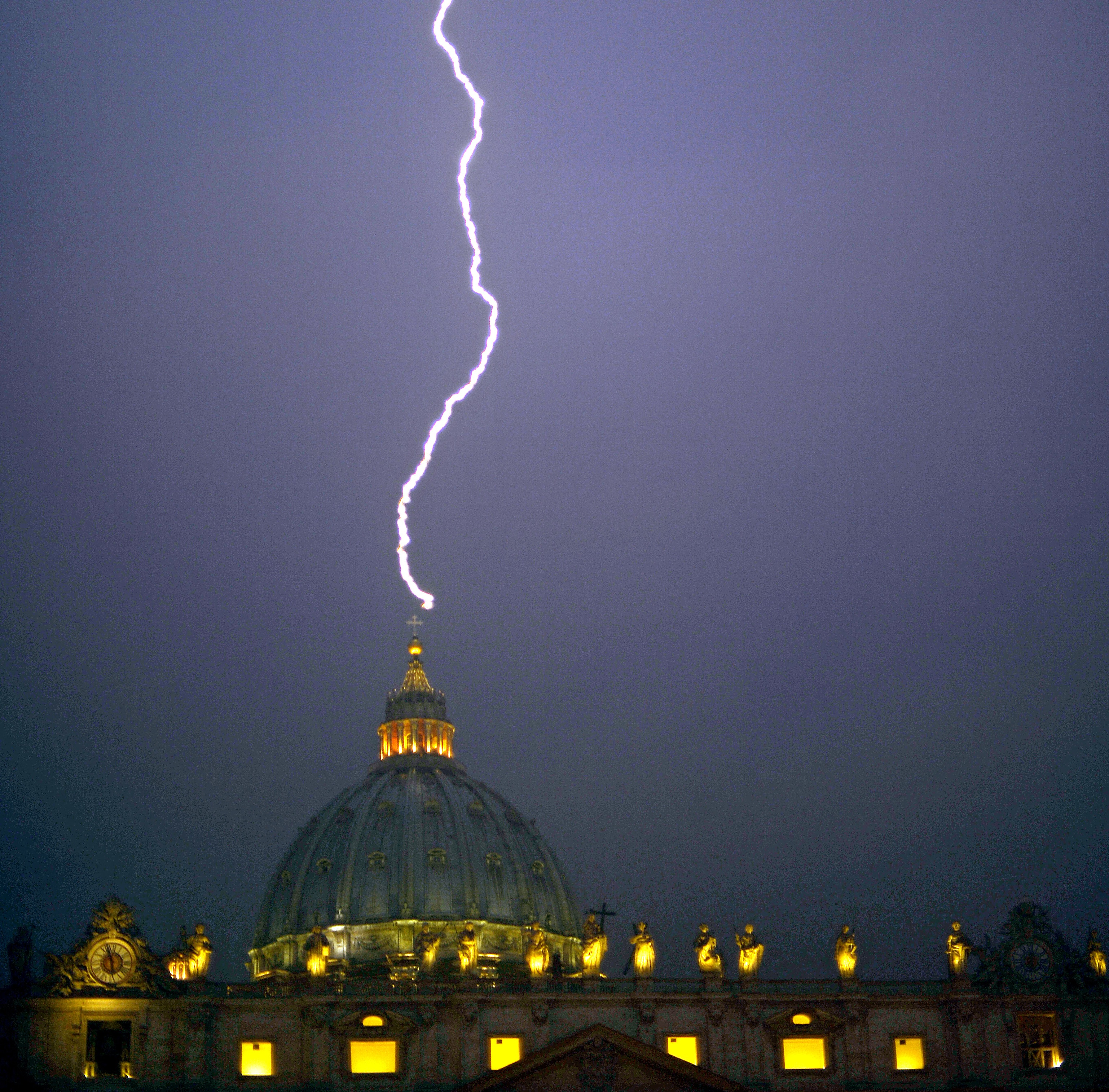
Will We Ever Know Why?

VATICAN-POPE-RESIGN-ST PETER

Stephen Marche, noting that in Dante’s Divine Comedy, “the last Pope who gave up his job, basically because he was too good to stomach the politics, ended up spending all eternity upside down in a hole of fire.” But he sees the “mystery” of the Roman Church’s machinations as part of its appeal:

What is so tantalizing about this story is that we’ll probably never know the actual reason, not for decades, anyway. Today the speculations will swirl, but it’ll eventually peter out [sic] when the race for the next Pope takes over the news. The Vatican is simply too opaque to make even intelligent guesses. You know how opaque the Vatican is? The journalist who broke the story heard the Pope giving his announcement to the Cardinals in Latin, and understood it, and then ran with the story. (Let nobody doubt the value of a classical education again.) The Vatican is so opaque that only recently did they release secret files about Pius XII, otherwise known as Hitler’s Pope, that showed him saving the lives of Jewish refugees. Even that bit of magnificently good news for the Church was hidden in the vaults.

Can you imagine what Ratzinger’s full files on the global child-rape conspiracy contain? That evidence of criminality may never see the light of day – like the tapes of torture deliberately destroyed by the CIA. Andrew Brown, claiming that the Pope’s resignation had been “planned” for some time – he even adds that Rowan Williams, the former Archbishop of Canterbury, knew about this before Christmas – believes Benedict deliberately did this as a response to the years of drawn-out, sickly last years of his predecessor, Pope John Paul II:

During the decrepitude of John Paul II, Pope Benedict, as Cardinal Ratzinger, was his right-hand man. It may be that his experience then planted in him a wish to leave office while he was still able to discharge his duties. Modern medicine does not work well with autocratic regimes traditionally renewed by death or disease, and the papacy remains the last absolute monarchy in Europe.

In Benedict’s resignation statement can be seen an implied rebuke to his predecessor, who argued that clinging to life and power for as long as possible was itself a form of witness to Christ’s suffering.

In a helpful summary of the process used to select a new Pope, Alessandro Speciale finds that secrecy and tradition are at the heart of what happens, indicated in part by a term we’re sure to hear much of in the coming weeks – “conclave”:

The word conclave is derived from the Latin phrase for “with a key.”

It was first used by Pope Gregory X in 1274 in a proclamation outlining the procedure for electing a pope in a meeting place that can be securely locked.

The conclave should open 15 days after the pope resigns but could be postponed to 20 days. All cardinals under the age of 80 are eligible to vote for the new pope. Pope Paul VI limited the number of cardinal-electors to 120; currently 118 are eligible.

The cardinals live in seclusion in the Casa Santa Marta, a luxury residence inside the Vatican walls. They meet to vote under Michelangelo’s famous ceiling in the Sistine Chapel, adjacent to St. Peter’s Basilica.

Once the conclave begins, a cardinal-elector may leave only because of illness or other serious reason accepted by a majority of his fellow cardinals. Everyone associated with the conclave — doctors, nurses, confessors, masters of liturgical ceremonies, sacristans and various priest assistants and housekeeping and catering staff — must swear never to tell anything they learn about the election.

(Photo: Lightning strikes St Peter’s dome at the Vatican on February 11, 2013. Pope Benedict XVI announced today he will resign as leader of the world’s 1.1 billion Catholics on February 28 because his age prevented him from carrying out his duties – an unprecedented move in the modern history of the Catholic Church. By Filippo Monteforte/AFP/Getty Images)

Benedict’s Greatest Encyclical

Not a hard choice. My 2006 take on “Deus Caritas Est”:

It’s a beautifully written document: humane, outward, subtle and exactly, in my view, what the Church needs right now.

It’s a reminder of our basis as Church – in the love that Jesus brought into the world and commanded us to live. Benedict’s Augustinian realism that heaven on earth is impossible, that ideologies that pretend to solve all human suffering are lies, that we should not attempt “what God’s governance of the world apparently cannot: fully resolve every problem” – all these are profound truths at the center of our faith.

I’m struck, however, by the near-complete absence in the document of the love of “amicitia,” of friendship. It is far more central to the Gospel message than eros, and under-estimated in our current culture, to our great detriment. I also, obviously, share Benedict’s wonder at conjugal love. I see no conflict between the love of two homosexual men or women for each other and the mystery of heterosexual love. One day, it would be wonderful to see this doctrine of love extend to all God’s creatures. But these are brief, provisional comments. Amy Wellborn has a very insightful short essay on the Enclyclical. So does Rocco Palmo…  And yes, this does surprise me somewhat. It is not as extreme or as repressive as Benedict’s well-earned reputation. It is a sign, one hopes, of a papacy that can change and grow and concentrate on the central truths, not peripheral obsessions.

For that, a great sigh of relief. And, even, yes, hope …

The Stench He Leaves Behind

This embed is invalid

I can’t imagine I’m alone in wishing Hitch were still here to comment on Pope Benedict’s abdication – the video above certainly indicates he’d relish the time between the Pope’s resignation taking effect and the appearance of white smoke in Rome, when no one on earth could claim to be infallible. Though Hitch’s passing means we’ll miss his real-time observations, we still have his writings. Slate just republished this piece of his from 2010, in which he decried the Church’s handling of the child rape scandal – and found the Pope to be at the heart of the institution’s corruption:

Very much more serious is the role of Joseph Ratzinger, before the church decided to make him supreme leader, in obstructing justice on a global scale. After his promotion to cardinal, he was put in charge of the so-called “Congregation for the Doctrine of the Faith” (formerly known as the Inquisition). In 2001, Pope John Paul II placed this department in charge of the investigation of child rape and torture by Catholic priests. In May of that year, Ratzinger issued a confidential letter to every bishop. In it, he reminded them of the extreme gravity of a certain crime. But that crime was the reporting of the rape and torture.

The accusations, intoned Ratzinger, were only treatable within the church’s own exclusive jurisdiction. Any sharing of the evidence with legal authorities or the press was utterly forbidden. Charges were to be investigated “in the most secretive way … restrained by a perpetual silence … and everyone … is to observe the strictest secret which is commonly regarded as a secret of the Holy Office … under the penalty of excommunication.” (My italics). Nobody has yet been excommunicated for the rape and torture of children, but exposing the offense could get you into serious trouble. And this is the church that warns us against moral relativism!

And here’s this, from another essay of Hitch’s from around the same time:

Almost every week, I go and debate with spokesmen of religious faith. Invariably and without exception, they inform me that without a belief in supernatural authority I would have no basis for my morality. Yet here is an ancient Christian church that deals in awful certainties when it comes to outright condemnation of sins like divorce, abortion, contraception, and homosexuality between consenting adults. For these offenses there is no forgiveness, and moral absolutism is invoked. Yet let the subject be the rape and torture of defenseless children, and at once every kind of wiggle room and excuse-making is invoked. What can one say of a church that finds so much latitude for a crime so ghastly that no morally normal person can even think of it without shuddering?

It’s interesting, too, that the same church did its best to hide the rape and torture from the secular authorities, even forcing child victims (as in the disgusting case of Cardinal Sean Brady, the spiritual chieftain of the Catholics of Ireland) to sign secrecy oaths that prevented them from testifying against their rapists and torturers. Why were they so afraid of secular justice? Did they think it would be less indifferent and pliable than private priestly investigations? In that case, what is left of the shabby half-baked argument that people can’t understand elementary morality without a divine warrant?

Earlier today, I asked if lawsuits could proceed against the Pope himself, once he no longer is shielded from legal accountability as a head of state. Not surprisingly, Hitch was there first:

The case for bringing the head of the Catholic hierarchy within the orbit of law is easily enough made. All it involves is the ability to look at a naked emperor and ask the question “Why?” Mentally remove his papal vestments and imagine him in a suit, and Joseph Ratzinger becomes just a Bavarian bureaucrat who has failed in the only task he was ever set—that of damage control. The question started small. In 2002, I happened to be on Hardball With Chris Matthews, discussing what the then attorney general of Massachusetts, Thomas Reilly, had termed a massive cover-up by the church of crimes against children by more than a thousand priests.

I asked, why is the man who is prima facie responsible, Cardinal Bernard Law, not being questioned by the forces of law and order? Why is the church allowed to be judge in its own case and enabled in effect to run private courts where gross and evil offenders end up being “forgiven”? This point must have hung in the air a bit, and perhaps lodged in Cardinal Law’s own mind, because in December of that year he left Boston just hours before state troopers arrived with a subpoena seeking his grand-jury testimony. Where did he go? To Rome, where he later voted in the election of Pope Benedict XVI and now presides over the beautiful church of Santa Maria Maggiore, as well as several Vatican subcommittees.

In my submission, the current scandal passed the point of no return when the Vatican officially became a hideout for a man who was little better than a fugitive from justice. By sheltering such a salient offender at its very heart, the Vatican had invited the metastasis of the horror into its bosom and thence to its very head. It is obvious that Cardinal Law could not have made his escape or been given asylum without the approval of the then pontiff and of his most trusted deputy in the matter of child-rape damage control, then cardinal Joseph Ratzinger.

Well, a legal case against him and his decades of abetting child rape is now a possibility. He is no longer a head of state.

The Pope Resigns: Your Thoughts

Faithfuls React At Pope Benedict XVI Resignation News

A reader writes:

I was struck by the Pope’s resignation today as simultaneously profound and more of the same. For one, his act of resigning due to his being “subject to so many rapid changes and shaken by questions of deep relevance for the life of faith” (as you emphasized) can be take two ways: (1) He’s 85 years old, or (2) the weight of what he knows of the Church’s sex abuse scandal, having served as the Prefect of the CDF prior to his election, combined with the continued flow of information about this massive problem and its direct impact on the Church’s financial survival, has become too much for him to bear.

However, his abdication while still alive also gives him the power to anoint his successor virtually directly, ensuring the culture of denial, secrecy, resistance to progress, and emphasis on preservation of the Church over its people that his reign (and, indeed, his career) has personified. Color me ambivalent and leaning cynical.

Another writes:

There’s lots of speculation today that Benedict’s resignation is linked to some aspect of the child-rape scandal. I’d like to draw attention to what may be a supporting detail for that hypothesis I haven’t yet seen mentioned in today’s coverage: The effective firing of Cardinal Roger Mahony from all public duties by the Archbishop of Los Angeles on January 31. Though I’m no expert on the church, it struck me as extraordinary at the time that an Archbishop would be permitted to make such a public rebuke of a Cardinal. If the goal were to lower Mahony’s public profile, he could simply have withdrawn from those activities quietly.

It strikes me that we may be seeing ripples of something much larger moving under the surface. Perhaps it’s a sort of coup that reached critical mass among the church hierarchy – “Enough is enough.” Or perhaps something even more disgraceful is about to become known.

But Mahony will still help pick the Pope’s successor. Another reader:

The Pope resigns shortly after he’s burgled by his butler who he then pardons. Maybe it’s cuz I watched Mea Maxima Culpa last night but I simply cannot believe someone isn’t forcing him to do this as penance for something he covered up. There is some Godfather III stuff goin’ on here.

A survivor of sexual abuse writes:

In reading the coverage of Pope Benedict XVI’s resignation as pope, I’m struck by the almost complete absence of any references to the actual survivors of sexual abuse by priests. Most of the coverage of the pope talks about his papacy and his orthodox Augustinian views. If articles refer to the abuse he presided over at all, they make a veiled reference like, “the abuse scandal overshadowed some of his papacy.” But the voices of the actual survivors are nowhere to be found.

As a survivor of sexual abuse by a pedophile, I know that this is one of the most common tactics used to silence us and deny us a voice: refuse to acknowledge that we exist at all. So often, when I’ve tried to talk about my experience, people refer to it as “that alleged incident” or “that thing that happened to you.” And this just makes me want to remain silent, knowing that my voice is insignificant and won’t be believed. On a much larger level, I see this happening with the Catholic Church.

I don’t know what the answer is. I don’t know if the Church is hopelessly lost, or if it can honestly take an accounting of its crimes and redeem itself. But I do know that any honest accounting can’t begin until the voices of the actual survivors are listened to and given a central place at the table. As long as we are pushed to the side and ignored, no real change can occur.

Another:

A small thing but it stood out for me in your take on Ratzinger’s early retirement. In your reference to ordained priests raping children, you twice used the word “monster” and “monstrous.” I’m reminded oddly of a course on the Catholicism of Flannery O’Connor from my bachelor degree (I did a minor in Catholic studies). My instructor mentioned the etymological route of the word monster, from the Latin monstrare. To show, to demonstrate.

The point was that monsters, understood in the medieval sense, pointed to an evil in need of grace. These crimes, these vicious, inhuman crimes, stand out as a sign in their own right to the evil the church has papered over in recent years with dense encyclicals: Thomist, intellectual straw. But the crimes are what the world has seen of the church. These monsters and their monstrous crimes stood as their own visible demonstration of the condemnation of the church, and Ratzinger’s theology could not cover it.

Unfiltered reader thoughts at our Facebook page.

(Photo: Worshippers attend a special evening mass at St. Hedwig Catholic cathedral following the announced resignation of Pope Benedict XVI on February 11, 2013 in Berlin, Germany. Pope Benedict XVI, born Josef Ratzinger in Germany, announced to Vatican clergy on Monday that he feels too physically frail to continue meeting the demands of being the Pope and will step down officially on February 28. By Sean Gallup/Getty Images)

The Pope Resigns: Tweet Reax

The Dish Model, Ctd

[youtube http://www.youtube.com/watch?v=mnCcoq-BNS4]

Mathew Ingram sees a new trend among disparate artists and writers:

In many ways, conservative blogger Andrew Sullivan and alternative musician Amanda Palmer couldn’t be more different: the former writes about the Obama administration and the intricacies of U.S. foreign policy, while the latter is the former lead singer of a punk band called The Dresden Dolls and sports hand-painted eyebrows, among other things. Their approach to their respective businesses, however — in both cases a very personal form of publishing — are similar in one crucial way: they succeed or fail based on how well they connect with and serve their fans. Is this the future of media? … Fans don’t want content, they want a relationship.

When I read this, the first thing that came to mind was the “pay what you want” music experiments of bands like Radiohead and Girl Talk, both of whom asked their fans to pay for songs that they could have easily downloaded for free, and got millions of dollars in response. Why did fans do this? Because they wanted to support those artists, not because they wanted music for free — just as readers who want to support Sullivan probably don’t care that they can get the content free via an RSS reader (Note: Sullivan will be discussing his new approach at our paidContent Live conference on April 17 in New York).

The Kickstarter campaign that Amanda Palmer ran last year to raise funds for a new album and a national tour falls into the same category (as does comedian Louis CK’s method of going direct to his fans to sell a concert tour): after quitting a deal with a traditional record label, Palmer initially wanted to raise $100,000 to fund her recording. Instead, she collected 10 times that amount, or more than $1 million. And the reason why her fans wanted to donate all of that money has very little to do with their desire to get an album, or even to see her perform.

The Continuing Keystone Fight, Ctd

David Roberts called for activism in the Keystone XL fight. An Alberta-based reader responds with some local perspective:

Your David Roberts quote (Fuck you. Watch me) reminded me again that Americans know so very little about Canada and Canadians and what the tar sands represent to the people of Alberta. I live in Alberta outside Edmonton. You’d have to look long and hard to find anyone from here to the far north whose life isn’t touched to one, or many degrees, by the oil industry. By and large, we’ve ridden out the current recession thanks to the tar sands and aside from a small (compared to the overall population) number of activist groups, everyone here knows we have the tar sands to thank for our standard of living.

Without a pipeline, the bitumen will flow by just rail, where the likelihood of derailment makes a spill more likely than shipping by pipeline, and Albertans will support any means to ship bitumen because they know it is the source of the province’s economic well-being. In fact, the common response to activists around here (especially American ones) is a snarling “fuck off”. No one here is willing to downgrade their standard of living so Americans can feel better about not actually giving up their first world lifestyle, which makes development of the tar sands profitable in the first place.

Rebecca Penty reports, the company behind Keystone XL is already looking at other modes of moving oil from the tar sands to the coast. Another reader thinks the activist attitude is counterproductive:

[T]he dark side to activist logic is the valuing of emotion and symbolism over practical needs. Looking at the oil sands, sure, it’s awful for the environment. But you know what’s worse? Coal. Without the oil sands, humanity will carry on consuming 148 terawatt hours of energy a year, we’ll just do it in a haze of coal smog.

I look forward to the day when we reduce energy consumption and produce enough renewable energy to stop using fossil fuels altogether, but until that wondrous day comes, the environmental movement needs to recognize a lesser evil when it sees it.

Poseur Alert Nominee

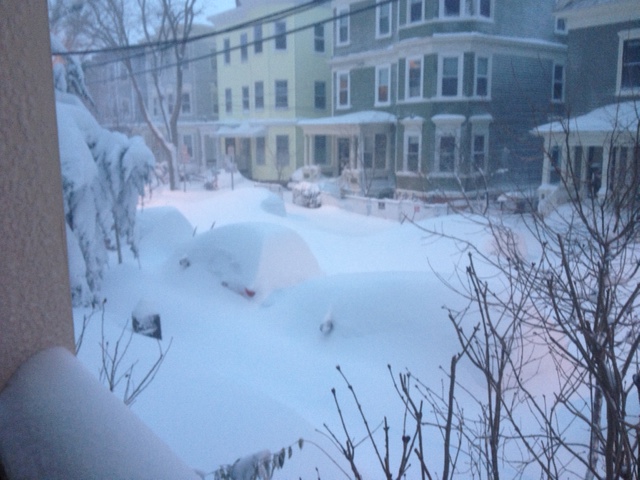
“At the height of the storm, anyone outside will face a fearsome blizzard. Innocent snowflakes turn to painfully stinging missiles, darts and tacks, propelled by gusting gales that scream over the seas and roar through the woods. In other words, high winds produce a crystalline ticker-tape parade of snowflakes: furiously falling and flowing flakes filling the fields, whisking past the windows, gliding to the ground and beautifying the bushes. The wild wind whips the snow into roadside rows and churns roof top snow into a creamy concoction with meandering smoky membranes of snow granules that dance to the edges and cascade down the sides. The storm’s gusty gales whip the snow into car-capturing, truck-trapping, bus-blocking, SUV-stalling drifts. It is among the great storms, one of the atmosphere’s awesome displays of change and violence among the momentous events that over time have shaped and changed the course of human events in ways wondrous and ominous,” – Elliot Abrams, AccuWeather.com. Update from a reader:

I’m pretty sure the quote from Abrams was tongue in cheek. He does AccuWeather’s forecasts on Chicago radio and quite often turns the forecast into a literary exercise, usually pretty amusing.

Another agrees:

Elliot Abrams is a regular on KYW News Radio here in the Philadelphia area.  This type of forecast language is kind of a schtick with him.  Sometimes it’s alliteration, sometimes rhymes, sometimes puns, but always in good fun and without taking himself too seriously.  The anchors sometimes take some good natured digs at him for it too.  So while it may seem a bit dorky, I this “Poseur Alert” is overly harsh in his case.  Here’s another example of the kind of things he does on the radio:

Peter Mark Roget was born in mid-January of 1779. He developed the first thesaurus, allowing us to look up all kinds of synonyms. It also means we could look for words that mean the same thing. What’s coming next? What is just around the corner? What about the future? What’s the weather’s next move? What’s the next step? What about the weekend and next week?

A shot of very cold air is affecting us this week on the strength of face-freezing, collar-clutching, nose-nipping, toe-purpling, thumb-numbing, ice-box bitter, bird-blocking blusters. The icy jaws of winter have opened wide as they bring us face freezing winds from the icy dungeon of Jailer January. This air has crossed the arctic tundra, where venturing out without proper protection is a sure invitation to frozen doom. It won’t be just the glacial frigid gelidity that contributes to the feeling of hyperborean chill, but also the adiathermic biting and piercing hiemal keen and nipping winterbound niveous isocheimal and polar unwarmed infrigidation that numbs our thumbs and freezes our toes.

In short, we’ll face the needles of winter’s icy fingers and the piercing refrigerated ice box blasts of marrow-chilling, teeth-chattering, glaciated, bitter blusters of January cold. There’s no bybassing of the bitterness, no solace from the sun. By the way, it’s gonna be cold.

I’m sure you can dig up a number of other examples off of his AccuWeather blog.