A Comedian Takes A New Direction

Jon Stewart’s directorial debut, Rosewater, is based on the memoir of Maziar Behari, an Iranian-Canadian journalist who was arrested while covering the 2009 elections in Iran. Behari spent 118 days in solitary confinement in Iran’s Evin prison. Michael O’Sullivan calls Stewart’s film “an impressive and important piece of storytelling,” and David Edelstein agrees:

In outline, Rosewater sounds earnest, one-note, relentless — something you’d watch out of a sense of duty. But it turns out to be a sly, layered work, charged with dark wit along with horror. The heart of the movie is the Kafkaesque relationship (if that’s the word) between Bahari (Gael García Bernal) and the interrogator-torturer whom Bahari dubs “Rosewater” (Kim Bodnia) for his distinctive scent. What happens between them has a dramatic fullness that’s rare in political filmmaking.

Other reviews are more mixed. Esther Breger questions “whether Stewart can hack it as a filmmaker,” writing that the film is at its best when it employs humor:

The scenes between Behari and Rosewater also allow Stewart to do something he’s very good atbe funny. The interrogation process is both grueling and surreal, and Stewart has an eye for those absurdities. Behari’s “Sopranos” DVDs are treated as pornography when he’s taken into custody. Trips to New Jersey are automatically suspicious. And who is that Anton Chekhov mentioned on your Facebook profile? Midway through his confinement, Behari begins to distract Rosewater by appealing to the man’s prurient side, concocting deadpan tales of Western decadence and erotic massages. For his next film, Stewart should take things a little less seriously.

Thomas Hachard differs, suggesting Stewart “may have been too tasteful” in sticking to “predictable knocks against the kinds of insular interrogators and government officials that wouldn’t be able to recognize the Daily Show’s satire.” He criticizes the film’s disjointed narrative:

When Stewart features news footage of a debate between Ahmadinejad and one of his main challengers, opposition leader Mir Hossein Mousavi, or real video of the violence against those protesting the contested election results, the most serious concerns surrounding Bahari’s arrest come into view. But in other moments, Stewart takes a more dismissive approach, treating Bahari’s interrogator, for example, as an unappreciated buffoon looking for recognition from his superiors. In those moments, Stewart seems to want to turn these men into trifling figures, refusing to give them even the benefit of serious treatment. There are times, too, when the film takes a more broadly inspirational tone, addressing itself to Bahari’s resolute spirit — itself an allegory, it would seem, for Iran’s quelled opposition.

One can imagine a film that combined these various approaches into a cohesive story, but in Rosewater they’re blindly tossed together, and the result neither portrays the suffering of Bahari’s incarceration adequately nor lampoons the absurdities of the situation.

Brett McCracken agrees the movie fails to find a focus:

Stewart’s film champions the important role of journalists even as it laments the degradation of the profession. Are traditional journalists even necessary in a world of citizen reporting and organizing via cell phone and social media? Rosewater nods in this direction, but doesn’t take up the question thoroughly. Indeed, one of the weaknesses of the film is that it doesn’t have clear focus or commitment to going deeper into one particular question. Is the film about Iran? Torture? Family? Journalism? The cyclical nature of war, terror and violence? Rosewater is about all of this, but it may have been stronger had it chosen just one or two of these areas to more profoundly ponder.

And Rob Hunter zooms out:

Stewart’s film is attractive, well-acted and “important,” and his stylistic touches of visible hashtags and other social media shorthand make it very much a film in the now. But is it a film that will be remembered in a year’s time? Bahari’s triumph is real, impressive and relevant. Rosewater is a pleasant feature debut.

Do I Sound Gay? Ctd

For his new documentary Do I Sound Gay?, which opened the NYC DOC festival this week, director David Thorpe filmed his investigation of the “gay voice”:

The film starts on a clever and fun note, with Thorpe clearing his throat before reading the credits out loud and then staging, in very low-tech manner, the Friday-night train ride to Fire Island that made him realize he disliked people with gay voices — which includes not only practically all his fellow passengers but also himself. Over 40 and newly single, the insecure Thorpe wonders if there’s something that can be done about his voice, so he goes to see a speech therapist, who has him working on his nasality and long vowels.

In a review, Rich Juzwiak calls the movie a “bold documentary that derives its momentum from Thorpe’s seesawing between self-loathing and acceptance”:

I related to Thorpe’s hyper-consciousness over his voice and his attempt to alter it. … Past encounters may have taught us that if we sound gay, we won’t be taken seriously or that we’ll put ourselves in some kind of danger or that other guys who are similarly obsessed with the construct of masculinity won’t want to fuck us. In some instances, it’s impossible to refrain from internalizing this. Part of your responsibility as a considerate human interested in communicating is evolution.

At the same time, and where do we draw the line at improving ourselves, and who dictates what constitutes improvement? If we historically deferred to majority opinion, we’d be closeted and attempting to twist our soft dicks into a point to fuck our wives. Because sexuality involves not just the internal but also the external, there will always be people arguing that being gay is a choice. And it is, insofar as one chooses to live his or her life fully, pursuing happiness to the best of his or her ability. One chooses to reject traditional narratives and cultural expectations and whatever external shame lurks, for the sake of just being. Do I Sound Gay? explores the complications that arise once you’ve settled into a life of just being. For a lot of us, just being is an aspiration itself. Even as adults, even in 2014.

In an interview, Thorpe and Dan Savage (who is featured in the film) talk about why they think the topic provokes so much interest:

Thorpe: The gay voice is a symbol—of homosexuality, of femininity—and symbols are very powerful. So it was important for me to address the gay voice as something larger than the gay voice and something representative of gayness, of femininity, and how it can provoke homophobia and misogyny. It seems like a small thing, but the disruption it causes is enormous. I would liken it to holding hands with your lover or kissing in public: it’s a very small act but if you kiss someone of the same sex in a room like this [a public restaurant], you know people are watching you and the temperature of the room changes. So a small act like speaking has enormous consequences.

Dan Savage: It’s also homophobia. It’s the hatred of gay people by non-gay people, but also the self-hatred that so many people struggle with. Like, what’s wrong with sounding like who you are? Some people have a real issue with that. There are straight people that want to live in a world where they can pretend gay people don’t exist and then there are gay people who so struggle with self-hatred that’s been pounded into them so that they policing themselves for any traits that might give them away. If you’re the kind of gay person that has a very identifiable gay voice, a lot of gay people will say it’s like you’re coming out all the time.

Check out my thoughts on the subject here, and read the long-running Dish thread here.

Punk And Circumstance

In a review of Vivienne Westwood, a new autobiography co-written with Ian Kelly, Bee Wilson considers how the punk ethos influenced the designer’s career:

The key to Westwood’s enduring success, apart from her brilliance at ‘making’, seems to be her almost unnatural sense of her own charisma dish_westwoodthatcher and authority: her sense that wherever she was, those were the barricades at which everyone else should be fighting. At fifty, she admitted that she thought any man who didn’t desire her more than everyone else in the room was ‘mad or stupid’. In 1989, she famously posed for the cover of Tatler dressed as Mrs Thatcher, complete with pearls, cravat and tailored jacket. The power of the image is in the uncanny facial similarity between the two: how can the woman who helped invent punk look so like the Iron Lady? But for Westwood herself, it wasn’t a stretch. All she had to do was ‘put a little doubt’ in her eyes and she looked just like Thatcher. It’s worth dwelling on the implications of this statement: the real Vivienne Westwood looks like a less self-doubting version of Mrs Thatcher.

It was self-confidence that allowed her to leap from safety-pinning the queen’s face on the King’s Road to emulating the monarch’s dress sense on the Paris catwalks.

The only person she ever tried to please, she said in 2003, was herself. It didn’t bother her when the business nearly went bankrupt in the mid-1980s. Nor is she now awed by the immense wealth generated by her brand today. ‘Our Vivienne’ was always in her glory, long before the world caught up. In 1987, Westwood did her Harris Tweed collection, inspired by the idea of ‘debutantes going to balls but with a Barbour flung over their ballgown’. She declared herself inspired by pomp and circumstance and Norman Hartnell. John Lydon has attacked the way she turned her back on her punk past, switching to making posh frocks ‘for Ascot’. Seen as part of the larger history of the Dowager Empress, however, the punk years were just one phase in her longer quest to find a more ‘interesting life’ through clothes. In any case, as Westwood herself recognises, the swagger of punk could point in more than one political direction. It could be part of an anarchist rejection of the establishment; or it could be a proto-Thatcherite form of extreme individualism.

In another review of the book, Jane Shilling adds:

Westwood has always seen the catwalk as an extension of the literary and political salon and vice versa. Her co-writer, Ian Kelly, argues that her importance as a cultural figure resides in “her conviction that clothing can change how people think. Fashion as agitprop.”

Irksome in short quotations, the vaguely hyperbolic tone is less irritating once you get used to it. Although the biography is written in the third person, Westwood’s trenchant voice and her superlative sense of self-belief rise pungently from the page. She is now 73, but, like that other iconic figure whom she once mischievously parodied, she shows every sign of going on and on.

(Image of 1989 Tatler cover via Dazed)

Fiction Isn’t Friendship, Ctd

Is it important for a fictional character to be “likeable”? In an essay exploring the question, Edan Lepucki gets feedback from her fellow novelist Emma Straub, author of The Vacationers:

I … think there’s a big difference between a character being unlikeable (whatever that means) and it being unpleasant to spend time reading about them. I have put down many books because I didn’t like the experience of reading them, but that has nothing at all to do with whether or not the characters in those books seemed like people I would want to hang out with. That’s my question, I suppose, for the people who keep bringing this horseshit up. Are they complaining about not enjoying the book, or that they don’t want to have tea with the characters? Because if it’s the former, for godssake, stop reading!

Lepucki goes on to comment:

Traditionally, the Unlikeable Character in fiction is created with authorial intention. You, as the reader, recognize the cues that the person you’re reading about is alienating or reprehensible, and it’s clear that such characterization is part of author’s aesthetic project. (Unreliable Characters, a la the infamous butler in Remains of the Day, are also traditionally revealed this way). But what if a character isn’t Unlikeable, but unlikeable?  What if you just didn’t like him or her? That’s a valid personal response, and certainly a good a reason as any to stop reading.  But it’s such a personal response that it’s irrelevant to the critical gaze.

Previous Dish on the subject here.

A Critique Of Ableism

Reflecting on her experience working as a college administrator, June Thunderstorm questions diagnoses of ADHD, PTSD, and various allergies and phobias “that heavily credentialed people devise to shirk routine labor.” She scoffs that “there must have been at least six empathy-inducing acronyms for writing is hard, so I refresh my Facebook page all day instead“:

[N]ow, with ten years of graduate school under my belt, it’s become my job to guess how to grade papers that come with special slips marked “dyslexia”; those slips mean, basically, that I’m not supposed to judge the writing on the basis of syntax, grammar, or coherence. Of course, the dyslexic papers are always diverse—some have syntactic mix-ups that are clearly symptomatic of the disorder, some do not, some appear simply to be bad papers written by someone who did not read the book, and some are as good as the best papers in the non-dyslexic category. The non-dyslexic category involves a similar spread—a certain proportion have the syntactic mishaps that are the classic signature of dyslexia, most do not, some are terribly bad, and some are great.

What divides students with the special slip from everyone else is not always or only dyslexia.

Some students work the system—i.e., have parents who bestow on them a sense of entitlement and access to expensive special health services that it doesn’t even occur to ordinary people to ask for. Disability then turns into class power misrecognized. The rebranding of social and cultural capital via a class-encoded discourse of health allows the privileged student to get ahead with even less merit than before. After all, it is only when pain is the exception rather than the rule that it is noticed; only those who can imagine escaping their pain bother to complain about it, and only those who know the system can have the strength to manipulate it. …

You see, the assumption behind efforts to eradicate “ableism” seems to be that only some people—people with recognized disabilities, and not, for example, workers routinely in harm’s way—deserve protection from dust, paint, and lifting boxes. Only some people don’t like seeing themselves bleed. Only some people are damaged by inhaling trisodium phosphate. And only some people should get to have their papers graded easy.

Update from a reader:

As Disability Services Coordinator at a small regional university, I have about 120 students registered with my office for some form of disability accommodation, at an institution of about 4,000 students. That ratio is pretty static across the profession. About half of the registered students attest to some form of concentration disorder such as ADD, ADHD, or certain types of anxiety with varying triggers. Common accommodations for students who provide appropriate documentation include extended time testing, and a provision that ensures they can do their homework, quizzes, and tests in a quiet and distraction-free environment outside of the traditional classroom.

The accommodations they receive are emphatically NOT easier grading or anything of the sort, as June Thunderstorm seems to imply. If these students are receiving accommodations that include a wholly different grading scale in the environment of postsecondary education, those are unreasonable accommodations that fundamentally alter the academic rigor of the instruction and evaluation. No law, anywhere, requires relaxed academic standards for students with disabilities.

Disability accommodation is about creating access and opportunity, not about making things easier overall.

A Poem For Saturday

From Dish poetry editor Alice Quinn:

I’ve been reading The Collected Poems of Lucille Clifton 1965-2010 for weeks and am mesmerized by the beauty and power, the humor, complexity, and charge of her poems, often bringing to mind the work of another great, canny contemporary poet, the Nobel Prize winner Wislawa Szymborska.

Toni Morrison wrote the forward to the book, and I’ll quote some lines I treasure. “The love readers feel for Lucille Clifton – both the woman and her poetry – is constant and deeply felt….Her devoted fans speak often of how inspiring her poetry is – life-changing in some instances….I read her skill as that emanating from an astute, profound intellect.”

Just months before her death, Lucille Clifton learned that she had been awarded the Frost Medal for Lifetime Achievement in the Art by the Poetry Society of America. At the awards ceremony that spring, the poet Cornelius Eady, standing beside Lucille’s beautiful daughters, accepted the award on her behalf, reading remarks she had composed for the occasion.

Two of my favorite short poems of hers can be described as self-portraits – one of spirit, the other of fidelity to poetry. The first is “We Do Not Know Very Much About Lucille’s Inner Life”:

from the light of her inner life
a company of citizens
watches lucille as she trembles
through the world.
she is a tired woman though
well meaning, they say.
when will she learn to listen to us?
lucille things are not what they seem.
all all is wonder and
astonishment.

The other is “the making of poems”:

the reason why I do it
though I fail and fail
in the giving of true names
is I am Adam and his mother
and these failures are my job.

We’ll feature her poems today and over the weekend.

“in the evenings” by Lucille Clifton:

i go through my rooms
like a witch watchman
mad as my mother was for
rattling knobs and
tapping glass. ah, lady,
i can see you now,
our personal nurse,
placing the iron
wrapped in rags
near our cold toes.
you are thawed places and
safe walls to me as I walk
the same sentry,
ironing the winters warm and
shaking locks in the night
like a ghost.

(From The Collected Poems of Lucille Clifton 1965-2010, edited by Kevin Young and Michael S. Glasner with a foreward by Toni Morrison © 2012 by The Estate of Lucille Clifton. Used by permission of BOA Editions, Ltd.)

Don’t Rule Out Ransom

Simon Critchley considers the US and UK policy of refusing to pay ransom to terrorists, noting that “governments like the Spanish, the French, and the Italian … have simply found other, more clandestine and covert ways of making such payments.” He notes that “the next move these [latter] governments make is simply to deny that such payments have been made”:

All of this suggests a moral dilemma: Is it better to (a) remain morally consistent, refuse negotiation and ransom payment to an allegedly evil organization, but watch your citizens get beheaded? Or (b) sign up to a principled agreement not to negotiate with “terrorists,” but then negotiate nonetheless, pay a large amount of money to release the citizens of your country, and simply deny the fact publicly?

In this case, I would argue that (b) is the best and wisest course of action. Consider the following scenario. Imagine that when the Spanish, French, and other governments began to negotiate with ISIS, the responsible parties in the UK and US did so as well. Based on what we know of the European negotiations, it seems likely that the lives of Foley, Sotloff, Haines, and Henning could have been spared. Also, Peter Kassig could be back in US and not threatened with a very likely beheading, and the voluble John Cantlie could hopefully return quietly to life in the UK. This would have required paying some money, probably quite a lot of money. Some reports indicated that ISIS had asked for 100 million euros for James Foley, but wasn’t he worth that much? European soccer players are traded for such sums. In October, the Pentagon reported that it had spent $1.1 billion on military operations since the offensive against ISIS began last summer.

In this way, the horrific spectacle of videoed beheadings of Western captives could have been avoided—executions that led to principled proclamations of the “pure evil” of ISIS on the part of David Cameron and Barack Obama and contributed in significant part to the subsequent, wildly expensive, and very probably ineffective policy of air strikes on ISIS in Syria. Absent these beheadings, the strikes in Syria might have been averted or at least conducted in a more covert, less febrile, and hysterical atmosphere.

We’re Not Ready For This Jelly

dish_jellyfish

Gwynn Guilford provides an overview of recent research into why “jellyfish blooms appear to be getting bigger, more frequent, and more destructive”:

Perhaps the most disquieting observation about the rise of jellyfish … has to do with new polyp habitats. A few centuries ago, when a jellyfish larva—i.e. a fertilized egg—looked for a surface to start cloning on, it had to make do mostly with the odd seabed rock or oyster shell. If a larva couldn’t find such a surface, it would be eaten or die out.

The odds of finding a place to settle used to be pretty long. But humans are bettering those larvae’s chances of survival.

Bridges, ports, drilling platforms, ship hulls—these are just a few examples of miles upon miles of smooth surfaces that polyps are colonizing. Research published last year reported polyps of numerous species taking over everything from buoys to floating plastic cigarette packaging (paywall).

study on moon jellyfish published in October offers a more direct link between booming coastal development and jellyfish blooms. The research team, which included the prolific Shin-ichi Uye and three other marine biologists, counted the number of baby moon jellyfish in a bay before and after a new floating pier was installed. The jellyfish polyps rapidly colonized the new pier’s underside, resulting in a four-fold surge in their numbers after the dock’s arrival.

Guilford goes on to clarify, “Though this latest research is building a strong case that man-made disturbances to the ocean are amplifying blooms, the lack of historical data on jellyfish means these links still aren’t certain.”

Previous Dish on the jellyfish menace here.

(Photo by Flickr user franzi ヅ)

Before There Was Fox News

Helen Rittelmeyer looks back to the origins of lowbrow conservatism, surveying the “pamphleteers, satirists, and hacks” who took up Edmund Burke’s critique of the French Revolution and its defenders, like Thomas Paine, in the 1790s:

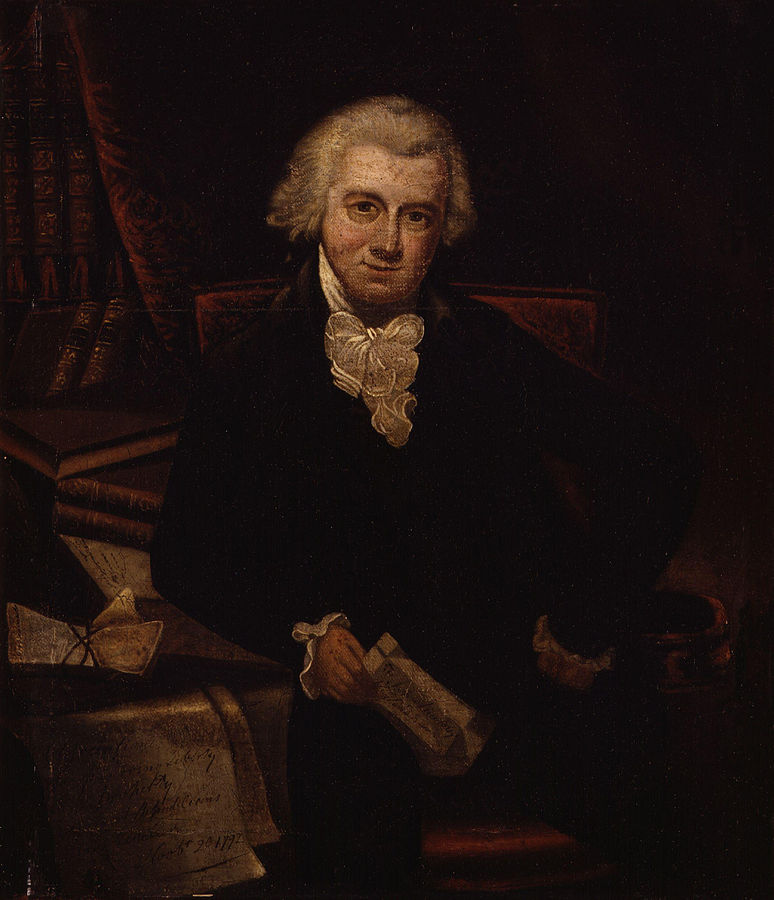
[A]nother lawyer thought that it would be better to answer Paine than to muzzle him. This was John Reeves, an ultra-monarchist barrister andjournalist who in 1792 founded the Association for dish_johnreevesPreserving Liberty and Property Against Republicans and Levellers. (If only the modern Tea Party had resurrected that name.) Later, when Reeves was charged with seditious libel for having written a pamphlet so fulsomely pro-monarchy that it appeared to reduce parliament to a mere appendage, Burke wrote eloquently in his defense, claiming that while the pamphlet had probably gone beyond what was strictly orthodox, its author was guilty of nothing more than a few ill-chosen metaphors.

Within a year of the Association’s first meeting—in a tavern, the Crown and Anchor—there were more than 1,000 clubs spread throughout the kingdom, their mission to halt the spread of Jacobinical ideas among the British public. Modern historians have focused on the Association’s more rambunctious pastimes, like burning Tom Paine in effigy and throwing the occasional radical in the local river, but far more of their effort was spent distributing loyalist literature. Reeves loved the excitement of publishing more than the practice of law, and he took great relish in reprinting suitable tracts—such as the Rev. William Paley’s unselfconsciously titled Reasons for Contentment, Addressed to the Labouring Part of the British Public—and, later, in accepting unsolicited submissions from amateur scribblers eager to help the cause. Prices were kept low partly to entice poorer buyers and partly to allow rich sympathizers to buy literature in bulk and hand it out for free. One pamphlet was listed at “Price only ONE HALFPENNY, or 3s. per Hundred to such as give them away.”

(Image of John Reeves by Thomas Hardy, 1792, via Wikimedia Commons)

The Doob Tube

Michael Tesler tries to measure how “TV helped change attitudes about marijuana”:

The large increase in support for legalization over the past decade was concentrated among Americans who watch a lot of TV. After accounting for other variables, support for marijuana legalization has increased by almost 20 percentage points among individuals who watch at least four hours of TV a day (nearly one-third of the population). Meanwhile, opinions remained relatively static among Americans who do not watch much television.

One his commenters contends that the Internet played a bigger role:

On any 30 minute discussion show, there are at least five minutes of commercials, five minutes of introduction, and five minutes of the host asking questions. That leaves 15 minutes divided by 2. If you speak at 100 WPM, that gives you 750 words to tell all there is to know about the subject. Don’t refer to any books because saying the titles will only waste precious air time, and no one will remember them, anyway. If you don’t win by knockout, you lose.

On the other hand, on the internet, each point can be explained in detail, authoritative references are a click away, and anyone from anywhere can participate for free. Idiots can run their mouths with stupid prohibitionist stuff on TV and get away with it simply because there isn’t time to go through all the stupidity. On the internet, they get handed their heads.