Do Syrians Support A Strike?

YouGov finds little reason to believe so:

More opponents of the regime strongly disapprove of a U.S. military strike than favor it. 81 percent of government supporters, as well as 56 percent of those who prefer not to say. There’s little evidence that ordinary Syrians favor an attack.

In fact, distrust of America is nearly unanimous among Syrian poll-takers. Only 7 percent of those interviewed thought that the U.S. government was “a friend of the Syrian people.” There wasn’t much disagreement on this point among supporters and opponents of Assad. 79 percent of supporters, 61 percent of opponents and 57 percent of non-aligned said the U.S. was “an enemy of the Syrian people.”

What Krauthammer Reveals

Leave aside the fact that the intellectual architect of the Iraq War and of the Bush-Cheney torture program has the gall to call any president “incompetent.”  His column today conveys a very 20th Century mindset. It’s a zero-sum world and the US must control as much of it as possible. So we have this puzzlement:

Take at face value Obama’s claim of authorship. Then why isn’t he taking ownership? Why isn’t he calling it the “U.S. proposal” and defining it? Why not issue a U.S. plan containing the precise demands, detailed timeline and threat of action should these conditions fail to be met?

Because he does not want the US to “own” Syria or this proposal. How’s that for an obvious answer that Krauthammer cannot imagine – because he is so trapped in power trips for a second American Century? But Obama, reflecting American public opinion, is perfectly happy to have Putin assume responsibility for the Middle East. Let Russia be drained, bankrupted and exhausted by managing that fractious and decreasingly important part of the world.

Then we get an honest account of what the architect of the Iraq catastrophe wants now – more enmeshment in the sectarian warfare of the Middle East:

Assad is the key link in the anti-Western Shiite crescent stretching from Tehran through Damascus and Beirut to the Mediterranean — on which sits Tartus, Russia’s only military base outside the former Soviet Union. This axis frontally challenges the pro-American Sunni Arab Middle East (Jordan, Yemen, the Gulf Arabs, even the North African states), already terrified at the imminent emergence of a nuclear Iran.

At which point the Iran axis and its Russian patron would achieve dominance over the moderate Arab states, allowing Russia to supplant America as regional hegemon for the first time since Egypt switched to our side in the Cold War in 1972.

And that would be a terrible outcome for the US because … ? He doesn’t spell it out. Here’s what I think would be a terrible outcome for the US: taking sides in the intra-Muslim endless conflict between Sunni Islam and Shiite Islam. The US has no, zero, zilch, nada reason to take such a position. It infuriates each side in turn – we backed the Shia in Iraq (Krauthammer’s bright idea) and now he wants us to back the Sunnis in Syria. This latter strategy, as Leon Wieseltier explained on AC360 Later the other night, is all about Iran. Where Krauthammer and Wieseltier agree is on perpetual conflict with Iran. Because the other thing they agree on is running American Middle East policy as if it were indistinguishable from Israel’s.

Look: If you accept their premises – that we need to be even more deeply involved in the Middle East, by joining one side in a hugely explosive religious schism – their argument makes sense. But I do not accept the premise. I think engaging in the Middle East to back one sect’s interpretation of Islam over another’s is a mug’s game – as I also think is true of the entire paradigm of unchallenged US hegemony in a uni-polar world. That hubristic, over-bearing posture all but guarantees over-reach and disaster. It has already done a huge amount to destroy this country’s reputation, and thereby soft power. It has led us to alienate almost everyone in the world, including most of our allies. At some point, we ought to question the logic of such a cycle of self-defeat.

And look: We have no serious enemy like we did with the Soviet Union or Nazi Germany. No other power even faintly matches our strength. We are in a different world. Moreover, we are bankrupt as a nation.

There is no American public willingness to get involved, and any prolonged conflict right now would increase the already deep and justified disdain for meddling in the Middle East. (As they did with the Iraq war, Krauthammer and Wieseltier keep offering up the same mindset that has actually sowed the seeds for non-interventionism, but that paradox does not seem to have occurred to them.) Obama, in contrast, wants us, it seems clear to me, to withdraw from such self-defeating power trips and was elected precisely to do so. He is living up to that promise – and I see no reason to listen to the unrepentant architect of the greatest foreign policy fiasco since Vietnam when he’s simply calling – again – for a return to Bush-Cheney era policies.

This has not been Obama’s finest hour or finest month. But that should not mean taking the neocon bait of another endless, draining war in a region which has already done its bit to bankrupt us both morally and fiscally. The pressure on Obama to cave to these discredited experts is to be expected. They love to shriek and bully. The test now is not whether Obama can jump through enough hoops to please them (something he will never do anyway). The test is whether Obama can keep us out of that region’s metastasizing war and throw Putin into that nightmare. Just stop arming the Syrian rebels and don’t turn down Putin’s offer to take responsibility for all of it. Then get back to the crucial domestic challenges of immigration, healthcare and the small problem that the entire federal government could be shut down within a week.

Clarity Through Dark Comedy

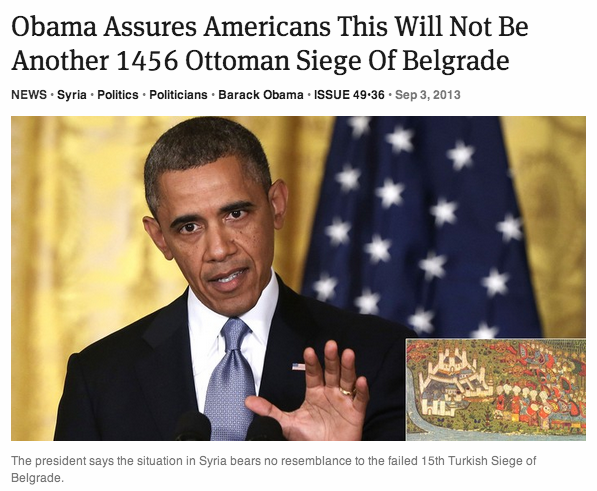
Screen Shot 2013-09-11 at 4.26.50 PM

Kabul-based journalist Tom A. Peter contends that The Onion has published some of the best commentary on Syria in recent weeks:

It can be exasperating playing it straight when you write news about a situation that regularly produces absurd scenarios. The Onion’s format allows its writers to plainly make sense of ridiculous situations that can be difficult to explain or fully appreciate in a normal news article.

During many of the trips I made into Syria, I met conservative people who supported the insurgents who used to fight Americans in Iraq, yet these same people were now calling for the same U.S. soldiers they wanted to kill six or seven years ago in Iraq to come to their aid with an intervention in Syria. Meanwhile, as of at least March, the CIA has been compiling a list of targets for potential future drone strikes inside opposition-controlled Syria, according to the Los Angeles Times. The Onion managed to explain this dark, complicated reality in just one fake headline: “Target Of Future Drone Attack Urges American Intervention In Syria.”

Head writer Seth Reiss discusses the site’s approach:

I think one thing we have tried to do with our content is humanize the Syrian people. For example, this piece isn’t calling for U.S. intervention so much as it’s saying that these are people with mothers and fathers and sons and daughters who, obviously, value their lives and relationships. It would be too easy and doing a disservice to the issue to stake out some sort of hardline resolute position i.e. “We should not intervene!” or “We should intervene!” It’s murkier than that. And in that murkiness there is comedy. Dark comedy, but comedy nonetheless.

(Screenshot from this Onion story. Recent Dish on the satire site here.)

Assad’s Terms

In an interview about the destruction of Syria’s chemical weapons, Assad declared that, “When we see the United States really wants stability in our region and stops threatening, striving to attack, and also ceases arms deliveries to terrorists, then we will believe that the necessary processes can be finalized.” Ezra focuses on Assad’s demand that America stop arming the rebels:

Assad is demanding the U.S. choose between its goals of enforcing the ban against chemical weapons and getting Assad out of power.

Right now, Assad’s got the upper hand in Syria’s civil war. The U.S. could change that in two ways. One is directly bombing Assad’s military assets. The other is aggressively training and arming the opposition — something we’re really only just beginning to do.

The discussion around the Syria disarmament deal has mostly focused on defusing the U.S.’s threat to bomb Assad. But what Assad is saying here is that’s not good enough: The U.S. also needs to stop arming his enemies. That means the real cost of destroying Assad’s chemical weapons is watching him crush the opposition and retain power.

“Syria Is Not A Country”

That phrase passed my lips last night on “AC360 Later”, in a heated and, I thought, really interesting discussion. I was pounced on as prejudiced or misinformed or even channeling neoconservatism. So I thought I’d take this opportunity to explain what I mean by that.

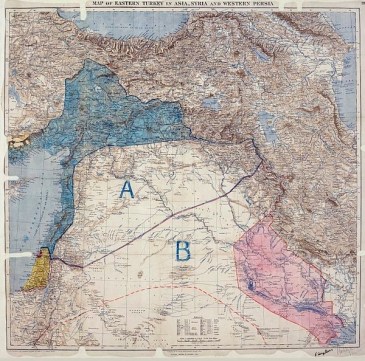
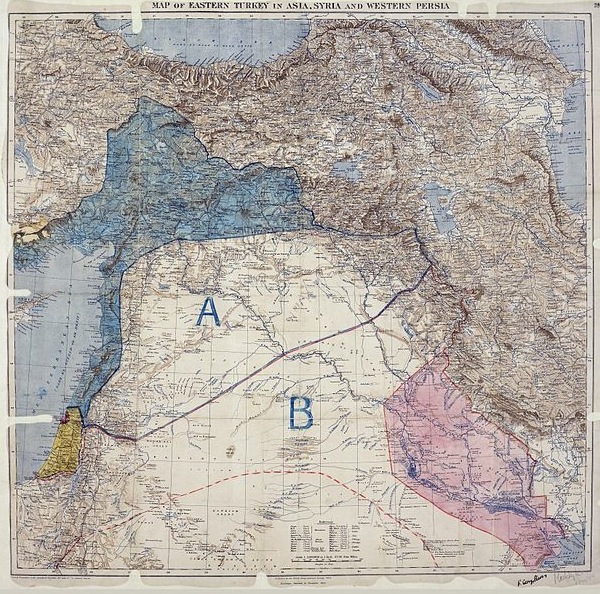
Syria as we now know it was created by one Brit, Mark Sykes, and one Frenchman, Francois Georges-Picot in 1920. Originally, it included a chunk of Iraq (another non-country), but when oil was discovered there (in Mosul), the Brits wanted and got it. With that detail alone, you can see how valid the idea is of a Syrian “nation” is. Certainly no one living in Syria ever called the shots on the creation of the modern 655px-mpk1-426_sykes_picot_agreement_map_signed_8_may_1916state. More to the point, it was precisely constructed to pit a minority group, the Shiite Alawites, against the majority, Sunni Arabs, with the Christians and the Druze and Kurds (also Sunnis) as side-shows. Exactly the same divide-and-rule principle applied to the way the Brits constructed Iraq. But there they used the Sunni minority to control the Shiite majority, with the poor Kurds as side-kicks again.
You can see why colonial powers did this. How do they get a pliant elite of the inhabitants of their constructed states to do their bidding? They appeal to the minority that is terrified of the majority. They give that minority privileges, protection and military training. That minority, in turn, controls the majority. It’s a cynical policy that still reverberates today: the use of sectarianism as a means to maintain power. Over time, the Alawites in Syria and the Sunnis in Iraq entrenched their grip on the state and, as resentment of them by the majority grew, used increasingly brutal methods of oppression to keep the whole show on the road. You can see how, over time, this elevates sectarian and ethnic loyalties over “national” ones. Worse, it gives each group an operational state apparatus to fight over.

The only time of relative long-term stability in the area we now call Syria was under the Ottoman empire which effectively devolved government to local religious authorities. The empire was the neutral ground that kept the whole thing coherent – a monopoly of external force that also gave the Shia and the Sunnis and the Christians their own little pools of self-governance.

Remove that external force and create a unitary state and you have the recipe for permanent warfare or brutal, horrifying repression. It is no accident that two of the most brutal, disgusting dictators emerged in both countries under this rubric: Saddam and Assad.

Now check out Syria’s history after it gained formal independence from the French in 1936 and operational independence after the Second World War in 1946:

There were three coups in the first ten years and with each one, the power of the military (dominated by Alawites) grew. Then in 1958 Syria merged with Egypt – to create the United Arab Republic. One test for how viable and deeply rooted Syria is as a nation? It dissolved itself as such as recently as six decades ago.

When Syria quit the merger with Egypt in 1961, yet another coup soon followed, later followed by another coup in 1970 that brought the Assad dynasty to power. The brutality of that dynasty kept the Sunnis under control, but not without a serious revolt from the 1970s on that eventually resulted in the 1982 massacre in Hama – a bloodletting of unimaginable proportions. Assad killed up to 40,000 Syrians in that bloody rout.

The point I’m making is a simple one. The reason we have such a brutal civil war right now is the same reason we still have a brutal civil war still going on in Iraq. The decades’ long, brutal oppression of a majority group has finally broken with the Arab Spring. All the tensions and hatreds and suspicions that built up in that long period of division and destruction are suddenly finding expression. Inevitably, this will mean much more sectarian bloodletting in the short, medium, and long run. It may mean an endless cycle of violence. The idea that these parties can reach a political agreement  to end the civil war in the foreseeable future is as plausible in Syria as it was in Iraq. It still hasn’t happened in Iraq – after over 100,000 sectarian murders and an exhausting civil conflict – and after we occupied it for a decade and poured trillions of dollars down the drain.

Any political solution to Syria is more than a heavy lift. It’s an impossible one. Only the parties involved can make it happen and none of them is anywhere close to that right now. For the US to take responsibility for this mess, to take on the task of finding a negotiated settlement, would be as quixotic as it would be bankrupting – of both money and human resources. By luck or design, Obama has now handed that responsibility to Putin. He’s welcome to it.

America, the anti-imperial nation, has no business trying to make British colonial experiments endure into the 21st Century. No business at all. It’s a mug’s game – and no one in the region will ever, ever give the US credit or any tangible benefits for the Sisyphean task. We will be blamed for trying and blamed for not trying. We will be blamed for succeeding and blamed for failing.

Which is why, absent the threat to the US of the chemical weapons stockpiled in that “country”, the United States must resist any inclination to get involved or take responsibility. That’s why the CIA’s arming of the rebels is so self-destructive to this nation. Once you arm and train a foreign force, you are responsible in part for its fate. And that kind of responsibility – for a bankrupt America, with enormous challenges at home – is one we should pass to others. Which we have. What we need to do now is grasp the Russian offer with both hands and slap the CIA down. No responsibility doesn’t just mean no war. It also means no covert war.

Is that something the president truly grasps? I sure hope so.

(Illustration: Map of Sykes–Picot Agreement showing Eastern Turkey in Asia, Syria and Western Persia, and areas of control and influence agreed between the British and the French. Signed by Mark Sykes and François Georges-Picot, 8 May 1916.)
The State Of The Displaced

Syrian Refugees Arrive In Germany

Chris Bertram uses the anniversary of the Chilean coup to evaluate changing attitudes toward refugees:

One thing that has changed greatly since 1973 is the sense of obligation of states in the “West” to the victims of persecution. However many Brothers are slaughtered in Egypt, they will find it very difficult to make their way to the United Kingdom in order to claim asylum. Certainly, no British government will be making it easy for them, just as they have taken steps to prevent the arrival of Syrians. Should any “Chileans” of today arrive in a boat in Australia they will not be able to make a new life, but will be sent to rot in a camp in Papua New Guinea.

Matt Lister complicates this argument:

I’m not sure how useful it is to talk about “western” attitudes towards refugees here in this period. There’s too much variation, going in different ways. The U.S. and Canada, for example, mostly got better on refugees after the late 70′s, though there are still lots of problems. Australia got worse, and Germany got worse, though for rather different reasons and in different ways, and at somewhat different times. I expect that we’d see other trends in different countries. But, talking about “western” attitudes here is just too broad to be useful.

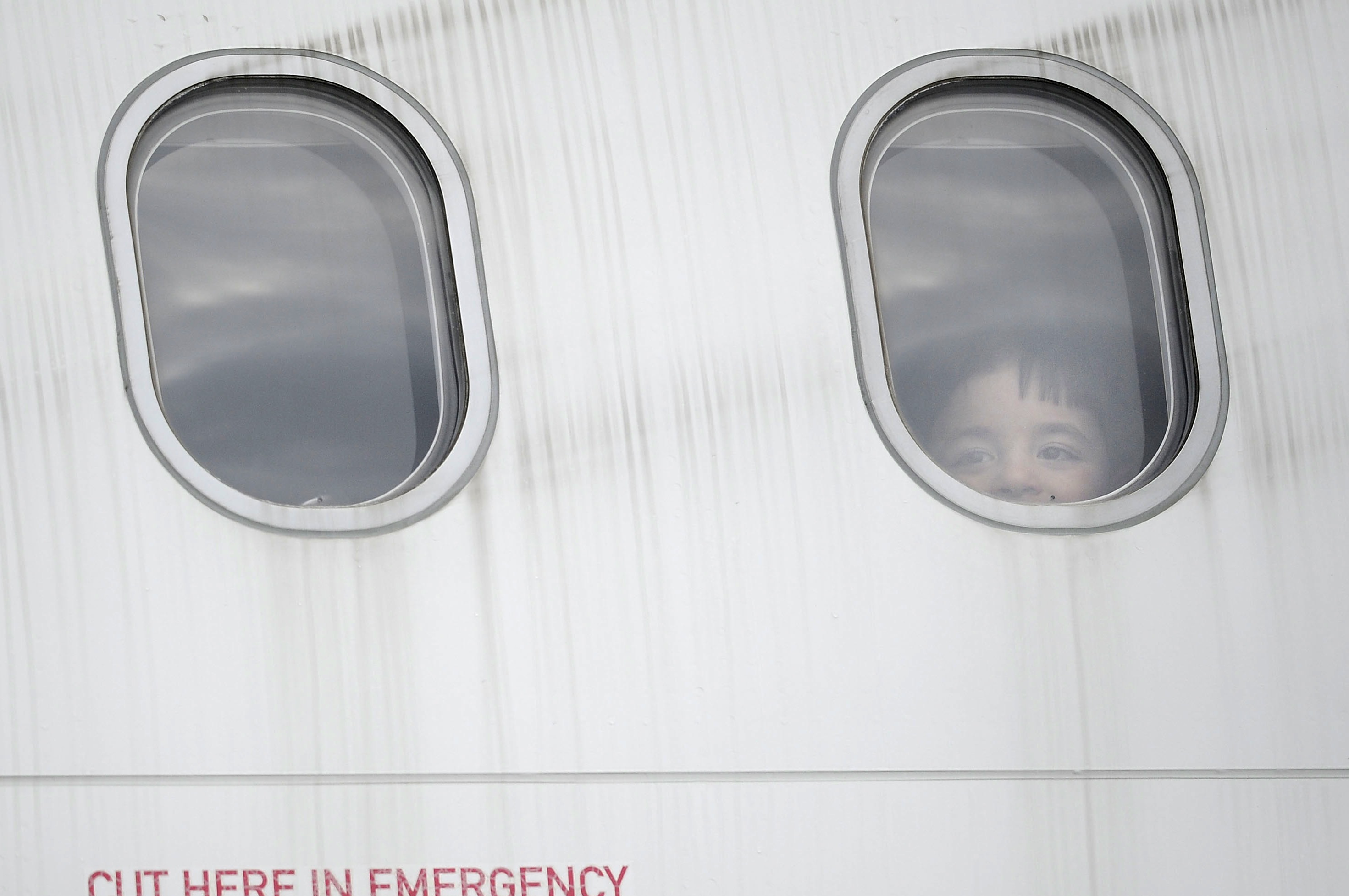
(Photo: A young Syrian refugee peers out of the window of an airplane after arriving at Hanover Airport in Hanover, Germany on September 11, 2013. One hundred and seven Syrian refugees arrived in Hanover from refugee camps in Lebanon as part of a resettlement program that will allow them to stay in Germany for two years. They are the first group of refugees who have been offered asylum in Germany after being deemed vulnerable by the United Nations High Commissioner for Refugees, having escaped the ongoing conflict in Syria. By Alexander Koerner/Getty Images)

The Neocon Fantasy Machine Rolls On

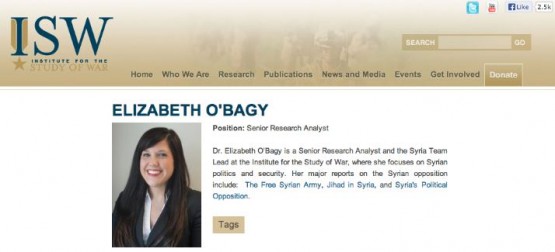
OBagy-555x252

The Kagans – so many you can barely keep track of them – are a particularly Washington clan. Like other neocons – the Podhoretzes and Kristols come to mind – the family occupies various posts and play assorted roles in advancing the idea of US global hegemony, constant interference in other countries (but never Israel!), and warfare. They played a key part in deceiving much of official Washington – wittingly or not – about the situation in Iraq, and thereby bear responsibility for the catastrophe that followed. Their “surge” subsequently failed to achieve what it was designed for: getting a multi-sectarian government with lower levels of mass violence in Iraq. You can see how utterly divorced from reality that pipe-dream was by just reading the news reports daily of the low-burning civil war there every day.

So is anyone surprised they were duped again? Zack Beauchamp (former Dishtern) gives a great account of the sorry story of how the woman who became one of the more conspicuous advocates for full-scale entry into another Middle East civil war was not what she said she was. Elizabeth O’Bagy lied to Kimberley Kagan about her doctorate and Kagan never checked it out before putting her Institute for the Study of War on record behind it:

Over the course of roughly a year, [O’Bagy] went from a graduate student and intern to a pundit making regular appearances on Fox News and being published in Foreign Policy, The Atlantic, and well, The Wall Street Journal. She was promoted to Senior Analyst and then to Syria Team Lead at ISW, and had become known as a go-to expert on the Syrian rebels among foreign policy experts.

It’s a classic example of how dubious actors with vague backgrounds can ascend so rapidly in Washington as long as they are parroting one faction’s preferred version of the truth. This isn’t unique to the neocons, of course. But since they currently hold the world record in being duped and duping others on matters of war and peace, the fact that this is still happening – especially after the lies and bullshit that occurred before the war in Iraq – is instructive that these people never learn.

These were the people touting Chalabi, remember? These were the people telling us there was no serious sectarian issue in Iraq under Saddam and a civil war was highly unlikely if we invaded. These were the people dismissing the notion in advance that we did not have enough troops to secure the country. These were the people – once trapped in their own delusional universe – that sanctioned grotesque and endemic torture of prisoners as a way to get out of it.

It sickens me to see this same propaganda machine wheeled into action again, and to see Washington take it seriously. But it heartens me as well that this unreliable person and demonstrable liar has been exposed. May she be the first of many.

Vladimir Putin, Meet Niccolo Machiavelli

RUSSIA-PUTIN-SECURITY-COUNCIL

President Putin’s op-ed in the NYT today is fantastic. It’s a virtual end-zone twerk, as this botoxed former KGB hack brags about restoring a more peaceful world order, basks in the relatively new concept of Russia’s global stature, asserts obvious untruths – such as the idea that the rebels were behind the chemical attack of August 21 or that they are now targeting Israel – and generally preens.

Good. And whatever the American president can do to keep Putin in this triumphant mood the better. Roger Ailes was right. If the end-result is that Putin effectively gains responsibility and control over the civil war in Syria, then we should be willing to praise him to the skies. Praise him, just as the far right praises him, for his mastery of power politics – compared with that ninny weakling Obama. Encourage him to think this is a personal and national triumph even more than he does today. Don’t just allow him to seize the limelight – keep that light focused directly on him. If that also requires dumping all over the American president, calling him weak and useless and incapable of matching the chess master from Russia, so be it. Obama can take it. He’s gotten used to being a pinata.

All this apparent national humiliation is worth it. The price Russia will pay for this triumph is ownership of the problem. At some point, it may dawn on him that he hasn’t played Obama. Obama has played him.

Which brings me to Machiavelli, the great intellectual master of power-politics. Most pundits use the term “Machiavellian” to mean whoever in the arena seems more successful at scheming, plotting, double-crossing, intimidating, and maneuvering. But Machiavelli himself had a different idea of what a true Machiavellian looks like: a kind, simple, virtuous naif.

Here’s the master making the point in The Prince:

Pope Alexander VI had no care or thought but how to deceive, and always found material to work on. No man ever had a more effective manner of asseverating, or made promises with more solemn protestations, or observed them less. And yet, because he understood this side of human nature, his frauds always succeeded.

It is not essential, then, that a Prince should have all the good qualities which I have enumerated above, but it is most essential that he should seem to have them; I will even venture to affirm that if he has and invariably practices them all, they are hurtful, whereas the appearance of having them is useful. Thus, it is well to seem merciful, faithful, humane, religious, and upright, and also to be so; but the mind should remain so balanced that were it needful not to be so, you should be able and know how to change to the contrary.

Notice the characteristic wit in praising true deception … in a Pope! Old Nick was funny – in fact, the only consistently funny political theorist. But notice too that the individual who seems the least Machiavellian is often the most. What you need to do is get past appearances and look coldly at the result of any course of action, and whose interests it really advances.

My view is that the US’s core interest is in not owning the Syria conflict, while making sure its chemical stockpiles are secure or destroyed. I think Obama’s worst mistake was not the WMD “red lines” comment (though that was unwise). It was his original public statement that Assad must go. Given that he runs the most powerful military machine ever assembled on planet Earth, that statement gave him some responsibility for what would happen next in Syria, without any core idea of where that conflict might lead. And the goal of the US in this conflict right now is not to own it. That is more important than the question of “boots on the ground” or not.

The core question is:

Are we seeking responsibility for resolving this ghastly sectarian bloodbath? I believe we have to have the steely resolve to act on our core interests – after bankrupting ourselves fiscally and morally next door in Iraq – to say no.

And the moments when Obama has risked owning this conflict have always been his low points. From that early high-minded and unnecessary statement on Assad to his impulsive declaration of intent to use force in August, he deeply worried the American people and Portrait_of_Niccolò_Machiavelli_by_Santi_di_Titothe world that the US could be getting into more responsibility for yet another Middle East sectarian bloodbath. But he has nimbly pivoted back from these positions – finding his way back to a more GHW Bush posture rather than a GW Bush one.

But the upshot right now – so far as I can see – is that Russia and not America now owns this conflict. It is Putin who is on the hook now – and the more Putin brags about his diplomatic achievement the more entrenched his responsibility for its success will become. And that is perfectly in line with Russia’s core interests: Putin is much closer to Syria than we are; he must be scared shitless of Sunni Jihadists who now loathe him and Russia more than even the Great Satan getting control of WMDs. Those chemical weapons could show up in Dagestan or Chechnya or the Moscow subway. It is Putin – and not Obama – who is therefore much more firmly stuck between the Sunnis and the Shia in Syria – not to speak of the Christians.

Of course, this argument only makes sense if you don’t believe the US is best served by being responsible for the entire Middle East, and by being the only major power seriously invested there. If your goal is US global hegemony, this was a very bad week. But if your goal is to avoid the catastrophe that occurred in Iraq, to focus on the much more important foreign policy area, Asia, and to execute vital domestic goals such as immigration reform and entrenching universal healthcare … then the result looks pretty damn good. Or at least perfectly good enough.

So when the inevitable cries of “Who lost the Middle East?” are raised by the neocon chorus, one obvious retort remains. Of all the regions in the world, wouldn’t the Middle East be a wonderful one to lose? You want it, Vladimir? Be our guest.

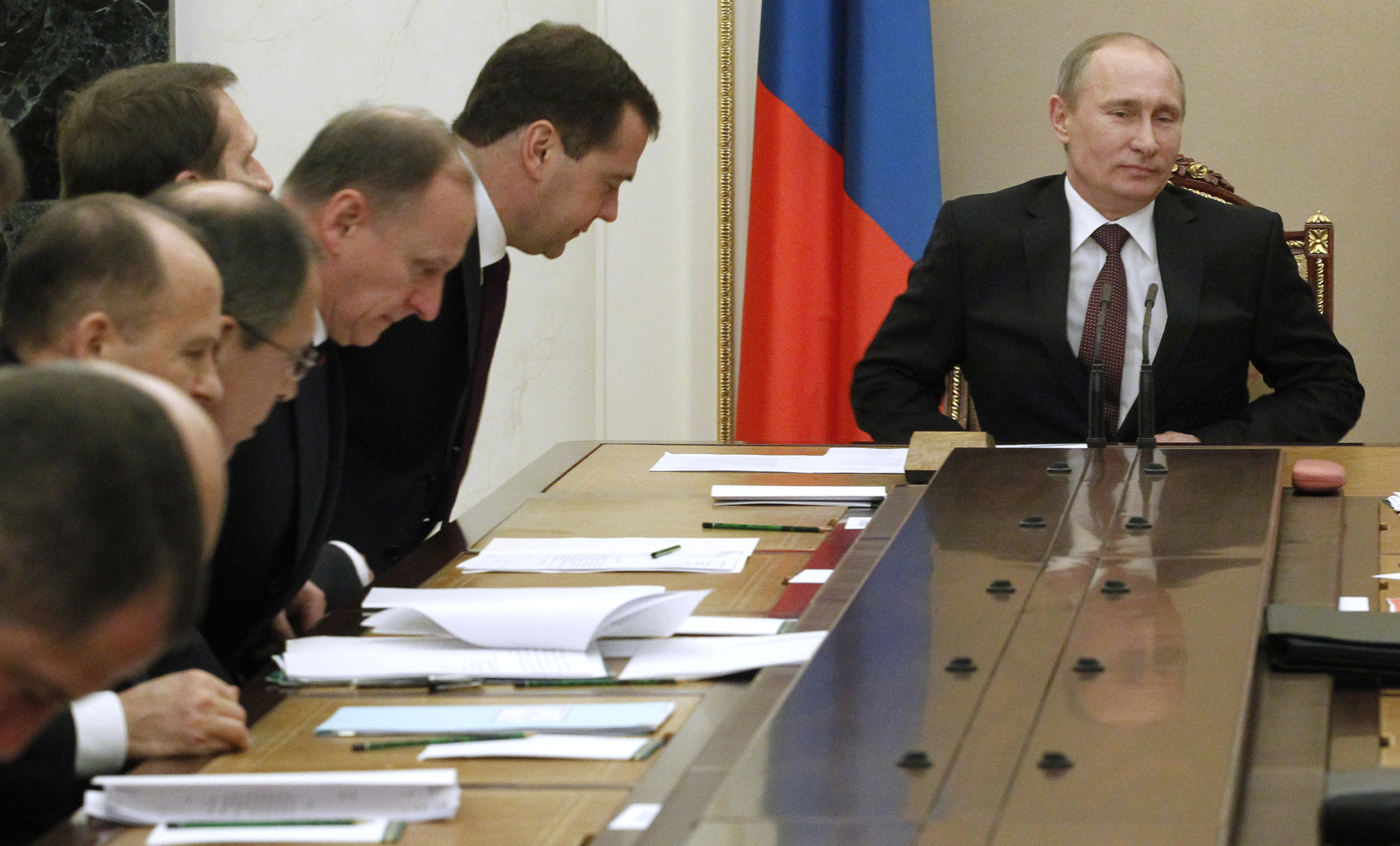
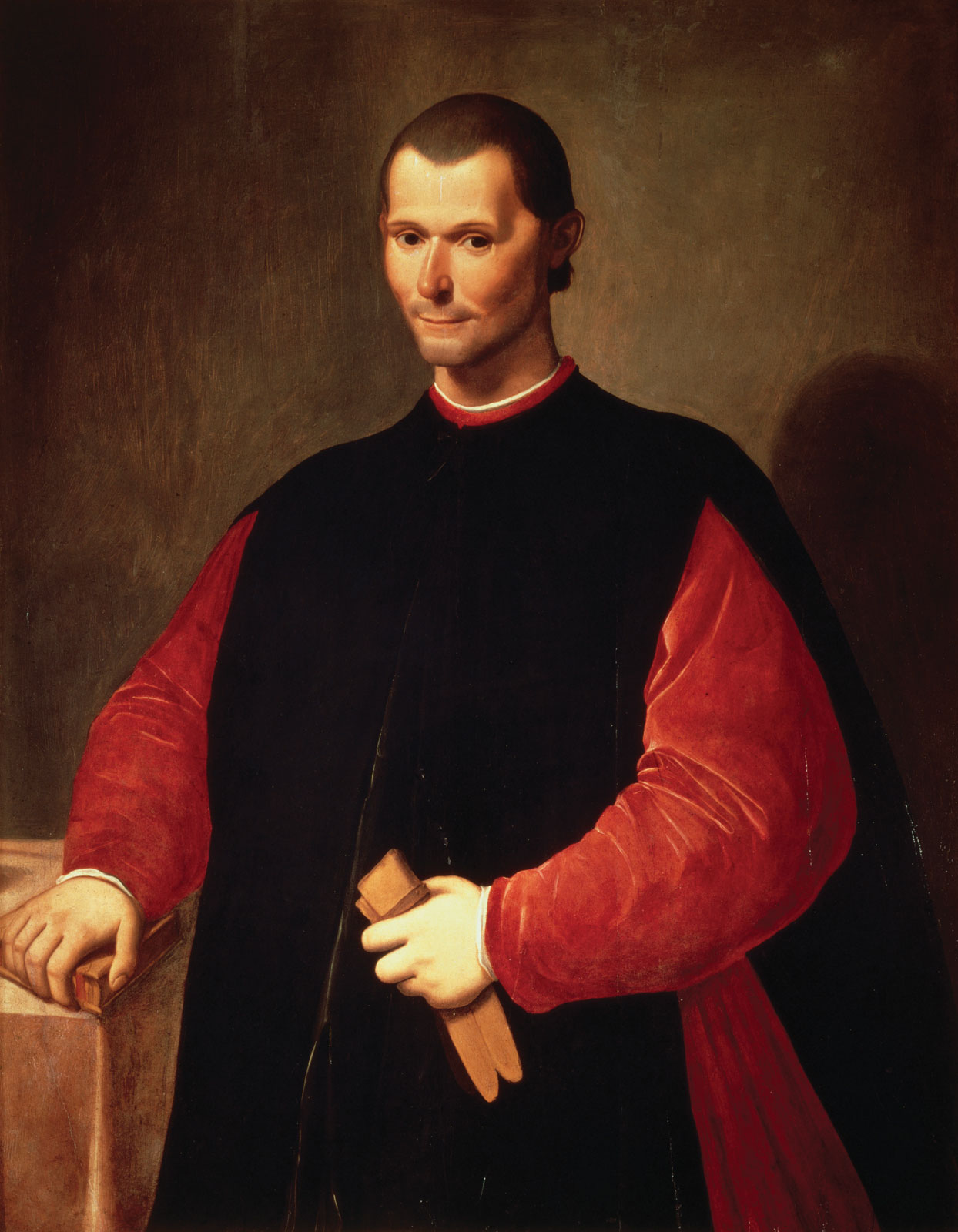
(Photo: Russian President Vladimir Putin chairs a Security Council meeting at the Kremlin in Moscow, on November 21, 2012. By Mikhail Metzel/AFP/Getty. Painting: Niccolo Machiavelli by Santi Ti Dito.)

The Difficulty Of Destroying Chemical Weapons, Ctd

Dieter Rothbacher acknowledges that destroying Syria’s chemical weapons during a civil war “would be dangerous and perhaps impossible.” But securing those weapons would be a much easier task:

[S]ecuring the stockpiles — sealing existing storage buildings after an initial inventory — might be possible within a matter of weeks. It would also involve a lot less technical equipment. First, Syria would have to declare what they have, where it is, how it is stored and where and how it was produced. A team on the ground could then conduct a first site assessment and an inventory of all known storage, production and research facilities. After this, stockpiles could be secured by sealing bunkers and installing monitoring equipment.

Jeffrey Lewis points out that 1990s destruction of Iraqi chemical weapons was carried out in less than two years:

Prior to destruction, the United Nations consolidated Iraq’s stockpiles. Consolidating Syria’s chemical weapons stockpile would prevent their use by the military. The international community could consolidate Syria’s chemical weapons in a third country, where destruction could occur at a more leisurely pace. Jordan, for example, has made clear its preference for a diplomatic solution to this crisis. Here is Amman’s chance to step up.

Earlier Dish on the logistics of chemical weapons destruction here.

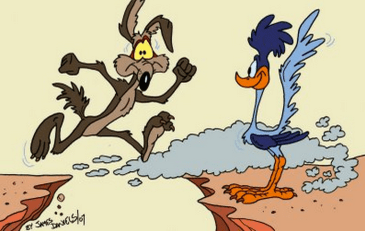
Another Meep-Meep Moment? Ctd

Readers keep the spirited debate going:

This talk of a meep-meep is absurd and could only be dreamed up by Obama-bots who are just as determined to wear rose-colored-glasses with all-things Obama as you declare the Right to be obstructionist against his every move. The only crisis averted was Obama’s crisis of accountability for his red-line stance on Syrian use of chemical weapons.  The actual crisis that you and Obama keep talking about, the fact of chemical weapons being controlled and used by madmen like Assad (and/or the Islamist rebels, take your pick), is far from resolved.

A wiser person would reserve the victory dance and cheers until some Screen Shot 2013-09-11 at 4.47.16 AM actual, verifiable results are forthcoming from the Russians and Syrians in producing and destroying their chemical WMD stockpiles.

Given the basement-level of trust any sane person would place in the parties involved here, extreme skepticism would seem to be warranted towards this agreement.  The appearance of progress was certainly made Tuesday – unless the primary concern was making progress towards finding a face-saving way out for Obama.  From your writing this week, it seems the latter was a more dire concern at the Dish.

I remain convinced that the actual issue of concern here remains far from resolved, and that all that has been accomplished is to kick the can down the road, postponing what is likely to be a renewed call for intervention by the U.S. in the near future.  I fully expect Syria and chemical weapons inspections, or lack thereof most likely, to still be in the news six months from now.  It will be interesting to see if Obama then ultimately follows through with his “serious threats” of “unbelievably small” attacks if (when?) Russia/Syria fail to meet their obligations.  Or whether the goalposts start getting moved by Kerry and Obama.  We shall see.

I have a post in process (update: now posted) that addresses some of these points. But my basic answer is this: what Obama has achieved is an unprecedented concession from Assad, and a much, much higher likelihood that chemical weapons will not be used again in this conflict in the way they just were. Fr0m my point of view, that’s our fundamental interest right now. And Obama has secured it – for a while. But unless we truly want Assad’s fall soon – and we obviously don’t – buying time is a perfectly good option. Another reader:

You seriously need to read James David Barber’s Presidential Character, about the primary traits of presidents and how they can predict presidential behavior. It will give you a good idea of what Obama is doing at any given moment because once you figure out what an Active-Positive is capable of then you know what Obama is capable of.

The key trait of an Active-Positive is Adaptive. Lincoln, for example, constantly looked like he was wavering between every issue during the conduct of the Civil War but in fact he was trying out every possibility towards a larger goal. Much like he wrote to Horace Greeley in that famous letter, if Lincoln had to free the slaves to preserve the Union he would; if he couldn’t to preserve the Union he would; if he freed only a portion of the slaves (the Emancipation Proclamation) he would do that. Lincoln was proved right: the Proclamation effectively blocked any European involvement and made more Union supporters into supporting the eventual end of slavery.

Adaptive A-P Presidents are more keen on compromise than the other three types (Active-Negatives won’t, Passive-Negatives might but would rather let someone else do it, Passive-Positives never want to rock any boat), and are certainly more creative in their solutions and in seeking alternate solutions as well. While the Active-Positive may look like a flip-flopper (especially to the more extremist wing of the president’s party) he’s actually shrewdly calculating the “long game” of getting his enemies to trip over themselves and his allies standing there gawking like they’ve never seen the Hand of God before.

I don’t buy into the current “story” that Obama got Kerry to float the chemical weapons solution that the Russian government quickly seized as a viable diplomatic answer. It really does look like Kerry pulled a gaffe. The genius of an Active-Positive President is to seize a gaffe and turn on a dime into making that gaffe work to his advantage.

The bad news about all this? Well, you see it makes you into the Horace Greeley of the story. Sorry (insert meaningful sympathetic pat on the back here). Hope you don’t mind. Meep-Meep.

Another:

You thought the money quote from Obama’s speech was when he agreed that the United States should not be the world’s policeman. Unfortunately, Obama contradicted this sentiment moments later with this:

My fellow Americans, for nearly seven decades, the United States has been the anchor of global security.  This has meant doing more than forging international agreements – it has meant enforcing them.  The burdens of leadership are often heavy, but the world is a better place because we have borne them.

Last time I checked, one who enforces laws is a policeman. Although in this case, the U.S. is the self-appointed policeman. Likewise, Andrew, you are talking out of both sides of your mouth.

You claim that Obama is moving us towards a world that is less dependent on the power of the U.S and strengthening international cooperation. Obama (and his “cast-iron balls“) did this by proposing unilateral humanitarian bombs be dropped. This is wonderful community organizing. To nudge diplomacy along sometimes you need to threaten unilateral strikes. Without threats, diplomacy is just “meaningless blather” – got it. To avoid wars, we need to threaten war. I am doubtful these tactics will take us to a better place.

Chill out with the Obama hagiography; leave that to MSNBC.

Wow: the notion that the credible threat of force may make diplomacy more effective seems a strange idea to my reader. Yet it is a core feature of international relations, with successful examples littering history. And it has taken us to a better place. Syria has admitted its chemical weapons stockpile and agreed to sign on to the Chemical Weapons Convention. Another piles on:

I appreciate the way you present things, the way you get all worked up, and the way things generally work out for you, but sometimes, you seem a bit shrill when defending yourself against the readers who question you. Here’s a good example: “Has it occurred to my reader that it was necessary to actually risk another war to get the diplomatic solution we now have? ”

This was one of your responses to criticism for your seeming about-face on Obama’s performance in this Syria fiasco. It seems very flippant and smug, because I’d immediately turn it back on you, and ask: “Did it occur to YOU, at the time when you were shrieking about his leading us to war, that it was necessary to actually risk another war to get the diplomatic solution we now have?”

Another quotes me:

And you don’t have to argue that Obama is some kind of Jedi warrior who saw all this from the start (a silly idea) to see that he was able to pivot, shift, test, improvise and flush out new options in a horrible situation as the crisis careened from one moment to another.

Amen to that. Watching Serious Foreign Policy Experts debate this on TV has been mind-boggling, as they all appear to have that same “silly” expectation. But really, solving difficult problems rarely works that way, where leaders announce a goal from on high, draw a straight line from A to B, and then follow that line. Rather, Albert Herschmann had it right in 1967 when he wrote about the “Principle of the Hiding Hand.” The entire essay [pdf] is worth a read, especially for those working in or around global development.  Money quote:

Creativity always comes as a surprise to us; therefore we can never count on it and we dare not believe in it until it has happened. In other words, we would not consciously engage upon tasks whose success clearly requires that creativity be forthcoming. Hence, the only way in which we can bring our creative resources fully into play is by misjudging the nature of the task, by presenting it to ourselves as more routine, simple, undemanding of genuine creativity than it will turn out to be.

Or, put differently: since we necessarily underestimate our creativity it is desirable that we underestimate to a roughly similar extent the difficulties of the tasks we face, so as to be tricked by these two offsetting underestimates into undertaking tasks which we can, but otherwise would not dare, tackle.

This isn’t the most comforting truth in the world (especially, it seems, for the pundit class), but it’s a truth nonetheless.

Another reader:

In taking account of the President’s actions regarding Syria, and reading your view of this, I can’t help but thinking of this scene from the West Wing:

I know you can be lukewarm when it comes to Sorkin’s work, and maybe others have already sent this along as well, but it keeps running through my head as I watch the way this thing in Syria unfold (and hope it continues to).  I don’t believe that the President had all of this in mind from the start, but I think he was smart and nimble enough to see an opportunity and willing to be misunderstood for a period of time.