The Climate For Chaos

Francesco Femia and Caitlin Werrell see evidence that climate change and drought helped cause the Syria conflict. Here’s Femia:

We found it very interesting that right up to the day before the revolt began in Daraa, many international security analysts were essentially predicting that Syria was immune to the Arab Spring. They concluded it was generally a stable country. What they had missed was that a massive internal migration was happening, mainly on the periphery, from farmers and herders who had lost their livelihoods completely.

Around 75 percent of farmers suffered total crop failure, so they moved into the cities. Farmers in the northeast lost 80 percent of their livestock, so they had to leave and find livelihoods elsewhere. They all moved into urban areas — urban areas that were already experiencing economic insecurity due to an influx of Iraqi and Palestinian refugees. But this massive displacement mostly wasn’t reported. So it wasn’t factoring into various security analyses. People assumed Syria was relatively stable compared to Egypt.

Drum summarizes what we do and don’t know about climate change’s connection to conflict:

Climate scientists have been warning for over a decade that global warming is going to produce environmental stresses and severe weather patterns that will have devastating impacts on countries that are none too stable to begin with. As always, there will never be proof that any particular war is due solely or even primarily to climate change, just as no particular hurricane is ever solely the product of climate change. But the evidence is striking—and getting more striking all the time—that climate change very likely plays a role.

Dead Children As Talking Points, Ctd

Fallows wants officials to “to stop basing appeals for international action on the ‘see the videos of children dying horribly’ theme”:

[T]o mention the suffering of children does not settle political, strategic, or even moral questions. You can argue that the Hiroshima and Nagasaki bombs were historical necessities and even “merciful” in some way, in averting later and much larger numbers of Japanese and American deaths during an invasion. You can argue the reverse. Either way, little children had their flesh roasted as they walked to school or happily played. Their suffering does not answer the “was Truman right?” or the “is deterrence moral?” questions. The suffering of people in New York, Washington, and Pennsylvania 12 years ago today did not answer the “should we invade Iraq?” question. The Syria videos tell us that something horrible happened, not what we should do about it.

Earlier Dish on the subject here.

“If Only …”

A reader writes:

You wrote: “If only such an offer had been possible in Iraq in 2003.”

Not only was it possible but it actually happened. I’m astonished at how many people forget that In late 2002 Saddam Hussein, in a letter to Hans Blix, invited UN weapons inspectors back into the country. I remember thinking at the time that we didn’t have to go to war and that this had been all brilliantly played by the Bush administration. This turned out to be quite a naive thought.

Then we went to war anyway.

If Obama exercises restraint here, then we have insight into how he would have handled Iraq in 2003 and it would have been taking yes for an answer when Saddam Hussein capitulated.

I stand corrected.

The Difficulty Of Destroying Chemical Weapons

Keating underscores it:

Both Russia and the United States have more than 20 years of technical experience in chemical weapons destruction, but as I noted yesterday, both countries’ efforts to destroy their Cold War-era stockpiles have been years behind schedule. Sometimes these delays are political—public protests in the United States prompted a shift from incineration to chemical treatments at several U.S. facilities—but often they’re due to the understandable technical challenges of disassembling some of the deadliest weapons ever created.

Mark Thompson goes into detail on US efforts to dispose of its own CW stockpiles:

It has taken the Pentagon far longer (the original completion date was 1994), and cost far more money (the original estimate was between $1 billion and $3 billion), to destroy its chemical weapons.

To date, the U.S. has destroyed, primarily by burning, 89.75% of the arsenal at seven of those nine [chemical weapons] sites: Johnston Island in the Pacific; Anniston, Ala.; Pine Bluff, Ark.; Aberdeen, Md.; Umatilla, Ore.; Newport, Tenn.; and Tooele, Utah. The remaining 10% is slated to be neutralized using new techniques. Current plans call for the 8% of the original stockpile remaining at Pueblo, Colo., to be rendered safe using a biotechnological process by 2019, while the 2% at the Blue Grass, Ky., is scheduled to be to be neutralized using what the Pentagon calls “super-critical water oxidation” by 2023.

Yochi Dreazen looks at how hard destroying CWs has been in Libya:

[Cheryl Rofer, who supervised a team responsible for destroying chemical warfare agents at the Los Alamos National Laboratory,] noted that Syria has far more chemical weapons than Libya, so getting rid of them could take even longer. “I wouldn’t be surprised to see this last as long as ten years,” she said.

If the U.S. and Syria came to a deal — a very, very big if — there would still be one major wrinkle. Rofer said that the only two organizations who really know how to get rid of chemical weapons are the Russia and American militaries. Given the amount of time it would take to build and then operate the disposal facilities, those specially-trained troops would need to stay in Syria for years. In a war-weary U.S., keeping that many boots on the ground for that long would be an extremely hard sell.

Larison agrees:

When we consider how adamant most Americans and even most members of Congress have been that the U.S. avoid sending ground forces into Syria, it is obviously a non-starter in Congress and with the public to suggest that American soldiers be sent into Syria for years as part of a weapons disposal effort. Such a scenario disturbingly echoes the mistakes of the Lebanon and Somalia missions. Then again, why would the Syrian government accept American soldiers on its territory for any reason? Considering how ineptly the administration has justified its proposed attack on Syria, I don’t see how they could possibly persuade Congress or the public to support what would prove to be a much longer, more significant commitment than the “unbelievably small” attack they had been advocating earlier.

The Journalistic Ethics Of The WSJ Op-Ed Page, Ctd

The latest on Elizabeth O’Bagy, the lobbyist for the pro-war Syrian Emergency Task Force:

The Syria researcher whose Wall Street Journal op-piece was cited by Secretary of State John Kerry and Sen. John McCain during congressional hearings about the use of force has been fired from the Institute for the Study of War for lying about having a Ph.D., the group announced on Wednesday. “The Institute for the Study of War has learned and confirmed that, contrary to her representations, Ms. Elizabeth O’Bagy does not in fact have a Ph.D. degree from Georgetown University,” the institute said in a statement. “ISW has accordingly terminated Ms. O’Bagy’s employment, effective immediately.”

And scene.

Another Meep-Meep Moment? Ctd

Ed Krayewski finds it hard to believe that diplomacy was always part of the administration’s plan:

[I]f the threat of military force were actually intended to secure a diplomatic breakthrough, then the president would  not have gone to Congress for a vote on Syria. After all, Obama has consistently denied he needs Congressional authorization to act. Were the purpose of the threat of military force jump-starting diplomacy, opening that threat of force to a Congressional vote far from guaranteed to be a success would be counterproductive. Threats work best when they’re not subject to question marks.

I’m not so sure. We don’t yet know the full story. Here’s Peter Baker today with some reporting. The idea of securing Syria’s stockpiles was raised by Obama with Putin, according to Baker, as long ago as June 2012:

The president brought the idea up more notionally than concretely, and it went nowhere, aides said, because the Russians were highly resistant to any intrusion in Syria’s internal affairs. A few months later, Mr. Obama raised the stakes on the matter when Screen Shot 2013-09-11 at 4.47.16 AMhe declared in August 2012 that Mr. Assad should not cross the “red line” of using such weapons.

By spring, as reports emerged of small-scale chemical attacks, Mr. Obama struggled over whether his red line had been crossed and how to respond. Mr. Kerry visited Moscow in May and, echoing Mr. Obama, again mentioned the issue of securing Syria’s weapons with Mr. Putin as part of a broader political transition the United States sought to remove Mr. Assad.

Mr. Putin agreed to keep discussing it. “He said, ‘O.K., you work with Lavrov on this,’ ” another senior official recalled, referring to Sergey V. Lavrov, the Russian foreign minister. Mr. Kerry talked about it with Mr. Lavrov at a dinner that did not start until midnight and continued until 2 a.m. The two considered the idea in the context of Libya, which voluntarily gave up its nuclear program a decade earlier.

So the idea that this was a total surprise seems a stretch. In fact, it seems pretty obvious to me that this Russian option was already in Kerry’s head when he was put on the spot about what alternatives there were to war – since he’d been discussing it previously with Lavrov. Now this doesn’t mean that was the objective all along. But it was one possible option – and it was flushed out as soon as Assad faced a truly credible threat of action.

Do I think Obama initially was prepared to strike Syria tout simple? I don’t know, but it seems likely. I’m sure Samantha Power was pushing him. Seeing his almost suicidal determination to uphold the chemical weapons taboo, one sees conviction if one isn’t desperately trying to avoid that impression. A reader puts it this way:

Obama had to make a stand here, regardless of the eventual outcome. And as for the resolution put before Congress, he was really never in any political danger there either. If Congress voted for it, some liberals may have thrown up their hands as usual (and well they should), but he wasn’t going to lose them. If Congress voted against it, he, and the Democratic party, would have a noose to throw around the necks of the Republicans for several election cycles. I can see the President in ads now: “I went to Congress and asked for the use of military force, and, my Republican colleagues chose to vote against me – again.” Win-win.

But my reader doesn’t assimilate the fact that Obama would have been extremely isolated if almost all the allies and his own Congress opposed an action he kept supporting. He could have blamed the Congress, but it would still have been a train-wreck. And the very valid and strongest point made by skeptics is that the abrupt decision to ask Congress was self-evidently a response to the collapse of support in Britain, and not the maintenance of some grand constitutional principle.

My best guess is that Obama was too sequestered among liberal foreign policy elites to realize just how out of touch he was with the mood of the country and his own base, even though he truly believed we should not let this stand. So he recalibrated. His humanitarian moral impulse was checked by his political realism. He had gone out too far. So yes: he made a misjudgment, and he corrected it. And in his defense, the case he has made for going to Congress is consistent with his previous broad view of war and peace. Money quote from last week in St Petersburg:

I did not put this before Congress just as a political ploy or as symbolism.  I put it before Congress because I could not honestly claim that the threat posed by Assad’s use of chemical weapons on innocent civilians and women and children posed a imminent, direct threat to the United States.  In that situation, obviously, I don’t worry about Congress.  We do what we have to do to keep the American people safe.  I could not say that it was immediately, directly going to have an impact on our allies.  Again, in those situations I would act right away.  This wasn’t even a situation like Libya, where you’ve got troops rolling towards Benghazi and you have a concern about time in terms of saving somebody right away.

Not even Libya. Note too that this was the same argument he used last night.

More reader pushback and my comments on the subject here.

What Does The Russian Solution Solve?

Keating pushes back on the idea that the Russian solution is actually a solution. He claims that “the United States will almost certainly be drawn in again”:

Putting aside the potential difficulty of verifying Syrian compliance with the plan and rounding up dangerous chemicals in the middle of a war zone, how is the credibility of the United States, its allies, and the United Nations—considered so important to maintain in the run-up to a possible airstrike—going to be tested if we’re actively turning a blind eye to atrocities committed with conventional weapons while an ongoing international effort, which would presumably require some international “boots on the ground,” is underway to take away the weapons responsible for fewer than 1 percent of the casualties in this war?

Ambers was unimpressed with how the Russian deal came about:

Recognizing the perceived and actual limits of U.S. power, hard and soft, Obama has always wanted regional powers to take more responsibility for moral calamities in their area of influence. With Syria, I think he made a mistake. It is in many ways the perfect test case for this new form of interest-balancing. Instead, Obama fell back upon old arguments. … It’s kind of embarrassing, and politically, probably terribly damaging, for the Obama administration to have fallen back and blundered into the solution its actual foreign policy would have recommended, but it may hasten the discussions that lead to the beginning of the end of the Syrian crisis. The U.S. will have to lead not from behind, but from somewhere way outside of the negotiating room.

And Juan Cole argues that the Russian proposal makes a political solution in Syria more likely:

Without a US or Western bombing campaign, the Syrian regime is likely just strong enough to hold on for years. The rebels’ advance of last spring has stalled and in some places been reversed. Some sort of negotiation now seems likely. While in my view the two sides are not yet desperate or exhausted enough to make that sort of agreement the Lebanese acquiesced in at Taif in 1989, they may be able to take small steps toward that eventual outcome, which increasingly seems the most plausible one.

The Card Obama Didn’t Play

Fisher was impressed with Obama’s honesty about Syria not posing a real threat to the US:

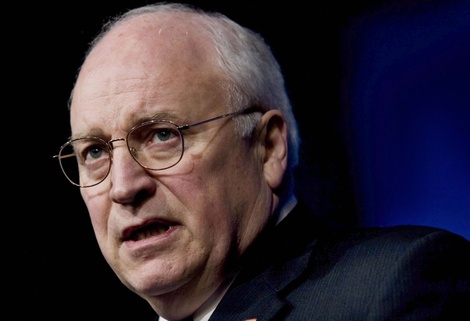
There are few more reliable ways to sell Americans on military action than to tell them that they’re in danger. That’s not a dig on Americans; people of all nationalities are naturally self-interested. Perhaps that was a lesson Obama learned in the Iraq War cheneymandelnganafpgetty.jpgdebacle, when the Bush administration’s over-sell of Iraq’s alleged threat made the public easier to convince but also badly distorted the debate in ways that still impact U.S. credibility. It’s still much easier to argue that the United States has to fight the enemy abroad so it doesn’t have to defend against them at home. And, almost 12 years to the day after September 11, 2001, it would have been awfully convenient for Obama to tell Americans that strikes are necessary to prevent terrorism.

But Obama didn’t say any of that, even though the political consequences of threat-inflation have proven low in American politics and the tactic often seems to work. Obama himself has not been afraid to refer to direct threats to national security when defending, for example, drone strikes and NSA surveillance. But in making the case for Syria, not only did he mostly demur from following that time-worn path, he actually — amazingly — went out of his way to argue that Syria is not an immediate national security threat to the United States or even Israel.

And so the Bush-Cheney syndrome evaporates a little bit more. Meep meep.

(Photo: war criminal Dick Cheney, by Mandel Ngan/AFP/Getty.)

“George Kennan Would Have Wept”

Greg Djerejian’s rhetoric gets ahead of him a little in his latest post on Obama’s Syria policy. He’s far, far too caustic about the extremely difficult choices Obama had to confront in the past few months and too breezily dismissive of the breach of the chemical weapons taboo. But he also argues, persuasively to me, that the precipitous decision to announce a strike against Syria was a function of Rice and Power et al recklessly over-playing their hand, without any serious understanding of what the Iraq War had done to US power in the Middle East or the dangers of an open-ended intervention as envisaged in the first proposed resolution for authorization of force in Syria. Money quote:

While the UN Ambassador was busily breezily querying the basic cornerstone underpinnings of the post WWII security architecture (e.g. the role of the UN Security Council, which like it or not, if wholly shunted aside without replacement international infrastructure, could eventually lead to far greater perils than any single CW attack), such myopically fanatical R2P adherents apparently did not engage in the merest bit of navel-gazing amidst the festival of frenzied outrage. Post-Iraq, was ‘high confidence’ good enough to launch a war, rather than confirmation? Why were the fatality counts in Ghouta so wildly different among different intelligence services? And why this “absurdly over-precise number” (CSIS Analyst Anthony Cordesman’s words) tally of 1429 dead? All this speaks to basic credibility, and one could be forgiven for being truly astounded that the Administration did not better realize how much higher the burden of proof needed to be post the Mesopotamian morass.

Agreed. But what matters is that Obama re-grouped and re-thought and the result is about as good as we could have hoped for. I’ll tackle more of the meep-meep question – especially about the decision to go to the Congress – soon.

This Was Roger Ailes’ Idea!

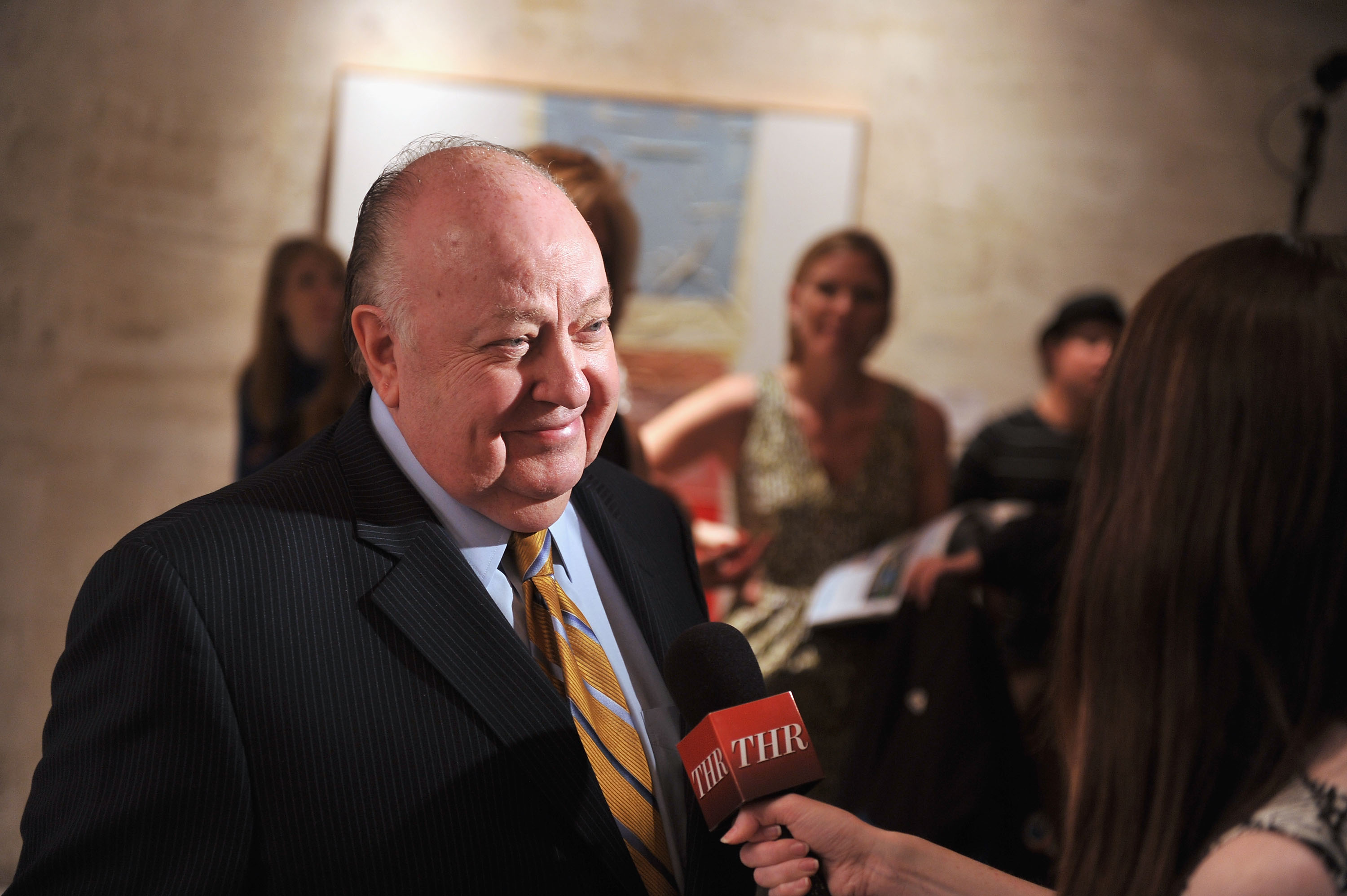
The Hollywood Reporter Celebrates "The 35 Most Powerful People In Media" - Arrivals

It will be fun – well, that might be going a bit far – to watch the usual partisan hacks on Fox attack Obama for his acceptance of the Putin offer in the next few days. Fun because the end-result is exactly what Roger Ailes proposed to solve the Syria problem over a year ago. McKay Coppins dug up the quote from Zev Chafets’ biography of Ailes from last year. Check this money quote out:

“Putin is angry. He thinks the United States doesn’t take him seriously or treat Russia as a major player. Okay, fine, that’s how he feels. If I were president, I’d get in a room with him and say, ‘Look at the slaughter going on in Syria. You can stop it. Do it, and I’ll see to it that you can get all the credit. I’ll tell the world it was you who saved the innocent children of Syria from slaughter. You’ll be an international hero. You’ll go down in history.’

Hell, Putin would go to bed thinking, ‘That’s not a bad offer.’ There will still be plenty of other issues I’d have with Russia. But instead of looking for one huge deal that settles everything, you take a piece of the problem and solve it. Give an incentive for good behavior. Show the other guy his self-interest. Everybody has an ego. Everybody needs dignity. And what does it cost? You get what you want; you give up nothing.”

And in the end, Obama did one better. He both explored this option for a year with Putin but got nowhere until he acted outside the box. At that point, Putin could genuinely feel as if the credit were his. As for empowering Russia in the Middle East?

What does it cost? You get what you want; you give up nothing.

(Photo: Roger Ailes, President of Fox News Channel attends the Hollywood Reporter celebration of ‘The 35 Most Powerful People in Media’ at the Four Season Grill Room on April 11, 2012 in New York City. By Stephen Lovekin/Getty Images.)