Putin Creates His Own Reality

The Russian leader continues to deny any wrongdoing:

Putin’s government also held a news conference [yesterday], in which it denied that Russia had supplied the separatists with a BUK missile system “or any other weapons,” and suggested that the Ukrainian government is the prime suspect in the crash. Air Force Lieutenant General Igor Makushev said that Russian radar detected the presence of Ukrainian fighter jets close to the Malaysian flight, suggesting that one of them may have shot down the airliner.

Margaret Hartmann unspins Russia’s spin:

Unfortunately for Russia, the scant evidence available doesn’t appear to support its fighter-jet theory. Photographs of wreckage riddled with holes have begun surfacing on social media, and experts say that suggests the plane was targeted by a missile that exploded nearby. After analyzing photos taken by New York Times reporters, IHS Jane’s, a defense consultancy, concluded that the damage was consistent with that caused by a Buk system. The missiles are designed to explode below a target, increasing the likelihood that a fast-moving Western military aircraft will be damaged even if it avoids a direct hit.

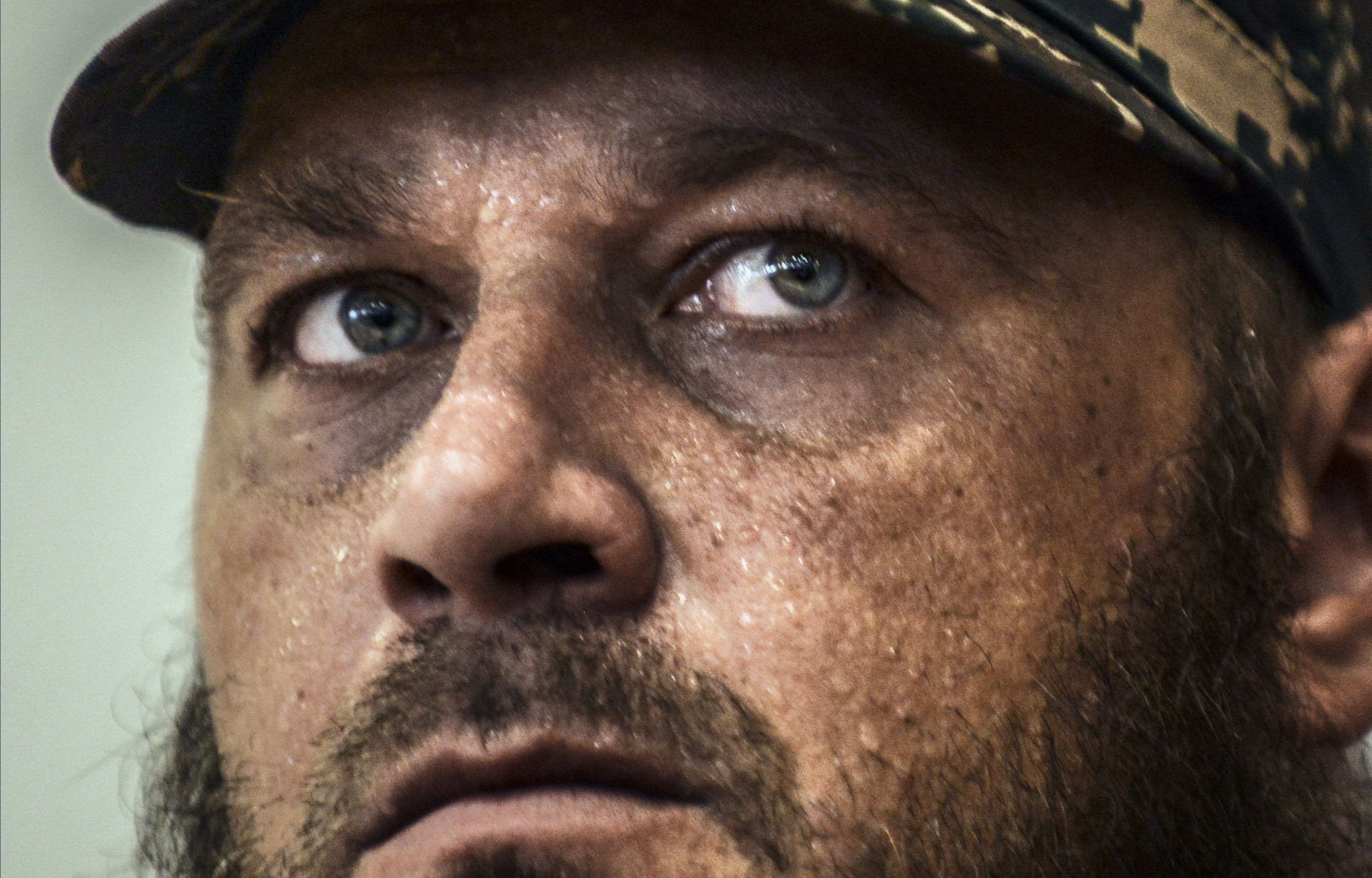
Which makes the entire spectacle riveting. What happens when a Tsar’s propaganda becomes completely untenable in a porous media world? What he can get away with at home is not as possible when your drunken proxies take down a plane from the civilized world? Watching that video statement from Putin in the early hours of the morning gave me some solace. Just look at the body language, the deflected gaze, the nervousness:

A Tsar never had to do this, or felt compelled to. He’s hanging by a thread, and we should take some pleasure in watching him struggle. Alex Altman examines Russia Today’s absurdist coverage:

In the aftermath of the crash last week, the RT machine kicked into overdrive, churning out a steady stream of strange reports. In an effort to implicitly assign blame on the Ukrainians, it noted the proximity of Putin’s own plane. It quoted a Russian defense ministry source asking why a Ukrainian air force jet was detected nearby. And it quoted another anonymous Russian official, who volunteered the juicy claim that a Ukrainian anti-aircraft missile was operational in the vicinity at the time of the incident. This is how RT works, explains [former RT employee Sara] Firth: by arranging facts to fit a fantasy.

Kirchick piles on:

A particularly egregious example was the most recent episode of the inaptly named Truthseeker, a program devoted to conspiracy theories. Titled “Genocide in Eastern Ukraine,” the 14-minute segment accused the Ukrainian government of conducting a crime on par with the 1994 Rwandan genocide (which claimed anywhere from 500,000 to 1 million victims), which, for good measure, the host accused the United States of sponsoring. The Ukrainian government (“the most far-right wing government on the face of the Earth,” a description that far better suits the current Russian regime), whose leaders“repeat Hitler’s genocidal oath,”is “bombing wheat fields to ensure there’s famine,” a perverse claim in light of the Soviet-orchestrated Holodomor, the killing by starvation that took the lives of millions of Ukrainians in 1932 and 1933. The segment featured an interview with crank “historian” William Engdahl, a regular columnist for the virulently anti-Semitic website Veterans Today, where he has suggested that terrorist bombings in Russia earlier this year were conducted by Israel in retribution “for Putin’s role in winning Obama away from war against Syria last fall and openly seeking a diplomatic resolution of the Iran nuclear problem.”

Such ravings are par for the course on RT, but what happened afterwards surprised observers who have grown accustomed to the network’s practice of throwing out an endless stream of indefensible allegations in hopes that some of them will stick in the media ecosystem. Two days after the program aired, RT announced via Twitter that it had removed the episode from its website due to “uncorroborated info.” If this were to be the new standard by which RT determines what material to air, it would have no choice but to shut down altogether.
Why Russia Wants A Cease-Fire

It’s a tactical move Russia has used before:

Putin supports a cease-fire, as he has all along, because that leaves the Russian-sponsored forces in control of Ukrainian territory, a status quo that suits Russian interests. This is precisely why the Ukrainian authorities originally ended the cease-fire, and why they have continued operations even after the downing of the aircraft. They suspect that the longer the territory remains in Russian hands, the more likely it is that it will never be returned.

To see why a cease-fire works to Russia’s advantage, the Ukrainian leadership need only look to Ukraine’s western border, where a slice of its neighbor Moldova known as Transnistria has been occupied by pro-Russian forces since 1992. The conflict began when a group that did not want Moldova to secede from the Soviet Union took up arms, with extensive support from the Soviet/Russian military. A cease-fire was declared in July 1992, and the conflict has remained “frozen” ever since.

Anna Nemtsova reports that fighting in Donetsk has heated up:

Clearly, all of the statements from Moscow and Kiev about a cease-fire for the period of the investigation have been forgotten. Rebels reinforced their positions in Donetsk, bringing tanks and armored personnel carriers closer to the railway station on Panfilova Avenue. Glass was blown out of the windows of five-story buildings on Slavatskaya Street. Local radio reported that the Ukrainian military blew up railroad tracks and blocked approaches to the city.

Once again civilians paid the price of this ferocious war. Shells killed pedestrians running to try to escape into basements. A young woman’s body was lying on the dusty road by a row of garages: her head was destroyed, both of her shoes had been thrown in the air by the shock wave of the explosion and had landed a few steps away from her motionless body.

How Does Ukraine’s Civil War End?

Ivan Katchanovski predicts that attempts “to solve the conflict in Donbas by force will lead to mounting casualties among civilians, Ukrainian forces and armed separatists”:

Even a military defeat of separatists is unlikely to end the conflict because it reflects significant regional divisions since Ukraine’s independence in 1991, including a history of separatism in Crimea and Donbas. And Russia, with significant military, political, and economic leverage over Ukraine, is there to stay.

An internationally mediated negotiated settlement — which would include international investigations of the shooting down of the Malaysia Airlines plane and other mass killings — could preserve Donbas as a part of Ukraine. An example of one such peaceful resolution of an armed conflict between separatists and the central government is in Macedonia, in the former Yugoslavia. A negotiated settlement can also stop an escalation of the civil war in Ukraine and the growing conflict between the West and Russia. But such a peaceful resolution in Ukraine is not very likely to happen.

Maxim Eristavi’s report suggests that fighting won’t stop anytime soon:

On Friday, Putin called again for peace talks—but nobody in Kyiv is listening at the moment.

The Ukrainian public and its leaders insist they will go all the way to defeat the rebels.“It is time to put an end to this aggression, and the world should join us in the eliminating of terrorists. It doesn’t matter where they are,” Oleksandr Tyrchynov, the speaker of parliament said in a public statement, most likely hinting at a possible military campaign along the Russian border.

The war has its political upsides. Local analyst Yuriy Romanenko told me that the new ruling elite has the same core problem as the old one—corruption—which makes Western countries especially wary of providing more assistance, absent major economic and political changes. It also makes Kyiv less willing to compromise. “But the second they realize that they are losing the Eastern Ukraine war, peace talks will probably have a big comeback moment,” Romanenko said. “It’s an easier thing for them to do than go through painful reforms.”

But, even if Kyiv wanted a peace deal, it’s doubtful that many of the rebels are capable of negotiation. For example, Motyl does a close reading of rebel leader Pavel Gubarev’s “Methodological Guide for Struggle Against the Junta.” His take-away:

Is compromise possible with the likes of Gubarev? Probably not. He detests Ukraine and Ukrainians, and his agenda consists of little more than terrorism. Can Russian President Vladimir Putin control him? That, too, is by no means clear: fanatics such as Gubarev are by definition uncontrollable.

If so, the Poroshenko government may have no choice but to attempt to crush Gubarev and his militant groups. The bad news, for Kiev, is that Gubarev is implacable and is willing to die. The good news is that his manual clearly, if unintentionally, reveals that the militant groups are isolated, on the run, and in constant fear of exposure. His open admission that “[w]inning people’s confidence will not be easy” hardly reflects deep popular support. As the document stresses, the terrorists cannot trust the local population, not even the local criminals who in the early days of the insurgency actually comprised a significant portion of the fighters. Nor can they rely on their own comrades to remain silent, if captured, for more than a “few hours.”

Will Europe Pass Serious Sanctions?

Bloomberg View’s editors urge them to:

There is no guarantee that sanctions of any kind will get Putin to back down over Ukraine. But the EU needs to demonstrate that it cares enough and is united enough to stop him — even at some cost to their own interests — if he is to be deterred from further adventures in Ukraine or beyond.

Amen. Vinik doubts, however, that EU sanctions will have teeth:

U.S. sanctions will only act as a deterrent if Europe credibly threatens to impose sweeping sanctions on the Kremlin. If banks don’t believe that the E.U. would ever sanction Rosneft, then they won’t worry about extending euro-denominated loans to it, no matter what the U.S. does. It’s hard to see how Europe can make a credible threat, given the mutually assured economic destruction that would result.

 For that reason, financial markets have not reacted negatively to Thursday’s events. The S&P 500 and Dow Jones index are both up around a percent Friday.

“If what we’re observing is all that we get, then I think the economy fallout on the U.S. is very small,” said Mark Zandi, the chief economist at Moody’s. “I don’t think it’s significant. It’s showing up in a bit higher oil prices. Stock prices are down. This is very, very marginal in the grand scheme of things.”

Yglesias observes that one “quirk of the situation is that the European Union voted for tougher sanctions on Russia on Wednesday, less than 36 hours before the destruction of MH17″:

That included suspension of billions of dollars in loans to Russian public sector projects and potential asset freezes on wealthy Russians who are financing separatist groups in Ukraine. Had these new sanctions not been already agreed to, this menu of options likely would have been the first wave of EU response to a new Russian provocation. But since these measures were already in the works, Europe has already plucked its lowest-hanging fruit and will need to think of some new ideas if more conclusive evidence forces European leaders to deliver consequences.

Meanwhile, Putin passed some toothless sanctions of his own last week:

Moscow knows the new sanctions on Abu Ghraib and Guantanamo officials won’t have much practical effect. But the fact the measures were made public shows that Putin is trying to bolster his argument that the U.S., rather than Russia, is the country that’s egregiously violating human rights and international law.

The Corner Putin Has Backed Himself Into

Adrian Karatnycky takes a close look at it:

In recent weeks, there had been signs of growing concern among Kremlin moderates and the Russian business community that the proxy war in Ukraine was far too damaging to Russia’s economy and was developing into a potential threat to Russia’s longterm Russian President Vladimir Putin Visits Samarastability. This week, with new U.S. sanctions and the threat of Russian isolation emanating from Putin’s Lockerbie, the Russian stock market fell by over 8 percent.

Putin can seize on this tragedy to move toward rapid de-escalation in eastern Ukraine. He can urge the 15,000 insurgent fighters in Ukraine’s Eastmany of them Russiansto lay down their arms. And he can immediately stop the flow of tanks, missiles, and other weapons to the rebels. Or he can become a Qaddafi-like pariah and plunge Russia into international isolation with his now transparently brazen support for Russian insurgents and Russian proxies who are seeking to create a permanent zone on instability in Ukraine.

No wonder he’s taking his own sweet time. I’m increasingly struck by how little control Putin seems to have over the nationalist, xenophobic and homophobic forces he has unleashed. Ioffe reveals the growing insanity of the propaganda machine:

Did you know Malaysia Air Flight 17 was full of corpses when it took off from Amsterdam? Did you know that, for some darkly inexplicable reason, on July 17, MH17 moved off the standard flight path that it had taken every time before, and moved north, toward rebel-held areas outside Donetsk? Or that the dispatchers summoned the plane lower just before the crash? Or that the plane had been recently reinsured? Or that the Ukrainian army has air defense systems in the area? Or that it was the result of the Ukrainian military mistaking MH17 for Putin’s presidential plane, which looks strangely similar?

Did you know that the crash of MH17 was all part of an American conspiracy to provoke a big war with Russia?

Well, it’s all true—at least if you live in Russia, because this is the Malaysia Airlines crash story that you’d be seeing.

And almost no others so total is the information blackout. Gregg Rowe has a very helpful essay on how this vortex of paranoia controls Putin as much as he controls it. Money quote:

Russia is a nuclear power and a near-dictatorship, but it’s a weak state. This is paradoxical given the overweening authority Putin manages to project, but it’s true. Putin has full authority over the security establishment, but that is no longer enough to endow unquestioned solidity upon the state he built. For one thing, Russia is no longer an isolated command economy. It’s been integrated into the capitalist world … You can police dissidents, but you can’t police the price of natural gas abroad.

If the old Soviet economy has been “privatized” …  so, too, have other parts of Soviet power. Corporate conglomerates, a military-industrial complex, rich and insecure churches, noisy social movements (more of them on the Right than the Left), local governments carving out their own extortion zones, and many more mini- and mega-oligarchies multiply …  For all his shirtless preening, Putin is no muscle-man able to wield top-down control. Instead he must exhort, scare, cajol, and distract the rest of society till he gets his way.

Daniel Berman posits that “the fundamental obstacles to any sort of concerted action against Moscow remain unchanged” for the West. But MH17 will have consequences for Putin:

[T]he tragedy is going to raise the economic costs of Russia’s policy, at a time when even the half-hearted sanctions have started to cause some damage. On a wider level, the events also illustrate the bind that Putin has managed to get himself into with the Ukraine. By encouraging the separatists he has raised their political expectations sky-high in a manner that can neither be met by Kiev nor is it in the interests of Russia to meet, while by arming them, he has vastly increased the amount of damage they can inflict in their frustration. Furthermore, for all the talk about cease-fires, its unclear if Putin could bring all of the groups to the table even if he wanted to, not without leaving the holdouts at the mercy of Kiev, whose success in such an operation would raise the Ukrainian Armies prestige to an unacceptable level.

Putin therefore finds himself trapped. There is no clear political objective behind the separatist campaign that Moscow can sell as a victory; but their abandonment would almost certainly lead to a clear-cut defeat.

Motyl claims that the “Russian militants in eastern Ukraine have lost the battle for the hearts and minds of the local population” and that “formerly pro-Russian populations that the Ukrainian army recently liberated have been genuinely relieved to be free of Russian rule”:

What can continued Russian escalation of the bloodshed accomplish? It can inflict harm on the Ukrainian army and volunteer forces—and only increase Ukrainian soldiers’ resolve to fight. It can increase the physical destruction of the Donbas—and only further alienate civilians. It can encourage the militants to engage in more human rights abuses and atrocities—and thereby outrage the international community. It could even impel the morally desensitized Europeans to impose genuinely painful sanctions on Russia.

And just what does Russia gain from continued escalation? It could establish control over parts of the Russo-Ukrainian border and save its proxies from total defeat. That would permit Putin to save face with his cronies and a Russian population that’s been whipped up to a hyper-nationalist frenzy. But this victory would at best be Pyrrhic. Would Russia annex the territories it devastated? Would it eventually retreat? Neither option qualifies as a strategic victory.

The fact is that Putin has maneuvered himself and Russia into a dead end.

How Do You Solve A Problem Like Vladimir?

Russian President Vladimir Putin Visits Samara

Kirchick wants the full neocon jacket:

It is long past time that the United States and its NATO allies supply the Ukrainian military with the lethal aid it has long requested, so that it can at least defend itself and its airspace from Russia. NATO should deploy more troops to Poland and the Baltic states, which are understandably nervous about Russian designs on their territory and quietly doubt the Alliance’s Article 5 commitment stipulating that an attack on one is an attack on all. Sectoral sanctions that could cripple the Russian economy are also long overdue. And, if Russian involvement in this attack is conclusively demonstrated, Russia should be added to the State Department’s list of state sponsors of terrorism.

I don’t think all of this is necessary – yet. Very little is gained by ramping up a military conflict the US and Europe are not prepared to enter in any sustained way. And the key has to be Europe: they have the real economic leverage; their citizens are the dead; their security is at stake. As for sufficient toughness, Obama should get props for imposing new sanctions on the day of the outrage. He wasn’t caught by surprise this time. But for American sanctions to bite, the Europeans have to be on concert. My sincere hope is that this outrage will spur even the Dutch to greater resolve. Anne Applebaum thinks “we are about to learn whether the West in 2014 is as united, and as determined to stop terrorism as it was 26 years ago”:

When the Libyan government brought down Pan Am 103 over Lockerbie, Scotland, in 1988, the West closed ranks and isolated the Libyan regime. Can we do the same now—or will too many be tempted to describe this as a “tragic accident,” and to dismiss what will inevitably be a controversial investigation as “inconclusive?” It is insufficient to state, as President Obama has now done, that there must be a “cease-fire” in Ukraine. What is needed is a withdrawal of Russian mercenaries, weapons, and support. The West—and the world—must push for Ukrainian state sovereignty to be reestablished in eastern Ukraine, not for the perpetuation of another frozen conflict.

The trouble, of course, is that Russia is slightly more powerful than Libya, don’t you think? And far more economically enmeshed with its European neighbors than ever before. And far more capable of inflicting damage on the rest of us – from sabotaging the talks with Iran to partnering with China in energy deals. But Anne’s right about the core issue:

this cannot stand or be dealt with in any inconclusive fashion. A formal apology for what was obviously a mistake, compensation for the victims’ families, and a verifiable end to the destabilization of Eastern Ukraine are all eminently doable. And yet they may also be something Putin cannot “man up” enough to do – for fear of appearing weak domestically.

Larison lobbies for far more caution:

The U.S. shouldn’t rush to take any action, and it should coordinate its response with its allies in Europe, especially the Dutch, since they have suffered the greatest loss and have the most at stake in this case. Russia should be called on to make a formal apology for the downing of the plane, and it should be expected to make restitution to the families and the countries of the victims. Slapping more sanctions on Russia will be as useless as ever, and pushing for additional sanctions is more likely to fracture whatever unity the U.S. and its European allies have in the wake of the disaster. There will understandably be a strong temptation to take some “tough” but foolish action now, but this is exactly the sort of outrage that requires a calm and cautious response so that it does not become the cause of even more bloodshed and conflict.

I understand the limits of economic pressure – and agree about coordination with the EU. But a calm response need not mean a weak one. Merkel is the key figure here. In some ways, she has Russia’s future with Europe in her hands.

(Photo: Russian President Vladimir Putin speaks at a meeting with regional officials during a visit to the Progress State Research and Production Rocket Space Center on July 21, 2014 in Samara, Russia. Putin is on a one-day visit to Samara. By Sasha Mordovets/Getty Images.)

A Man Who Believed We Could Defeat AIDS

UKRAINE-RUSSIA-CRISIS-MALAYSIA-NETHERLANDS

Researcher Joep Lange was on his way to an HIV/AIDS conference in Melbourne before the chaos in Eastern Ukraine cut his life short. Laurie Garrett remembers him:

Like so many of the great AIDS scientists that toiled through the years of extreme loss and urgency before there was effective treatment, Joep Lange absorbed the political dimensions of the pandemic, and gained the skills necessary to translate lab and clinical findings into high-level battles inside the United Nations and across the global stage. He became a leader, in the fullest sense of that word. Like Jonathan Mann, Joep blended science, medicine, and an activist spirit to help bring the life-sparing medicines to people in all of the world – not just rich countries.

The last time Joep and I spent time together we argued, I’m sorry to say. And I may have been completely wrong, he completely right.

The saga we argued about hasn’t played out yet. Joep believed without hesitation that effective treatment, “is like a vaccine,” as he put it. The global epidemic could be stopped, he said, simply by getting every HIV+ person on the planet put on an effective regimen of treatment. Once on medicines, he insisted, the load of viruses in their blood, vaginal fluids, and semen would drop so low that they would not be contagious. And that, he said with a grin, will be the end of AIDS. I was skeptical – there were too many cases of drug resistance, non-adherence to treatment, supply chain failures to deliver vital drugs to remote or impoverished areas. I resented use of the word “vaccine” to describe universal treatment – we still desperately need an actual HIV vaccine, I insisted.

I want Joep’s optimism about eliminating AIDS through treatment to win out. I want to be wrong.

I think Joep was right – and profoundly prescient. Charles Kenny reviews Lange’s work:

Lange’s research demonstrated the importance of simple drug regimens: if people only have to take a few pills with smaller side effects, they are far more likely to take them and stay healthy. He also founded a research collaboration based in Thailand that carried out studies on sexually transmitted disease—including an ongoing study of using HIV treatment as a tool to prevent the spread of the virus.

Harold Pollack considers the legacy Lange has left:

[Friday’s] New York Times includes an old quote from Lange, in which he said: “If we can get a cold can of Coke to any part of Africa, we can certainly deliver AIDS treatment.” In the year 2000, Lange founded the PharmAccess Foundation to improve drug access in sub-Saharan Africa.

This vision caught the imagination of President George W. Bush, among others. At that time, many people believed that the obstacles to providing high-quality care in low-resource environments would prove too severe. I was one of those skeptics. Fortunately, people like Bush and Lange proved the skeptics wrong. The efforts of Lange and others contributed to dramatic improvement in HIV prevention, treatment, and care around the world. These efforts made possible the one genuinely shining accomplishment of George W. Bush’s presidency: the Presidents Emergency Plan for AIDS Relief (PEPFAR), which has saved millions of lives.

For the record, I was wrong too. I was far too gloomy about the potential for the new meds in Africa and the developing world. But what greater legacy can a man leave than the lives now being lived because of his passion?

(Photo: A woman signs the condolence book for Dutch Aids expert Joep Lange and his assistant Jacqueline van Tongeren, on July 19, 2014 in the Academic Medical Centre (AMC) in Amsterdam. Lange and Van Tongeren, were on their way to the International Aids Conference in Melbourne when their plane from Malaysia Airlines crashed in Ukraine, last Thursday. By Evert Elzinga/AFP/Getty Images)

Flying Over A Conflict Zone, Ctd

Restricted Airspace

Jessica Schulberg and Josh Kovensky map the world’s restricted airspaces:

Several of the restrictions in the map above only apply to flights below a certain altitudeusually under 24,000 feet. This varies according to the situation on the ground. In the Democratic Republic of Congo, for example, where rebels possess less advanced rocket technology, the minimum operating altitude is 15,000 feet, whereas planes flying over ISIS-controlled regions of Iraq must remain above 20,000 feet.

But less than two weeks ago, the Ukrainian government declared it unsafe to fly over eastern Ukraine at an altitude below 32,000 feet, because of the presence of anti-aircraft weapons. MH17 was at a cruising altitude of 33,000 feet when it was shot down.

Fallows defends Malaysia Airlines decision to fly over Eastern Ukraine:

Short version: Airlines rely on regulators and national and international bodies to tell them about airspace they should avoid. Absent such warnings, airspace is presumptively legal and safe for transit. MH17 was following the rules by staying out of no-fly and warning zones. A terrible crime and disaster occurred, but that is not Malaysia Air’s fault.

Shorter still: According to Spiegel (German version here), while some airlines, including Air France, had changed their routes to avoid Ukraine, most did not. Many other airlines took a path similar to the one on which MH17 was shot down, notably including Lufthansa. Here is Spiegel’s chart of how many planes had gone this way in the week before yesterday’s disaster;

But Rick McCullough, “a Captain experienced in international flight,” admits he “would have been uncomfortable flying in that region of conflict”:

Military aircraft had been shot down in the recent past, so at least one of the combatants obviously had that capability. Weather deviations might force my aircraft even further into the region of conflict. Flying a route that avoided the conflict zone would have required some additional fuel and time, but would have been the safer course of action in light of the warnings issued by the Ukrainian government and the FAA.

And Jon Lee Anderson worries that a similar event could happen in other parts of the world:

For decades, the Libyan despot Muammar Qaddafi fielded his own proxies in fights across Africa and beyond. The Venezuelan terrorist Ilich Ramírez Sánchez (a.k.a. Carlos the Jackal) was on his payroll at one point. Qaddafi’s agents planted explosives aboard a Pan Am jetliner that blew up over Lockerbie, Scotland, in 1988; a year later, in similar fashion, they blew up a French civilian passenger plane as it flew over Niger. When Qaddafi was deposed, in 2011, a motley group of “revolutionaries,” including some whom he had supported, swarmed into Libya and looted his vast armories. Among the weapons were large numbers of Russian-made heat-seeking anti-aircraft missiles. Peter Bouckaert, of Human Rights Watch, documented hundreds of them in unguarded caches, but, by the time weapons inspectors arrived, the missiles were gone. Where they are today, nobody knows. But Libya has become a hotbed of warring militia groups and jihadi extremists, and it seems likely that, sooner or later, the missiles will find a use.

Earlier Dish on MH17’s route here.

Holding Corpses Hostage

UKRAINE-RUSSIA-POLITICAL-CRISIS-MALAYSIA-ACCIDENT-CRASH

I’ve not yet weighed in on Russia’s response to the downing of MH17, partly because it beggars belief. The staggering insouciance, the prickly denials of the bleeding obvious, the corrupt and foul attempt to shift the blame, and the shameful refusal to allow international flight inspectors into the area as swiftly as possible: which realm of barbarism do these goons of Putin’s invention come from? And now this:

Separatists controlling the area of the MH17 wreckage have declared that they can only ensure international investigators will have access to the crash site if Ukraine agrees to a truce: “We declare that we will guarantee the safety of international experts on the scene as soon as Kiev concludes a ceasefire agreement,” said Andre Purgin, a senior leader of the self-declared Donetsk People’s Republic. The declaration amounts to blackmail, as Nina Ivanovna put it. The separatists are holding the bodies of MH17 passengers hostage in exchange for territory.

I find myself agreeing with Roger Cohen:

This mass murder is an outrage that should not stand. Falling military budgets have reduced the Dutch special forces to a paltry remnant. Russia would veto any United Nations Security Council Resolution authorizing force for a limited mission to recover the bodies and the evidence. But Ukraine, on whose territory the debris and dead lie, would support it. The American, British, Dutch and Australian governments should set an ultimatum backed by the credible threat of force demanding unfettered access to the site. Putin’s Russia must not be permitted to host the 2018 World Cup. A Western priority must be to transform the Ukrainian army into a credible force.

The principle of non-intervention in distant civil wars is not harmed by this kind of resolve. What just happened over the skies of Eastern Ukraine was an attack on the far more important principle of free travel across the globe. If Russia’s thugs can down a civilian airliner  – can kill hundreds of European civilians – with impunity, then we have permitted a deeply damaging precedent for chaos and disorder to take root. Russia has crossed a Rubicon and should really now be deemed a rogue neo-fascist state that requires containment.

That cannot happen without European unity and resolve – without, that is, a far more stringent and focused response than we have seen so far. It means that Germany and Britain in particular must accept some sacrifice for the maintenance of a global order they rely on. If the Europeans do not enact sanctions at the level of America’s and more, their appeasement of this strutting, irresponsible tsar of disorder will come back to haunt them – and sooner than they might think. Russia is not a stable international actor, it is not a stable economy, it is rather an oligarchy kept together by ever-more inflammatory moral and xenophobic panics. There is no stable state to partner with.

The latest on the situation:

Four days after the tragic crash of Malaysia Airlines Flight 17, Dutch forensics experts are finally being allowed onto the scene. However, the site is still being guarded by armed rebels, who are making it very difficult for investigators to move in and out. The rebels also control much of the access to the bodies, most of which have been moved, decomposed, or otherwise tampered with. These Dutch experts have arrived to review remains of the victims, that is, if they can get to them.

The forensic experts are in the town of Torez, where many of the bodies have been put onto refrigerated rail cars. However, the train cannot leave, as Ukrainian prime minister Arseniy P. Yatsenyuk says the rebels controlling the area are preventing the train from moving. Thus far, the experts have only been able to inspect the bodies on the train.

(Photo: Bodies of victims wrapped in bags wait to be collected by rescuers at the site of the crash of a Malaysia Airlines plane carrying 298 people from Amsterdam to Kuala Lumpur in Grabove, in rebel-held east Ukraine, on July 19, 2014. By Dominique Faget/AFP/Getty Images.)