How Graphic Should War Coverage Be? Ctd

PALESTINIAN-ISRAEL-CONFLICT-GAZA-DEMO

A reader writes:

Can you please put the graphic images of dead people and children after the link?  I am begging you. I have been avoiding these images all day.  Maybe you do not understand, but I am sick about Gaza and MH17 enough already.  I don’t need graphic images to shake me out of some indifferent stupor – I am already there, right with you.  Please help out your readership.

But another gets it right:

Thank you for posting the photo of the debris and the bodies under the post “A Game-Changer For Ukraine”. It is a horrible, terrible image, yes. And it’s the kind of photo that many will jump on as “disrespectful to the dead” and so forth. But let me counter with this:

I do NOT want anyone who takes in this news to see only “sanitized” images of this barbaric action and hear only clean and neat reports out of a conference room at a hotel in Amsterdam, Washington, or Kuala Lumpur. It’s much too big and awful and important to stuff down into a bureaucratic exercise at a podium and treat like some report out of a county board.

Your treatment – one photo, not large, not the only coverage – is totally honest and appropriate. Thank you for using good judgment and appropriate wisdom on this.

But another thinks we misfired on another image:

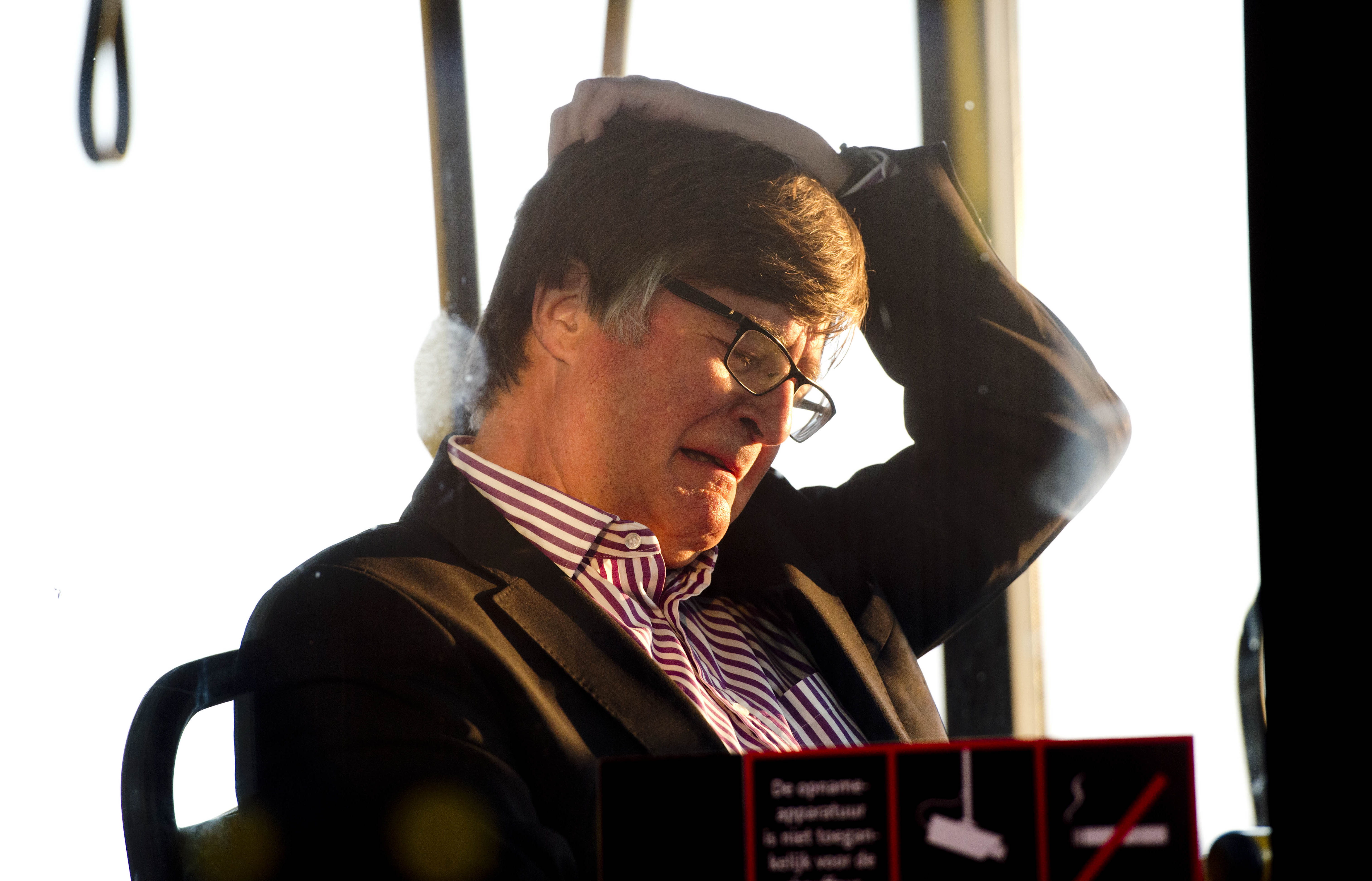
One of the reasons why I like the Dish is your willingness to share uncomfortable images which other media outlets censor – but I was seriously disappointed to see you pick a zoom-lense shot of a grieving relative as your “Face of the Day“. In my view, this seriously oversteps the line between news reporting and invasion of privacy.

Someone I know was killed on the flight – someone who had devoted their life to battling AIDS. Those who are grieving have the right to do so in private, without paparazzi chasing them around the airport looking for grief-porn shots. The fact that Getty saw fit to take and distribute the photo is a discredit to them, and that fact that you would publish it is a discredit to you, and a disappointment to those of us who thought the Dish stood for something better.

We have debated this issue extensively in the past. See the results of a reader survey here. The Dish stands by its policy of airing every image that illuminates the truth of war.

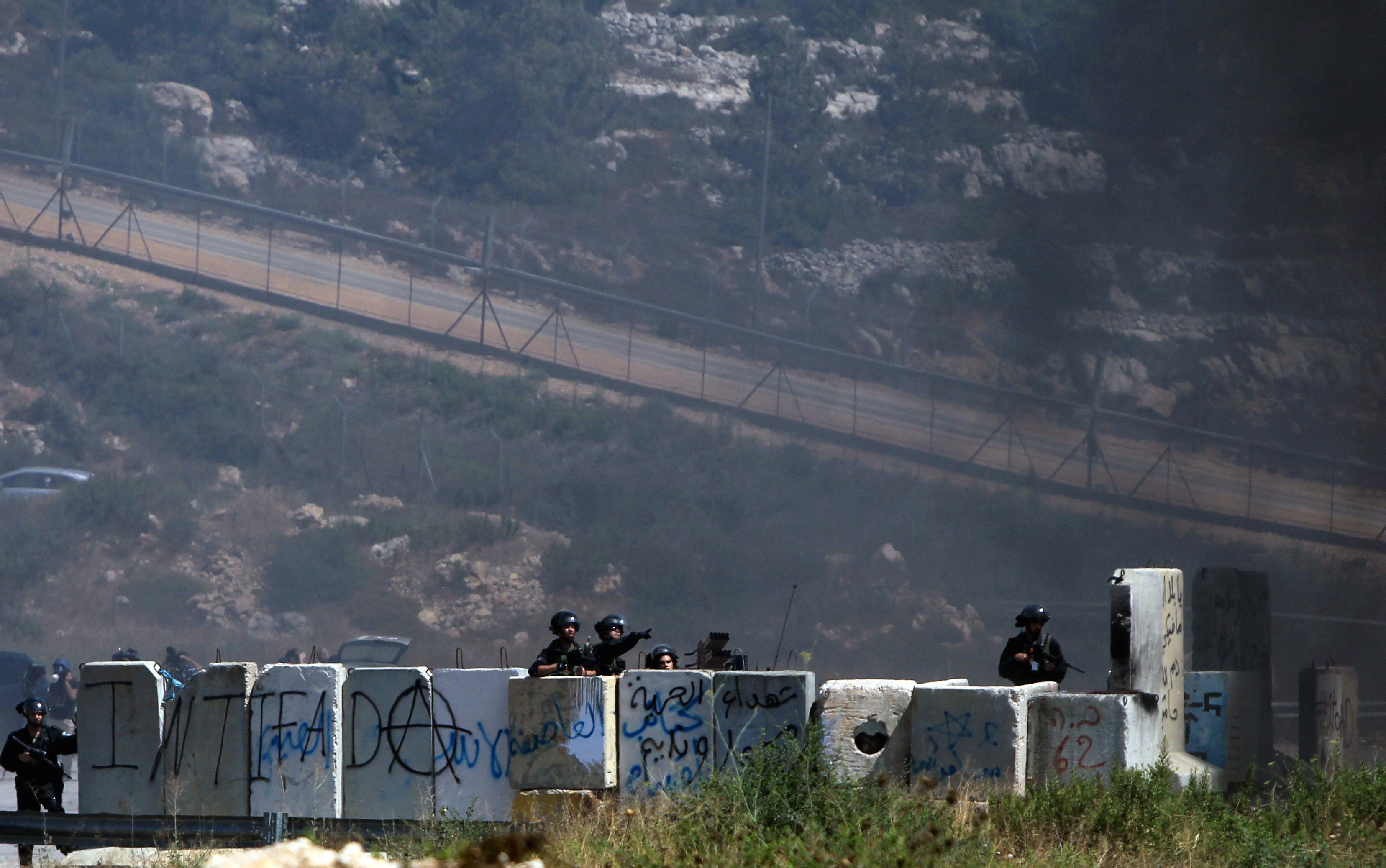
(Photo: Israeli soldiers take cover during clashes with Palestinian demonstrators at the entrance of Israeli-run Ofer prison in the West Bank village of Betunia, on July 18, 2014, following a protest against Israel’s military operation in the Gaza Strip. Israeli Prime Minister Benjamin Netanyahu spoke of bolstering his ground assault on Gaza in what commentators said was part of a strategy to pressure Hamas into a truce. By Abbas Momani/AFP/Getty Images)

Russia Isn’t Winning Any Popularity Contests

Russia

It’s losing support around the globe:

In the United States, unfavorable views of Russia had jumped by 29 points in just one year. Similarly, in Europe, they climbed 20 points. Latin America, Asia and Africa had also seen their opinions of Russia grow more guarded, albeit by a far smaller margin.

In sum: more than two-thirds of people in the United States, Europe and the Middle East — all the regions most interested in what comes next — are pretty much anti-Russia. Any way you slice the data, Russia has few allies beyond China and a smattering of others that include Greece, Bangladesh and Vietnam.

How Reagan Handled A Situation Like This

Andrew Rudalevige draws parallels between the MH17 tragedy and the USSR shooting down a Korean Airlines plane in 1983. Reagan’s reaction to it:

Reagan demanded an apology to the world and continued a number of sanctions — but he decided not to end grain sales to the USSR or to suspend arms control talks. George Will argued that “the administration is pathetic…. We didn’t elect a dictionary. We elected a President and it’s time for him to act.”  The Manchester Union-Leader editorialized that “if someone had told us three years ago that the Russians could blow a civilian airliner out of the skies – and not face one whit of retaliation from a Ronald Reagan administration, we would have called that crazy. It is crazy. It is insane. It is exactly what happened.”

Even at the height of the Cold War, however — and keeping in mind that the flight had departed from the U.S., with dozens of American passengers, including a sitting member of Congress – Reagan told a National Security Meeting that “we’ve got to protect against overreaction. Vengeance isn’t the name of the game.”

What Putin And Netanyahu Have In Common

Meeting of Vladimir Putin with Benjamin Netanyahu in Kremlin

Both have been riding nationalist waves of xenophobia – and have done their best to inflame it some more; both believe that military force is the first resort when challenged; both have contempt for the United States under its current president; both regard Europeans as pathetic weaklings and moral squishes; both use a pliant mass media to instill the tropes of paranoia, wounded pride and revenge; both target “infiltrators” in their midst, whether it be African immigrants and Palestinians or gays and Westerners; and both have invaded and threatened their neighbors. Perhaps most important of all: both have lost control to the even more enraged extremists to their right.

Check out the thoughts of  Gleb Pavlovsky as told to David Remnick:

The nightly television broadcasts from Ukraine, so full of wild exaggeration about Ukrainian “fascists” and mass carnage, are a Kremlin-produced “spectacle,” [Pavlovsky] said, expertly crafted by the heads of the main state networks. “Now this has become a problem for Putin, because this system cannot be wholly managed,” Pavlovsky said. The news programs have “overheated” public opinion and the collective political imagination.

“How can Putin really manage this?” Pavlovsky went on. “You’d need to be an amazing conductor. Stalin was an amazing conductor in this way. Putin can’t quite pull off this trick. The audience is warmed up and ready to go; it is wound up and waiting for more and more conflict. You can’t just say, ‘Calm down.’ It’s a dangerous moment. Today, forty per cent of Russia wants real war with Ukraine. Putin himself doesn’t want war with Ukraine. But people are responding to this media machine. Putin needs to lower the temperature.”

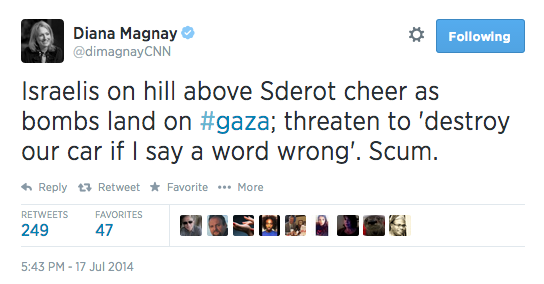
Now consider the vigilantes who poured gasoline down the throat of a young Palestinian and burned him alive. Do you think they come out of a vacuum? Or the horrifying tweets of young Israelis proudly urging genocide of Arabs. Or the cheers from the hilltops outside Sderot as Israelis celebrate the slaughter of civilians in Gaza. Or the fact that Netanyahu’s endless provocations have led to a cabinet even more hawkish than he and a country ever further away from any reconciliation with the people whose land it took decades ago.

Both men have the supreme self-confidence of fools; and the political instincts of geopolitical arsonists. Our only hope in restraining them is to watch them slowly hoist by their own canards. The problem is that hundreds of civilians in an airplane and in the crowded streets of Gaza keep becoming the collateral victims of their posturing.

(Photo: Israeli Prime Minister Benjamin Netanyahu and Russian president Vladimir Putin appear during the Security Council meeting in the Kremlin on November 20, 2013 in Moscow, Russia. Netanyahu was on a one-day visit to Russia. By Dmitri Azarov/Kommersant via Getty Images.)

No Drama Obama vs High Drama Putin: Meep Meep

It’s been a study in contrasts for quite some time. One global leader whips up nationalist sentiment to get sky-high ratings at home; the other glides through another summer of Tea Party dyspepsia with imperturbable equanimity. One leader acts on the world stage by annexing a neighboring country and then threatening it some more; the other slowly and painstakingly ratchets up sanctions, whether it be on Iran or Russia, and keeps his options open. And it all came to a fitting climax yesterday. In the morning, no-drama Obama announces new, tougher sanctions because of intelligence showing deeper Russian assistance for the slowly fading separatists in east Ukraine; and only hours later, Putin’s hot-headed goons, using weapons they clearly are not fully in control of, shoot down a civilian airliner. So who, Mr Krauthammer, looks weak now?

Putin has lost Ukraine, its trade pact with the EU is now signed, and its Russophile separatists exposed as fanatical, fantasizing idiots, while Ukraine elected a new president to chart its future. The Russian economy, already hobbled, could face increasingly strong headwinds, if Merkel decides to press the West’s advantage or finally leverages a real climb-down from Moscow over Ukraine. Obama, on the other hand, has a wide noose around the Russian economy and just increased the odds of deeper EU tightening.

And if the missile that shot down the plane can be traced to Russia itself, then the consequences dramatically widen. And that seems possible this morning. Austin Long points out that a Buk missile launcher would not have been easy for Ukrainian rebels to capture from the Ukrainian government and that the operation of such weaponry is complicated. This leads him to suspect that “the Buk was provided by Russia along with any necessary training”:

This is supported by U.S. and Ukrainian reports last month that Russia had provided tanks and other heavy equipment to the separatists. Notably both the tanks alleged to have been provided (T-64s) and the Buk are older Soviet-era equipment that Russia would not miss but would also be plausibly present in Ukrainian arsenals. This allows the Russians to retain a figleaf of plausible deniability about the equipment.

If Russia is directly involved in this way, it seems to me that Putin has now over-reached in such a way that all but destroys what’s left of his foreign policy.

And Josh Marshall’s right that the spectacle of Russian cluelessness, amateurism and recklessness could be the worst news of all for Putin. If there’s one thing a neofascist Tsar cannot afford it’s the appearance of incompetence and chaos.

Leonid Bershidsky, meanwhile, declares that “the separatists’ campaign is doomed.” He argues that there “is no chance of the rebels marching on Kiev or even making secession work: They are too weak for that, and after MH17, they have lost their last shreds of moral authority”:

If Putin keeps backing the insurgents until their inevitable defeat, his international isolation will deepen, as did that of the Soviet Union’s leaders after their jets shot down a Korean passenger jet in 1983, and former Libyan dictator Muammar Qaddafi after the 1988 bombing of a PanAm airliner over Lockerbie, Scotland. Malaysia, a Muslim nation that has long fought American influence, can hardly be expected to listen to Russian fairy-tales about the crash. The developing world will now join the West in condemning the rebels — and Putin as their only ally.

The Lusitania Of The 21st Century?

1024px-RMS_Lusitania_coming_into_port,_possibly_in_New_York,_1907-13-crop

It was, eerily enough, 99 years ago, and the parallels are a little too close for comfort. A reader writes:

When I heard of the plane having been shot down yesterday, I immediately thought of the Lusitania. Now, that was probably mostly because I’m currently working on finishing my dissertation which includes a chapter on World War I. And while as a historian, I am quite aware that history doesn’t simply repeat itself and that the current situation is indeed very different from the one a hundred years ago, there are a few takeaways from the sinking of the Lusitania.

The passenger vessel was torpedoed by German submarines in 1915 after Germany had declared the waters around the UK a war zone. 1,198 people on board lost their lives. Among them were 128 U.S. citizens. This act of aggression against a civilian target caused the American public’s attitude toward Germany to change and made America’s entry into the war in 1917 easier.

We are in a very different situation now. The skies above Ukraine were not declared a war zone by Russia. Russian military (as far as we know) did not shoot down this plane. But the Russian supported separatists in Eastern Ukraine apparently did. With Russian support of these separatists (including apparently military equipment), this puts Russia in a similar predicament that Germany was in after the sinking of the Lusitania.

Similar in the following aspects:

Russia and the separatists so far had several important countries that showed sympathies towards their position. It has also received support from parts of the population of several Western countries, even though their governments were sympathetic towards the Ukraine. This may now well change – just as sympathies towards Germany changed after the Lusitania sinking, especially with so many citizens of Western countries among the dead. Will this lead to additional sanctions? Yes. Will there be military retaliations? Highly unlikely. Will this be a repeat of World War I? No. History doesn’t simply repeat itself. But we can learn lessons from it. Let’s hope Mr. Putin does.

I do too. I’ll note, however, Putin’s willingness to tell bald-faced lies about the situation in Ukraine, his Cheney-esque inability to admit error, and the highly pitched nationalist atmosphere his entire political standing now rests on. I’ll also note the pathetic unwillingness of the Germans and the Italians and the British to enact any serious sanctions so far (including Merkel’s refusal to commit to anything yesterday); and the somewhat Putin-supportive words from the Chinese government, decrying a rush to judgment on who shot down the plane.

This is a 21st Century tragedy born of a 19th Century farce.

The Best Of The Dish Today

Dorsey Shaw flags the above video and notes that “a few minutes later, the reporter, CNN’s Diana Magnay, tweeted this and then deleted it about 20 minutes later:”

enhanced-31646-1405634778-17

She was right the first time. As if on cue, the US Senate passed a resolution backing Israel’s new invasion of Gaza:

Sens. Bob Menendez (D-N.J.) and Lindsey Graham (R-S.C.) authored S.Res. 498, which reaffirms Senate support for Israel, condemns unprovoked rocket fire and calls on Hamas to stop all rocket attacks on Israel. “The United States Senate is in Israel’s camp,” Graham said on the Senate floor Thursday.

We knew that already, Butters. Only too well.

I have only two thoughts about the horrifying events in Ukraine. First, a prayer for the souls lost and their loved ones. Second, a provisional inference: If the plane was downed by the Russian separatists – as seems pretty obvious from the smoking gun audio – then Putin has just found out how reckless grandstanding can come back and bite you back in the posterior. It will change a huge amount in the fraught politics between Putin’s neo-fascist Russia and Europe. The new Tsar will soon have a choice: to keep lying and become an international pariah, or to back down and get a grip. I suspect he’ll keep lying … and quietly back down. But these are Thursday night conjectures. They may evaporate with more information by the morning.

You can read all our Ukraine coverage of today in one place here. And you can read all our coverage of the Gaza war in one place here.

We’re now at 29,550 subscribers. You can join them and help get us to 30,000 here – and get access to all the readons and Deep Dish – for a little as $1.99 month. Gift subscriptions are available here. A new Dishhead writes:

Just wanted to say I subscribed this evening for the first time. I discovered your blog a few months ago when that horrendous gay discrimination bill in Kansas blew over and was really impressed with the quality of the discussion, so I’ve stuck around since then, religiously reading the posts as they come in. After today’s one-two punch of the Israeli invasion of Gaza and the shooting down of the plane over Ukraine, coming here for the news is like night and day compared with the sensationalism of traditional media. Looking forward to scouring the Deep Dish in the weeks to come. Keep it up.

See you in the morning.

The Timing Of Our Sanctions

It’s quite a coincidence. Yesterday, before today’s tragedy, the US Treasury announced new sanctions on a number of Russian individuals and businesses. Beauchamp tries to understand the rationale behind them:

What’s the point of imposing them now?

“I’d assume it’s the blatant transfer of Russian weapons to the rebels,” Dan Drezner, a professor at Tufts’ Fletcher School and an expert on sanctions, said. Indeed, Russia has been openly dumping weapons — including tanks and rocket launchers — into East Ukraine. That’s because the Ukrainian military had been slowly getting the upper hand over the Russian-backed separatists, including retaking two major rebel-held cities, Slovyansk and Kramatorsk, in early July.

Keith Johnson and Jamila Trindle explain the sanctions:

Despite the tough talk, the United States didn’t cut off whole sectors of the Russian economy, but it went after four big energy and finance firms. The Treasury Department banned a pair of big Russian banks — Gazprombank and VEB, Russia’s state-owned development bank — from issuing any new debt or equity in U.S. markets. It also banned two energy giants, Novatek and Rosneft, from tapping U.S. debt markets. But the United States did not target Gazprom, Russia’s mammoth oil and gas firm, directly. The United States also blacklisted eight Russian arms firms and a list of senior Russian officials.

The sanctions announced Wednesday will essentially close U.S. capital markets to those big firms. That limits those big firms’ abilities to roll over or refinance their debts, making it more expensive for them to borrow new money. Officials said those firms would likely have to turn to Russia’s Central Bank to try to fill their financing needs.

Leonid Bershidsky is unimpressed:

[The announcement] names large companies such as the state-controlled oil major Rosneft, second-biggest natural gas producer Novatek, third biggest bank, Gazprombank, and government-owned development bank, VEB, which makes for impressive headlines. But the sanctions against them are narrow.

The banks are not banned from dollar clearing, and Gazprombank-issued Mastercard and Visa cards will still work, unlike for a few previously sanctioned small Russian banks. The energy companies can still trade with U.S. entities. Igor Sechin, Rosneft CEO and Putin’s close friend, says he is confident his company’s several big projects with ExxonMobil are going ahead, and nobody in the U.S. has contradicted him.

The only thing denied to the big Russian companies will be new financing with a maturity of more than 90 days from U.S. entities and individuals. The markets have already taken care of that: In recent months, it has become hard for Russian public and semi-public companies to line up foreign credit.

Although the new sanctions include “tons of loops and caveats,” Ioffe is persuaded that they might be effective in the longer term:

In sum, it’s a gradual ratcheting up, as slow-motion as the conflict on the ground. But it’s definitely a powerful crank of the handle. Take, for instance, ExxonMobil: the sanctions don’t kill its multi-billion-dollar deal with Rosneft outright, but they might eventually. The official said that these sanctions “don’t provide an exemption for Exxon.” Under this latest order, certain types of transactions and refinancing could easily be blocked, throwing the whole deal into jeopardy. (Apparently, these plans weren’t shared with Exxon in advance and the sanctions team seems pretty indifferent to the oil giant’s coming travails. “What they do now I cannot say,” the official said.)

“It’s as much a signal to Wall Street as it is to the Kremlin,” says [the head of Russia research for the Eurasia Group, Alexander] Kliment. “While the measures are limited in certain ways, the U.S. is making clear that its not scared to go after major Russian companies. It’s a pretty wide noose at the moment, but it’s one the U.S. is prepared to tighten.”

Robert Kahn is cautiously optimistic that the sanctions will bite, especially if Europe plays along:

It is not quite full “sectoral” sanctions–both because it is limited in what it blocks (new debt and equity of maturity greater than 90 days) and because it excludes Sberbank, which holds the majority of Russian deposits. But I would argue that the reach of this new executive order in terms of institutions covered is sufficiently broad that the effects on the Russian financial system could be systemic.

Europe chose not to match these sanctions, so it is critical that large European banks not fill the gap left by the withdrawal of U.S. banks.  Moral suasion from European leaders on their banks (and the desire of those banks not to run afoul of U.S. law in this space post BNP/Citi fines) should be effective, and U.S. officials appear confident that the easy loopholes are closed.  In addition, if any leg of the transactions require U.S. institutions, the deals will fail based on U.S. action alone.  In this sense, the U.S. can go ahead of Europe and pull them along.

Henry Farrell wonders if the downing of MH17 will push EU leaders to impose harsher sanctions of their own:

If it turns out that Russian sponsored rebels have used Russian advanced weaponry to down an aircraft bound from the Dutch capital to Kuala Lumpur, it may transform Europe’s debate, and make it far harder for countries like Italy to remain holdouts. EU member states – like all states – tend to be pretty hard nosed about pursuing their self-interest, and it could be that several countries would prefer to limit their actions to rhetorical condemnations. …

However, as Frank Schimmelfennig shows in his account of bargaining over E.U. enlargement, states can also find themselves “entrapped” by rhetoric into taking positions that run counter to their true preferences.

But, even if the EU decides against new sanctions, Russian trade with Europe is already on the downslope:

According to new data out today (pdf), trade with Russia shrank particularly sharply in the first four months of 2014, a period that includes the annexation of Crimea in March and a few rounds of EU travel bans and asset freezes against Russian officials. The EU’s imports from Russia—mainly oil and gas—fell by 9% in the year to April, while exports from the EU to Russia dropped by 11%. Given steadily souring relations, further declines seem likely. …

But even without explicit sanctions, the EU has been hitting Russia where it hurts. Various technical and bureaucratic hurdles have been erected to limit the flow of Russian gas into the EU via Germany, Ukraine, and a proposed southern pipeline. Today the EU delayed, again, a decision on allowing more Russian gas to flow through a pipeline to Germany. Structural, long-term dynamics in global energy markets won’t be kind to Russia’s key exports, either. It all adds up to more trouble ahead for Russia’s sputtering economy.

The Dish covered the two previous rounds of US sanctions on Russia here, here, here, and here.
What The Hell Just Happened Over The Skies Of Ukraine? Ctd

UKRAINE-RUSSIA-POLITICS-CRISIS-MALAYSIA-ACCIDENT-CRASH

The latest developments via Twitter:

A reader reacts to that statement:

That’s all I need to know that Russia and/or its Ukrainian rebels shot down the airline. Putin is preemptively seeking to muddy the waters of blame.

All of our crash coverage is here.

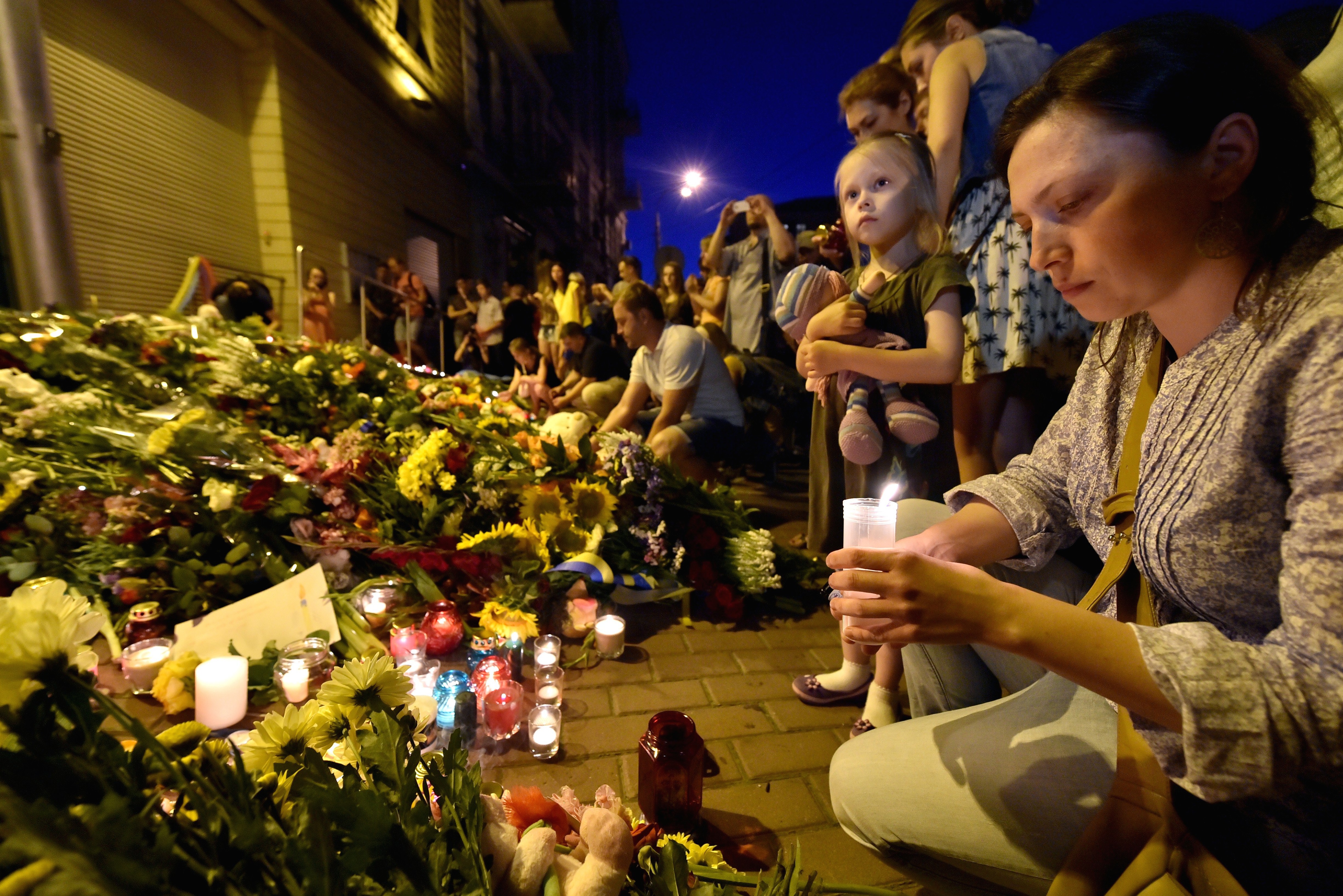
(Photo: A woman lights a candle in front of the Embassy of the Netherlands in Kiev on July 17, 2014, to commemorate passengers of Malaysian Airlines flight MH17 carrying 295 people from Amsterdam to Kuala Lumpur which crashed in eastern Ukraine. By Sergei Supinsky/AFP/Getty Images)

Face Of The Day

Air Malaysia Passenger Jet Crashes In Eastern Ukraine

Family members are leaving Schiphol airport in Amsterdam, Netherlands in a provided bus on July 17, 2014. Air Malaysia flight MH17 travelling from Amsterdam to Kuala Lumpur has crashed on the Ukraine/Russia border near the town of Shaktersk. The Boeing 777 was carrying 280 passengers and 15 crew members. By Robin Utrecht Photography/Getty Images.