(For the View From Your Window contest, the results below exceed the content limit for Substack’s email service, so to ensure that you see the full results, click the headline above.)
Reading the latest VFYW writeup just now, I am humbled by the sheer precision with which the other sleuths were able to find the location. I myself almost went to get the room number (I am an alumnus). I reminded myself that the challenge lies in getting the info from a computer, so I reasoned myself out.
I would most appreciate receiving the book. Thank you and have a great summer!
From a sleuth in Vancouver, BC:
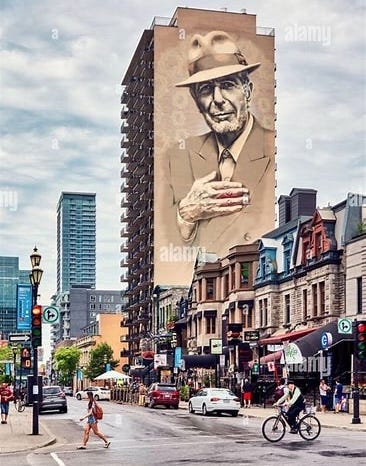
In the discussions of Montreal last week, I was surprised to see no mention of the city’s most famous son, Leonard Cohen, who was born and buried there. He is memorialized by a 21-story mural on Crescent Street in his old neighbourhood:
Here’s a followup from our super-sleuth biologist:
I’m abashed that after finding the tough view last week, I got the building it was taken from so wrong ☹. But seeing the write-up about William Shatner was some consolation. It left out his album Has Been, the one Milwaukee Ballet performed a dance sequence around. I got to see it twice — the only ballet I’ve attended more than once — and it was great fun. You can see the documentary about it here, or listen to the title song here:
This followup comes from our super-sleuth in Augusta, GA:
In October of 1994, Canadian authorities responding to a fire in Morin-Heights (about 40 miles northwest of Montreal) made a gruesome discovery: five bodies, including those of a man, woman, and 3-month-old baby who had all been stabbed repeatedly, with the infant having been possibly pierced through the heart with a wooden stake. The case was quickly linked to a simultaneously unfolding horror in Switzerland, where burning chalets in the towns of Cheiry and Salvan had yielded a total of 48 bodies, many dressed in ceremonial capes.
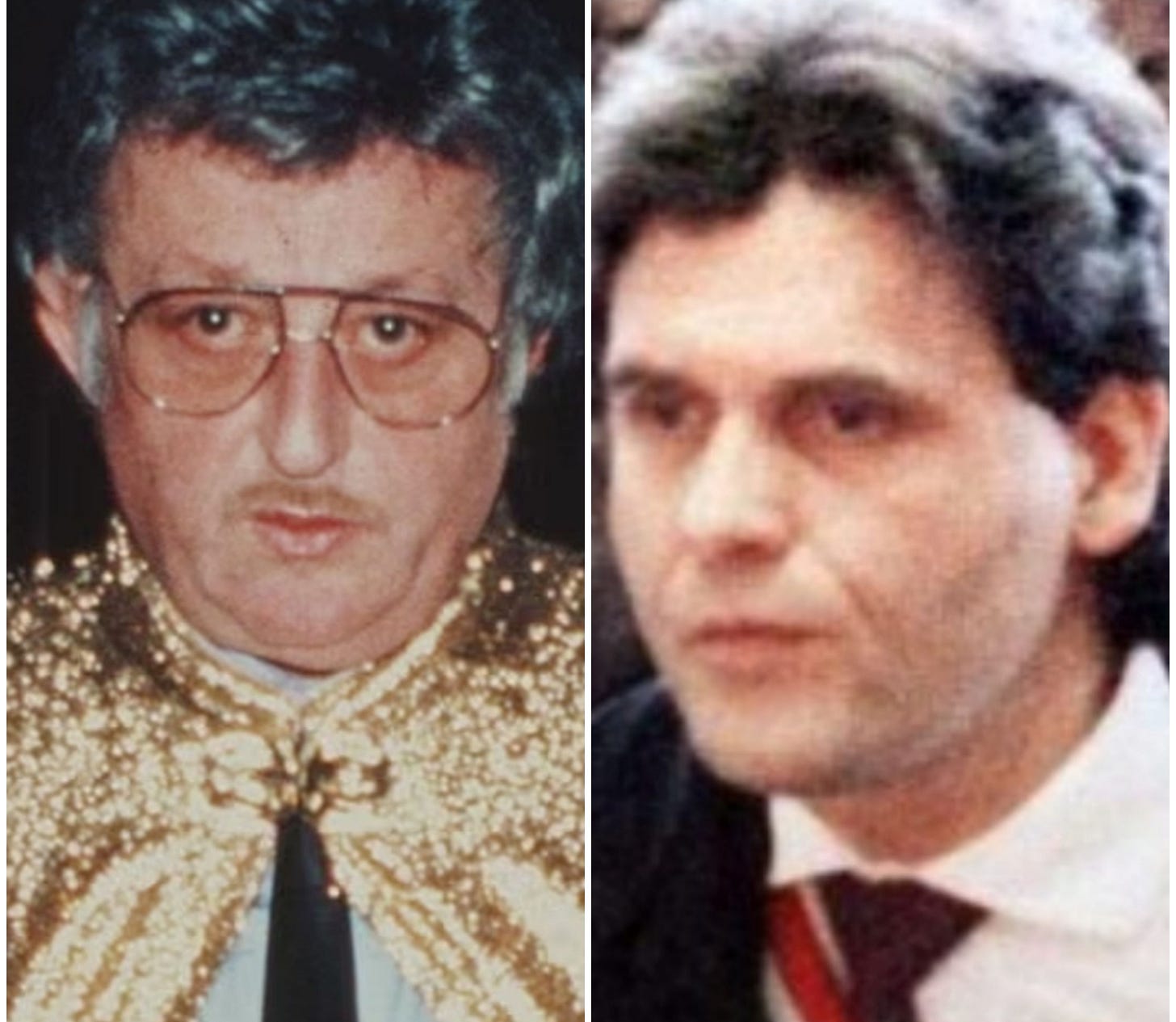
The deceased were identified as members of the Order of the Solar Temple, an occult society formed in Geneva in 1984 by Joseph Di Mambro (a French jeweler who had once been imprisoned for impersonating a psychiatrist) and Luc Jouret (a Belgian doctor who had embraced homeopathy):
The Order combined neo-Templar/Rosicrucian practices with other New Age beliefs and had amassed many wealthy followers in Switzerland, France, and Quebec. Trouble began to brew in the early ‘90s, with accusations of financial impropriety as well as claims of trickery involving the “manifestations” seen during ceremonies. Di Mambro and Jouret decided to eliminate the “traitors” in the Order who had turned against them, and then abandon their mortal shells to “transit” to Sirius with their most loyal followers. They lured back former members with the promise of repaying old debts and dispatched an assassination team to Canada to kill two married members who had named their newborn son Christopher Emmanual. (Di Mambro had named his own “immaculately conceived” daughter Emmanuelle, and had proclaimed her the new Christ-child.)
The Order continued to add to its body count with 16 more deaths in France in 1995, and five more in Quebec in 1997. Swiss composer Michel Tabachnik — a high-ranking Order member who had written many of the sect’s esoteric texts — was tried in 2001 in connection to the 1995 deaths, but he was acquitted in both that and a 2006 trial.
There have been several documentaries about the group in recent years, such as this one in 2022 (which should be available on BBC iPlayer). Below is the first episode of a 2023 documentary, which features video and audio recordings from the Order’s archives that have been newly released by authorities, as well as current interviews with Michel Tabachnik and other former members:
Episodes 2, 3, and 4 have also been uploaded, and the whole series is available for purchase on Amazon. (I’ve seen it disappear from YouTube more than once, so anyone interested in watching it for free might want to do it sooner rather than later!)
From the submitter of last week’s view:
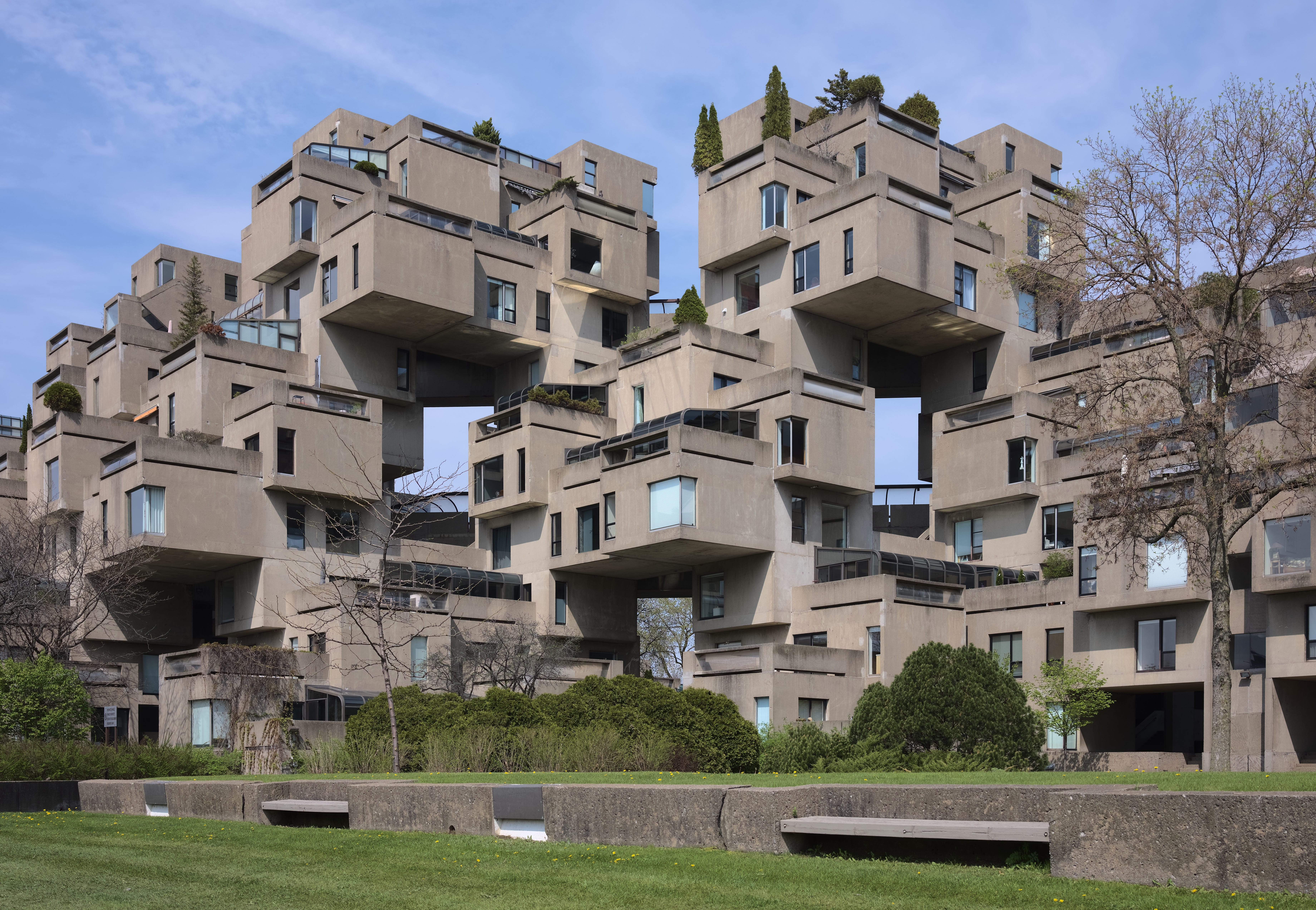
Thank you again for running my photo of Montréal! I’m really not sure I would have found that one, and I’m kind of sorry there wasn’t an architecture report last week. I know about Moshe Safdie’s Habitat 67 but have never gotten closer to it, and who knows what else there is in this amazing city.
Habitat 67
Damn, what a cool building. Here’s a quick followup from our resident architect who was stumped last week:
I can’t believe it. I searched all over Montreal, but I was searching west towards Mt Royal when I needed to be looking east. I almost emailed you to confirm if we were in Montreal so I could write about its buildings.
Earlier in my carrier I worked with Vince Ponte, the urban planner who designed the underground walkways in Montreal. He knew all 32 kilometers of them. Plus he had the idea to link the downtown buildings of Dallas and Minneapolis with skywalks. I missed contest #380 the first time we visited Montreal. Maybe next time.
And as the Park Avenue sleuth suspected, my wife and I also did a mini-moon in Montreal, before heading to Greece a few months later to check out the Acropolis and ancient Greek sites.
One more followup comes from the UWS super-sleuth:
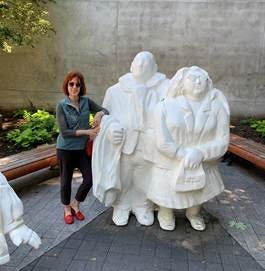
Last week I enjoyed reading about Montreal, a wonderful city to visit. My husband and I were there four years ago, staying 650 meters from last week’s View. (Yes, I should have recognized it!) I want to give a shout-out to the glorious Musee des Beaux-Arts, in the Ville Marie area. And to the public art, such as “Les Touristes,” sculptures by Elisabeth Buffoli, located in Parc de la Presse in Montreal:
Meanwhile, not sure where you are these days, but if it’s anywhere on the East Coast, hope you’re keeping cool! And that you’re doing something enjoyable for the Fourth. Thanks, as always, for all the VFYW fun!
A handful of times
I’m a (retired) fully certified ski instructor and a 40-year member of the Professional Ski Instructors of America – Western Division, which certifies nearly all ski and snowboard instructors in California, Nevada, and Hawaii. For the last year, the organization’s elected board has clung to power, secretly and unlawfully suspending all their opponents and voiding the most recent election. It’s a sorry mess, with three lawsuits, claims of violating fiduciary duty, an illegally recorded private conversation, a police investigation, and alleged civil extortion.
I discovered that the root cause was a “One Voice” policy that gags directors, preventing them from speaking critically to the membership after a majority vote of the board. And then I learned that One Voice has been a common policy among nonprofits for decades, and, even more distressing, common among boards for school districts, community colleges, and state universities. I ended up writing a Substack article, “One Voice: Gagging education board members,” for the Foundation for Individual Rights and Expression.
Here’s one more email before we get to the current view:
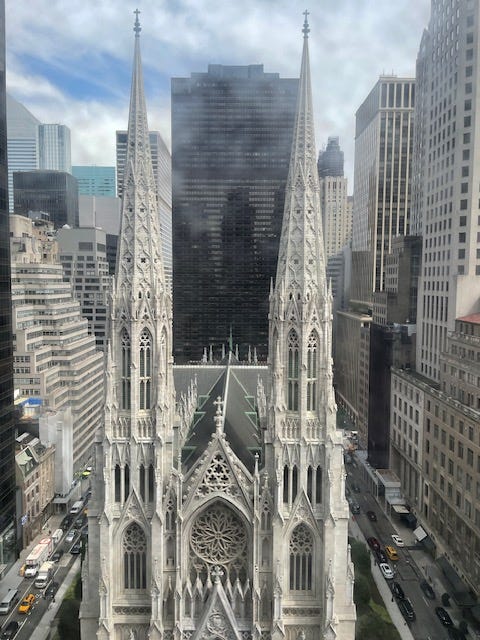
When I saw St. Patrick’s Cathedral in last week’s regular VFYW, I said to myself, is your reader at the dentist? Because it’s the similar view I will see on Monday when I go to the dentist for my next cleaning:
New York, New York, 12 pm
On to this week’s view, a sleuth writes:
I’m pretty sure that’s Luxembourg, along the river descending from the Old Town. I used to live there in the Summer of 2019 and it’s a magical, if small, place.
Another guessed simply, “Besançon:: Bourgogne-Franche-Comté, France.” A few clues are highlighted by our super-sleuth in Durham, UK:
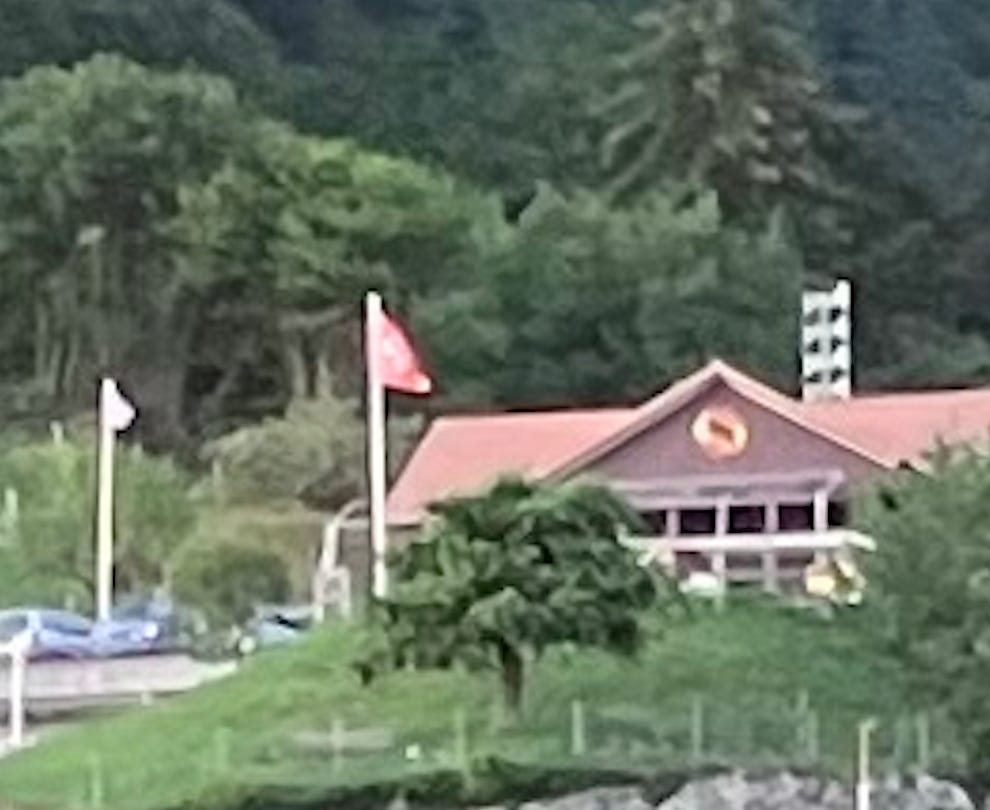
This week I think the view is from the rather-fancy (and expensive!) [hotel redacted]. Two clues in the image led me there — first, the Swiss flag:
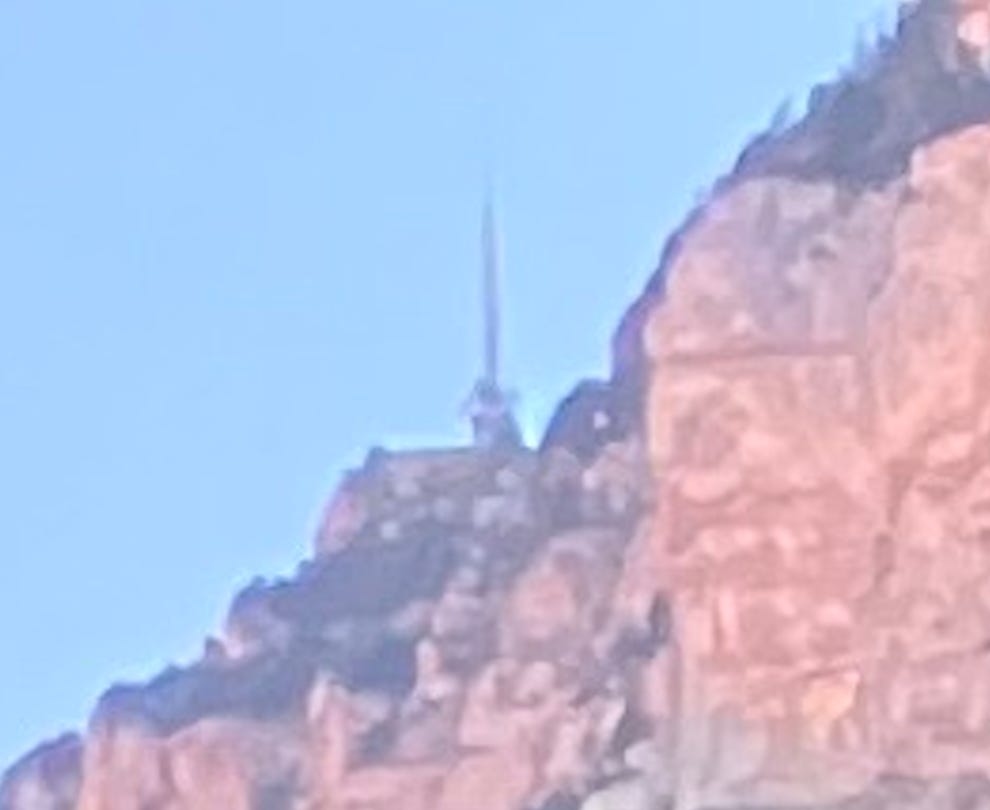
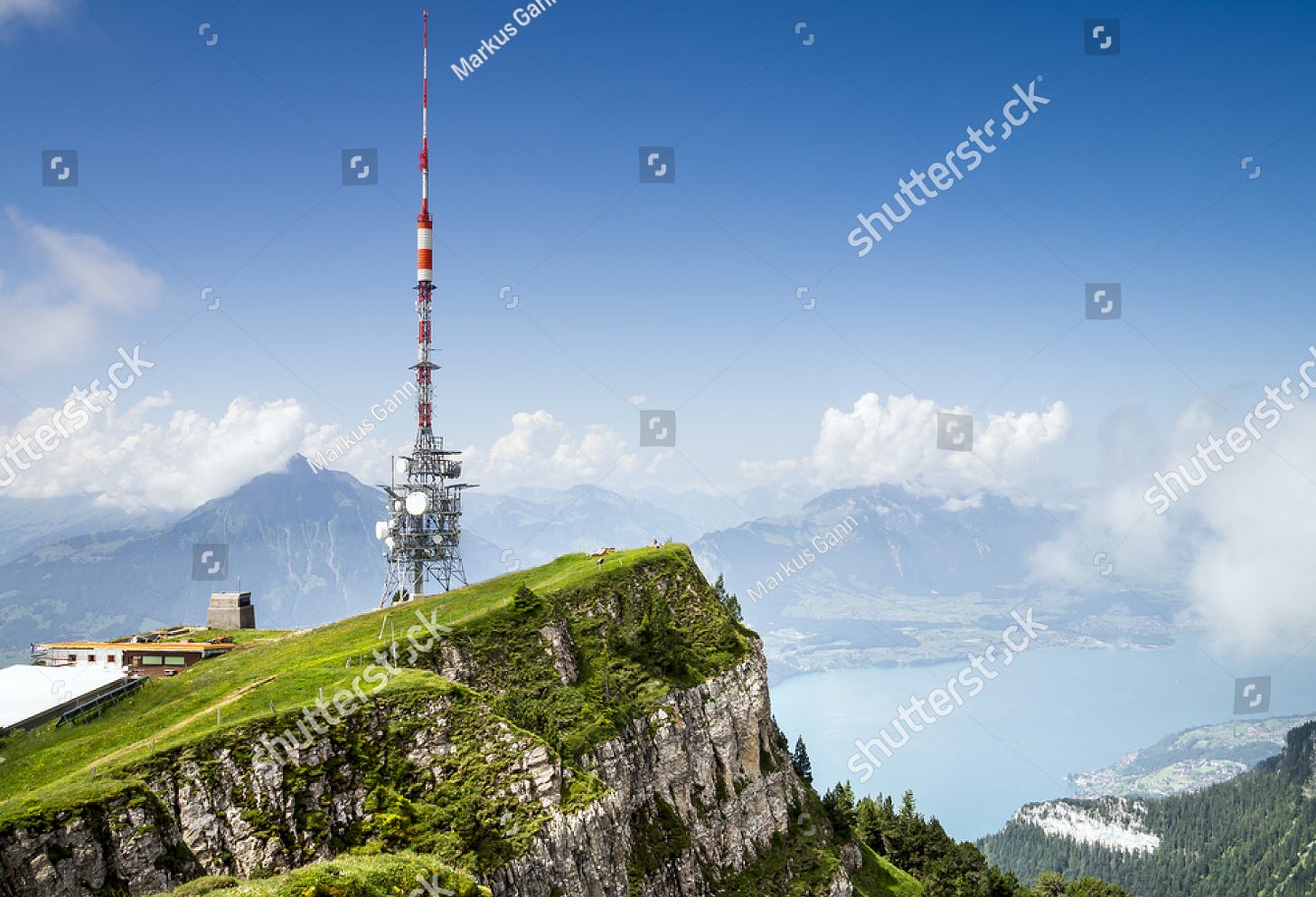
… and then the mountaintop antenna in the far distance, which I think is the Beatenberg Antenna:
A better view of that antenna comes from our super-sleuth in Warrensburg:
I knew the Swiss flag left conspicuously unblurred in the background was too good to be true this week. Or rather, while it narrowed down the country, it didn’t change the fact that [country redacted] has a million towns with a view like that. I decided therefore to focus on the radio tower on the mountain, and after eliminating a bunch, I came upon one at Beatenberg, which seemed to fit:
Our super-sleuth in Berkeley and his wife name the right country:
Normally Jeanne doesn’t express an interest in the VFYW photo until after I’ve found the location, but this week she asked about it early, and after studying it a bit, and pondering a bit more, she said “Switzerland.” And she was right. (I’d been thinking that too.)
But getting any more specific than that didn’t happen until I’d managed to identify the triangular road sign as one indicating a “school crossing,” and the vivid green box next to the sign as a “dog toilet” from a Swiss company named ROBI AG Wallbach (which apparently supplies them all over Europe but mostly in Switzerland). But that just gave me the confidence to conclude that the panel next to the gray box next to the green box is a tourist information sign featuring a map of Thunersee, the lake that’s just west of Interlaken. After that it was all a piece of Zuger Kirschtorte.
Here’s our Giuseppe, our super-sleuth in Rome, got to that lake:
This week the contest was fairly easy; I found the location by searching for it on a map. This might seem a bit odd. While we know the place is in Switzerland (there is a clearly visible flag in the photo), the rest of the image features fairly generic elements: a cluster of houses, a narrow valley, and two looming peaks. Switzerland may be a small country, but it contains hundreds of valleys. How long would it take to check them all?
In reality, I only consulted the map for the immediate area, but that just pushes the problem back a step. How did I manage to identify that specific area from such a generic photo? It is actually perfectly feasible — if the image itself contains a map of its surroundings. And that is precisely the case with this week’s view:
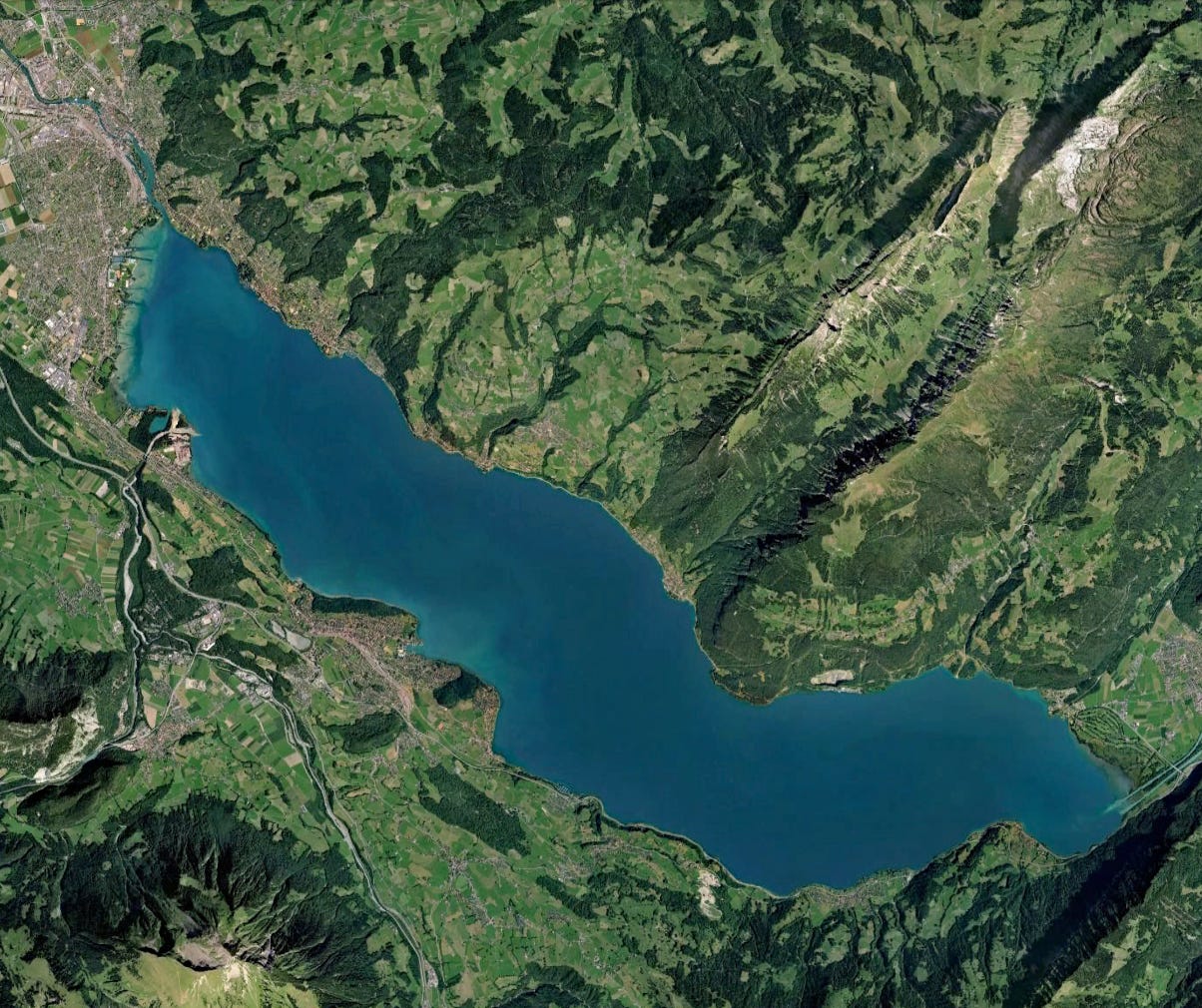
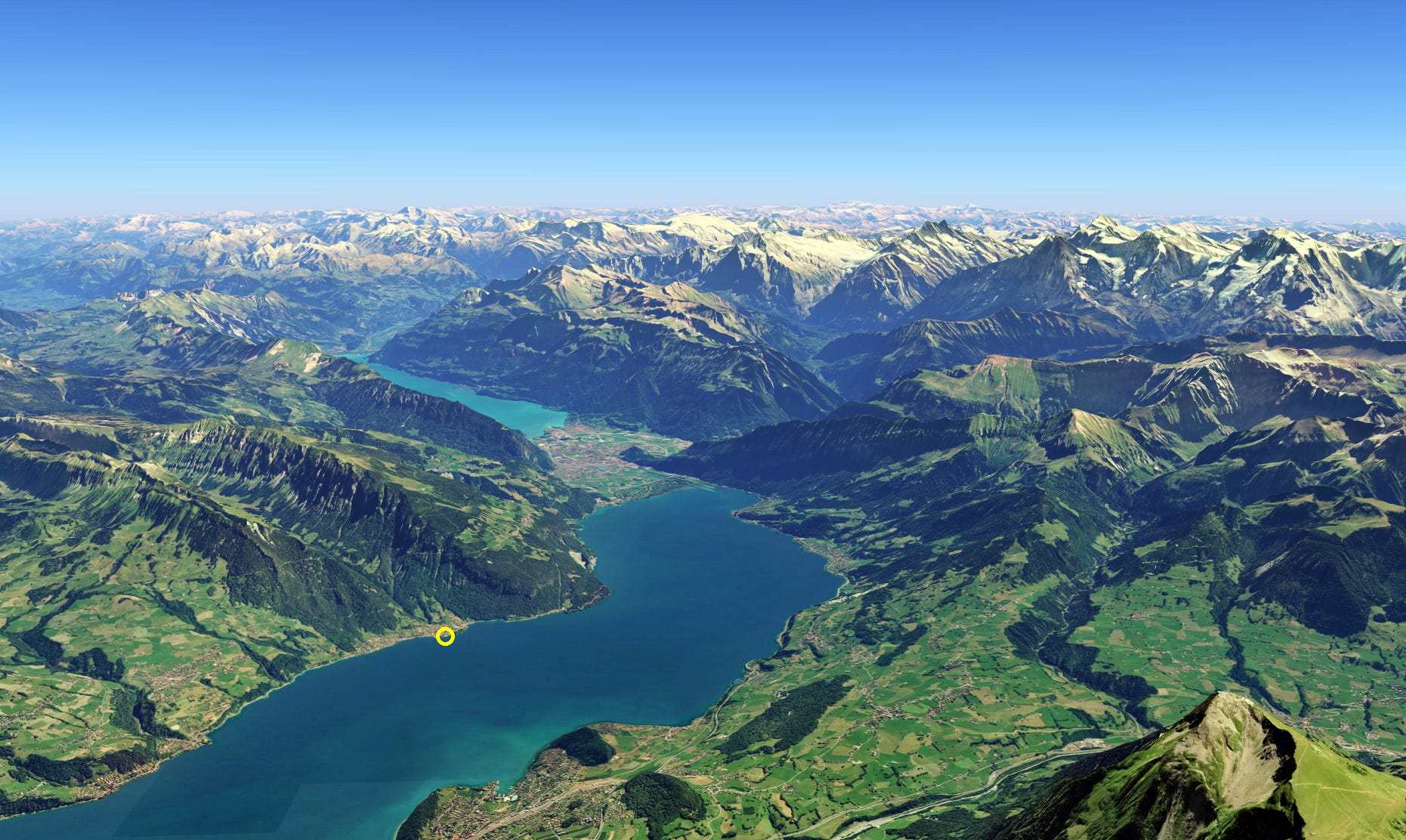
If you look closely, you can see that the map depicts a lake (which is not surprising, given the palm tree visible in our photo: there is clearly something nearby that moderates the Alpine climate), and within a few minutes, you can find the corresponding lake (Lake Thun) on Google Maps:
The biologist sleuth grumbles:
What kind of person posts a mountain-cliff image from Switzerland that isn’t in the Alps? A sadist, that’s who. But I got an exhaustive tour of every limestone cliff in the Alps out of it, so not really complaining. It was the cable car tower that finally gave it away, along with a similar image from Thun.
Here’s a town guess from our super-sleuth in Alexandria:
Lauterbrunnen, Switzerland? I have nothing to go on but the license plates and the alpine houses … and the beautiful cliffs in the background. Sadly, I’m too lazy to descend the rabbit hole this week. My mom died last week and I’m planning the funeral with my sister, so I’m busy.
Our VFYW condolences ❤️. Next up is our super-sleuth Sagaponack, and prepare yourself for the cutest damn photo ever:
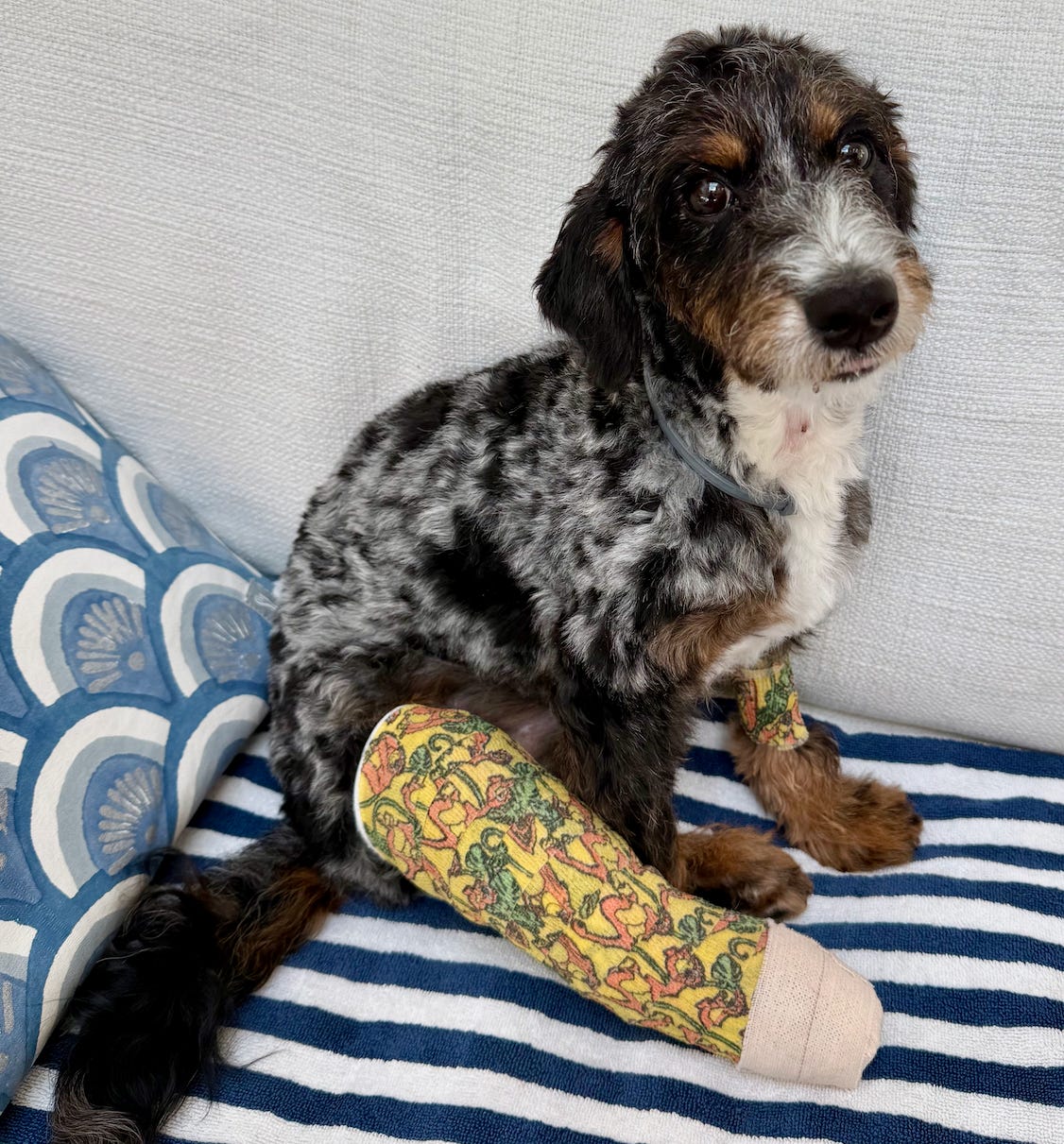
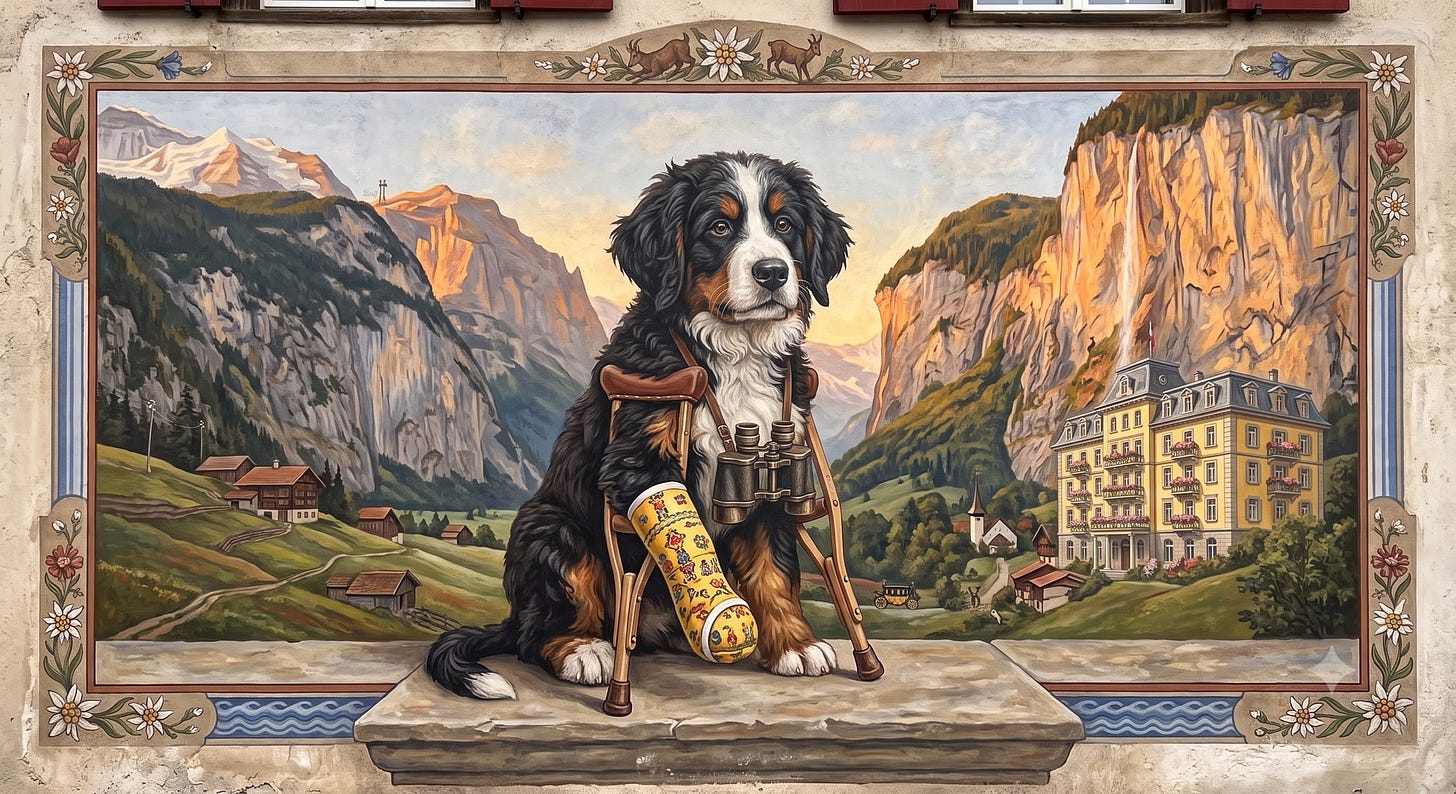
We’re on a very packed itinerary in Croatia, Bosnia, and Montenegro this week, so not ideal for solving a very tough (at least for me) contest. From what I can tell in this week’s View, we’re somewhere in the Bernese Oberland. My closest connection is our Bernedoodle puppy, who has 1/8 heritage from that region. Sadly he broke his leg, but happily on the mend:
He did his best to help us find the View window from his homeland, but we just ran out of time.
That doesn’t deter us from our weekly mural, though. This one is executed in the traditional Lüftlmalerei style — the classic alpine art of trompe-l’œil house painting. It blends 19th-century romantic realism for the sweeping mountain landscape with an ornate folk-art border featuring native edelweiss and chamois, giving the entire piece the timeless look of a hand-painted fresco on a historic stucco facade:
Another Swiss town is picked by our super-sleuth in Riverwoods:
Hi Chris, I hope your summer is going well and, if you’re a futbol fan, you are enjoying World Cup action. I’m not achieving as much as I would have liked for VFYW on my trip, but I hope to still send something upon returning — nonetheless our European travels have been enjoyable and are not over yet thankfully.
The view this week is challenging in general, but even more so for me when I can only use my phone and not PC to research. Too small of a screen :) After missing the Piso language clue from the Cusco view, I was determined to never miss easy clues again, so this week I feel confident that the flag shown in rear is Switzerland’s. But no luck in locating the town or window! So I’ll guess Murren, Switzerland.
Yet another guess, from a new sleuth: “I’m not sure, but this looks like a view from the Swiss Alps in Lucerne, Switzerland.” Another guesses simply “Chur, Switzerland.” Chini knows the right mountain town:
The UWS sleuth sees Wengen:
Immediately clear that those are the Alps. Lots of poking around got me to Wengen, Switzerland, but that’s as far as I could go. The Google Street map shows this area after what looks like a serious storm: snow everywhere, and you can’t even see the mountains. Bottom line: no luck and no time (again!) this week.
Our super-sleuth in Sydney also went with Wengen:
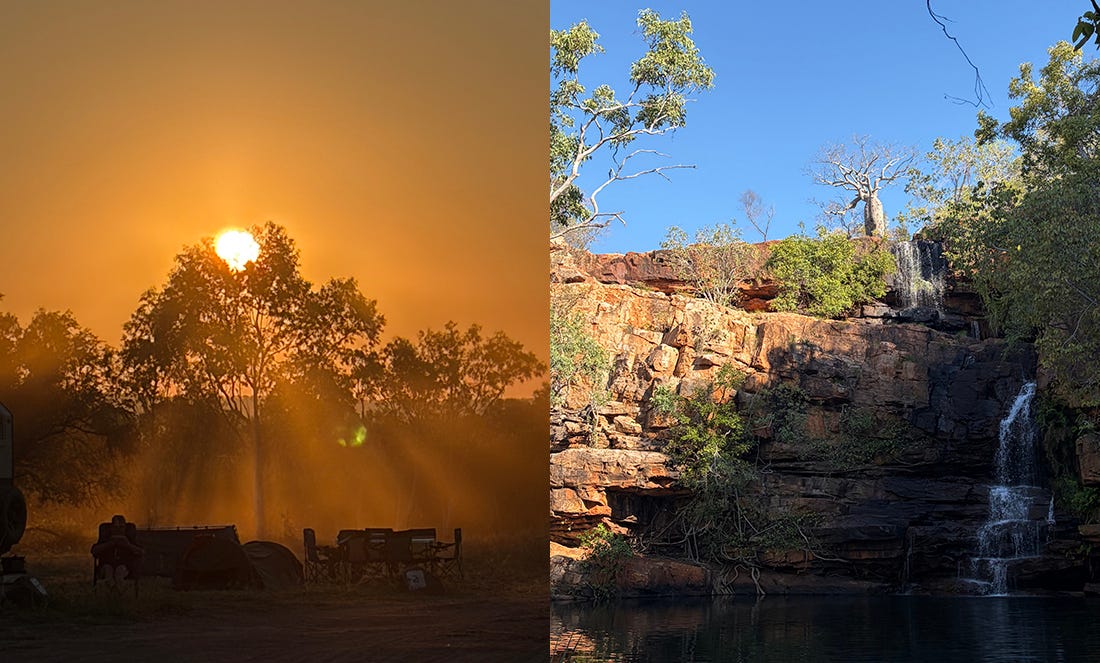
No time for the actual hotel, as we have almost no reception right now, but here are some photos of where we are — the Kimberley in north Western Australia:
Incredible country this one.
From our super-sleuth in San Mateo:
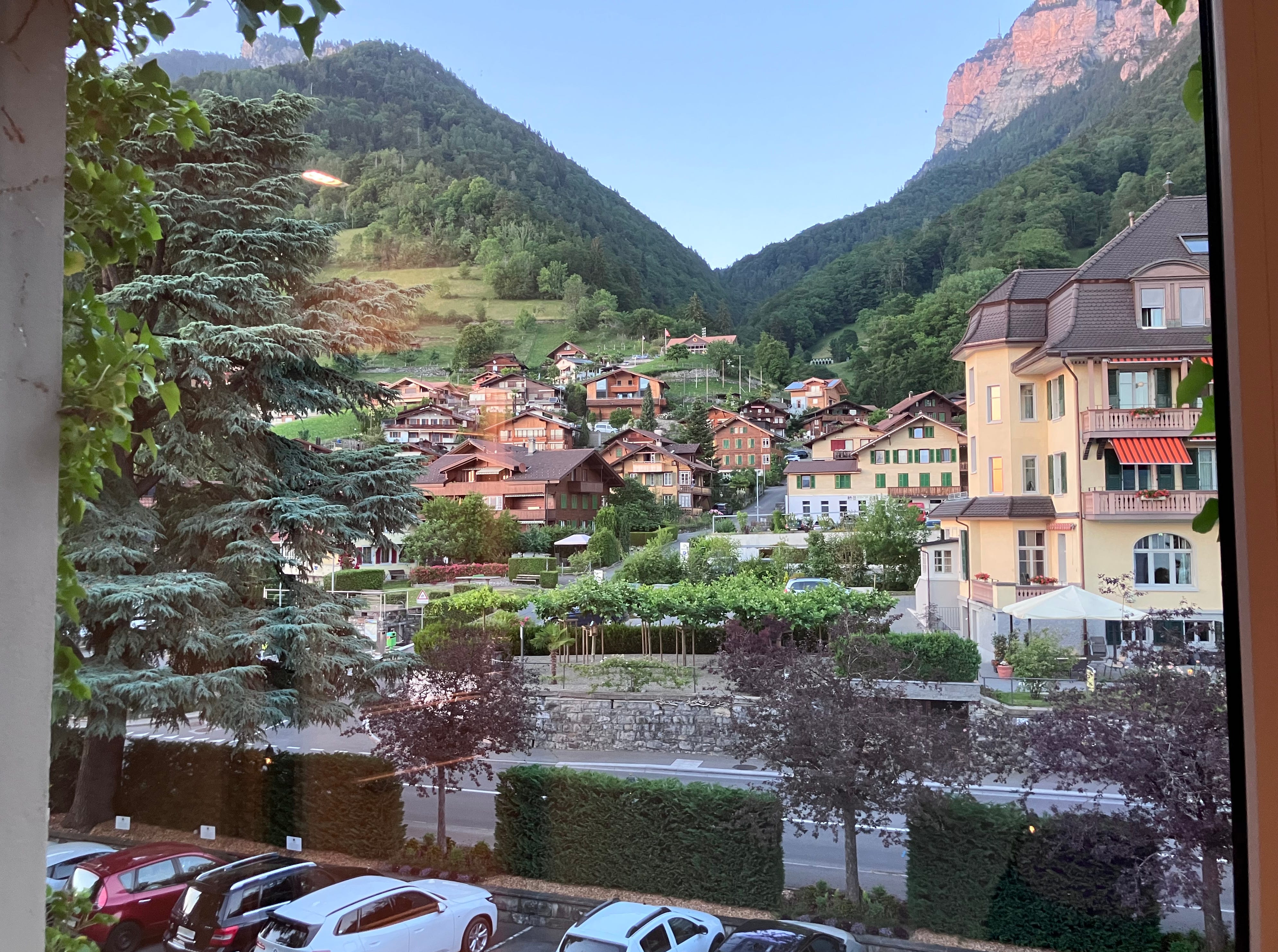
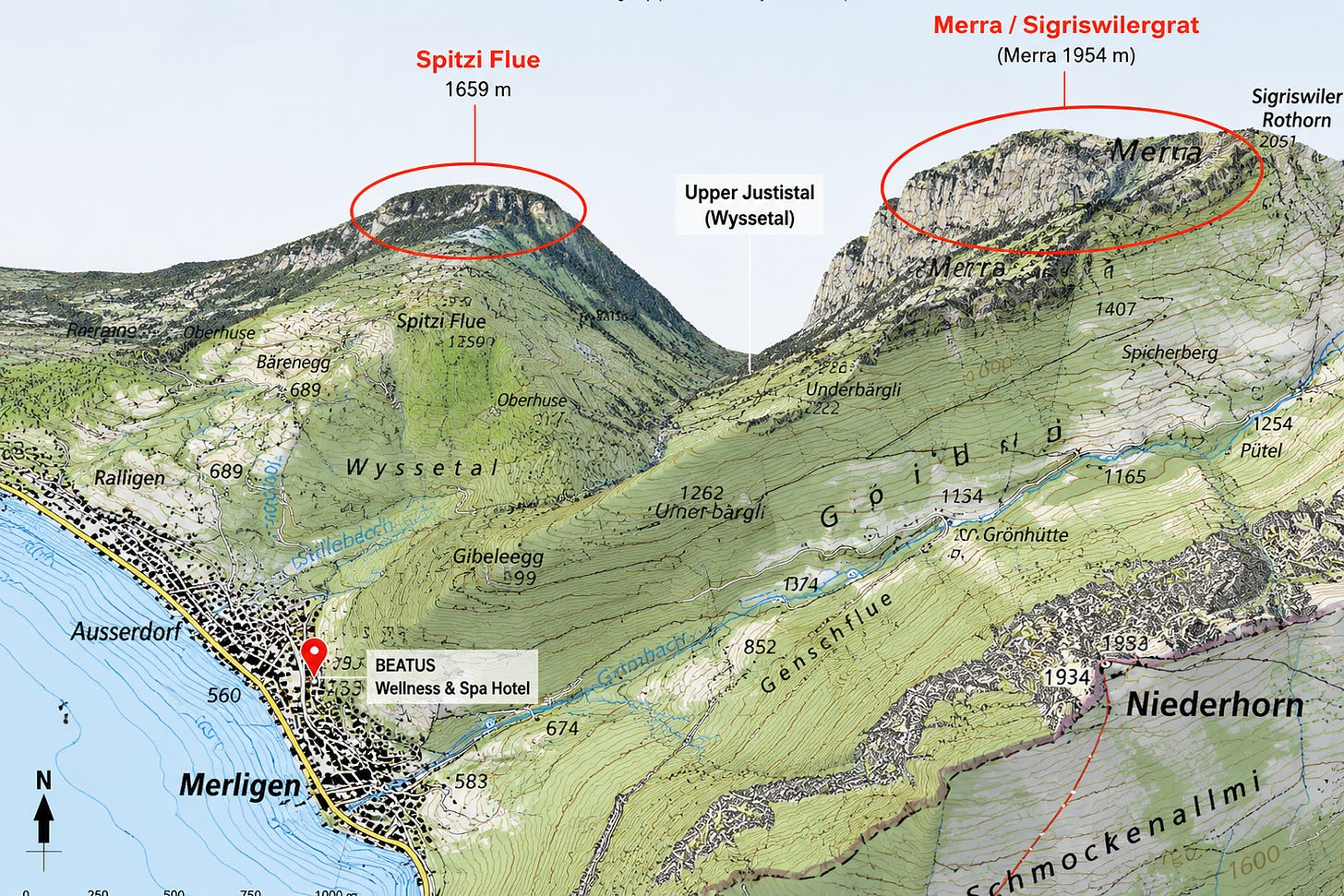
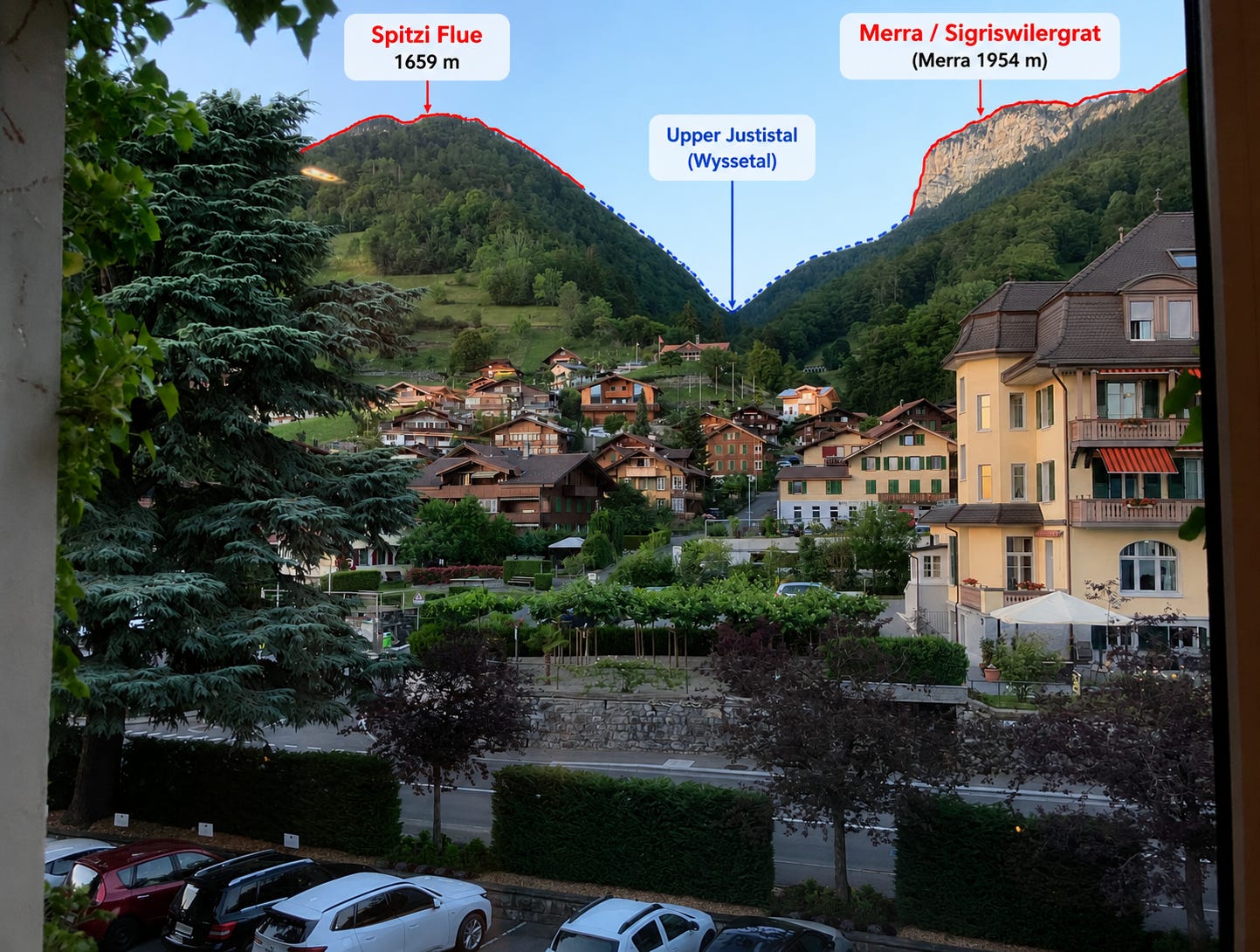
The VFYW shows us a small village spread out in a lovely green valley, but this week, the houses, buildings, streets, and cars are not the clues which solve the puzzle, except to suggest that we’re likely in a Swiss village. Then we only need to pay attention to the peaks in the upper-left and -right of the VFYW, because from there, the official Swiss topological maps can help us identify the peaks, which are Spitzi Flue and Merra/Sigriswilergrat, and guide us to the valley below, which leads us to [town redacted]:
And so, here is the first iteration of this week’s Reimagined, with the key clues superimposed on the VFYW (but wait):
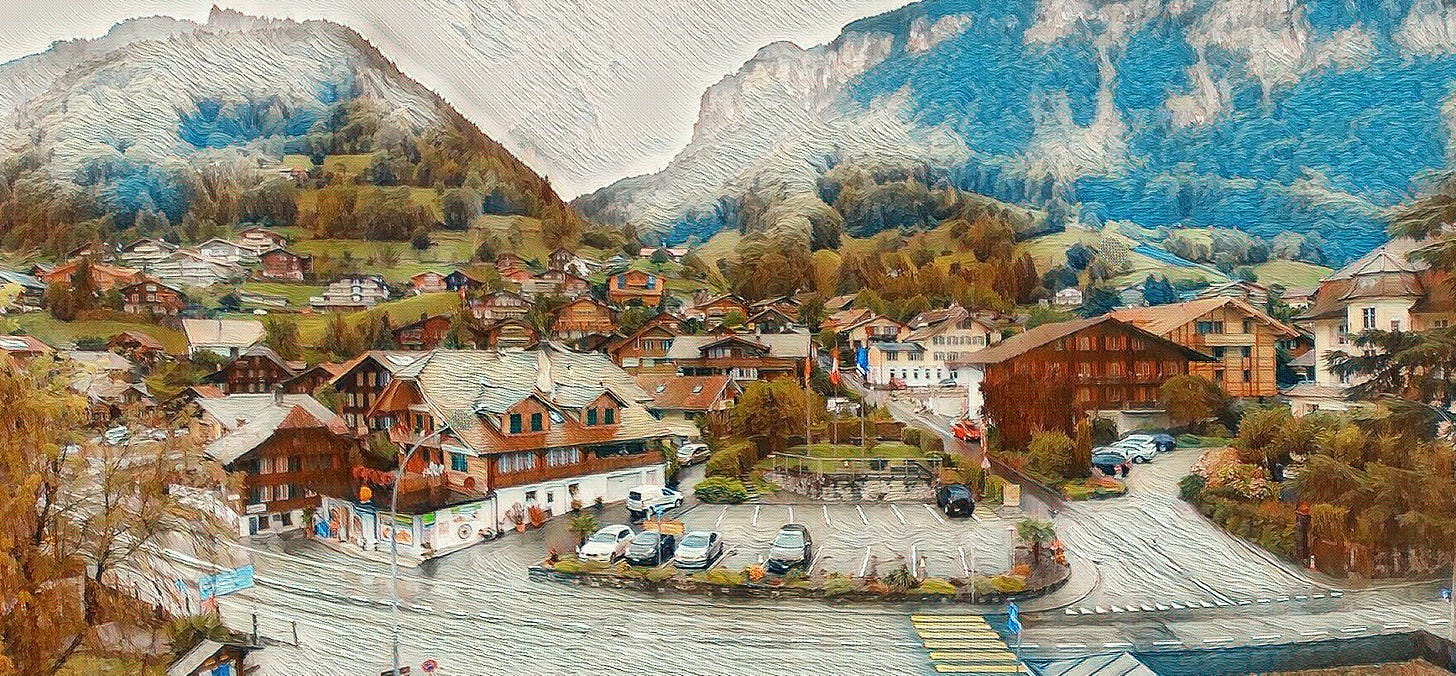
The VFYW, jammed up against this hotel parking lot and hedges, seems cramped. Rather, the VFYW should have better emphasized the small village spread out in the valley, and the limestone cliffs of the Sigriswil Ridge (Sigriswilergrat), part of the foothills of the Bernese Alps. The curved Seestrasse is a better lower border for the picture, and the Mittelstrasse guides the eye from there up the diagonal to the church at the center top with the distinctive bell tower. So here’s a Reimagining of the Reimagining of the VFYW:
Revealing the right town is the CO/NJ super-sleuth:
Oof, this was a tough one. Switzerland was the easy part, what with the Swiss flag in front of the highest building up on the hill, the classic Swiss chalets, and the limestone cliffs characteristic of the northern Alps. After that, though, this was a slog.
Two big clues were essential for me.
One was the spire up on top of the cliffs to the right. The lack of such a spire on most of the mountains I looked at around the most obvious towns — such as Lauterbrunnen, Brienz and Engelberg — allowed me to quickly move on. The other, more subtle clue was that I had a very strong hunch we were on a lakefront. The road in the foreground running straight and perpendicular to the roads going up through the village felt like a lakefront road. And the temperate to even tropical trees, planted in a manner reminiscent of a promenade, made me think we had a moderating influence of a body of water nearby.
I initially thought Interlaken would be a prime candidate, but unfortunately, there were no matching mountains in that town. I then looked at Oberhofen on the Thunsee. No luck there either, so I thought I would try the other villages around the lake. Next one was Merligen. Bingo.
Turns out that prominent yellow chateau across the street is not a hotel, but rather an old folks home. And that building at the top of the hill with a Swiss flag?? I think it is a freaking used-car dealership!
Yep, according to the A2 Team in Ann Arbor:
What kind of building is this anyway? A restaurant? Actually, it’s Paul Lenz’s used-car dealership, which mostly sells old but well-maintained Subarus — appropriate for Switzerland.
Here’s more on Merligen from our super-sleuth in Baltimore:
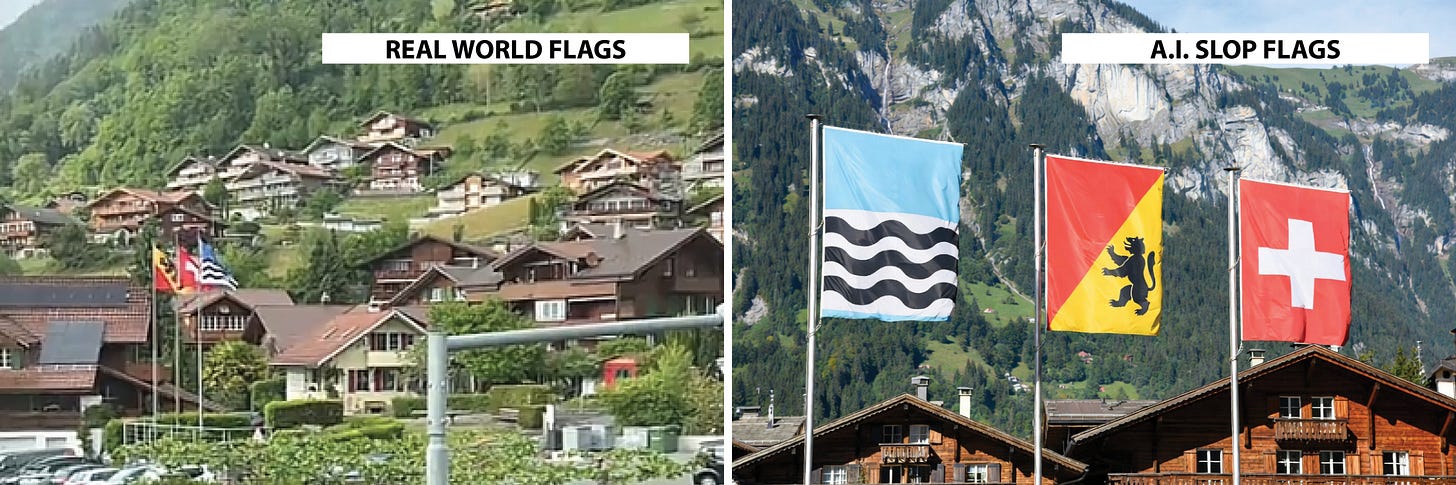
I was lucky to come across this TikTok video that may have been filmed just one window away from ours. As the camera pans to the left we can see three flags: Canton of Bern, Suisse, and Merligen. I couldn’t find any great images of an actual Merligen flag in the wild, so AI kindly generated the not-quite-passable version below-right:
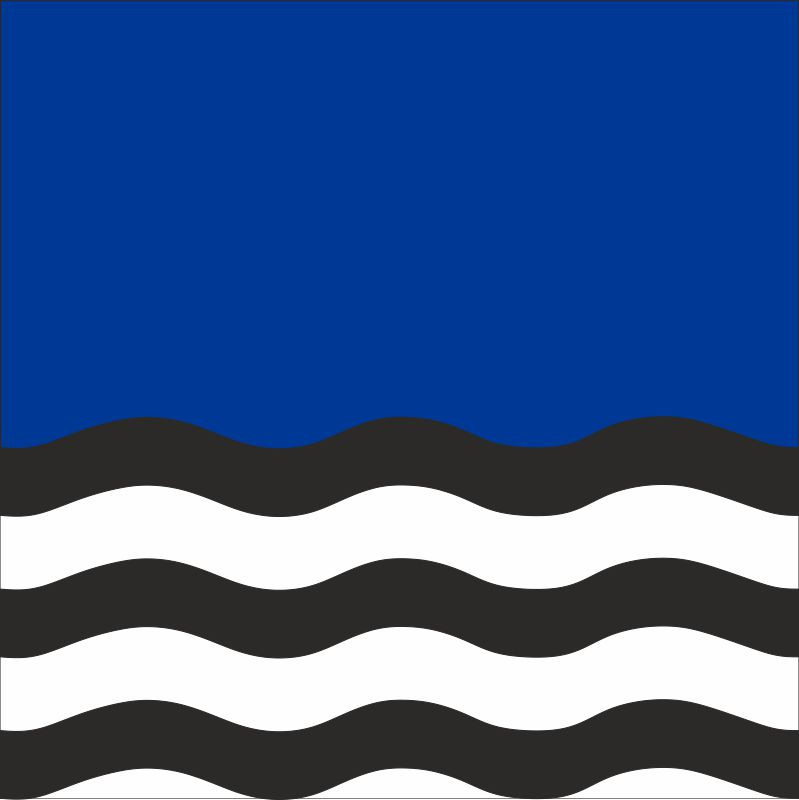
Here’s what it’s actually supposed to look like:
The Merligen flag was, for me, the key to finding this window. The TikTok video calls this location Interlaken (~20 minutes away by car), which added to the level of difficulty. More difficulty means more fun, right?
Thanks for all you do, Chris. Here’s wishing you a happy 4th of July. Be well and stay cooool.
Thank yooou! A bit more on Merligen comes from the A2 Team:
The town is situated on an alluvial fan formed by the creek (the Grönbach) that runs through the deep valley we see in our view. It was first documented in 1280 AD, and for much of its history was a rather isolated place, accessible either via boat or by footpath along the shore. The southern orientation allowed growing grapes for wine, which, together with the remote location, may have contributed to the reputation of the Merligers to be fools.
The a-maize-ing sleuth in OKC zooms out:
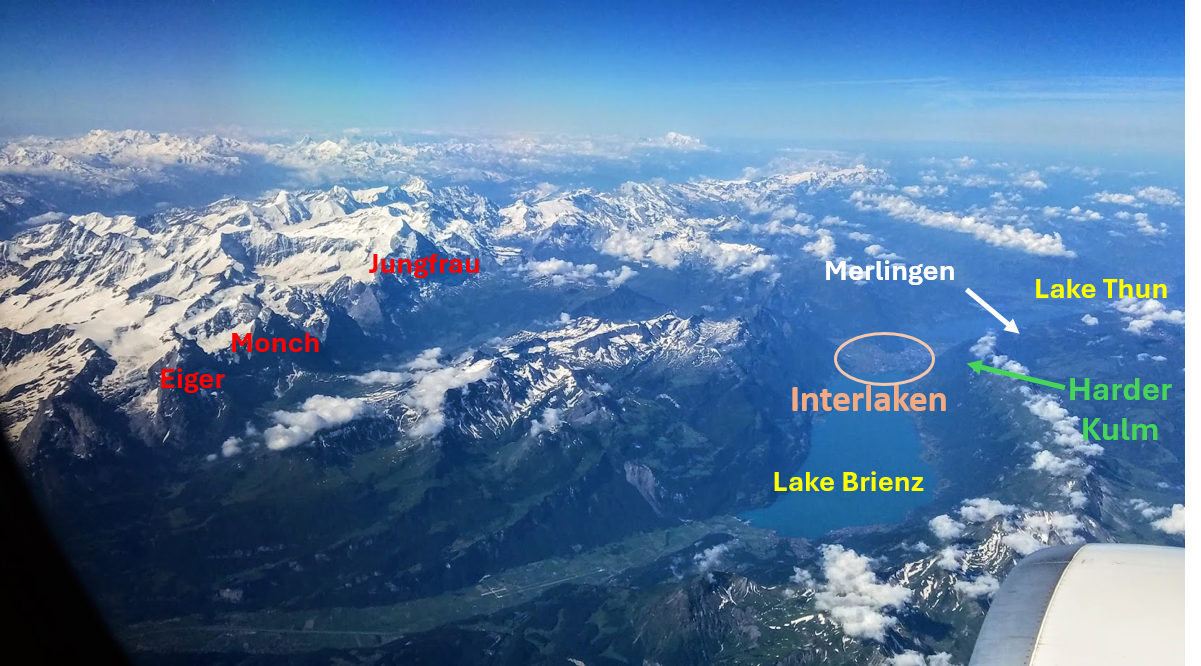
I looked through my travel photos in the Interlaken-Jungfrau area and found Merligen mostly hidden just behind the slope. Here it is from a fly-over in 2018 on my way to Milan:
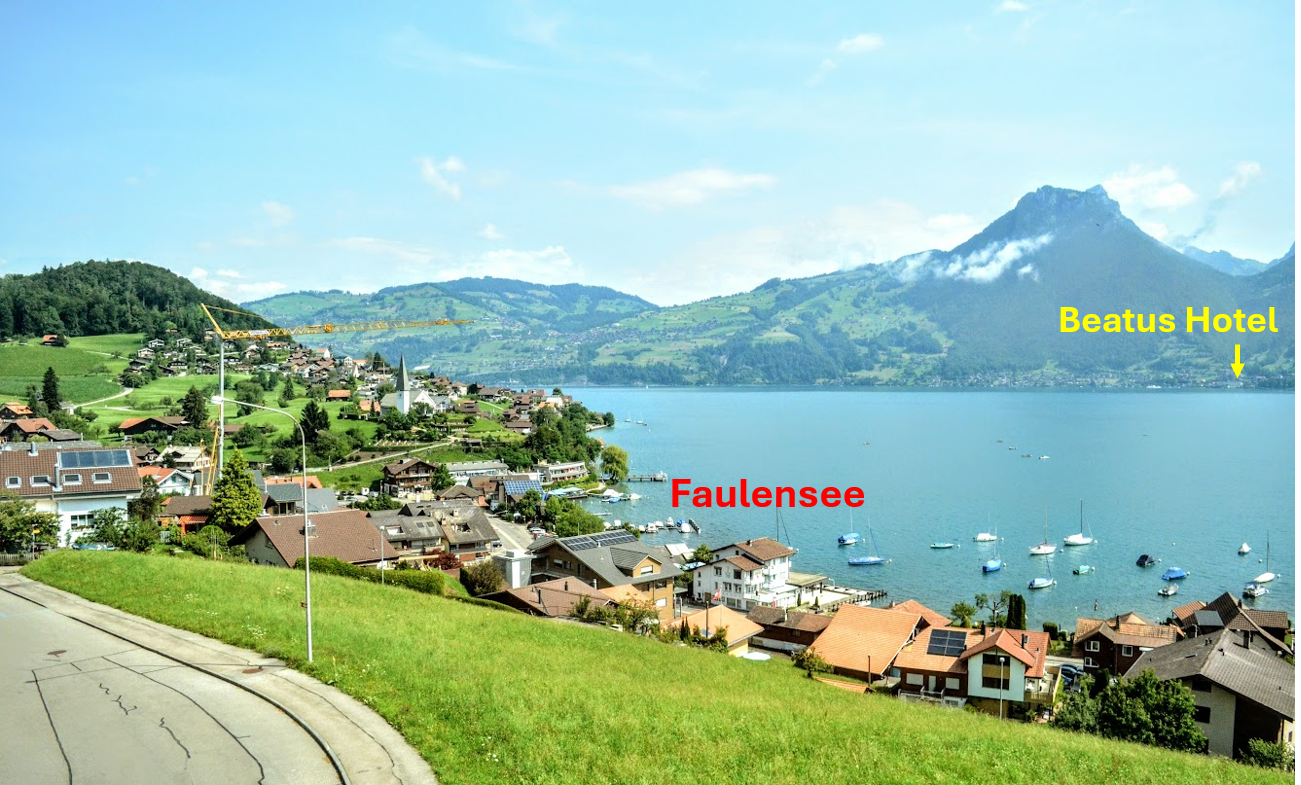
And here’s a photo from a ridge-wide walk at the top of the funicular, Harder Kulm, in 2019:
That same summer, here’s a photo from the Interlaken-Geneva train, on the south shore of Lake Thun looking north:
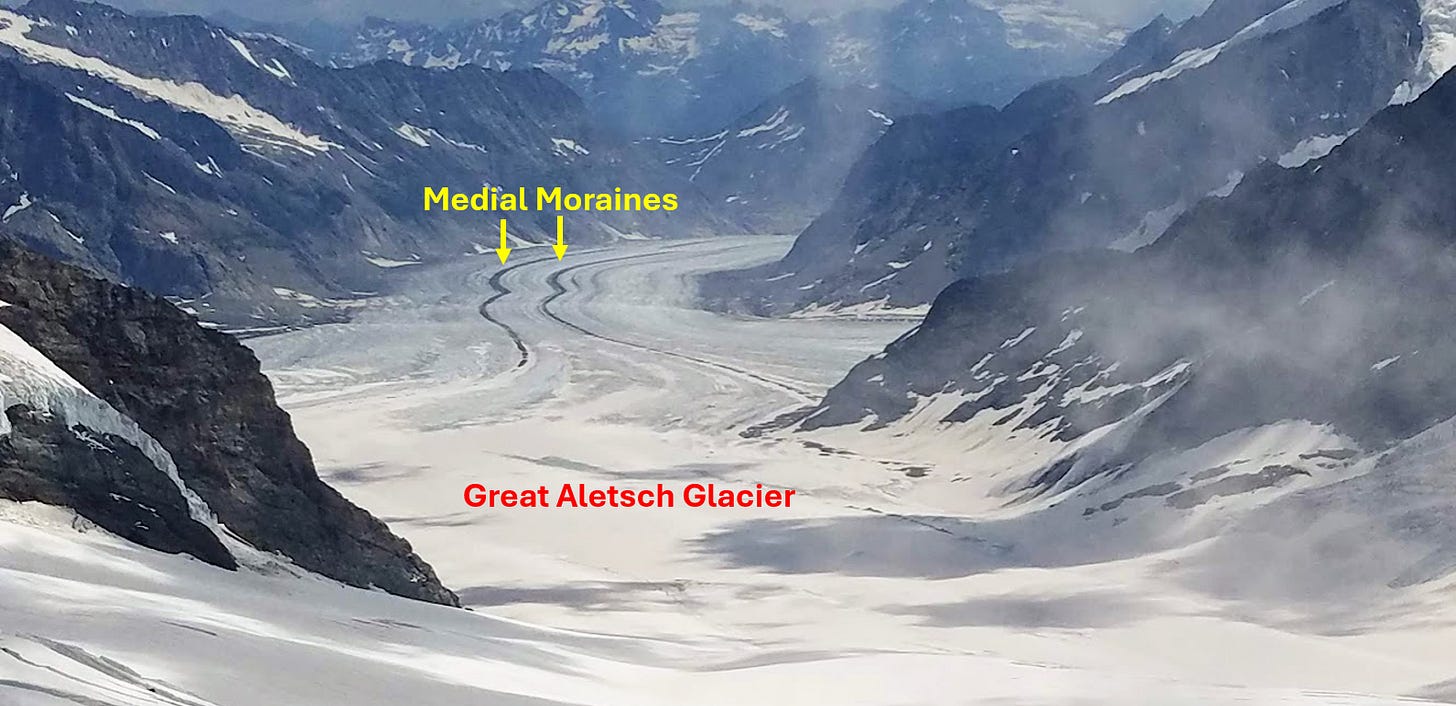
On the popular train ride up to the Jungfraujoch, we stopped for the view of the Great Aletsch Glacier:
Those dark stripes in the distance are clear examples of medial moraines, formed by rock and gravel flows from different tributary glaciers. Such contents are more quickly homogenized when two liquid rivers merge, but the debris identities of “ice rivers” remain in their own lanes and can be lineage-traced many kilometers downstream. That’s more or less how we trace ancestry in human DNAs.
adf
Riverwoods gets the honor of revealing the right hotel this week because he’s actually been there:
This week’s window view is from the Beatus Wellness and Spa Hotel in Merligen, Switzerland. I have been here! Shortly after high school, I went on a trip that took me through Amsterdam, Rome, Venice, Florence, Heidelberg, and Interlaken, which is a stone’s throw from Merligen. I remember stopping by a local bar in the summer, lots of young travelers from all over the world there, reggae playing … and somebody handed me a joint, which I had never had before. I went with it. “Wow this feels crazy,” I remember thinking.
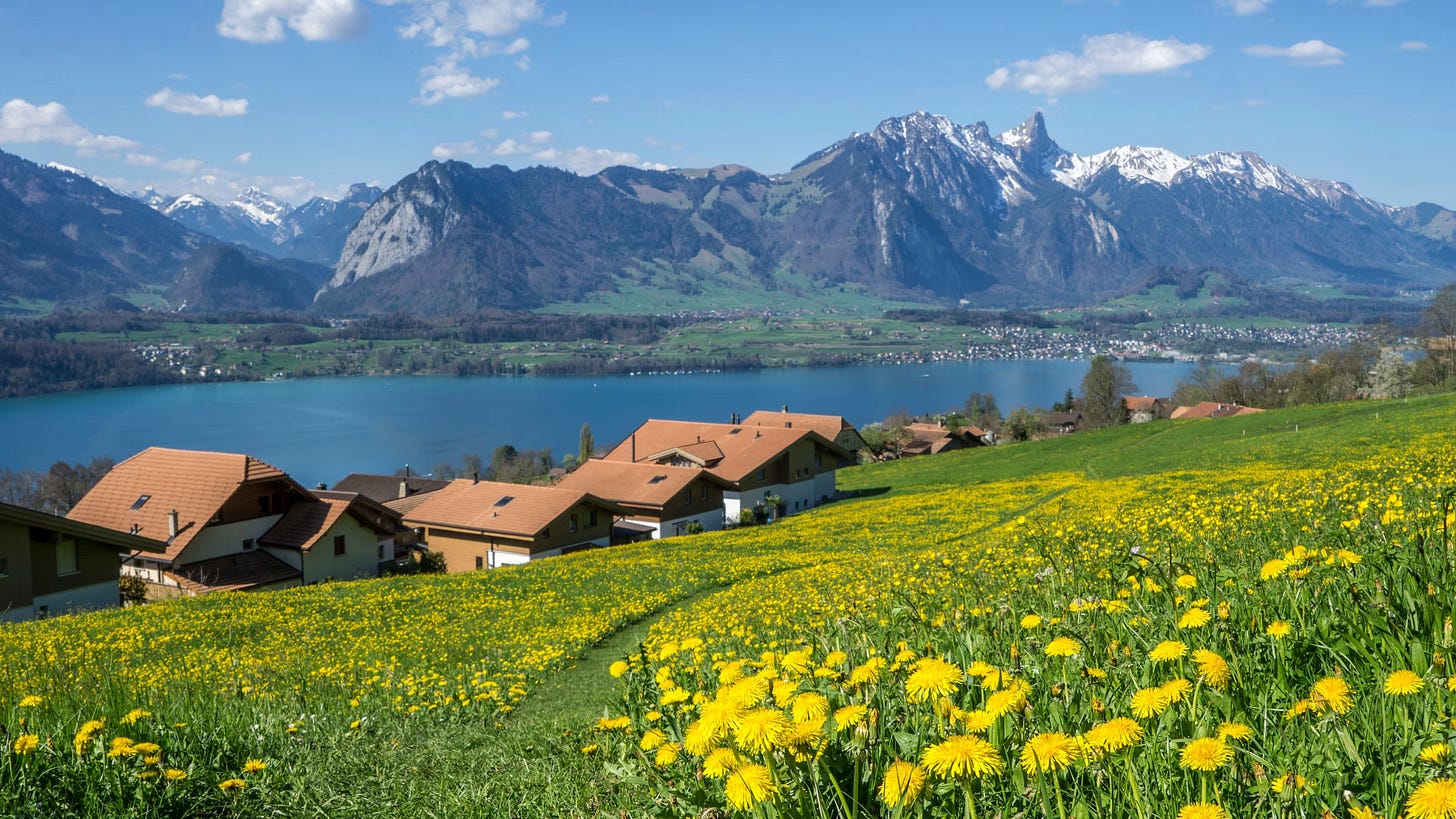
Of anywhere I have ever been, Switzerland is just the pinnacle of natural beauty perfection, especially this Interlaken/Merligen area. The color of nearby Lake Thun is the bluest blue, the grass the greenest green, the dandelions the yellowest of yellows:
Just a spectacular part of the world.
Eagle Rock wins the speed prize this week:
For what possible purpose could this town forbid Street View on the two blocks around our hotel? So weird. Like, “If you want to savor this picturesque-ass view, you come pay for it.”
From the submitter of this week’s view:
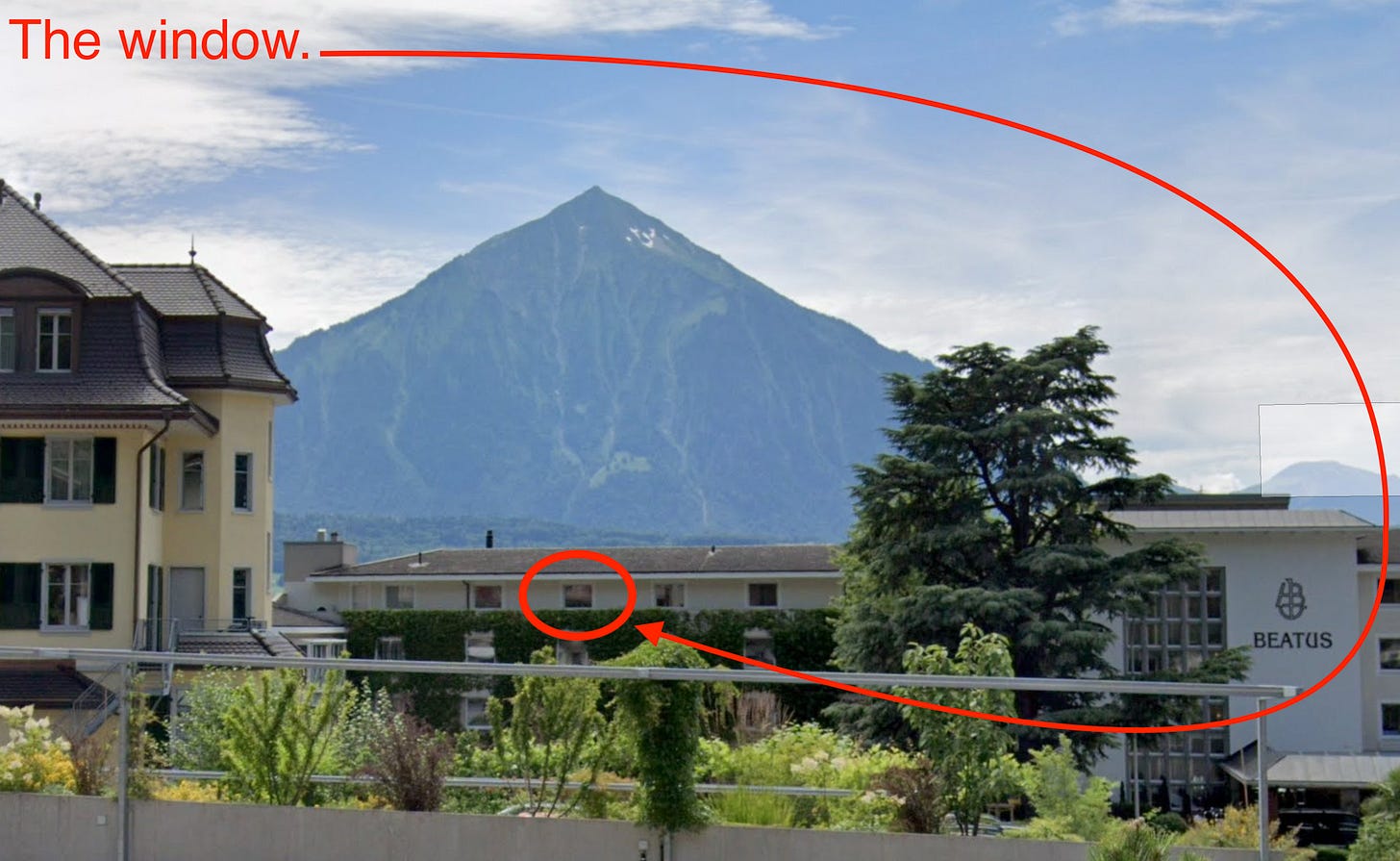
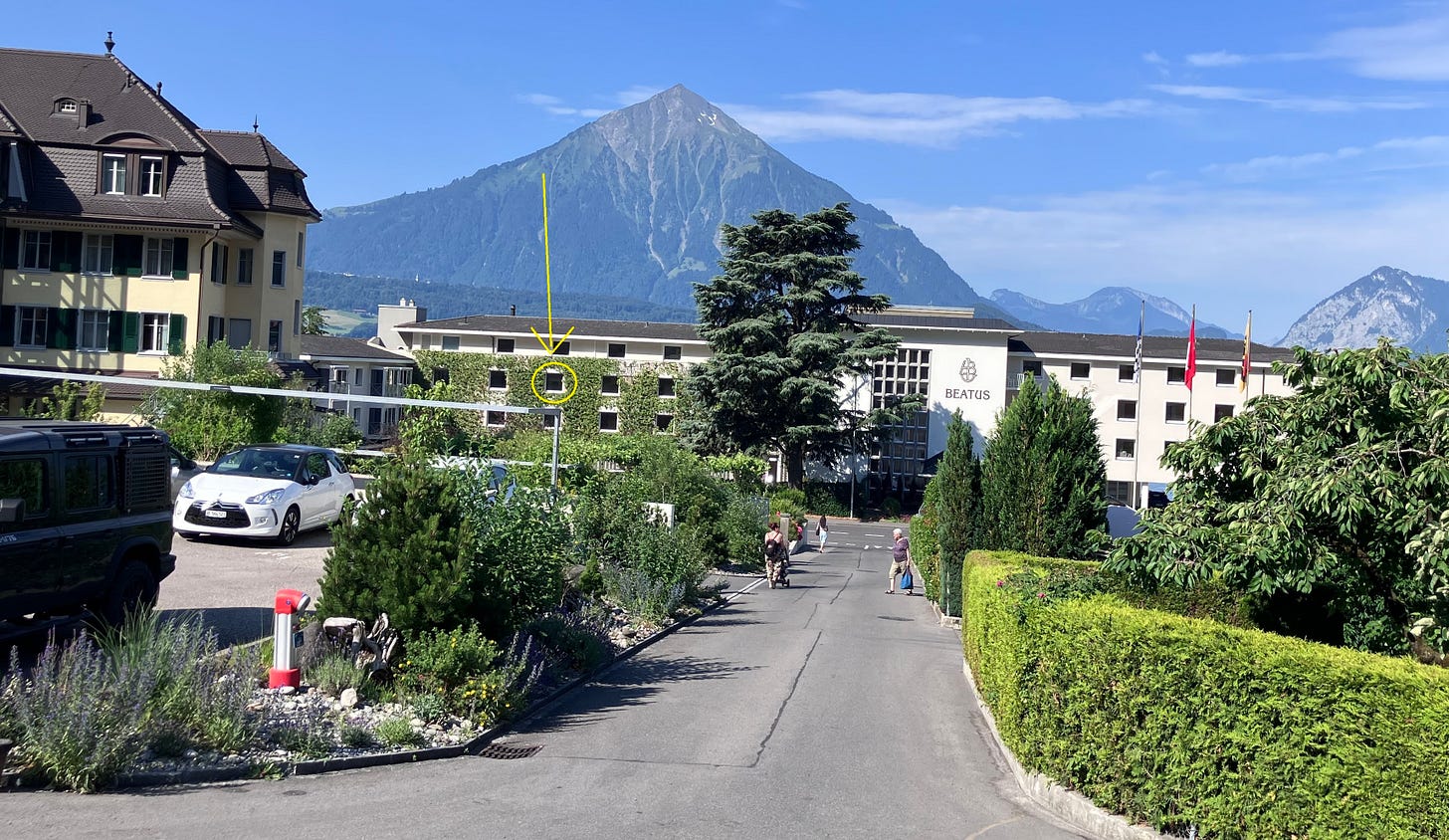
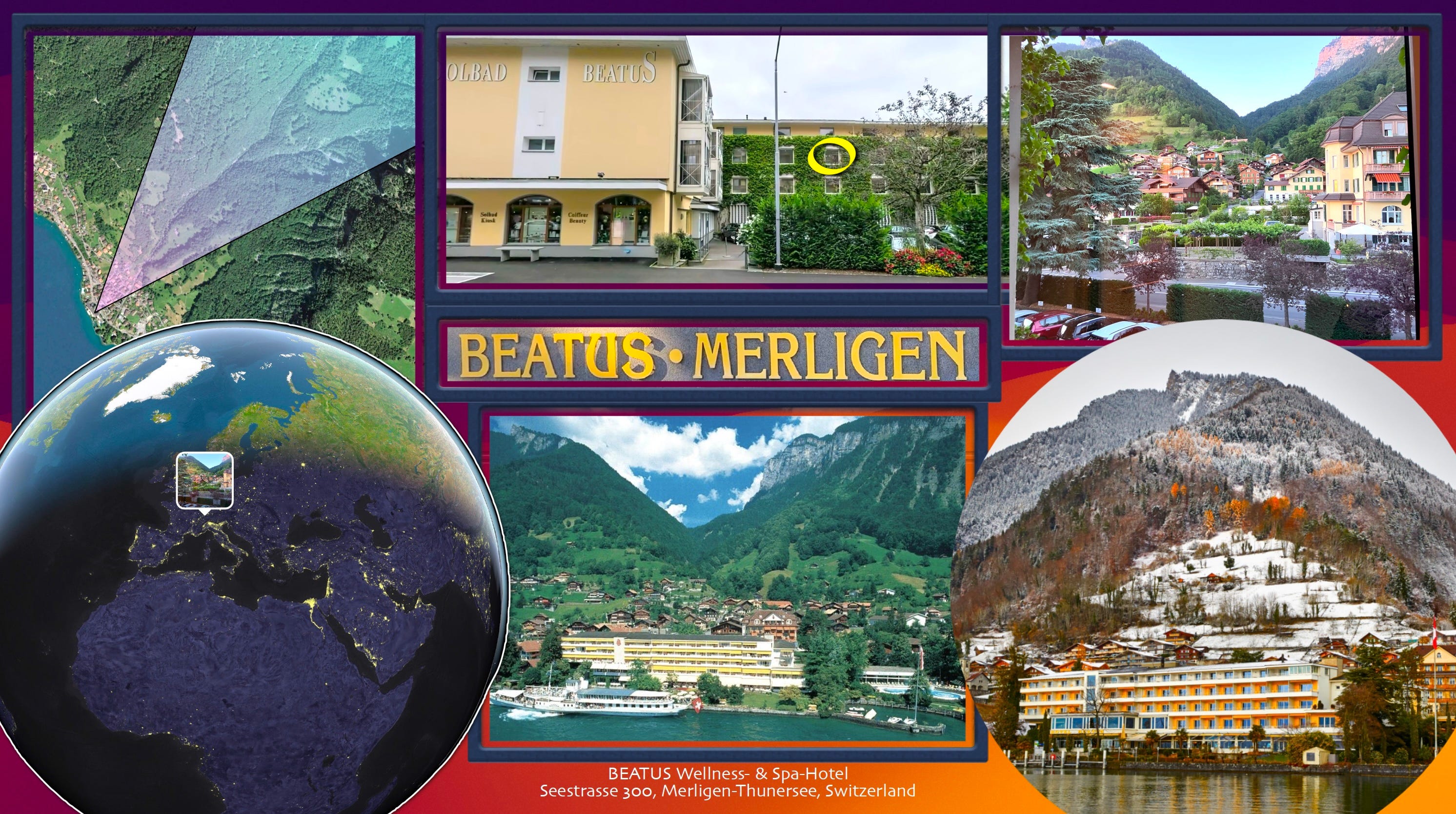
The window is located in the Beatus Wellness and Spa Hotel (not be confused with Hotel Beatus, not too far up the road) in Merligen, Switzerland. Here’s a Google Maps link. Here’s the window:
We had a beautiful view from our room facing the lake, but I thought there was too much water across the bottom/center of any picture I could take from the room. This one faces up the hill from the other side of the hotel.
I don’t know exactly why I want to win the contest or submit photos. I enjoy supporting you guys, and somehow getting FREE Dish for a while is a carrot. Mostly I like geography and like to play the game. I am astonished by the real sleuths.
By the way, I will support you guys for as long as you’re creating a place for discussion and encouraging dissent as you are. That you select dissents where Andrew’s response includes “Fuck you — go fuck yourself,” and you print the dissent and his response to it — well, that’s exactly the demonstration of how we need conversation to guide us. Andrew might be angered, but if he thinks there’s an argument being made he will respond (to the argument) even if with a bit of emotion. Unusual in today’s world and definitely noticed and appreciated here.
After I told him we’d be using his photo, he follows up:
How fun! No worries on the subscription extension; I like supporting your work. Of course what I really want is to find the window and win the contest someday. I may have to keep playing for a LONG time for that.
“My wife at the top of nearby Cedar Breaks”
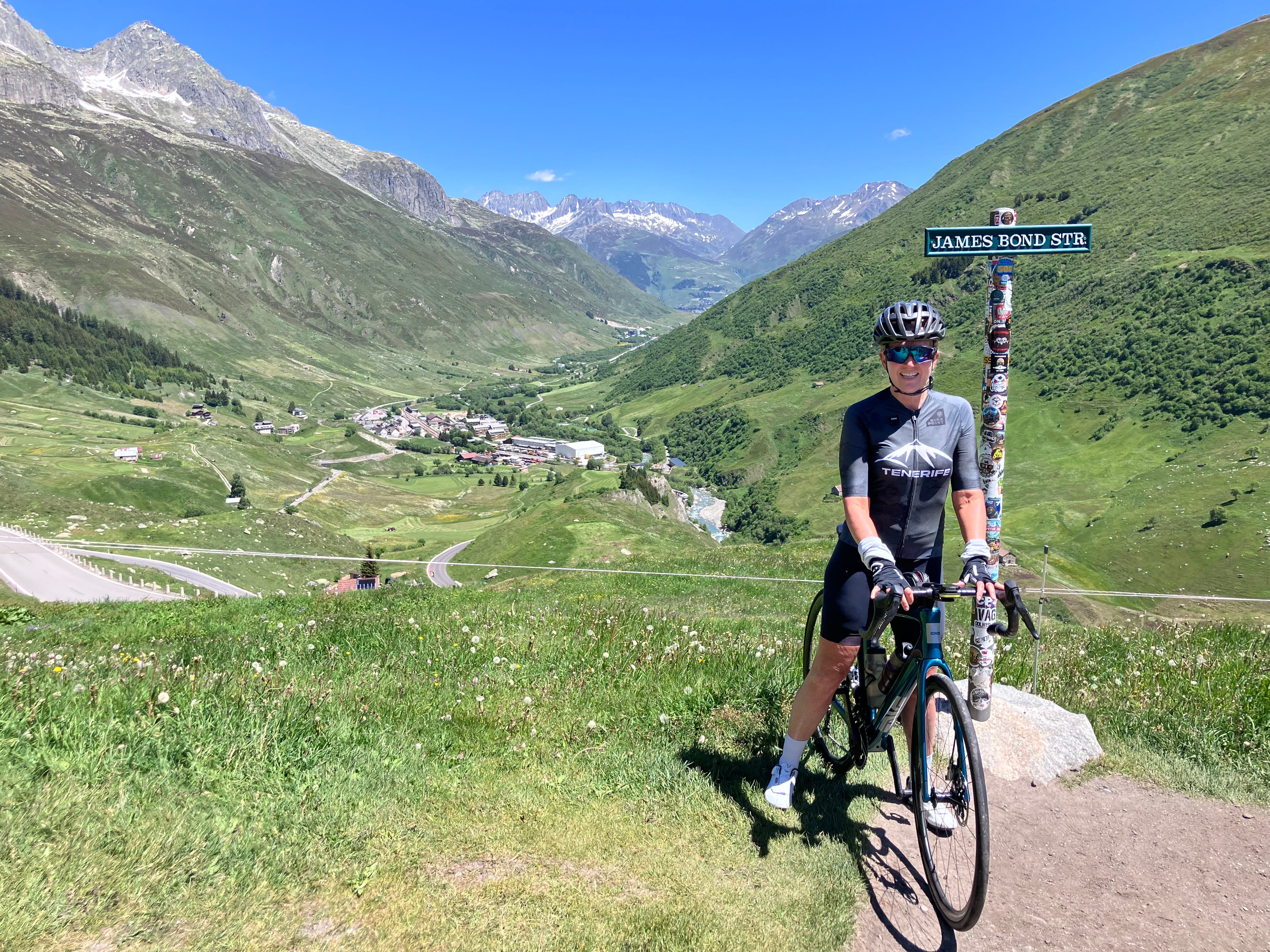
By the way, there seems to be a nearby James Bond theme for this one — somewhere near Murren, Switzerland, and a 1969 movie. Apparently, in the Sean Connery Era, people had a thing for Switzerland. You for sure will know more about it than I do.
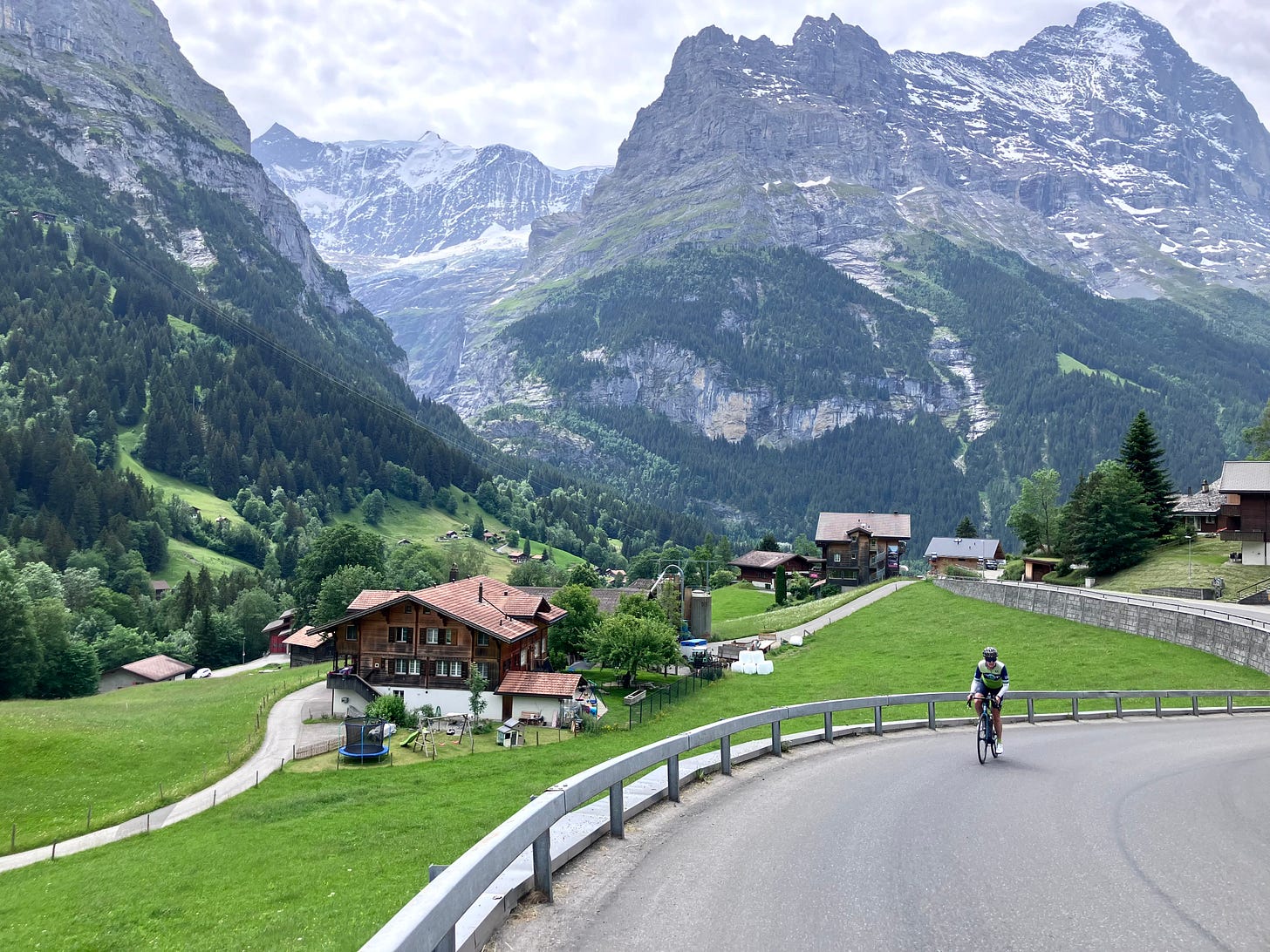
Also, here’s a photo of spectacular nearby bicycling in Grindelwald:
Thanks again for all your correspondence and for creating this silly game.
There’s also phenomenal skiing in the area. Here’s our resident ski nerd:
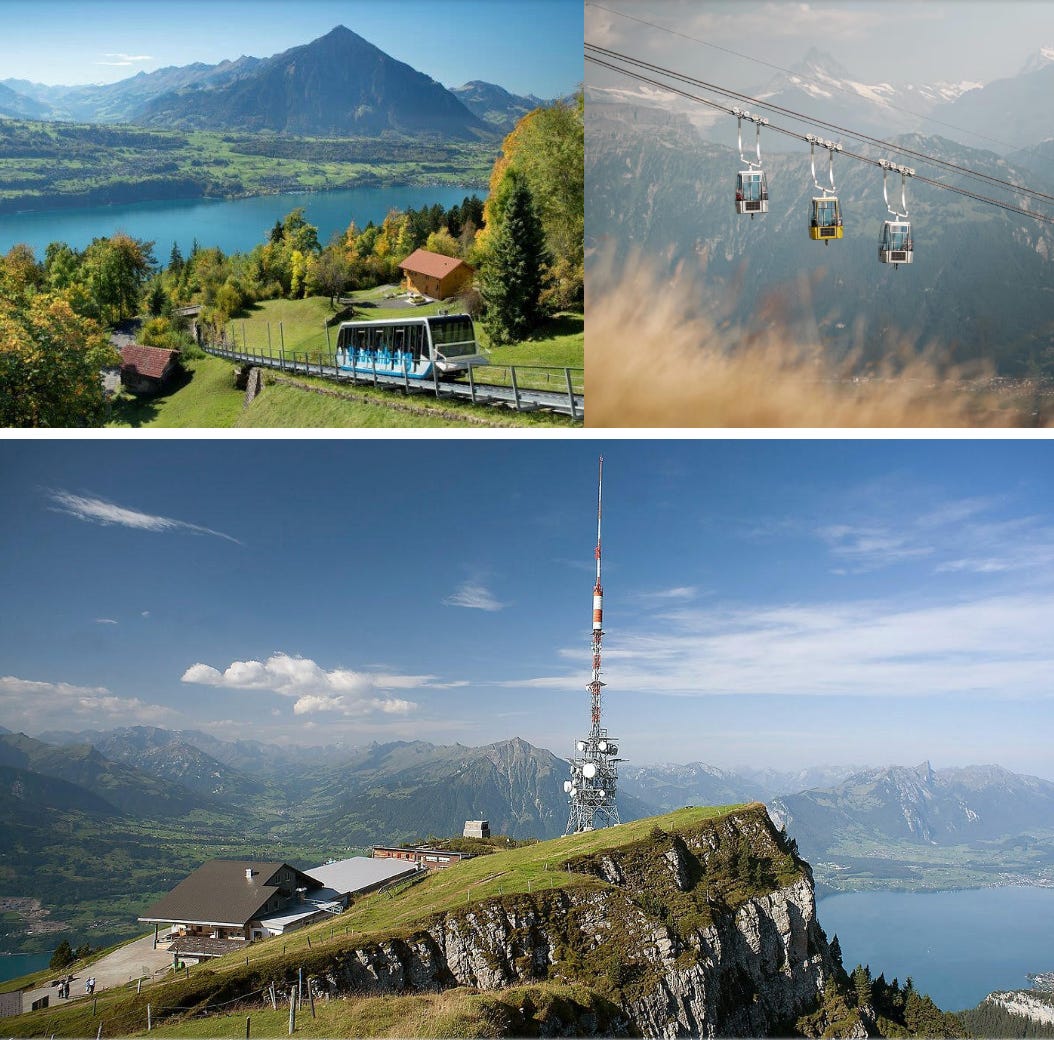
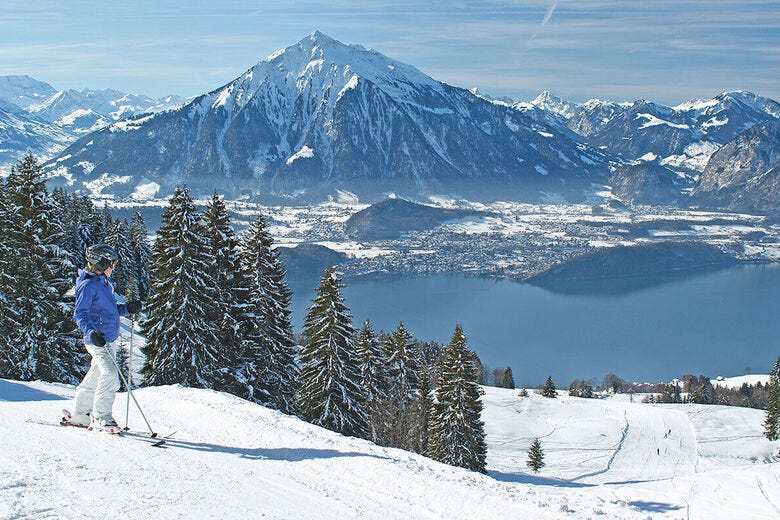
Merligen is close to world-class skiing in the Swiss Alps; Zermatt is 45 miles south (contest #357). But the nearest skiing is just one mile east on the Niederhorn, a prominent peak whose large cliff-top antenna is visible in the upper-right of the view. You take a funicular and then a unique “group gondola” from lake level 4500’ to the top, for spectacular 360-degree views:
There’s only one T-bar at the top, with a 1185’ vertical drop servicing intermediate slopes:
But in some winters, you can ski off-piste all the way down to the lake. The Niederhorn funicular, gondola, and summit restaurant are open year-round, offering sightseeing, hiking, mountain biking, sledding, snowshoeing, hang gliding, and paragliding.
That skiing would pair well with these hot springs:
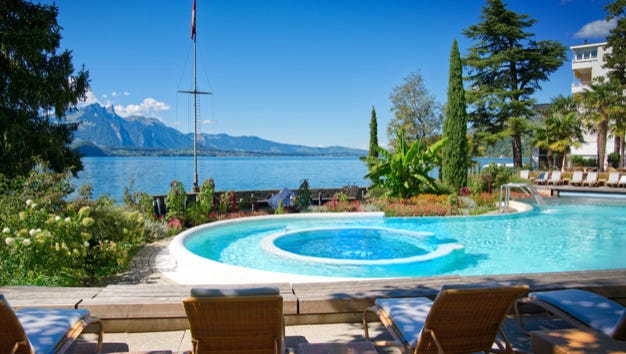
You don’t have to travel far this week to get a faux hot spring experience; Hotel Beatus features its own outdoor saltwater 35C (95F) pool on the shores of Lake Thun. The water is drawn from deep salt deposits and artificially heated. Admission for non-guests is CHF 40 (about $50.)
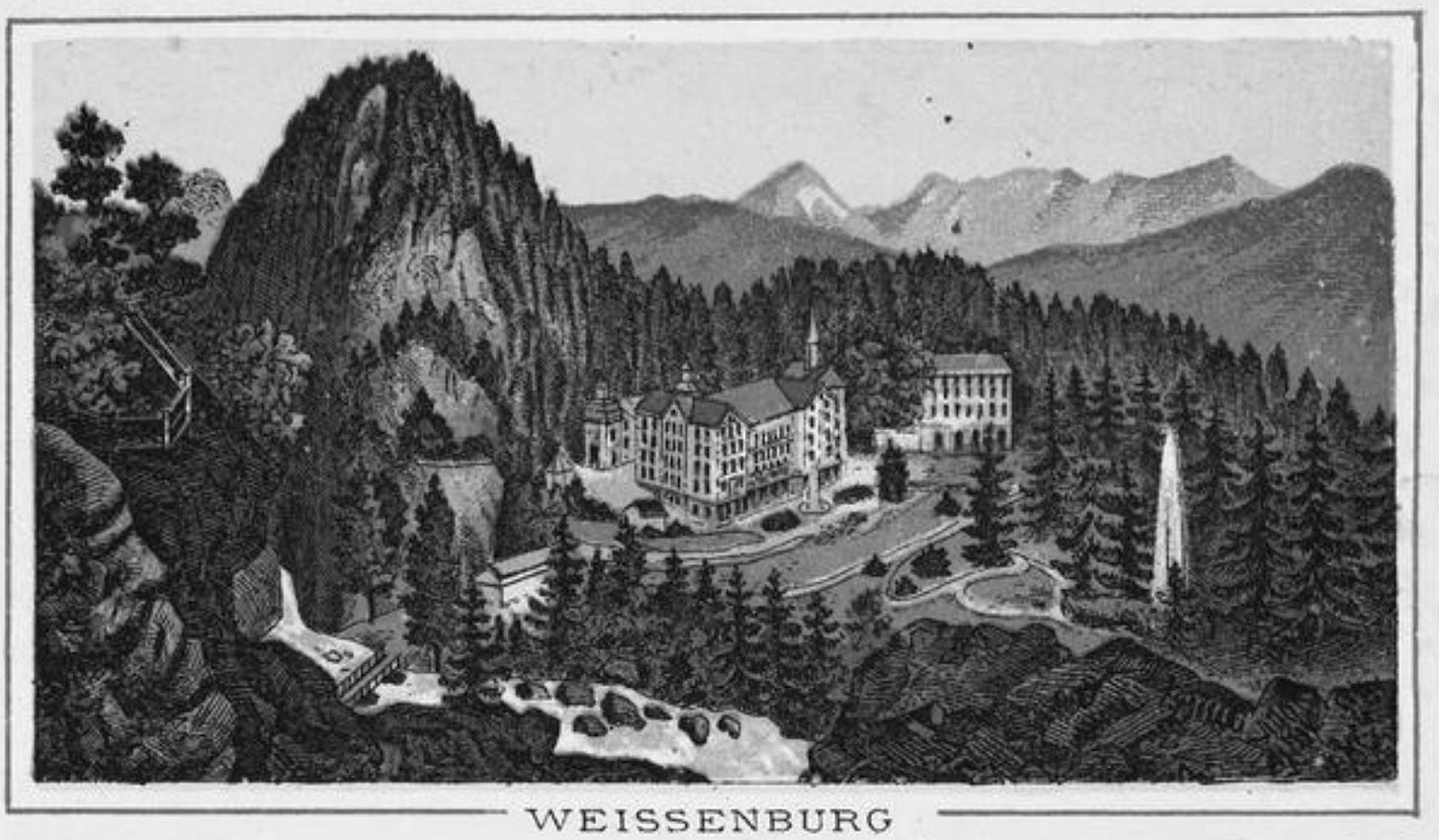
Looking for more honest thermal springs, the historic but now defunct Bad Weissenburg lies 25 km to our west in Aeschi bei-Spiez. In 1604, the Bernese Council authorized construction of a spa there and employed a bath master. During its heyday from the 1800s to World War I, it employed 200 to 300 people and attracted European royalty. An 1878 bathhouse burnt in 1898, but a new grand hotel was soon constructed. It lost popularity after World War II, closed in the 1960s, and burned down in 1974.
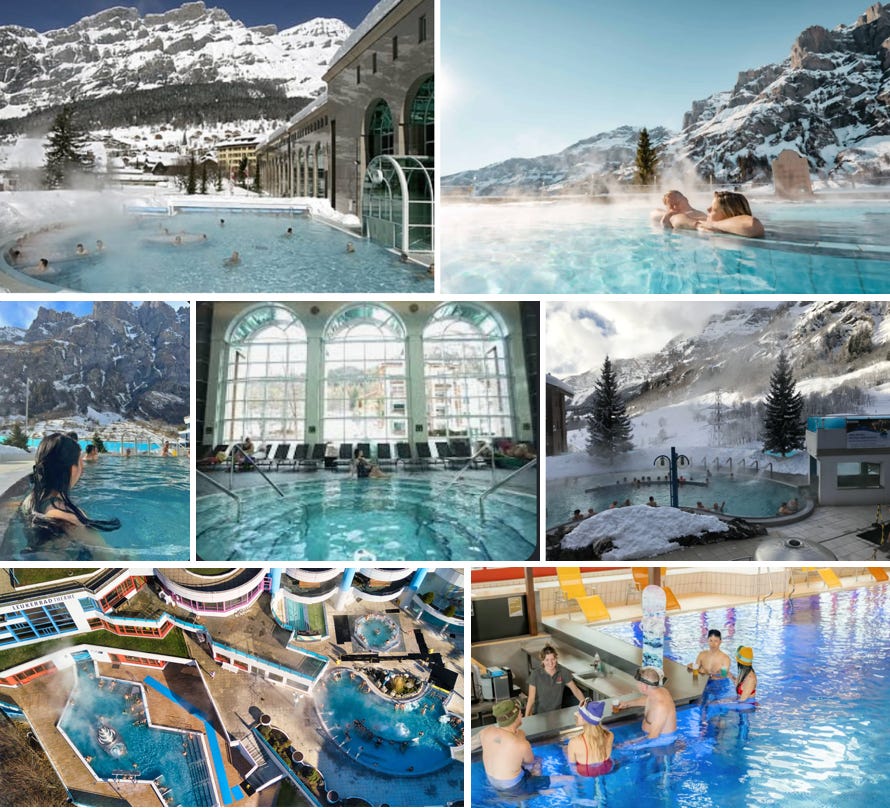
The real hot spring gem this week is the nearby alpine village of Leukerbad, 50 kilometers south of Merligen by foot, or 100km/two hours by car. Sixty-five springs provide 12 million liters/day of 51C water, cooled for public pools to between 35 and 44C. The town of 1,500 is the largest alpine spa in Europe, with 250,000 visitors annually. Of several establishments in town, Leukerbad Therme is the most family-friendly. Choose from outdoor pools with the Daubenhorn massif in the background, children’s pools with 160 metre water slides, indoor pool/sauna options, or a pool bar. Its upscale relative the Walliser Alpentherme is oriented more for adults with an indoor Roman-Irish nude bath, a Sauna Village, and more extensive spa options:
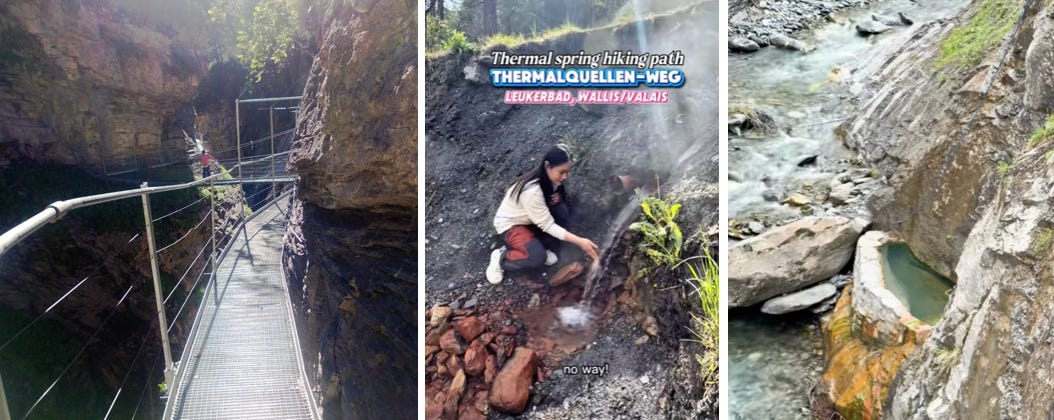
You can hike into the Dala Gorge at the edge of town and still see some of the smaller source springs, but there are no remaining bathable natural springs:
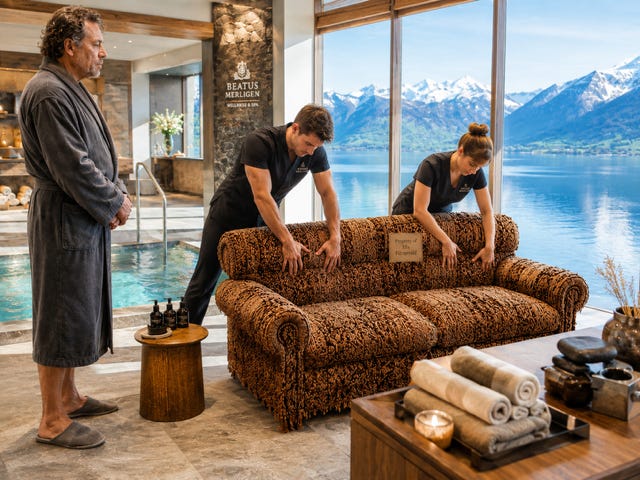
That report will surely appeal to the Intrepid Couch Traveler:
Couchella and I very much looked forward to a lovely VFYW spa weekend … until she started Bogarting all the masseurs!
What’s a couch thief gotta to do to get a good shvitz around here?
More fun facts about Merligen come from the DC super-sleuth:
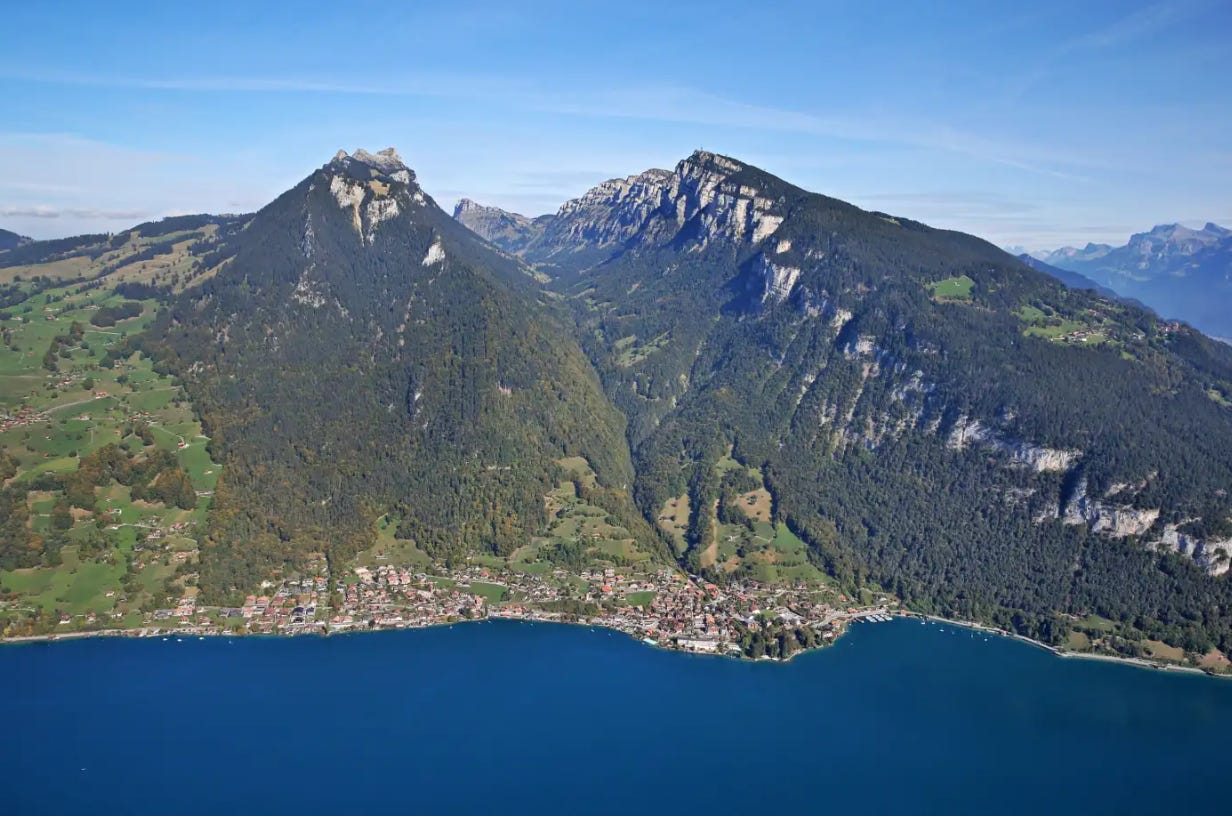
Population 927, Merligen is about 25 miles from Bern, the Swiss capital. It’s located on the southern slope of the Niederhorn, a mountain visible in the upper right corner of the contest photo. The village also sits at the end of the Justistal, an alpine valley that stretches for more than five miles inland from the lake:
Due to its location, Merligen benefits from a balmy Mediterranean-like microclimate nearly year-round (or at least that’s what the folks in the local tourism and hospitality industry claim). Because of the relatively warm weather and the presence of palm trees in the village, Merligen is sometimes referred to as “Palm Village” and the “Riviera of Lake Thun.”
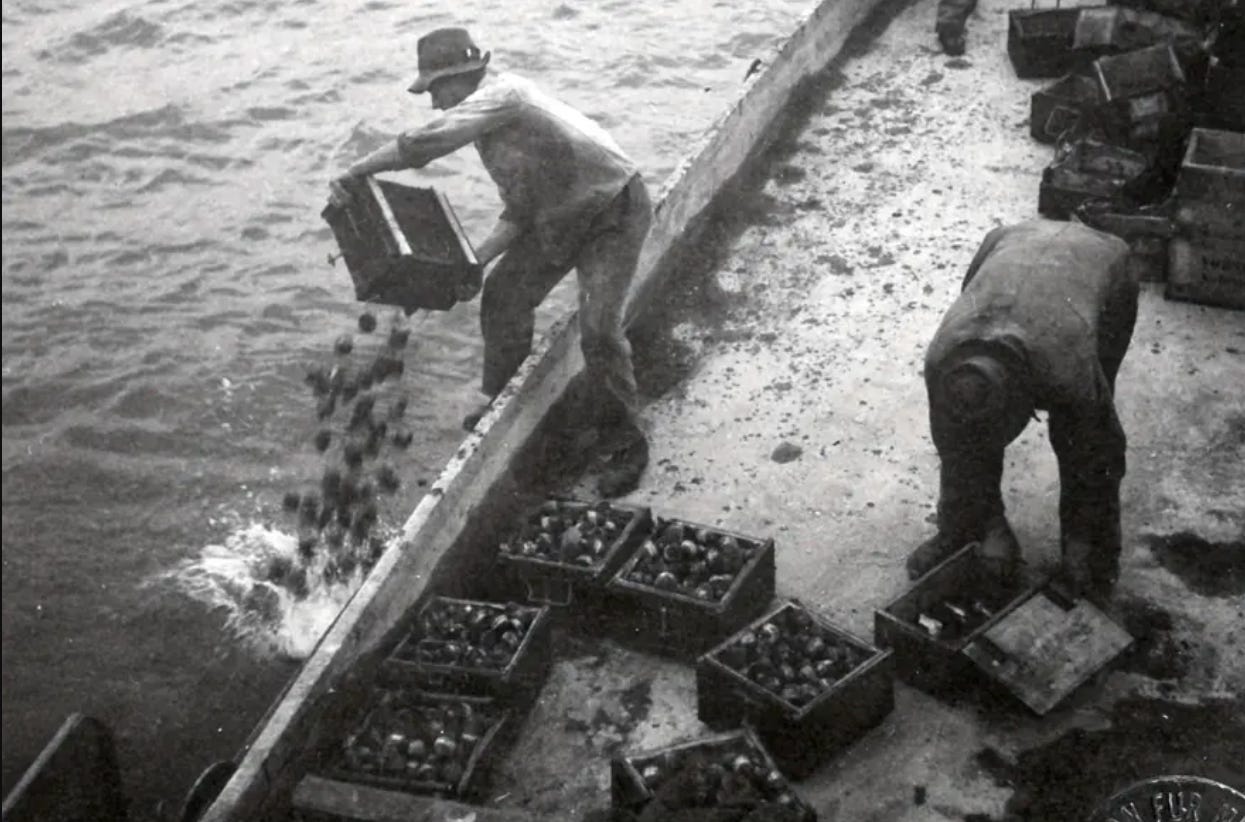
Although Lake Thun looks beautiful on the surface, the view underwater might not be quite as nice. Between 1918 and 1964, the Swiss government dumped thousands of tons of unexploded munitions into the lake and other alpine bodies of water. Apparently, officials believed that this was the safest disposal method because the water supposedly would absorb any blasts that might occur. Of all the lakes, Lake Thun received the largest amount: 4,600 tons. Here’s a photo from the late 1940s showing workers dumping explosives into the lake:
A couple of years ago, the Swiss government held a contest seeking the public’s input on whether to remove the explosive devices and, if so, how best to do it. But I’m not sure what the public recommended or whether the government has any plans to extract the munitions from the lake.
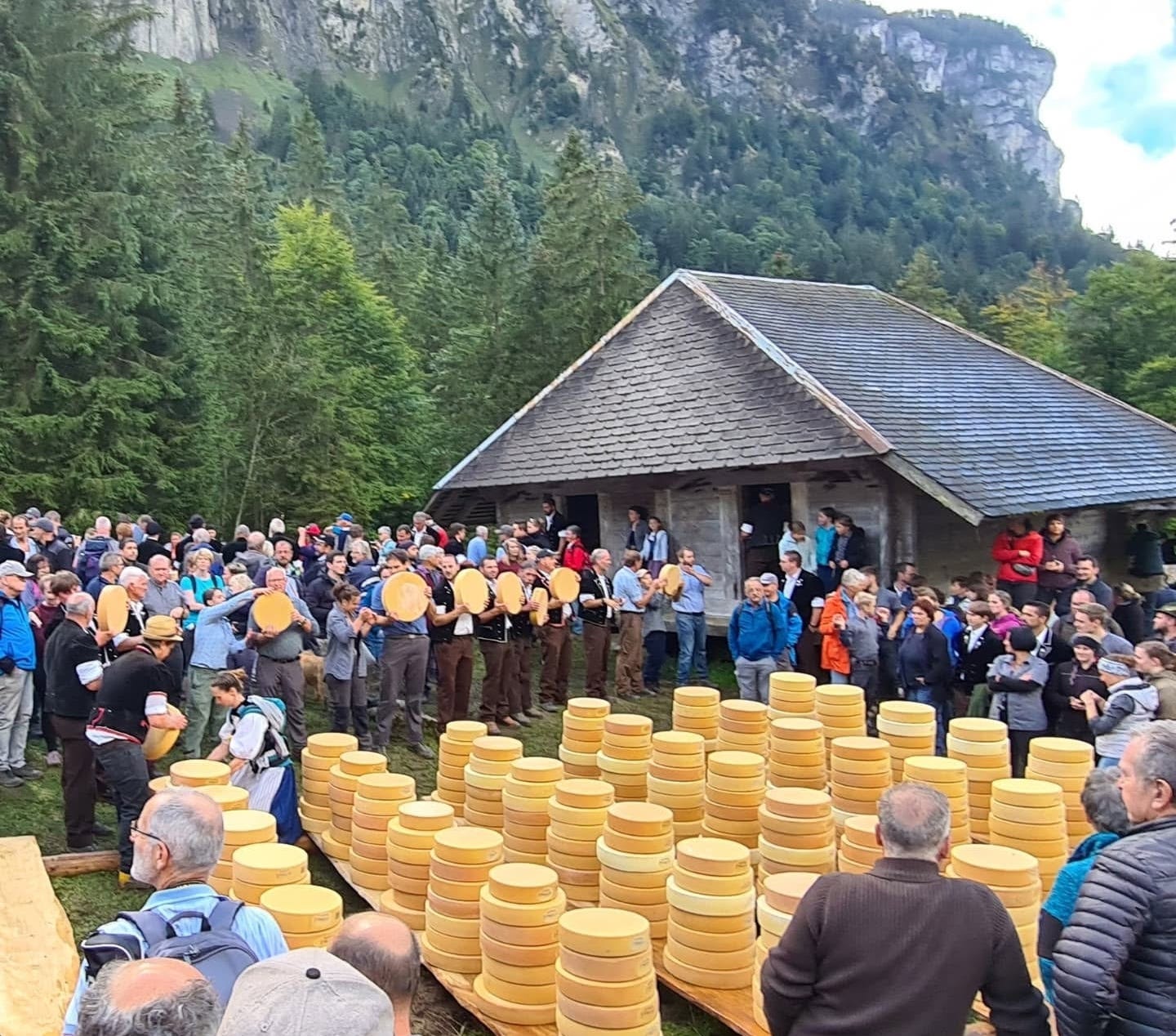
Each spring, local farmers lead their dairy cows to the higher elevations of the Justistal valley, where they’ll spend the summer grazing in the alpine meadows. The milk that the cows produce during the summer is used to make cheese. At the end of the summer, the farmers hold a centuries-old ceremony known as the “Chästeilet,” where all the cheese is divided among the local farmers based on the amount of milk their cows produced:
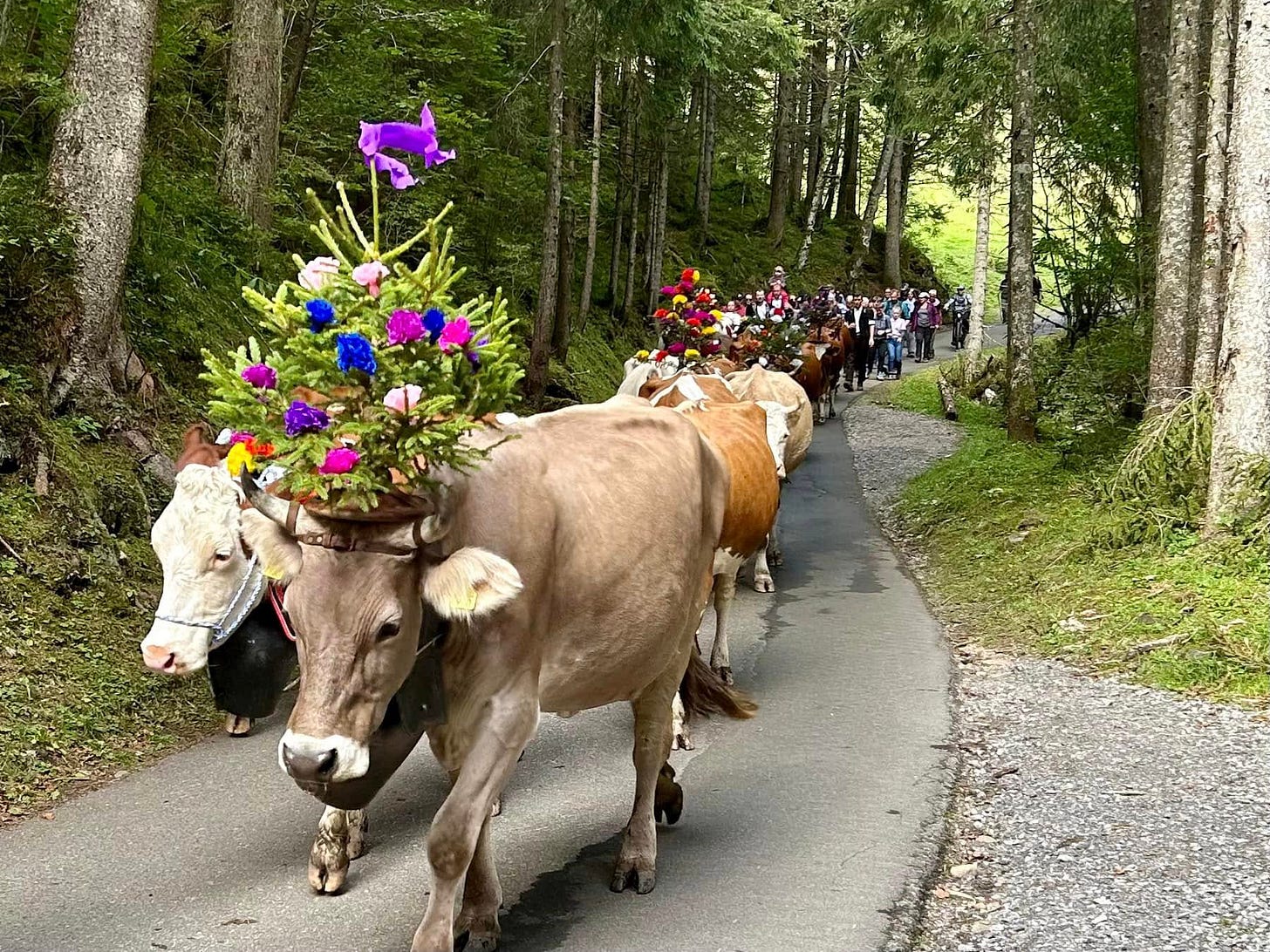
The event has become a popular tourist attraction. After the ceremony, the farmers, dressed in traditional garb, lead their cows down the valley to the lower elevations where they’ll spend the fall and winter. Many of the cows are decorated with flowers, ribbons, and what appear to be small fir trees. Apparently, the cows that produce the most milk receive the most elaborate decorations, but I’m not sure it’s much of an honor for the cows. Some of the decorations — especially those resembling miniature Christmas trees — look like they would be terribly uncomfortable for the animals:
Here’s Warrensburg again:
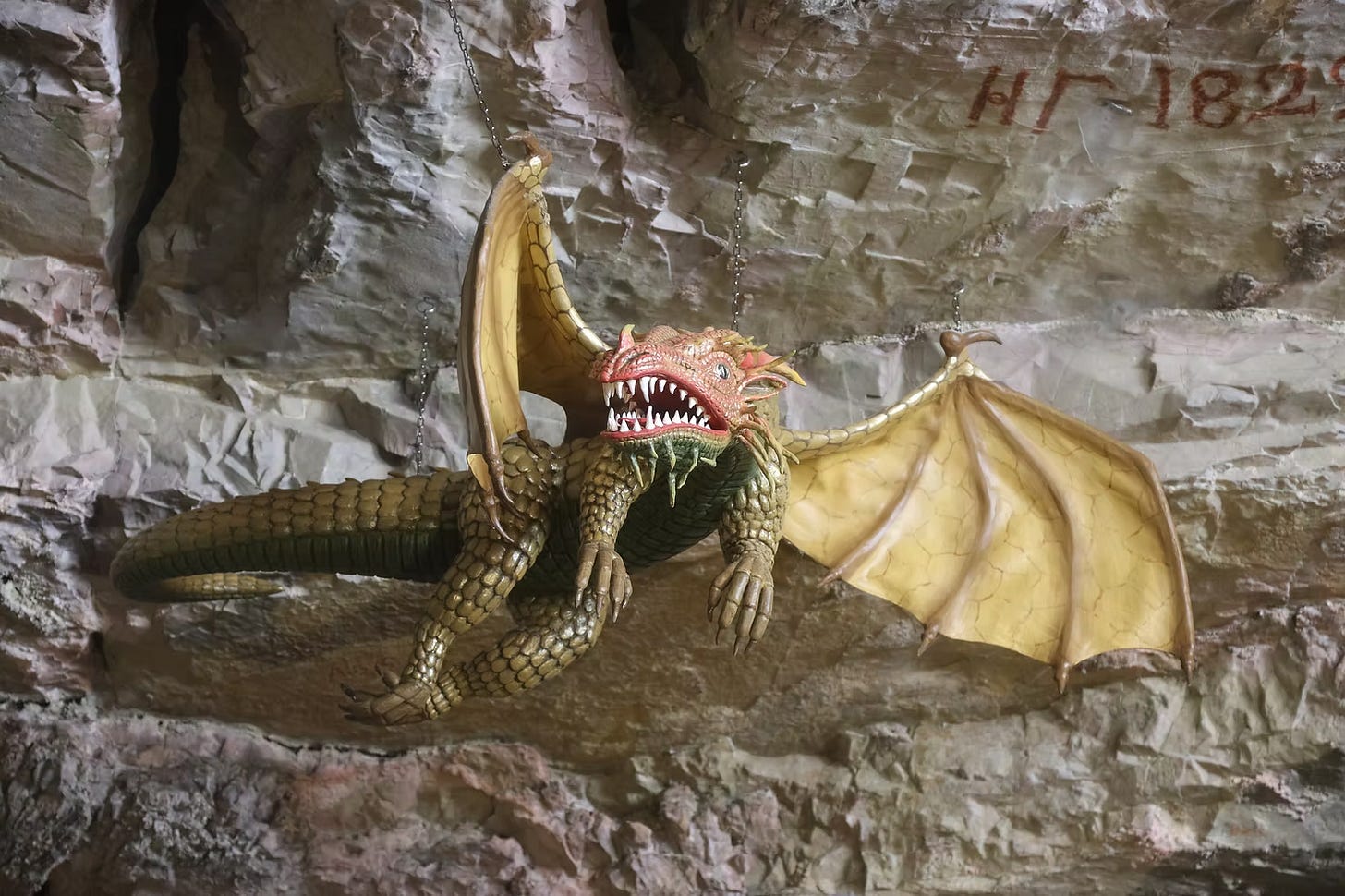
So first of all, this place is stunning. But do you know what would make it even more stunning? A fucking dragon!
The village of Beatenberg gets its name from a holy man named Saint Beatus. Legend has it that Beatus — a Scottish (some say Irish) monk in the 1st century CE — was sent as a missionary to Switzerland to convert the Helvetii tribe to the true faith. After finding success, he decided on a well-earned rest, selecting a nearby cave for his hermitage.
There was just one problem, of course:
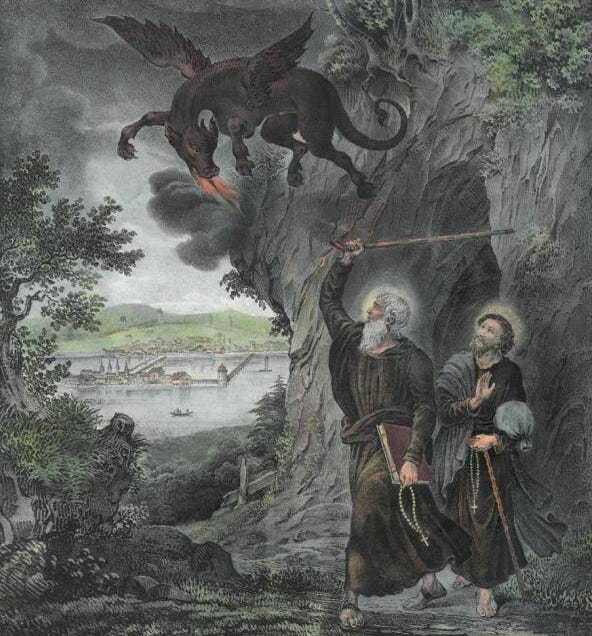
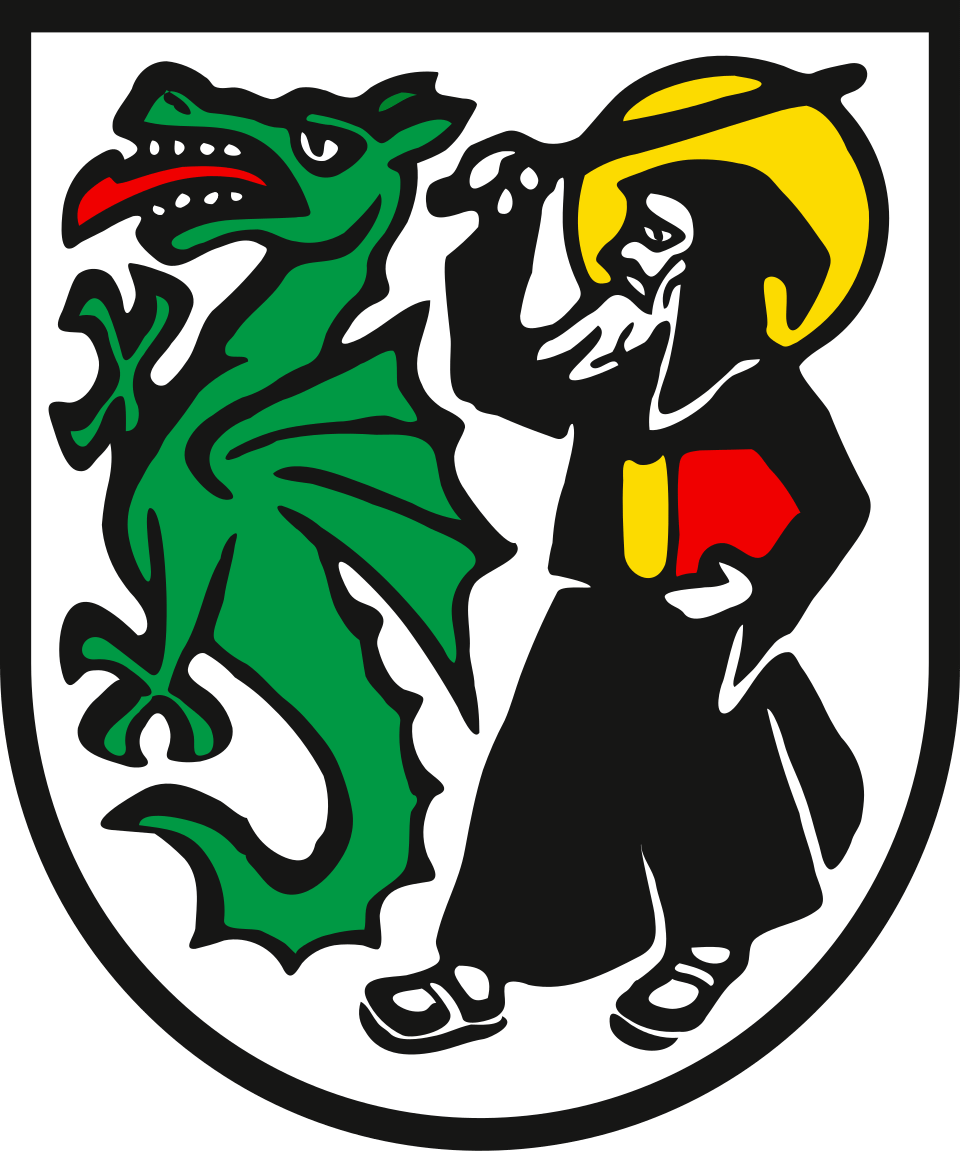
The cave was already occupied by the dragon, using it as a base to terrorize the locals. Beatus, though, was unafraid. Cloaking himself in his faith and carrying little more than a pilgrim’s staff, he made his way into the cave to confront the fiery beast. The dragon, it turns out, was no match for the Holy Trinity, and with the power of his staff, Beatus cast the creature into the lake, extinguishing its flame once and for all. Indeed, here’s the coat of arms for Beatenberg:
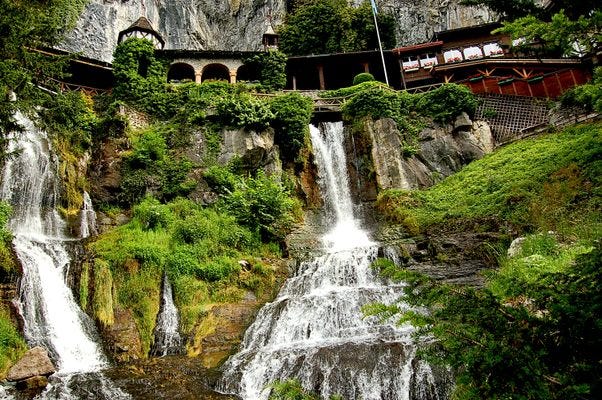
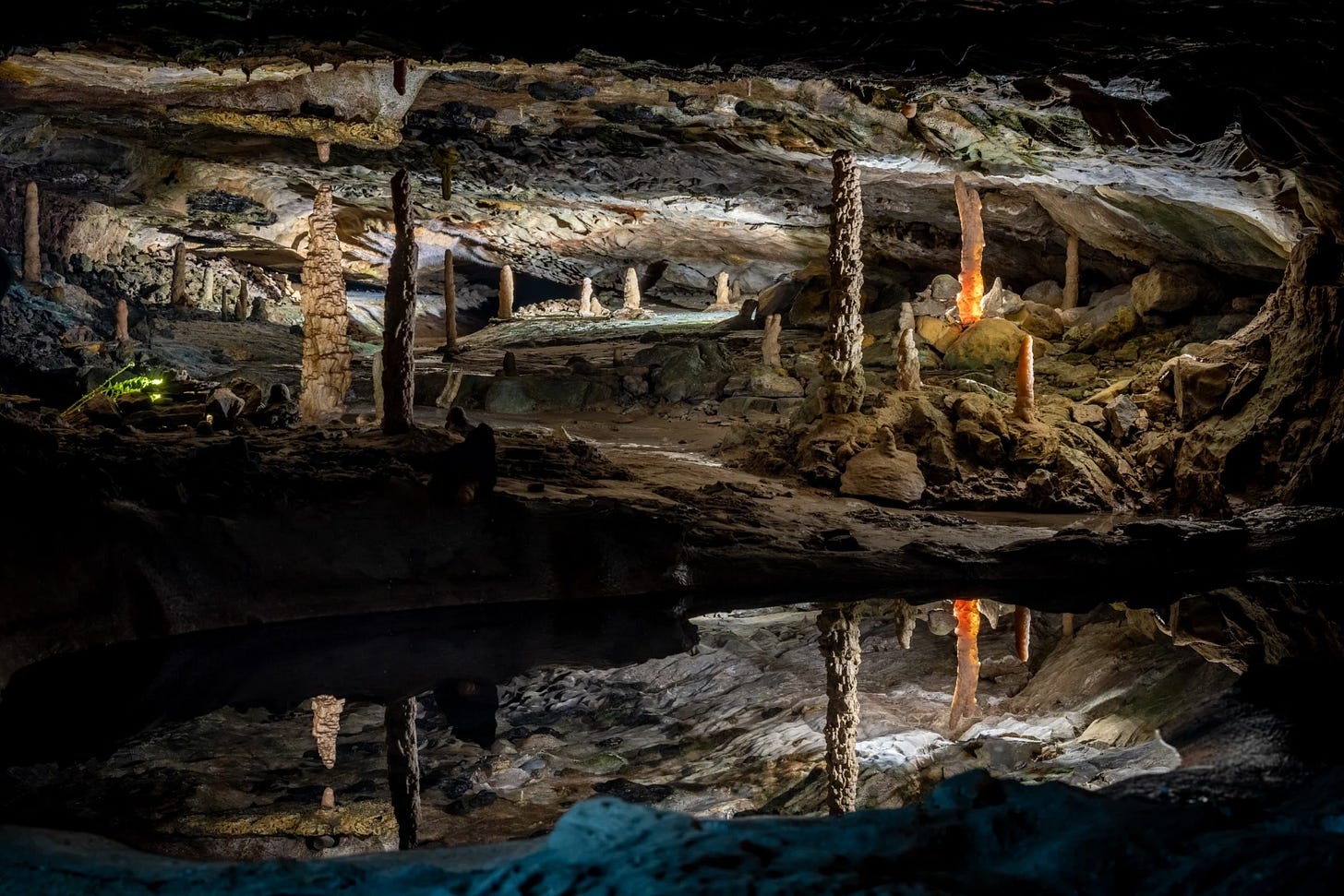
Beatus consequently moved in, remaining in the cave until his death. He spent his final years receiving the sick and the lame, blessing and healing them with God’s grace. The site remains a place of veneration, with a lovely facade in front and several mysterious mountain caves inside:
The dragon’s bones, they say, have never been found. Perhaps he’s still waiting in the depths for the right time to reemerge …
Here’s the VFYW chef — and handyman:
I hadn’t gotten to the town of Merligen by the time Sunday rolled around because I spent the weekend building this at our house in Asheville:
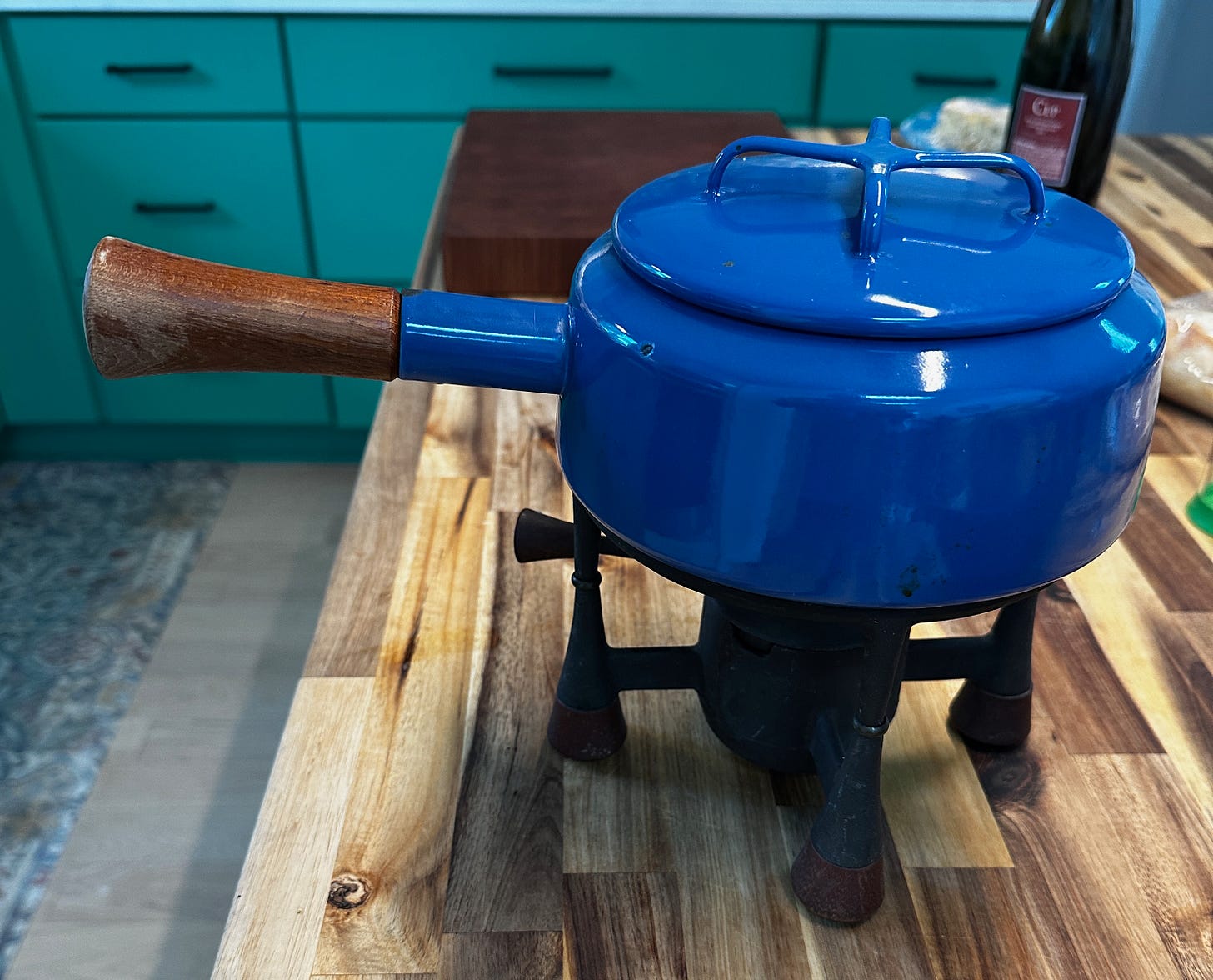
But I was pretty sure about Switzerland, so I made a cheese fondue on Sunday using this ancestral fondue set that my wife’s mother purchased in the ‘60s or ‘70s and, to my wife’s memory, used about once:
We used it about the same number of times and stored it away in a high inaccessible cupboard. When daughter no. 1 drove out with her family to spend some months with us in Tucson during the pandemic, we took the opportunity to pass it on to her, and she promptly stored in what she calls the cupboard of death: a long corner cupboard that I had to lie on the floor and stretch my arm into to retrieve it.
It’s a classic Dansk Købenstyle fondue pot, designed by Danish sculptor Jens Quistgaard. In 1954, Ted and Martha Nierenberg were searching Scandinavia for products they could bring to the American market and discovered Quistgaard’s stainless steel and teak cutlery in a Copenhagen museum. They tracked him down and convinced him that it could be mass produced, and so went on to found Dansk Designs out of their garage in Great Neck, NY, selling Quistgaard’s Fjord flatware, which is now featured in the permanent collection of the Museum of Modern Art in New York. In 1956, Quistgaard designed the Købenstyle line of cookware, of which this fondue pot is an example. Fondue’s status as a Swiss national dish was manufactured by the Swiss Cheese Union in the 1930s as a way to sell more cheese.
Fondue is easy to make and delicious: you melt grated cheeses like gruyere, Appenthaler, and raclette in white wine and bring it to the table. So I don’t know why we only eat it once a generation, but that seems to be the rule.
Here’s your cinema report:
I have fond childhood memories of being taken to see Goldfinger by my mother not long after it opened in 1964. It was one of the first adult-themed movies I was ever allowed to see. As a middle-school math teacher, she’d somehow gotten into a debate with her students about the appropriateness of youth being exposed to such movies, and the experience of being admonished by 12-year-olds for criticizing something she hadn’t seen must’ve gotten to her. Because one day she came home from school and hauled my sister and me off to see Goldfinger at the Sequoia Theater in Mill Valley, CA. We all loved it, and when Doctor No and From Russia With Love were rereleased as a double bill later that year, she took us to see them too!
That’s to say Goldfinger holds a special place in my heart. It is and always will be the best James Bond movie, so I was thrilled when I realized one of its filming locations is very near this week’s window. On that note, and because the movie should need no introduction, I’ll jump straight to the clip:
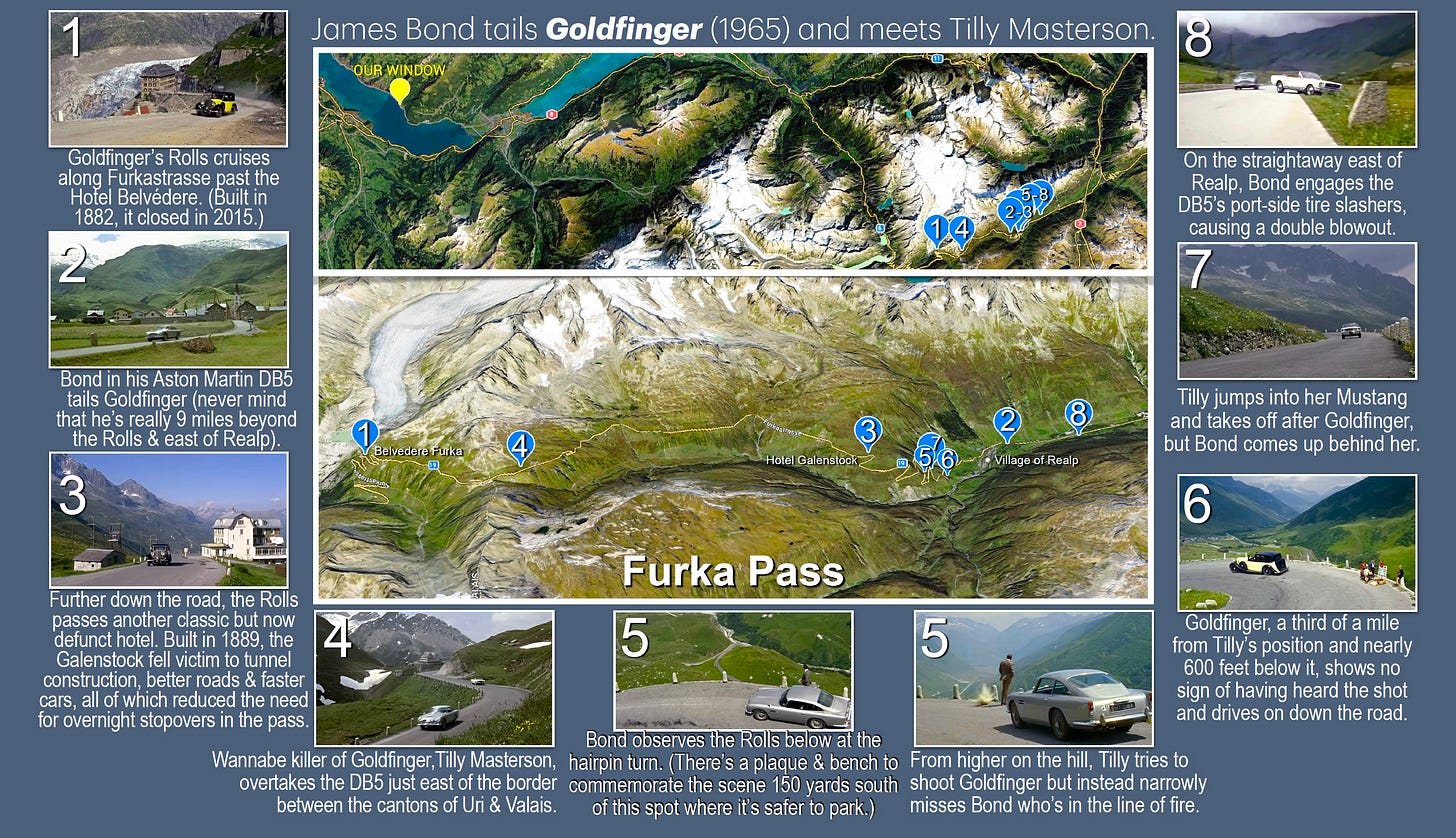
The clip opens with a downward pan from the 10,462-foot peak of Gärstenhörner, a mountain in the Urner Alps, descending until Auric Goldfinger’s yellow 1937 Rolls Royce Phantom III comes into view. (Goldfinger uses the Rolls to smuggle gold from Britain into Switzerland in two-ton increments by replacing the car’s side panels and other accoutrements with 18-carat gold facsimiles, which by the way would increase its weight to about six tons.) We see the heavy vehicle grinding up the dusty grade into the Furka Pass about 32 miles east of us as the crow flies (53 if the crow’s driving).
The building in the shot is (or was) a classic: the Hotel Belvédere, which became a popular attraction when it opened in 1882 due to its immediate proximity to the Rhône Glacier (the source of the Rhone River), which touched the hotel’s doorstep. But the glacier gradually receded until eventually it was no longer even visible from the hotel and patrons had to hike to it, so the hotel closed in 2015.
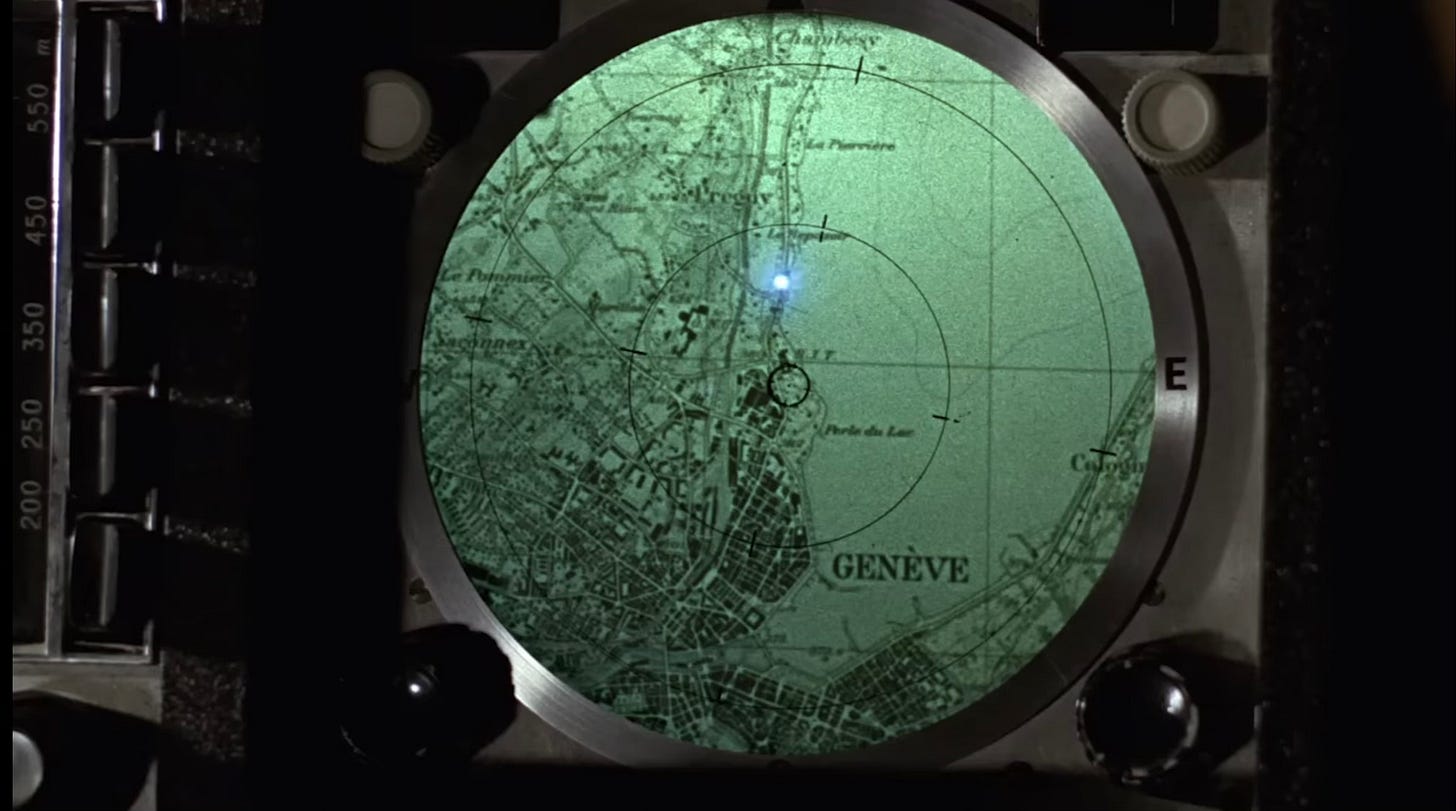
Using a sort of ur-GPS, Bond follows Goldfinger at a comfortable distance. Never mind that he’s really nine miles east of Goldfinger’s actual location and heading away from him, or that the GPS is more than 100 miles off, falsely showing the Rolls to be headed north out of Geneva along the shore of Lac Léman (and incidentally less than half-a-mile from our window in contest #357).
And never mind that Tilly Masterson, seeking revenge for the killing of her sister Jill (the famous golden girl), shoots at Goldfinger with a .22-caliber ultra-lightweight backpack rifle that I’m told has a maximum effective range of 100-yards. With her target about a third-of-a-mile away and 600 feet below her, no wonder she’s more of a threat to Bond in this scene!
This next clip wasn’t shot on location, but I was curious how Desmond Llewelyn as Q refers to the crazy-ass tire slashers Bond uses to disable Tilly’s Mustang. But Q doesn’t mention them at all! When Bond deploys them on the straightaway between Realp and Andermatt, audiences are apparently just expected to think of Messala’s wheel scythes in the Ben Hur chariot race and think “Sure! Why not?”
(By the way, apropos of that clip, 1963 DB5s had no center armrest, so Q-branch needed to improvise. But could they have installed a cheesier looking one?!? I mean the lid clearly doesn’t fit when Q taps on it, the inside hinge looks like something from ACE Hardware and the switches from Radio Shack, and how about labeling some of those switches? They trigger deadly weapons, for God’s sake!):
I’m glad they don’t make trailers like this anymore:
A September 2024 Esquire article titled Every Bond Film Ever, Ranked,agrees with me about Goldfinger, rating it number one with a bullet. But then the article spoils it all by giving the 5th spot to On Her Majesty’s Secret Service (1969), which for me is a hard NO. (To be fair to the article’s author, if I’d done the rating, OHMSS would’ve tied for last place with about a dozen of the others.)
And to be fair to George Lazenby, no one at the time was prepared to accept a replacement for Sean Connery as Bond. But then Lazenby had campaigned for the role long before he could’ve hoped to be ready for it (so maybe some blame is warranted?). He gave pretty much the performance you’d expect from someone with zero professional acting experience who’s taken on the highest-profile role in moviedom. I mean who jumps from this straight to James Bond?
It doesn’t help that Telly Savalas, as the villain Blofeld, seems to be auditioning for his TV character Kojak (1973) minus the Tootsie Pop. But the action scenes are pretty good if you blink during skiing close-ups, as in this clip:
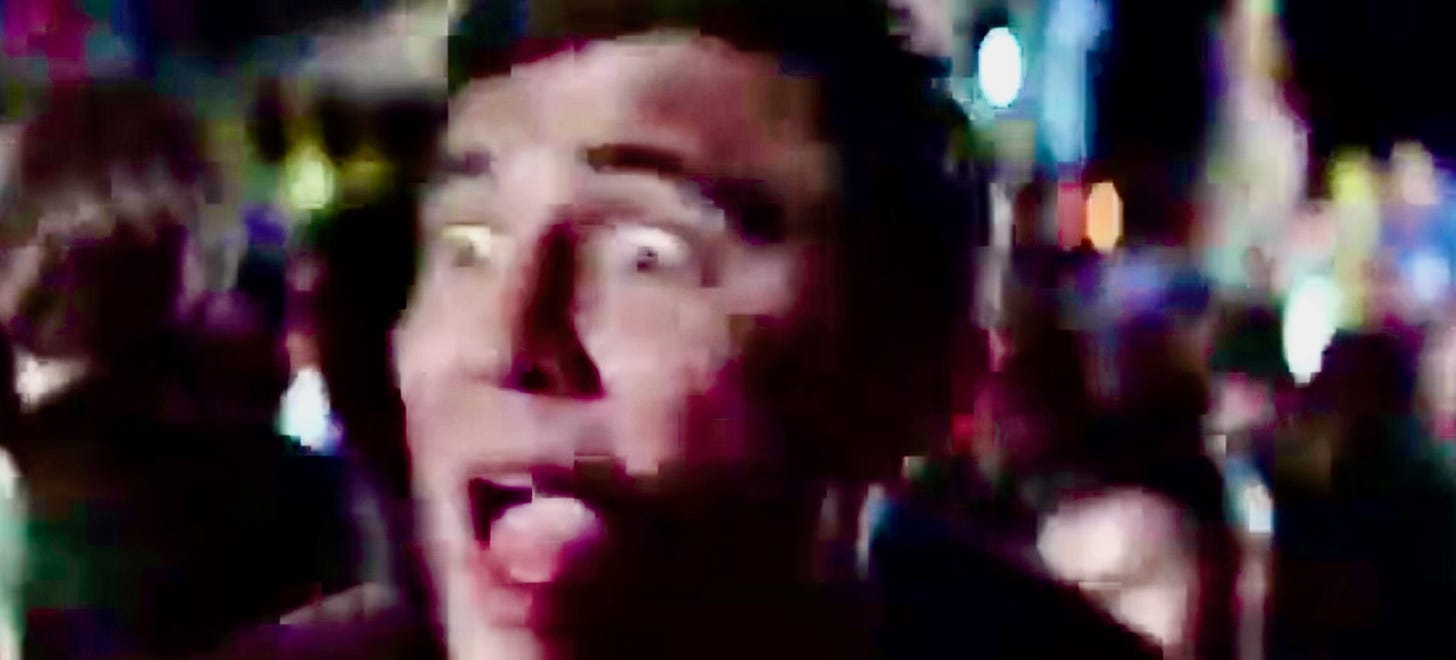
I lay most of the blame at the feet of first time director Peter R. Hunt (who’d been editor on all the previous Bond movies). He committed the unpardonable sin of allowing Lazenby to pull faces like this (sorry for the low res):
I doubt that any of the other actors who’ve played Bond have ever come close to looking so frightened, and certainly not when just trying to evade Blofeld minions at a winter festival and somebody in a polar bear costume snaps a flash photo. That sort of thing happens all the time in Bond movies without Bond breaking a sweat let alone looking scared.
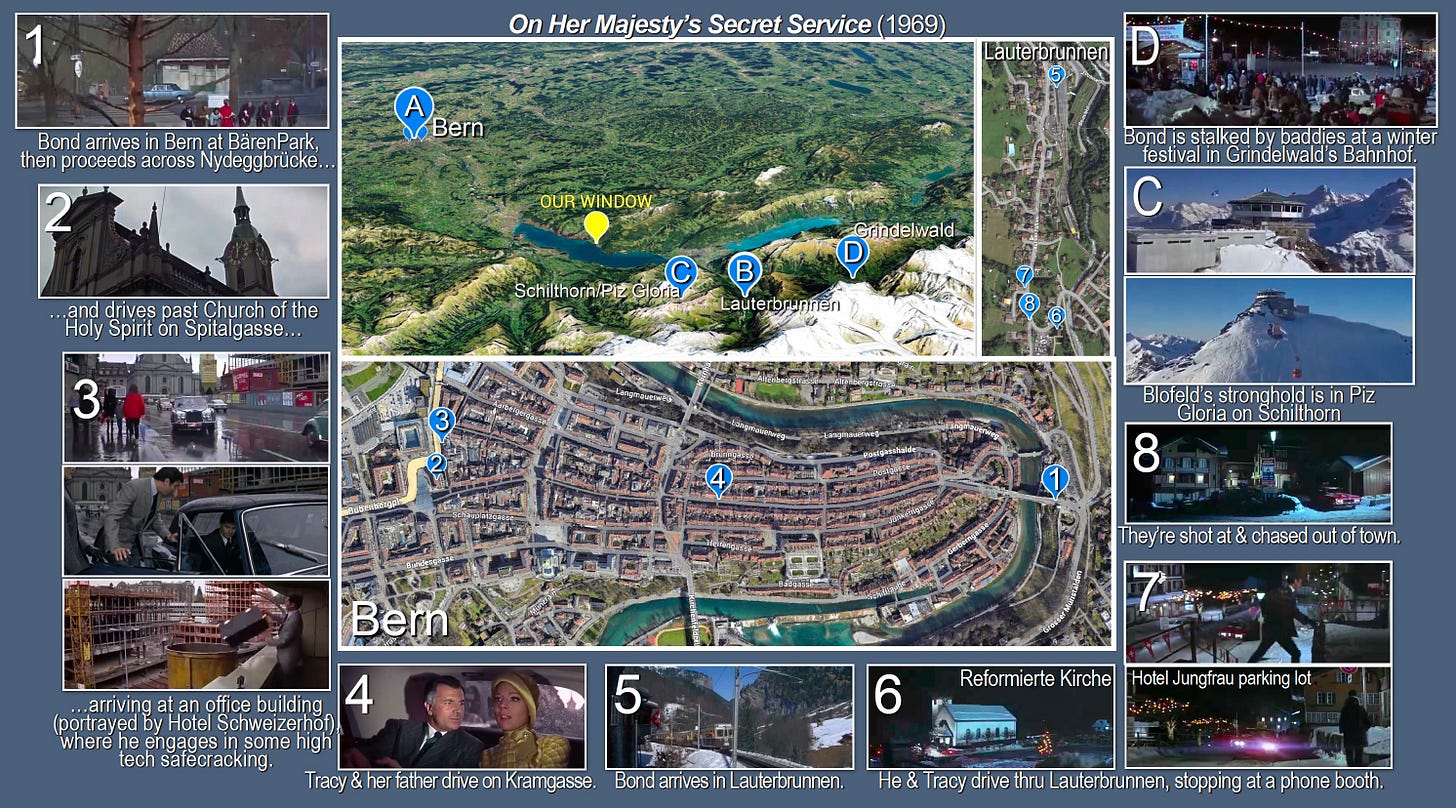
This next clip starts up in the heart of Grindelwald right after the polar bear moment (note the lingering un-Bond-like trepidation in his eyes and how he lets Tracy — actress Diana Rigg — lead him around). They drive out of town and by 2:18 in the clip they’ve arrived in Lauterbrunnen, although Tracy calls it Feldkirch. The action starts after Bond steps into a phone booth in the Lauterbrunnen Parkplatz:
Probably the most memorable element in OHMSS is Blofeld’s mountain stronghold. Piz Gloria is a revolving restaurant that’s 11 miles south southeast of our window atop Schilthorn, a 9,744-foot peak in the Bernese Alps. What I didn’t know until this week is that the restaurant was still under construction and in financial duress when production manager Hubert Fröhlich discovered it and recognized its potential. The movie company assisted in the building’s completion with the understanding they could film there before its opening. And the restaurateurs gladly retained the name of Blofeld’s stronghold for their business because who the hell wouldn’t?
Here’s the movie’s climax, much of it filmed on location (just don’t look too closely at the cheesy model work — I mean they couldn’t very well actually blow up the building they’d just paid to have built):
My location search this week was greatly helped by a well done video created by one Daniel Ammete, in which he’s managed to place action scenes side-by-side with parallel live shots of the locations as they look now, or at least as they did in 2011. I still needed to do my homework, but it helped:
From movies to music, thanks to the Indy super-sleuth:
Polo Hofer is considered to be one of the pioneers of Swiss rock music and, according to an article in SRF (a Swiss Radio and Television Broadcasting Company), it’s a “national treasure” of Switzerland. Hofer was born in 1945 and passed away in 2017. He sang in Bernese German and was a huge proponent of Swiss-German rock music called Mundartrock, which translates to “dialect rock.” It’s rock music that features lyrics performed in regional German dialects.
While Hofer did some solo projects, he’s best known for his work with the band Rumpelstilz. Hofer was the lead singer and co-founded the band, along with his friend Hanery Amman (piano). Other original members were Jürg Werren (guitar), Sami Jungen (bass) and Hans Jungen (drums). But Jungen was replaced on drums soon after the band’s founding by Küre Güdel; and six months later, René “Schifer” Schafer replaced Werren on guitar.
In 1975, Rumpelstilz released their first album, Vogelfuetter (meaning “bird seed”). Here’s “Muschle”:
Their second album, Fuuf Narre im Charre (“five jesters in the wheelbarrow”), was released in 1976. “Teddybar” was a commercial hit. This video is the best where it looks like they are all wearing pajamas!
In 1978, the band released a double album called Fätze u Bitze vo geschter u Jitze. One album was the film score for the movie Kleine frieren auch im Sommer, and the other was a live performance from the Atlantis event venue in Basel.
The next ten years saw the band members pursue solo projects. In 1989, the band performed three shows; and in 1991, they released a live album. Then the band split for good.
Polo Hofer has been honored with the Swiss Prix Walo (Swiss award given for show business) twice, the Music Prize of the Canton of Bern (annual award presented to professional musicians and groups who significantly shape the local musical landscape), and, in 2011, the Swiss Music Award for his lifetime achievement.
Another prominent Swiss is given the spotlight by CO/NJ:
For the notable person this week, I am coming up empty for the little town of Merligen. So, I am going with a proximity choice:
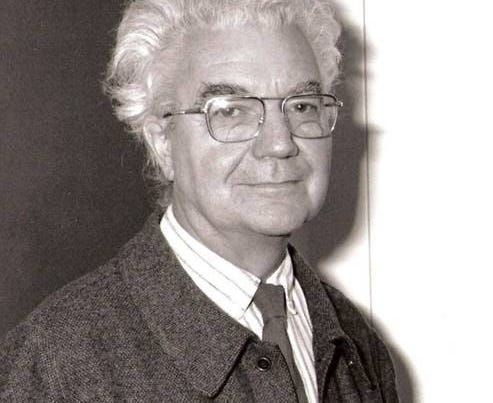
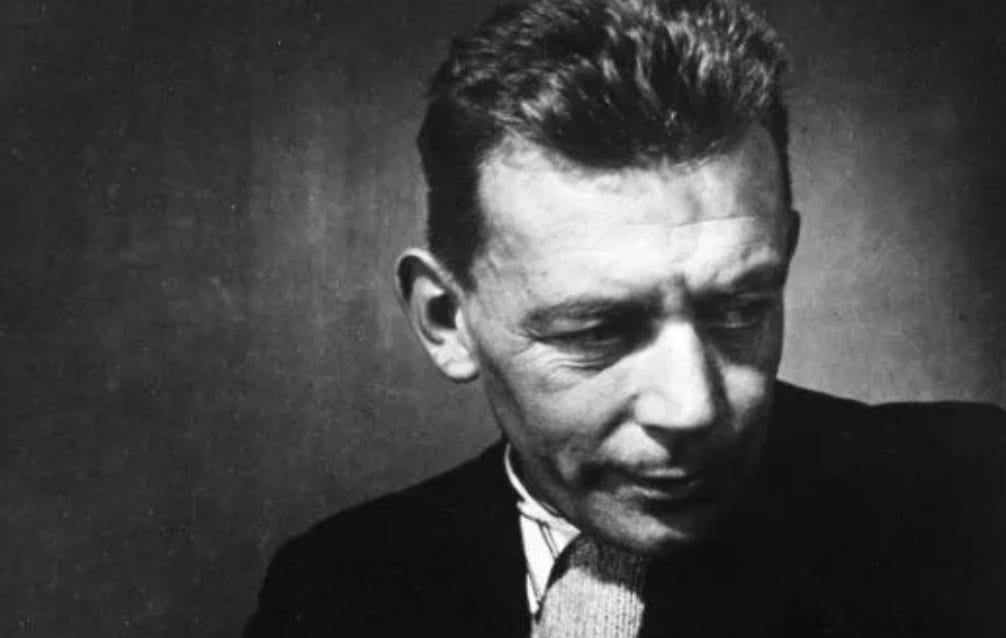
Few people have shaped the way the modern world looks as profoundly — and as quietly — as Adrian Frutiger. While architects define skylines and industrial designers create the objects we hold, Frutiger devoted his life to something even more fundamental: the letters through which nearly all human communication passes. His typefaces appear on airport signs, passports, roadways, books, computers, and countless corporate identities, yet most people encounter his work without ever knowing his name. That anonymity suited him. For Frutiger, typography was never about attracting attention to itself; it was about making reading effortless.
Born in Unterseen (about five miles east, as the crow flies, from our window) on May 24, 1928, Frutiger developed an early fascination with handwriting and letterforms. As a child he was more interested in the shapes of letters than in the words they formed, carefully sketching alphabets while others focused on drawing landscapes or people. His artistic interests eventually led him to apprentice as a compositor before enrolling at the Zurich School of Arts and Crafts, where he studied under influential Swiss typographers and refined his understanding of proportion, balance, and visual harmony.
In the early 1950s, Frutiger moved to Paris to join the renowned type foundry Deberny & Peignot. The timing proved ideal. Printing technology was evolving rapidly, and publishers sought fresh typefaces that reflected a modern, international aesthetic. Frutiger quickly demonstrated an unusual ability to combine technical precision with warmth.
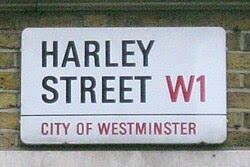
His breakthrough came in 1957 with Univers, an ambitious type family that introduced a highly systematic numbering scheme and offered designers an unprecedented range of coordinated weights and widths. Rather than creating isolated fonts, Frutiger envisioned typography as an integrated system, anticipating the flexibility demanded by modern graphic design.
Univers Bold Condensed on a London street sign
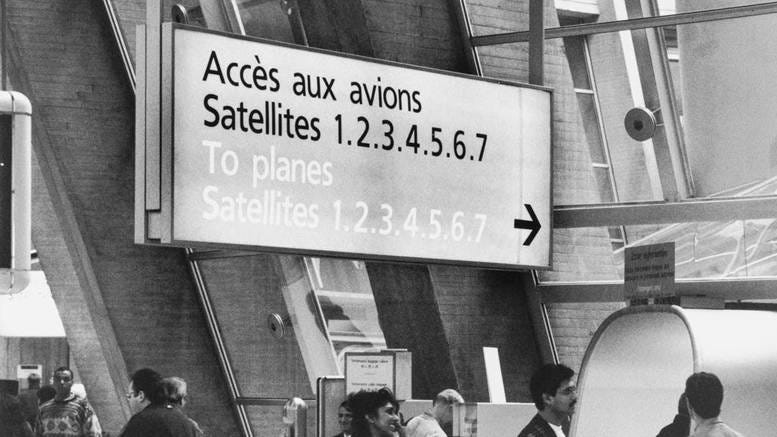
His reputation grew steadily over the following decades, but perhaps his most celebrated achievement emerged from an architectural challenge. In the 1970s, he was commissioned to design signage for Charles de Gaulle Airport outside Paris. The resulting typeface prioritized instant recognition under less-than-ideal viewing conditions, allowing travelers to navigate complex terminals quickly and confidently. That design later evolved into Frutiger, widely regarded as one of the finest humanist sans-serif typefaces ever created. Its remarkable clarity made it a favorite for airports, hospitals, universities, and public transportation systems around the world:
Frutiger’s influence extended beyond two famous fonts. He designed numerous other successful typefaces, including Avenir, which blended the geometric ideals of earlier sans-serifs with a more human, approachable character. Throughout his career he emphasized that letters should serve readers rather than impress designers. He believed typography should function almost invisibly, allowing ideas to flow without distraction. That philosophy placed usability above fashion and helped ensure that his work remained timeless even as design trends changed.
Despite international acclaim, Frutiger remained thoughtful, modest, and deeply reflective about his craft. He wrote extensively about typography, exploring not only technical considerations but also the psychological relationship between readers and letterforms. To him, every curve, spacing adjustment, and proportion carried meaning because each influenced how comfortably people absorbed information.
When he died in 2015 at the age of 87, he left behind a visual legacy that is almost impossible to measure. Millions of people continue to rely on his designs every day, often without realizing it. His greatest achievement was not creating beautiful letters, though he certainly did that. It was making communication clearer, navigation easier, and reading more natural for generations around the globe. In a world overflowing with words, Adrian Frutiger ensured that those words could be seen with exceptional grace and clarity.
A bonus notable comes from the A2 Team:
For a prominent person, let us propose Friedrich Glauser (1896-1938), the Swiss author who was born in Vienna, died in Genoa, but his Heimatrecht — i.e. his home rights as citizen — tied him to Muri near Bern. Glauser became addicted to morphine and various other drugs as a teenager, and most of his short life alternated between being committed to various institutions, escaping to his stern and unloving father, or seeking other ways to get away, while committing all kinds of small crime to get his hands on drugs. He served in the French Foreign Legion in the 1920s, was expelled, mined coal in Belgium, and was extradited to Switzerland, where he ended up in a mental institution for most of the coming years.
He had become acquainted with the Dadaist movement in the 1920s and started publishing, but every opportunity to start a job and a career, whether in Paris or elsewhere, was thwarted by his addiction. He died in 1938.
The books on which his lasting acclaim rests were all written during the last three years of his life: the detective novels featuring Wachtmeister Studer — the Swiss counterpart to Georges Simenon’s Commissary Maigret whom Glauser had read in the early 1930s. Interestingly, they don’t reflect his wide international experience, but instead focus on Switzerland — in its most Swiss, if you will.
When I was a German expat rummaging through the last books on offer in the bookstores of Kiev, in 1990 or so, I had never heard of Glauser, but I bought the collection of short stories plus one novel prepared for Russian students of German. I was amazed. He wrote a distinctly Swiss form of German (not Schwyzertütsch!) with so much warmth and nuance that you felt you could here his protagonists speak. You felt the atmosphere of these orderly, neat, claustrophobic villages, and as you kept reading, you found how the coziness and order of these Swiss villages masked ruthless systems of corruption and traditional authorities exploiting the vulnerable and the poor. And in the midst of all this there was Wachtmeister Studer — decent but disillusioned, trying in his own way to make the world a little less of a terrible place.
It’s because of Glauser that I can’t look at a idyllic bourgeois little place like Merligen without wondering what might be going on behind those well-kept facades.
Our biologist in Milwaukee gets fishy again:
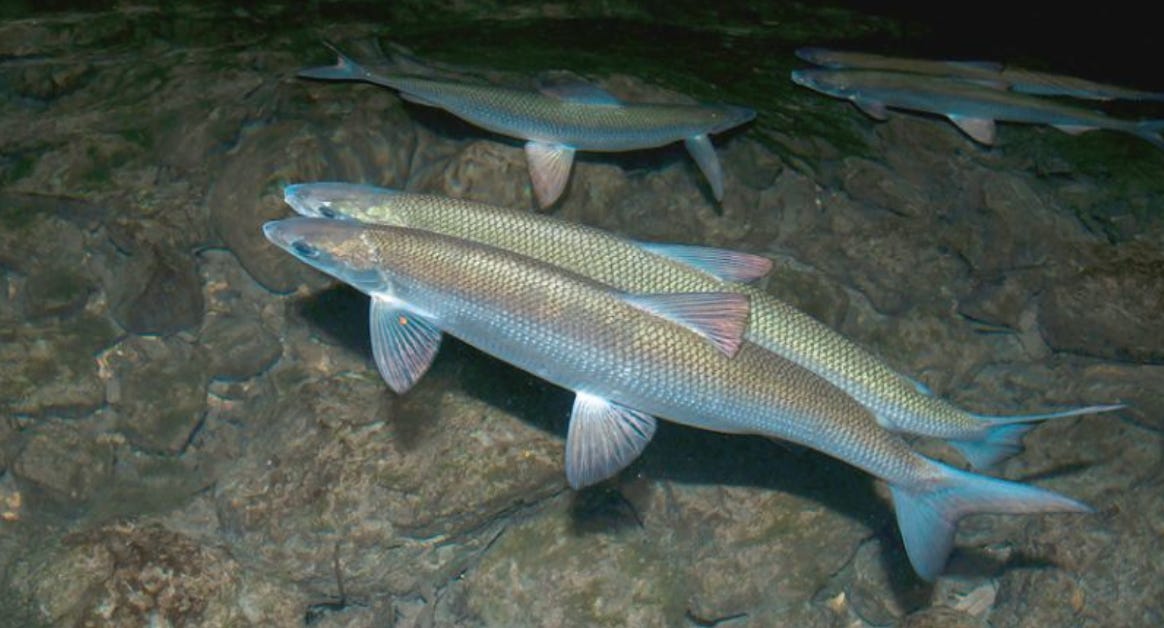
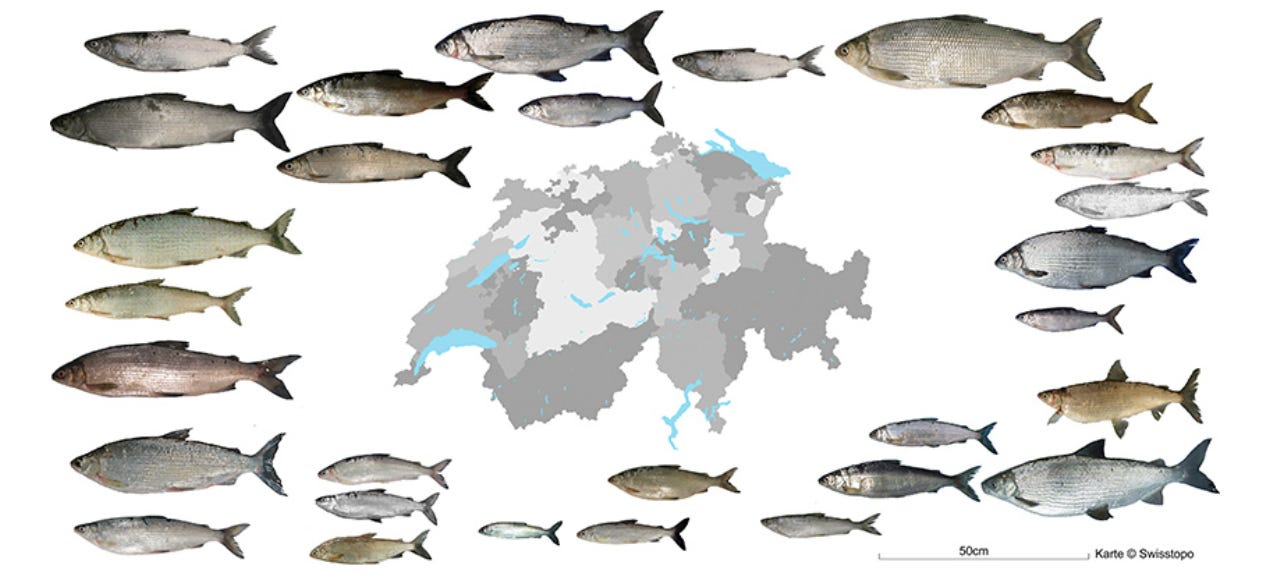
Surprise — for two weeks in a row, we have locations with endemic freshwater fish species! The Thunersee has several species of lake whitefish found nowhere else in the world:
This surprised me until I opened an article on it and was reminded that duh, there are a lot of isolated lakes in the mountains, and the fish in them have been isolated as well, going their own way. As a result, these Swiss lakes developed at least 34 unique species of whitefish, though about 10 of them are now extinct:
How did these new fishes arise? During the ice age 15,000 years ago, the lakes were all frozen and no fish survived, so when the ice finally melted and fish were able to laboriously swim up the mountain streams into them, they found no competition. But they didn’t find much else either, and only the fishes ready for deep, cold, almost empty environments survived — including the whitefishes, who love that sort of thing. Here they underwent speciation; the fishes in different lakes gradually became different from one another (allopatric speciation), while the fishes in each lake gradually partitioned the habitat, hanging out in one area and mating with the others in that area until they became distinct populations, specialists for that lifestyle (sympatric speciation).
In this way you get whitefish that are adapted to the deep dark waters, and others that are adapted to the shallow, weed-filled waters: “The two common combinations of traits among species in European whitefish radiations are large, fast growing, sparsely gill-rakered, benthivorous fish spawning in shallow water versus small sized, slow growing, densely rakered, zooplanktivorous fish spawning in deep water.”
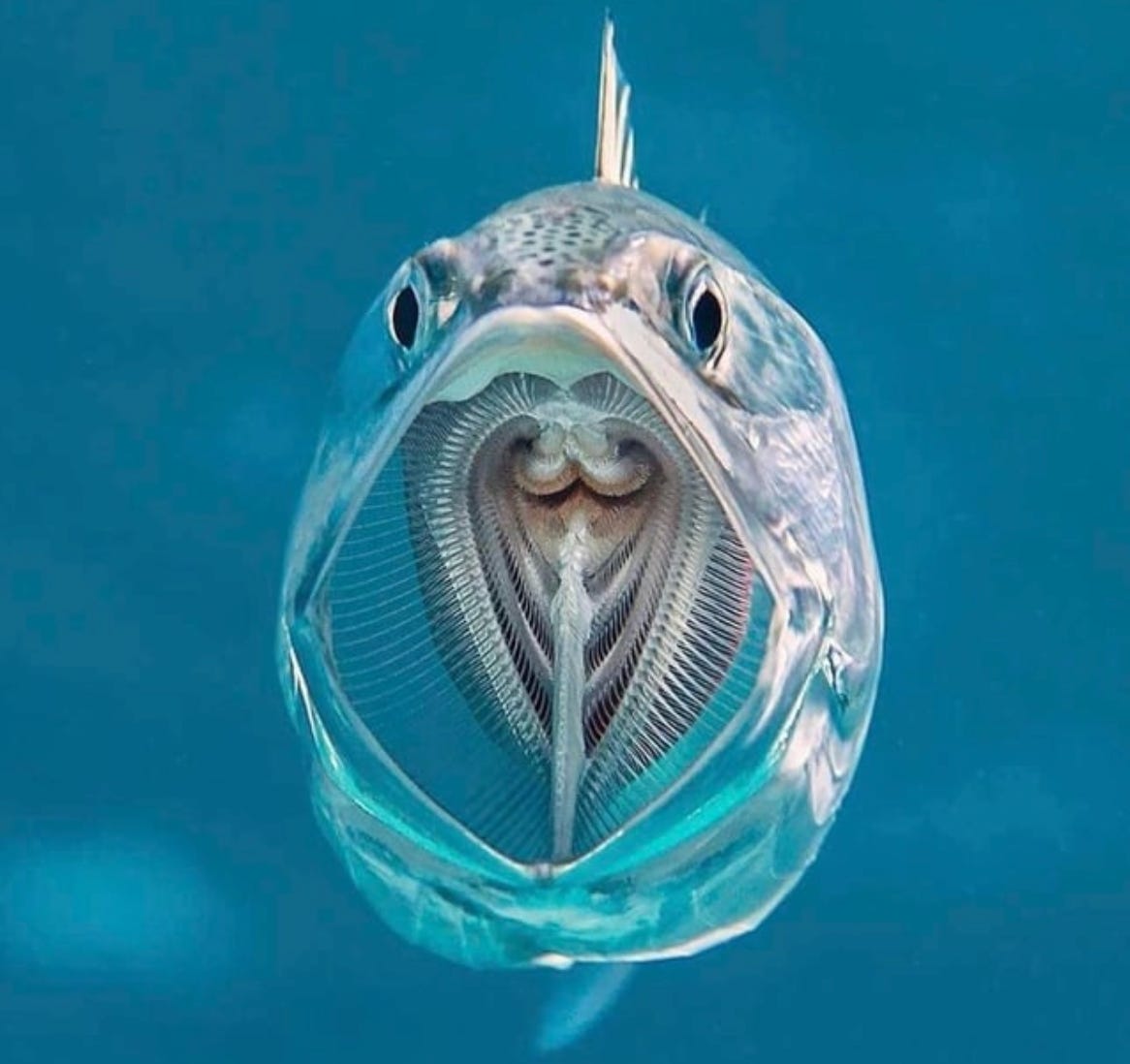
For folks who are thinking, “gill rakers, wha–?”, here’s an image of them:
If you have nice gill rakers, you can gulp in a mouthful of water and force it out your gill slits, sieving out the yummy little critters. If your gill rakers are subpar, you will have to pick up those little critters one at a time. (By the way, that image is a striped mackerel, not a whitefish.)
The same kind of speciation has happened with whitefish in Canada, where even more differences have been found. The deep-water and shallow-water whitefish have different hemoglobin and red blood cells, adapted to their environments.
If our photographer has had a fish dinner in Switzerland, it may very well have been one of these endemic species, as over half the fish caught in Switzerland are whitefish. Bon appetit!
Here’s CO/NJ again, reminiscing about the area:
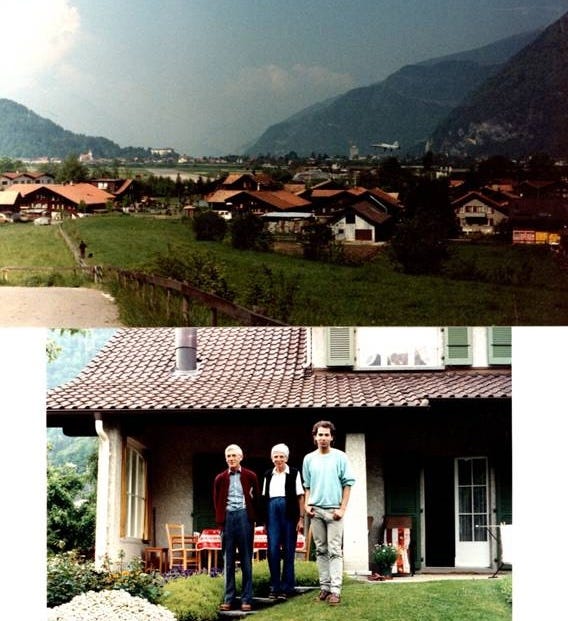
Nearly 40 years ago, on a jaunt across Europe with a buddy when we were 19, I stayed a few days with an old acquaintance of a family friend who lived in Interlaken. We hiked the area, went to a local movie, helped our hosts around the house, got acquainted with their kids who were around our age, and spent our time learning the rhythms of local life in that beautiful part of the world.
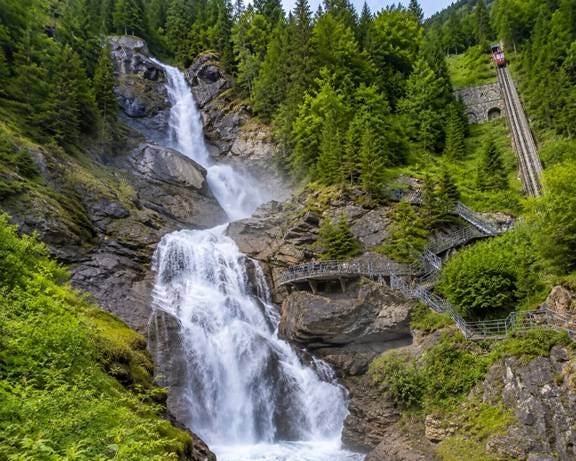
One day we took a ferry around the eastern lake, the Brienzersee, and visited Giessbach Falls at the far end of that lake. But it was so long ago that my memories are now mostly faded. Here’s a photo of our hosts at their house, and the Interlaken neighborhood where they lived:
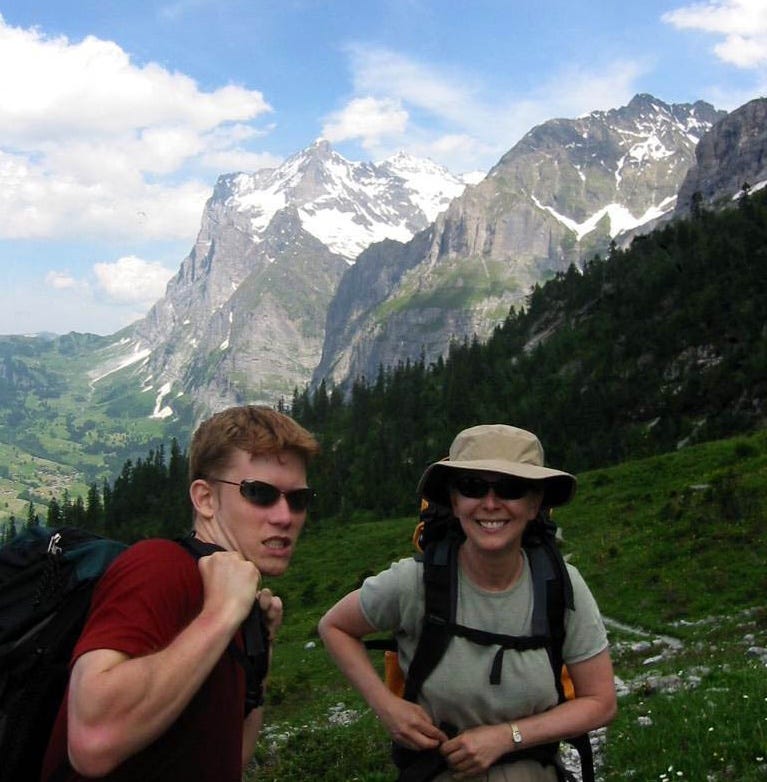
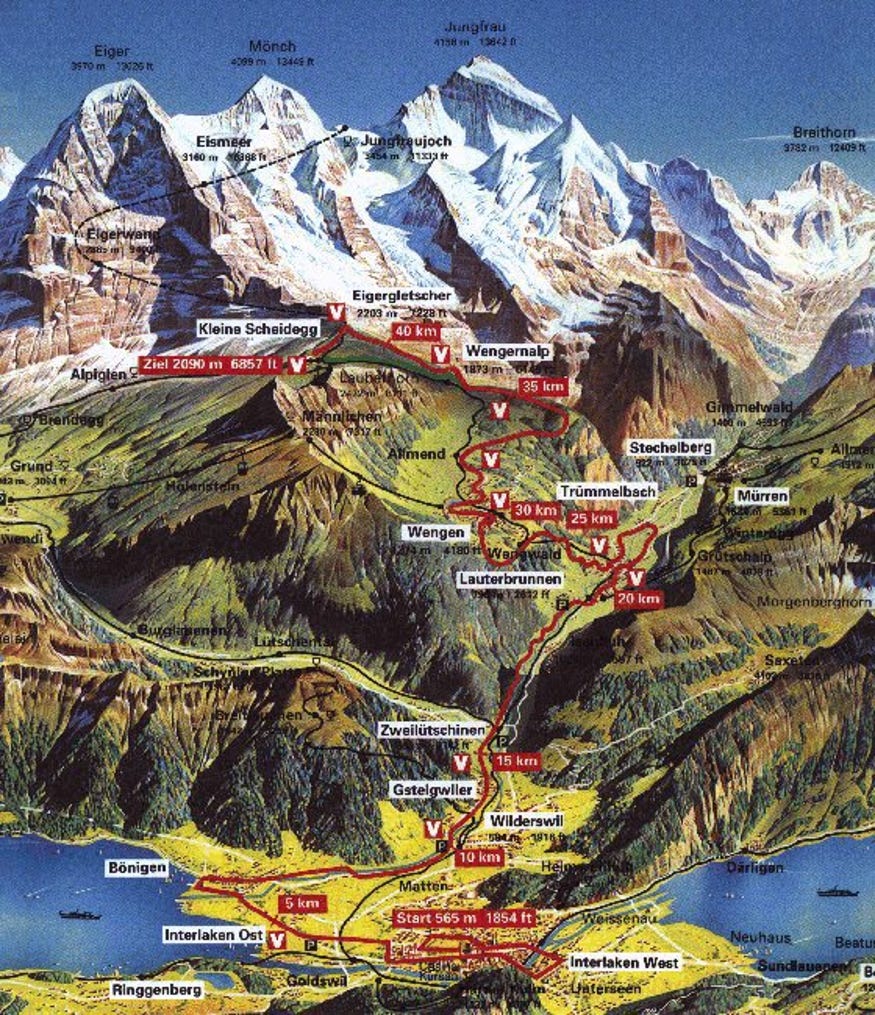
One of the best — and most exhausting — hikes of my life was through the mountain trails outside Interlaken, with my mom and brother, back when I was a college senior:
Here’s San Mateo with more memories:
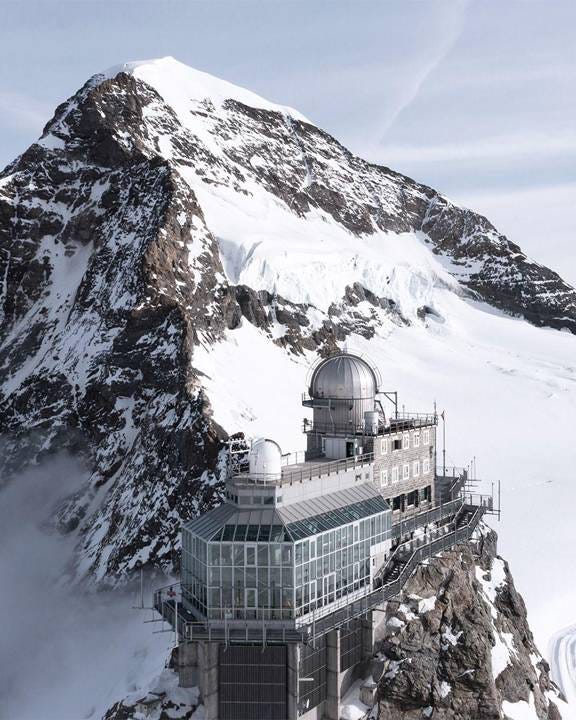
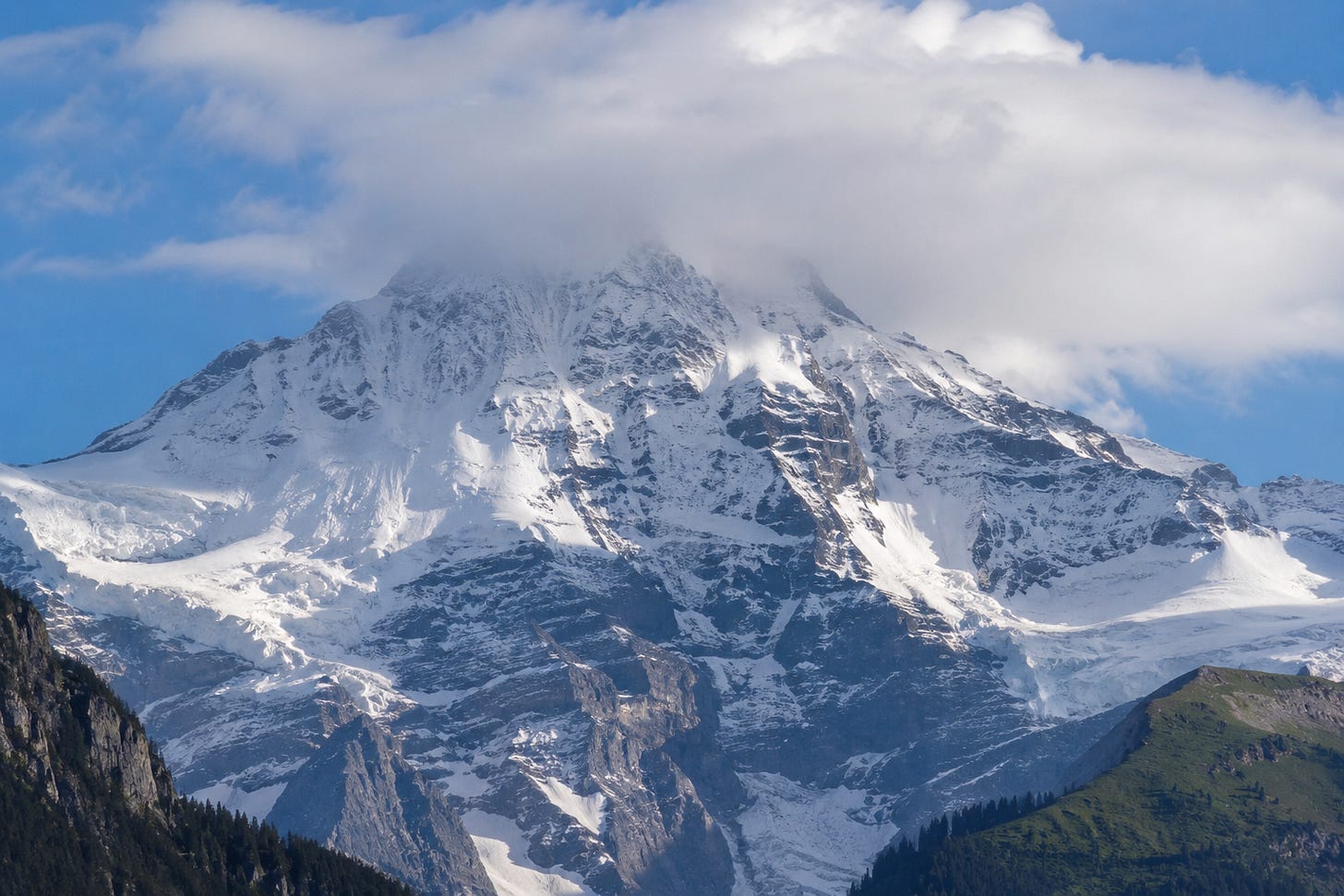
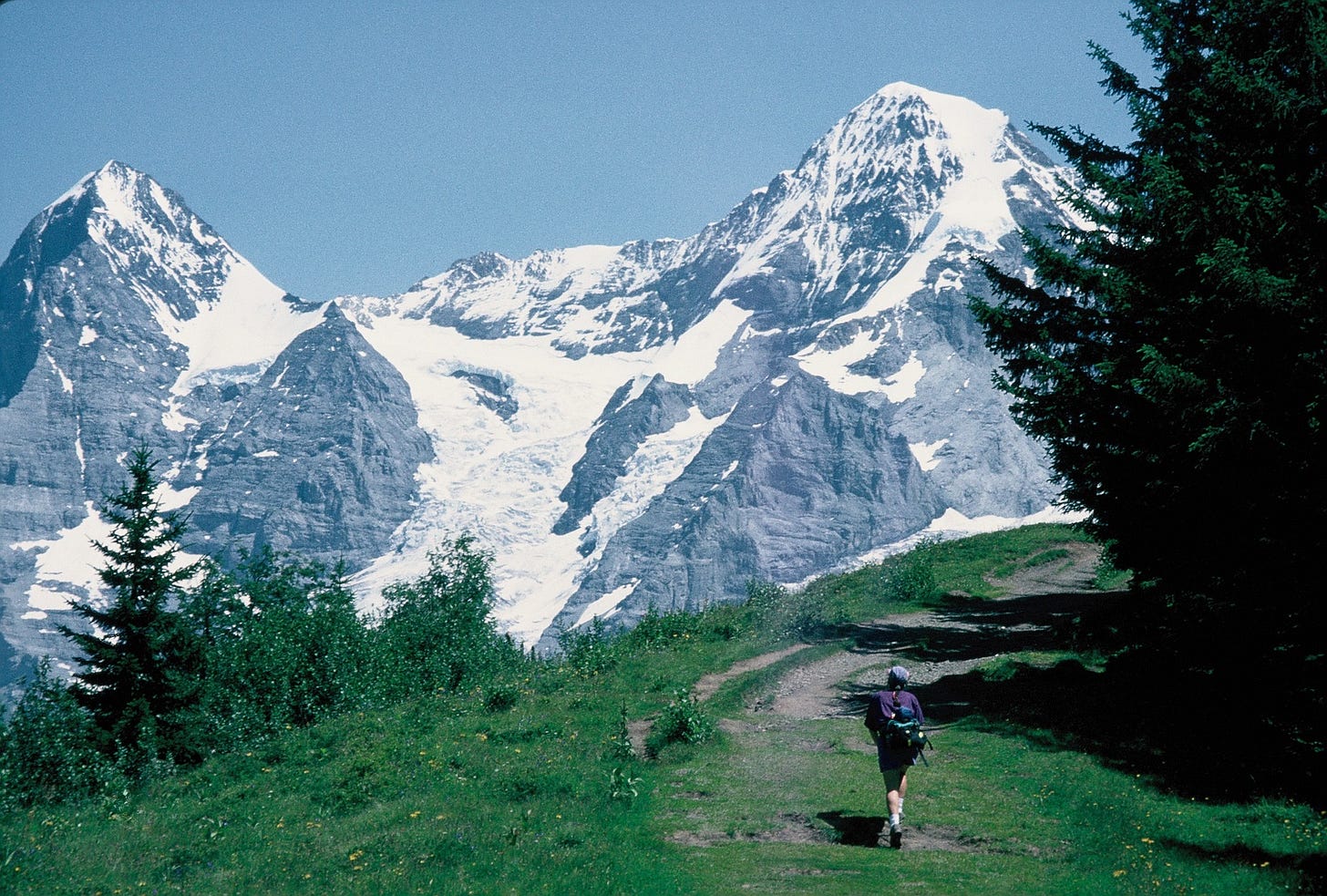
Merligen is a small village on the north shore of Lake Thun, and the VFYW reminded me that years ago my wife and I were traveling in Switzerland and planned to visit the Jungfrau — one of Switzerland’s premier tourist destinations, and only 16 miles from Merligen. The Jungfrau is one of Switzerland’s most iconic mountains, rising 13,642 feet above the Bernese Alps. Together with the neighboring Eiger and Mönch mountains, it forms one of the most recognizable mountain groups in Europe and is part of the UNESCO Swiss Alps Jungfrau-Aletsch World Heritage Site.
Hundreds of thousands of visitors travel each year to Jungfraujoch — the mountain pass between the Jungfrau and Mönch (the Jungfrau’s summit can only be reached by experienced climbers with technical climbing equipment). From Jungfraujoch, visitors can usually (but not always, as you’ll see shortly) enjoy spectacular panoramic views of the Alps and the vast Aletsch Glacier.
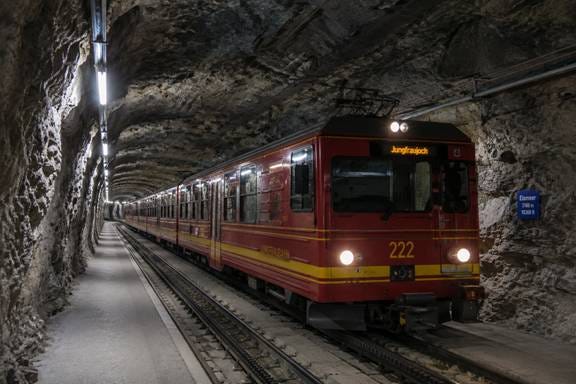
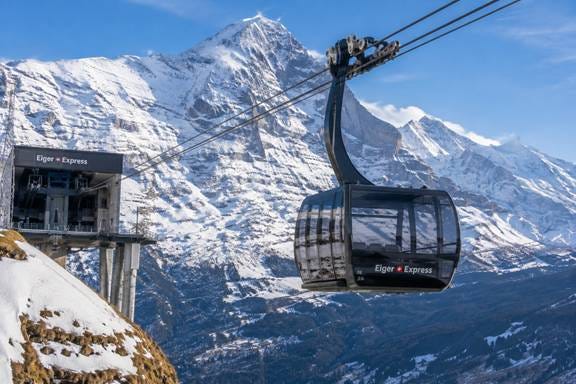
We made reservations at a hotel in nearby Grindelwald, planning to leave for the Jungfrau the following morning. The fastest way to reach the Jungfrau from our hotel was from Grindelwald Terminal on the Eiger Express tri-cable gondola, which climbs to Eigergletscher Station in about 15 minutes with spectacular views of the surrounding Alps. At Eigergletscher, you transfer to the Jungfrau Railway, which travels through tunnels carved inside the Eiger and Mönch mountains. The railway ends at Jungfraujoch, the high mountain “saddle” between the Jungfrau and Mönch peaks at an elevation of 11,332 feet.
The Jungfrau Railway was one of Switzerland’s great late-19th-century engineering dreams: a railway from Kleine Scheidegg up through the Eiger and Mönch to the high saddle of the Jungfraujoch. It was promoted by Zürich industrialist Adolf Guyer-Zeller, who received the concession to build it in 1894. Construction began in 1896. The original plan was even greater than today’s line: the railway was going to continue toward the summit of the Jungfrau, but cost, danger, and engineering difficulty forced Guyer-Zeller to accept a more modest end point: the Jungfraujoch.
Much of the route had to be blasted through the Eiger and Mönch, with workers facing altitude, cold, accidents, strikes, and financial troubles. The line opened in stages: to Eigergletscher in 1898, then deeper into the mountain through intermediate tunnel stations such as Eigerwand and Eismeer. The final breakthrough came in 1912, and the Jungfraujoch station finally opened on August 1, 1912, nine years later than planned.
The railway made the high Alps accessible to ordinary tourists without mountaineering skills and gear. Jungfraujoch became — as it is today — the highest railway station in Europe. The railway is a rack/cogwheel line, mostly underground, partly to handle the steep gradient and partly to protect it from extreme snow and weather. After opening, the Jungfraujoch became a high-altitude tourist and scientific site. A research station opened in 1931, and the Sphinx Observatory followed in 1937.
The summit of the Jungfrau is famous for intermittently disappearing in clouds, and the round-trip ticket on the Eiger Express and Jungfrau Railway and admission was very expensive (it’s now about $400), so we wanted to find a clear day to go up the mountain. Fortunately the very next morning, the Jungfrau summit was bathed in sunlight with not a cloud in sight, so we boarded the Eiger Express and transferred to the Jungfrau Railway. But when we reached the end of the line and stepped onto the Sphinx Observatory viewing terrace — where we were supposed to see panoramic views of the surrounding Alps and the Aletsch Glacier — we couldn’t see a thing, The summit had become covered in a cloud, which remained on the peak of the Jungfrau mountain as if stuck all morning and afternoon.
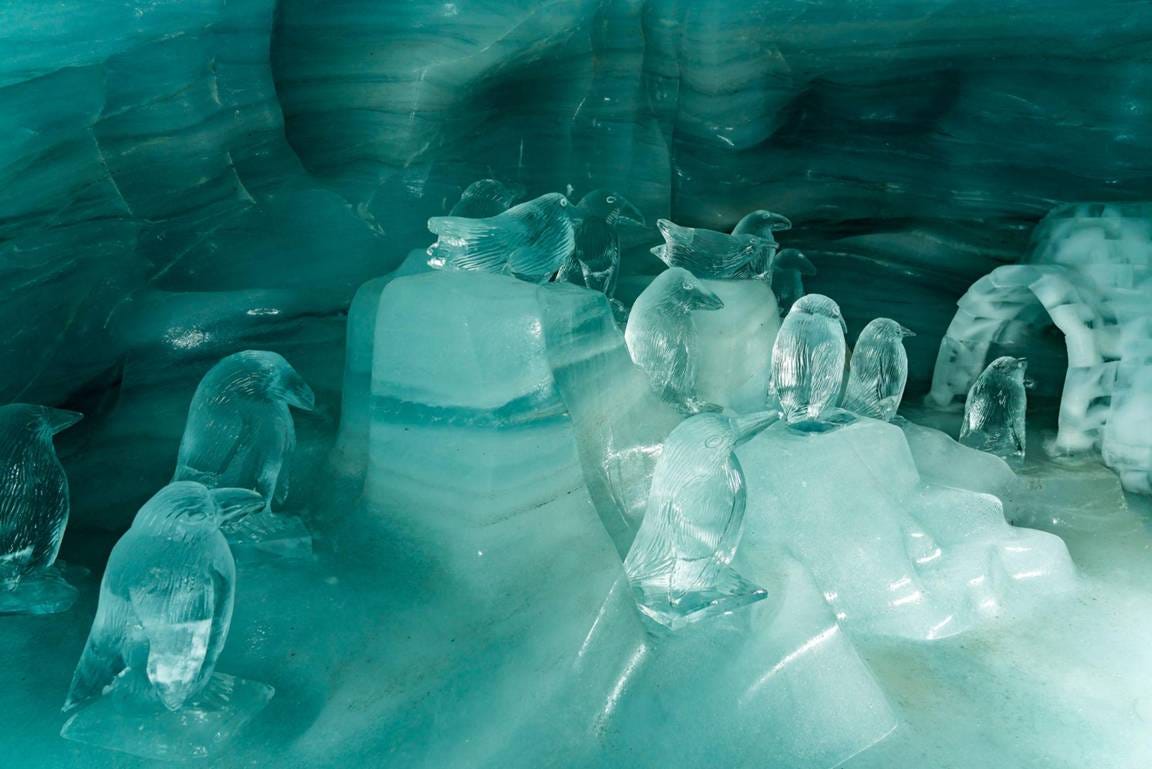
We did have the opportunity to see the Ice Palace, with corridors and sculptures carved entirely from glacial ice, as well as snow fields outside:
We waited and waited for the cloud to clear, but the summit was still obscured when we took the last train down the mountain. Not to worry, we thought; we had another day in Switzerland, so we could try again.
Which we did. The mountain in the morning was free of clouds, and there weren’t any clouds in the sky, so we bought tickets again, took the Eiger Express and Jungfrau Railway again, arrived at the viewing terrace again, and could not see a thing. The cloud had returned.
While in Switzerland, we also visited Interlaken, Wengen, Mürren, and the Reichenbach Falls, where Sherlock Holmes and Professor Moriarty fought on a narrow path beside the falls. Holmes’ friend, Dr. John Watson, is lured away by a fake message, and when Watson returns, he finds only Holmes’ walking stick and a note. Footprints indicate that Holmes and Moriarty struggled and both apparently fell into the torrent below.
For years, readers believed Holmes had died. The public reaction was so intense that Arthur Conan Doyle eventually brought him back in The Adventure of the Empty House, explaining that Holmes had survived by using his knowledge of the Japanese martial art “baritsu” to escape before Moriarty fell.
But that’s another VFYW.
Speaking of the Jungfrau, here’s the a-maize-ing sleuth:
A long time ago, when I was into endurance running — and full of juvenile bravado — I learned all that I could about the Jungfrau Marathon. It’s for those who don’t mind 6000 ft elevation gains and punishing thin air:
This year’s run, on September 5th, is all booked, but next year’s registration opens on February 14, Valentine’s Day.
My brother, a marathoner, would be drooling over that race. Another walk down memory lane comes from our globetrotting super-sleuth:
I’m heading into Montreal for Canada Day and still hanging in provincial parks at night with limited internet, but I couldn’t pass up this easier view. I think we are in Wengen in the Bernese Oberland — one of the most beautiful alpine regions I’ve ever seen.
First visit was at age 16 in 1977, dragged along by my older sister and her friend on Eurail passes at my mom’s request. (She probably just wanted me out of the house; we were living in Brussels at the time.) We were staying in an Interlaken hostel and had free rail transport up to Lauterbrunen, but we wanted to get up higher. The Jungfrau Eigerwall cog train was too much for our budget, but there was a deal for Eurailers up the Shilthorn via bus, funicular, and cable car. We gulped at the price (like 50 USD) but did it anyway.
It was early July, but there was still plenty of remnant snow and amazing scenery at the top. We decided to hike down the length of the tram to Birg and on to Murren, which was a fantastic choice. Glissading down snowfields with inappropriate footwear, we eventually dropped into greener meadows and communed with the bell-wearing cows, then grabbed food and wine in Murren in late afternoon.
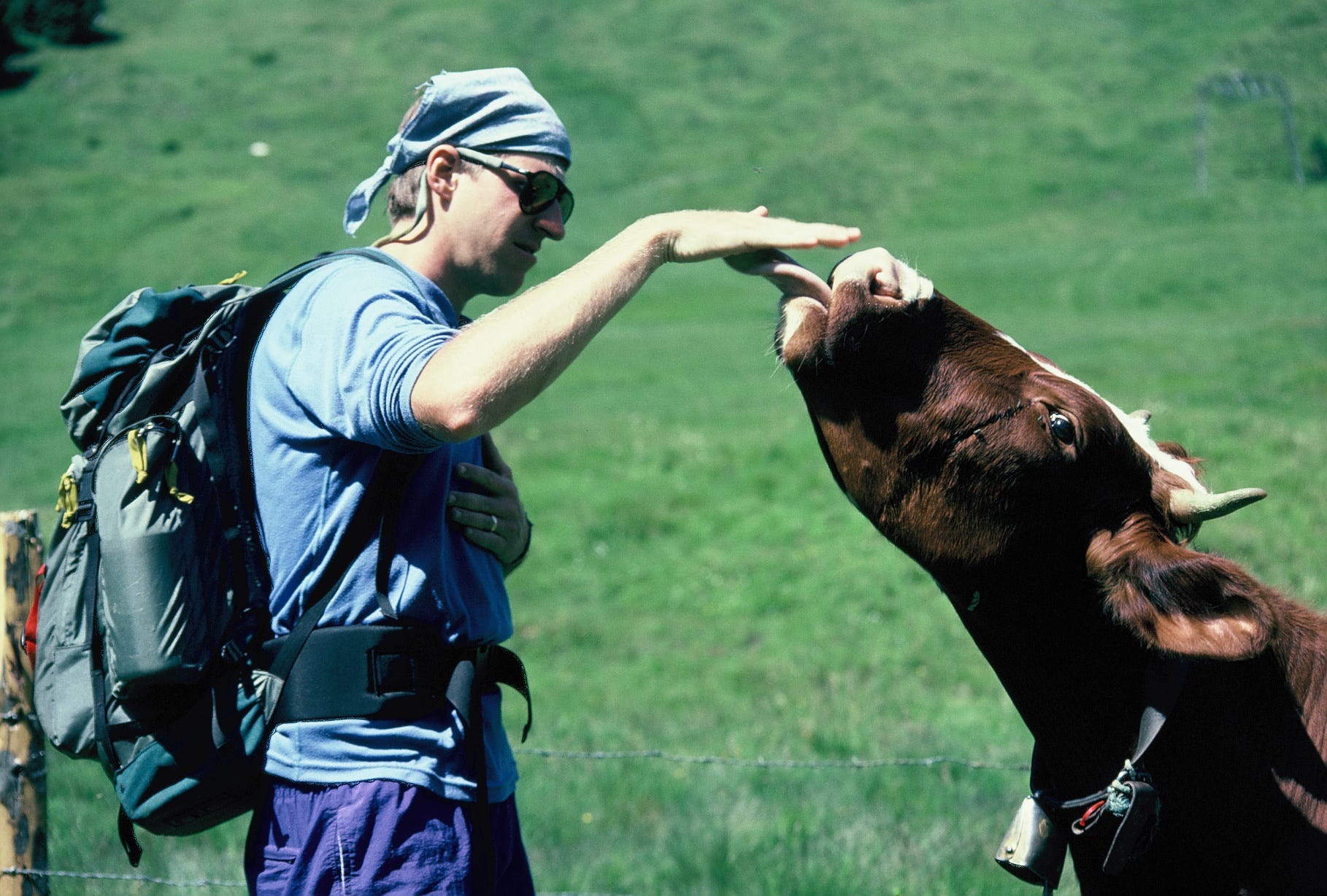
“If you fall asleep in a meadow, you might just find one licking the salty sweat off your legs. Their tongues are like sandpaper.”
The Shilthorn is over 9000 feet and Murren is about 5000, so this took a few hours and we were pretty beat upon getting to the top of the funicular a few kilometers over from Murren. We had timed our walk to catch the last afternoon funicular to the valley floor in time for the last train to Interlaken. But things went sideways when I realized I’d some how lost my ticket for the funicular. It must of happened slipping through the snow fields, but I am famously disorganized, so I could have dropped it tying the laces of my Chuck Taylor high-tops. We tried convincing the funicular operator that I had just lost my ticket, but the Swiss woman lived up to her national reputation for chilly hospitality and precise rule following: “Nein.”
My sister was livid — I was already a liability for just existing as a tagalong — and she started pulling out her money to cover the cost of a new ticket. I told her not to bother; I could simply run down the rest of the way. I was sure I could catch the train.
I did, just barely, but way underestimated the cost. It only took about an hour, but I was running and stumbling the whole way — falling a couple of times cutting immaculately designed switchbacks in my traction-challenged basketball shoes, and scratching myself silly through the brush. I was in a hurry.
I jumped on the train within seconds of its departure, like in a bad movie, finding my sister and her friend, and thinking I would be congratulated for my resourcefulness and effort — oozing blood from knee and elbow scrapes, red faced, and sweating. She looked at me with some sympathy but without disguising some disgust and some interest in the justice of the situation. I’m sure she thought I would learn how to keep track of things better in the future. Fifty years later, I can say with some confidence that, nope, I’m still just as scattered most of the time.
I’ve returned to the Oberland many times since that trip — to ski in winter and hike in summer.
I haven’t forgotten the latest great collage from Berkeley:
Here’s the VFYW architect:
I think on a per capita basis, Switzerland might have developed the most top-notch architects of any country. Charles-Edouard Jeanneret was born in La Chaux-de-Fonds, Switzerland, in 1887. As a teenager he apprenticed as a Swiss watchmaker before discovering architecture. After designing a few residences in his hometown, he moved to Paris in 1917, adopted the name Le Corbusier, and ultimately staked his claim as a giant of 20th Century modern architecture. Following in his footsteps, there are several practicing Swiss architects with international reputations. I’m going to focus on the two who have won the Pritzker Prize.
Herzog and de Meuron received their prize in 2001. They’re incredibly prolific. If you go to their website, they have thumbnails of their projects starting in 1978 with 001 Attic Conversion in Riehn, Switzerland, all the way up to 708 Palace of Congresses in Tirana, Albania. In between they’ve worked in nearly 40 countries. Unlike Le Corbusier — whose buildings adhere to his Five Points of Architecture, are stylistically similar, and use the same materials over and over — Herzog and de Meuron take the opposite approach. They rarely repeat themselves. Instead of pursuing a consistent visual language, they pursue a consistent process: studying the site, experimenting with materials, and creating buildings whose character emerges from those investigations.
Their work is known for its conceptual rigor, technical innovation, and sensitivity to place. Creative use of materials, as well as simple forms with complex and rich details, are their signature moves. I would guess most sleuths will recognize at least one of their buildings.
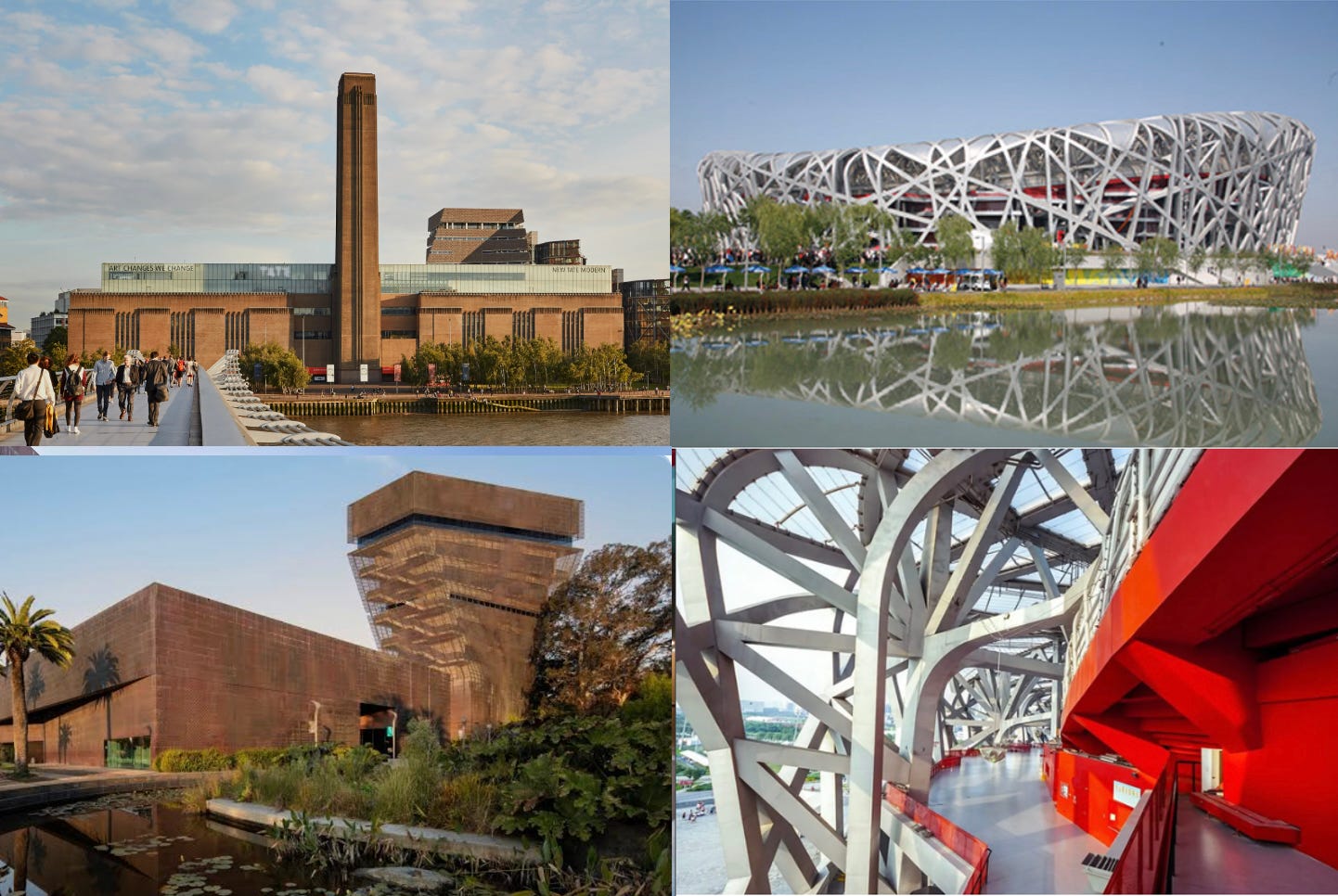
I’ve talked about many sports stadiums in my reports, and I think my favorite that I’ve seen in person is the 2008 Olympic Stadium in Beijing, better known as the Birds Nest. To me it’s incredible that Herzog and De Meuron could conceive of it and that their structural engineer could figure out how to build it.
The Tate Modern art museum on the Thames in London is a terrific example of the adaptive reuse. The former Bankside Power Station has been turned into one of the world’s great art museums. The De Young Museum in Golden Gate Park, San Francisco is a sophisticated example of the architecture responding to the site. The park flows into the building and the building becomes part of the landscape. The texture of the skin is formed by more than 7,000 unique embossed and perforated copper panels.
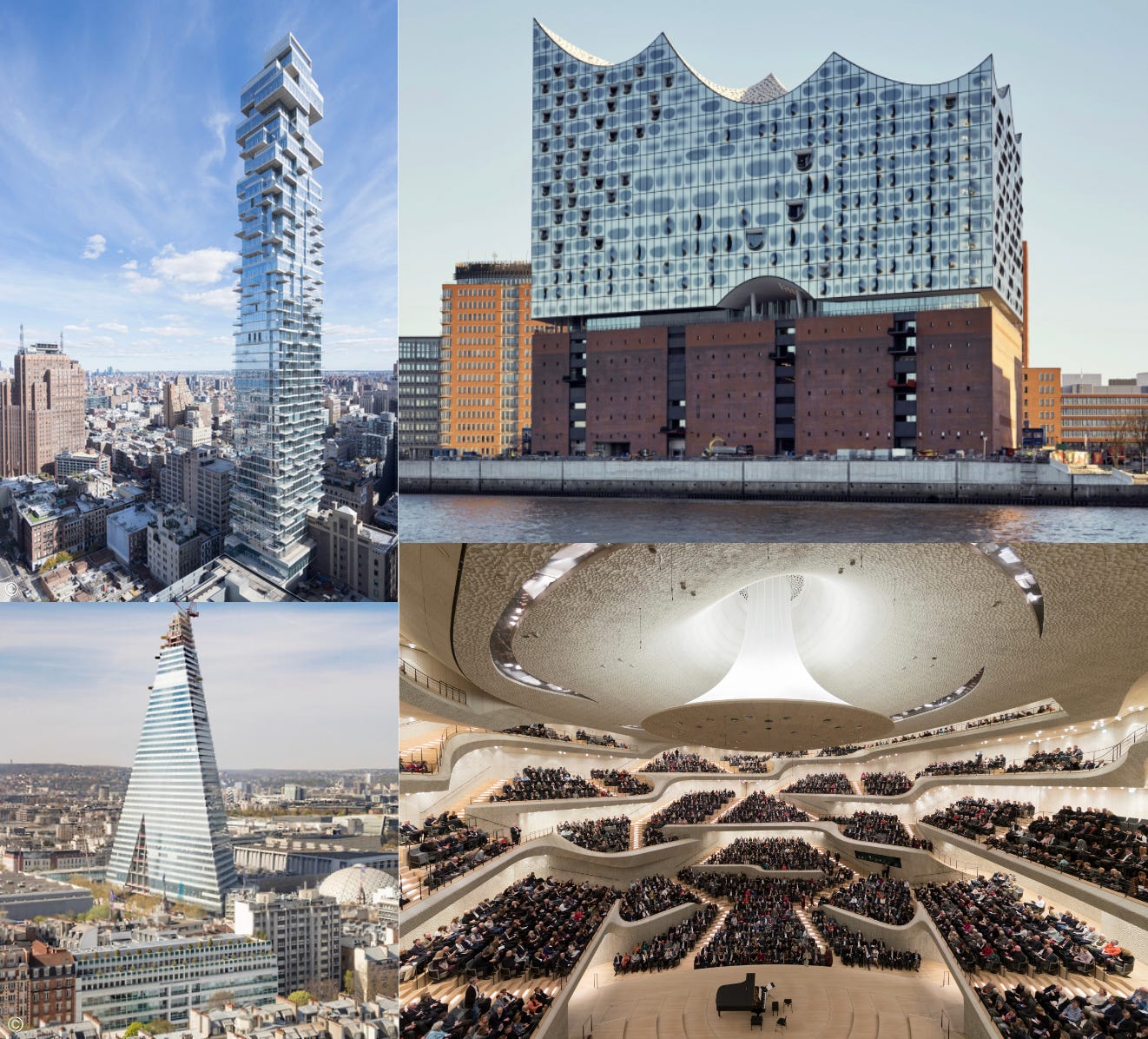
The Elbphilharmonie Hamburg is another example of Herzog and de Meuron transforming an industrial structure into a civic destination. Originally a waterfront warehouse, now the complex contains three performance venues, a hotel, luxury apartments, restaurants and shops, and exhibition spaces. I’m sure the client wasn’t expecting that when the renderings were unveiled; Herzog and deMeuron must be master pitchmen.
Then there are the two skyline-altering towers. In downtown NYC, the 821-foot, 57-story “Jenga Tower” seems to be well liked, if largely unaffordable. On the other hand, even though the nearly completed 590-foor, 42-story Tour Triangle in Paris contains offices, a hotel, a conference center, and a slew of public amenities in its base, it is widely loathed — so much so that the city of Paris officially reinstated a rule that limits the height of new buildings in the capital to 37 meters.
In 2009, Peter Zumthor became the second Swiss architect to win the Pritzker Prize. In some ways his work is a rebuke to Herzog and de Meuron. Zumthor is not primarily trying to create beautiful objects; he is trying to create profound experiences. While many architects begin with form, image, or an abstract concept, Zumthor begins with a more fundamental question: “What should it feellike to be here?” He wants each building to have a distinct atmosphere — an emotional character that people perceive almost instantly. Rather than impressing visitors intellectually, he wants them to simply feel that a place is calm, solemn, intimate, mysterious, or joyful.
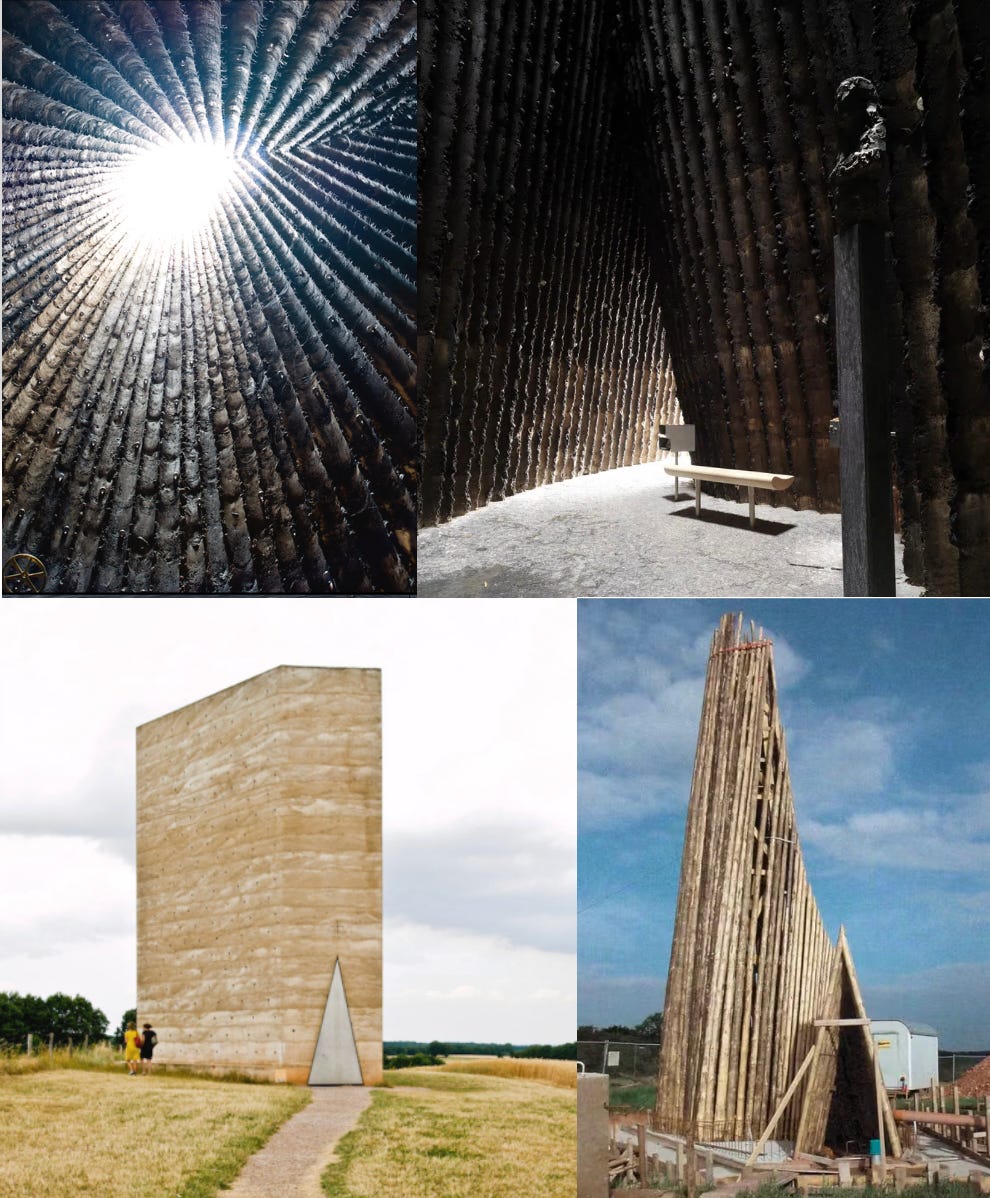
The Bruder Klaus Field Chapel is a truly singular building. It is located on an isolated hill in Mechernich, Germany, about an hour outside Cologne. Bruder Klaus (1417-1487) was one of Switzerland’s most revered saints. He was not only as a mystic and hermit but also as a peacemaker whose counsel is credited with helping preserve the unity of the early Swiss Confederation.
The technique Zumthor used to build it unfolded in several carefully choreographed stages. First, about 120 spruce tree trunks were leaned together to form a teepee. The bundle served as the interior formwork of the eventual chapel volume. Then, concrete made from local sand, gravel, and white cement was poured around the teepee in 24 horizontal bands. Each one was compacted to form the visible bands. Once the concrete had fully cured, the trees were set on fire and allowed to smolder slowly for several weeks. When the wood had completely burned away, it left behind a hollow chamber whose walls preserved the exact negative imprint of every trunk. The concrete became permanently blackened and carries the scent and texture of the burning process.
Many people who have visited the chapel describe the experience as spiritual rather than religious. As Zumthor intended, rather than communicating through crosses, stained glass, or religious imagery, the chapel creates meaning through light, darkness, texture, smell, and sound. I hope someday to make the pilgrimage myself.
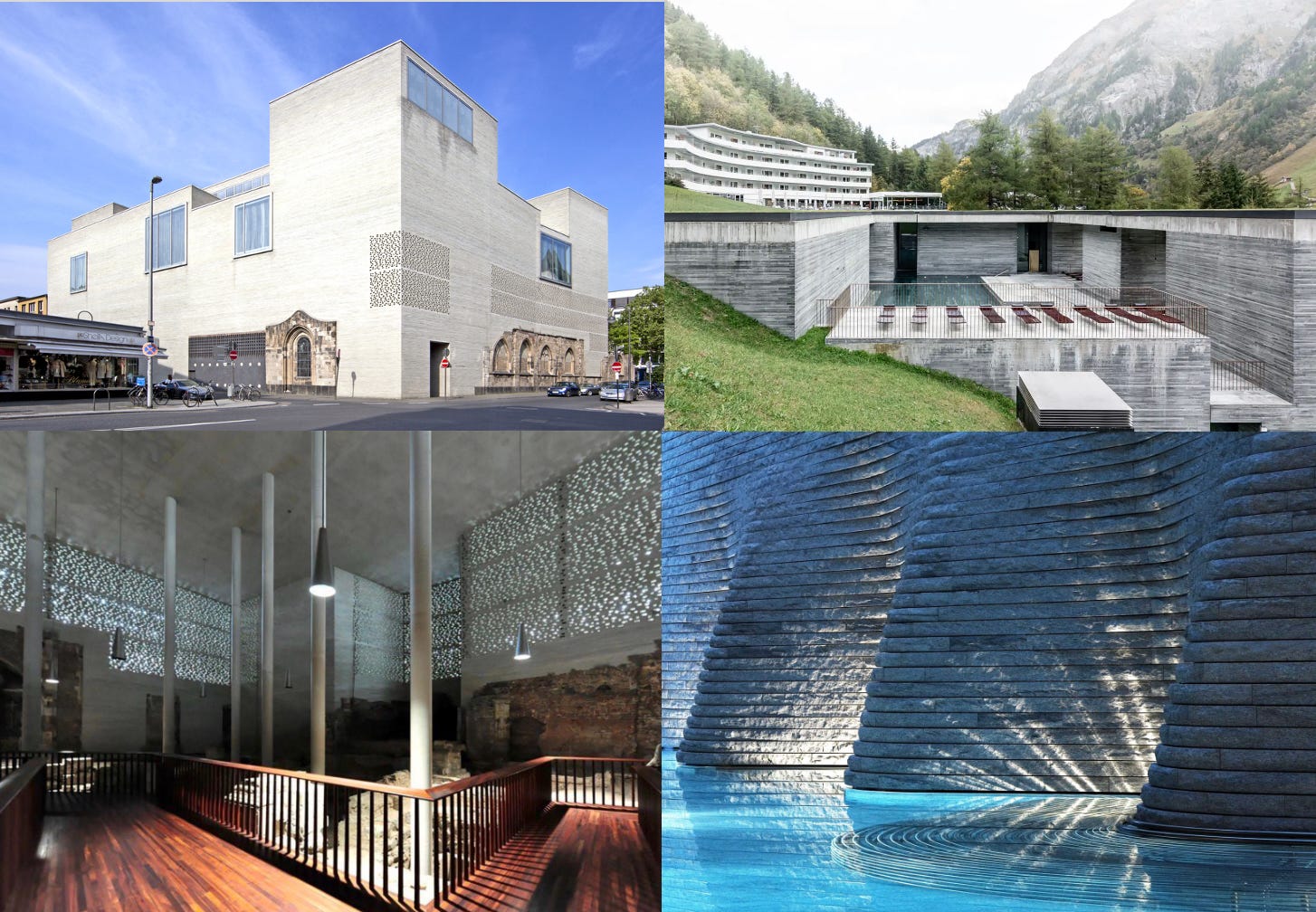
Therme Vals, is a thermal spa and bath complex in the Alps fed by natural spring water. It is an architecture of stone, water, light, silence, and movement — a building that feels like a piece of the mountain hollowed out to reveal a sequence of sensory experiences. The complex is constructed almost entirely from locally quarried Valser quartzite, and approximately 60,000 slabs of quartzite were used. The stone is laid in thin horizontal courses of varying thicknesses, giving the walls a layered, geological appearance.
In the heart of Cologne is the Kolumba Museum built in 2007. Zumthor deftly weaves together history, art, and archeology. The museum encloses the ruins of the medieval St. Kolumba Church, destroyed during the Second World War, along with Roman archaeological remains and the postwar Madonna of the Ruins Chapel. Rather than restoring or contrasting these fragments, Zumthor allows them to coexist as equal layers. The building becomes a physical record of Cologne’s history rather than a reconstruction.
Perhaps the defining architectural feature are the bricks. Working with a German brick manufacturer he basically invented them. The long, slender, gray bricks are 20 3/4” x 4 1/4” x 1 1/2” are now a commercial product called Kolumba bricks, which can be purchased in many colors.
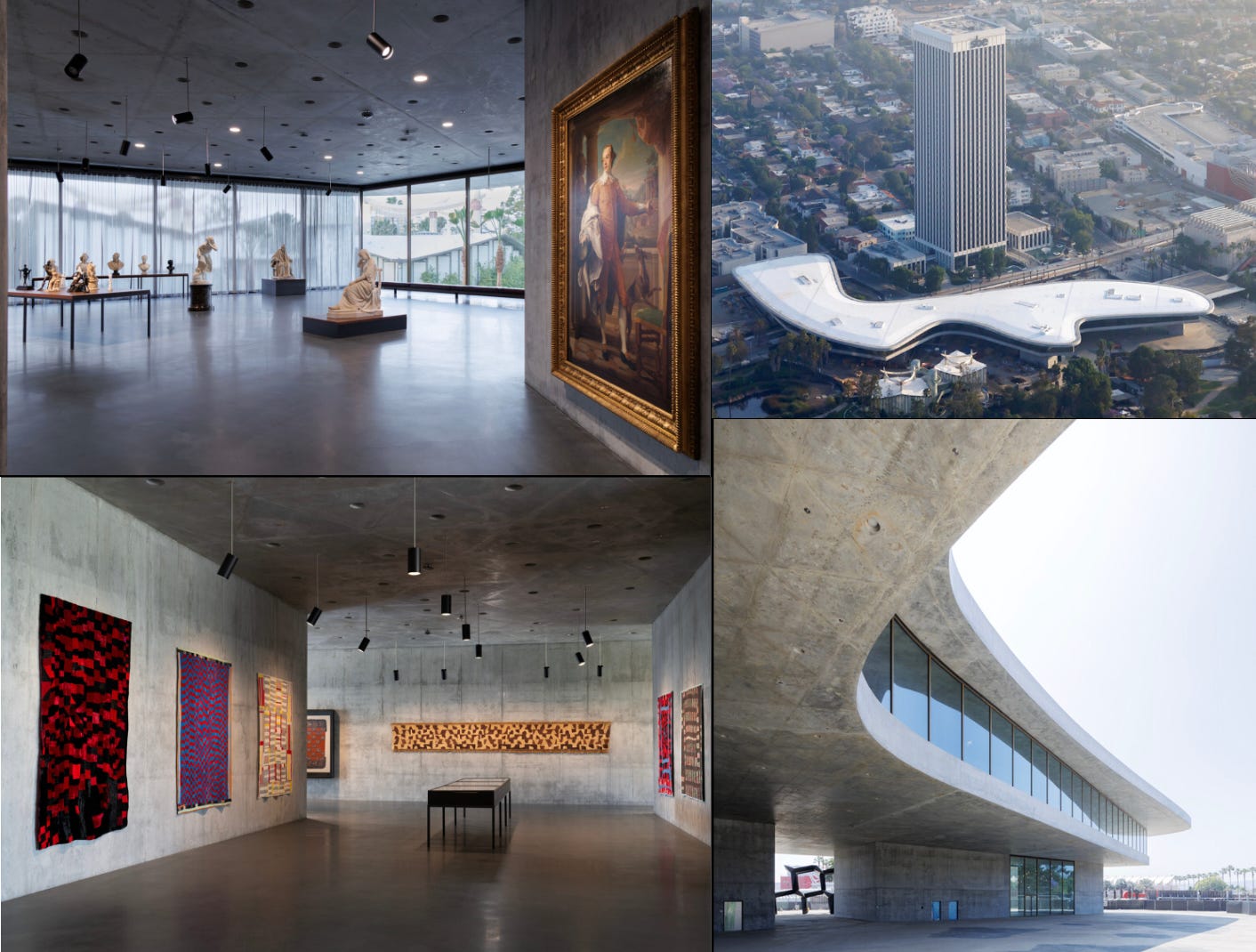
I would be remiss if I did not mention Zumthor’s most recent building that just opened in April: the Los Angeles County Museum of Art (LACMA), which I suspect many sleuths have visited. I haven’t been there yet, but I’ve read several reviews. One described the museum as a sweeping, elevated museum that reimagines the art museum as a continuous, naturally lit gallery floating above the landscape and Wilshire Boulevard, prioritizing the experience of movement, light, and place over a conventional sequence of rooms.
When I look at the photos, I can’t help but feel the project was just too big, too far from home, and the three-quarter billion budget too overwhelming for Zumthor. Sometimes when I’m at museums I imagine what the people in the paintings would think if they sprang to life. I imagine the figures at LACMA are thinking: How did I end up on a concrete wall, staring at a concrete floor, a concrete ceiling, and a window that over looks the La Brea Tar Pits? But the art critic in the Art Newspaper wrote: “It demands to be experienced in person; photographs alone do not capture the qualities of light, movement, and changing atmosphere that are central to Zumthor’s design.” So okay, I’ll withhold final judgment for now.
Here’s the a-maize-ing sleuth once more:
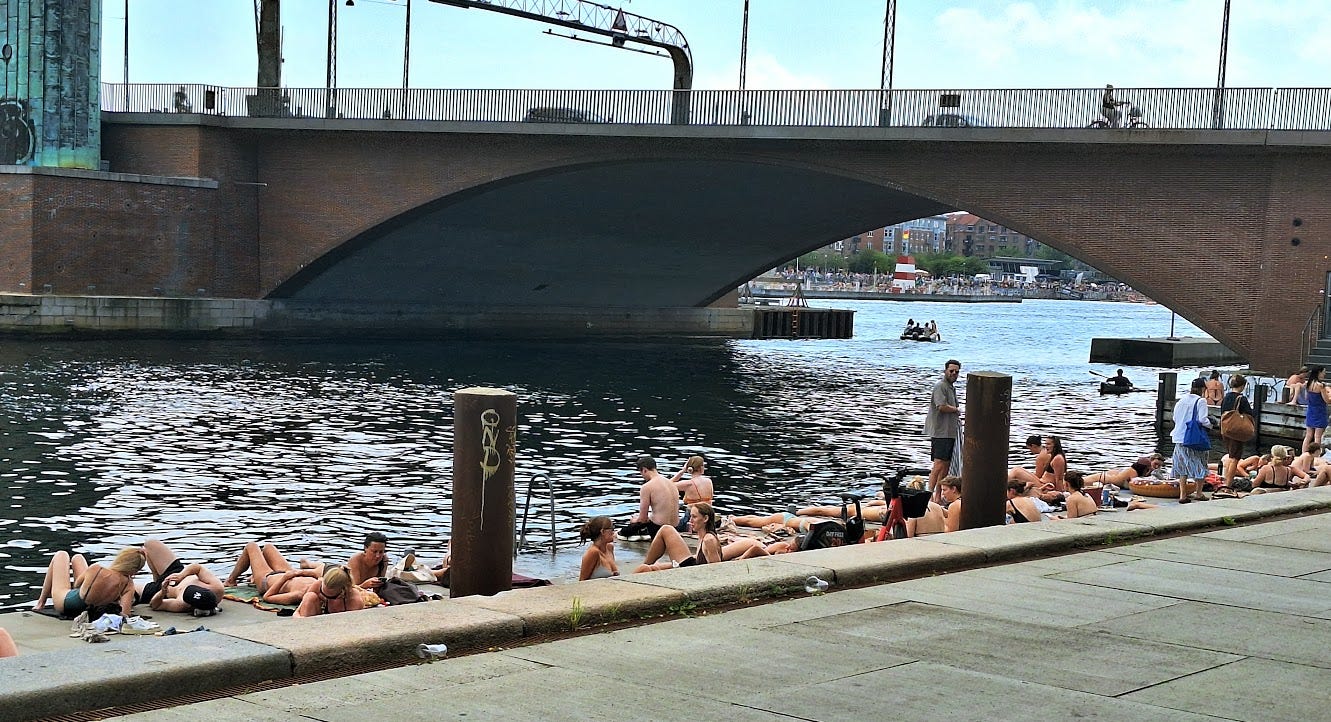
Greetings from Copenhagen! I arrived on Sunday, when a high of 85F was announced as Extreme Heat. Sunbathers thronged the riverfront, covering the boardwalk like seals at the Fisherman’s Wharf:
Most were not yet tanned, and some were draped in Norwegian flags on World Cup soccer nights. Locals far outnumber tourists at the swimming spots, enjoying (I guess) the fruits of 50% national income tax. I also really liked the fluffy pastries and $10/hour bike rentals.
The last word this week goes to our Burner super-sleuth:
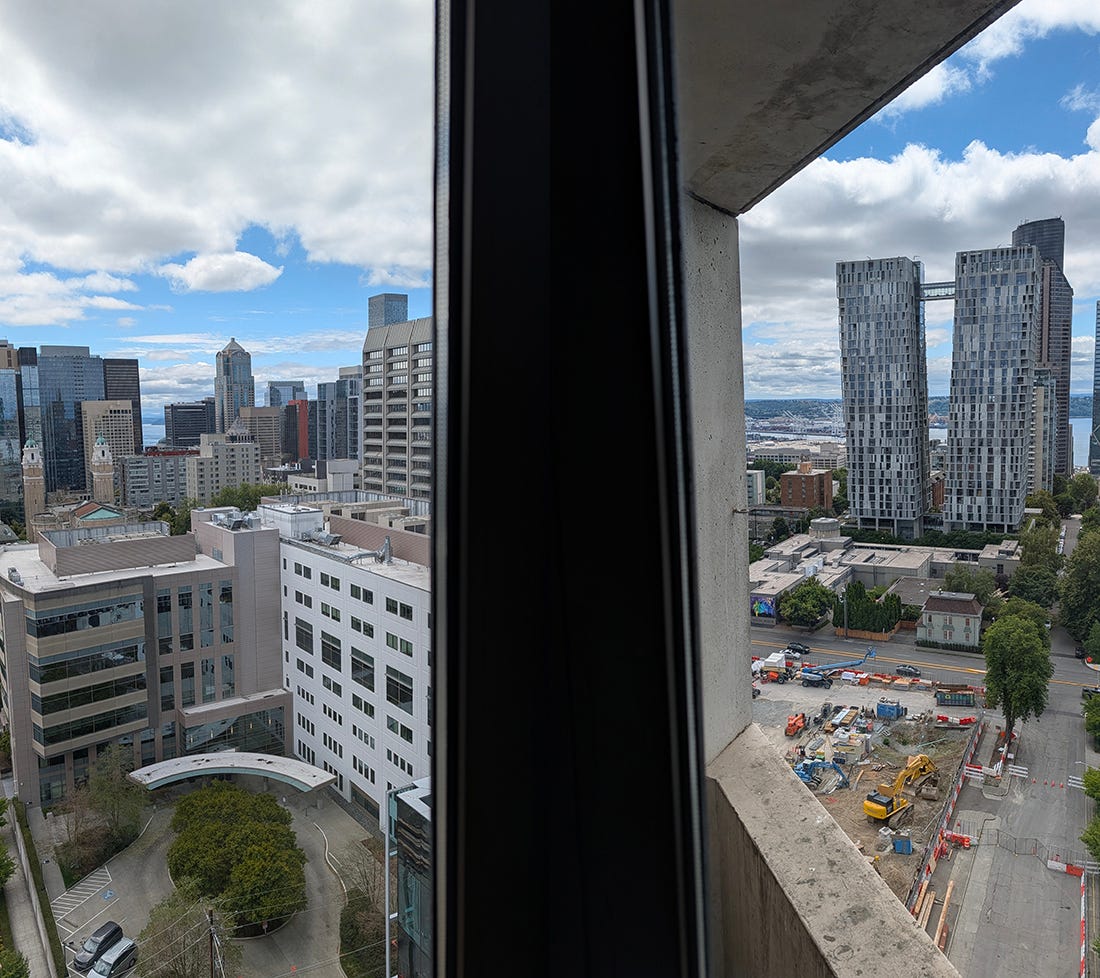
A good friend and fellow burner is in the hospital with a serious but manageable issue. One positive: he has a great view! These pics were taken from room 1216, Swedish Hospital, 747 Broadway, Seattle:
Get well soon! And Happy Fourth to all. See you two Saturdays from now, after a Dish break for the 250th.
This week: Merligen, Switzerland. Next week:
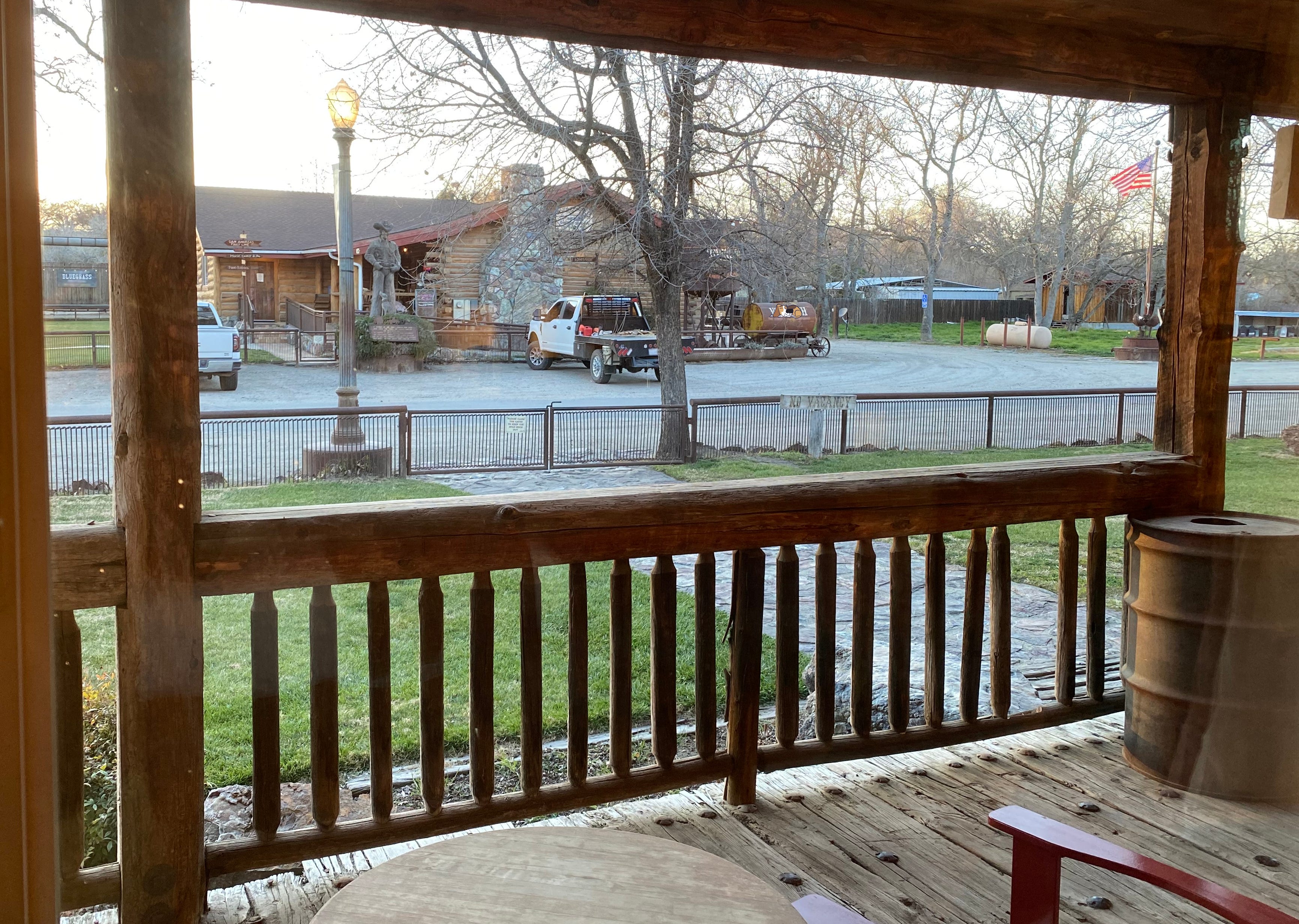
Where do you think? Email your entry to contest@andrewsullivan.com. Please put the location — city and/or state first, then country — in the subject line. Bonus points for fun facts and stories. Proximity counts. The deadline for entries is Wednesday, July 15, at midnight (PST). The winner gets the choice of a View From Your Window book or two annual Dish subscriptions. The contest archive is here.
(To submit a photo for the contest view, also use contest@andrewsullivan.com. Horizontal photos are preferred, and make sure part of the window frame is showing. Please also send a photo of the building with the window circled, which makes the contest go much smoother. If we select your view, you’ll get six free months added to your Dish subscription.)


 The Dish