This Used To Be The Future

Otsuka

Chino Otsuka makes double portraits:

Images of Otsuka as an adult are craftily combined with snaps of the artist as a child, pinched from the family photo album. The resultant composite snapshots are both glaringly literal and astoundingly subtle musings on the contemporary relevance of the self-portrait.

More here.

(hat tip: Kottke)

Dissent Of The Day

A reader writes:

One sticking point I've always had with the standard conservative approach to health care is the underlying assumption that it will behave like a free market. Free markets are based on two primary principles – the idea that people have sufficient information to choose the optimal solution and that they can and will delay gratification. Neither idea seems particularly plausible when it comes to health care.

Even highly educated people are unable to assess whether a particular test or procedure is worth the cost. Nor, generally speaking, do they even have the time to research their options – if you're having a heart attack, are you really going to debate with the doctor whether a stent is necessary or try and determine which is the lowest-cost hospital? You could argue, I suppose, that of course people can't and shouldn't make those sort of micro-decisions, but that they should be able to choose among insurance plans and thus free market principles can operate in that arena. Only, the incentive structure for insurance companies isn't weighted properly either. Insurance only works at all because of pooled risk – you pay into a general pool and insurance companies are able to calculate the statistical likelihood that they'll have to pay out in case of accident. "Accident" is the key word – it's an event that has some probability of occurring given someone's history and lifestyle. But it's a finite, time-limited occurrence that incurs a certain amount of cost. Car insurance, therefore, works. Yes, you pay more if you're a poor driver or a 16 year-old, but there's still some statistical probability that these people won't get into accidents. Health care isn't like that. If health care insurance companies were only hedging against the likelihood that someone will slip and fall and break an arm, or fall off the ski lift, then the private solution would work fine. Now imagine the following case. To continue with the car insurance analogy, pretend that everyone has one car that cannot be sold. Some people have lemon cars whose brakes fail every week, or have continuous oil leaks, etc. In other words, the insurance company knows that it will have to pay out on the people with lemon cars, not just occasionally, but continuously. There's absolutely no incentive to insure these people at all. We could, as a society, say well, that's tough. Only, eventually, we all end up with lemon cars – we're all going to die one day, and the large majority of us will be sick for some time before that. The only way to insure people with lemon cars is stick them in a large group of average people and calculate the risk for that pool as a whole. This is why employer-provided health care insurance works – the employer has done the risk pooling and the insurance company can't sift through the employee rolls to weed out anyone with a lemon car.

This is why the standard Republican plan strikes me as so nonsensical. Having health care that isn't job-dependent would be great, yes. I think that we've reached the end of the time when employer-provided health care is a workable solution. But, providing tax credits to purchase health care isn't going to make insurance companies want to provide insurance to people with pre-existing, chronic conditions. There's no financial incentive, and that's the primary governing philosophy of any company. Purchasing individual insurance plans, essentially, gives the insurance companies too much information. In the end, I think that the only way for health care to work is to force large enough risk pools such that the cost is spread among many and the only entity with the incentive to do that in the long run is the government. It won't be perfect, there will inefficiencies, and it will cost a lot, but given the current imperfections, inefficiencies (the U.S. spends more on administrative health care costs than any other civilized nation), and cost, I'm still pretty sure that it be an improvement.

If I'm missing something about how health care can behave as if it were a free market, please make a post on how it's supposed to work. Right now, I don't get it.

On Good And Bad

A writer at Less Wrong updates Nietzsche:

…the big problem, the world-breaking problem, is that sticking everything good and bad about something into one big bin and making decisions based on whether it's a net positive or a net negative is an unsubtle, leaky heuristic completely unsuitable for complicated problems….the War on Drugs would make a good stock example of irrationality. So, why is the War on Drugs so popular? I think it's because drugs are obviously BAD. They addict people, break up their families, destroy their health, drive them into poverty, and eventually kill them. If we've got to have a category "drugs", and we've got to call it either "good" or "bad", then "bad" is clearly the way to go. And if drugs are bad, getting rid of them would be good! Right?

A Third Revolution?

The Economist reports on digital medicine:

Robert Langer, a biochemist at MIT who holds over 500 patents in biotechnology and medical technologies and has started or advised more than 100 new companies, thinks innovation in medical technologies is about to take off. Menno Prins of Philips, a Dutch multinational with a big medical-technology division, explains that, “like chemistry before it, biology is moving from a world of alchemy and ignorance to becoming a predictable, repeatable science.” Ajay Royyuru of IBM, an IT giant, argues that “it’s the transformation of biology into an information science from a discovery science.”

America’s Marriage Carousel

WEDDINGDavidMcNew:Getty

Random House interviews Andrew Cherlin about his new book:

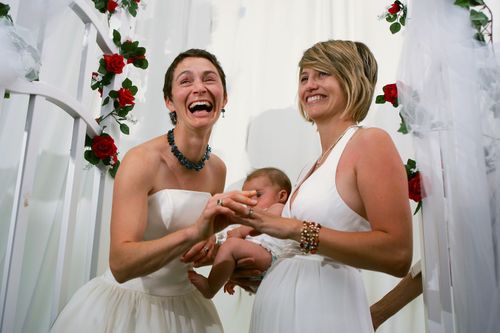
Some observers have focused on changes in marriage, others on divorce, and others on non-marital births. But I realized that you have to look at the whole picture—all of these aspects together—to appreciate what was happening. We have more marriages and remarriages, more divorces, and more short-term cohabiting (living together) relationships than the other countries. Put them together and you have more turnover, more movement in and out of relationships than anywhere else. As a result, Americans have more spouses and live-in partners over the course of their lives than do people in any other Western country. We step on and off the carousel of marriages and partnerships faster than anywhere else.

He has a theory why this is:

Americans believe in two contradictory ideals. The first is the importance of marriage: we are more marriage-oriented than most other Western countries. The second is the importance of living a personally fulfilling life that allows us to grow and develop as individuals—call it individualism. Now, you can find other countries that place a high value on marriage, such as Italy where most children are born to married couples and there are fewer cohabiting relationships. And you can find countries that place a high value on individualism, such as Sweden. But only in the United States do you find both. So we marry in large numbers—we have a higher marriage rate than most countries. But we evaluate our marriages according to how personally fulfilling we find them. And if we find them lacking, we are more likely to end them. Then, because it’s so important to be partnered, we move in with someone else, and the cycle starts all over again.

(hat tip: Justin Wolfers. Photo: David McNew/Getty.)

The Hobby Economy

Rob Horning marvels:

…gains in productivity derived from things like the internet aren’t showing up as more money in our pockets, and they are not showing up as corporate profit, but they do exist in a kind of nascent alternative economy. The “consumer surplus” is being generated outside of capitalist structures, outside of the market, though it is still occurring within a capitalist, consumerist society. It’s being made through activity that has in the past been generally dismissed as hobby behavior—collaborative open-source projects, online content production and archiving, tagging information, sharing and organizing useful data, etc., etc. The internet amasses this effort, consolidates it, distributes the example and rewards of it, and draws more people into contributing.

For The Love Of Robots

Presenting Tweenbots, "human-dependent robots that navigate the city with the help of pedestrians they encounter. Rolling at a constant speed, in a straight line, Tweenbots have a destination displayed on a flag, and rely on people they meet to read this flag and to aim them in the right direction to reach their goal." The kindness of strangers apparently also applies to anthropomorphic electronics:

Over the course of the following months, throughout numerous missions, the Tweenbots were successful in rolling from their start point to their far-away destination assisted only by strangers. Every time the robot got caught under a park bench, ground futilely against a curb, or became trapped in a pothole, some passerby would always rescue it and send it toward its goal. Never once was a Tweenbot lost or damaged. Often, people would ignore the instructions to aim the Tweenbot in the “right” direction, if that direction meant sending the robot into a perilous situation. One man turned the robot back in the direction from which it had just come, saying out loud to the Tweenbot, "You can’t go that way, it’s toward the road.”