Flatiron Building New York City from Brian Przypek on Vimeo.
Month: April 2009
Colbert Does NOM
In case you missed it, check it out. As they say, "there's a giant gay storm gathering, and before long the winds will be blowing each other."
Quote For The Day
"There is a sound conservative argument to be made for same sex marriage. I believe conservatives, more than liberals, insist that rights come with responsibilities. No other exercise of one’s liberty comes with greater responsibilities than marriage. In a marriage, two people are completely responsible to and for each other. If you are not willing to accept and faithfully discharge those responsibilities, you shouldn’t enter the state of matrimony, and it doesn’t make a damn bit of difference if you’re straight or gay. It is a responsibility like no other, which can and should make marriage an association between two human beings more fulfilling than any other.
Many studies have shown that married people are generally happier than unmarried people. Marriage gives greater purpose to life, and, to borrow from Pastor Warren, the more purpose driven your life is, the happier it is. Marriage does not or should not depend on transitory emotions. It is a partnership in all aspects of life that changes the way not just society, but the individual perceives him or herself, and gives greater incentive to an individual to live a good and virtuous life because the happiness, not just momentary pleasure, but the lasting happiness, of others depends on it. Marriage can be a profoundly gratifying state that strengthens the virtue of individuals and societies, and increases the measure and quality of the happiness we enjoy. It seems to me a terrible inequity that any person should be denied that responsibility, and the emotional enrichment it can provide. And I cannot in good conscience exclude anyone who is prepared for such a commitment from the prospect of such happiness," – Steve Schmidt, to Log Cabin Republicans.
Steve's support for an inclusive GOP has been long and constant. This is not a gimmick. He has walked this walk.
Bush’s Disappeared Human Being
Who knows where he is and what has been done to him?
Sophistry 101
A reader writes:
Reading the Bybee torture memo released yesterday was my second nearly personal brush with this type of argumentation.
In 2004, I learned that the draft Report on Interrogation Methods by the Pentagon Working Group, the granddaddy of torture memos leaked in 2004, cited an appellate decision from a case I tried in federal court in the 1990's as part of the justification for why certain acts of brutality did not fit the definition of torture under federal law.
Sure enough, there on page 16 of the memo released yesterday was the reference to South Atlantic v. Riese, again for the proposition that “if a defendant acts with the good faith belief that his actions will not cause such suffering, he has not acted with specific intent.”
The chilling thing is that the case wasn't about torture, it was a business dispute over construction of an apartment complex in Nashville, TN.
The sophistry is stunning.
Goldfarb’s Source
In many ways, you couldn't make this up. But given Michael Goldfarb's enthusiasm for killing innocents, it's not terribly surprising. Goldfarb was part of the wide bloggy attempt to describe TNR's correspondent, Scott Beauchamp, as an America-hating loser and liar for pointing out that some soldiers in Iraq acted dishonorably and immorally. One of his key sources, Beauchamp's own First Sergeant, was critical in rebutting Beauchamp's charges. Goldfarb's source for defending the honor of his men and himself was just convicted "of executing four handcuffed, blindfolded Iraqi men by shooting them in the backs of their heads." Goldfarb's kinda guy. But who looks more credible now? Goldfarb or Beauchamp?
In The Wake Of War Crimes III
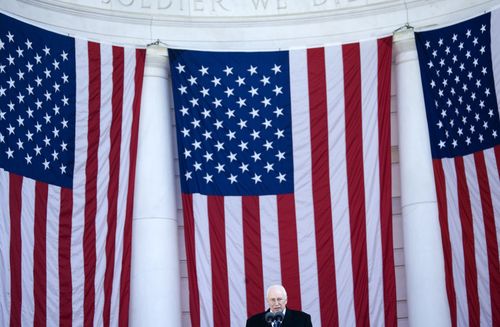
One more round up (parts one and two) Kristol disagrees with Krauthammer:
Leave aside how dark and painful the chapter really was. The question is, Is it over? Is the chapter in which we had to focus on preventing further attacks really through? Isn’t there still a war against the jihadists on? Of course Blair and other senior Obama officials have elsewhere suggested that the terror threat remains real, and even urgent. Why else the maintenance of the Bush era surveillance program? Why else the decision to send more troops to Afghanistan, and to deploy more Predator strikes into Pakistan? But can we then afford Obama’s “dark and painful chapter” attitude, exemplified by his foregoing certain interrogation techniques in the present and future, and his exposing and deploring what was done in the past? Can we afford an intelligence director who tries to excuse his boss by telling us we are now safe?
K-Lo calls it torture:
The president yesterday said that “withholding these memos would only serve to deny facts that have been in the public domain for some time.” If the facts are already out there, why the need for yesterday? Unless you’re looking to drum up support for prosecutions?
Torture at the hands of Americans should never be swept under a rug. But some adult in this administration ought to be taking the headlines they are making deadly seriously.
John Hinderaker echos Abe Greenwald:
…you will see that DOJ’s lawyers grappled carefully and fairly with issues that are, by their nature, both difficult and distasteful. I find much to agree with in the memos and little, if anything, with which I disagree from a legal standpoint. Several things about the memos are striking: the concern that is shown for the health and well-being of the detainees; the very limited circumstances under harsh interrogation techniques were used (only when the CIA had reason to believe that the detainee had knowledge about pending terrorist attacks, among other limitations), and confirmation of the fact that thousands of American servicemen have been waterboarded and subjected to the other techniques in question, as part of their training–a practice that continued at least up to the dates of the memos.
The number of terrorist attacks (that’s a “man-made disaster” for any monitors from DHS who might keeping an eye on us extremists) on US soil that killed approximately 3,000 people and caused billions of dollars in economic dislocation before use of these techniques…1.
The number of attacks on US soil that killed approximately 3,000 people and caused billions of dollars in economic dislocation after use of these techniques began…0.
Reasonable people can disagree. Indeed, they can disagree about what is reasonable, as anyone who has sat through a judge’s instructions on reasonable doubt knows. Serving on a jury gives one, if nothing else, an ear for the nonsense of lawyers, but you don’t need much discernment to pick up the utter sophistry in the Justice Department memos released yesterday (thanks to an A.C.L.U. FOIA suit) and their rambling—rationalizing isn’t even the right word—on the putative reasonableness of all involved, especially the person being tortured. “A reasonable person,” a memo signed by Attorney General Jay Bybee says, would not “reasonably anticipate,” based on having his head slammed into a wall (up to “twenty or thirty times consecutively,” according to another memo) that something worse was to come; “a reasonable person in the subject’s position”—position meaning, in this case, stuffed into a dark box—“would not infer from this technique that severe physical pain is the next step.” Say that the next step was putting an insect in the dark box with him—this was proposed for Abu Zubaydah—and the interrogators, whatever they hinted, didn’t “affirmatively” say that it was poisonous…
One thing that nobody should ever be permitted to say again, after reading these memos: “The United States didn’t torture.” When President Bush said it, he was a liar. The only question is whether or not he was lying to himself, so that he could sleep at night, or consciously lying to the public for reasons of political expediency.
The third Bradbury memo observed that the State Department calls many of the techniques that we were using torture when practiced in other nations. But then the memo, in part, dismisses the force of that point by saying that other nations use these methods for relatively trivial purposes, while we were using them to protect America. The end, in a sense, justifies the means. One difficulty with the memo’s analysis is that many regimes that inflicted torture probably thought they were doing it for a good reason. The Inquisition was trying to defend the Faith, the Nazis were trying to defend racial purity, the Khmer Rouge was trying to defend the workers’ paradise, etc. That’s why the whole point of banning torture was to prohibit certain types of conduct without regard to motive. The rack or the thumbscrew can’t be used even it works really well at getting information and is done for an excellent reason. Treating torture as a relative harm rather than as a categorial ban is contrary to that understanding, and that departure is not really explained in the memos.
…from a legal perspective, I do not believe there is any chance in hell of securing a criminal conviction against anyone who acted in accordance with specific OLC legal advice. The opinions of the OLC essentially carry the weight of law within the executive branch. You’d have about as much chance of convicting someone who acted in accordance with a specific Supreme Court opinion.
Marc:
I’d like to point you to this article by the American Prospect’s Adam Serwer, who compared the strictures placed on interrogations in the OLC memos with the practices described by the detainees in the International Committee of the Red Cross report. I am sympathetic — or, at least, I am cognizant of the view that the detainees who described their conditions and experiences to the Red Cross might not be the most honest, most reliable witnesses. But the scope of the ICRC report, the cross-correlated evidence, the similarities of accounts between prisoners — I believe that these will convince historians that the ICRC report fairly accurately describes the milieu of American torture, circa 2002-2009.
President Obama makes forgiving and forgetting sound awfully appealing. The country is in deep economic trouble. The days and weeks after 9/11 were really, really scary. We need our intelligence officials to be able to keep us safe without having to look over their shoulders. Good people shouldn’t be punished for the bad legal advice they received. Bygones. But is the short-term comfort of saying we’re over it worth the long-term cost of having become torturers and then cavalierly gotten over it? Because the real risk of getting over it is the possibility that it happens all over again.
When Cheney goes on television to insist darkly, “If it hadn’t been for what we did….then we would have been attacked again,” he can simultaneously insist that we take his word for it, because backing up his claims would require releasing information crucial to America’s safety. As Danner notes, “Cheney’s story is made not of facts but of the myths that replace them when facts remain secret: myths that are fueled by allusions to a dark world of secrets that cannot be revealed.”
That’s why Obama’s decision to release the “torture memos” is an important step, in the country’s best interests. And that’s why suggestions that he’s somehow hurting America by airing the facts are naked political ploys — even if you find them on the editorial page of the Wall Street Journal.
Not All Were Silent II
When senator Dick Durbin noted that many of the torture and abuse techniques being deployed by the US under president George W. Bush were identical to techniques once used by Stalin, the Gestapo and the Khmer Rouge, he was given the Full Hewitt. In the wake of both the Red Cross Report and the Bush Torture Memos, it's worth re-reading Durbin's full statement at the time:
Mr. President, there has been a lot of discussion in recent days about whether to close the detention center at Guantanamo Bay. This debate misses the point. It is not a question of whether detainees are held at Guantanamo Bay or some other location. The question is how we should treat those who have been detained there. Whether we treat them according to the law or not does not depend on their address. It depends on our policy as a nation.
How should we treat them? This is not a new question. We are not writing on a blank slate. We have entered into treaties over the years, saying this is how we will treat wartime detainees. The United States has ratified these treaties. They are the law of the land as much as any statute we passed. They have served our country well in past wars. We have held ourselves to be a civilized country, willing to play by the rules, even in time of war.
Unfortunately, without even consulting Congress, the Bush administration unilaterally decided to set aside these treaties and create their own rules about the treatment of prisoners.
Frankly, this Congress has failed to hold the administration accountable for its failure to follow the law of the land when it comes to the torture and mistreatment of prisoners and detainees.
I am a member of the Judiciary Committee. For two years, I have asked for hearings on this issue. I am glad Chairman Specter will hold a hearing on wartime detention policies tomorrow. I thank him for taking this step. I wish other members of his party would be willing to hold this administration accountable as well.
It is worth reflecting for a moment about how we have reached this point. Many people who read history remember, as World War II began with the attack on Pearl Harbor, a country in fear after being attacked decided one way to protect America was to gather together Japanese Americans and literally imprison them, put them in internment camps for fear they would be traitors and turn on the United States. We did that. Thousands of lives were changed. Thousands of businesses destroyed. Thousands of people, good American citizens, who happened to be of Japanese ancestry, were treated like common criminals.
It took almost 40 years for us to acknowledge that we were wrong, to admit that these people should never have been imprisoned. It was a shameful period in American history and one that very few, if any, try to defend
today.I believe the torture techniques that have been used at Abu Ghraib and Guantanamo and other places fall into that same category. I am confident, sadly confident, as I stand here, that decades from now people will look back and say: What were they thinking? America, this great, kind leader of a nation, treated people who were detained and imprisoned, interrogated people in the crudest way? I am afraid this is going to be one of the bitter legacies of the invasion of Iraq.
We were attacked on September 11, 2001. We were clearly at war.
We have held prisoners in every armed conflict in which we have engaged. The law was clear, but some of the president's top advisers questioned whether we should follow it or whether we should write new standards.
Alberto Gonzales, then-White House chief counsel, recommended to the president the Geneva Convention should not apply to the war on terrorism.
Colin Powell, who was then Secretary of State, objected strenuously to Alberto Gonzales' conclusions. I give him credit. Colin Powell argued that we could effectively fight the war on terrorism and still follow the law, still comply with the Geneva Conventions. In a memo to Alberto Gonzales, Secretary Powell pointed out the Geneva Conventions would not limit our ability to question the detainees or hold them even indefinitely. He pointed out that under Geneva Conventions, members of al Qaeda and other terrorists would not be considered prisoners of war.
There is a lot of confusion about that so let me repeat it. The Geneva Conventions do not give POW status to terrorists.
In his memo to Gonzales, Secretary Powell went on to say setting aside the Geneva Conventions "will reverse over a century of U.S. policy and practice . . . and undermine the protections of the law of war for our own troops . . . It will undermine public support among critical allies, making military cooperation more difficult to sustain."
When you look at the negative publicity about Guantanamo, Secretary Colin Powell was prophetic.
Unfortunately, the president rejected Secretary Powell's wise counsel, and instead accepted Alberto Gonzales' recommendation, issuing a memo setting aside the Geneva Conventions and concluding that we needed "new thinking in the law of war."
After the president decided to ignore Geneva Conventions, the administration unilaterally created a new detention policy. They claim the right to seize anyone, including even American citizens, anywhere in the world, including in the United States, and hold them until the end of the war on terrorism, whenever that may be.
For example, they have even argued in court they have the right to indefinitely detain an elderly lady from Switzerland who writes checks to what she thinks is a charity that helps orphans but actually is a front that finances terrorism.
They claim a person detained in the war on terrorism has no legal rights–no right to a lawyer, no right to see the evidence against them, no right to challenge their detention. In fact, the government has claimed detainees have no right to challenge their detention, even if they claim they were being tortured or executed.
This violates the Geneva Conventions, which protect everyone captured during wartime. The official commentary on the convention states: "Nobody in enemy hands can fall outside the law."
That is clear as it can be. But it was clearly rejected by the Bush administration when Alberto Gonzales as White House counsel recommended otherwise.
U.S. military lawyers called this detention system "a legal black hole." The Red Cross concluded, "U.S. authorities have placed the internees in Guantanamo beyond the law."
Using their new detention policy, the administration has detained thousands of individuals in secret detention centers all around the world, some of them unknown to members of Congress. While it is the most well-known, Guantanamo Bay is only one of them. Most have been captured in Afghanistan and Iraq, but some people who never raised arms against us have been taken prisoner far from the battlefield.
Who are the Guantanamo detainees? Back in 2002, Secretary Rumsfeld described them as "the hardest of the hard core." However, the administration has since released many of them, and it has now become clear that Secretary Rumsfeld's assertion was not completely true.
Military sources, according to the media, indicate that many detainees have no connection to al Qaeda or the Taliban and were sent to Guantanamo over the objections of intelligence personnel who recommended their release. One military officer said: "We're basically condemning these guys to a long-term imprisonment. If they weren't terrorists before, they certainly could be now."
Last year, in two landmark decisions, the Supreme Court rejected the administration's detention policy. The Court held that the detainees' claims that they were detained for over two years without charge and without access to counsel "unquestionably describe custody in violation of the Constitution, or laws or treaties of the United States."
The Court also held that an American citizen held as an enemy combatant must be told the basis for his detention and have a fair opportunity to challenge the Government's claims. Justice Sandra Day O'Connor wrote for the majority: "A state of war is not a blank check for the President when it comes to the rights of the Nation's citizens."
You would think that would be obvious, wouldn't you? But yet, this administration, in this war, has viewed it much differently.
I had hoped the Supreme Court decision would change the administration policy. Unfortunately, the administration has resisted complying with the Supreme Court's decision.
The administration acknowledges detainees can challenge their detention in court, but it still claims that once they get to court, they have no legal rights. In other words, the administration believes a detainee can get to the courthouse door but cannot come inside.
A federal court has already held the administration has failed to comply with the Supreme Court's rulings. The court concluded that the detainees do have legal rights, and the administration's policies "deprive the detainees of sufficient notice of the factual bases for their detention and deny them a fair opportunity to challenge their incarceration."
The administration also established a new interrogation policy that allows cruel and inhuman interrogation techniques.
Remember what Secretary of State Colin Powell said? It is not a matter of following the law because we said we would, it is a matter of how our troops will be treated in the future. That is something often overlooked here. If we want standards of civilized conduct to be applied to Americans captured in a warlike situation, we have to extend the same manner and type of treatment to those whom we detain, our prisoners.
Secretary Rumsfeld approved numerous abusive interrogation tactics against prisoners in Guantanamo. The Red Cross concluded that the use of those methods was "a form of torture."
The United States, which each year issues a human rights report, holding the world accountable for outrageous conduct, is engaged in the same outrageous conduct when it comes to these prisoners.
Numerous FBI agents who observed interrogations at Guantanamo Bay complained to their supervisors. In one email that has been made public, an FBI agent complained that interrogators were using "torture techniques."
That phrase did not come from a reporter or politician. It came from an FBI agent describing what Americans were doing to these prisoners.
With no input from Congress, the administration set aside our treaty obligations and secretly created new rules for detention and interrogation. They claim the courts have no right to review these rules. But under our Constitution, it is Congress's job to make the laws, and the court's job to judge whether they are constitutional.
This administration wants all the power: legislator, executive, and judge. Our Founding Fathers were warned us about the dangers of the executive branch violating the separation of powers during wartime. James Madison wrote: "The accumulation of all powers, legislative, executive, and judiciary, in the same hands may justly be pronounced the very definition of tyranny."
Other presidents have overreached during times of war, claiming legislative powers, but the courts have reined them back in. During the Korean war, President Truman, faced with a steel strike, issued an executive order to seize and operate the nation's steel mills. The Supreme Court found that the seizure was an unconstitutional infringement on the Congress's lawmaking power. Justice Hugo Black, writing for the majority, said: "The Constitution is neither silent nor equivocal about who shall make the laws which the President is to execute . . . The Founders of this Nation entrusted the lawmaking power to the Congress alone in both good times and bad."
To win the war on terrorism, we must remain true to the principles upon which our country was founded. This administration's detention and interrogation policies are placing our troops at risk and making it harder to combat terrorism.
Former Congressman Pete Peterson of Florida, a man I call a good friend and a man I served with in the House of Representatives, is a unique individual. He is one of the most cheerful people you would ever want to meet. You would never know, when you meet him, he was an Air Force pilot taken prisoner of war in Vietnam and spent 6 1/2 years in a Vietnamese prison. Here is what he said about this issue in a letter that he sent to me. Pete Peterson wrote:
"From my 6 1/2 years of captivity in Vietnam, I know what life in a foreign prison is like. To a large degree, I credit the Geneva Conventions for my survival. . . . This is one reason the United States has led the world in upholding treaties governing the status and care of enemy prisoners: because these standards also protect us. . . . We need absolute clarity that America will continue to set the gold standard in the treatment of prisoners in wartime."
Abusive detention and interrogation policies make it much more difficult to win the support of people around the world, particularly those in the Muslim world. The war on terrorism is not a popularity contest, but anti-American sentiment breeds sympathy for anti-American terrorist organizations and makes it far easier for them to recruit young terrorists.
Polls show that Muslims have positive attitudes toward the American people and our values. However, overall, favorable ratings toward the United States and its Government are very low. This is driven largely by the negative attitudes toward the policies of this administration.
Muslims respect our values, but we must convince them that our actions reflect these values. That's why the 9/11 Commission recommended: "We should offer an example of moral leadership in the world, committed to treat people humanely, abide by the rule of law, and be generous and caring to our neighbors."
What should we do? Imagine if the president had followed Colin Powell's advice and respected our treaty obligations. How would things have been different?
We still would have the ability to hold detainees and to interrogate them aggressively. Members of al Qaeda would not be prisoners of war. We would be able to do everything we need to do to keep our country safe. The difference is, we would not have damaged our reputation in the international community in the process.
When you read some of the graphic descriptions of what has occurred here–I almost hesitate to put them in the record, and yet they have to be added to this debate. Let me read to you what one FBI agent saw. And I quote from his report:
"On a couple of occasions, I entered interview rooms to find a detainee chained hand and foot in a fetal position to the floor, with no chair, food, or water. Most times they urinated or defecated on themselves, and had been left there for 18-24 hours or more. On one occasion, the air conditioning had been turned down so far and the temperature was so cold in the room, that the barefooted detainee was shaking with cold. . . . On another occasion, the [air conditioner] had been turned off, making the temperature in the unventilated room well over 100 degrees. The detainee was almost unconscious on the floor, with a pile of hair next to him. He had apparently been literally pulling his hair out throughout the night. On another occasion, not only was the temperature unbearably hot, but extremely loud rap music was being played in the room, and had been since the day before, with the detainee chained hand and foot in the fetal position on the tile floor."
If I read this to you and did not tell you that it was an FBI agent describing what Americans had done to prisoners in their control, you would most certainly believe this must have been done by Nazis, Soviets in their gulags, or some mad regime–Pol Pot or others–that had no concern for human beings. Sadly, that is not the case. This was the action of Americans in the treatment of their prisoners.
It is not too late. I hope we will learn from history. I hope we will change course.
The president could declare the United States will apply the Geneva Conventions to the war on terrorism. He could declare, as he should, that the United States will not, under any circumstances, subject any detainee to torture, or cruel, inhuman, or degrading treatment. The administration could give all detainees a meaningful opportunity to challenge their detention before a neutral decision maker.
Such a change of course would dramatically improve our image and it would make us safer. I hope this administration will choose that course. If they do not, Congress must step in.
The issue debated in the press today misses the point. The issue is not about closing Guantanamo Bay. It is not a question of the address of these prisoners. It is a question of how we treat these prisoners. To close down Guantanamo and ship these prisoners off to undisclosed locations in other countries, beyond the reach of publicity, beyond the reach of any surveillance, is to give up on the most basic and fundamental commitment to justice and fairness, a commitment we made when we signed the Geneva Convention and said the United States accepts it as the law of the land, a commitment which we have made over and over again when it comes to the issue of torture. To criticize the rest of the world for using torture and to turn a blind eye to what we are doing in this war is wrong, and it is not American.
During the Civil War, President Lincoln, one of our greatest presidents, suspended habeas corpus, which gives prisoners the right to challenge their detention. The Supreme Court stood up to the president and said prisoners have the right to judicial review even during war.
Let me read what that Court said:
"The Constitution of the United States is a law for rulers and people, equally in war and in peace, and covers with the shield of its protection all classes of men, at all times, and under all circumstances. No doctrine, involving more pernicious consequences, was ever invented by the wit of man than that any of its provisions could be suspended during any of the great exigencies of government. Such a doctrine leads directly to anarchy or despotism."
Mr. President, those words still ring true today. The Constitution is a law for this administration, equally in war and in peace. If the Constitution could withstand the Civil War, when our nation was literally divided against itself, surely it will withstand the war on terrorism."
The View From Your Window
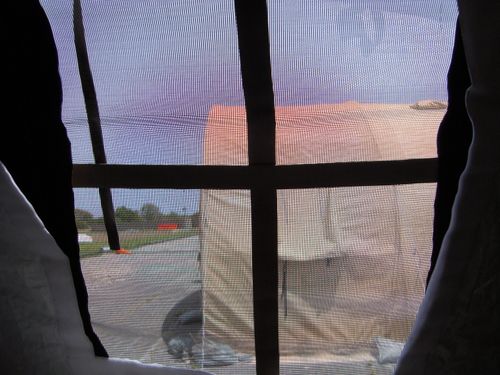
Camp Justice, Guantanamo Bay, Cuba, 12.11 pm. [Re-posted by reader request.]
Dissent Of The Day
A reader writes:
Shhhh. Listen. Can you hear that? No, be quiet and listen. That deafening, ear splitting silence is the reaction of Americans to the frat pranks of our CIA brothers. I’m absolutely aghast at your hysterically over the top reaction to this non-issue. Please, get a grip.
Why don’t you post a picture from somebody’s window instead.
 The Dish