Or, as TDW puts it, "The most fun you’ll ever have watching a Darwin’s beetle get laid, guaranteed."
Month: May 2010
The Weekly Wrap
Today on the Dish, the oil spill seemed much worse than expected, readers addressed further dangers, and Andrew pointed out Palin's stubborn ignorance on the issue. He also vented over the White House's treatment of Kagan, readers dissented yet again, Greenwald called out Kagan's hypocrisy, and Jack Balkin found her easy to read.
British electoral coverage here, here, here, and here. Iran updates here and here. Another drug war casualty here. And marriage skyrocketed in DC.
In various commentary, Kinsley took on the tea-partiers, Friedersdorf differed, Fallows followed up on his cover story, McArdle investigated QVC, Yglesias advocated for better buses, Graeme shared his experiences with burqas, Eric Baker studied our sex drives, and we took a close look at Gov. Christie's fiscal fortitude. Andrew reflected on his writing and blogger identity. Cannabis closet here and MHB here.

(Win McNamee/Getty Images)
Thursday on the Dish, Andrew kept the heat on Kagan, a reader turned up the temperature, she continued to be coy, Crist went to bat for her, David Sessions surveyed the Christianists, Serwer joined the race/ethnicity debate, and Kinsley sounded off. In election fallout, Andrew and a reader examined the proposals for electoral reform, the Tories touted their religious and gay diversity, the Brits showed up the US, and the BBC made a funny flub.
Oil spill updates here, here, and here. HCR update here. More on the drug war here, here, and here. The debate over Israel and smears carried on here and here. Get your Palin fix here and here.
In assorted coverage, Leonhardt defended himself on Greece, Sara Rubin looked at the lettuce threat in Arizona, Drum replied to Andrew about atheism and the afterlife, Friedersdorf lovingly hated on NYC, Lewis Black pwned Beck, several more readers added to the burqa discussion, and others rapped about Modern Family. Paternal superhero here. Super creepy ad here.
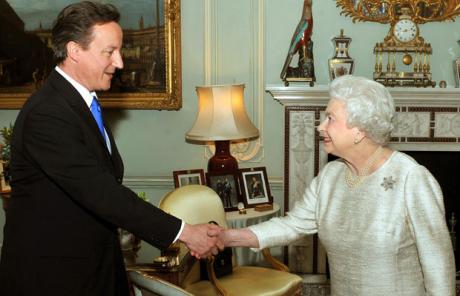
Wednesday on the Dish we rounded up reaction to the Cameron-Clegg alliance. Andrew sized up Cameron and his similarities to Obama, Clive Crook was skeptical of the alliance, Frum addressed its concern over the debt (US version here), LSE looked at voting reform, and Gideon Rachman remembered the new chancellor.
In other coverage, Palin came out with a new book, Laura Bush came out for marriage equality, and another cartoonist was attacked. Greece update here. Andrew updated us on the latest smearing of Goldstone, Fallows investigated the state of online journalism, Ramesh broached the topic of race in the court confirmation, The Economist stood up for burqas, Packer diagnosed Karzai, Lexington learned from the spill, and Balko followed up on the puppycide video.
Readers continued to dissent over Andrew's view of Kagan, one stood strong with him, others loved our recent tribute to mothers, and another confessed from the closet. Stephen Asma grappled with the soul and Drum discussed his lack of faith. A funny new site for parents here.

Riverside, California, 7.22 am
Tuesday on the Dish we saw Brown resign and Cameron take over as PM. Drama leading up to the dramatic switch here, here, here, here, here, and here. Andrew's thoughts on the developments here, Cameron's speech here, a warning from his right here, and how it could affect the American right here.
In Kagan coverage, Andrew scrutinized her careerism and elitism, readers continued to dissent over his outing inquiries, and others commented on her issues with recruitment on campus. Horton examined her views on the executive, Stuart Taylor did the same approvingly, Josh Green assessed the politics of the confirmation, Maggie Gallagher tried to decipher her stance on marriage equality, and a New Yorker commenter challenged Toobin on the closet. Andrew continued to mull over Kagan's identity here and especially here.
Finally, an answer appeared.
Monday on the Dish, Andrew reacted at length to the nomination of Elena Kagan. Hanna Rosin thought Andrew's kind of inquiry was out of line and readers agreed. Blogger reax here and here. Beinart targeted Kagan's views on military recruitment, Balko did the same on executive power, the NYT dug into her pseudo-personal past, AOL dug deeper, and Google users deeper still. More from John Palrey and Kagan herself. Ugly rhetoric from Ed Whelan, Bill Kristol, and an assortment of others on the far right.
In British election fallout, Gordon Brown announced his intention to resign. Subsequent commentary and analysis here, here, here, here, here, and here. Possible replacements for Brown here. Andrew offered his take here and especially here, fearing a death knell for the Tories.
In assorted coverage, the concrete dome failed to stop the oil leak. Iraq update here and EU economic crisis here. McCain made of chump of himself, Goldblog alleged some anti-Semitism, Israeli officials piled on Goldstone, McArdle fumed over the puppycide video, and Scott Morgan talked legalization. Yglesias award here, Mothers' Day tribute here, dog-blogging here, and cool ad here.
— C.B.
Picturing Disaster, Ctd
A reader writes:
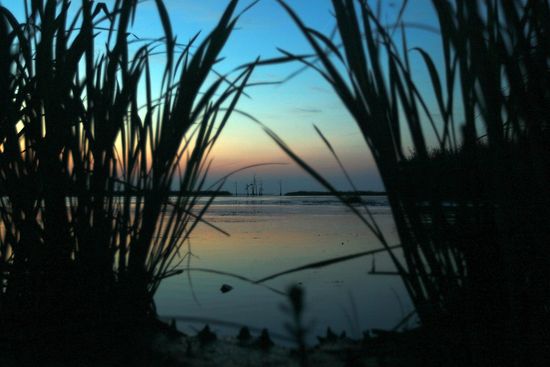
Your reader referencing the Gulf's "Dead Zone" oversimplifies the reasons behind the lack of oil-covered wildlife. My wife works at the Environmental Defense Fund and told me the workers in the Gulf are using chemicals that dissolve the oil, making it heavier than water, so it sinks down and is absorbed into the sediment, rather than resting on the surface for birds or other larger animals to get coated. So the less sexy issues are plant, plankton, algae, and larvae life being threatened – in addition to unseen implications for fish and coral.
Another writes:
The focus on dead animals would be misguided anyway. This is not your run-of-the-mill oil spill. The real threat is not the loss of animal lives; it is the risk to human lives. The potential for the destruction of acres of wetlands accelerates the loss of New Orleans' natural protection from hurricanes by 50-100 years. That's the biggest problem here. That's what journalists should be reporting on and columnists should be pitching proposals to rebuild our natural defense barriers, not whining and wondering about the lack of dead dolphins.
More on the wetland threat here. A TPM reader reviews the new math on the size of the oil spill. New images of the spill at the Big Picture.
(Marshland is seen as efforts continue to contain BP's massive oil spill on May 11, 2010 in Venice, Louisiana. Oil is still leaking out of the Deepwater Horizon wellhead at a estimated rate of 1,000-5,000 barrels a day. Photo by Joe Raedle/Getty Images.)
Will Google Help Save Journalism? Ctd
Fallows follows up:
If there is a point that, above all the others, I wanted most to convey in this article, it is not "everything is going to be OK" or "Google is our friend" or even "here comes a torrent of new advertising money!" Rather it is a cultural/attitudinal argument about the press and everyone who cares about it. Far from being autumnal and despairing and mournful about a supposed golden age that has passed and fatalistic about the doomed state of public information and the resulting lapsed state of society, people who care about the media should (according to me) recognize that technological upheaval, and the resulting business shifts and forced individual innovations, have been the norm rather than the exception in our enterprise. Clever and ambitious people, especially but not only young people, will find new ways to do the work a society needs of them — and to make a living while doing so. There will be parts of a future press establishment that will be worse than what we know now. There will be parts that are better. That is how it has always been. This paragraph, near the end of the story, is what I really believe:
Ten years from now, a robust and better-funded news business will be thriving. What next year means is harder to say. I asked everyone I interviewed [at Google] to predict which organizations would be providing news a decade from now. Most people replied that many of tomorrow's influential news brands will be today's: The New York Times, The Wall Street Journal, the public and private TV and radio networks, the Associated Press. Others would be names we don't yet know. But this is consistent with the way the news has always worked, rather than a threatening change. Fifteen years ago, Fox News did not exist. A decade ago, Jon Stewart was not known for political commentary. The news business has continually been reinvented by people in their 20s and early 30s–Henry Luce when he and Briton Hadden founded Time magazine soon after they left college, John Hersey when he wrote Hiroshima at age 32. Bloggers and videographers are their counterparts now. If the prospect is continued transition rather than mass extinction of news organizations, that is better than many had assumed. It requires an openness to the constant experimentation that Google preaches and that is journalism's real heritage.
Face Of The Day
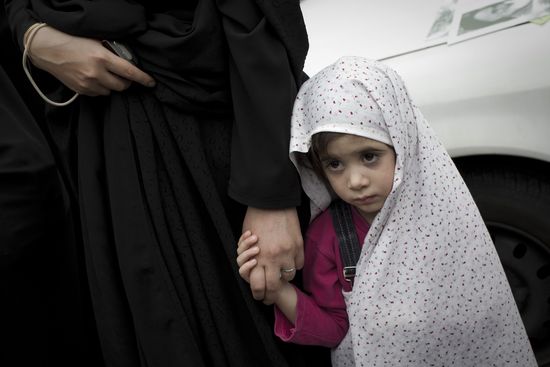
An Iranian girl holding her mother's hand attends the funeral of Iranian armed forces who were killed during the Iran-Iraq war (1980-88) after the Friday prayers in Tehran on May 14, 2010. Iran held a funeral for 89 soldiers who were discovered by a searching team on the Iran-Iraq border. Photo by Behrouz Mehri/AFP/Getty Images.
Not The GOP, Ctd
In response to this post on gay MPs in Britain, Joyner asks:
Granting that the House of Commons is somewhat larger than the combined U.S. House and Senate, how can the numbers be that different? Sure, there are parts of the country that where religious fundamentalism makes it hard for gays to run for office; but one imagines that’s true in the UK, too. But there are numerous urban centers in the United States where gays have lived openly since before Archie Bunker went on the air. And whole swaths of the country where rugged libertarianism is the norm. How come…few open gays are in senior positions in American politics?
One of his readers answers:
Part of what's at issue, I think, is that Britain has been much more tolerant on these issues than many parts of the United States have been…Also, I don't know that it's so much that there are more homosexual politicians in the UK as it is that there are more open homosexual politicians there.
The Executions In Iran, Ctd
The Leveretts go after Nazila Fathi, for her NYT article on five recent executions in Iran. From their follow up:
[O]ne of our criticisms is that Ms. Fathi did not inform her readers that the organization to which three or four of the executed prisoners (depending on which Western media reports one reads) are alleged to have belonged, PJAK, was designated as a terrorist organization not only by the Islamic Republic but even by the Obama Administration. On this issue, Mr. Lucas now writes, “Point taken…yes, Fathi could have mentioned that PJAK is proscribed as “terrorist” by the US Government.”
…In the end, we do not know whether the five executed prisoners were wrongfully convicted—and, as we noted in our initial critique of Ms. Fathi’s article, we are personally opposed to the death penalty. But we do know that Ms. Fathi’s reporting on this case was professionally irresponsible. It is Ms. Fathi’s prerogative to report on human rights cases in Iran. But when she, or any other journalist, does so in a professionally irresponsible way in order to advance a particular political agenda, we will call them on it.
Lucas's rebuttal:
The authors of Race for Iran have posted an attempted rebuttal of this column. As it is largely a misrepresentation of my analysis and a continuing assault on Nazila Fathi, I will not post a detailed response. There is no value in continued conversation with or even recognition of those who are void of information and deaf on ethics and morality.
I will note, however, how the authors met this challenge that I set on Wednesday: “1. Make their own critique of the material surrounding this case of the 5 executed Iranians and present that critique; 2. Alternatively, acknowledge that they have no concern with human rights, justice, and fairness within the Iranian system; 3. If they do so, disclaim any ability to assess the legitimacy of the Iranian Government since they are not concerned with issues — human rights, justice, fairness — which may affect the legitimacy of that Government in the eyes of the Iranian people.”
The authors make no attempt to meet the first test, but they do tacitly accwept the second and third challenges: “[Race for Iran] is not focused on human rights; it is focused on Iran and its geopolitics.”
What The People Voted For
Hari contends that "the British people have not got what they voted for." Norm Geras, a Labour supporter himself, counters:
[Y]es, they have. Or, put in slightly more qualified form: they have got a perfectly legitimate outcome within the range of what their collective vote permitted. The claim that this isn't what the British people voted for is predicated on the assumption that a democratic electoral system aims, or should aim, to yield results that perfectly reflect the preferences of the totality of voters. But, apart from the fact that no method of aggregating preferences can guarantee this, it is not what an electoral system does. An electoral system is, rather, a set of rules for giving some approximate expression of voter preferences and then translating the result (in candidates elected) into a governing arrangement. If the vote is fair and the count is accurate and the rules for forming a government from the elected representatives are duly followed, then to complain that this isn't what the people voted for is beside the point.
Avoiding Pigeonholes
Steinglass compares politicians and bloggers:
[F]or Elena Kagan, as for many people operating in government, the way to make sure nobody pigeonholes you as part of one ideological camp or political clique, or dismisses you as somebody's lackey, is to be relentlessly technical and positive. If you're down in the wonky weeds on every issue, and always congratulating everyone for sincerely addressing an important problem that everybody needs to work on, you're fine. For bloggers, on the other hand, the way to make sure nobody pigeonholes you or dismisses you as somebody's lackey is to be relentlessly cynical and negative. As long as you're constantly bemoaning the hypocrisy and stupidity of all political actors (yourself included), you're golden; you're nobody's lickspittle.
This is itself too cynical for me. It is also possible for a blogger and (to a lesser extent) a politician to have a complicated view of the world and be honest about it. Not to be popular, not to be golden, not to prove you're "nobody's lickspittle" – but because it's what you honestly think and believe.
That is seriously what I try to do here, and longtime readers can judge for themselves how successful I have been. I am simply trying to understand the world as I see it – and my own experience is obviously the filter. I'm hard to pigeonhole not out of any strategy but because I am who I am, and my life has pushed me into all sorts of apparent contradictions and conflicts … which are less of a contradiction or conflict when you can see the totality of someone's life and thoughts. By opening up about this, I hope the Dish fosters more complicated thinking and fewer pigeonholes.
Because almost all of us are complex and contradictory in this modern world, and all of us deserve an equal chance to be heard.
 The Dish