The VFYW Contest: Winner #6

Vfyw-contest_7-10

by Chris Bodenner

A reader writes:

You said you’d make it harder but *#&@ me!

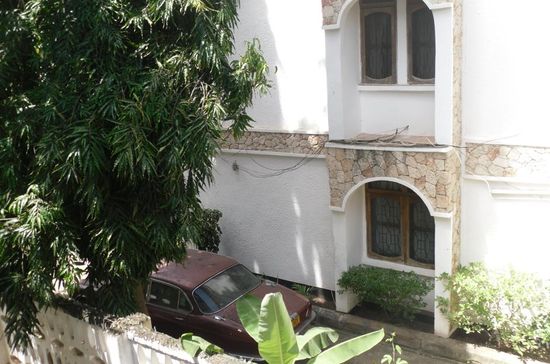
We have a Jaguar XJ (appears to be right-hand drive), a European-looking white stone house and a few temperate-climate plants. So I’ll take Nicosea, Cyprus. It’s a warm country with a UK connection that drives on the left and has yellow number plates.

Is anyone else embarrassed by their desperation to solve these things? (Spend ten minutes browsing “License Plates of the World” and you might agree.)

Another writes:

An old beat up Jag.  A banana tree. A tropical, possibly fruit tree, possibly mango.  Is that papaya next to the banana?  Spanish glasswork on the doors and maybe moorish/Al-Andalus white property wall and stone arches over the windows.  Dilapidation.  Maybe Havana?

Another

When I saw the photo it looked instantly familiar.  The vegetation, the house, the Ambassador and license plate all look like Southern India … Tamil Nadu, Chennai.  I was just there in February visiting friends.

Another:

I am currently in Chennai, South India, attending to a family emergency. The trees (including the small banana tree) are very indicative of this region. The car, however, is not Indian. The yellow license plate can indicate a foreign consul’s vehicle in India but I am going to guess the picture was taken across the Palk Strait in Colombo, Western Province, Sri Lanka.

Another:

Instinctively, I say the south of France (must be the foliage and the characteristic light).  The yellow license plate on the Jag may support a French locale.  The walls, the Jag, and the property expanse suggest an older wealthy area. I’m going to say St. Jean Cap Ferrat to the east of Nice.  Specifically, a neighbor to the late David Niven’s house (i.e.).

Another:

The crazy mix of wires running into the house next door reminds me of Beirut, Lebanon, where several of my aunts and uncles live. The people there were nothing if not creative in figuring out how to get electricity, phone, cable, etc., after basic services collapsed during the civil war. The architecture, vegetation, and light also seem to be consistent with Beirut.

Another:

Fascinating, Watson. Let’s start with the architecture. [160 words later…] Bottom line? I have NO FUCKING CLUE!  Gated community in Chihuahua, Mexico?

Another:

My guess is Gibraltar.  My first impression was someplace in Latin America.  Then I noticed that the Jaguar seems to have British plates.  So, I believe it is someplace with British plates, tropical foliage, and architecture that feels Spanish.  Gibraltar.

Another:

Bangalore, India. My gut instinct was Tblisi, Georgia, but the Jaguar steered me towards a former British colony. So, a guess.

Good call with a former British colony. Another:

I think the car pictured may be a Jaguar which, if so, would mean that this is probably somewhere British. But it’s not Britain. So I’ll guess that this is Bermuda and, if so, probably somewhere in the capital, Hamilton. Probably only out by 12000 miles, I know…

Only 7300 miles. Another:

I believe that the photo view is of Monrovia, Liberia, most likely in the neighborhood of Sinkor.  I was an American college exchange student in Liberia in 1983 and clearly recall glass-shards on the top of the protective walls surrounding the more affluent homes in Monrovia.  The Jaguar appears to have the orange colored Liberian car tag.  Also, the trees are consistent with the ones I remember in Liberia.

Closer. Another:

I’m going to plump for Blantyre, Malawi, which is a pretty long shot but here’s how I got there: [350 highly intuitive words later…] But to be honest I’m stumped!

But much closer. Another:

I’m going to go way out there:  Zanzibar, United Republic of Tanzania.  Somewhere near Stonetown.

Oh so close. Another:

Ok, I’m probably going to wind up looking silly, but here goes.

The foliage is tropical or subtropical; the banana plant could be cultivated in lots of places, but if the fern tree is filicium decipiens, it’s native to East Africa, India, and Sri Lanka.  The white stucco, recessed windows to shade the sun, worn wooden window frames, and the funky electrical wiring suggest the house was built pre-AC and possibly pre-electricity, and the municipality isn’t fussy about building codes.  The stone stringcourse and the beveled glass in the windows suggest colonial design; probably British colonial since Britons are a bigger share of your readership than Belgians, Dutch, or German (and it doesn’t look German).  The plantings aren’t lush, and the dusty car says the place has a dry season.  So I’m going with the colonial residential quarter of a former British protectorate in East Africa where expats live now.  The orange/yellow license plate with black letters is similar to one that www.worldlicenseplates.com says is in current use in Tanzania; Kenya and Uganda have different plates.

Is the house on the Msasani Peninsula, in Dar es Salaam, Tanzania?

Yes!  Congrats to the winner and the four other readers who guessed correctly (out of about 300 entries). Perhaps we’ll ease up on the next one. Tune in Saturday.

By the way, I recently came across this random bit of reporting:

[NYT crossword editor Will Shortz] does puzzles in other publications (he likes the cryptic crossword in Harper’s, the USA Today crossword not so much). For kicks, he’ll read The Huffington Post or Andrew Sullivan online.

Might he be a fan of our pictorial puzzle?

What’s a Libertarian to Do?

by David Frum

Reason hosts a what promises to be a very interesting three-way debate over the right party-political path for libertarians. The debate opens with a tough-minded entry by Cato's Brink Lindsey:

The spirit of freedom is cosmopolitan. It is committed to secularism in political discourse, whatever religious views people might hold privately. And it coolly upholds reason against the swirl of interests and passions.

On that basis, Brink disavows the old libertarian-conservative political alliance.

Declaring independence from the right would require big changes. Cooperation with the right on free-market causes would need to be supplemented by an equivalent level of cooperation with the left on personal freedom, civil liberties, and foreign policy issues. Funding for political candidates should be reserved for politicians whose commitment to individual freedom goes beyond economic issues. In the resources they deploy, the causes they support, the language they use, and the politicians they back, libertarians should be making the point that their differences with the right are every bit as important as their differences with the left.

I am not a libertarian, and I remain committed to the right and the Republican party, but I feel Brink's pain. Here's the consolation however: the party system as we have seen it these past few years is not the party system of tomorrow. The Republican party cannot survive as a coalition of the rural and the elderly – and Republicans are very determined to survive. Democrats have in recent months made a fateful choice to depart from the centrist economics of the Clinton years in favor of bold new exercises in very unlibertarian state control.

Nor is it at all certain that libertarianism itself will remain a single movement. Brink Lindsey, as I read him, is very much a classical liberal. The fate that cast him into the same party as, say, Jesse Helms is just as adventitious as the fate that cast him into the same movement as Rand Paul – or that thrust either of them into the same movement as Thomas Szasz. Libertarianism is itself a fusion of many different component parts. And since the goal of politics is to form coalitions that can govern, the energy of responsibility-minded people like Brink Lindsey should be directed outward to building and sustaining the broadest functional coalition consistent with the most urgent and immediate of principles.

Cool Ad Watch

Hair-ad_

by Chris Bodenner

The Billboard Awards spots one:

In order to capture the natural aspects of their products, they used a billboard using nature itself to represent their product.  A perfectly placed billboard that uses the sunset and moonlight to illustrate their superior hair color products and change the hair color of the billboard.  

Tempest In A Teapot

by Chris Bodenner

The NAACP is expected to pass a resolution today condemning the Tea Party movement as racist. Jim Newell sighs:

There are clearly racists in the Tea Party, but how effective can a resolution condemning "racist elements" of a group be? It would be like condemning the racist elements of Walmart or an intramural kickball league or any organization. On the other hand, if you're condemning the entire movement as "racist," you're going overboard and inviting backlash.

Anyway, the Tea Party will call the NAACP "reverse racists" for this, and then the NAACP will have to reconvene next year to call the Tea Party "inverse reverse racists," and so on.

How Fear Infects, Ctd

by Patrick Appel

A reader writes:

Something to keep in mind is that police officers are required to walk into and to participate in events from which the rest of us are entitled – and even advised – to shy away.

That fact, I think, is part of the reason why police officers are less likely to be convicted for shootings for which they would be punished if they were not police officers. I'm not chasing after a guy identified by a bloodied victim as having raped her; I'm not supposed to confront him, to physically subdue him and to take him into custody.

If I think a guy has a gun – just "think" he does – I can run away. But since I wasn't running after him in the first place I'm not that likely to be present when he pulls out what I think is a gun. And I certainly don't have to keep going toward him so that I can capture and subdue him.

Police officers get a break on their decisions to use force because they have to actually make decisions; the rest of us don't.

Asking Questions

by Patrick Appel

Po Bronson and Ashley Merryman claim that American creativity is declining. Some of their conclusions are suspect, but much the research they round-up on creativity is new to me and well worth pondering:

Preschool children, on average, ask their parents about 100 questions a day. Why, why, why—sometimes parents just wish it’d stop. Tragically, it does stop. By middle school they’ve pretty much stopped asking. It’s no coincidence that this same time is when student motivation and engagement plummet. They didn’t stop asking questions because they lost interest: it’s the other way around. They lost interest because they stopped asking questions.

Having studied the childhoods of highly creative people for decades, Claremont Graduate University’s Mihaly Csikszentmihalyi and University of Northern Iowa’s Gary G. Gute found highly creative adults tended to grow up in families embodying opposites. Parents encouraged uniqueness, yet provided stability. They were highly responsive to kids’ needs, yet challenged kids to develop skills. This resulted in a sort of adaptability: in times of anxiousness, clear rules could reduce chaos—yet when kids were bored, they could seek change, too. In the space between anxiety and boredom was where creativity flourished.

Yglesias Award Nominee

by Chris Bodenner

"They should have been indicted. They absolutely should have been indicted for torturing, for spying, for arresting without warrants. I'd like to say they should be indicted for lying but believe it or not, unless you're under oath, lying is not a crime. At least not an indictable crime. It's a moral crime," – Fox News host Andrew Napolitano, on Cheney and Bush.

Bachmann Overdrive

by David Frum

Everybody was talking yesterday about Sarah Palin's big fundraising haul: $865,000 in the second quarter of 2010. 

But I'm proud to say that FrumForum star reporter Tim Mak noticed something fascinating underneath the hype: Congresswoman Michelle Bachmann actually raised twice as much as Palin over the quarter. 

And for those who fear that the zanies have taken over the Republican party, Mak offers this reassurance: Palin raised a lot – but Mitt Romney (who has not reported yet) has almost certainly raised more. Details on the FrumForum site. 

The Unstoppable Sarah Palin, Ctd

Schmidt

by Chris Bodenner

A reader writes:

One thing I haven't heard discussed amidst all the handwringing is her staff. You can't win the Iowa caucuses with a smarmy TV commercial – you need an actual organization. We seem to know a few things about Palin's staff – there are only a few that she trusts, they have no real practical political experience, and they spent the 2008 campaign being lambasted for their screw-ups. What serious Republican operatives are going to work for her after seeing how she treated the McCain people that were brought in?

You can't win a battle if the people that know how to fly the planes or drive the tanks aren't willing to fight on your side.

Another writes:

She can get the engaged and ruthless team, but do not discount the elites she needs. You've met the Axelrods, Carvilles, Roves, Shrums, Schmidts and Wallaces and their ilk. Professional campaign managers expect their bosses to be moderately engaged in such topics. Running for President is a tough job which requires experienced help. Who the hell is going to work for her?

I have no doubt she will run. And it will be the most spectacular train wreck in the history of man-made disasters. I'm already looking forward to the tell-all books by back-stabbing staffers.

Ambinder looks at staffing issues and more in his latest assessment of Palin's run. Massie also provides a lengthy breakdown on "why she can, should and will run."