The Daily Wrap

Today on the Dish, Andrew magnified Frum's examination of why Obama didn't ask Congress for approval, and examined his own scars from Iraq and the last ten years. Obama promised a hand-off soon(ish), and Andrew praised Egypt's huge steps towards democracy. Bill Kristol loved war, Obama supported most US military interventions, Romney didn't like nuance, and Douthat didn't defend Bush. Larison feared we were encouraging weak rebellions, Tom Ricks demolished the idea of an exit strategy, and Freddie DeBoer skewered the colossal arrogance of any interventionist logic. A reader tracked Joe Biden's role in the resolution, and Dylan Matthews policed Leon Wieseltier's fight with Ezra Klein. A reader offered 1831 as a better example than Arab 1848, and Andrew wished for Secretary of State John Quincy Adams' response. Libya adventure has already cost more than the discretionary spending cuts desired by the GOP, Reihan considered the astronomical costs, and rebels ate Snickers.

Palin skipped the West Bank possibly because she forgot it isn't part of Israel, broke the rules and offended the Republican Jewish Coalition, and a reader berated her for sporting a Star of David. We sized up Pawlenty's presidential bid, Johann Hari interviewed Gideon Levy, and Charlie Chaplin narrated events in the Middle East. The Economist tallied Japan's earthquake damage as the costliest ever recorded, Richard Posner considered the politics of unlikely disasters, and since no one has gotten a lethal dose of radiation from this nuclear meltdown George Monbiot now supports nuclear energy. Readers skirted the NYT paywall and offered other fundraising alternatives, Timothy B Lee wanted to support real reporting elsewhere, and Andrew posed questions behind a paywall. The Argentine military stole babies in the 1970s, Andrew was grateful for modern medicine, and the week's news was too much for some. Politicians lagged behind public opinion in Indiana on gay marriage, Meghan bought a house to live in, and healthcare opinions haven't changed. Katie Roiphe wrote recommendations for 18-month olds and real talent requires grit.

Cool ad watch here, question of the day here, answer here, chart of the day here, headline of the day here, Yglesias award here, quotes for the day here, here, here and here, map of the day here, FOTD here, MHB here, and VFYW here, and VFYW contest winner #42 here.

–Z.P.

The Politics Of Unlikely Disasters

Richard Posner is unsurprised that Japan likely "failed to take cost-justified measures to minimize the damage from a 9.0 or greater earthquake":

Politicians have limited time horizons. If the annual probability of some catastrophe is 1 percent, and a politician’s horizon is 5 years, he will be reluctant to support significant expenditures to reduce the likelihood or magnitude of the catastrophe, because to do so would involve supporting either higher taxes or a reallocation of government expenditures from services that provide immediate benefits to constituents.

In principle, it is true, politicians would take a long view if their constituents did out of concern for their children and grandchildren. But considering how the elderly cling to their social benefits, paid for by the young including their own young, I doubt the strength of that factor, although I do not know enough about Japanese politics to venture a guess on whether politicians’ truncated policy horizons was indeed a factor in Japan’s surprising lack of preparations for responding promptly and effectively to the kind of disaster that has occurred. 

Map Of The Day

The creator explains "A History of the World in 100 Seconds":

Many wikipedia articles have coordinates. Many have references to historic events. Me (@godawful) and Tom Martin (@heychinaski) cross referenced the two to create a dynamic visualization of Wikipedia's view of world history. Watch as empires fall, wars break out and continents are discovered.

A commenter:

so cool! really incredible how euro-centric it is. i wonder what it would look like if events were weighted by their appearance in the non-english wikipedias?

(Hat tip: Flowing Data)

Learning To Love Nuclear

The Fukushima disaster has changed George Monbiot's opinion of nuclear power. He now supports it:

A crappy old plant with inadequate safety features was hit by a monster earthquake and a vast tsunami. The electricity supply failed, knocking out the cooling system. The reactors began to explode and melt down. The disaster exposed a familiar legacy of poor design and corner-cutting. Yet, as far as we know, no one has yet received a lethal dose of radiation.

Egypt’s First Steps, Ctd

Issandr El Amrani analyzes Egypt's referendum:

The majority of the 77.2% that voted yes probably did so because they understood it as a vote for stability, a return to normalcy after the biggest political upheaval in decades. A no result would have been a challenge to the military now ruling the country, which could have either imposed the amendments anyway by decree or entered into protracted negotiations with a political landscape still in gestation. For others, including radical activists, a yes vote meant pushing the military back into its barracks as quickly as possible.

A Global Arms Race, Ctd

FighterJetGetty

Reihan largely agrees with Manzi:

[T]he utility of military force is declining, as our experience in Iraq should have made clear. The control of territory matters far less than it did during the twentieth century because wealth, much of it in the form of human capital, is far more mobile. The Iraqi insurgency drew on the country’s density and its relatively modern communications structure to wage a highly effective, highly lethal low-cost campaign against the world’s most formidable military. Though the U.S. eventually triumphed, in a sense, the Iraq experience demonstrates that a strategy of clear, hold, and build in hostile terrain is astronomically expensive, and the benefits are almost always extremely limited.

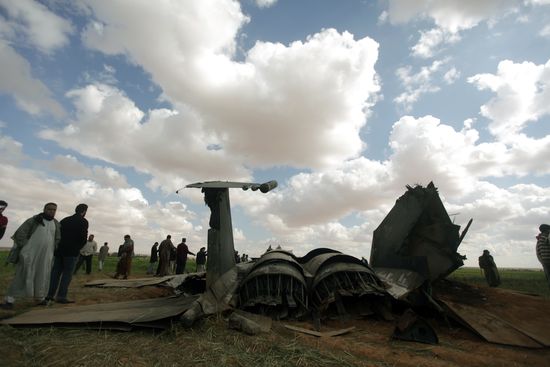
(Photo: Libyans gather around the wreckage of a US F-15 fighter jet in Ghot Sultan, South-East of Benghazi on March 22, 2011 after crashing while on a mission against Moamer Kadhafi's air defences. The US Africa Command said the aircraft had experienced equipment malfunction over northeast Libya, adding that the two crew members had ejected and were safe. By Patrick Baz/AFP/Getty Images)

How To Think About Housing

Megan McArdle recently bought a house with her husband. She insists their home is "a consumption good, not a savings plan":

We didn't buy our house for an investment; that's what our investments are for. Our house is to live in. We bought mostly because we wanted to commit to a place, and to make it over to suit us exactly. Landlords get testy when you rip out walls and replace the stove; besides, who wants to spend money installing custom blackout curtains only to have the place sold out from under you?

A Placebo Candidate

Pareene sizes up Pawlenty's chances:

Pawlenty is the first mostly serious candidate to officially announce (sorry, Newt) but it's still a long-shot run. If Pawlenty had been McCain's running mate in 2008, well, McCain might not have lost the voters turned off by Sarah Palin's transparent awfulness. But he'd also be a real 2012 front-runner, instead of a weird simulacrum of one — a man acting like Romney's only real challenger despite being basically indistinguishable from the former Massachusetts governor, only without the cash advantage.

R.M. at DiA puts his finger on Pawlenty's appeal:

If Mr Pawlenty's conservative-for-all-seasons strategy is successful, he could come to be seen as a combination of his rivals—Romney, but not so slippery; Huckabee, but not so evangelical; Gingrich but not so aggressive; Daniels, but not so bookish; Palin, but not so scary. He's no one's perfect candidate, but he's no one's nightmare. He's harmless, waiting for voters to find whatever value they will in him, and then be satisfied enough to give him their vote. A placebo.

And one that I simply cannot imagine winning really enthusiastic support from the base or beating Barack Obama.