The End Of The 99¢ Effect?

Leigh Caldwell's new research finds that "prices such as £1.99, £5.99 or £9.99" no longer boost sales. Update: Caldwell's post was an economic April Fools' joke. The money quote from his wry post:

1. Prices ending in .99 no longer have any advantage in consumer value perception, and do not lead to higher sales.

2. The optimal penny value varies by country. In the United States, it is .01. So, instead of $3.99, companies should charge $4.01. In European countries, the optimal price point is different for different product categories, but there is a peak at .04 for many products. So, British or European retailers currently charging, say, £0.99 should increase the price to £1.04.

3. By switching in this way to a “dollar-plus” price instead of “dollar-minus”, retailers can increase sales volume by an average of 8% and increase profit margins by 1-3% (depending on the exact price point).

4. Consumers, when presented with the new price point, report an increased level of trust and affinity with the brands of the retailer and manufacturer. We believe this arises from the “honesty signal” that comes from abandoning a discredited and manipulative sales practice. 

(Hat tip: Niklas Blanchard)
How Safe Is Cycling?

Thomas Krag weighs the risks of walking, biking, and driving. Phil of Statistical Modeling, Causal Inference, and Social Science summarizes:

[I]t's misleading, to the point of being wrong in most contexts, to compare the safety of walking vs cycling vs driving by looking at the casualty or fatality rate per kilometer. Often, as in this article, the question of interest is something like, if more people switched from driving to cycling, how many more or fewer people would die? Obviously, if people give up their cars, they will travel a lot fewer kilometers! According to the article, in Denmark in 1992 (!), cycling was about 3x as dangerous per kilometer as driving, but was essentially equally safe per hour and somewhat safer per trip.  

Fist-Pumping In Libya: Not The Best Idea

Ryan Calder explains why the Jersey Shore ritual doesn't quite translate to Libyans as a dance move:

Me: “Why not?”

Muhammad, laughing: “The rebels will launch a rocket at us.”

Me: “Huh?”

Muhammad: “The fist-pump in the air — that’s what Gaddafi and his guys do. The rebels do this [he puts two fingers up in a "V"]. Stick with the two fingers.”

(Muhammad changes the CD.)

And be wary of driving in a white pick-up truck.

Bypassing The Block

A reader suggests a tip for those who can't access the Dish at work because their employers have classified The Daily Beast as a social networking site:

To answer one of your reader's complaints, Google Reader allows me to search your feed – and your feed only – to my heart's content.  There's also a strong possibility that the reader who has been blocked from visiting The Beast at work can access Google Reader any time he or she wishes.  Being a "read only" site anyway, The Dish loses almost nothing when viewed via an RSS feed compared to landing on the proper webpage.

Anyway, thanks for the literally unnoticeable transition on the RSS side today. In fact, I was wondering this morning why you hadn't switched over yet, until I saw the posts regarding the switch and clicked through.

The Dish RSS can be accessed here.

Legalizing Cannabis: The Danger Of Half-Steps

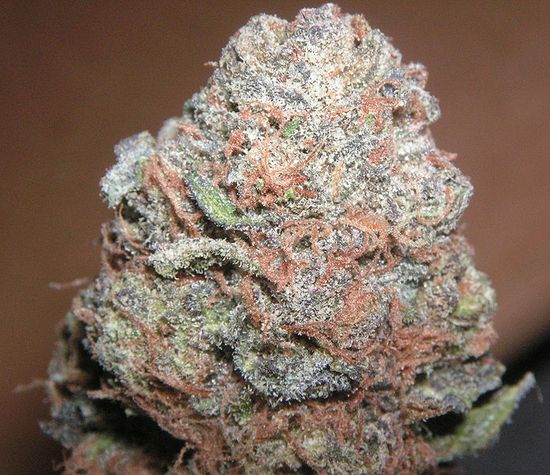
694px-Purple_Kush

Keith Humphreys flags a year-old paper (pdf) from Jonathan Caulkins and Eric Sevigney:

Because U.S. legalization of production, manufacture and sale of cocaine, heroin and methamphetamine would do significant financial damage to the Mexican drug gangs, many people believe that decriminalization of these substances (conceptualized as a sort of half-step to legalization), would do at least some economic damage to the cartels. But as decriminalization maintains the structural consequences of illegality in drug production and sales (e.g., high prices) the profits of the cartels would not be hurt at all by reductions in criminal penalties on U.S. drug users. Indeed, to the extent that decriminalization leads more people to be comfortable trying drugs, it would make the Mexican situation worse by providing more profit to the gangs: Same high prices, more customers.

Just legalize it for adults, place strong constraints on minors finding a way to purchase it, and stop using pot arrests as some benchmark for police success, especially when there is an obvious racial dispairty in enforcement of the law. It's not that hard.

(Photo: a bud of Purple Kush, via Wiki.)

Obama’s Latest Volte Face

The decision to try KSM in a military tribunal is as sad as keeping Gitmo open. He has, of course, been hemmed in by an irrational, panicked Congress. Maybe a civil trial would be impossible because of the torture inflicted on KSM by the last administration. But I cannot help but be amused by some Republicans’ argument for military rather than civil prosecution. Here’s House Judiciary Committe chairman, Lamar Smith:

“It’s unfortunate that it took the Obama administration more than two years to figure out what the majority of Americans already know: that 9-11 conspirator Khalid Sheikh Mohammed is not a common criminal, he’s a war criminal.

But doesn’t that distinction also apply to Bush and Cheney, who committed war crimes by sanctioning torture? On what basis does the Justice Department enforce the law against war crimes solely when they are committed by others, but refuses to prosecute America’s own? None of this helps us win the war, of course. Here’s General Petraeus on Gitmo:

Closing the military prison at Guantanamo Bay would purge the U.S. of a symbol used by enemies to divide the nation, the head of the U.S. Central Command said Friday. Army Gen. David Petraeus said the U.S. military is “beat around the head and shoulders” with images of detainees held in Guantanamo.

The GOP and the scaredy cat Dems who are demagoguing this issue clearly disagree with Petraeus. But I’d say Petraeus has a better grip on the terrible impact of the Gitmo torture and detention camp in the war than most Senators and Congressmen.

The Body Count In Iraq: Down But Not Done

Joel Wing looks at the latest numbers:

Shootings and explosions are unfortunately still a daily occurrence in Iraq. They have become highly selective however, with most being political assassinations of government officials and members of the security forces and Sons of Iraq. Very rarely are there indiscriminate mass casualty attacks in Iraq anymore. Al Qaeda in Iraq is usually responsible for them, with the sole purpose of gaining publicity. They have been unable to shake the security situation, or provoke retaliatory attacks. Iraq’s militants are on the decline, but they are still carrying out their deadly trade.