Larry Kramer on the Human Rights Campaign.
Month: November 2011
“Do We Still Like Him?”
Matt Lewis examines the relationship between Republicans and the Hermanator.
What Professionals Believe About Torture
Glenn Carle, reviewing Ali Soufan's harsh new book on the war on terrorism, scores a hit against torture apologists:
It is telling that, to my knowledge, four individuals with first-hand experience in interrogations during the "War on Terror," have spoken out about enhanced interrogation methods: two Air Force officers (Steve Kleinman and another officer writing under the pseudonym Matthew Alexander), an FBI officer (Soufan), and a CIA officer (myself). All of us, independently, make the same points: interrogation must be based on rapport; enhanced interrogation methods are ineffective, counterproductive, immoral, illegal, and unnecessary, and they had nothing to do with obtaining much, if any, information not otherwise obtainable. It is only apologists for the Bush Administration, or Bush Administration policymakers themselves, who assert that "enhanced interrogation techniques" are legal, or work.
The Need For Justice In Egypt

Michael Hanna explains why he's so worried about Egypt's haphazard efforts to confront the abuses of the Mubarak regime:
With Egypt’s politics in flux, a return to authoritarianism is among the possibilities for the country. Grappling with the past is as much, in this regard, about preventing the return of dictatorship as it is about ending impunity. While an excessive preoccupation with justice and accountability could distort the focus of transition, without a proper and unimpeachable accounting of repression and authoritarian rule, the process of constructing a democratic culture and respect for the rule of law will be compromised from its inception.
Mohamed Fadel Fahmy interviews the former dictator's lawyer. After reading a document intended to guide the drafting of Egypt's new constitution, Issandr El Amrani fears that the Egyptian army won't give up power:
It's hugely telling of how the military seems to conceive the transfer of power back to civilian rule: they're not going to disband themselves, but are turning themselves into a fourth power alongside, not beneath, the executive branch.
(Photo: Egyptians police stand guard as supporters of former President Hosni Mubarak gather outside the courts set up at the Police Academy on October 30, 2011 where his trial was supposed to resume. The trial of the former President for corruption and murder has been postponed to December 28, pending a decision on a possible replacement of the judge. By Mahmud Hams/AFP/Getty Images.)
A Left-Right Consensus Against State-Run Lotteries
Jack Meserve sees an opening:
Lotteries are bitter policy pills, because while it’s unlikely they’ll be repealed absent a major scandal, it’s not an exaggeration to say that no political ideology should support them. Conservatives and libertarians are against government programs, and especially against raising more revenue. It’s hard to imagine a principled conservative thinking a state monopoly whose sole purpose is to generate money is a good idea. Progressives, on the other hand, are adamant that protection of the poor and minorities is a responsibility of government, and that revenue should be raised by progressive means. But lotteries are terribly regressive, and actually rely on money from disadvantaged groups. Even though collecting revenue is important, we should remember that money is a means, common welfare the end—not the reverse.
An earlier defense of lotteries here.
The Robots Are Coming
For your job:
[C]omputers still aren't very good at many menial labor jobs like cleaning bathrooms and other janitorial work; we still need humans for that. So it turns out for many very low-skill jobs, there's still demand. For high-skill and high-touch jobs like being a good manager at a company, a doctor, or a nurse, we need humans. But many middle-skill, middle class jobs are where we're seeing the squeeze.
"That's the irony, right?" [MIT economist David Autor] says. "That basically the things that proved easier to automate are not the lowest-skill activities. It's easier to have a computer play chess than it is to have a computer wash dishes."
Can Defense Cuts Transform Our Foreign Policy?
Benjamin Friedman hopes so:
The Pentagon's boosters are right that big cuts will limit military capabilities. But that would actually be a good thing for the United States. Shrinking the U.S. military would not only save a fortune but also encourage policymakers to employ the armed services less promiscuously, keeping American troops — and the country at large — out of needless trouble.
Joshua Goldstein and Michael Cohen feel similarly. Andrew Exum dissented from this view a couple of months ago. Spencer Ackerman bets that proposed cuts won't happen:
Don’t believe the poverty story that the service chiefs brought to the House Armed Services Committee on Wednesday morning…The so-called “sequestration” process that the chiefs fear, whereby automatic congressional cuts decimate the Pentagon budget — in Defense Secretary Leon Panetta’s memorable phrase, “this goofy meataxe scenario” — is way less automatic than advertised. Even if the military’s nightmare comes to pass, there are lots of ways the Pentagon can still save its bloated budget, much like the kids on Elm Street always stave off Freddy Krueger.
Cartels vs Hackers
"Hacktivist" group Anonymous appears to have backed off its threat in the above video to expose personal information about members of "Los Zetas," a leading drug cartel, perhaps because (a wild guess) the cartel has been successful in killing people who have done so in the past. Jack McDonald thinks the episode says something important about modern warfare:
What’s playing in my head is the idea of "identity wars". A persistent online conflict in which the "game" is to identify other people and knock them out before they identify you. States are used to playing this with hackers: they try to identify them, arrest them and imprison them. Hackers play this game against each other/civilians (doxing, whereby they dump a person’s identifiable information on the internet), and recently, right back at the state. All these people are not, however, likely to kill each other directly …
This analysis also explains why Anonymous couldn't win:
[F]or hackers, getting identified might get you arrested, but that’s only when they’re going up against companies, states and organisations that play nice. Capture/kill raids and predator strikes are what states do to people when they’re not "playing nice", and I doubt that criminal networks are liable to play nice to anyone that might out them, or their assets. Maybe when the first OpCartel chap winds up gruesomely executed with a note pinned to their chest, Anonymous etc might realise that there are worse people out there than Visa and Paypal.
Sam Biddle calls Anonymous a "shell of its former self."
What Determines Success?
Will Wilkinson points out that "liberals tend to explain both poverty and wealth in terms of luck and the influence of social forces while conservatives tend to explain poverty and wealth in terms of effort and individual initiative." He adopts and rejects aspects of both world-views:
In plenty of circumstances in which people are suffering due to no fault of their own, I think they need both material assistance and the conviction that they can improve their lives if they really try. And this is why I have a hard time seeing eye to eye with some progressives. Progressives are sincerely inclined to impersonal, socio-cultural explanations of success and failure, but I think they're also generally of the opinion that an ethos of initiative, hard work, and individual responsibility will impede the political will to offer assistance to those who ought to get it.
I'm not sure that they're wrong. After all, those who tend to oppose progressive transfers tend to do so partly on the basis of their disbelief in the faultlessness of the needy. In any case, it seems to me progressives' deep-seated opposition to victim-blaming and by-the-bootstraps perorations helps keep a lot of suffering people from getting the other, non-material part of what they really need: encouragement to meet the social expectation that they will continue supplying effort on their own behalf, even if that hasn't worked out well so far.
The Daily Wrap

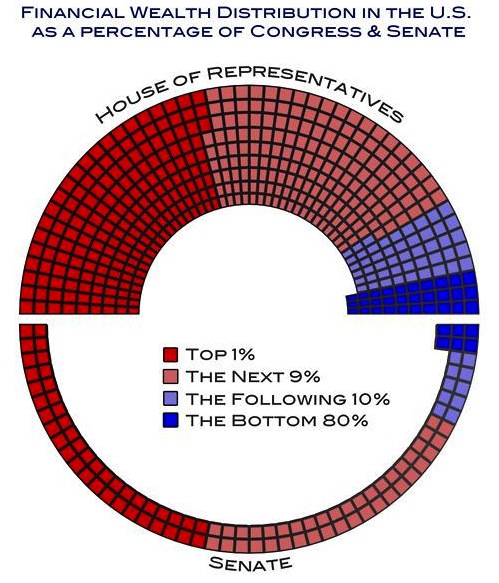
Today on the Dish, the collective net worth of American lawmakers jumped 25 percent in two years, Dodd-Frank failed in a comprehensive simulation of a banking crisis, and Silver gave Obama a 50-50 shot at re-election. In our video feature, Andrew made the conservative case against extreme income inequality, 40 House Republicans endorsed tax revenues, and occupiers brought Oakland to a standstill. The Hermanator relapsed, he won Pamela Geller's endorsement, and Pajamas Media uncovered new "details" of a sexual harassment incident (related correction of the day here). Pejman Yousefzadeh called out Cain supporters, the only way past this for Cain is through it, and most of Cain's defenders piped down (some are even taking the charges seriously). Romney leads the field in endorsements and potential support, his foreign policy got worse (as did Perry's), and readers weighed in on Huntsman's hapless campaign.
Greece toyed with a potential exit from the Euro, Andrew was impressed by Papandreou's strategy (others felt differently), Frum blamed Germany, and Italy is too big to fail. We chewed over US strategy in Somalia, wondered if the Syrian opposition could coalesce under a unified organizational umbrella, and marked 100 years of air war. We assessed the latest speculation on Iran as the Israeli military resisted war, a veteran grappled with the impulse to torture, and Bruce Crumley mocked the French satirical newspaper firebombed for caricaturing Muhammad.
Mariah Blake unraveled a doozy of a Ponzi scheme in the Midwest, the Tea Party threat waned, and the death penalty stretches the legal system. Readers reacted to a horrific story of "Texas domestic justice" and shared their stories of abuse, and the hard problem of consciousness is so hard. We appraised college degrees, scientists said that sugar doesn't make kids hyper, but parents begged to differ.
Hathos alert here, app of the day here, correction of the day here, cool ad watch here, MHB here, VFYW here, FOTD here, and amusing profiles in Republican intellectual gymnastics here and here.
— M.A.
 The Dish