A Poem For Sunday

Bh

"Sunday Morning" by Wallace Stevens:

What is divinity if it can come
Only in silent shadows and in dreams?
Shall she not find in comforts of the sun,
In pungent fruit and bright, green wings, or else
In any balm or beauty of the earth,
Things to be cherished like the thought of heaven?
Divinity must live within herself:
Passions of rain, or moods in falling snow;
Grievings in loneliness, or unsubdued
Elations when the forest blooms; gusty
Emotions on wet roads on autumn nights;
All pleasures and all pains, remembering
The bough of summer and the winter branch.
These are the measures destined for her soul.

The poem continues.

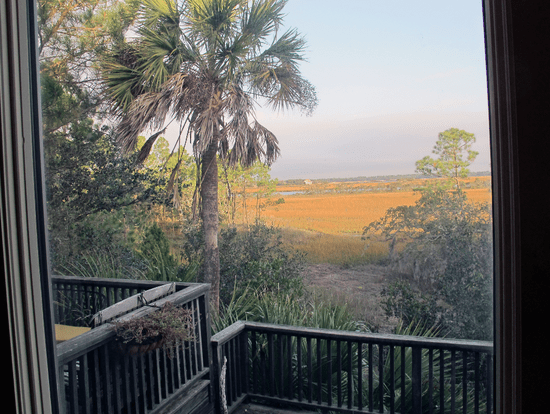
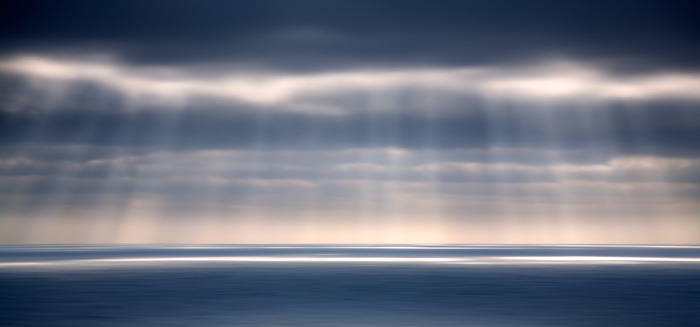
(Image: Pacific Point by Jeff Friesen, part of his Beyond Here series, courtesy of the artist.)

The Origin Of Grief

Hannah Waters ponders it:

In an 1843 letter to his second cousin, Reverend William Darwin Fox, Charles Darwin wrote, “Strong affections have always appeared to me, the most noble part of a man’s character and the absence of them an irreparable failure; you ought to console yourself with thinking that your grief is the necessary price for having been born with (for I am convinced they are not to be acquired) such feelings.”

Grief is the price we pay for friendship.

Does Neuroscience Kill Free Will?

Brain

Professor Patrick Haggard argues it does. He subjected himself to "transcranial magnetic stimulation," where magnetic coils affect one's brain and control minor movements in the body:

The idea that our bodies can be controlled by an outside force is a pretty astonishing one. "This is absolutely out of my control," insists Prof Haggard, as his muscles continue to move. "I'm not doing it, Christina is. I'm just a machine, and she is operating me."

Eddy Nahmias wants a different definition of free will:

If we put aside the misleading idea that free will depends on supernatural souls rather than our quite miraculous brains, and if we put aside the mistaken idea that our conscious thinking matters most in the milliseconds before movement, then neuroscience does not kill free will.  Rather, it can help to explain our capacities to control our actions in such a way that we are responsible for them. It can help us rediscover free will.

Michael Gazzaniga wonders how scientific advances will change our understanding of free will:

At some point we might be able to recognize psychopathology as a problem just as we recognize Parkinson’s as a problem, or Alzheimer’s as a problem. I can imagine in the future there’s going to be biomedical research to recognize criminal mind states to see if they can be remedied. Maybe then people would be happier with utilitarian policies because they will think, “Fine, we can fix these brains.” Meanwhile the attitude of the culture will have to allow treatments to come along. There are lots of things that need to change to make it work.

Gazzaniga elaborates on his ideas in an interview with Scientific American. Awhile back, Sam Harris deconstructed a different definition of free will while Gary Gutting complicated the concept.

(Image by Suzy Lelièvre)
Porn’s Supporting Actor

Tumblr_lupkmeFmfi1qb6w4lo1_500

Amanda Hess profiles average-looking male porn star, James Deen:

The straight male performer must be attractive enough to serve as a prop, but not so attractive that he becomes the object of desire. As Curry puts it, "No one wants to alienate the male audience."

 But Deen has his fans:

Deen is not supposed to be the star of his scenes—his sex partners are. But on Tumblr, a network of teenage bloggers has emerged to turn the focus on him. The young women trade Deen videos, post candid photographs, and pluck out all the minute details that turn them on: the way he looks at a woman, touches her, stares into her eyes, whispers in her ear. …  For his teenage fans, James Deen is a window to a world of sexual expression that had previously been no-girls-allowed. For many, it’s an aspect of their sexuality that they’re exploring exclusively on the internet. 

For the rest of us, there's always Depressingly Realistic Sexual Role Play Scenarios. J. Bryan Lowder adds his two cents.

(Photo of Deen via A Space Disaster, from one of many Tumblr posts devoted to him.)

The Study Of Missed Connections

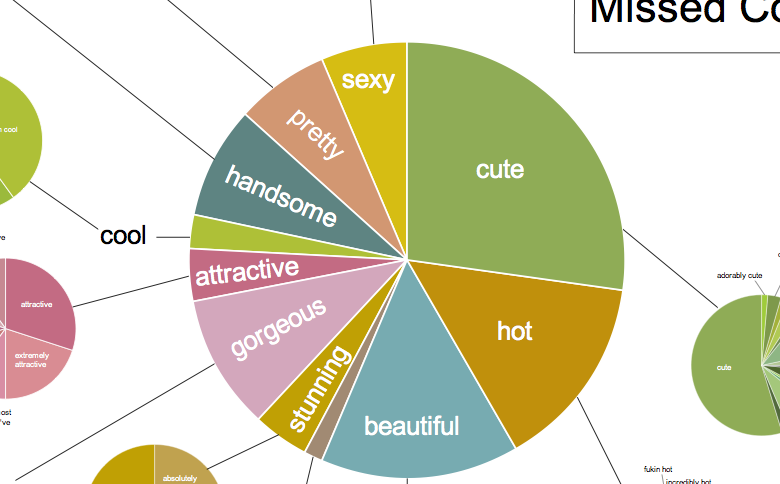
A detail from an info-graphic of on superlatives used in Missed Connections:

Missed_Connections

More research on Missed Connections here from The Center For Missed Connections, a project by artist Ingrid Burrington. Why Missed Connections resonate:

With its establishment as a part of the personals section of the newspaper, Missed Connections began to take on dimensions more literary than urban—it was a shared written realm, a common zone of loneliness in print. With the advent of Craigslist (a section for exclusively Missed Connections was added to the site in 2000) and other online personals resources, the concept of what constitutes a “missed connection” has transformed into a free-for-all dialogue of venting, longing, and spamming. Analysis of Craigslist Missed Connections postings and communities offers a glimpse into the loneliness and sexual tension that serve as the linchpin of any thriving metropolitan environment. Missed Connections embody a key element of the lure of cities: they provide temporary engagement with a total stranger in uncertain, finite intimacy.

Dan Amira points out the obvious:

Nobody is looking to get in touch with the "mediocre looking" dude or the "homely" girl they exchanged glances with on the subway.

“The Intestines Of The Earth”

Priscilla Long observes worms: 

Worms like sex. They are hermaphroditic, each one possessing both male and female genitalia. But they do not fertilize themselves. They copulate, each inseminating the other. During sex, worms can cling together for as long as three hours. In his vivid book on earthworms, The Formation of Vegetable Mould Through the Action of Worms with Observations of their Habits, Charles Darwin writes: “Their sexual passion is strong enough to overcome for a time their dread of light.”