Wherein I Answer The Door In My Underwear

Hand

Mark Warren's Esquire profile of me is up. The part on why I love America:

I arrived here, and you had people brawling over everything that mattered, and just presuming to do so, honoring no protocol or pecking order, and showing precious little deference to position… This was so different from the land of my birth. This was the America of my dreams.

Of course, he was already American, certificate or not. He was as American as the first American, who was not American at all but who left a place far away and arrived in this new place as a very different person. That is, of course, the essence of Americanism, which is to say that the immigrant with a vision of America may be more American than the baby born on this soil ten generations hence.

I have to say seeing myself included in a list of 20 Americans Of The Year actually brought a tear to my eye. I haven't read the piece yet. I find it too excruciating to read about myself in print. I'll ask Aaron to read it and ask him how it is and then send it to my mum. Then I'll read it quickly. It's the way I am.

Conservatism And Modernity

GT_DAVIDCAMERONGAYPRIDE_111115

Having read a new "policy manifesto" by my old friend, gay conservative MP Nick Boles, Noah Kristula-Green looks to his British and Canadian conservative counterparts and longs for a similar conversation in the US. Nick, for example, pointed out the bleeding obvious:

Until the collapse of Lehman Brothers, it was generally accepted that free markets provided the most efficient way of allocating resources to different economic activities. But firms like Lehman operated in the ultimate free market and ended up destroying themselves, nearly taking the whole capitalist system down with them.

Any intelligent free-market conservative who hasn't absorbed that fact is in rigid denial. To his credit, Alan Greenspan fessed up immediately. Then this:

We have observed that the countries with the lowest levels of income inequality and the lowest levels of social problem have strong education system which seem to achieve good results for the vast majority of children and not just an elite few.

Yes; conservatism can care for the many, not just the few, indeed has a duty to care for the many. Dreher sighs:

[T]he conservative movement and the Republican Party is so driven now by hidebound orthodoxies that it’s by and large unwelcoming to innovative thinking and creative challenge. This is unconservative, if conservatism is understood as the opposite of ideology, as Kirk had it. 

(Photo: Britain's Prime Minister David Cameron addresses guests at the Gay Pride reception in the garden at 10 Downing Street, in central London on June 16, 2010. By Andrew Winning/AFP/Getty Images.)

The Productivity Paradox, Ctd

An assistant professor of economics e-mails:

Don’t get taken in by the “higher productivity = unemployment” argument. Productivity has been growing for the last century, yet somehow we have MORE jobs than we did 100 years ago.  Remember the 1990s?  Productivity surged because of computers – and jobs and wages also grew at their fastest rate in decades.  Why doesn’t productivity eliminate jobs?  It’s the fallacy of composition – productivity may eliminate jobs in one industry.  But then those products become cheaper, effectively putting more money in consumers’ pockets, and leading to job-creating booms in other industries. One industry sheds jobs, but the economy as a whole gains jobs.  Marx never figured that out, which is where the “productivity as contradiction in capitalism” came from.  Is our current unemployment mess due to productivity that never caused a problem in the past?  …. or just maybe to the sharpest contraction in GDP in 80 years, and consumers who are saving to rebuild their net worth?

Another reader speaks from personal experience:

I wonder how much overall productivity numbers are influenced by worker productivity increases in the aughts.  Because I believe worker productivity increases were (and are) a function of massive layoffs, where the remaining employees absorb the duties of the laid-off workers and take on increased hours without overtime pay (and often without pay raises).  More work, fewer employees, less wage costs.

To me, one of the best ways to get Americans back to work is to reform federal laws regarding the 40-hour work week.  Right now, companies are using the piss-poor economy to prevent disgruntled, overworked employees from leaving their jobs for greener pastures.  Because there are no greener pastures.

Currently, if three of your co-workers are laid off, and you absorb a good portion of their duties without a pay increase, what can you do?  You were hired to work a job that required roughly 40 hours a week.  Now you're working 50 to 60 with no extra pay (or a relatively modest pay increase).  I'm in that situation myself.  And I'm pretty sure my extra hours are not legally exempt from overtime pay.  But I need my job.  So there's no wisdom in seeking recourse.

A final reader dissects the example I gave:

The individual baker can't compete with Safeway. Nor should they try. The success of these small, personal contact-oriented businesses is exploiting the niche market space the large businesses abandon because they aren't profitable. Individualized, high-quality product is not profitable for Safeway, so they focus on lower to mid-quality consistency with less personal contact, and compete on price. But the market for the more personal, high-quality items doesn't disappear, and a well-run small business can exploit that niche. But the key to that business's success, I think, is being comfortable with non-growth oriented success while serving that niche market. Make decent profits, serve your customers, manage your quality. Because if growth is the goal, and they work towards growth, they will ultimately lose the quality while butting up against Safeway's market at some point. And then they will lose, because they'll rarely if ever be able to match Safeway's economies of scale. 

What Does Democracy Look Like?

In the wake of the Occupy Wall Street crackdown, Julian Sanchez reflects on the meaning of democracy:

For most of human history, we’ve spent our whole lives in social clusters of a few hundred people—we’re basically hardwired for groups of that size. That makes it easy to look at a throng of a few thousand out at a rally and tell yourself: “This is what democracy looks like.”  Except, of course, it isn’t really. Or at any rate, it’s only a tiny part of what democracy looks like.

A small group of people self-selected for their commitment to some set of shared goals and values may be able to pick a set of slogans to chant in unison, or resolve their limited disagreements by consensus process. But real democracy in a pluralist society involves deep and often ineradicable disagreement—and not just on the optimal uses of public parks and other commons. It’s true, of course, that concentrated and wealthy interests routinely capture the apparatus of government, and use it to serve ends inimical to the general good. But a frame that sets up an opposition between “the 99%” and “the 1%” —or, if you prefer, between “Washington/media elites” and “Real America”—suggests a vain hope that profound political differences are, at least in some spheres, an illusion manufactured by some small minority.

A Religious Right The Religious Don’t Want

Almost two weeks ago the Michigan State Senate passed an anti-bullying bill that exempted those with a “sincerely held…moral conviction." Amy Sullivan reports that this is one exemption believers disapprove of:

After hearing from outraged constituents who didn’t want their state sanctioning the bullying of gay students, from concerned leaders of Michigan’s large Muslim community–who worried that the bill would permit Christian students to target Muslim classmates–and religious leaders of all stripes who said, in effect, don’t do this on our account, the Michigan House of Representatives passed its own version of the anti-bullying bill without a religious exemption

An interesting twist to this story came courtesy of the Michigan Catholic Conference, which endorsed the original anti-bullying bill (without the religious exemption) over the summer. Once the Senate passed the altered bill with language ostensibly intended to protect the religious liberty of students, the Michigan Catholic Conference withdrew its endorsement.

This is a wonderful example of Christianity defeating Christianism. More please.

(Video: Losers from Everynone on Vimeo.)

Facing Inequality

In the Weekly Standard, Matthew Continetti concedes the reality of income inequality, but concludes that it’s simply not the government’s place to intervene:

Too quick to dismiss the occupiers, too convinced that the bad economy will doom Obama’s reelection, too distracted by the silliness of the Republican primary, too beholden to the egalitarian assumptions of the left, Republicans and conservatives have not responded coherently to the arguments put forward by their newly invigorated opponents. … The way out is to reject the assumption that government’s purpose is to redress inequalities of income. 

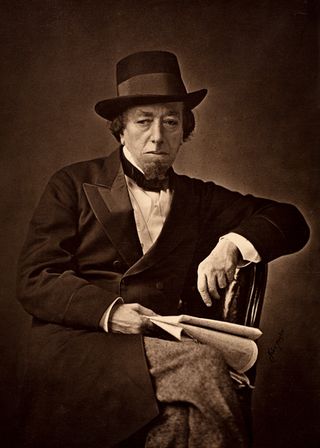
I completely agree as a general principle. But to see the world in purely ideological or ideal terms is to miss something. Political conservatism, as I understand it, is the constant adjustment of government to changing social, economic and moral changes in society, with a preference for stability and limited government. It has principles – fiscal prudence, limited government, strong defense – but it also knows when to adjust those in the face of reality. To give an example, as a Benjamin_Disraeli_by_Cornelius_Jabez_Hughes,_1878principle, I oppose progressive taxation; in practice, I see no way even America will move to it. As a principle, I don’t want to see the wealthy and successful penalized for their success. These people are often, though not always, the job-creators and wealth-creators. You do not help the poor by punishing the rich.
But this is not where we are, is it? We are at decades-high inequality and declining social mobility – two major threats to the social order conservatives want to maintain. The tax code, as Tom Coburn has pointed out, is riddled with loopholes for the perquisites of the very rich, and for their income. Some groups of citizens have become rentier classes, using their expertise and mastery to enrich themselves at the expense of others. The top two categories of these sectors are doctors (vastly overpaid alongside every aspect of US healthcare) and bankers (bordering on criminal in the imbalance between what they contribute to society and what they get out of it). Globalization has accelerated income inequality even beyond our worst fears in the 1990s. And the rich have essentially bought the Congress, which is why healthcare reform and banking reform have become so tough.

Instead of reiterating that conservatism, properly speaking, should be indifferent to these trends, ruling them out of bounds for government action, conservatives should right now be assessing how to adjust these principles to the new reality. Some – like Alan Simpson or David Frum or Bruce Bartlett or Richard Posner – are. There is a tradition in Toryism, One Nation Conservatism, which, in Britain, oscillates in the Conservative Party with its more neo-liberal Thatcherite strand. This One Nation Toryism, innovated by Disraeli, takes national division and inequality seriously as a problem for social stability. My view is that both conservative strains are necessary, and that the GOP needs to revive its moderate, pragmatic identity now, when it is most desperately needed. The point of prudential judgment is knowing when to compromise, not taking pride in never compromising.

That means above all tackling the debt aggressively in the long term while avoiding a debt trap in the near term; that means serious long-term entitlement and defense cuts and a scythe to end as many loopholes and deductions in the tax code as possible. I’d leave only charity as an exception but would scrap that if the alternative was the status quo. The truth is we currently have a golden opportunity to raise revenues and cut rates a little if we tackle the corruption of the tax code. We’d also throw lobbyists, like Herman Cain and Jack Abramoff, out of business. If this isn’t a conservative response to our current crisis, I don’t know what is.

Alas, we have the party of Cantor. Complete indifference to vast economic inequality, no plans or ideas for how to generate middle class growth and jobs, scorched earth partisanship,and a rigid attachment to ideology, conservatism’s age-old nemesis. If the Super-Committee fails, it will be because one party alone refuses to budge on one half of the equation – revenues. That very intransigence destabilizes the US and the whole world.

And since when do conservatives stand for destabilization?

(Photo: Benjamin Disraeli by Cornelius Jabez Hughes, 1878.)

Is God Trying To Tell Me Something?

It was a great few days for yours truly to make peace with some ideological foes. On the plane out to Los Angeles, who do I bump into but Bill Bennett and his wife, cordial and respectful as ever? On the way back, I kid you not, Andrew Breitbart was in the seat next to me. We've never met, but we've emailed over the years. He's hot-headed and a bundle of bearish energy and nerves. But we had a blast on the plane, with him sharing his latest pop music obsessions on his iPod with me.

Breitbart is actually a kind of straight gay: loves pop music, hates rock n roll, lost interest in radio music around the time of grunge (as did I) and now believes there's a revival of joyous pop going on. Oh, and, yes, we talked Trig a little. How could we not?

Anyway, I happen to personally like him, and Bill, and am touched they don't take my public debating personally. I don't. I consider this blog to be the House of Commons. We can hammer away at each other but have a beer afterwards. Or an iPod share (yes, I made him listen to some new PSB classics).

Good times. Oh, and by the way, I'm giving the Theodore H White Memorial Lecture tonight at the Kennedy School at Harvard. A big honor from my alma mater. The topic is "Conservatism And Its Discontents." The speech is only 20 minutes long to make room for lots of discussion and panels the next day. If you're around, join us.