Forget Gingrich’s Numbers?

Gingrich_Polls

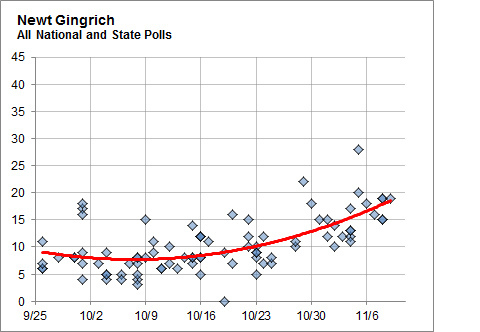
Gingrich and Cain are neck and neck in Iowa. PPP finds Gingrich in the lead nationally:

There's reason to think that if Cain continues to fade, Gingrich will continue to gain.  Among Cain's supporters 73% have a favorable opinion of Gingrich to only 21% with a negative one. That compares to a 33/55 spread for Romney with Cain voters and a 32/53 one for Perry.  They like Gingrich a whole lot more than they do the other serious candidates in the race.

Jamelle Bouie doesn't think Newt's recent uptick in some polls means much:

Like Cain, Gingrich has done few of the things necessary to building a viable campaign for the presidential nomination. Large chunks of his time have been spent outside of the three early primary states, where his organizations are threadbare. He has $300,000 cash on hand, compared to the millions raised by Romney and Texas Governor Rick Perry, and has few endorsements from Republican Party activists and lawmakers. According to Mark Blumenthal’s poll of “power outsiders,” only 20 percent say they stand a good chance of endorsing the former House Speaker.

Jennifer Rubin piles on:

I agree that Gingrich will benefit for some time from Herman Cain’s and Texas Gov. Rick Perry’s woes. It is ironic that the feisty base, which wants to fight, fight, fight against the Democrats, would consider the last GOP speaker of the House to get badly rolled by the White House. But in short order not only his personal baggage but his embrace of decidedly unconservative ideas and ethical problems will become a turnoff for many evangelicals, the group the not-Romney candidate must capture. For all of his flash and humor, Gingrich remains a loose cannon and an inconsistent conservative — not exactly what the not-Romney crowd is looking for.

John Cassidy is marginally less dismissive:

The probability of him winning the nomination is small. Intrade, the political betting market, currently puts it at 11.6 per cent, which sounds about right. (Romney’s odds of winning are 71.3 per cent.) But that doesn’t mean he can’t mount a semi-serious challenge and makes things interesting.

Chart above from Nate Silver.
Immigration Laws Sneak Across State Borders

Harsh illegal immigration laws in Arizona and Alabama are making it harder for Washington state's apple growers to find workers. Amanda Peterson Beadle warns that local immigration laws have far-reaching affects:

The Supreme Court held nearly 70 years ago that a state cannot set its own immigration policy separate from federal law because of how it will affect every other state in the United States of America. … The voters of Alabama elected an anti-immigrant government, and the people of Washington suffer for it without any ability to hold Alabama’s leaders accountable at the polls.

Today In Syria: The Arab League Acts

Over the weekend, the Arab League suspended [NYT] Syria's membership and plans to impose sanctions on Assad's regime. The decision  prompted riots from pro-regime mobs and thankful demonstrations like the one above. Jack Goldstone thinks the move is a big deal:

This formal denunciation, to be followed by discussions of how to protect Syrian civilians, will put Bashar on the defensive, and offer enormous moral support to the courageous Syrian opposition.  Whether any kind of intervention will follow — from providing shelter for refugee or opposition groups on the borders, or even more direct intervention to separate civilians from assault by armor or air — is still quite uncertain.  But as with Libya, the action of the Arab League starts a process of isolating and deligitimizing the Syrian regime.  And that process, once begun, is likely to continue to its logical conclusion, which will be a regime change.

Michael Totten nods, but Joshua Goldstein is less confident. Juan Cole sees the vote as partially motivated by anti-Iranian sentiment, while David Ignatius situates it in the history of previous Arab League actions. Meanwhile, a new video gives you a sense of what it's like to be in a protest broken up bloodily:

Massive crowds, like this one today in Hama, gather to commemorate the dead and call for an end to the brutality:

These crowds gather even in the face of near-certain torture if captured (via The Revolting Syrian):

Playing Hot Potato With Tough Choices

Stan Collender is amazed by the gall of the debt committee: 

The anything-but-super committee was set up because the regular committees and legislative process could not agree on what to do about the deficit.  But rather than make those decisions, the super committee may decide [NYT] that the best way to deal with this situation is to throw it back to the two tax-writing committees that, because they were unable to come up with a plan in the first place, gave the job to the super committee.

Jared Bernstein worries about the consequences:

If the Supercommittee fails and Congress takes apart the trigger, that could send a worrisome message to markets that our politics are even more dysfunctional than people thought. 

The GOP’s Tax Cut Insanity

Rollingstone2

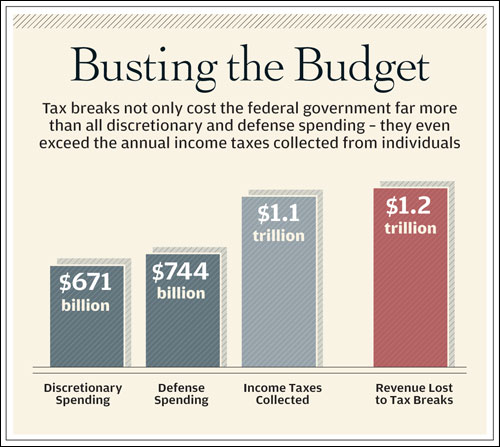
Tim Dickinson tracks the GOP's frenzied pursuit of tax cuts for the very rich:

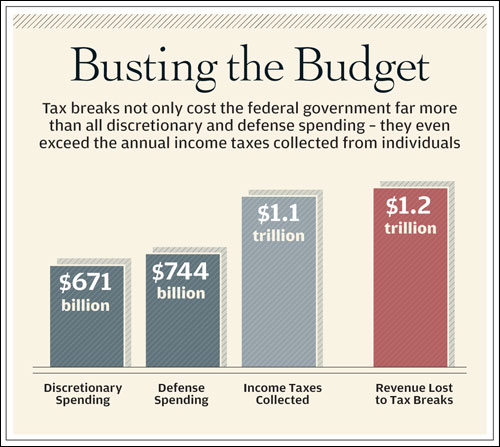
It's difficult to imagine today, but taxing the rich wasn't always a major flash point of American political life. From the end of World War II to the eve of the Reagan administration, the parties fought over social spending – Democrats pushing for more, Republicans demanding less. But once the budget was fixed, both parties saw taxes as an otherwise uninteresting mechanism to raise the money required to pay the bills. Eisenhower, Nixon and Ford each fought for higher taxes, while the biggest tax cut was secured by John F. Kennedy, whose across-the-board tax reductions were actually opposed by the majority of Republicans in the House. The distribution of the tax burden wasn't really up for debate: Even after the Kennedy cuts, the top tax rate stood at 70 percent – double its current level. Steeply progressive taxation paid for the postwar investments in infrastructure, science and education that enabled the average American family to get ahead.

All this is true. In today's degenerate GOP, Eisenhower would be a communist, as, indeed, the John Birch Society insisted he was at the time. But I don't think you need to get into the argument about redistribution to note simply that the US has a massive debt that needs to be tackled urgently, and that obviously revenues – at half century lows – must be part of that mix. Taking taxes back up to where they were under Clinton, who presided over a boom, solely to tackle the debt crisis is such a no-brainer that only the current GOP would oppose it. Especially since in return, the Dems would have to cut entitlements by a serious amount.

Americans, by the way, see this. They back tax hikes on the successful and wealthy by 2 – 1 as a way to reduce debt. But as America moves "left" back to Clintonism, the Republicans are moving way to the right of Reagan. At some point, something will have to give. I only hope it isn't after we have become Greece.

Berlusconi’s Resignation

Greg Ip wonders whether it will matter:

The worry … is that as each new turn of the austerity screws fails to produce the hoped-for relief in the markets, more austerity will be prescribed, until the Italian political system rebels, making default and exit from the euro unavoidable.

Fallows has mixed feelings about Berlusconi's departure:

I am as happy as the next person to see the well-deserved end to Silvio Berlusconi's reign in Italy. But I don't think many people can, or should, feel too happy about this second resignation of a democratically elected government (after Papandreou in Greece) because of pressure from bankers outside the country's borders. 

The WaPo’s Israel Problem

Jennifer Rubin re-tweeted this vile post by Rachel Abrams, which regards the captors of Gilad Shalit as "animals":

Throw them not into your prisons, where they can bide until they’re traded by the thousands for another child of Israel, but into the sea, to float there, food for sharks, stargazers, and whatever other oceanic carnivores God has put there for the purpose.

Rubin's own version of the diatribe was as follows:

“gilad is free and home. now round up his death-worshiping captors and turn them into food for sharks"

The leaders of Hamas are indeed often despicable in their war crimes, but it's a mark of civilization that we do not descend to this kind of tribal, racist, fascistic bile. And notice that Rubin is endorsing the notion that God Almighty views the captors of Shalit (who, unlike many prisoners under Israeli and US control in the past, was not tortured) as inferior to the "children of Israel." He put sharks in the ocean to eat Arabs. Moreoever, given a chance by the Washington Post ombudsman to take back the endorsement of this sentiment, Rubin doubled down:

Rubin told me that she did agree with Abrams. Rubin said that she admires Abrams, has quoted her a lot, thinks she’s an excellent writer and endorsed the sentiment behind the Abrams blog post.

So we have a blogger at the WaPo endorsing throwing Arab prisoners into the sea to meet righteous divine punishment. Can you imagine a Arab writer pennng that about Israelis and surviving at the Post?

Of course you couldn't. This was pointed out by many readers, who

suggested that if a Post liberal blogger had retweeted an equivalent anti-Israel broadside, American pro-Israel groups would be screaming for his or her head. I think the critics are right: Rubin should not have retweeted Abrams’s tweet.

Three cheers for the ombudsman. And the matter should have ended there. But Ben Smith, one of sharpest (and most mischievous) observers of the Israel Lobby in Washington, put the head neocon enforcer at the WaPo, Fred Hiatt, on the spot. He asked him where he stood. And Hiatt, of course, did what a neocon always does. He closed ranks:

I think Jennifer is an excellent journalist and a relentless reporter. I think because she has strong views, and because she is as willing to take on her home team, as it were, as the visitors, she comes under more scrutiny than many and is often the target of unjustified criticism. I think she brings enormous value to the Post.

If you read through the whole contretemps, you will see that Rubin escaped what would have been automatic censure because she is not a reporter but an opinion writer. Yet here is Hiatt backing her precisely as a reporter and journalist (even though her entire oeuvre emanates solely from a pro-Israel fanaticism). Glenn Greenwald pounces:

Is there any doubt whatsoever that had Rubin promoted a rant spewing these sorts of ugly caricatures about Jewish children and Israelis with accompanying calls for savage violence — rather than directed at Palestinians — that she would have instantly been fired, then castigated and attacked by all Serious precincts?

No doubt. But Rubin was hired entirely because she is a Likudnik fanatic, just as Dan Froomkin was fired for opposing torture. The Washington Post editorial page is more pro-Israel than most papers in Irsael itself. It has every right to be in a free country. But it's worth knowing.

Obamacare Will Get Its Day In Court

Obama_healthcare_signature

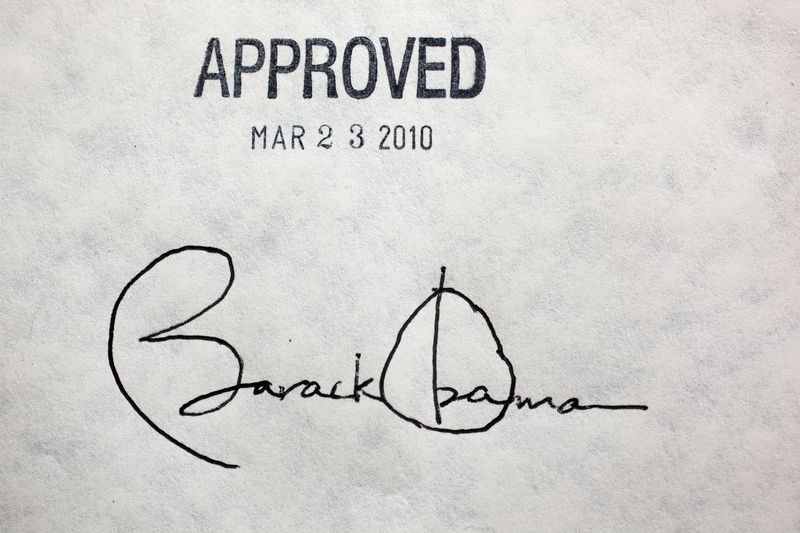
SCOTUS announced today that it will hear the case against Obamacare this term. Lyle Denniston reviews what will be debated during oral arguments:

The Court will hold two hours of argument on the constitutionality of the requirement that virtually every American obtain health insurance by 2014, 90 minutes on whether some or all of the overall law must fail if the mandate is struck down, one hour on whether the Anti-Injunction Act bars some or all of the challenges to the insurance mandate, and one hour on the constitutionality of the expansion of the Medicaid program for the poor and disabled.   

Sarah Kliff answers various questions about the case. Among the Supreme Court's choices:

The Court could rule that the health reform law is constitutional and allow it to move forward. It could also rule, as the 11th Circuit did, that the individual mandate falls while the rest of the law stands. The justices do, however, have another option: The Court could decide that the individual mandate is so key to health reform law that, if it falls, the whole law comes down with it.

Peter Suderman explains why the Obama Administration wants to hear the case this term:

This is what the Obama administration had asked for, in part to ensure that they're the ones to get to argue the case (if a Republican wins in 2012, a GOP controller White House might be less enthusiastic about defending the merits of the mandate).

Ed Morrissey expects the ruling will impact the 2012 race:

If they end up supporting ObamaCare, Barack Obama will claim vindication for the next few months of the campaign for his re-election bid.  If they strike it down, Obama loses his signature achievement and has to explain that for the next few months leading up to the election — and explaining is not winning.

Jonathan Bernstein disagrees:

[I]n political terms, I’d be very cautious about assertions that the Supreme Court decision will have any effect in November 2012 at all. Supposing the Court acts at the very end of June: that still leaves four months before the election. That’s a very long time in politics, especially for something that won’t have any immediate, tangible effect on people’s lives. 

(Photo: Obama's signature on the ACA from Wikipedia)

Breaking: O’Reilly Still Not Interested In Facts

Bill O’Reilly’s best-selling new book, Killing Lincoln, is rife with factual errors. Justin Elliott summarizes a scathing review from the deputy superintendent at Ford’s Theatre:

“Killing Lincoln” makes multiple references to the Oval Office; in fact, Emerson points out, the office was not built until 1909. … The book says that Ford’s Theatre “burned to the ground in 1863.” In fact, the fire was in 1862, according to the review.

The November issue of North & South, the official magazine of the Civil War Society, continues the assault: 

A farm where John Wilkes Booth hid after the killing was not 500 acres, as O’Reilly says. It was 217 acres, according to the review. O’Reilly refers to John Ford’s chief carpenter as John J. Clifford. In fact, according to the review, his name was Gifford. “Lewis Powell, the man assigned to kill secretary of state William Seward, did not speak with ‘an Alabama drawl.’ He was from Florida,” the review notes.

Mark Liberman analyzes whether O'Reilly's use of "furling one's brow" as opposed to furrowing one's brow is wrong. Heh. But look: all O'Reilly cares about is what his boss, Roger Ailes, cares about: ratings and money. Facts are inconvenient at times. It hasn't stopped them before; and it never will again.