Rooms Of Memory

Rooms

Christian Jarrett flags a fascinating new study:

Like information in a book, unfolding events are stored in human memory in successive chapters or episodes. One consequence is that information in the current episode is easier to recall than information in a previous episode. An obvious question then is how the mind divides experience up into these discrete episodes? A new study led by Gabriel Radvansky shows that the simple act of walking through a doorway creates a new memory episode, thereby making it more difficult to recall information pertaining to an experience in the room that's just been left behind.

(Image by Flickr user Dominic pics)
Your Brain Is Shrinking

An aging academic grapples with losing his mental sharpness:

[B]rains are already heading downhill by one's early 30s, even late 20s, some parts faster and more precipitously than others. The prefrontal cortex where a good chunk of YOU resides is last to develop (thus helping explain why teenagers are teenagers) and first to start its slow drift and then increasingly rapid plunge downward. Luckily, I had lived more than twice 30 years in blissful ignorance of that fact. I make sure to tell my younger colleagues about it lest they be caught unawares like I was. How could I have been surprised though? Why should the brain be any different from the now minuscule muscles I used to run with?

Quote For The Day

"I've gone empty, completely empty and all they see is the visual form; my arms and legs, my face, my height and posture, the sounds that come from my throat. But I'm … empty. The person I was just one year ago no longer exists; drifts spinning slowly into the ether somewhere way back there… I'm a blank spot in a hectic civilization. I'm a dark smudge in the air that dissipates without notice. I feel like a window, maybe a broken window. I am a glass human. I am a glass human disappearing in rain," – David Wojnarowicz, writing in his diary before dying of AIDS.

Face Of The Day

Bonneted_bat (1)

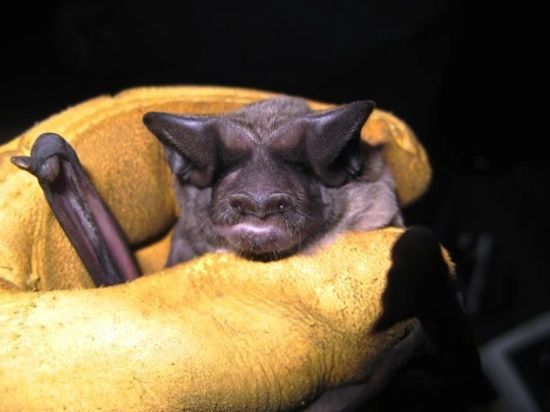
The Florida bonneted bat is one of many species that has languished on the waiting list for the Endangered Species Program. A recent settlement means decisions will finally be made on hundreds of species slated for protection since the '80s:

Some of the animals, like the Mexican wolf, are powerfully charismatic. Others, like the Florida bonneted bat or Spring pygmy sunfish, might be considered ugly, even forgettable. But each represents a singular, unreplicable form of life — millions of years of evolution culminating in a creature whose fate is now in our hands.

(Photo by Florida Fish and Wildlife Conservation Commission)

Religion’s Role In Development

Duncan Green unpacks it:

Engagement [with religion] can fit anywhere along a spectrum from ‘find out more’ through ‘dialogue and critical engagement’ and ‘limited issue-based alliances’ to ‘active partnership’. Don’t get me wrong – in all of these areas, religion can play a progressive or a (sometimes very) regressive role (or both). But if we’re serious about development, we need to understand much more about the diversity, divisions and debates within each church on things like women’s roles. That’s true even if, like me, you are ‘devout atheists’.

Susan Harding shares her own experience doing fieldwork among Baptists.

Indulge In The Nothing

Mark Morford rebels against microtasking, or filling each space in work with more work:

Yes, we're Americans. We are, by and large, utterly terrified of silence, stillness, spaciousness, the doing of nothing so as to feel the totality of everything. Meditation, for most, is disquieting and strange. Deep quiet feels weird and dangerous, a void aching to be filled. The Internet has us convinced that the world is a roaring fire hose of urgent information, and if you can't swallow it all, well, something must be wrong with you. "In any 48-hour period in 2010," says a stunning bit I just read in the Atlantic by way of entrepreneur Yuri Milner, "more data was created than had been created by all of humanity in the past 30,000 years. By the year 2020, that same amount of data will be created in a single hour." Go ahead, swallow. Hard.

Is Fantasy A Christian Genre?

D.G. Myers makes the case:

Speaking as both an author and scholar of fantasy, [C.S.] Lewis said in a 1947 essay that "To construct plausible and moving ‘other worlds’ you must draw upon the only real ‘other world’ we know, that of the spirit." No statement about the genre has ever been more definitive. The bedrock premise of fantasy, which cannot be waived without voiding the genre, is the existence of a spirit realm. Lewis’s Narnia, Tolkien’s Middle Earth, Rowling’s "wizarding world," parallel universes of all kind are imaginative reconstructions of Christianity’s first principle: namely, that the "kingdom of heaven" is the only true world.

Evil As The Absence Of Good

Mark Vernon contemplates the dictum: 

[Evil] might be a lack of values, and so nihilistic. It might be a lack of virtue, or the practical intelligence that allows life to flourish. It might be a lack of appropriate early attachments between mother and child – the empirically well supported analysis from psychotherapy. … All in all, the nothingness of evil gathers a lot of understandings together, scientific, moral and theological. It is nothing, almost as in Burke’s ‘It is only necessary for the good man to do nothing for evil to triumph.’

Transcending Our Wants

Denning-5-600x628

According to David Gessner, Henry David Thoreau offers a lesson in doing more with less:

Everywhere you look these days people are singing the praises of restraint and bemoaning the failings of sheer excess. Frugality, that unfashionable virtue, is suddenly back in fashion. How do we make our own home economics, our personal ledger sheet, balance with what is happening in the larger world? Although Thoreau did his share of finger-wagging, it isn’t his moralizing that interests me. What is truly exciting is what you might call his celebration of the joys of restraint, his thrill in self-abnegation, as long as it is self-abnegation for a purpose. Perhaps most vital for our moment is his deep-seated and deeply-lived belief, that one can live a good life, and an interesting and compelling life, by consciously doing with less instead of striving, incessantly, for more.

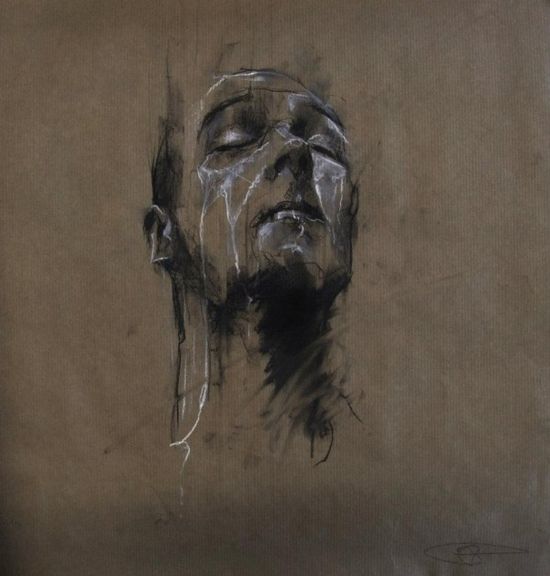
(Image: One of several drawings inspired by OWS by Guy Denning)