Is Pinterest Actually Interesting?

Brian Donovan is unimpressed with the latest social media phenomenon

It’s literally the least amount of information that can be put in front of you and still make you feel like you’re looking at something. You admire a photo, re-post it if you like, and if you’re feeling particularly frisky, clink on it to see if it links to a recipe or design idea. That’s it. Basically, imagine going to a museum that’s been curated by someone’s hip aunt using magazines and Hallmark cards as her only resource, and you’ve been to Pinterest.

Obama: “We’ve Got Israel’s Back” Ctd

A reader writes:

I agree that the Obama interview on Iran was most masterful. They reflect an Obama who fully understands the game that Bibi is playing and is responding to him in a way that is simultaneously tactically skillful and substantively correct. That's quite a feat, actually, since most politicians would see this as a choice and few manage the sort of Weberian calculus that Obama uses to reconcile the two seamlessly. When I got to the end of the interview, I thought to myself "check," this is a sort of chess game, and Obama is really outmaneuvering his foe. Picking Goldberg, a committed hawk on Iran who is nevertheless skeptical of the wisdom of Bibi's move, was very cunning.

But this reflects something unique in American domestic politics. A foreign political leader with powerful domestic connections is challenging a sitting US president on his home turf.

The only parallels are probably to be found in the first two decades of the American democracy, in which British and French interests waged a battle for American sentiments within the American political process that was sometimes only half-way discarded. However the stakes this time are much bigger. It's truly extraordinary, however, that the mainstream U.S. media seems incapable of even observing what is obviously going on. Not only that, they defer in a stunning way to the Likud viewpoint, insuring it's right in front of us all the time–some fairly mild criticism presented, but not much. Could you imagine something like this happening with any other country?

No, I can't. But the blogosphere has definitely enabled the debate to grow and widen and be less vulnerable to the thuggery of some parts of the Greater Israel lobby. Their instinct to purge dissent, take out big newspaper ads, and hound individual writers and threaten the reputation and livelihoods of others is not a positive thing. By all means, attack in print, or rebut, or campaign. But why the desire to rule some people or arguments or even phrases out of bounds – and launch campaigns to get Greater Israel critics fired? It's ugly, and getting uglier.

Copy-and-pasting Culture

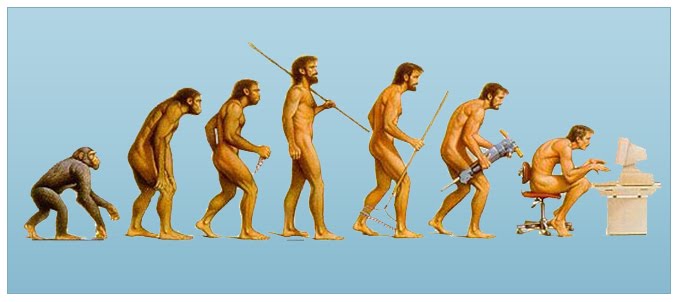
Computer evolution

Maria Popova quotes from Mark Pagel's new book, Wired for Culture: Origins of the Human Social Mind: "Having culture means we are the only species that acquires the rules of its daily living from the accumulated knowledge of our ancestors rather than from the genes they pass to us." Popova:

Language, says Pagel, was instrumental in enabling social learning — our ability to acquire evolutionarily beneficial new behaviors by watching and imitating others, which in turn accelerated our species on a trajectory of what anthropologists call "cumulative cultural evolution," a bustling of ideas successively building and improving on others. (How’s that for bio-anthropological evidence that everything is indeed a remix?)

Pagel elaborated in a recent Edge conversation:

We can all think of things that have made a difference in the history of life. The first hand axe, the first spear, the first bow and arrow, and so on. And we can ask ourselves, how many of us have had an idea that would have changed humanity? And I think most of us would say, well, that sets the bar rather high. I haven't had an idea that would change humanity. So let's lower the bar a little bit and say, how many of us have had an idea that maybe just influenced others around us, something that others would want to copy? And I think even then, very few of us can say there have been very many things we've invented that others would want to copy.

This says to us that social evolution may have sculpted us not to be innovators and creators as much as to be copiers, because this extremely efficient process that social learning allows us to do, of sifting among a range of alternatives, means that most of us can get by drawing on the inventions of others.

Academia Needs More Google

Alan Jacobs makes the case

Not long ago I was using a research database to try to get a PDF of an article published in a journal to which my college's library has a digital subscription. I knew the title of the article, the author's name, the title of the journal, and the issue date. I plugged all those in to the appropriate text boxes, clicked "search" . . . and got hundreds of results. But the one that I wanted wasn't on the first several pages. I sent an email to a reference librarian describing this event, and he wrote back saying, "Oh, see, you should have entered the journal's ISSN." Really? Exact title of article and journal, exact name of author, exact date of publication – that's not enough? 

There's no question that students' search skills are generally quite poor, and need to get better, but to some extent we've all had our search habits trained by Google's algorithms, which in most cases — though by no means all – are quite effective. 

The View From Your Window Contest

Vfyw_3-3

You have until noon on Tuesday to guess it. City and/or state first, then country. Please put the location in the subject heading, along with any description within the email. If no one guesses the exact location, proximity counts.  Be sure to email entries to VFYWcontest@gmail.com. Winner gets a free The View From Your Window book. Have at it.

Is Mandarin The Language Of The Future?

Nope, says Robert Lane Greene:

Fewer and fewer native speakers learn to produce characters in traditional calligraphy. Instead, they write their language the same way we do—with a computer. And not only that, but they use the Roman alphabet to produce Chinese characters: type in wo and Chinese language-support software will offer a menu of characters pronounced wo; the user selects the one desired. (Or if the user types in wo shi zhongguo ren, “I am Chinese”, the software detects the meaning and picks the right characters.) With less and less need to recall the characters cold, the Chinese are forgetting them. 

He recommends learning French instead.

The Politics Of Presidential Pups

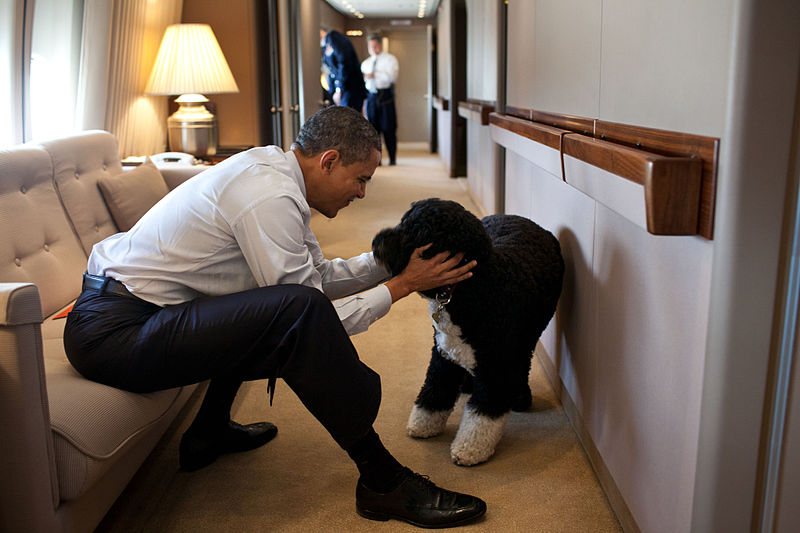
800px-Obama_and_Bo_on_Airforce_One

Why it matters:

It’s fair to say that a president’s relationship with his dog goes a long way toward humanizing the Commander in Chief for the average American. Truman famously said, "If you want a friend in Washington, get a dog," and while this probably does explain a presidential predilection for their canine pets, it’s a collateral bonus that being perceived as a loving pet owner hardly hurts when it comes to the ballot box. Obama’s campaign team has been forthright in their plans to capitalize on Romney’s dog troubles, and on January 30th, David Axelrod tweeted out a picture of Obama and Bo in the presidential limo with the subtle-as-a-jackhammer caption, "How loving owners transport their dogs."

David Graham is surprised that the Seamus story still has legs:

In addition to the latest car stunt, Dogs Against Romney has organized an anti-Romney protest outside the Westminister Dog Show. Demonstrators have appeared at primary events across the nation to remind attendees of the incident. Ann Coulter has weighed in, apparently revealing that she is not only able to communicate with dogs but is also able to channel the thoughts of dead ones. … Someone with decent editing skills and too much free time has painstakingly grafted Romney's head into a scene from National Lampoon's 1983 Vacation (come to think of it, there are some similarities between Chevy Chase and Romney). It's joined by countless clips of news anchors talking about the incident — in case you're unsure where the roof of a car is, CNN's Jeanne Moos has a handy demonstration — and a plethora of poorly animated spots like this one.

Tazi Phillips runs through the 44 presidents and their pets.

(Photo via Wikimedia Commons)