The Season For “Tree Bukkake”

That's Xeni Jardin's charming term for the onset of allergy season. If you aren't suffering enough already, global warming is going to make pollen much worse:

USDA scientist Lewis Ziska, among other researchers, has found that ragweed is one of the plants whose growth is most enhanced by exposure to higher concentrations of carbon dioxide. Not only does the ragweed grow faster when exposed to more CO2, it also produces more pollen. This is especially an issue in cities, which have higher concentrations of CO2 than rural areas, thanks to having a higher concentration of cars and other CO2 emitting sources. Extra bonus: There's also some evidence that allergy seasons are getting longer, as Spring starts earlier and Winter takes longer to truly set in.

Climate Central has a cool interactive showing how early spring is arriving, state by state:

Nationwide, the date of "first leaf" has clearly shifted — arriving roughly three days earlier now on March 17th (1981-2010 average) from March 20th (1951-1980 average). This shift affects all sorts of biological processes that are triggered by warmer temperatures — not just flowering, but animal migration and giving birth and the shedding of winter coats and the emergence from cocoons. How much will an earlier spring disrupt the intricate natural balance between the tens of thousands of species that depend on each other for food, reproduction and ultimately, survival? No one really knows.

(Video via Maria Popova)

Does Creativity Distinguish The Human Race?

Tim Requarth and Meehan Crist claim Jonah Lehrer's new book argues as much:

For years, scientists thought [humans] were different because we use tools. Not so, as it turned out. Chimpanzees have us there. And gorillas and orangutans and some other primates. And birds. And elephants. And a few bottlenose dolphins. Even ants use grain to carry honey. Until very recently, many scientists thought language set us apart, but in the past ten years, researchers have observed precursors to human speech in primate vocalizations and striking similarities between how infants learn to speak and songbirds learn to sing. Even self-awareness, a treasured feature of human consciousness, is no longer considered unique to humans.

It’s tempting to think that we are special, but today most researchers agree with Darwin’s eloquent observation that humans are animals, too; we are different in degree rather than kind. There’s no reason to think that creativity will be the exception.

The real problem is that claiming creativity’s exceptional status makes for a better story: if creativity is what sets us apart from the animals, understanding this faculty is tantamount to unlocking the mystery of who and what we are. As Lehrer writes, "Until we understand the set of mental events that give rise to new thoughts, we will never understand what makes us so special." This claim raises the stakes for the book. The problem is, it’s probably just not true.

Jonah counters from the comments section:

You … quibble with my speculation that human creativity is rather unique. Well, look around. We have remade this world of ours, for better or worse. We live fully surrounded by our own inventions. At the very least, this suggests that the human mind is doing something a little different than every other kind of mind.

The Weekly Wrap

Imagesizer

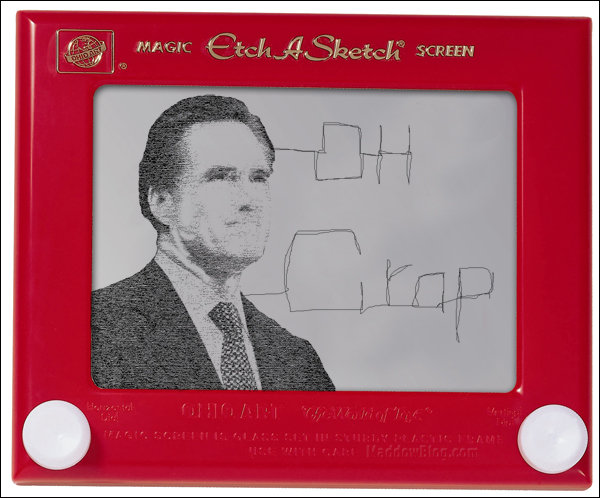
Friday on the Dish, Andrew called out for help in the coming marrige equality fights, solicited more etch-a-sketch moments from readers, reupped "Ask Steven Pinker Anything," and shared documentation of an "emo killing" in Iraq. We kept up the debate on Beinart and settlements (here, here, and here), explained why Obama wasn't ready to bomb Iran just yet, got pessimistic about Afghanistan's future, watched Turkey turn (far to the) west, heard a harsh take on Islam's "true" face, aired reader debate on whether American soldiers were heroes, were horrified by genital wounds, examined whether the TSA was an overreaction to terrorism, and located the world's smokers. The boring primary slogged on, Romney's gaffe piqued readers' intersts, and Obama surged in Virginia. Ad War Update here.

Andrew also disabused anyone of the notion that Paul Ryan's budget was in touch with reality, while we guessed that Roberts would uphold Obamacare and checked in on the law's precedents. The Tea Party benefitted from good weather and had a curious artistic sense. Obama spoke out about Trayvon Martin, testimonies of Christianism breeding atheism rolled in, PETA dissembled about murdering animals, legal pot appeared unlikely to solve the budget deficit, Mormon feminism sparked discussion, and catcalling was horrifying. The Dish's male readership imbalance became a bromance, good advertising required better products, employers demanded access to Facebook passwords, science fiction got darker, The Hunger Games fit our times, sex scenes made actors very uncomfortable, and television recaps died out. We found evidence that people in big cities walked faster, detailed how an Etch-A-Sketch actually worked, and wondered if the obese should pay more for airfare. Hewitt Nominee here, Creepy Ad here AAA here, VFYW here, FOTD here, and MHB here.
6a00d83451c45669e20167641a61ed970b-550wi

Thursday on the Dish, Andrew chronicled the offensive against Peter Beinart, went another round with Jeffrey Goldberg on related issues, flagged Roger Cohen's critique of Goldberg's reporting, called him out again, and restated his basic position on Beinart's boycott. Peter himself challenged opponents to articulate an alternative for restricting settlement growth, the Libyan war might have precipitated a coup in Mali, size of a state's economy was an ambiguously useful metric of global power, and traumatic brain injury was a serious problem for soldiers.

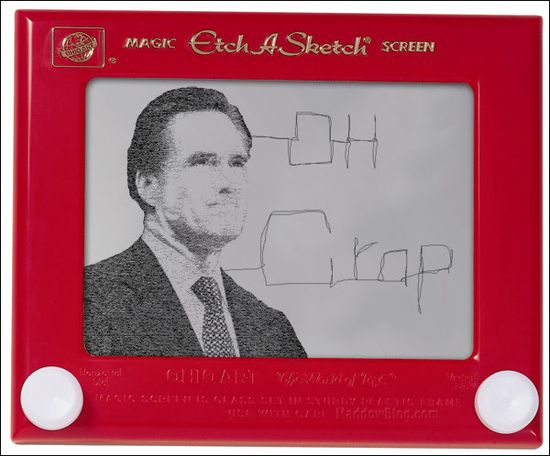
Andrew also explained in great depth why the Etch-A-Sketch gaffe was so devastatingly embarrassing for the Romney campaign while we followed up on some reactions from blogosphere to it, dug up one instance of his Etch-A-Sketchness, compared The Gaffe to equivalents in campaigns past, gave Mitt a chance in Louisiana, yawned at Jeb Bush's endorsement, wondered when the losers would drop out, and noted the importance of the Presidential race for shaping who controlled the Senate. Ad War Update here.

Finally, we posted an Urtak for Ask Steven Pinker Anything, charted the rise of Mormon feminism online, explored the "cost of being a woman," updated you on a victory for marriage equality in NH, aired a critique of Christianist "freedom," and looked at how a self-defense law enabled the murder of Trayvon Martin. Striking down the health care mandate looked likely to make premiums skyrocket, environmentalism hurt asthma sufferers, mapping the brain appeared capable of revolutionizing medicine, and referring to former politicians by their ex-titles seemed silly. Sexual desires were inextricably linked to your identity, fairy tales returned to their dark roots, an amazing chess story might be corrupted by Hollywood, the truth's imperfections helped create a story's value, the Clintons got an airport, and men cheered. AAA here, FOTD here (follow-up to yesterday's here), VFYW here, and MHB here.
6a00d83451c45669e20167640c9388970b-550wi

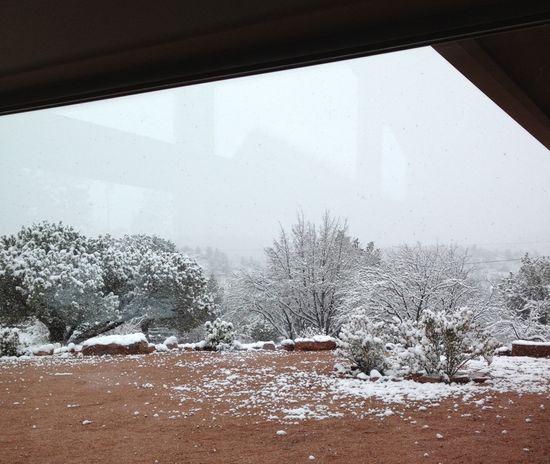
Sedona, Arizona, 8.30 am

Wednesday on the Dish, Andrew called the end of the horse race, explained why he couldn't get on board with Paul Ryan's plan, and delved into the data suggesting that the GOP's Christianism was, rather than saving Christianity, destroying it. We blamed Romney's failings as a candidate for the overlong primary (follow-up here), noted the weaknesses of another veep pick, cornered the constituency responsible for Santorum's possible tactical victory in Louisiana, and listened to him disavow one of them. The next Democratic nominee looked poised to embrace marriage equality, Obama's supposed funding problem got scrutinized, and David Corn analyzed Obama's "strategic patience." Ad War Update here.

Andrew also got into it with Jeffrey Goldberg on arguments from "authoritah" on Israel and notified y'all about his Bill Maher appearance this Friday. We aired a sophisticated dissent from a reader on how to deal with the settlement problem, listened to more readers on the same topic, examined Peter Beinart's own rebuttal to his "Zionist boycott" proposal's critics, were appalled by the terrorist assault in Toulouse, checked on Syria's reverberations in Lebanon, and spotted basic Russian and Chinese weaknesses in global politics. American soldiers may (or may not) have been properly given the label "hero" automatically and officers made bank.

The web reacted to Paul Ryan's new budget, inequality's causes were debated, the ranks of the suburban poor swelled, men left professions that women entered, Obamacare litigation received scrutiny, a lottery ticket's value wasn't principally financial, and lying about Foxconn deflated the truth. Trayvon Martin was unjustly murdered, humanity seemed able to avoid extinction, horse racing brutalized horses, firefighter vision disoriented us, anonymous sobering helped many, and female Dish readers kept speaking up. AAA here, Quotes for the Day here and here, VFYW here, MHB here, and FOTD here.

Tuesday on the Dish, Andrew went after Jeffrey Goldberg's dismissal of The Crisis of Zionism, noticed two other instances of a growing "Ignore. Peter. Beinart." movement, explained how the Israeli-Palestinian conflict fuelled Bin Laden's fanaticism, and decried some home-grown religious craziness from a Santorum supporter. We compiled reax to Romney's win-verging-on-blowout in Illinois, heard the "primary is over" chorus out, checked on how long it would take for Romney to wrap it up, explored his extraordinary underperformance, wondered if Mitt's military non-service would become an isssue, and gathered evidence that Rubio would be a terrible VP pick (electorally speaking). Ad War Updates here and here.

Andrew also blasted two cardinals' nigh-GOP endorsements, reacted to thoughts from the Dish's female readership on the gender imbalance, and brought Ask Jonah [Lehrer] Anything back to your attention. We spotlighted the spate of recent debt ceiling debate autopsies, rubbished fears of dumb voters, continued debate on the Alexandra Pelosi Obama voter video, waited for Obama's reelection for an about-face on marriage equality, bet SCOUTS would leave Obamacare alone, and dug up some old-but-relevant remarks from Obama on striking Iran. India might not have begun a rise to great power status, Iraq didn't help the victims of "emo killings," and Apple wasn't any worse about immoral outsourcing than its competitors. Steve Jobs led his company to an enormous fastly rise, Google fell by trying too hard to fight Facebook, a dictator used Photoshop, and an iPad met concrete. Glenn Beck profited online, hockey loved the gays, historians verified chop suey's authenticity, yellow fever got filmed, spring came early, and Ryan Gosling aged like scotch. Chart of the Day here, Malkin Nominee here, Quote of the Day here, AAA here, VFYW Contest Winner here, VFYW here, MHB here, and FOTD here.
6a00d83451c45669e20168e8e16773970c-550wi

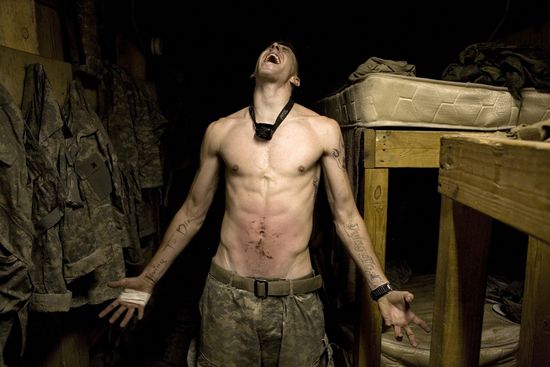
By Tim Hetherington

Monday on the Dish, Andrew reupped his defense of Democratic fiscal conservatism over the GOP's profligacy, argued that Obama and Cameron's respective fiscal strategies made sense in the context of each of their countries, spotted the "critical bad play" in the debt ceiling negotiations, explained why Catholics were rejecting Santorum and the Church hierarchy, noted Romney's new spin on the economy, and called out Drudge for merging with the Romney campaign. We noted Romney's significant victory in Puerto Rico (and its undercoverage by the press), previewed a potential blowout in Illinois, and gaped at Gingrich's perseverence. Readers debated Alexandra Pelosi's Obama voter "expose," American voting looked pretty tribal, and presidential rhetorical power was pretty limited.

Andrew also introduced the poll for "Ask Jonah Lehrer Anything," flagged both a great PSA on being gay in hockey and a horrific interview with Tony Blair and Ellen Johnson-Sirleaf on the latter's support for laws banning homosexual sex, got angry about the Dharun Ravi verdict, and uncovered a truly repellent instance of Church corruption. We grabbed reax to the Mike Daisey Apple-In-China fiasco, guessed an Iran war could never be won, and saw Gitmo assimilate its opponents. The Catholic hierarchy didn't always hate gays, an abortion in Texas was excruciating, and the sex offender registry had unintended consequences. Obamacare's legality came up for debate in anticipation of next week's case, domestic oil appeared unlikely to solve high gas prices, cities greened, and ways to increase creative thinking got examined.

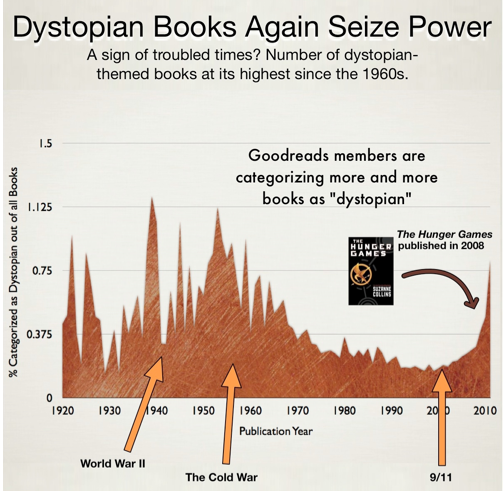
We told you to relax and get bored, cautioned against over-optimism, rubbished human nature, watched detectives use data to succeed, marvelled at the consequences of global warming, and broke down why decaf coffee tasted terrible. The Hunger Games discussion went on, films critics ceased to matter, Luck's luck ran out after one-too-many killed horses, and another reader kept up up the discussion of gore in fiction. Hathos Alert here, Hathos Red Alert here, AAA here, Chart of the Day here, Quote of the Day here, MHB here, VFYW here, and FOTD here.

Z.B.

War Through A Child’s Eyes

Screen shot 2012-03-21 at 9.33.58 AM

Amy Davidson connects the Hunger Games series to counterinsurgency:

America has been at war for a decade now; is it really a coincidence that the biggest movie of the year is the first in a trilogy in which torture, terror, asymmetric warfare, and the manipulation of public opinion all play a role? 

Mark Medley tries to predict the next Hunger Games. Diana Butler Bass considers the religious aspect of the franchise:

On the surface, Panem appears void of religion. There are no prayers, no churches, no temples, no priests, no shamans, no God or gods, no sense of hope. In this future world, all vestiges of institutional religion are gone. … Despite the lack of conventional religious trappings, however, the major theme of the novel is a deeply theological question, one that has haunted the religious imagination for millennia: Can violence–even sacrificial violence–save?

(Chart via Goodreads)

Your Password Or Your Job

Facebook has come out swinging against the recent trend of businesses requiring job applicants to turn in their Facebook login and password as part of the application process. Eric Limer applauds:

Facebook is really just affirming their privacy policy, affirming everyone’s privacy policy really. … After all, the only real reason to worry about someone’s social networking activity is their questionable judgment if they make everything public. Private stuff is, well, private. But aside from addressing the "user rights" perspective — like the ACLU did — Facebook has also taken the opportunity to point out how viewing an applicant’s Facebook page could be very dangerous for the employer or college.

Annalee Newitz pinpoints what's so creepy about the corporate quest to ensure their employees aren't posting "inappropriate photos" or having any other sort of fun online.

Ad War Update

Total Super PAC spending now exceeds $80 million (Romney's Restore Our Future is responsible for more than $37 million). Further analysis of new fundraising reports here. Meanwhile, the Obama campaign marks the two-year anniversary of the ACA's passage: 

Needless to say, the National Republican Senatorial Committee remembers things differently: 

In case you doubted his commitment to defeating Obama in November, Santorum issues this dystopian portrait:

Alex Burns has more

Santorum strategist John Brabender tells me the video kicks off an eight-part miniseries. The focus on small-town America is of a piece with Santorum's campaign message so far, which has focused on maxing out support for the Republican in conservative and more rural areas.

Ron Paul tries to change the conversation: 

Matt Lewis scoffs

Ron Paul’s team will argue this ad is mocking all three of his opponents for focusing on pointless issues. (All three of their campaigns, after all, are talking about an Etch a Sketch.) Trivializing the Etch a Sketch debate, of course, also happens to help Mitt Romney. But is the Etch a Sketch debate trivial? To many, it is a metaphor for a much larger and serious question: Whether or not Romney can be trusted to remain a true conservative on a variety of substantive issues after he wins the nomination. I’ll let you decide if this is a legitimate Ron Paul ad meant to contrast him against the field, or one designed to subtly help Mitt Romney.

Lastly, the RNC fixates on Solyndra:

Previous Ad War Updates: Mar 22Mar 21Mar 20Mar 19Mar 16Mar 15Mar 14Mar 13Mar 12Mar 9Mar 8Mar 7Mar 6Mar 5Mar 2Mar 1Feb 29Feb 28Feb 27Feb 23Feb 22Feb 21, Feb 17, Feb 16, Feb 15, Feb 14, Feb 13, Feb 9, Feb 8, Feb 7, Feb 6, Feb 3, Feb 2, Feb 1, Jan 30, Jan 29, Jan 27, Jan 26, Jan 25, Jan 24, Jan 22, Jan 20, Jan 19, Jan 18, Jan 17, Jan 16 and Jan 12.

Our Imagined Futures

Have gotten darker:

Neal Stephenson has seen the future—and he doesn’t like it. Today’s science fiction, he argues, is fixated on nihilism and apocalyptic scenarios—think recent films such as The Road and TV series like "The Walking Dead." Gone are the hopeful visions prevalent in the mid-20th century. That’s a problem, says Stephenson, author of modern sci-fi classics such as Snow Crash. He fears that no one will be inspired to build the next great space vessel or find a way to completely end dependence on fossil fuels when our stories about the future promise a shattered world. 

Turkey’s American Turn?

GT_TURKEY-US-BFF_120322

Dimitar Bechev tracks a growing pro-American bent in Turkey's foreign policy:

Before the Arab spring of 2011, Turkey had confidently pursued what it called a "zero-problems" regional approach (its own version of Brussels's "European neighbourhood policy" that promotes functional integration with states on the European Union's periphery). But the violent upheavals in Libya and Syria effectively derailed the "zero-problems" principle.

Instead, the region's new turmoil reinforced Ankara's bonds with Washington as they forged a common front on the Syrian crisis (while agreeing to disagree on Israel). Turkey shifted towards projecting the notion of a "Turkish model" as something the awakened Arabs could emulate – whose traces of a "freedom agenda" had resemblances to the outlook of neocons in the George W Bush administration. Hillary Clinton, the US secretary of state, has even spoken of a "golden era" in US-Turkish relations.

Soner Cagaptay nods.

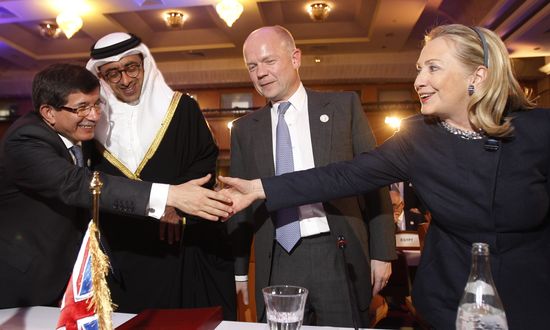
(Photo: Secretary of State Hillary Clinton greets Turkey's Foreign Minister Ahmet Davutoglu (L), United Arab Emirates' Foreign Minister Sheikh Abdullah bin Zayed al-Nahyan (2nd L) and British Foreign Minister William Hague (2nd R), in Tunis on February 24, 2012, during the 'Friends of Syria' conference at which representatives from over 60 countries will discuss the crisis in Syria, with a focus on aid and a political resolution of the violent conflict which has killed over 7000 people since the beginning of pro-democracy demonstrations a year ago. By Jason Reed/AFP/Getty Images)

Has The Post-9/11 TSA Done More Harm Than Good?

The Economist is debating the question. Bruce Schneier is against the changes:

Examining the recent failed plots against planes shows that it's not post-9/11 security that prevents terrorism, but instead pre-9/11 security. Consider the 2009 underwear bomber. Because security screened for obvious bombs, Umar Abdulmutallab had to construct a unreliable bomb. Instead of using a timer or a plunger or a normal detonation mechanism, he had to resort to an ad-hoc and much more inefficient system involving a syringe, 20 minutes in the lavatory and setting his pants on fire. Not only did the bomb fail to explode, but his actions were so obvious that the other passengers noticed what was going on and subdued him. The shoe bomber, Richard Reid, was foiled in the same way.

Kip Hawley counters:

There have and continue to be serious threats to aviation (and many other targets). TSA operations are required to stop the attacks in progress, for instance at checkpoints or with air marshals, but they also work with others throughout the American government and around the world to get ahead of future plots. "Airport security" is much more than the TSA and checkpoints; it has to be a connected network that links global intelligence, law enforcement, military and private-sector counter-terrorism resources.

Obamacare’s Precedents

If Medicare and Social Security are constitutional, argues Cohn, so is the ACA:

[W]hy is the Affordable Care Act such an unconscionable infringement of liberty, while those two other, more revered programs are not? Some critics have suggested the Affordable Care Act is fundamentally unfair, because it effectively requires relatively healthy people to subsidize relatively unhealthy people. But that is true of Medicare and Social Security, too.

The whole point of any social insurance is to ameliorate the impact of sheer chance on life—whether it’s being born with the wrong genes, growing up in the wrong neighborhood, or coming into contact with the wrong physical threats. Social insurance programs redistribute funds from the lucky to the unlucky, on the very sensible theory that any one of us could end up unlucky (and, at one point or another in our lives, probably will).

Joe Klein seconds him.