The Anti-Immigration-Industrial Complex

0530prisoncharts_detentionbudgets

It's growing. Todd Miller zooms in on border patrol:

The Border Patrol became part of the Department of Homeland Security in 2003 and was placed under the wing of Customs and Border Protection, now the largest federal law enforcement agency in the country with 60,000 employees.  In the process, its "priority mission" became “keeping terrorists and their weapons out of the U.S.” Since then the Border Patrol has not netted a single person affiliated with a terrorist organization nor a single weapon of mass destruction. …

More than one million migrants have been deported from the country over the last 3½ years under the Obama administration, numbers that surpass those of the Bush years.  This should be a reminder that a significant, if overlooked, part of this country’s post 9/11 security iron fist has been aimed not at al-Qaeda but at the undocumented migrant.


The American Greet

According to Klaus Schneider's new paper, Americans love to state their names:

Schneider compared the openings of small-talk conversations between teens at parties in Ireland, the US, and England. One of his findings was that about 85% US teens identify themselves early in the conversation, but only about 12% of English teens do. The majority of English teens (56.7%) start with a greeting only (e.g. Hi), while Americans prefer greeting + identifying themselves (60%) and sometimes explicitly asking for the other person's name.

You Contain Multitudes

Deptagriculture

Scientists have mapped the microbes that cohabitate your body:

Microbes extract vitamins and other nutrients we need to survive, teach our immune systems how to recognize dangerous invaders and even produce helpful anti-inflammatory compounds and chemicals that fight off other bugs that could make us sick.

Why it's a big deal:

Now that disturbances in this rich microbiome community have been linked to weight gain, inflammatory bowel disease, vaginal infections and risk for infection with harmful microbes (such as methicillin-resistant Staphylococcus aureus, or MRSA), the importance of understanding what makes up a "healthy" microbiome has become even more apparent.

(Image: Enterococcus faecalis, a bacterium that lives in the human gut, via the Department of Agriculture.)

Chart Of The Day

Wealth_Chart

Chad Stone compares the income gap to the wealth gap:

45 percent of before-tax income goes to the top 10 percent of families ranked by income. An astounding 75 percent of wealth goes to the top 10 percent of families ranked by wealth. If previous years' surveys are a guide, we'll discover once all the data are available, that, in each case, nearly half of the income received or wealth held by the top 10 percent in each distribution is received or held by the top 1 percent.

Manning The Grill

It's women's work in most of the world:

[W]hy do we have this idea that grilling is a guy’s thing? Globally, it seems that this gendered division of cookery is an American phenomenon. Across cultures, women generally do most of the cooking, period. In some parts of the world—such as Southeast Asia, Malaysia, Serbia and Mexico—you will see female street vendors selling grilled food. The cost of starting up a barbecue business is nominal: charcoal, a grate and you’re good to go.

How Do We Respond To Images Of War?

GT_LIBYA_120605

A recent study by Kenneth Vail III and Jamie Arndt found that images of destroyed buildings encouraged people to think of death and to support military action against those hostile to the US. Eric Horowitz scans the bigger picture:

The study’s findings stem from the fact that dealing with death is one of the hardest things our brains have to do. Research on something called "terror management theory" has shown that one way we deal with thoughts about death is by reaffirming our cultural beliefs and worldview. The certainty that we live our lives based on "true" values and beliefs, as well as the knowledge that we’re sure to head to whatever afterlife we believe in, helps mitigate the existential issues posed by death.

So far, so good for our brains. The problem is that when attempting to reaffirm our beliefs, the existence of other worldviews is seen as a threat. To further bolster our own worldview, we see those with different beliefs in an increasingly unfavorable light, and as a result we’re more likely to support military action against them.

Why it can be a dangerous catch-22 for the media:

If they don’t publicize death and destruction, they won’t reveal the true nature of war. But if they do show death and destruction, Americans may respond by increasing support for action against those who threaten their ideology, and that’s most likely to be whatever country is opposing the U.S. in the military conflict.

(Photo: A Libyan walks through the destroyed compound of fomer Libyan leader Moamer Kadhafi, in Tripoli's Bab al-Aziziya on June 2, 2012. By Gianluigi Guercia/AFP/GettyImages)

Intelligence Isn’t A Buffer Against Bias

Jonah Lehrer digestsnew study in the Journal of Personality and Social Psychology that showed even people with high SAT scores fall prey to simple mental errors. One reason why:

[W]hen assessing our own bad choices, we tend to engage in elaborate introspection. We scrutinize our motivations and search for relevant reasons; we lament our mistakes to therapists and ruminate on the beliefs that led us astray.

The problem with this introspective approach is that the driving forces behind biases—the root causes of our irrationality—are largely unconscious, which means they remain invisible to self-analysis and impermeable to intelligence. In fact, introspection can actually compound the error, blinding us to those primal processes responsible for many of our everyday failings. We spin eloquent stories, but these stories miss the point. The more we attempt to know ourselves, the less we actually understand.

In Search Of Edmund Burke

Burke

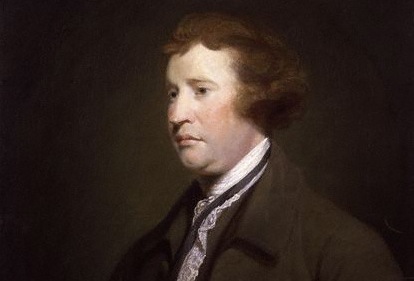
Claimed by both the right (he stood against the French Revolution) and the left (he was a sage skeptic of colonialism), Edmund Burke tends to get lost amidst competing partisan appropriations of his legacy. Was there a unifying core to his words and deeds? Brian Doyle argues it was his pragmatism:

For two centuries people with every sort of idea have picked over Burke’s writings for their own benefit and justification; and the lesson of their success is not that Burke was mercurial and changeable, but that he was relentlessly interested only in what worked, what was best for the most, what was real and what was high-flown nonsense or worse. “Again and again, revert to your own principles—seek peace and ensure it,” he roared in Parliament, during the bitter debates about America. “I do not enter into … metaphysical distinctions; I hate the very sound of them.” It is ironic that a man who wrote and spoke with such imaginative flair, with such moving eloquence, was himself unmoved, as a rule, by flights of fancy.

(Image: Sir Joshua Reynolds painting of Edmund Burke in the National Portrait Gallery, London)

Winners And Losers Of The Political Contest

Frum anticipates some hard decisions:

The political scientist Harold Lasswell famously defined politics as a contest over “who gets what, when, and how.” Over the next dozen years, as the gap between the revenue lines and the expenditure lines of the federal and state governments widen, that definition could aptly be amended: Who gets disappointed—and by how much? Will baby boomers receive a less generous deal from Medicare than their parents did? Will the huge promises to public-sector retirees be honored? Or will other programs for younger people be squeezed? Will we sacrifice America’s military presence in the world? Or will we exact more in taxes—and if so, what kind of taxes, and imposed on whom?

The choice for Republicans comes down to their limited government ideology and their older voting base:

If they choose their ideology, they will need to locate some new voters in upper-income America. They will need to draw back to the Grand Old Party the kind of voters who defected to Barack Obama in 2008: affluent professionals, especially women, in major urban centers. This was the kind of Republicanism practiced in the 1990s by governors like Christine Todd Whitman, John Engler, Tommy Thompson, and George Pataki. Such a Republicanism would not need to jettison its pro-life message, just de-emphasize it, as Democrats have, for example, de-emphasized their message on gun control.