My thoughts on his second term agenda here, now with the link (just released) to Ryan Lizza's new must-read.
Month: June 2012
And Sometimes AIPAC Loses
A fascinating tale from a Democratic primary in New Jersey.
Plant Perception
It's more sophisticated than you'd think. Daniel Chamovitz, author of What a Plant Knows, elaborates on their extraordinary sense of "smell":
You may have heard that if you put a ripe and an unripe fruit together in the same bag, the unripe one will ripen faster. This happens because the ripe one releases a ripening pheromone into the air, and the green fruit smells it and then starts ripening itself. This happens not only in our kitchens, but also, or even primarily, in nature. When one fruit starts to ripen, it releases this hormone which is called ethylene, which is sensed by neighboring fruits, until entire trees and groves ripen more or less in synchrony.
The “Geography Of Incarceration”

Josh Begley created Prison Map (detail above) to understand it. Jane-Claire Quigley sees the power of the project:
At first, Josh Begley’s Prison Map may not seem so remarkable: a bunch of ariel photos of some pretty ugly concrete buildings. But then the infinite scroll sets in. There are just so many. There are at least 700 prisons on this site, and that’s just a fraction of the almost 5,000 prisons in America, the world’s most incarcerated nation, with more than 740 of every 100,000 citizens behind bars.
Emily Badger reflects on the rural-vs-urban divide in incarceration:
Some of the most striking images are those of rural prisons, which project intricate patterns onto otherwise empty landscapes. These rural prisons often house urban prisoners, in the process transforming both the communities where these facilities are located and the neighborhoods from which their inmates came. This population shift has serious consequences for urban, often minority communities, in part because the Census has long counted prisoners where they’re locked up, not where they’re from, costing inner-city communities resources and political capital (this practice, often called “prison-based gerrymandering,” began to gain greater attention during the 2010 Census).
The Brains Of Liars
Are wired differently:
One experiment measured the brain structure of pathological liars, and compared it to normal controls — more specifically, the ratio of gray matter (the neural tissue that makes up the bulk of our brains) to white matter (the wiring that connects those brain cells). Liars, it turned out, had 14% less gray matter than the controls but had 22-26% more white matter in the prefrontal cortex, suggesting that they were more likely to make connections between different memories and ideas as increased connectivity means greater access to the reserve of associations and memories stored in gray matter. “Intelligence,” it turned out, wasn’t correlated with dishonesty — but creativity, which we already know is all about connecting things, was.
Are Smartphones The New Cigarettes?

Ian Bogost considers the possible demise of RIM, the company that gave us the Blackberry:
The point is that technologies like the Blackberry change our social fabric in ways that we often cannot see, and therefore cannot fully reason about. McLuhan argued that technologies can never be fully grasped in the present, but only after we establish some distance from them. Today we lament the downfall of Research In Motion as if it were an athlete whose prodigious career was cut short by hubris. But perhaps the truth is even weirder than that. Ruined or not, Blackberry has left us with the most distinctive social tic since cigarettes. And cigarettes may be deadly and disgusting, but they're cool and chic too.
(Photo by Quinn Dombrowski)
No One Marries Up Anymore
Modern mating rituals have increased income inequality:
In the past, women tended to “marry up”: nurses married doctors and secretaries their bosses. But as women increased their presence on campuses and then began to bring home more money, college-educated men decided that they were better off marrying one of their own. Think of the implications for household earnings. A lawyer was always likely to earn more than a plumber—but today, plenty of upper-income households are headed by two lawyers. That considerably widens the gap between a power couple and a lower-middle-class duo. Sociologist Christine Schwartz has estimated that assortative mating brought about a 25 percent to 30 percent increase in inequality among married-couple families between 1967 and 2005.
How A Mosquito Survives The Rain
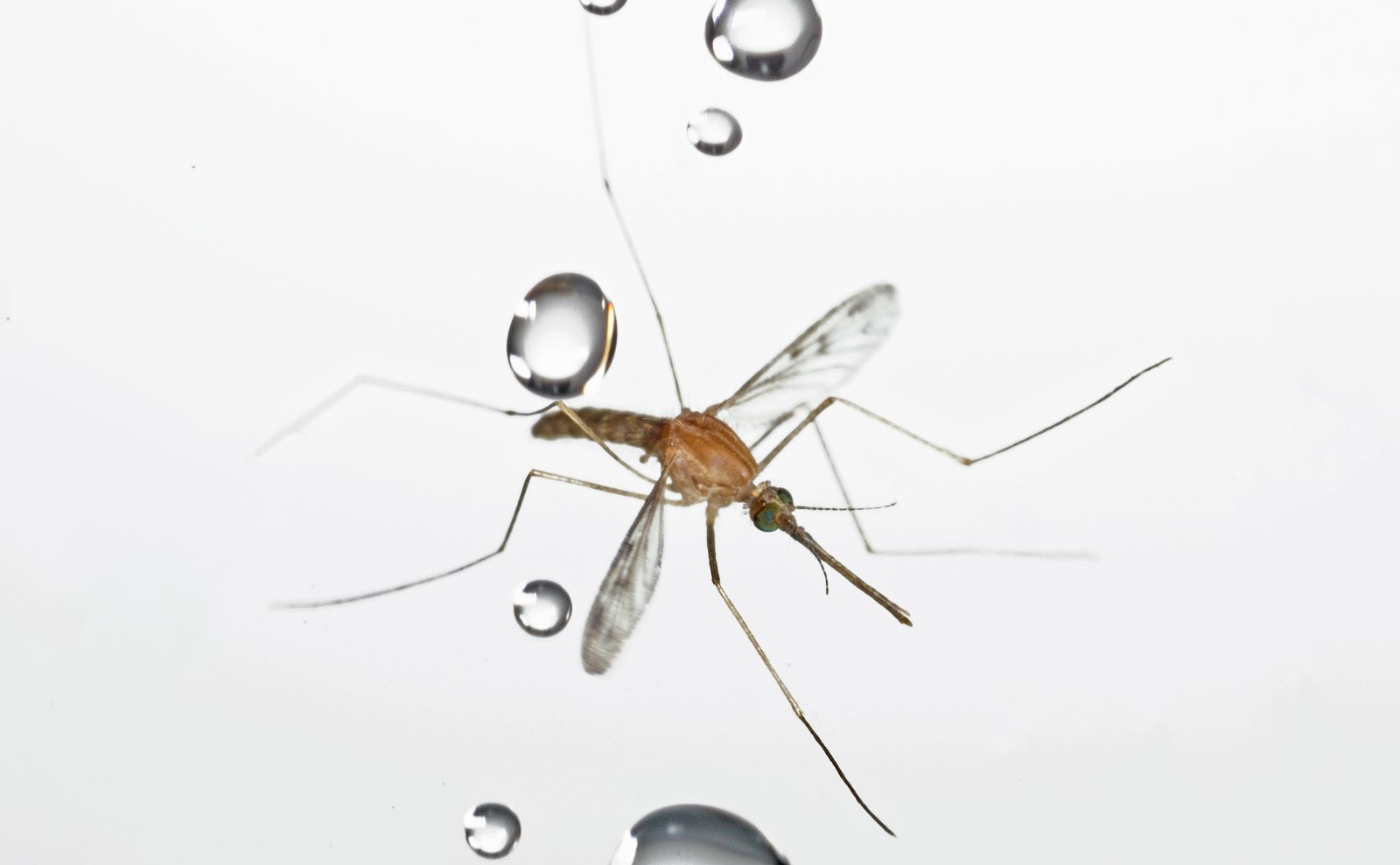
The trick:
Although a raindrop isn't any bigger than a mosquito, the insect is extremely lightweight compared to the water. When the heavy drop hits the airy mosquito, it's almost like hitting nothing at all. And this, the researchers found, is what keeps the mosquitos alive. By offering barely any resistance, a mosquito minimize the force of the collision. The raindrop doesn't even splatter when it hits.
How that information could help us build better drones:
To fly successfully through rainstorms, these aircraft might adopt some of the mosquitos' technologies. A low mass would minimize the force of collisions. And sprawled legs, the authors write, could give tiny aircraft enough torque to pull away sideways from a falling drop. Mosquitos also have water-repellent hairs that may help them separate from stuck-on raindrops; aircraft could achieve the same thing with hydrophobic coatings.
The Web Is Mostly For The Rich
The global digital divide endures:
77 per cent of North Americans have internet access, 61 per cent in Oceania / Australia and 58 per cent of Europeans. There are many developing countries that have internet penetration rates that are less than 1/100 of those in wealthy countries. This skews the composition of the internet community. The total proportion of population in 2011 who are internet users is 30 per cent. So if the internet is bringing the world together, it is primarily the affluent who are being brought into communion with each other. Most of the world’s poor are not part of this magic circle of ‘mutual understanding’.
Jeb Agonistes
Check out the Charlie Rose interview here. Go to the 50 minute mark. And watch him squirm in a way he doesn't anywhere else in the interview. The subject? Marriage equality. He sounds like Obama two months ago. David Link observes:
Jeb’s detours, platitudes, bromides and banality not only don’t answer the question, they don’t even seem to convince Jeb himself.
That, I think (and hope) is the tragedy of politicians of good faith. They know they are giving the wrong answer and hate themselves for it. Can Jeb Bush really believe that when he says same-sex marriage is a “diversion,” he is not insulting every lesbian and gay man, to whom marriage is not some triviality or stratagem, but a central fact of their daily life?
I think not. He was brought up right. But that's where his party is, and he cannot cross them.
 The Dish