Play Nice?

by Zoë Pollock

Jacob Silverman recently accused online literary communities of being too nice, using author Emma Straub as his case in point. Michelle Dean weighed in and Straub refused to back down. In a fascinating take on the whole debate, Edward Champion points out that "nice" used to be an insult:

The word originated from the Latin nescius for "ignorant." By the late 14th century, nice people were fussy or fastidious types: snobs who deliberated over a restaurant menu for twenty minutes. By the turn of the century, a nice person was someone with delicate sensibilities. In the 16th century, a nice person was someone who was very careful or precise. The proverb "more nice than wise" preserves some of these original meanings. Then in 1769, "nice" altered into something that was agreeable or delightful. In 1830, "nice" involved being kind and thoughtful.

He thinks the sentiment is overrated:

"God damn it, you’ve got to be nice" sounds porous and gutless next to Kurt Vonnegut’s "God damn it, you’ve got to be kind." And it reveals the inherent deceit of nice. If you’re "being nice" to someone, you’re not being honest. You’re humoring a person you don’t want to be with and I don’t think I can trust you. Especially when you’re flattering a person one minute and talking shit about that same person when they leave the room. But if you’re "being kind" to someone, you are legitimately trying to understand where another person is coming from and you are willing to change your mind.

And there's something utterly wonderful about a pitch-perfect hit job.

(Hat tip: Frank Wilson)

Paul Ryan Wins The Veepstakes: Reax

by Patrick Appel

Romney accidentally introduced Ryan as the next president of the United States during the roll-out this morning:

Text of Ryan's remarks here. How Ezra Klein sees the pick:

This is an admission of fear from the Romney campaign. You don’t make a risky pick like Paul Ryan if you think the fundamentals favor your candidate. You make a risky pick like Paul Ryan if you think the fundamentals don’t favor your candidate. And, right now, the numbers don’t look good for Romney: Obama leads in the Real Clear Politics average of polls by more than four percentage points — his largest lead since April.

Red State's Erick Erickson says he's "encouraged":

Paul Ryan exposes the left’s great lie. They think they can just raise taxes on those who make $250,000.00 a year or more and never have to cut spending or fix entitlements. Paul Ryan not only exposes that lie, but he has plans to solve it. He does so as a fresh, young face who is not at all scary to old people and relates to them and to young people. He himself is in his early 40?s with small kids. He’s from a swing state, out performed John McCain in his home district, and is telegenic and articulate. Paul Ryan is what Mitt Romney needs.

Larison doubts Ryan is ready to be president:

Now many movement conservatives have their consolation prize to make Romney’s nomination a little less offensive, and they won’t be able to say later that Romney ignored them or failed to be “bold” (a.k.a., desperate and trailing). In terms of political risk in the general election, choosing Ryan is certainly bold, but at the same time it is not a very surprising outcome. In the end, Romney gravitated to the one person on his reported short list that would generate enthusiasm among movement conservatives, and in so doing managed to sabotage his campaign’s theme of competence and readiness. 

David Frum wonders why Romney picked Ryan:

Romney has transformed a campaign about jobs and growth into a campaign about entitlements and Medicare. Romney will now have to spend the next months explaining how and why shrinking Medicare after 2023 will create prosperity in 2013. Economic conditions are so tough—the Obama reelection proposition is so weak—that Romney may win anyway. But wow, the job just got harder.

Ed Morrissey supports the choice:

Ryan has solid policy credentials, but also has enough media presence and charm to make people listen.  Team Obama will hang Ryan’s budget on Romney, but they were going to do that anyway.  Why not have the man himself as the VP to explain it?  Ryan also gives the ticket solid Washington experience, while giving conservatives more hope that a Romney presidency will aim for serious change.

Jonathan Bernstein emphasizes Ryan's inexperience:

 I don’t think it will doom the campaign or anything like that, but it is worth noting that this is a shockingly inexperienced ticket, especially when it comes to national security and foreign policy. Dan Drezner wrote about Ryan and foreign policy back in the spring, and it’s worth looking at, but there really isn’t much there, I don’t think. Governors almost always pick someone with serious foreign policy or national security credentials, and one would think that would be particularly true with the nation still at war.

Timothy Noah can't believe Obama's luck:

If it is indeed Ryan, then that's the final demonstration that Romney will never, ever move to the center. He will never stop trying to establish his bona fides with the Republican party's hard right wing, even when doing so demonstrably harms his own interest, as it does here. The inmates will run the asylum.

Guy Benson celebrates the choice:

Any way you slice it, this is a game-changer. As I wrote earlier this week, Paul Ryan is one of the sunniest, most likeable conservatives on the scene today. He’s also the party’s top wonk and is completely fluent in fiscal issues. I predict that Democrats will publicly gloat over this pick (“he’ll be so easy to demonize!”), even as they privately worry. Paul Ryan is earnest, smart, articulate, attractive, calm, good-humored, and exceptionally gifted in explaining his case in persuasive and unthreatening terms.

Jazz Shaw is less confident:

I confess that I’m still nervous about whether or not the rest of the country is ready to lace up their boots and seriously discuss tough medicine for an ailing system. Perhaps it’s just because I’m out in New York and we are still smarting from the 2011 debacle where we lost what was considered the safest GOP seat in the New York delegation to a county clerk who ran a blistering campaign, 24/7 with absolutely no other message than the fact that her Republican opponent would not completely disavow the Ryan Plan.

Tomasky predicts the future:

[Ryan will] get some good press, and he’ll generate great enthusiasm among conservative intellectuals. But the introduction of him to the American people will inevitably involve some other things, too. It will involve explanations from the media that he is the GOP’s archconservative theoretician. It will involve explaining who Ayn Rand is. It will involve going into detail on his budget, and in particular his plans for Medicare. Learn that now, folks, if you don’t know it already. It will involve endless interpretations exactly like mine, about Romney sending a signal that he is running an ultraconservative campaign. The Ryan controversy will overtake the campaign. Romney will become in some senses the running mate—the ticket’s No. 2.

Nate Cohn weighs the pros and cons of the pick:

I don’t think the Ryan plan is assured to cripple Romney’s chances, as many Democrats suspect. For starters, Romney was already vulnerable to attacks on the Ryan plan. Now, perhaps the reporting about Priorities focus groups is accurate and voters didn't find these attacks especially credible, but will now once they see Romney's association with Paul Ryan, but I find it hard to imagine that the Romney campaign volunteered to walk down the plank. As I’ve said before, I do not assume that campaigns make cataclysmic strategic errors, and the Romney campaign undoubtedly tested this extensively and still felt comfortable picking Ryan.

And Ryan Lizza thinks "Romney has made the most daring decision of his political career":

Romney’s choice of Ryan will undoubtedly be criticized as capitulation to the right, and this pick does seem to demonstrate that Romney is not able or willing to distance himself from the base of his party. But the good thing about the Ryan pick is that the Presidential campaign will instantly turn into a very clear choice between two distinct ideologies that genuinely reflect the core beliefs of the two parties. And in that sense, Romney’s choice of Paul Ryan is good news for voters.

In response to the selection, Andrew Kaczynski has rounded up "defining videos" of Ryan.

The Magnetic Man

by Patrick Appel

Ben Popper profiles "biohackers" with magnets implanted under the skin:

On its own, the implant allows a person to feel electromagnetic fields: a microwave oven in their kitchen, a subway passing beneath the ground, or high tension power lines overhead. While this added perception is interesting, it has little utility. But the magnet, explains [biohacker Tim] Cannon is more of stepping stone towards bigger things. "It can be done cheaply, with minimally invasive surgery. You get used to the idea of having something alien in your body, and kinda begin to see how much more the human body could do with a little help. Sure, feeling other magnets around you is fucking cool, but the real key is, you’re giving the human body a simple, digital input."

The Long, Strange History Of Gender Testing

GT_SEMENYA_120810

 by Gwynn Guilford

Caster Semenya qualified Thursday for the 800m final scheduled today. David Epstein wonders what response her performance will elicit:

If Semenya wins the gold, she is likely to be accused of having an unfair advantage. If she runs poorly, she is likely to be accused of sandbagging the race so as not to be accused of having an unfair advantage.

Epstein’s writing betrays an outrage about the treatment of Semenya that’s increasingly consistent with the discussion in both the blogosphere and in Dish inbox. The path to this understanding, though, should halt any back-patting. Semenya is the first high-profile target of gender testing to have much of anyone on her side. The history of gender controversy involves a litany of injustices dating back decades. These resulted from our evolving understanding of intersexuality’s many complexities, but also from the blunt instrument of bureaucratic bigotry. The first major gender “scare” episode concerned an exceptionally loyal Hitler Youth. Explains TransGriot:

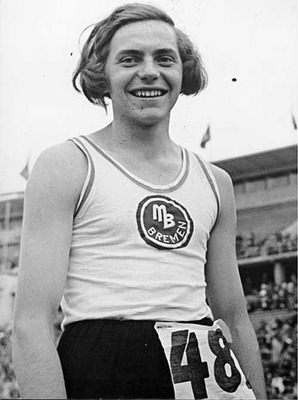
The watershed year for the paranoia behind men competing in women’s international sporting events is 1936. Nazi Germany wanted the Berlin Olympics to be a political Dora_ratjenshowcase for the Third Reich. They set the goal of surpassing the 21 total medals Germany won in the 1932 Los Angeles Games, and one way they sought to do that was sneaking their ‘supermen’ into the women’s events. To accomplish that goal, the Nazis forced Hitler Youth member Hermann Ratjen to live and compete for three years as Dora Ratjen…. Dora was busted while traveling in Germany after the European championships. While wearing feminine attire Ratjen was spotted at a train station with five o’clock shadow on his face. A doctor was summoned, and the truth about Dora’s actual genitalia was revealed. Ratjen was barred from competing in international athletics and went back to his life as Hermann.

The Berlin Games also marked the beginning of the “she’s a man” slur – which still proves useful. For instance, in the case of the rivalry between sprinters Helen Stephens and Stella Walsh:

Walsh, angry about being beaten by her rival, promptly threw ‘that’s a man’ shade at Stephens which the Polish press amplified. She protested to officials that Stephens was really a man falsely running as a woman because no woman could run that fast. German officials examined Stephens, pronounced her female, and the protest was disallowed.

This ended up being fairly ironic, given what happened next:

[In 1980, Walsh, who had emigrated to the US] was struck by a stray bullet in the wake of a robbery attempt of a Cleveland, OH discount store while unloading her shopping cart to her car. Her autopsy revealed she had mosaicism, which meant that, chromosomally, she was mostly, but not all, male but had androgynous [enough] looks to live her life as and be raised female.

However, some argue it was transgender athletes, and not Ratjen, who were the catalyst for more thorough gender testing.

Shortly after the accusation that Stephens was a man her team coach, Avery Brundage, called for more systematic screening of suspicious cases. But when he chose to point the finger at ‘suspicious’ cases, it was neither Ratjen nor Walsh that he named. Instead Brundage named the Czechoslovakian runner Zdenka Koubkova who had changed sex from female to male (becoming Zdenek Koubek) in 1936, and the British shot putter and javelin thrower Mary/Mark Weston. Ratjen and Walsh’s stories have been reinvented to fit narratives about the Cold War and the politicisation of sport; in so doing, the stories of Koubek and Weston have been lost.

Supposedly, both Koubek and Weston transitioned after having been unaware of the potential maleness of their anatomy during their competing years. From a 1937 article on sex changes:

For twenty-three years Zdenek [Koubek] lived as a woman – at one time as a corset fitter – an occupation which, as his nascent masculinity asserted itself, he found at times decidedly embarrassing. No one, except himself, doubted his femininity. However, in 1935, while he was wearing his running togs, suspicion as to his true sex arose. An investigation ensued. Shortly afterward (according to his story related to Gordon Kahn in the New York Daily Mirror), Professor Milosh Kilcka, head of a surgical institute in Podol, decided to emphasize Zdenek’s masculinity by means of an operation. The operation was so successful that the Czecho-Slovakian government officially sanctioned Zdenek’s transfer from the female to the male classification.

(Sidenote: decades later, East Germany’s doping program would have cause similar confusion for champion shot-putter Heidi Krieger, who is now Andreas. The Olympic gold medalist underwent gender reassignment surgery after the virilization from the steroids made him “unable to come to terms with his female gender role.”)

The decades of media speculation about Eastern Bloc men passing themselves off as females eventually led to the institution of gender verification testing, according to the Journal of the Royal Society of Medicine (pdf). The final straws were the Press sisters, Ukrainian track superstars who set a combined 26 world records. After dominating track and field for the Soviet Union in the 1960 and 1964 Olympics, both retired suddenly in 1966 – right when gender verification was introduced, as it happened. At the time, this pretty much confirmed the speculation that they were female impersonators, though medical scientists now think they, like Walsh, probably had some degree of mosaicism.

At that point, IAAF gender testing referred to physical, drop-your-pants inspection, called “nude parades.” By the time the IOC embraced gender testing, in 1968, both groups had moved on to testing chromosomes via buccal smear, called the Barr body test. The Barr test seems simple – an XX reading is fine, while an XY result indicates maleness, i.e. failure. But women with androgen insensitivity syndrome (AIS) have male chromosomes, while others have more than two chromosomes. For these reasons, the buccal smear test had a false positivity rate of something like 20%.  That didn’t stop it from ending the careers of several athletes. Ewa Klobukowska, a Polish track phenom in the late ’60s, was the first to fail the test:

[Klobukowska] won a gold medal for Poland in the 1964 Tokyo Olympic Games for the 4×100-metre relay, and a bronze medal in the 100-metre dash…. In 1967 she took an early defective form of the chromatin test and it registered that she had ‘one chromosome too many’. This brought her career as an international athlete to a close. Perhaps the test was mis-administered or misinterpreted, because she became pregnant and bore a son in 1968.

The IOC changed the test the following year. As Elizabeth McClung points out, those changing standards would have accepted Klobukowska as a female instead of stripping her of her medals (the IOC returned them in 1999). McClung also calls out the case of Spanish hurdler Maria Jose Martinez-Patino:

It used to be the IOC who policed this and elite female athletes needed to carry with them their ‘Certificate of Femininity.’ Like Maria Patino, who forgot her certificate at the 1985 World Games. Using a different test, she failed the retesting, due to being an XY female. Ignoring the advise to feign and injury, she came first. The test results came out and her medal were stripped, her records eliminated, her scholarship revoked, her fiance left and she was kicked off the National team. Her appeal took several years, but she finally got her second ‘Certificate of Femininity’.

Patino was also declared ineligible for the 1988 Summer Games in Seoul. Several years later, another test was introduced, though it too generated false positives – most notably in Atlanta, when eight female athletes failed – only to be cleared on appeal. Seven of these were intersex women. Since then, the IOC scrapped systematic testing altogether, though, starting in Beijing, it conducted testing on a case-by-case basis.

However, even as policies were relaxed, gender testing continued to result in crude determinations about an athlete’s sex. While Semenya is the most recent notable example, she’s not the only one. After winning a silver in the Doha Asian Games in 2006, Indian middle-distance runner Santhi Soundarajan failed a gender test and was stripped of her medal. She now works as a laborer at a brick kiln – paid women’s wages, nonetheless – after having attempted suicide in 2009. Soundarajan reportedly has partial or complete AIS – which means that, under the current IOC rules, she would be eligible to compete. Narayan Swamy highlights the difference in how the women’s cases were handled:

The 21-year-old Semenya will be her country’s flag-bearer at the London Olympics. Her outraged nation rallied around her. South Africa fought to safeguard Semenya’s dignity and position in world sports. The result: last year, the International Association of Athletics Federations revoked the ban on her. Unfortunately for Santhi, no such help was forthcoming for her from her own countrymen. Banned by the Athletics Federation of India from participating at any level, the then 25-year-old’s name and feats were struck off the records.

In preparation for London, the IOC recalibrated its policy once again, as we covered in previous posts, so that it now assesses both hormone levels and the body’s receptivity to androgen. (Nevermind that there’s no clear science that shows elevated testosterone levels giving female athletes unfair advantages.) This new policy would allow women with partial or complete androgen insensitivity like Patino or Soundarajan to pass without trouble, despite their Y chromosomes.

It doesn’t necessarily give Semenya a pass, since her body is said to be receptive to androgen, and it is rumored that she has undergone medical treatment to be eligible for competition. Regardless of what she’s been through, though, the runner seems more focused on nabbing a gold in her Olympic debut than on what the IOC will decided it thinks of her femininity.

Previous Dish coverage here, here, here and here.

(Photo: Caster Semenya of South Africa competes in the Women’s 800m Semifinals on Day 13 of the London 2012 Olympic Games at Olympic Stadium on August 9, 2012 in London, England. By Mike Hewitt/Getty Images)

Looks Like Ryan: Tweet Reax


by Chris Bodenner

The Weekly Wrap

GT_RENAUDLAVILLENIEPOLEVAULT_20120810

by Gwynn Guilford

Today on the Dish, Chait guessed at Romney's veep pick, Barro explained Romney's rock-and-a-hard-place positioning on social welfare and private equity, and Matthew Continetti lamented Romney's inability to define his candidacy. After Team Obama worked the tax-avoidance angle effectively in ads yesterday, both campaigns got dirty again today. Larison emphasized that Romney's still under neocon sway, Weigel saw the upside of politi-bickering and Romney was – wait for it – disingenuous on his ad campaign. 

A reader called for more constructive optimism on coal usage, a timeline traced our path to collective forgetting and Barney discussed his favorite GOP colleague. And while Marc Lynch marveled at Islam's generational divide, the US government screwed sick Afghans.

In Olympic coverage, Travis Waldron hailed the amazing performance of US women in the London Games, Persian history contributed to Iran's Olympic wrestling and weightlifting conquest, and a former Olympican explained track and field's great equalizer. A reader reminisced about Abdul Baser Wasiqi's moving run, and while Ian Johnson explored the Olympics "arms race," Liel Leibovitz examined the funding shortage behind Israel's Olympics flameout. The Dish met Zoich, the blue, furry, crowned amphibian of the people – at least until it became a marketing trojan horse – a Google Olympics tribute doodle elicited calls of racism and Big Tobacco got crafty about Olympics marketing.

Austin Frakt thought hospitals wouldn't reform, robots grew creepier and Sady Doyle hoped for an end to the MPDG. Men talked nipples while dolphins gripped genitally. Birthday FOTD here (it's Andrew's!), sarcasm didn't translate well and Landon Palmer rued Rotten Tomatoes. Meanwhile, readers got worked up about the use of "literally," Robin Hanson wanted to bring fun back and Hathos alert here. And VFYW here, MHB here and that friend who takes games waaay too seriously here.

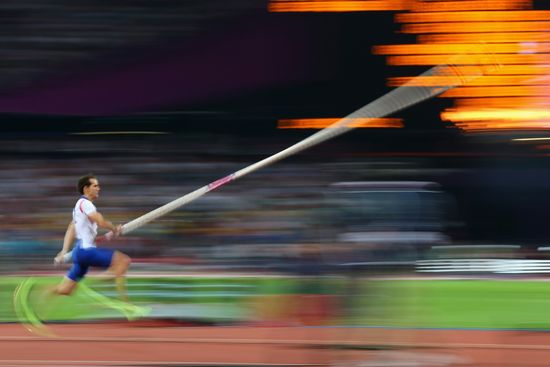
(Photo: Renaud Lavillenie of France competes during the Men's Pole Vault Final on August 10. By Alex Livesey/Getty Images)

The rest of the week after the jump:

GT_SIKH-MOURNING_120808

(By STRDEL/AFP/Getty Images)

Thursday on the Dish, while Romney battled back the base on both foreign policy and healthcare, Nate Cohn explained Obama's upper hand in favorability. Meanwhile, the blogosphere mused on what sequestration cuts will mean. Newt admitted to no proof on welfare smears, Patrick eviscerated Dick Morris and things looked good for Colorado's marijuana legalization. As the blogosphere weighed in on the Gu Kailai trial, Barney talked scandals, and Ethiopia's human rights violations posed a dilemma for aid donors. Greenwald condemend Islamophobia, Steve Coll ID'ed the real roots of domestic terror and Kevin B. Lee testified to the quiet courage of turban-wearing.

In Olympics discussion, Afghanistan won its first medal and divers created cavities. And while one reader posited that PC-ness is driving Olympic mascot design, others introduced the Dish to the fairly un-PC trio of Fatso, Klee Wyck and Springy.

David Simon remembered DeAndre McCullough, the maximum income tax idea was terrible and Ed Smith made the case for excelling by slacking. Meanwhile, David Thompson reimagined Marilyn, Ted Scheinman celebrated old-school ADHD lit and spam cost a lot. Also, bloggers debated doping, a reader shared the secret of Olympic tape blogging – in blank verse, no less – and NKOTB proved unexpectedly useful.

A shark historian pondered what turns a great white into a deranged killer, things looked bad for Big Cable and Nabokov's fists informed his pen. Baseball taught patience, Jason Feifer dug into Axe's evolving sex appeal strategy and deo of old sure stung. VFYW here, MHB here and get your pure, creepy grossness right here.
Izzy

Wednesday on the Dish, campaigns traded blows on welfare waivers while the blogosphere savaged Romney's anti-Obama welfare ad from yesterday and CNN found some gaping holes in Obama's GST Steel worker ad. DeLong pilloried Romney and his economic advisers, Yglesias called out Rubio's Olympic tax break plan – and Obama's support for it – and Suzy Khimm explained how this time, it's different (fiscally, that is).

While fighting raged on in Syria, Jon Lee Anderson considered the conflict's global impact. Meanwhile, the ECB lacked data, Singapore's corny-horny National Night campaign revealed nasty race and class undertones and banks proved too interconnected to fail. Robert Bryce said coal is here to stay and Salmon argued Facebook's listing has made Zuckerberg less effective. Bob Wright wondered why Aurora got more attention than the Sikh temple shooting, and Randy Blazak delved into the history of hate rock.

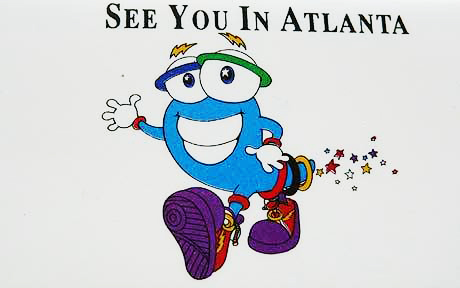
In Olympics coverage, eight Olympics athletes went missing, Liu Xiang's choke complicated both corporate sponsor and apparatchik messaging and Chris showcased another menacing pic of an utterly unthreatening sport again today. While one reader waxed poetic on the biathlon, another nominated Izzy for contention in the ongoing weird Olympic mascot assessment. Noreen Malone declared Ryan Lochte to be a "himbo," and an Olympic MHB here (though some people are Olympic-ed out).

Tracy Clark-Flory pondered the struggles of the singleton, Jesse Bering talked penis shape and a hacker exposed how he attacked a tech journalist at random. Steve Heller mused on motivation and hipster giving was found to be actually working. And while VR Narayanswami waved "bye" to language police, two of them ranted about "literally" and "actually."

A reader made the case for working remotely, still more readers told Bloomberg to go suck it, and many wise, serious people debated Bruce Springsteen's art. Last but not least, a VFYW here.

GT_PUSSYRIOT_120807

(By Andrey Smirnov/AFP/Getty Images)

Tuesday on the Dish, bloggers differed on the veracity of Harry Reid's statement about Romney's taxes, Nate Cohn prescribed a Sister Souljah moment for Romney and Pareene christened Jennifer Rubin as a member of the hack list. And while the Warren-Brown war encapsulated the Massachusetts authenticity curse, Wikipedia predicted the 2008 VP choices and Josh Barro clawed back with his Romney's secret weapon economic plan argument. Meanwhile, Gopnik disintangled creed and commerce in Romney's persona and Barney got frank on Obama.

As for the ad war, a pro-Obama Super PAC put out a ruthless new ad while Team Romney argued that Obama gutted welfare. And Andrew Romano explored how pro-GOP spending floods downticket races. 

In Olympics, Saudis lashed back against the participation of their female athletes, and while the reader thread continued on objectification of Olympic lesbian footballers like Megan Rapinoe and beach volleyballers, they debated the potential enhancements of cannabis. Also, this photo offered a rare glimpse at the menacing side of synchronized swimming.

Curiosity's journey received tribute as the excitement for its documentary abililites built. A new ad campaign encouraged citizens to lie back and think of Singapore, Ugandan queer activists staged the country's first Pride Parade and the Bush administration missed the diplomatic boat with Iran. Meanwhile, Pussy Riot embodied political punk in their fight against Putin. 

In assorted commentary, healthcare trended towards chains, a physicist explained the finer points of the death zone and a new study rehabilitated bisexual men – via their eyes. And while Adrian Vermeule showed how SCOTUS prizes convention, Homer overlooked blue because it was scarce. One's 20s proved to be crucial years, readers dug deeper on PTSD and no one wanted to sit next to strangers on the bus. And Randall Munroe dismissed the robot revolution, Jeremy Harding exposed the art behind pre-digital photography and Balaji Prabhakar made the case that incentives might help traffic congestion. In weed updates, a new documentary examined how drug prohibition fuels the business while the long view on pot legalization was an optimistic one. Finally, VFYW contest here, MHB here and a deluged VFYW here

GT_ROVER-120806

(By NASA/JPL-Caltech via Getty Images)

Monday on the Dish, just as Andrew was going dark, Curiosity alighted on Mars. After a neo-Nazi shooter killed six at a Sikh temple on Sunday, many readers praised the aplomb of Sikh-Americans in the face of violence and bigotry, while others picked up on an eerie resemblance. In politics, Romney's undecided voter problem could scuttle his chances, and his lack of appeal with women – something Obama went after in a recent round of TV ads – may derive from his Mormonism. Nyhan likened Romney coverage to the gaffe-patrol Gore got, Barney Frank shared his first impressions of Romney and Josh Green gave the backstory on Romney's Twitter nemesis. DeLong chimed in with Chait's argument on the travesty of the new unemployment norm, Jared Bernstein chipped away more of the Paul Ryan facade and good jobs have gotten harder to find.

Meanwhile, marriage equality campaigners rolled out the senior varsity, campaign promises in this election have become harder to trust and Michael Brendan Dougherty wished for more honesty from the political media. In Olympics news, Usain Bolt and his fellow Jamaicans killed it and while China's sports program outsourced athlete training, wealth and population largely determined medal count. Also, special tape didn't do much and Joseph Stromberg recalled the long-lost art Olympics.

In assorted commentary, a shocking 10 percent of Japanese males owned child pornography, paid internships proved to be the ticket to a real gig and David Axe ridiculed the specter of a North Korean invasion. 3D printing promised to change the face of contraband, Mark Mitchell did battle on the term "culture war," and Michael Moyers broke down the monthly subway pass math. An old HP ad was oddly relevant, VFYW here and MHB here.

Vfyw_8-4

Waterton, Alberta, 12 pm

Saturday and Sunday on the Dish, Andrew took us on a stroll through Rasmussen-Land, contemplated an Obama landslide, noted that Fox News went there with Gabby, reminded us not to take VP advice from Bill Kristol, and wondered who would want the number-two job anyway. In Olympics news, Louis Menand pondered the cultural significance of the Games and we continued asking questions about their relationship to nationalism.

Literary and philosophical coverage abounded. Sean Wilentz considered the artist's role in politics, Elain Scarry argued for literature's ethical power, William Sieghart examined the consolations of poetry, Jamie James explored the connection between poetry and magic in Yeats' work, Sarah Rich asked where Sherlock got his hat, and Joyce Carol Oates held that Dickens was the most English of English novelists. Jim Holt told us who was his favorite philosopher, Ira Brent Diggers praised N.T. Wright's theology of engagement, and Adam Frank turned to Walker Percy to find out why we're lost in the cosmos. Read Saturday's poem here and Sunday's here.

In assorted coverage, Robert Rosenberger investigated how technology changes writing and Jay Rosen revisted what he thought of Wikileaks. Roger Ebert questioned the lack of contemporary additions to a recent greatest films list and Andrew O'Hehir applauded the subdued coverage of Larry Wachowski's transition to Lana. William Davidow searched history for the meaning of our dependence on tools, Joshua Yates inquired about the sustainability movement's sustainability, Nicole Pisulka profiled the man behind funeral home music, Tom Freston met General Butt Naked, Heather Havrilesky applauded TV characters moving beyond the typical tropes, and Doerte Bemme and Nicole D'souza showed the difficulty of diagnosing mental health problems in the developing world.

And of course, what would the weekend be without thinking about our vices? Cigarettes remained our most addictive drug and our assumptions about how best to serve wine got muddled. Check out our FOTDs here and here, MHBs here and here, VFYWs here and here, and the latest window contest here.

Finishing The Race

by Chris Bodenner

A reader writes:

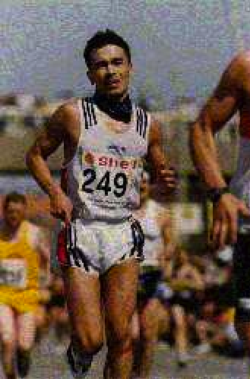
Thank you for publishing the Afghan taekwondo medalist Rohullah Nikpah's elation as the Abdul Baser WasiqiSummer Olympic Games in Atlanta. Along with a hundred or so others, I stood on Piedmont Road in northeast Atlanta to watch the marathon. We had been told police cars would come along when all runners had passed to reopen the street. After all the faster runners had passed us, and all the slower runners had too, there was a long gap. But no police cars. An officer at our intersection radioed and came to tell us there was one more runner.
Word quickly passed among our small crowd to cheer wildly no matter who it was. Soon enough, a lone runner came over the crest of a hill south of us. A spotter for whoever was broadcasting those Games had a clipboard and binoculars. She checked the number on his bib. He was from Afghanistan.

Afghanistan was last in the 1996 marathon. He was limping. He face told us he was in pain. But he was in the race. And we cheered wildly. We waved and shouted and jumped up and down and waved and clapped and shouted. And he waved back. And he smiled at us.

His name was Abdul Baser Wasiqi. He was limping because he pulled a hamstring before the race. He did finish, and he finished last. He was the only person on the Afghanistan team in 1996. 

Seeing Kurt Angle and Kendall Cross of the USA win gold medals in freestyle wrestling, and choking up while "The Star Spangled Banner" was played, is my strongest memory of attending those Games. The smile on the face of the marathoner from Afghanistan, the last runner, is almost as strong.

Romney vs The Base: Foreign Policy Edition, Ctd

by Gwynn Guilford

Reading into the Bob Zoellick pick, Joyner makes the Romney-as-realist argument:

My sense all along has been that Romney, while willing to say pretty much anything on the campaign trail, is actually the guy who governed with substantial success as a moderate Republican (sorry, "severe conservative") in liberal Democratic Massachusetts. While his foreign policy team includes enough neocons to keep that part of the base happy, his policy papers have strongly hinted at a conventionally Realist foreign policy. The Zoellick choice is a really welcome reinforcement of that message and the notion that he might emerge as Secretary of State rather than, say, John Bolton strikes me as much more in keeping with Romney’s history.

Larison pushes back:

What history would that be? Romney doesn’t have a history on foreign policy as a politician before 2005, and since then he has been predictably and excessively hawkish. During this campaign, he has been inclined to favor so-called "Cheneyites" and hard-liners on every issue…. Zoellick’s appointment is the thinnest reed on which to place hopes for a sane Romney foreign policy I have ever seen.

Another Larison observation contradicts the premise of our thread:

As for neoconservatives and "the base," I have to protest. Romney didn’t include neoconservatives on his foreign policy team to keep "that part of the base happy." They aren’t part of "the base." Neoconservatives are almost entirely movement and party elites, and they are the ones Romney was trying to satisfy. They have little or no representation at the rank-and-file level. If he didn’t have Robert Kagan and the like on his foreign policy team, 90% of Republican voters wouldn’t even notice, but neoconservative activists and pundits in Washington would. His choice of advisers is a statement about how he intends to govern, and the advisers he appears to listen to most often are among the most hawkish.

From Title IX To The XXX Games

GT_USWOMEN4X100RELAY_20120810

by Chas Danner

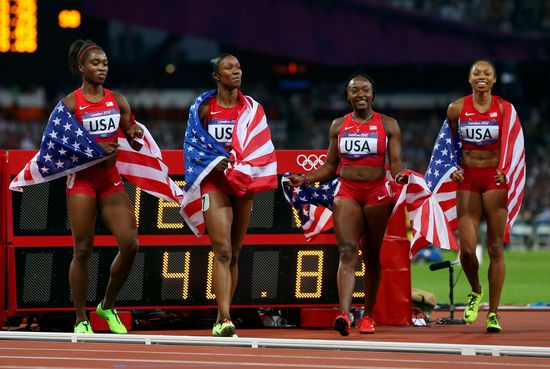
Alyssa Rosenberg Travis Waldron catches us up on the incredible medal run by America's women during this 30th Olympiad:

[They] are now on pace to win more medals than they ever have at a single Games. American women are carrying the U.S. Olympic team: [as of Friday evening], they are responsible for [27] of the team’s [41] gold medals with more likely to come, and they have outpaced every other country’s women on the medal leaderboard.

Alyssa Travis notes that one of the primary reasons for this level of success is Title IX, which banned the exclusion of women from any educational program (i.e. college sports) that benefits from federal assistance:

Without Title IX, many of the women on America’s Olympic team may not have made it to London, and others would have taken paths with many more hurdles along the way. In the U.S., female participation in sports has increased 545 percent at the college level and nearly 1,000 percent at the high school level since Title IX passed in 1972, and it has led to opportunities for female athletes that did not exist years ago. … Before Title IX passed, few women received college athletic scholarships. There are now more than 200,000 women playing sports at American colleges and universities. Those women largely play low-revenue sports like basketball, track and field, soccer, and volleyball — all sports where American women either have or will win medals, most of them gold.

(Photo: US athletes Carmelita Jeters, Bianca Knight, Allyson Felix and Tianna Madison celebrate next to the clock after winning gold and setting a new world record of 40.82 in the Women's 4 x 100m Relay Final in the London 2012 Olympic Games on August 10, 2012. By Alexander Hassenstein/Getty Images)