Islam’s Generational Divide

by Patrick Appel

Marc Lynch is fascinated by a new Pew report on Muslims worldwide:

Contrary to the conventional wisdom that the Middle East is being reshaped by a rising Islamist generation, Muslims older than 35 are significantly more religious than those under 35. They are more likely to pray several times a day, to attend mosque, to read the Quran daily, and to say religion is important in their lives. And the margins are pretty wide. In Morocco, the older generation is 19 points more likely to read the Quran daily; in Tunisia, the older generation is 17 points more likely to attend mosque once a week; in the Palestinian territories, the older generation is 23 points more likely to pray several times a day. This generational divide was the widest in the Middle East compared to any other region of the world.

Why Are Olympic Mascots So Bizarre? Ctd

by Chris Bodenner

Just when you thought we covered everything:

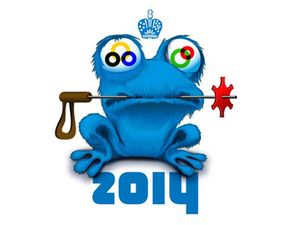
I can’t believe nobody’s mentioned the Russian blue furry frog, Zoich. During the contest to pick the mascot for the 2014 Winter Olympics in Sochi, the government’s Sochi-2014-mascot-zoich.nfavorite entries were all cutesy pablum. The people’s choice came out of left field: it was a spaced-out amphibian, inspired by the Hypnotoad from Futurama. Zoich is a depressed-looking frog without arms, covered in blue fur, with Olympic rings instead of pupils and a ski pole in its mouth. Drawn by a well-known member of the Art Lebedev design studio, it instantly became the most popular symbol of the Russian Olympics. It looked subversive, weirdly funny, and indifferent to Olympic euphoria and boosterism. (The name comes from the date “2014,” which can be read as a mixed Latin/Cyrillic word “ZOI?,” pronounced Zoich. The fact that it sounds like the surname of a Jewish physicist adds to the deal.)

Despite popular love, nobody was surprised when the results of public polls were ignored and Zoich was passed over in favor of something more cutesy and derivative, although most expected only one mascot instead of a whopping three. The most dramatic twist, however, came last June.

It turned out that Zoich’s blue fur was actually Astroturf. The “people’s mascot” was, in reality, commissioned by the Sochi Organizing Committee as a guerrilla marketing initiative. The mascot is still clever, still popular, but there was a real sense of betrayal in the Russian blogosphere. In a country where print and television are controlled by the state, and the Internet is about to fall under censorship, finding out that even counter-culture is paid for by the government was demoralizing, to say the least.

Nick Gillespie also picked up on the weird mascot phenomenon and has some parting words:

Amidst the human perfection and striving represented by a two-week-long competition among the world’s greatest athletes, mascots such as Wenlock and Mandeville, Amik the Beaver, Whatzit, and the too-terrifying-to-mention Fuwa bring us all back down to Earth. The mascots of past Games and, one suspects, their yet-to-be born brethren of future Olympics, drive home the fact that however far we run and high we jump, we will, just like Olly, Syd, and Millie – and even Fatso! – fail completely in our quest to make something more of our efforts than abject, humiliating failure. If Olympic athletes remind me us of the best that we might be (especially when it comes to cheating on drug tests), then Olympic mascots function as a memento mori, a remembrance that we will die. And look bad doing it.

Update from a reader:

Do you think you might be overthinking this one, just a bit?  How about a simpler kind of explanation for why you think Olympic mascots are so weird – they’re not for you. It’s a form of marketing to children, remember Joe Camel, only these won’t give you emphysema or lung cancer.  If Olympic organizers can appeal to kids with a mascot, then they can slam the mascot on all kinds of merch and squeeze a few more euros, pounds, and dollars from parents around the world.  Really, would you want to have a key chain in the likeness of Usain Bolt or Wenlock?  Now, make a dangleborris key chain and you might be onto something.

And that excerpt you included from Nick Gillespie’s article should have been a Poseur Alert nominee.

Another differs:

I just don’t get it – don’t the Olympics already have a mascot?  A spectrum of five interlocked rings?  Why the need to “anthropomorphize”?  Are they trying to appeal to kids? Because if I were still a child impressionable enough to be swayed by mascots, the impression from these things would more likely be a trauma scar that makes me reflexively avoid the Games in adulthood rather than throw my hard-earned money at them. I mean, if you want characters for kids to hug and people to take their picture with, aren’t there actual Olympians at the Olympics?  I’d rather have my picture taken with Gabby Douglas than with walking nightmares, much like kids today would rather hug Justin Bieber than hug a tumorous leper; and like adults would rather shake hands with the President than with sperm covered in lint.  Just ditch the things, IOC!

What Romney Can’t Admit About Government

by Gwynn Guilford

Josh Barro says Romney's private equity track record, while entirely defensible, traps him in an oversimplified argument about the roles of business and government. The problem? His allegiance to conservative doctrine makes him unable to talk sensibly about the relationship between business and government.

Private equity defenders must stand up for the idea that firms do not have a social obligation to retain and pay their employees; their function is to produce products and profits and getting them to do so more efficiently is good for consumers and for the economy as a whole.

Who, then, does have an obligation? In neoliberal thinking, that role falls to government. "A dynamic private sector…needs a substantial welfare state to support the people who fall through its cracks," explains Barro. A substantial welfare state like, say, Romneycare. Says Barro:

The problem for Romney is that his base consists not of neoliberals but of conservatives. They do not want the government taking on increased safety net responsibilities.

What's worse are the convenient elisions that typically accompany the pro-creative destruction argument:

[The answer] more commonly employed by conservatives…is to deny the existence of a problem created by the free market. As this argument goes, a fast-growing and free private sector will make it easier for people to get jobs and health insurance; no government action is needed.

But even policies that do lead to aggregate job growth and GDP growth don’t benefit everyone. Creative destruction entails destruction, and there are always people like the Soptics, who lose out personally due to economic changes that make the country as a whole better off.

Barro also makes the interesting point that Romney has been framing his Bain experience as venture capital – funding the creation of new companies – rather than private equity, which usually refers to restructuring companies for improved profitability. While PE is complicated, the VC story of new jobs and new technology and new products and America, Fuck Yeah! innovation is always a winner.

Fair enough. But VC too thrives when you provide that neoliberal social safety net – a critical point that has been crowded out by lower taxes-are-good-for-business nostrums. Max Chafkin served up the best discussion of this in recent memory in an Inc. article a few years back, looking in particular at startups in Norway:

Whereas in the U.S., about one-quarter of start-ups are founded by so-called necessity entrepreneurs—that is, people who start companies because they feel they have no good alternative—in Norway, the number is only 9 percent, the third lowest in the world after Switzerland and Denmark, according to the Global Entrepreneurship Monitor.

This may help explain why entrepreneurship in Norway has thrived, even as it stagnates in the U.S. "The three things we as Americans worry about—education, retirement, and medical expenses—are things that Norwegians don't worry about," says Zoltan J. Acs, a professor at George Mason University and the chief economist for the Small Business Administration's Office of Advocacy.

Acs thinks the recession in the U.S. has intensified this disparity and is part of the reason America has slipped in the past few years. When the U.S. economy is booming, the absence of guaranteed health care isn't a big concern for aspiring founders, but with unemployment near double digits, would-be entrepreneurs are more cautious. "When the middle class is shrinking, the pool of entrepreneurs is shrinking," says Acs.
The Most Cynical Game

by Chas Danner

Yesterday Mitt Romney responded to the Priorities USA Bain-cancer ad, or rather, responded to the fact it was still on the air:

“You know, in the past, when people pointed out that something was inaccurate, why, campaigns pulled the ad,” Romney said on the radio. “They were embarrassed. Today, they just blast ahead. You know, the various fact checkers look at some of these charges in the Obama ads and they say that they’re wrong, and inaccurate, and yet he just keeps on running them.”

Of course there's no chance the Romney campaign will start taking down the numerous ads they've run that journalists and fact checkers have deemed misleading or false. Instead this is, as Greg Sargent notes, yet another example of how deeply cynical the campaign is. Kevin Drum, responding to the seemingly controlled uproar over the Bain-cancer ad, is depressed:

On both sides, the base will flip out if they feel their candidate is being too meek or too moderate. Likewise, they'll cheer (sometimes publicly, sometimes privately) if their candidate bludgeons the other guy harder or throws out some policy red meat. Obama bludgeoned the other guy harder, so lefties cheered in private and mostly left him alone in public. Romney seemingly moved a bit toward the center, so righties flipped out. These are two entirely different things, and both sides reacted according to script. It says nothing one way or the other about how well the campaigns are keeping their supporters in line.

And many reporters will simply play along, as Jay Rosen recently pointed out when responding to a piece by WaPo's Aaron Blake, in which Blake essentially complimented the Romney campaign's "Didn't Build That" and "It Worked" attack strategies, not because they were accurate, which he acknowledged they weren't, but because they would likely "work" on voters:

From Blake’s point of view, the story that needs to be told is not about the granularity of deception, the misuse of words to make them mean what they did not mean when spoken, or the tricky matter of which side is relying to a greater degree on truth-busting, context-shredding claims. The real story lies in the game of it all: the daily routine of scoring points, landing blows, seizing on any little advantage and making it work for your side. “Acumen,” as he put it.

What this all unfortunately may mean is that the campaigns, their supporters, and the press see almost the entire political process as nothing but an athletic bullshit competition.

The World’s Most Racist Fruit

Watermelon Track

by Gwynn Guilford

Responding to Wednesday's Google home page that included the above image, Rabbi Yair Hoffman speaks out:

Either a young Google programmer decided to see if he could get away with showing an African American athlete chase after a watermelon themed track, or a terribly unlikely random coincidence occurred.

For those unfamiliar, Hoffman explains watermelon-based racism's long tradition. A commenter on the site takes Hoffman to task:

Are you serious?

1. He looks Indian to me, not African American.
2. He’s sporting a pompadour. (see #1)
3. Many tracks are red.
4. Most grass is green.
5. Many tracks are lined…using white paint.
6. One of the programers is Asian American, and judging my the traditional last name of the other, I am assuming Jewish. Put them together and you dont quite get the White Man’s Conspiracy you are searching for.
7. This is 1 in a series of Google Doodles. Are the others racist because they are varying shades of brown, tan, yellow?

Yes, but that Mondo track does look mouthwatering. Google's alleged subliminal bigotry campaign aside, the watermelon's racist past is fascinatingly vast, as documented in this roundup of racist images. Years ago, Keith Woods reflected on this history – and how it has affected him personally:

Like all racial and ethnic stereotypes, this one’s destructive properties have, through the decades, stretched far beyond mere insult. It has helped poison self-esteem, pushing some people to avoid doing anything that seemed too “black,” lest they be lumped into the company of Uncle Remus, Aunt Jemima, or some other relative of racism. [For instance,] just a few days earlier…, I’d found myself in a familiar internal debate over whether to take a slice of watermelon from a luncheon fruit tray. In the pause before my fork stabbed a couple of slices, I worried anew that white people looking on would follow the crooked path of bigoted logic that says if one stereotype is validated, all the others must be true.

There's evidence that Woods isn't alone in feeling apprehensive about his watermelon consumption. David Pilgrim, who curates the Jim Crow Museum, notes that African-Americans eat disproportionately fewer watermelons than other races.

The GOP Base’s Veep Of Choice

by Patrick Appel

Chait argues that "Romney may have no choice but to pick Paul Ryan": 

At this point, joining Ryan to the ticket would be a huge gamble. Romney would be tapping into Ryan’s immense political talent, but giving up on his win-by-default strategy that has taken a beating but might look good again if, say, some international disaster craters the recovery between now and November. In any case, the conservative drumbeat for Ryan has grown so overwhelming that it’s no longer even clear that Romney could turn Ryan down for an Incredibly Boring White Guy, even if he wants to. The Republican Party belongs to Ryan.

I'd still bet on Romney selecting an Incredibly Boring White Guy. But, if Ryan is picked, Ezra Klein thinks Ryan will share blame if the ticket loses:

[I]f Romney chooses Ryan — if he makes this the “big election over big issues” that the Wall Street Journal editorial page wants — then his loss will be their loss as well. He’ll still be blamed, of course. But the fact will remain that he took conservative counsel, adopted conservative ideas, named a conservative hero as his vice president, ran on the Ryan budget, and lost to a liberal. The right will not be able to pretend they weren’t on the ticket. They will have chosen the ticket. The right will not be able to say Romney ran a cautious campaign. They will have cranked his campaign’s strategy up to 11.

Weigel counters:

There are two words missing from this argument. They are "Sarah" and "Palin." Conservative base voters, and some of the movement's elites, are convinced that Sarah Palin boosted the sure-to-lose McCain campaign. The people who donated to McCain in September and October 2008 agree; political scientists disagree. But it's a truly essential article of conservative faith.

The Future Means More Creepy Robots

by Chas Danner

Human-looking robots might inspire the Uncanny Valley Effect, but other naturally-inspired robots like this one come with a whole different kind of uneasiness:

Andrew Liszewski explains how it works:

The Meshworm's entire body is made from the special nickel-titanium wire that expands and contracts when it's heated or cooled by a small onboard battery. And thanks to a specially-developed algorithm that carefully regulates the pattern of heating and cooling, the artificial worm is able to inch its way along like its real-life counterpart. An additional set of muscle wires running along the length of its body are able to steer the Meshworm left and right, and since there are no rigid materials used in its construction, it keeps on going even after being stepped on or abused with a hammer—an experience that would leave a real worm splattered across the sidewalk.

And of course who can forget the other robot that was abused by its makers, Big Dog (not to be confused with its hilarious predecessor):

Death By A Thousand Attack Ads

by Patrick Appel

Romney supporter Matthew Continetti worries that Romney will follow in Kerry's footsteps:

The chief objective of any candidate is to define himself positively and his opponent negatively. Romney has allowed the Obama team to define him in their terms. He has three opportunities—his vice presidential pick, his convention speech, and his performance in the debates—to seize the initiative and escape the fetters Obama has constructed. Failure to do so would leave this close election to chance. Romney risks John Kerry’s fate.

His kicker:

Mitt Romney did not kill Joe Soptic’s wife, but the Obama campaign is effectively killing Mitt Romney’s reputation. It may be ugly. It may be dishonest. But if it succeeds, like all killings it will be irrevocable.