The Mormon Diet

Mitteating

As Mitt Romney begins to publicly embrace his Mormonism, Sue Spinale McCrory wants the religion's dietary dimension to get some attention:

According to church teaching, in the early 1830s, Smith received as revelation and dictated into lectures one of the primary texts of the Mormon faith, The Doctrine and Covenants (D&C). Section 89 of the D&C, known as the Word of Wisdom, is considered by Mormons as their law of health. In it, Smith addressed certain behaviors he wished his followers to avoid, including bans on alcohol, tobacco and "hot drinks." Mormons, therefore, do not drink alcohol or smoke, and many will not take coffee or tea.

But the diet Smith prescribed is probably less well known to non-Mormons. This includes the consumption of wheat, herbs and fruits in season, and meat "sparingly." To be clear, such a manner of eating — oracle-like for today's flexitarians — would have been logical for any people settling in the Western territories of 19th-century America. Followers of the early LDS church weren't the only ones relying predominantly on themselves for sustenance.

Previous Dish on Mormon cuisine here.

(Photo: US Republican presidential candidate and former Massachusetts Governor Mitt Romney eats ice cream at a campaign stop at Tom's Ice Cream Bowl in Zanesville, Ohio, on August 14, 2012. By Saul Loeb/AFP/Getty Images)

All Or None

Brian Jay Stanley considers the contours of faith in a pluralistic world:

Before college I was a skeptic and rationalist toward every religion except my own, Christianity. Like most of humanity, I had believed the religion I’d heard first, and on its authority dismissed all the religions I’d heard second. Seeing Muslims wearing turbans or Hindus bindis, I thought the oddity of their customs proved the error of their beliefs. Studying all faiths in one class in college, however, I saw my religion from the outside and realized that the rites of my Sundays — warbling choirs and smocked babies dipped in silver fonts and bread as the body of Christ — were as curious as what I had disparaged as myths. In class discussions I sometimes unwittingly revealed assumptions that I thought were axioms, and would read surprise in the eyes of a Hare Krishna or Bahai. My notion of normal was an accident of my birth and upbringing. Whomever I saw as strange saw me as strange. I had raised a doubtful brow at Buddhists bowing to golden statues, even as I prayed weekly to a crucified first-century Jew, not realizing that either all religions are bizarre or none is.

Preaching Politics

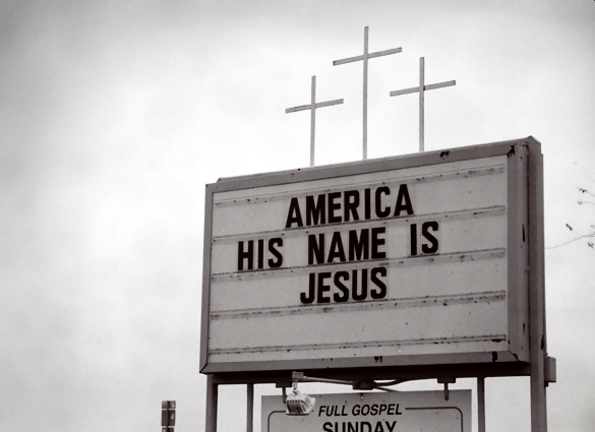
America-jesus

After this week's news of Cardinal Dolan's role at the Republican convention (and, subsequently, the Democrats'), one wonders when religion began to feature so prominently at the events. Robin Varghese recently unearthed V.S. Naipaul's 1984 visit to the Republican convention, where he heard a sermon delivered by a Dr. W. A. Criswell of the First Baptist Church of Dallas. Sound familiar?

Dallas was air-conditioned—hotels, shops, houses, cars. … Yet in this city created by high science Dr. Criswell preached of hellfire and was a figure. And the message of convention week was that there was no contradiction, that American endeavor and success were contained within old American faith and pieties. Karl Marx and homosexuality were on the other side of these pieties and could be lumped together.

The fundamentalism that the Republicans had embraced went beyond religion. It simplified the world in general; it rolled together many different kinds of anxieties—schools, drugs, race, buggery, Russia, to give just a few; and it offered the simplest, the vaguest solution: Americanism, the assertion of the American self.

Richard Lawson found this year's Christianism simmering just below the surface:

There have been allusions to marriage and abortion and various other social matters throughout this convention, but they have not been talked about head-on, it's all been on the side, little dog-whistle references for those paying attention. Paul Ryan sneaked it in […] during his mostly economy-concerned speech, saying "The man who will accept your nomination tomorrow is prayerful and faithful and honorable. Not only a defender of marriage, he offers an example of marriage at its best." Just like that. "Defender of marriage" communicating a whole anti-gay platform. Mike Huckabee was a bit more direct, but even he, the Evangelical, didn't go full tilt. He devoted about a minute to the social policies that are at the foundation of his politics, saying Obama "tells people of faith that they have to bow their knees to the God of government and violate their faith and conscience in order to comply with what he calls, health care." And of course we have to consider Ann Romney's blaring invocation of her "real marriage" on Tuesday night, that "real" landing hard and sticky, the crowd losing it at the righteousness of it all. The audience seems to enjoy the secret language, they have fun with the "non-PC" whispering that insists they are simply better, morally pure, the socially anointed. These are built-in rallying cries that you can try to dismiss as cynical appeals to a hardcore base, but are still received loud and clear by those who genuinely believe in the message. They telegraph a monolithic sameness of moral convicion that this crowd relishes in as if in religious ecstasy.

(Image above from Christian Piatt's round-up of church signs.)

Diagnosis: The Wrath Of God

Psalm 137 reads:

If I forget you, Jerusalem,
  may my right hand forget its skill.
May my tongue cling to the roof of my mouth
  if I do not remember you,
if I do not consider Jerusalem
  my highest joy.

Vaughan Bell dissects a short study on it. Researchers connected the familiar symptoms to earlier views about divine punishment:

Both right-sided paralysis and loss of expressive speech are clear symptoms of a stroke of the left middle cerebral artery, where the blood flow is blocked – leading to the death of the surrounding brain tissue, suggesting that the Psalm may be wishing these effects on people who forget the importance of Jerusalem. … But why these specific symptoms are mentioned may have more to do with ancient beliefs about stroke itself. The reason the condition is still called stroke is because people originally believed that it was a result of being ‘struck down’ by God.

Living As We Choose

At the BBC News magazine, John Gray provides a primer on the meaning of freedom. In particular, he looks to an older generation of political thinkers – Bertrand Russell, and, further back, John Stuart Mill – who grasped the way democratic rule can encroach on a free life:

Where this older generation differed from many today is that they thought of freedom as a lack of restriction on how we can act. Being free meant simply the absence of obstacles to living as we choose. While it's a view that's been criticised because it seems to see individuals as being separate from society, it seems to me to capture better than any other what freedom means and why it's important for every human being.

We need freedom because our goals and values are highly diverse and often quite different from those of the people around us. Having a voice in collective decisions – the basis of democracy – is a fine thing, but it won't protect your freedom if the majority is hostile to the way you choose to live.

Many will tell you that this danger can be dealt with by bills of rights that put some freedoms beyond the range of political interference. But politics has a habit of finding ways around the law, and when the state is weak declarations of rights tend to be unenforceable.

Mormonism’s Conflict With History

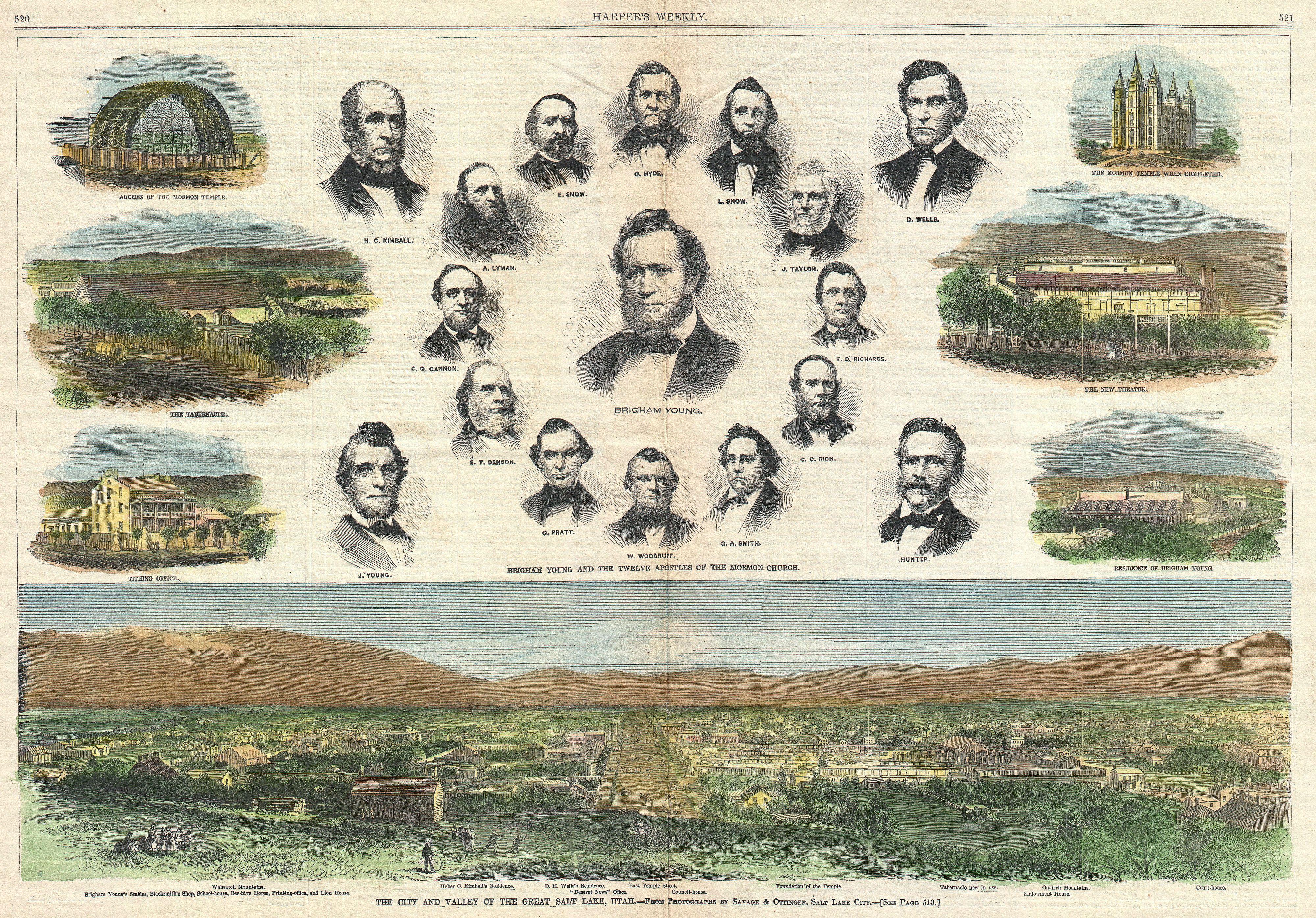
1866_Harper's_Weekly_View_of_Salt_Lake_City,_Utah_w-_Brigham_Young_(Mormons)_-_Geographicus_-_SaltLakeCity-harpersweekly-1866

Laurie Winer explores LDS history and scriptures, finding that the church "possesses a remarkable adaptability that keeps it alive and thriving." To believe Mormonism is true depends on a mindset that downplays intellectual openness in the name of obedience, even obedience to doctrines that might change in an instant. She argues the peculiarities of the religion help explain Romney's etch-a-sketch beliefs:

Aside from the trinity of the Godhead, the main difference between Mormons and
other sects of Christianity is that their founding is recent enough to have been extensively documented by verifiable witnesses and historians at every turn. Mormonism therefore requires a different kind of faith than does other Christian sects. It requires a very special obedience. It asks its members not to read, and not to believe, wide swatches of their own country’s history. 

What this means in practice:

Young people born into the church are actively encouraged to read only the official, neutered version of Mormon history, which omits virtually all of the good stuff, all the messy moral complexity. Perhaps that is why the Mormons of the twentieth and twenty-first centuries have cultivated a certain bland exterior, keeping the messy and complicated submerged. Apostay is a very serious matter and often involves the cutting off of all family and friends. Worrying about the past can destroy your future.

(Image: "A handsome view of Salt Lake City, Utah from the August 1866 issue of Harper’s Weekly. Offers a panoramic view of the city as well as six smaller views of important Salt Lake City buildings, including the Tithing Office, The Tabernacle, the Arches of the Mormon Temple, the Mormon Temple when Completed, the New Theater and the Residence of Brigham Young. Also offers portraits of sixteen important early leaders of The Church of Jesus Christ of Latter-day Saints, including Brigham Young," via Wikimedia Commons)

The Church Of Hard Work

William Deresiewicz looks down on it:

To every age its virtue. For the Greeks, courage; the Romans, duty; the Middle Ages, piety. Our virtue is industriousness, in the industrial age. (It is one that would have been incomprehensible to other times. The Greeks had a word for people who worked harder than anyone else: slaves.) It is the Protestant ethic, in other words, made general by the Victorians as the factories rose. That it is a virtue, not merely a value, is proved by the aura of righteousness that surrounds it.

A virtue is not just a personal excellence, it is something that is felt to call down blessings upon the community, that wins the gods’ approval, that possesses not just practical but metaphysical worth. We’re in a panic, as a nation, that we don’t work hard enough, and blame this iniquity for our “decline.” God—the one who blesses America—is withdrawing his favor. Hence the sanctimoniousness with which the topic of work is approached. If you don’t work as hard as people think you should, you’re not just morally inferior, you’re committing a kind of spiritual treason. And if you deny the value of work as a matter of principle, you’re treated like a heretic.

Leah Libresco makes a similar point:

Today, many of the most high-status jobs for the well-educated make a virtue of intensity and commitment. Investment banking boasts 80-hour work weeks; Teach for America’s emotional crucible results in a high burnout rate; and jobs in the political sector spawn articles like Anne-Marie Slaughter’s cri de coeur. Have a Type A personality? These jobs are ready to push you to (or past) your limit, and isn’t that what excellence is all about?

There’s a word for people who turn over their entire waking life to one cause, and willingly sacrifice the possibility of a family for the opportunity to serve: monks (or, more archaically, oblates). Just like the driven twenty-somethings of Rosin’s article, monks and nuns have made a commitment so total that it precludes marriage. But in the case of vowed religious, the form of their service is meant to be elevating, not just useful. I seldom hear people claim that spreadsheets are good for the soul.

Disneyland For Adults

Devin Friedman test-drives Marquee, the "highest-grossing nightclub in Las Vegas and very likely the universe," where table service requires you spend between $1,000 and $10,000, depending on the night:

Part of the branding concept at Marquee is: Overwhelm the guest. And when we walked into that main room, we were indeed overwhelmed. Like it physically drew the air from our lungs and then replaced it with something that felt and tasted like vaporized Red Bull. The room had no visible ceiling. It was a clamshelly cavern of a place that glowed reddish and pulsed, with a dance floor at its focal point, layers of bottle-service tables perched around it, and a forty-foot LED screen above the DJ stage. The sound system cost $1.5 million and was built to rock a space as big as Madison Square Garden. Facing the speaker arrays was like walking into a strong headwind.

Seth Stevenson recently described the business model as "the Cheesecake Factory approach to clubbing":

Indeed, Marquee is not even close to the coolest club out there. It’s not exclusive enough (its spaces are huge, so it lets in lots of "muppets"—the club-world term for the unfabulous). It’s not raw enough (its professionalism dictates that it maintain a danger-free environment). It’s not organic enough (it uses hired entertainers and canned routines to spice up the dance floor). But some clubbers seek a more predictable, dependable, reined-in night. Marquee provides this, across multiple locations, and yet still maintains a veneer of hipness by ensuring that celebrities frequent its banquettes. As long as Kanye West is going to Marquee, the venue will be more than cool enough for the thrice-a-year club-goer.

A Coach For The Sexual Revolution

Sybil Sage writes that in the 1960s, living in the midst of the sexual revolution was like participating in "a relay race with men and herpes being passed along by Team America" – and that for many women who came of age then, their "coach" in that race was Helen Gurley Brown. What the famed columnist offered:

In those early days of Cosmopolitan, we ripped into each new issue to find out "How You Can Become a More Likeable, Secure, and Less Jittery Person … and Change Your Life." You might think that, having read that, you would never need another self-help article, but Helen Gurley Brown had endless ways of tapping into our self-doubts while simultaneously giving us license to lust. Virtue was no longer a virtue. The shame connected to sex that our mothers had tattooed on our DNA was suddenly spun on its head by a woman who never had a daughter. And maybe that’s why she made so free with recipes to heat up the bedroom, renovating what was done in bed the way Better Homes and Gardens had our bedrooms. We could now have orgasms along with mismatched bedside tables.

Even if we didn’t manage to snag one of the Bachelors of the Month, we might consider other options after reading, say, "The Undiscovered Joys of Having a Chinese Lover," "Should You be Faithful to Somebody Else’s Husband," "Buddy-Flirting—the Bold, New Way of Having Him Notice and Like You," "Foot Fetishes: The Trade Secrets of the Sexiest Ladies in History," and "When He Wants You to Make the Orgy." Married women, often overlooked, could learn "How to Get Our Husbands to Love Us Like a Mistress."

Sady Doyle is more critical of Brown's legacy.