Friday on the Dish, after Andrew analyzed why Romney's 1980 playbook isn't working, the candidate's tax release induced yawns (and Tweet-cracks). Meanwhile, Peggy Noonan called Romney's campaign a "rolling calamity," undecideds broke for Obama and Kevin Drum argued Romney was the most electable of the GOP candidates. Jim Fallows and Josh Barro then dissected Romney's and Obama's debating styles, Bernstein wondered why Romney picked such feeble attacks and Romney campaign rolled out a new Spanish language ad.
In polls, Andrew synthesized that latest swing-state data, Sam Wang defended his House forecast and Nate Cohn discounted Gallup's poll. More generally, Eric Randall rounded up Romney's 99 problems, Dan Drezner explained what presidents care more than voters about and former governor likened George Romney's presidential run to duck-on-football action. And while the job market increasingly demanded bachelor's degrees or higher, income inequality has worsened compared to 1774 and Republicans illuminated American history.
In world news, Benghazi's identity fragmented, Eli Lake investigated what really happened in Libya and Mara Hvistendahl kneecapped Hanna Rosin's arguments about the end of men in Asia.
In assorted commentary, Andrew highlighted how the diversity of early Christianity's sacred texts contradicts the rigid dogma of later permutations. Meanwhile, TNC discussed how he talks to his son about race, readers distinguished between pedophiles and child molestors, as well as weighing in more on hookup culture. Seth Mnookin explained bad science, Andrew Rotherham reported on teachers cashing in on lesson plans, Elizabeth Greenwood was appalled by "Breaking Amish," and Brad Leithauser took on Hemingway's paradoxical style.
Homer voted, Chris Jones profiled quiet comedian Teller and the mainstreaming of gay culture marginalized queens. Plus, men loved money and Ben Yagoda dissed idioms. MHB here, VFYW here, FOTD here and don't forget to ask Dina anything (this reader sure won't)!
The rest of the week after the jump:
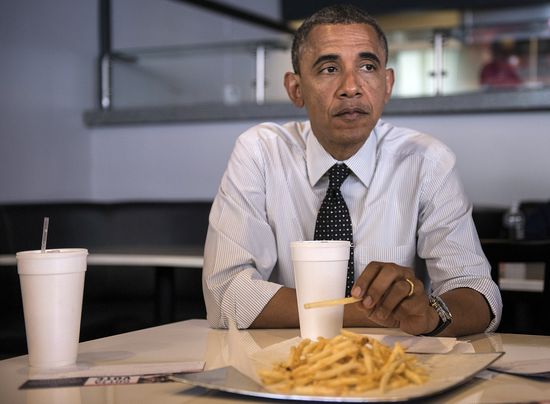
By Brendan Smialowski/AFP/Getty Images
Thursday on the Dish, Kevin Drum marveled at Romney's ignorance, Jesuits tackled Ryan, Joan Walsh mused on Ryan's future presidential prospects, and Ezra Klein summed up Romney's income tax-only deception. Readers agreed with Andrew on Hillary's presidential cred and dazzled us with their knowledge of home state-losing tickets. Andrew debated Jesse Bering on circumcision.
Looking at the polls, the race leaned hard in Obama's direction, and while Sam Wang predicted a Dem House retaking, Dylan Matthews dismantled his case. Rasmussen showed Obama in the lead, while Silver assessed the Senate and tried to filter out the noise. Pareene believed gaffes mattered, Tod Kelly pondered the fact that few people like Romney – in part for cracking jokes like this. Alex Massie compared Romney to Gore, Shafer likened him to Nixon, and a commenter christened him "Money Boo-Boo."
Meanwhile, Joyner gave up on Afghanistan while Dexter Filkins noted the relative absence of the Taliban in Afghanistan's killings. Bill Browning wanted gayer ads, Michelle Malkin frothed on Fox News, and partisanship picked up in the '60s and '70s. And as Jill Lepore investigated political consulting, Barbara Spipndel revisited Strom Thurmond's bizarre relationship with race while Rick Perry spouted off about Satan. TNC addressed the Trayvon Martin case, wealthier people noticed their use of government programs less than poor people, and all psychotherpies were created equal.
In other assorted commentary, Gila Lyons recounted her panic attacks, Malcolm Harris reframed Breaking Bad's main product, Daniel Trone mapped Springsteen's concerts, Davy Rothbart collected "anything that gives a glimpse into someone else's life," and Chris Anderson hailed the DIY movement. And as David Byrne considered the right to silence, a Korean guy loved drumming. FOTD here and VFYW here – and don't forget to ask Dina anything!

Wednesday on the Dish, Andrew said "nice try" on Romney's videogate retaliation, hailed another Obama campaign ad and called out cynicism in Romney's elite pandering that Obama lacked. Readers testified to Romney's ignorance of how most Americans live. Meanwhile, Romney's 47% stat conveniently omitted all other taxes, Millman and Larison traded views on whether Romney's comments would hurt him and the two-minuters entered.
In polls, Obama lost his bounce but gained in the enthusiasm gap, topping Romney on a number of key dimensions. And while Obama still led by more now than he did at this point in 2008, the race more closely resembled 2004. Plus, Warren's prospects boosted Dems' Senate outlook and same-sex marriage initiatives looked set for ballot-box victories. Finally, Pew results suggested the public sided with Obama on last week's embassy attacks.
Team Romney rolled out a debt-focused ad, Alyssa praised Obama's Letterman appearance and Peggy Noonan compared Romney's spending strategy with Obama's – unfavorably. Ambers argued the economy isn't everything as Jay Rosen pointed the way out of the "post-truth" era – something beefcakey blowhard Paul Ryan needed some help with. Chris Geidner, meanwhile, awaited the announcement of marriage equality cases on the SCOTUS docket and TNC mused on whether the GOP is racially motivated.
In world news, Stephanie Kleine-Ahlbrandt flagged escalating Sino-Japanese hostility as both presidential candidates slammed China on trade. Meanwhile, Razib Khan explored global views on free speech, women excelled in the CIA and the climate for crime ripened.
In assorted commentary, Malcolm Gladwell investigated the screening tactics of child-molestors, Tanya Marie Luhrmann explained how our understanding of schizophrenia has evolved and Catherine Rampell labeled McArdle's college-is-a-bad-investment thesis "faddish." Burberry offended Aaron Paul, the iPhone 5 bored and Jane Austen lit up brains. Then readers threw down widsom on girly hurling.
MHB here,VFYW here and don't forget to vote for the "Dick" presence in the Morris Award – and ask Christopher Ryan anything!
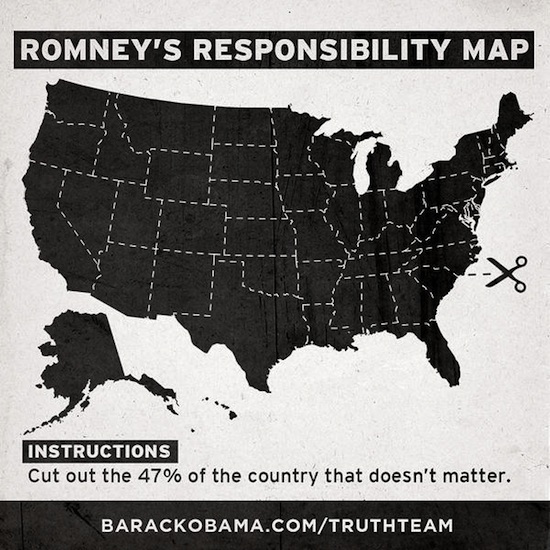
Tuesday on the Dish, Andrew framed the election as a Tory against a Randian. And as commentators hailed Ponnuru's takedown of the 47 percent attack line from last year, Andrew saw hope for the GOP's return to sanity. He also pointed to the debates as Romney's chance for recovery, parried a reader's dissent on the context of Romney's remarks, and assessed the Obama camp's first online ad regarding the scandal. (Full ad war update here.) Scores of bloggers contextualized the remarks and assessed the damage. As Bob Shrum wondered what Romney had left, conservatives applauded the "Real Romney" and John Tucker argued the race wasn't over. Derek Thompson observed the popularity of the 47% talking point, Jim Tankersley questioned its appeal to independents and Rich Lowry knocked Romney's lack of policy substance.
As another shoe dropped from the taped fundraiser, Andrew reiterated that Romney would be an extension of the Likud party. Chait called out Romney on pandering to conservative Jewish donors, Ackerman parsed Romney's Mideast policy, and the GOP base got the campaign it wanted. Meanwhile, Krugman broke down tax-paying by age, Blake Zeff outlined why candidates go off-script for donors and Rob Delaney likened Romney's fragmented talking point to alcoholism. Ta-Nehisi hailed the end of whiteness, the 47 percent video kicked around for months before breaking yesterday and Dorothy Rabinowitz earned a Dick Morris nod. The @MexicanMitt meme emerged and we highlighted some notable quotes here and here.
In other electoral developments, Weigel tallied up how Dems might hold the Senate, Nate Silver noted that swing states remain close, Virginia's hue grew bluer, and Super PAC execs pocketed mammoth salaries. Meanwhile, Chris Geidner looked forward to SCOTUS gay marriage cases, readers set the record straight on Bush apologies, while another identified Obama as a night owl. Jesus may have married and John Hodgman revealed the funniest person in the world. VFYW here, FOTD here, MHB here, and reflections on the view from a Mankato, Minnesota window here.
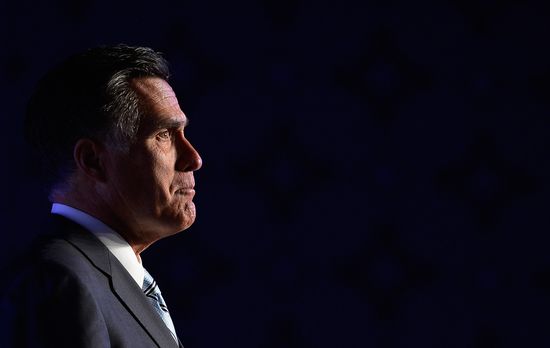
By Kevork Djansezian/Getty Images
Monday on the Dish, in the wake of Mother Jones' video bombshell, Andrew reflected on Romney's views on 47% of the voters and wondered whether he just lost the election. Blogger reax here, tweet reax here, and reader thoughts here. Romney's desperate TV response here.
Andrew also marveled at the GOP's tax-cut non-logic, questioned Romney's staff-blaming, called out Netanyahu's election-meddling, remarked upon Europe's views on Romney, noted that the Catholic heirarchy is now indistinguishable from the GOP, and hoped for sanity on marijuana decriminalization. Meanwhile, John Heilemann reported on Romney's "very bad place" and Alex Altman rounded up the reboot stories. And as Derek Thompson graphed Romney's middle class, Galupo wished Romney's tax proposals were less detailed. Ezra Klein analyzed sequestration, Sasha Issenberg proposed ideas on turnout-boosting and Nate Cohn anticipated a momentous week ahead. In ad war news, the avalanche snowballed and Obama may have gotten an ad bump.
As Goldberg and others anti-Semite-slimed MoDo, David Gregory slipped up on Netanyahu and Eric Lewis asked why Israel should get a pass. Ayaan Hirsi Ali discussed democracy's long game in the Middle East. Judith Matloff considered the language journalists use when writing about military violence and David Carr thumped Michael Lewis for granting quote approval.
In assorted commentary, Emil Johnson plotted the hobbit longevity spike, Andrew Tuck checked in on efforts to curb sprawl density and Tom Stafford warned about eBay psychology. Girls threw like girls, John Hodgman advised those with scanty upper-lip hair and black holes resembled dams. A Fox News prankster thought he was funny, Frank Portnoy advocated mandatory lunch, Ian Ayres encouraged prudent road-crossing and readers pushed back on the hookup culture debate. FOTD here, MHB here and VFYW here.
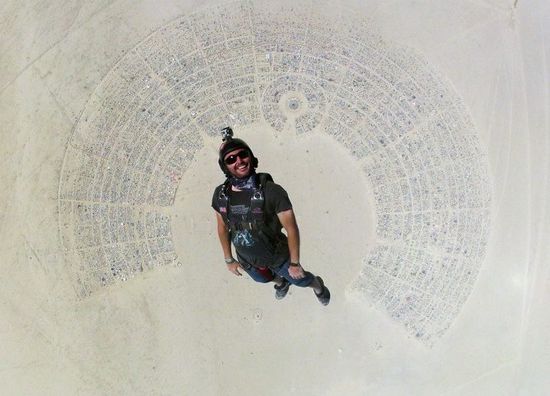
By redditor opi8. Hat tip: Nerdcore
Saturday and Sunday on the Dish, Andrew denounced Bibi's attempts to blow up the presidential race, deconstructed Romney's "apology" nonsense, described his problem with Rasmussen polls, pointed to yet another Bill Kristol FAIL, celebrated a great new Obama ad, showcased the latest example of desperation from Karl Rove's super PAC, reminded us that Americans haven't forgotten the Bush years, and – gasp – admitted he wants to see Hillary as president someday. To read all of the latest coverage of the embassy attacks and their political fallout, see our designated thread page. It wasn't all politics for Andrew, though – he took the time to note how Dish readers can make the world less lonely.
We also provided wide-ranging coverage of both faith and doubt. Greg Garrett sketched an Augustinian approach to Christian political engagement, Casey Cep reimagined the meaning of sacraments, Robert Dean Lurie remembered Jack Kerouac's pervasive love of Jesus, and Paula Findlen uncovered the origins of modern religious pluralism. Susan Jacoby asked where all the women atheists were, great writers stared down death, Peter Lawler argued that Hitch's materialism couldn't account for his own greatness, and Josef Pieper illuminated the difficulties of sustaining hope.
In literary and cultural news, William Childress ruminated on the poet's purpose, Darryl Campbell named the foundation of criticism, Jonathon Green took a stand against democratizing definitions, Jeff Sharlet contemplated the lesson of suffering, Stefany Anne Goldberg reviewed a 19th century self-help book, and George Sugihara noted why we miss the signs of impending disaster. Read Saturday's poem here and Sunday's here.
We thought about sex and our bodies, too. Debbie Herbinick looked at the science behind good sex (it turns out Dan Savage has been right all along), Jeffrey Eugenides saw through the fantasies of the college libido, and Steven Strogatz mused on the math our bodies can teach us. Relatedly, Brian Jay Stanley explored our desparate need for validation and, for those trying to forget a fraught encounter, it turns out drinking doesn't help – but pot does. (For those interested, Keith Humphrey's debated what legalizing cannabis would mean for the potency of our weed.)
In assorted coverage, we mentioned how little cheats and rationalizations add up, James Estrin moderated a debate on how phone photography impacts our visual sense, Andrew Polsky feared the consequences of constant flattery from our politicians, The Billfold revealed the surprising story behind the IT preparations for the Iraqi elections, Karina Longworth reported on the afterlife of a defunct video store, John Churhill pondered the dignity of unglamorous work, and Alain de Botton peddled an "ethical advertising agency." We asked John Hodgman anything here and here. MHBs here and here, FOTDs here and here, VFYWs here and here, and the latest window contest here.
– G.G.


 The Dish