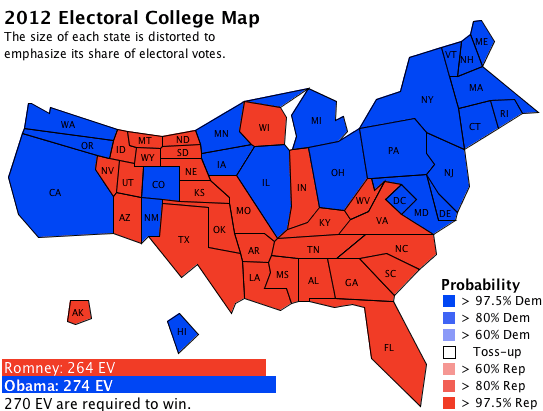
Today on the Dish, Andrew reflected on Obama's cool as captured in Michael Lewis' profile, called Romney out on his new views on the Cairo attacks, crunched the electoral college numbers and rhapsodized about the new Pet Shop Boys record. Ambinder's deconstruction of "provocative weakness" prompted Andrew to condemn Romney's atavistic foreign policy. Meanwhile, Andrew doubted Romney would have even Dubya's probity – let alone, as readers pointed out, that of Reagan and Bush Sr.
Blake Zeff observed how Obama outflanks his opponents on messaging, Romney jumbled his tax math and, as Alex Altman argued Romney could win the Middle East debate, Nate Cohn thought that debates are overhyped. A Mormon feminist then lent insight into Romney's view on women and election cheating caught up, and American's didn't want another war. In economic news, Greg Ip and others interpreted QE3, while Scott Sumner used his underdog blog for good. Jared Bernstein homed in on the growing income gap, renting homes grew more expensive than buying and the Bush-era housing bubble dogged the recovery. Catherine Rampell then called attention to how Obamacare is kicking in.
Beyond US borders, Peter Hessler explored why Egyptian authorities hesitate to defend foreigners, Juan Cole weighed in on the Egypt-as-ally debate and Millman challenged Frum on engaging the Muslim Brotherhood. Meanwhile, the anti-film protests spread, Beinart explained the Jerusalem-in-the-Dem-platform fracas, Aung San Suu Kyi faced new challenges, and China's population helped its ping-pong prowess.
In assorted commentary, Keith Humphries pondered marijuana potency post-legalization, Steven Poole equated neuroscience with self-help, Mark Silk claimed that family allegiance isn't always a good thing, and a reader ridiculed the notion of sexual compatibility. John Hodgman discussed working for The Daily Show, an app typeset history and Daniel Day Lewis owned Honest Abe. And while the apple-for-teacher tradition hailed from frontier days, Nicole Pasulka detailed the history of Hawaiian land-grabs. A coffee owl here, MHB here, VFYW here, and FOTD here.
The rest of the week after the jump:
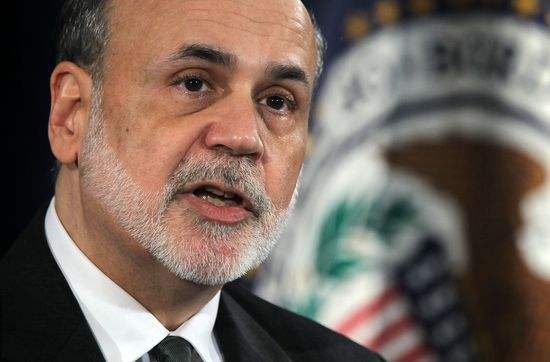
By Alex Wong/Getty Images
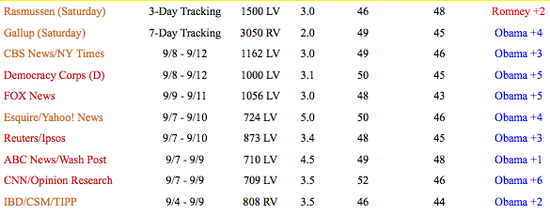
Thursday on the Dish, Andrew explained the Romney campaign's Reagan delusion while exposing the GOP's implosion of integrity. He then cast Romney's FP as "Cheneyism on the cheap" and, a bit earlier, likened the candidate to a "Cheney with better hair and even fewer scruples." While calling for a Obama landslide to destroy Rove, Andrew also pointed out that Romney's numbers are in "free-fall."
Joe Klein ripped into Netanyahu, and while attacks roiled Yemen today, Obama said Egypt as neither an ally nor an enemy and Ackerman criticized the media for misrepresenting the Benghazi attack. In Sam Bacile discussion, Noah Schachtman named him a fraud, while John Herman found evidence that he might be a Coptic Christian. Then massively multi-player online roleplayers remembered Benghazi victim Sean Smith.
Then the Fed ponied up, while the blogosphere celebrated. Meanwhile, Andrew noted that Adelson is off-limits due to the anti-Semitism card, Mark Kleiman summed up Romney's brave guy act and Kerry Howley debunked the "apology tour" smear. Tomasky hoped for a return of Dem foreign policy dominance, Abby Rapaport revealed the GOP's secret and readers clarified "introvert." Meanwhile, Romney's welfare attack ads fizzled and Ambers noticed growing Obama enthusiasm from independents.
The Chinese soon-to-be president disappeared, Iraq proved a risky investment, and while the Chart of the Day plotted the decline of newspapers, Walter Kirn chafed against journalistic groupthink. Then John Hodgman addressed doomsday fear-mongering and readers flagged some liberal pap in the hookup culture debate.
Elizabeth Blair explored the extraordinary origins of "Strange Fruit," Ed Yong marveled at nucleotide mapping and as prison love faced hurdles, Ed Gimson lamented the end of gentlemen. Tech geeks gave the iPhone 5 mixed reviews, Derek Thompson examined the social media business and Navneet Alang pondered our digital self-image. FOTD here, MHB here, VFYW here and don't forget to ask Reihan anything!

By AFP/Getty Images
Wednesday on the Dish, after summing up the situation in Libya and Egypt, Andrew laid out his case for why Romney is unfit to govern, as Romney continued to lie unflinchingly. Larison then weighed in on Romney's recklessness, Nicholas Burns spoke out and the NYT mused on the possibility that the Libya attack was planned. Then as Fallows called Romney's statement the "3 a.m. test," Buzzfeed rounded up bipartisan reactions and Obama's numbers continued to climb. Kristol, meanwhile, doubled down, Jon Kyl offered up a rape analogy and Reince Priebus earned a Hewitt nomination.
Rosie Gray wondered if the "anti-Muslim movie" was real, while Goldblog defended Obama, found a Sam Bacile wingnut associate and, along with others, tried to nail Bacile down. Daniel McCarthy contextualized free speech, Mohamed El Dashan dreamed of a more reasonable response and Shadi Hamid reminded us of Libya's progress. While Christian Caryl noted the similarities between Libya and Egypt, signs looked bad for a Morsi apology and David Remnick responded to Netanyahu's grotesque meddling. Romney QOTD here, FOTD here and, for keeping track of all this, the handy Libya/Egypt thread here.
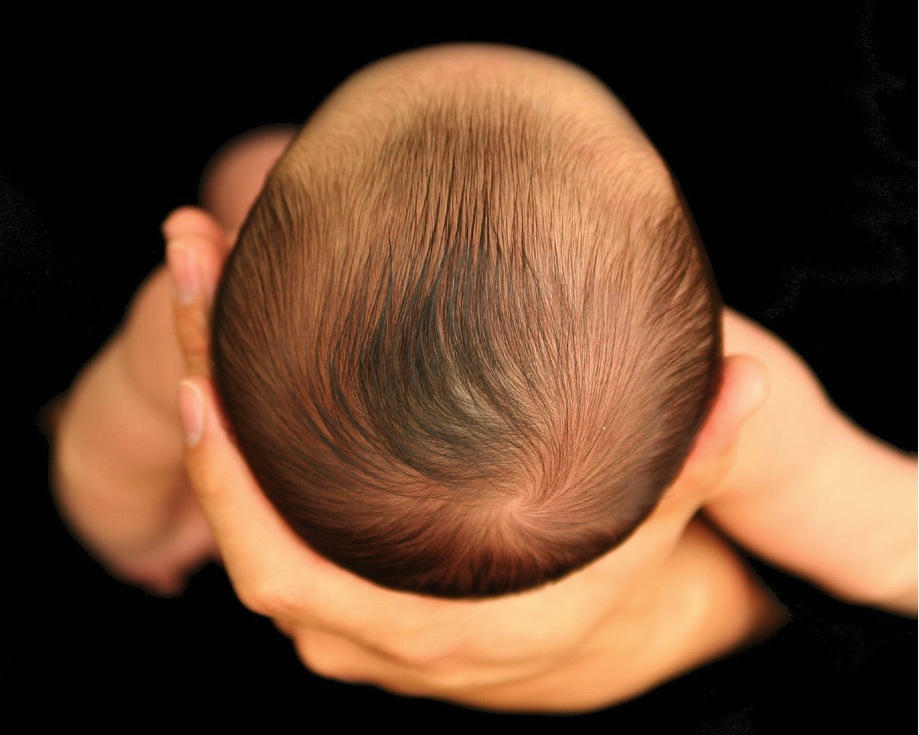
In other political news, Political Math kept Obama honest on jobs, the blogosphere speculated on the Fed's action and Obama released new ads. And while readers prevailed upon Andrew to change the Von Hoffman award name and Japan nanny-stated the obese, Orhan Pamuk imagined life after the Bosphorus and the Iranian rial declined. Meanwhile, Andrew was at peace with his bald pate, ASL-fluent readers offered perspective on a recent MHB and John Hodgman discussed the Apocalypse. And as McArdle defended her argument on college degrees, Kafka praised patience. MHB here, VFYW here, and Ask Reihan anything!
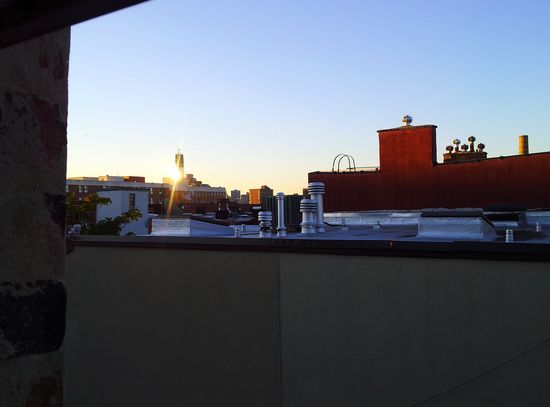
Hoboken, New Jersey, 6.57 am, looking towards Lower Manhattan
Tuesday on the Dish, Andrew reflected on newly excavated 9/11 attack intel – and what it implies about Romney's foreign policy. And while Mark Vanhoenacker asked whether the 9/11 memorial needed protecting, Reason complained about the cost of the Freedom Towers. A poem for Tuesday here, FOTD here, VFYW here and Tweet of the Day here.
Andrew then decried the GOP's stonewalling on taxes, argued for containing Iran and explained how Romney "sliming Obama personally could actually help the president."
Polls continued to show an Obama ascent, and as Millman wondered how Romney donors would respond to recent numbers, Hodgman discussed whose convention was better. While Dick Morris earned another Von Hoffman Award nomination, Matt Lewis pondered the recent conservative embrace of Bill Clinton and some liberal wingnuts Les Mis-ed their values.
Kevin Fallon revealed how Scott Van Duzer's life changed post-bear-hug, the ad war lulled for 9/11 and Seth Stevenson subjected himself to 45 hours of ads. Meanwhile, as Noah Millman and other showed there's more that meets the eye to the CTU strike, the blogosphere reacted to the issue.
In pot news, the Netherlands prepared to decide its weed policy, Ryan succumbed to etch-a-sketching on medical marijuana and the Snoop endorsement came down.
Patrick Walsh highlighted the difference between soldier and civilian gun background checks, Dan Ephron reported on the removal of Migron and after Megan McArdle questioned the value college degrees, Felix Salmon debunked some of her logic. Nate Silver praised meteorologists, Kraft bestrode the world and Pat Robertson advised a husband with an uppity wife.
While happy couples waited 182 days before having sex, readers sounded off on hookup culture and pushed back on Hanna Rosin's wage gap thesis. Muppets looked humanoid and antique repatriation had a downside. While Robert Provine put forth a theory on morning sneezing, football grew even more dangerous and Larry transitioned to Lana with support from family (plus the new Cloud Atlas trailer). News blooper MHB here, QOTD here and a sentimental VFYW contest here.
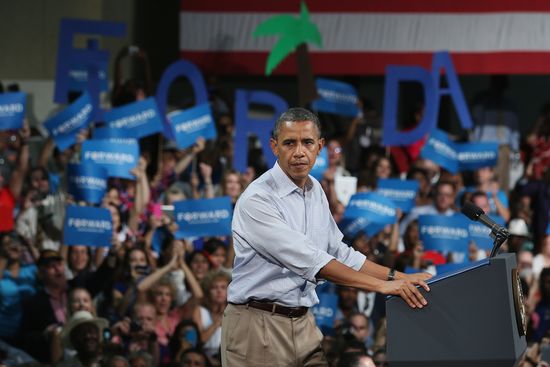
By Chip Somodevilla/Getty Images
Monday on the Dish, Andrew appreciated Obama's introversion and agreed with Beinart that Dubya is a "moaning skeleton in Romney's closet." After calling Romney's Obamacare positioning a "flip-flop that's also a lie," he then highlighted the impact, or lack thereof, of out gay servicemembers. Crunching the poll data, Andrew declared that Romney needs a game-changer. And as he called out a sudden dive in GOP support, Obama's number ticked up. Noah Millman battled Frum on Romney's hypothetical foreign policy, and Romney invoked God while backing Steve King. Jonathan Bernstein noted the Gipper's fibbing, Drezner thought foreign policy could hurt Romney and David Sessions decried Kerry's and Biden's blitheness on bloodshed.
Elsewhere in politics, as Ambinder sized up the race, Texas' purple future looked distant and Michael Grunwald discussed the stimulus that keeps on giving. Then a pizzamaker bear-hugged Obama, Romney's ad machine unleashed in Wisconsin and politicians fought for credit for Ohio's recovery. Meanwhile, Suzy Khimm flagged workforce flight, stadiums returned little on their investment and bloggers debated the manufacturing comeback. John Hodgman mused on Eastwood's speech as readers got Mittrolled.
In sports coverage, Serena Williams redefined tennis, and as a reader reflected on the Paralympics, athlete Kyron Duke watched the London crowd.
In assorted commentary, as Al Qaeda threatened, James Barilla contemplated living in disaster-prone areas. Then a latter-day direwolf sang the Game of Thrones theme, Paul Bourke captured fractal earth and Philip Roth dueled Wikipedia. And though the jury remained out on hydration's cosmetic upside, women definitely out-schooled men. Meanwhile, a scientist became the go-to guy on apocalypse, Jehovah's Witnesses warned the deaf against onanism – with the help of R. Kelly – and Jonothon Gold explained the tricks of his trade. Finally, a charming VFYW here!

"Poetic Cosmos of the Breath" by Tomas Saraceno
Saturday and Sunday on the Dish, Andrew asked if the conventions had changed the presidential race – and grew more hopeful about Obama's chances – while George Weigel provided a glimpse of how the misguided rightwing mind still views the contest. Deborah Orr fell in love with America, Vladimir Putin spoke of a different sort of romance in Russia, Texas continued its outsized ways, and Tom Junod mused on what waterparks teach us about democracy.
Mostly, though, politics receded as we thought about books and culture. John Jeremiah Sullivan defined the latter for a young Southerner, Martin Amis explained how the world was becoming less innocent, Jonathan Franzen approached birdwatching with awe, and D.T. Max described the difficult work of interviewing those who loved David Foster Wallace. Thomas Heis remembered F. Scott Fitzgerald's downward spiral, Caleb Crain considered the critic's freedom, Kerry Howley noticed the remarkably consistent guidelines at erotic publishing houses, BLS Nelson portrayed Wittgenstein as a lone wolf, Alan Lightman meditated on life's inevitable changes, and Zoë Heller complicated Naomi Wolf's ideas about sex and creativity. It wasn't all highbrow, however – Jessica Roy uncovered the history of Rickroll and Alexis Madrigal highlighted a great Missed Connection at Burning Man. Read Saturday's poem here and Sunday's here.
We explored religion, too. Francis Spufford defended the emotional core of Christian faith, Yuan Zhiming saw the universal message of Jesus as a threat to Chinese communism, Peter Berger investigated the religious significance of beards, Kate Blanchard pondered when religion deserves our respect, David Montgomery noted the surprising contribution of creationism to geology, and Francine Prose plumbed the connection between art and the divine.
In assorted coverage, Drew Nelles recounted the strange history of animals being tried in court, Jamie Feldmar looked back on the power lunch, Linda Besner analyzed why depressives are in touch with reality, Sam Dunne covered the latest in condom wrapper innovation, Ike Anya disproved the myth that depression is just for Westerners, and Adam Frank reflected on how we experience time. FOTDs here and here, MHBs here and here, VFYWs here and here, and the latest window contest here.
– G.G.

 The Dish