How To Read Kafka

450px-Kafka_portrait

And, for that matter, any great writer or text:

"Impatience led to our expulsion from paradise", wrote Kafka in one of his aphorisms, "and impatience stops us returning." The besetting sin of the Kafka critic is impatience, the need to locate the mystery and then solve it, as it were, the need to move, like the man in that early story, across the text from beginning to end, not stay with it, savour it, allow it slowly to come into focus. To do this we have first of all to recognize that the best way in to Kafka is not via an idea – Kafka and mysticism, Judaism, the insurance business or the condition of modernity – but via his unique way of approaching his material.

For tech-savy Kafka fans, check out Will Self's experimental digital essay on the author.

(Photo of Kafka via Wikimedia Commons)

Nanny-Stating The Fat Away

Noah Smith explains why so few Japanese are obese:

There are three reasons, and none of them has to do with genetics. One is the traditional Japanese diet, which is heavy on fish, vegetables, and rice. The second is Japan's mass-transit-centered urban design, which encourages Japanese people to walk a lot more than Americans. But the third factor is paternalism. Japan's government takes an active role in combating any hint of an upward trend in fatness.

A review of Japan's nanny-state policies:

In 2008, Japan's diet passed a law designed to combat "metabolic syndrome," which is known to Americans as "pre-diabetes." The so-called "Metabo Law" requires overweight individuals, or individuals who show signs of weight-related illnesses, to go to dieting classes. If they fail to attend the classes, the companies that employ them and/or the local governments of the areas in which they live must pay fines to the federal government. In addition, companies with more than a certain percentage of overweight employees are fined directly.

Smith argues that "government paternalism" might be a "last resort," but that American people have reached that point. For a comprehensive, 13-post Dish thread on the debate over the nanny state, specifically Mayor Bloomberg's summer campaign to ban certain sizes of soda and curtail the use of baby formula among new mothers, go here. It includes commentary from bloggers and Dish readers, many of whom have personal experiences to share, as well as informative and entertaining videos.

When The Water Runs Dry

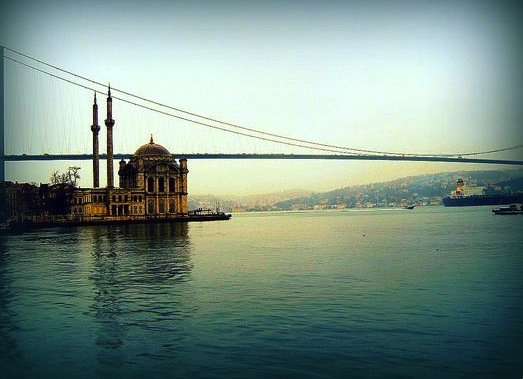
Bosphorus

Orhan Pamuk imagines life after the Bosphorus – the Turkish strait that separates Europe from Asia:

The Black Sea, we are told, is getting warmer, the Mediterranean colder. As their waters continue to empty into the great caves whose gaping holes lie in wait under the seabed, the same tectonic movements have caused Gibraltar, the Dardanelles, and the Bosphorus to rise. After one of the last remaining Bosphorus fishermen told me how his boat had run aground in a place he had once had to throw in an anchor on a chain as long as a minaret, he asked, Isn’t our prime minister at all interested in knowing why? I didn’t have an answer for him.

All I know is that the water is drying up faster than ever, and soon no water will be left. What is beyond doubt is that the heavenly place we once knew as the Bosphorus will soon become a pitch-black bog, glistening with muddy shipwrecks baring their shiny teeth like ghosts.

(Hat tip: Matthew Schantz. Photo of Ortaköy Mosque and Bosphorus Bridge by Wajahat Mahmood)

Pate No More

Preliminary research on baldness suggests an surprisingly common cure – Vitamin D:

Essentially, every hair follicle on your head produces a hair every two to six years and then lies dormant for a few weeks or months. For those who suffer from baldness, these follicles simply stop waking up over time. Then, a breakdown in communication stops new skin cells from becoming follicles — they become regular skin cells instead. The key to switching these cells back in the right direction are those vitamin D receptors, and so baldness researchers have been focusing all of their energy in this direction.

Previous Dish coverage on baldness here and here. I'm at peace with my billiard ball.

How Iran Handles Its Currency Crisis

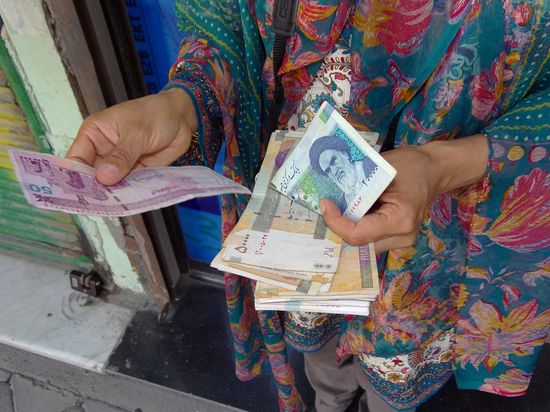
7421182372_3aa984f5a7_b

As noted earlier, the rial is continuing to lose its value under the weight of Western sanctions and is now trading at a record low against the dollar. The regime's response:

Mobile telephone text messages that included the word "dollar" in English or in Farsi were censored, with the message not being received, AFP noted. The Farsi word for "foreign money" was also blocked. But text messages containing the words "USD", "euro" or the $ symbol were all transmitted and received normally.

Such text blocks on the word "dollar" were implemented before in Iran, on January 10, when the rial also dived precipitously. The country's two main mobile phone service providers, MCI and Irancell, claimed at the time they were not filtering messages.

Several Iranian websites that usually give real-time foreign exchange rates had the dollar rate blanked out on Monday. One website, mesghal.ir, did give a dollar rate, but at 25,650 it was lower than that reported by money-changers.

Just like the chicken.

(Photo by Adam Jones)

No Room For Euphemism

A reader writes:

I've been fluent in American Sign Language for 20 years and even have Masters in Linguistics from Gallaudet – and that video [since removed from YouTube – other copy here] in your Hathos Alert was, by far, the most disturbing thing I have ever seen in ASL. Now I'm gonna have that guy's "O" face burned into in my brain for who knows how long, so thanks for that.

Another:

You have no idea of how hilarious I found that video with the signing Jehovah's Witness (JW). I'm an ex-JW and the most amusing thing, to me, is how the translators know how to gesture a "sin" they shouldn't really know how to perform. I followed the link to the actual video and knew enough about JWs to be able to track down the actual text the American Sign Language (ASL) interpreters were interpreting. It's here [pdf] if your readers want to peruse.

A deaf reader writes:

I get why it's funny, but still want to say something. 

The main guy started out awkward (I was looking forward to saying "pssh, stupid hearing person making ASL look bad") but he actually is quite good at ASL.  He was clear, grammatical, etc. As someone who's bicultural (deaf and hearing) it's a bit annoying for me that the video is viewed as "look at him doing funny masturbation faces hahahaha."  That's ASL.  You can't just do the handshapes and actually be using the language correctly.  All that other stuff (expressions, body orientation, etc.) is very much part of the language.

I shifted into ASL mode after several seconds (since I'm deaf, the soundtrack – I'm assuming something by R. Kelly – didn't register at all), and I had to get myself out of that mode to figure out what would possibly be "hathos"-y about it.  It was good signing.  I disagree with the message of course, but it was good signing.

The other part of ASL/deaf culture is that it's very blunt and matter-of-fact.  You don't use stupid euphemisms and stuff. You just tell it like it is.  If you're trying to remember the name of that one person you met last week you say to your friend, "Remember, she was really fat, she had brown hair about this long, big nose, horn-rimmed glasses…?"  There isn't any value judgment assigned to those things, it's just a description of what she looks like.  The person so described wouldn't take any offense, either.

Same goes for sex and sexual terminology.  Just use the proper signs for it and if someone gets all shocked and giggly about it that's seen as very "hearing" and/or immature. I'm not like Outraged or anything, just thought I'd offer my perspective.

Asked to elaborate more on "bicultural (deaf and hearing)", our reader follows up:

It can mean a lot of things, so for simplicity's sake I'll just say what it means for me – I became deaf as a teenager.  I was young enough that I learned ASL and became part of the Deaf culture, but old enough that my "native" culture was the general hearing culture.  I speak and lip-read well, so I have access to both. I learned how to switch between the two cultures, both in terms of languages (English and ASL) and cultural mores. It doesn't have to be about becoming deaf later in life though – for example, when deaf parents have a hearing child, that child is often bi-cultural (the "native" culture is deaf culture, but because that person is hearing they also operate within that culture). Hope that makes sense!

The Dish ran a short thread last year called "Deafness As Ethnicity" – read it here, here and here.

The Daily Wrap

GT_911-2_120911
Today on the Dish, Andrew reflected on newly excavated 9/11 attack intel – and what it implies about Romney's foreign policy. And while Mark Vanhoenacker asked whether the 9/11 memorial needed protecting, Reason complained about the cost of the Freedom Towers. A poem for Tuesday here, FOTD here, VFYW here and Tweet of the Day here.

Andrew then decried the GOP's stonewalling on taxes, argued for containing Iran and explained how Romney "sliming Obama personally could actually help the president."

Polls continued to show an Obama ascent, and as Millman wondered how Romney donors would respond to recent numbers, Hodgman discussed whose convention was better. While Dick Morris earned another Von Hoffman Award nomination, Matt Lewis pondered the recent conservative embrace of Bill Clinton and some liberal wingnuts Les Mis-ed their values.

Kevin Fallon revealed how Scott Van Duzer's life changed post-bear-hug, the ad war lulled for 9/11 and Seth Stevenson subjected himself to 45 hours of ads. Meanwhile, as Noah Millman and other showed there's more that meets the eye to the CTU strike, the blogosphere reacted to the issue.

In pot news, the Netherlands prepared to decide its weed policy, Ryan succumbed to etch-a-sketching on medical marijuana and the Snoop endorsement came down.

Patrick Walsh highlighted the difference between soldier and civilian gun background checks, Dan Ephron reported on the removal of Migron and after Megan McArdle questioned the value college degrees, Felix Salmon debunked some of her logic. Nate Silver praised meteorologists, Kraft bestrode the world and Pat Robertson advised a husband with an uppity wife.

While happy couples waited 182 days before having sex, readers sounded off on hookup culture and pushed back on Hanna Rosin's wage gap thesis. Muppets looked humanoid and antique repatriation had a downside. While Robert Provine put forth a theory on morning sneezing, football grew even more dangerous and Larry transitioned to Lana with support from family (plus the new Cloud Atlas trailer). News blooper MHB here, QOTD here and a sentimental VFYW contest here.

G.G.

(Photo by Stan Honda/AFP/Getty Images) 

A Poem For Tuesday

The poet Lucille Clifton wrote "September Song: A Poem in Seven Days" after watching the wreckage of the Twin Towers on television. She says, "I thought a lot about that and about the fact that my eldest daughter had, had a new baby girl five days before, and about love and continuing and fear and hope." The "Tuesday" poem from the sequence:

thunder and lightning and our world
is another place no day
will ever be the same no blood
untouched

they know this storm in otherwheres
israel ireland palestine
but God has blessed America
we sing

and God has blessed America
to learn that no one is exempt
the world is one all fear
is one all life all death
all one

Listen to Clifton read this and another section of the poem here.

“The Most Expensive Office Building In American History”

Reason complains about the cost of the Freedom Tower:

Meanwhile, construction on the 9/11 museum will resume:

Mayor Bloomberg and Governor Cuomo's dispute over which group should pay for and oversee the 9/11 Memorial and Museum brought construction to a halt in June, but on Monday night they finally reached a deal. "I’m very gratified that on the eve of this important anniversary we are able to announce an agreement that will ensure the completion of the 9/11 museum," said Bloomberg in a statement, adding that work "will be restarted very soon and will not stop until the museum is completed." Officials are hoping that the underground museum, which was scheduled to open on Tuesday before construction stopped after the tenth anniversary, will be completed by the end of 2013 — though it definitely won't be finished in time for next September 11.