Seeing What Cannot Be Spoken

Wittgenstein_photo

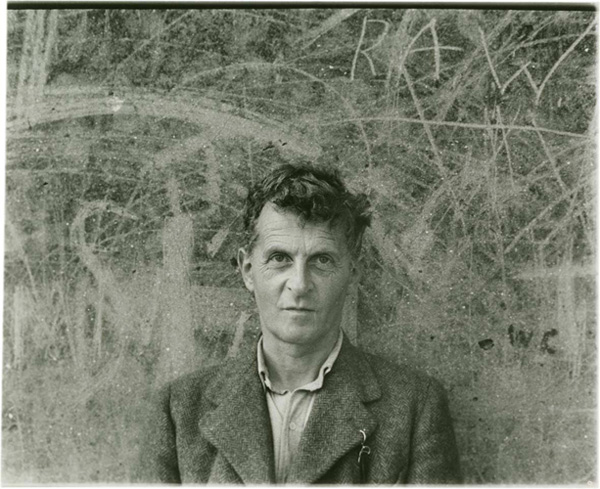
Recently, both the London School of Economics and Cambridge University featured an exhibition, "Wittgenstein: Philosophy and Photography," that included a remarkable series of images from the famed philosopher's life – family portraits, photos of a house he designed, and even photobooth snapshots. Ray Monk, Wittgenstein's biographer, shows why these photographs are not just historical curiosities, but rather point to the core of Wittgenstein's thought:

It was fundamental to Wittgenstein’s thinking – both in his early work Tractatus Logico-Philosophicus and in his later work Philosophical Investigations – that not everything we can see and therefore not everything we can mentally grasp can be put into words. In the Tractatus, this appears as the distinction between what can be said and what has to be shown. “Whereof one cannot speak, thereof one must be silent,” runs the famed last sentence of the book but, as Wittgenstein made clear in private conversation and correspondence, he believed those things about which we have to be silent to be the most important. (Compare this with the logical positivist Otto Neurath, who, echoing Wittgenstein, declared: “We must indeed be silent – but not about anything.”)

To grasp these important things, we need not to reason verbally, but rather to look more attentively at what lies before us. “Don’t think, look!” Wittgenstein urges in Philosophical Investigations. Philosophical confusion, he maintained, had its roots not in the relatively superficial thinking expressed by words but in that deeper territory studied by Freud, the pictorial thinking that lies in our unconscious and is expressed only involuntarily in, for example, our dreams, our doodles and in our “Freudian slips”. “A picture held us captive,” Wittgenstein says in the Investigations, and it is, he thinks, his job as a philosopher not to argue for or against the truth of this or that proposition but rather to delve deeper and substitute one picture for another. In other words, he conceived it as his task to make us, or at least to enable us, to see things differently.

The caption on the photo above reads: "Wittgenstein photographed under his own instruction in Swansea, Wales, 1947." A slideshow of Wittgenstein photographs, from where the above image is drawn, can be viewed here

Too Certain Times

Over his lifetime in the 17th century, Sir Thomas Browne tried to make sense of religion, reason and the mystery of creation. Reviewing a newly released collection of his work, Alexander Nazaryan finds relief in Browne's doubt:

The pervasive uncertainty of Browne’s writing offers a respite from the stifling certainties of today. We have religious zealots, just as the seventeenth century did—but we also have zealots of so many more varieties. We have had the end of history and the death of faith. Civilizations clashed, everything is post-something. Cassandras say we are digital drones; Panglosses say the Internet is freedom. We believe in St. Paul Krugman or St. Paul Gigot. Anyone who says we are a society lacking belief is not paying attention. If anything, we are lacking doubt.

Browne, who counselled with intimations of Ecclesiastes that “it is a vanity to waste our dayes in the blinde pursuit of knowledge” is an antidote to all this—to doomsayers and optimists and all those who prey on the human need to understand. He knew very little. We should all be so wise.

Face Of The Day

Screen shot 2012-08-31 at 12.11.29 PM

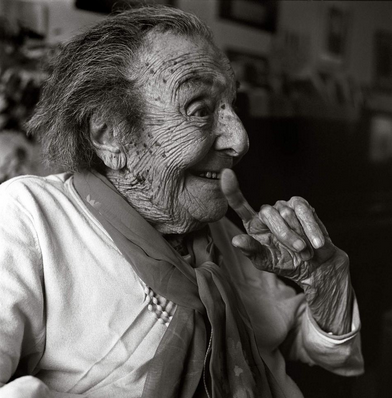
Claire O'Neill comments on Dennis Darling's portrait of Alice Herz-Sommer, 108, the oldest Holocaust survivor in the world:

Herz-Sommer was already an accomplished pianist by the time she was deported to Terezin, the concentration camp, in her early 20s.  Terezin (or Theresienstadt), in what is now northern Czech Republic, was a unique place. It served as a transit camp for western Jews en route to other camps like Auschwitz — but was also the temporary "home" to some of the most notable artists and cultural leaders from Germany, Austria and Eastern Europe.

Conditions were harsh, and only a small percentage survived. For many people like Herz-Sommer, art was the ticket to life. She would practice for hours and perform recitals for inmates. But those performances were also effectively used as propaganda when visitors like the Red Cross came through the camp: Especially at Terezin, Nazis exploited artists to give a false impression of civility to the outside world.

The picture is part of Darling's ongoing project to document Terezin survivors. You can see more of Darling's portraits at the Texas Performing Arts center this fall.

(Image courtesy of the artist.)

Astronaut Life Insurance

Robert Pearlman, a space historian and collector, explains the scheme that would have been used to provide for Neil Armstrong's family, should the worst have happened:

"These astronauts had been signing autographs since the day they were announced as astronauts, and they knew even though eBay didn't exist back then, that there was a market for such things," Pearlman said. "There was demand." Especially for what were called covers -– envelopes signed by astronauts and postmarked on important dates.

About a month before Apollo 11 was set to launch, the three astronauts entered quarantine. And, during free moments in the following weeks, each of the astronauts signed hundreds of covers. They gave them to a friend. And on important days — the day of the launch, the day the astronauts landed on the moon — their friend got them to the post office and got them postmarked, and then distributed them to the astronauts' families.

It was life insurance in the form of autographs.

Poems For Sunday

Morning

From Your Time Has Come by Joshua Beckman:

Oh atlas
look
you forgot my island.

*

Twisting river,
from up here
your deception seems honest.

*

Before she returned
I stepped slowly though the yard
as if to say, here an entire hour passes.

(Reprinted from Your Time Has Come © 2004 by Joshua Beckman, used with the permission of Wave Books and the author. Photo by Flickr user Mr. iMaax)

The Afterlife Of Your iTunes

There isn't one:

Someone who owned 10,000 hardcover books and the same number of vinyl records could bequeath them to descendants, but legal experts say passing on iTunes and Kindle libraries would be much more complicated. … Most digital content exists in a legal black hole. “The law is light years away from catching up with the types of assets we have in the 21st Century,” says Wheatley-Liss. In recent years, Connecticut, Rhode Island, Indiana, Oklahoma and Idaho passed laws to allow executors and relatives access to email and social networking accounts of those who’ve died, but the regulations don’t cover digital files purchased.

Mental Health Break

Life's little moments, captured:

Taking the first bite of a watermelon. Cracking an egg. Floating in the ocean on a sunny day. These are brief, seemingly inconsequential moments that almost immediately slip from memory as they pass, neither life-altering or particularly remarkable, and yet taken together they become a sort of texture of our lives. Filmmaker Vitùc recognized the importance of these small moments and collected several dozen of them in his new video short called The Pleasure Of that was shot in part with an iPhone 4s. 

Subtracted From Society

Brett Forrest traveled to Russia in search of a reclusive, eccentric genius – Grigori Perelman – who solved the Poincaré Conjecture, a theorem that had frustrated mathematicians for nearly a century. Before describing their meeting, including the three-day stakeout that led up to it, Forrest catalogued Perelman's strange life:

I liked his style. The more he did, the more I liked. In 2006 Perelman became the first person to turn down the Fields Medal, the top award in mathematics (there is no Nobel Prize in math). He has declined professorships at Princeton, Berkeley and Columbia. In 2010, when the Clay Mathematics Institute in Cambridge, Massachusetts awarded him a $1 million prize for proving the Poincaré conjecture, Perelman refused it. Unemployed these past seven years, he lives with his mother in a former communal apartment in St. Petersburg, the two subsisting on her monthly pension of $160. “I have all that I need,” Perelman has told his concerned Russian math colleagues, with whom he has severed all but the most perfunctory telephone relations.

Perelman last gave an interview six years ago, shortly after a collective of Ph.D.s finished a three-year confirmation of his proof. Since then, the domestic and international press have harassed him into reclusion. Perelman has spurned all media requests, muttering tersely through his apartment door against a wave of journalists. “I don’t want to be on display like an animal in a zoo,” he told one reporter. “My activity and my persona have no interest for society.” When one journalist reached him by phone, Perelman told him, “You are disturbing me. I am picking mushrooms.”

“This Universal Experience Of Being Alive”

The Library of America is set to release Jack Kerouac's Collected Poems. In an interview, the volume's editor, Marilene Phipps-Kettlewell, describes Kerouac's enduring appeal:

I heard the late Peter Gomes say in a sermon that the Incarnation proved a success when Christ cried out from the cross, “Father, why have you abandoned me!”—Christ felt then fully what it is like to be born human.

Kerouac’s poems still speak to us because he did undress for us, in order to reach this element of Soul that we all share, this universal experience of being alive, the human abandonment—the rage, the fear, the pain; the desire to partake of more of the goodness we encounter all too rarely, and which we could distribute much more selflessly, if it weren’t for the rage, the fear, the pain . . . we recognize it all in Kerouac’s poems, we empathize with him while being moved.

For true obsessives, the Kerouac scholar Paul Maher, Jr. sifts through the writer's archives to show what the new volume of poetry contains and what was left unpublished. Previous Dish Kerouac coverage here, here, and here.

If Your Friend Is A Pirate

Randy Cohen, who has written "The Ethicist" column in the New York Times Magazine for the last 12 years, just published a new book, Be Good: How to Navigate the Ethics of Everything. He claims the most frequent questions he gets asked fall into two categories: the ethics of the Internet and social networking (should you google someone before a first date?) and also what to do when you become aware of wrongdoing by others. His response to the latter:

The question I would receive the most was duty to report, as a class of question. People who had done nothing wrong themselves were aware of the wrongdoing in others, and they wanted to know when they had an obligation to come forward. The guideline for me is this: When someone is acting in a way that presents an imminent, serious threat to other people, you have an absolute duty to come forward.

So, you would – if you found out that your friend was a pirate and 50 years ago, you know, looted a ship and buried pirate gold, you don't have a duty to the community to set that matter right, to dig up that treasure chest and report your pirate friend. If your friend is about to attack another ship, then you have a duty to come forward.