Epistemic Closure In Uganda

Uganda_Ad

Rachel Adams interviewed David Bahati, author of Uganda's anti-homosexual bill. The entire episode is a fascinating, if disturbing, window into an incurious mind. This reply to a question about the "research" that informs the bill stands out:

We have enough information about how our society works. Family is between man and woman. Anything beyond that should be outlawed. Most of the research we have is just from life. My mom was with my dad. I know the Bible and the Qur'an are against homosexuality. When an anal organ is used for things it's not supposed to be used for, it's hazardous. I don't need to be taught anything beyond that.

Jim Burroway notes that Ugandan Parliament adjourned yesterday and won't resume its work until February:

[I]f today’s Order Paper is any indication(DOC: 41KB/2 pages), Parliament’s eagerness to take up the Anti-Homosexuality Bill appears to be waning. It has now fallen to number seven under “Notice of Business to Follow,” following some fairly mundane committee reports, after having held the top spot just two weeks ago.

(Photo: On December 11, 2012 a man looks at an ad protesting Uganda's anti-homosexuality bill in the state-owned Ugandan newspaper The New Vision. By Michele Sibiloni/AFP/Getty Images)

Generation XX

Tying in nicely with the Dish's thread on millennials, Swati Pandey reviews Twenty Something, written by the mother/daughter team of Robin Marantz Henig and Samantha Henig:

The Henigs do discuss the impact on millennials of the wide availability of birth control, changing sexual mores, and the postponement of childbearing for the pursuit of careers. Like a disappointing amount of writing on the question, they do not consider how men are dealing with all this change, how everyone’s choices are more complicated, how relationships falter over negotiations on pursuing careers and raising children, how sometimes, no matter our gender, we all want a husband (a breadwinner) or we all want a wife (a homemaker), but none of us wants to stick solely to one role because we no longer must. …

Written by two women, Twenty Something might have reflected on the gender bias of generational portraits. After all, the identities of the two most distinct American age groups, the Greatest Generation and the Baby Boomers, are framed primarily by whether their men fought or did not fight in wars. For millennials, for the first time, the experience of women may be the definitive one.

The Greatest Year Ever?

The Spectator nominates 2012:

Advances in medicine and technology mean that people across the world are living longer. The average life expectancy in Africa reached 55 this year. Ten years ago, it was 50. The number of people dying from Aids has been in decline for the last eight years. Deaths from malaria have fallen by a fifth in half a decade.

Nature can still wreak havoc. The storms which lashed America’s East Coast in October proved that. But the speed of New York City’s recovery shows a no-less-spectacular resilience. Man cannot control the weather, but as countries grow richer, they can better guard against devastation. The average windstorm kills about 2,000 in Bangladesh but fewer than 20 in America. It’s not that America’s storms are mild; but that it has the money to cope. As developing countries become richer, we can expect the death toll from natural disasters to diminish — and the same UN extrapolations that predict such threatening sea-level rises for Bangladesh also say that, in two or three generations’ time, it will be as rich as Britain.

Amelia Earhart’s Prenup

Dan Savage applauds her monogamish take on marriage. Lori Adelman is also impressed:

Reading through the document, one thing becomes very clear: this woman had a clear sense of what she wanted out of a marriage. And I find much of her marital vision compelling, even today. Earhart first expresses some trepidation about getting married at all ("You must know again my reluctance to marry…") for fear of derailing her career, which "means most" to her. Maybe it’s just me, but this kind of agonizing over work-life balance sounds like a distinctly familiar dilemma to the modern feminist. Earhart goes on to give the rough outline of an open marriage ("I shall not hold you to any midaeval [sic] code of faithfulness" and emphasizes rather than monogamy a goal of "finding happiness together", on which she finds the marriage to be contingent.

Amanda Hess, who stumbled upon the prenup last week, wonders:

Maybe part of our confusion stems from the fact that our "modern" view of marriage is actually quite retro.

As sociologist Claude Fisher explains, "Marrying rates and ages around the turn of the 21st century are more like those a century ago." The United States reached peak spinster in 1920, and there was a higher percentage of never-married women in 1930 than in 1998. And though Americans are marrying older today than we used to, we’re making up most of the difference by cohabiting first, not by flying around the world. Also confusing: When we quote figures marking the decline of marriage since 1960, we’re not looking back far enough. According to Fisher, "it was the 1950s-60s that were most unusual—not our era."

The Weekly Wrap

A98FrTECQAALp47

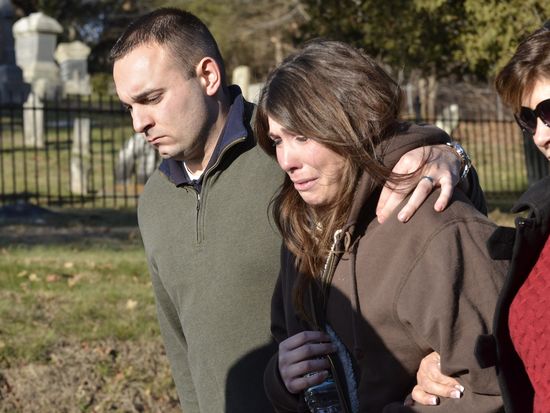
Friday on the Dish, we sadly followed the horrifying school shooting in Connecticut, covering the initial reports, then hearing from a reader who noted the difference between the shooting here and another school-attack in China, while other readers later elaborated on how the Chinese try to counter such violence. We also watched Obama's emotional press conference, rounded up commentary from across the blogosphere, published many readers' responses to the tragedy, and thought it would be a good night to feature a beautiful poem about children by Rainer Maria Rilke. Also, our Faces Of The Day are in the above photo, taken from one of the last tweets sent by Dawn Hochsprung, the principal of Sandy Hook Elementary School who was among those killed.

In other coverage, Andrew finally saw Zero Dark Thirty and reported that not only was the film not an apology for torture, it was in fact a compelling indictment of the Bush adminstration's war crimes as well, crimes that include the torture Khaled El-Masri received at the hands of the CIA. Andrew was also relieved to hear Obama did not seem interested in messing with Washington and Colorado's newly-legal weed.

In political coverage, Julia Preston checked in on the continuing pressure Obama faces over DOMA now that SCOTUS has taken the case, Erica Grieder told us why Texas doesn't yet have civil unions for same-sex couples, Stan Collender expected us to fall off the fiscal cliff, and Ezra believed that the White House was honestly seeking a deficit deal, while TPM reiterated that yes, Obama has a mandate in negotiations — though Douthat doubted the fiscal cliff would lead to any grand bargain.

In assorted coverage, Shafer dreaded the oncoming end-of-the-year listgasm, Michael C. Moynihan reflected on his expose of Jonah Lehrer, Chana Joffe-Walt examined Lego's dominance through quality control, Tim Heffernan introduced us the increasingly high-tech deer-hunting industry, and a reader contributed another story to our thread about sudden heroism, while other readers added their thoughts on the ways we can micro-pay for online content. We also explored why a new climate change report was leaked by one of its deniers, learned that paper towels were the most hygienic option for drying our hands, and admired a foggy morning in the Pacific Northwest through the VFYW.

The rest of the week is after the jump:

The headbutting king

Thursday on the Dish, Andrew differentiated his opposition to affirmative action from his support for marriage equality, ripped apart the bizarre reasoning of Justice Scalia's anti-gay statements, responded to the European Court of Human Rights' decision in favor of a former CIA-detainee, and raged against the GOP's filibuster abuse and "legislative terrorism".

In political coverage, readers rejected Andrew's federalist idealism on marriage equality, Mike Kinsley made a counter-intuitive argument for right-to-work laws, Larison expected 2014 to magnify the GOP's denial, Jacob Sullum looked at the DUI ramifications of legal weed, and Gary Gates gave us his analysis of how gays delivered the election for Obama, an assertion readers later disputed. Speaking of the election, Phllip Klein reminded Republicans that they lost (earning himself an Yglesias nod), while Robert Kuttner noted the judge deficit on the federal bench, Balko had trouble finding out how many people get killed by the police, John B. Judis believed taxing the rich might prevent them from damaging the economy, Razib Kahn suggested more fertility-freezing as a way to reduce health care costs, and Michael C. Moynihan explained how his only regret about Draw Mohommad Day was that not enough people participated. We also tried to figure out what the GOP would want to cut, discovered how much illegality adds to the cost of drugs, and our popular letters from millennials thread expanded to include the views of Generation X.

In international coverage, we came to better understand Cambodia's car-racing problem, and Steve Coll thought through the complicated situation facing Egypt's Muslim Brotherhood. In assorted coverage, Hunter Oatman-Stanford told us the nautical history of tattoos, Hamish McKenzie explored the micropayment options available to content providers, Paul Campos tracked the decline of law-school applications, Alyssa wished female fantasy-authors could keep their names, and Creative Review highlighted an ingenious ad campaign using faux self-shots. Readers chimed caroled in with their thoughts on how best to express our season's greetings, while we finally located the news that Google had put an end to the Apple Mapocalypse, learned not to eat at our desks for a reason other than crumbs, examined new research into the gene "instructions" which may cause the trait of homosexuality, and watched the "head-butting king of the world" take on some honeydew. DMX knew the most famous reindeer of all in our MHB, Copts prayed for Egypt in our FOTD, and it was a sunny afternoon in Arizona through the VFYW.
Screen shot 2012-12-12 at 1.26.07 PM

Wednesday on the Dish, Andrew laid out his ideal fiscal cliff solution, noting that he now believes an additional stimulus should be included. He also continued to take on the torture in Zero Dark Thirty's plot, pointed out that Obama definitely has a mandate to wield against the GOP on tax rates, spoke with Carl Swanson about adjusting to NYC, and stood by his Federalist ideals — even when it came to marriage equality.

In political coverage, we published more letters from millennial voters, this time weighing in on their generation's economic and employment concerns, while other readers responded to Mitch Daniels' Federalism, R.M. reminded us how little an effect tax rates or the Medicare eligibility age will actually have on the debt, Michael "pre-chalkboard" Moynihan reviewed Glenn Beck's business prowess, and Bouie and Bernstein wondered if the GOP could get by with only a superficial makeover. Also, David Frum pwned Marc Thiessen, Dylan Matthews suggested more sensible "scheduling" of illegal drugs, Aaron Carroll did a life-expectancy reality check regarding the Medicare eligibility age discussion, and we again considered the economics of having children, as well as tried to guess which SCOTUS judges were itching to take on Prop 8. Looking overseas, Millman dismissed any possible one-state solution for Israel and Palestine, Melanie Kirkpatrick reported on the setup of North Korea's underground railroad, and the (translated) Prime Minster of Cambodia supported gay and lesbian speed-limit adherence.

In assorted coverage, Mark Hertsgaard sounded the alarm over climate change's impact on wheat, Bill Nye proved climate change was real, a reader pushed back on the idea of micropayments for journalism, Roben Farzad broke down the success of the fund manager Vanguard, Penn Jillette defended the use of "Happy Holidays", and Judith Shulevitz worried about the fewer years parents who delay having kids will be able to give those kids once they become adults. Vaclav Smil debunked the dream of the electric car, Laura Beck called out Weight Watchers for being ineffective, Louis Menand offered his take on the prevalence and importance of homework, Kirsten Hively explained the magic of classic neon signs (and hoped we would help her preserve them), and more readers wrote in to join our Roid Age discussion about the modern bodies of men and women. We also aired more debate about the prospects of tablet-only journalism, discovered that algorithms have biases, and loved to hate how well a toilet handled not only hot dogs, but a surprisingly-specific number of chicken nuggets. Buzzfeed rounded up the year in perfectly-timed photographs in our MHB, Dick Butkus went to Washington in our FOTD, and it was pleasant in Pleasanton through the VFYW.
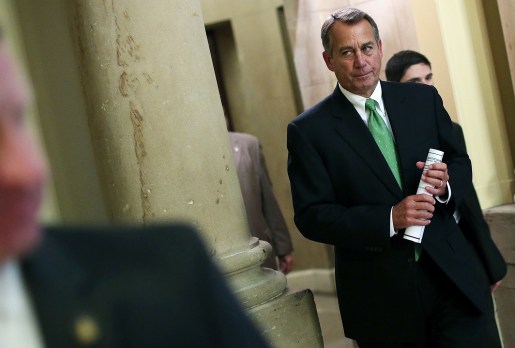
GT BOEHNERFISCALCLIFF 20121211

By Win McNamee/Getty Images

Tuesday on the Dish, Andrew anticipated the first papal tweet, responded to Dan Savage's debunking of the idea of "normal" sex, went another round rejecting the possible use of torture as a plot device in Zero Dark Thirty (which he'll be seeing later this week), and asked readers to help us decide what we should ask the wonderful David Kuo.

In political coverage, Mitch Daniels defended Washington and Colorado's federalism, Bruce Bartlett summed up the latest GAO debt report, Michael C. Moynihan highlighted some libertarian insights regarding climate change, Masket and Drum offered a rosier assessment of Democrats' 2014 chances, and Glenn Beck earned an Yglesias nod for wanting to keep government out of marriage. We also aired some pushback from Larison and Greg Scoblete on Beinart's assertion that Obama is deliberately "standing back" on the mess in Israel, examined voters' anxieties over the secrecy of their ballots, again explored Obama's drug policy dilemma(s), and posted some reader rejections to Andrew's connection of gay marriage to legal weed. Our thread of letters from millennial readers continued as well, this time weighing in on the costs of higher education. In international coverage, Nathan Brown and Ellis Goldberg debated the importance of Egypt's constitution, Dan Trombly doubted the efficacy of Assad's chemical weapons in preserving his rule, and Kevin Hartnett celebrated the addition of deaf camera-watchers to a Mexican police force.

In assorted coverage, we marveled at a new gravity-powered light, a kind of innovation Andrew found very promising, though readers later wrote in to let us know it wasn't exactly gravity that made the light run. Also, readers suggested micropayments as an alternative to journalism paywalls/meters, Alastair Bland worried about our over-reliance on GPS devices, Pareene appreciated the parent-friendly boozing of cruise-ship vacations, Louis C.K. was a magazine-interview anti-hero, Ian Crouch considered how difficult it was to adapt a novel into a film, and Clay Risen explained the history of the anti-Santa Claus (an "evil, goat-horned spirit" named Krampus).We had a lot of fun going through readers' answers to this week's VFYW contest, heard about the development of high-tech, practically invisible condoms, listened to some landscape architects' complaints about 9/11's effect on the National Mall, and we continued our Roid Age thread with some feminist perspectives from readers. Nicola Twilley reported on what it's like to work in refrigerated warehouses, Emma Komlos-Hrobsky tried to avoid worshipping the myth of Sylvia Plath, biographer Jonathan Bate was intimidated by the letters of John Keats, Rachel Sagner Buurma shared the history of epigraphs, William Hudson helped us get more meat in our burrito bowls at Chipotle, and David Thomson reviewed a new film that documents a woman's death that somehow no one noticed for three whole years. Lastly, Snoop Dogg Lion battled Santa Claus in our MHB, we checked in on Michigan's Right-To-Work fight in our FOTD, and we visited Scotland in the VFYW.

Minneapolis-5pm

Minneapolis, Minnesota, 5 pm

Monday on the Dish, Andrew criticized the possible use of a torture-lie plot-device in Zero Dark Thirty, responded to British conservatives' backing of marriage equality, and joined readers to discuss the maddeningly-high tolerance for Republican quitters. Andrew and others also wondered if the GOP could improve its image by opposing weed prosecutions, and he additionally took on Kleiman over federal drug enforcement and pot dependancy.

In political coverage, Charlie Cook previewed Democrats' poor prospects for 2014, Michael C. Moynihan tried to debunk the anarchist-straw-man argument against libertarianism, a reader identified DADT and DOMA as historical growing pains, and we featured more letters from millennial voters, this time defending the generation from naysayers, as well as making us aware of the slightly-older voters whose childhoods lacked an "overarching boogeyman" to oppose. Suderman and Ezra debated a return to Clinton-era spending limits, Beinart explained Obama's "standing back" policy with regards to Israel, McKibben took on Hillary for her possibly unethical support of the Keystone XL Pipeline, and if Obama goes after legal weed, Pareene advised drug reformers to wield a new litmus test for political candidates. We also rounded up more reactions to Friday's SCOTUS decision to take up marriage equality and DOMA, tried to figure out if Obama would raise the Medicare eligibility age, and discovered that not only is Dick Morris always wrong, he's likely a con artist too. Looking overseas, we tracked the developments in Egypt's political crisis, as well as reviewed the country's democratic chances, while Eyal Weizman detailed Israel's use of "teaser bombs" to clear targets of civilians before larger airstrikes, and Kay Hymowitz examined how Sweden may be suppressing women's careers with the very policies they designed to enable them.

In assorted coverage, we collected the best new commentary on journalism meters and paywalls, Josh MacPhee and Nick Carr considered Kickstarter's fee structure, Paul Gabrielsen explored the use medical maggots, Wesley Law photographed bales of donated clothing, and another reader shared their experience being a sudden hero, this time at the beach. Readers also responded to toy companies' gender neutral marketing, while Scott Adams dreamt of a better to-do app and Devin Leonard looked at the rise of luxury home-healthcare. Slavoj Žižek hated Gangnam Style to earn himself a poseur alert, video game characters died dumbly in our MHB, there was ample snowfall through our Minnesota VFYW, and we met a few of India's hidden drug users in our FOTD. The weekend wrap is here.
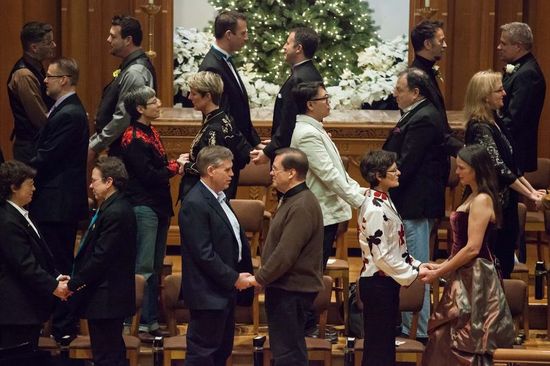
6a00d83451c45669e2017ee6196135970d-800wi

By David Ryder/Getty Images

Last weekend on the Dish, Andrew riffed on SCOTUS and gay marriage while nominating George Will for an Yglesias Award, meditated on Christianity and death, told the GOP to read John Stuart Mill, and noted a charming anecdote about jazz legend Dave Brubeck.

In matters of faith, doubt, and philosophy, Nick Olson deciphered the religious meaning of The Life of Pi, Morgan Meis learned from St. Francis of Assisi, Patrick Jarenwattananon covered the religious side of Dave Brubeck, Mary Karr told us how she prays, the LDS launched a new website about being gay and Mormon, and Nick Cave turned to the Bible for great love songs. Costica Bradatan argued that philosophy is a way of life, Susan Jacoby profiled the 19th century secularist Robert Green Ingersoll, Thomas Beller considered photography and memory, Edward Shorter highlighted the difficulty in diagnosing personality disorders, and Robin Hemley asked about the persistence of curses.

In literary coverage, Zoë Heller eviscerated Salmon Rushdie's new memoir, Lydia Kiesling reviewed Kurk Vonnegut's letters, Ben Zimmer detailed how the Oxford English Dictionary helped Tony Kushnerwrite Lincoln, and Tina Rosenberg recounted the true story of British spy novelist Dennis Wheatley. Helen Vendler worried that Ive League admissions systematically exclude artists and writers, Henri Cole pondered the relationship between selfishness and writing, Silas House revealed his writing habits, and Faith Barrett described poetry's role in the Civil War. Read Saturday's poem here and Sunday's here.

In assorted news and views, Ricardo Cortés discussed the secret history off coffee and coca, Rachel White reported on the rise of red state surrogate mothers who carry children for gay couples, Emma Marris explained the uptick in liberal urban hunters, Debbie Nathan explored the nudist origins of the ACLU's defense of sex acts, and John Davis taught pot entrepreneur's about banking. Alyssa Rosenberg found the truth in a viral video about gender roles, Maria Popova praised John Homans' new book about dogs, G. Murphy Donovan held that proper meals hold civilization together, and James Flynn dissected how retirement might impact IQ. Check out another Bill McKibben "Ask Anything" video here, MHBs here and here, FOTDs here and here, VFYWs here and here, and the latest window contest here.

– C.D. & M.S.

Childhood

158375872

It would be good to give much thought, before
you try to find words for something so lost,
for those long childhood afternoons you knew
that vanished so completely –and why?

We're still reminded–: sometimes by a rain,
but we can no longer say what it means;
life was never again so filled with meeting,
with reunion and with passing on

as back then, when nothing happened to us
except what happens to things and creatures:
we lived their world as something human,
and became filled to the brim with figures.

And became as lonely as a sheperd
and as overburdened by vast distances,
and summoned and stirred as from far away,
and slowly, like a long new thread,
introduced into that picture-sequence
where now having to go on bewilders us.

– Rainer Maria Rilke.

(Photo: Parents leave Sandy Hook Elementary School in Newtown, Connecticut, with their children on Friday, December 14, 2012. By John Woike/Hartford Courant/MCT via Getty Images.)

The Horror In Newtown: Reader Reax

158374954

A reader writes:

My boys are about the same age as the victims – 7 and 5. The immediacy of this morning is very real and utterly horrific. My spouse emailed me to say she cried in her office. My personal, emotional reaction to this story, is that I am done – done with the absolutists whose only contribution to the conversation is that there be no comprise, that it be all or nothing. I am done. Period. It is time to have the conversation again, to break the Second Amendment taboo and have a civic conversation. I suspect patience/tolerance towards the far right will be in short supply. The blood of innocents is a deeply rooted, ancient, psychological thing. And these were innocents in the purest sense.

I am very far away in Seattle, but this kindles a certain sadness and fury I have not had since 9/11. This has to change. My heart tells me the response will likewise be primal and communal. Maybe I am completely/emotionally wrong. Yet, it is in these moments when the tide turns and public sentiment sweeps away barriers that the day before seemed so strong – this feels like one of those moments. Today is not the day … but tomorrow may be.

Another:

Guns don't kill people – people do. By the same token, planes don't kill people – people flying them into buildings do. And yet, I recall that we immediately and decisively worked to keep deranged people from gaining possession of planes when a handful of those people used them as tools of mass murder; indeed, we made it much more difficult for the overwhelming majority of peaceful, law-abiding citizens to board a plane.

Another:

If the mass-murder of children isn't enough to actually do something about gun control, I don't know if we'll ever have the courage to do anything.

At least start with background checks, eliminating the gun-show loophole. Then an assault-weapons ban would be nice. Nothing good can come from unstable people having guns. And you don't hunt deer or protect your family with assault-weapons. If you like cool gadgets, get a PS3, or noise-cancelling headphones, or something.

Today, as you noted, there was also an elementary school assault in China, where private gun ownership is prohibited. Some kids were horribly injured by the knife attack, but no one was killed. Guns do make it much easier to kill people. The defense of "Guns don't kill people. People kill people" needs to be retired. It's as idiotic as "Fried food doesn't make you fat … unless you eat it."

I know it's easy to say guns aren't the problem if you haven't been in this situation. But people need to put themselves in the shoes of the children who survived, who will live the rest of their lives with the scar of losing their best friends while their social development was just beginning. And think of the parents, some of whom may not have other children and may not be able to have another in the future. Their children were everything to them. Their lives were built for and around these kids who were stolen from them by a lunatic with a near military-grade weapon. And the teachers, many of whom grow to love and care for their students almost as if they are their own.

If you don't think we need more gun control, try to see it from the perspective of these kids and parents. That's a good rule, not only in this situation, but for life in general. Try to see things from the perspective of the victims, not the unaffected.

Another:

I've been reading the comments and comparisons of today's massacre with the attack in China, and I've got to tell you it only adds to the sadness and disgust I'm feeling. I think anyone making that comparison is missing a fundamental point. Do we want to be a society that compares itself to China and feels somehow absolved by coming up only slightly short, regardless of the weapon employed? I've spent time there – China is an insecure, deeply troubled society with a lot of violence bubbling beneath the surface. What makes me sick is that we are increasingly the same way.

As I drove around today, my day off, all I felt was sadness and disgust listening to the radio. The complete unwillingness to reflect on why this country is so full of violence. I could never feel anything but contempt for the asshole who did this, but the truth is we are a nation of assholes. I include myself in that. Most radio stations I heard could only be bothered to touch on this massacre of children for a moment or two before getting back to the critical topic of football. That wonderful game full of violence that has no regard for the well being of the young men who play it. It was such an apt representation of the priorities of our country. I watch it too, but at least I'm willing to examine it.

The radio stations that did discuss the killings were quick to blame silent doctors for protecting the crazies, then followed the obligatory self congratulation about how so many Americans are decent and come together at times like this. No where to be found was any discussion of why we breed such violence, what sicknesses in our collective unconscious give rise to such soaring levels of senselessness. I live in Baltimore, I hear it everyday. A murder everyday, often of children, and we're still such a great town because we've got the Ravens and what a great season the Orioles had. Sports are just one example of many, many childish distractions that we use to ever avoid looking in the mirror.

I'm a conservative in the vein you are, and I still think this country is exceptional, but our heads are too far up our own asses to look at why we kill each other at exceptionally high rates. If even the massacre of innocent children won't wake us up, it's because we've become a nation of children!

Another looks to the right-wing blogosphere:

Only Drudge headlines the atrocity in Newton.  There is a Fox news clip buried deep on the National Review's front page.  Nothing on The Corner.  Nothing on Michelle Malkin.  Nothing on Red State (I don't think, best as I could tell from the front of the paywall).  

Did I cherry pick the right wing sites?  Yes.  Did I want some response, even if it would opine something (again) about the danger of jumping to conclusions, about people killing people, about guns as necessary machines of defense?  Yes.  Why?  TWENTY CHILDREN ARE MURDERED IN A KINDERGARTEN CLASSROOM and half of the bloggers on our political spectrum are not reporting it!   I can picture these people, definitely horrified by the killings, but also slapping their heads thinking "Aw jeez, not again, these crazies are really giving us a bad name," all the while constructing some appropriately sympathetic-but-not-damaging-to-their-benefactors column. It's good to think before you type.  But sometimes, it's good to just think - and I really hope that that is what these defenders of guns-for-all are doing.

Another reacts to Obama's press conference:

This paragraph carries more weight than it seems at first glance:

As a country, we have been through this too many times. Whether it is an elementary school in Newtown, or a shopping mall in Oregon, or a temple in Wisconsin, or a movie theater in Aurora, or a street corner in Chicago, these neighborhoods are our neighborhoods and these children are our children. And we’re going to have to come together and take meaningful action to prevent more tragedies like this, regardless of the politics.

Tying the American habit of shooting strangers in public spaces with the American street crime epidemic is the first step towards bringing conversations about all crime together under a single rubric. Which means its the first step towards serious discussions about controlling guns. Maybe.

Another:

I also want to say one thing about the president crying. My first thought when I saw it happen was that that is no way for a president to respond. I don't buy all that "president is father of the nation" bunk, but I do think in situations like this, there is more truth to it than at other times. I thought he should be a source of stability and calm, and when he cried he was betraying that responsibility. 

Yet, after that initial reaction, I began to think the opposite. This is a president who has had to console families after the Giffords shooting, the Aurora shootings, and others, and now he is faced with the unambiguously and overwhelmingly senseless murder of kindergarteners. There really isn't anything more sorrowful and lamentable than that, and composure wouldn't have been an apt response in my view. (Now if he tumbles into a pit of dispair, that's another thing.)

I'm not sure if he's been criticized or of he will be, but I think it would be senseless to expect anyone, even the president, to present a false sense of composure in the face of something so clearly tragic and inhumane.

It revealed why I love this president as a human being. Another:

After all these years of hearing from politicians of both parties – both publicly and personally, in response to my letters – that there's nothing we can do, I can't tell you what it meant to me to see even a small indication that the President Obama might genuinely take responsibility for preventing future school shootings and get other elected officials to do the same.  These are public institutions, and we need to figure out how to make people safer there, to say nothing of the broader problem of gun violence in this country.  We probably don't want to see our public officials crying most of the time, but watching our president fight back tears gave me hope, and in that moment I truly loved him for that.

Another notes a news item from Michigan:

Changes to the concealed weapons law passed the [GOP-controlled] state House and Senate late Thursday, allowing trained gun owners to carry their weapons in formerly forbidden places, such as schools, day care centers, stadiums and churches.

No word post-Newtown on whether the Republican governor will veto it. I'd bet against it.

Blog reax here.

(Photo: Scene outside Sandy Hook Elementary School in Newtown, Connecticut, where a gunman opened fire inside the school killing 27 people, including 18 children. By Howard Simmons/NY Daily News via Getty Images)

The Horror In Newtown: Blog Reax

158375350

Fallows wonders when America will learn its lesson:

Guns don't attack children; psychopaths and sadists do. But guns uniquely allow a psychopath to wreak death and devastation on such a large scale so quickly and easily. America is the only country in which this happens again — and again and again. You can look it up.

Ezra adds:

Only with gun violence do we respond to repeated tragedies by saying that mourning is acceptable but discussing how to prevent more tragedies is not. But that’s unacceptable. As others have observed, talking about how to stop mass shootings in the aftermath of a string of mass shootings isn’t "too soon." It’s much too late.

Eugene Volokh rounds up instances of citizens with guns confronting shooters:

[I]t appears that civilians armed with guns are sometimes willing to intervene to stop someone who had just committed a mass shooting in public. In what fraction of mass shootings would such interventions happen, if gun possession were allowed in the places where the shootings happen? We don’t know. In what fraction would interventions prevent more killings and injuries, as opposed to capturing or killing the murderer after he’s already done? We don’t know. In what fraction would interventions lead to more injuries to bystanders? Again, we don’t know.

Finally, always keep in mind that mass shootings in public places should not be the main focus in the gun debate, whether for gun control or gun decontrol: They on average account for much less than 1% of all homicides in the U.S., and are unusually hard to stop through gun control laws (since the killer is bent on committing a publicly visible murder and is thus unlikely to be much deterred by gun control law, or by the prospect of encountering an armed bystander).

Tom Jacobs reviews research on gun control:

[I]f you hear the argument "Gun control wouldn’t have prevented tragedies like the one in Connecticut," the answer is: That’s probably true. But it would lessen the likelihood of a lot of other, smaller tragedies that receive less publicity, but still cause enormous pain.

Frum weighs in:

A permissive gun regime is not the only reason that the United States suffers so many atrocities like the one in Connecticut. An inadequate mental health system is surely at least as important a part of the answer, as are half a dozen other factors arising from some of the deepest wellsprings of American culture. Nor can anybody promise that more rational gun laws would prevent each and every mass murder in this country. Gun killings do occur even in countries that restrict guns with maximum severity. But we can say that if the United States worked harder to keep guns out of the hands of dangerous people, there would be many, many fewer atrocities like the one in Connecticut.

Goldblog's advice on how to prevent such shootings:

We must find a way to make it more difficult for the non-adjudicated mentally ill to come into possession of weapons. This is crucially important, but very difficult, because it would require the cooperation of the medical community — of psychiatrists, therapists, school counselors and the like — and the privacy issues (among other issues) are enormous. But: It has to be made more difficult for sociopaths, psychopaths and the violently mentally-ill (who, in total, make up a small portion of the mentally ill population) to buy weapons.

What Ambinder would do

The answer to me is fairly obvious: Everyone who wants to have access to a gun can do so provided they register their weapon and get state-sanctioned training. The types of guns that people can carry on their persons ought to be limited to those made legitimately for self-defense. The gun show loophole should be closed; with the exception of family-to-family transactions or old weapons given as gifts, every sale or exchange of a weapon must be registered. The instant background check will be replaced for new gun owners with a state-approved training course that includes a more extensive background check. (Each state course would have to meet basic federal guidelines but could differ in the particulars.)

Alex Koppelman considers the politics:

We are, all of us, angry now. Bewildered. And those of us who support gun control are perhaps maddest of all—right now. When it comes to Election Day, though, it’s the pro-gun people whose vote is most likely to be determined by this one issue. Those who want tighter restrictions, well, they typically have higher priorities to consider first. Put simply, supporting gun control is unlikely to help your typical politician much, but it’s very likely to hurt them. And Democrats know the numbers: they can’t lose any more white voters than they already have, especially not white voters in union families. And a lot of union households are gun-owning households, too.

And Alyssa sighs:

I really want someone who advocates against gun control to balance the scales for me, to go ahead and try to explain to me why the inconvenience suffered by gun owners and prospective gun owners under much tighter restrictions on the purchase of guns and ammunition outweighs the death of children in their classrooms, a place where they’re not just supposed to be safe, but to thrive. Explain to me why their suffering is worse than that of the people who died, and lost family members, in the rampage at Aurora, Colorado, where they were drawn to a midnight screening of The Dark Knight Rises out of enthusiasm, because it’s a time when parents with infants can see a movie and trust that they’ll sleep through the screening. Please, balance out for me, the loss of Gabby Giffords’ potential with impatience at a waiting period, or frustration at not being able to fire a certain number of bullets per minute.

Because this is the choice we make, every time. And I’m terrified to watch us make it again.

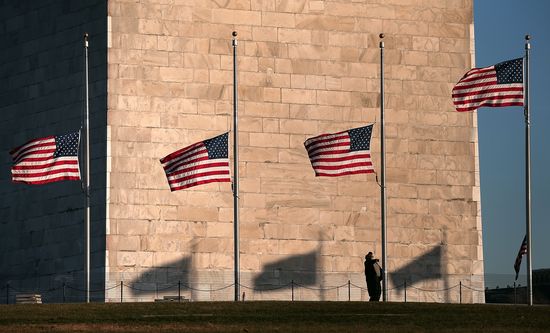
(Photo: A National Park Service employee lowers flags at the base of the Washington Monument to half staff after President Barack Obama ordered the action while speaking on the shootings at the Sandy Hook Elementary School December 14, 2012 in Washington, DC. Obama called for 'meaningful action' in the wake of the latest school shooting that left 27 dead, including 20 children. By Win McNamee/Getty Images)

How School Massacres In China Are Different

98758587

A reader writes:

I just read your post about the reader who heard of the knife attack in China and pointed out the difference between that and Newtown. But there's another point to be made: whenever I've heard of the Chinese attack mentioned on cable news over the last few hours, it's to make the opposite point: the commentators have all said this is a sign that these attacks are international – the implication being that nothing can be done, not that the guns are at fault.

Another notes:

There is an entire Wikipedia entry dedicated to a spate of school attacks in China from March 2010 through 2011. They all involved blades of various types, as well as hammers. While today's attack in China resulted in zero fatalities, that series of six attacks resulted in 21 dead and some 90 injured.

For an average of 3.5 deaths per attack. Newtown alone is upwards of three dozen.

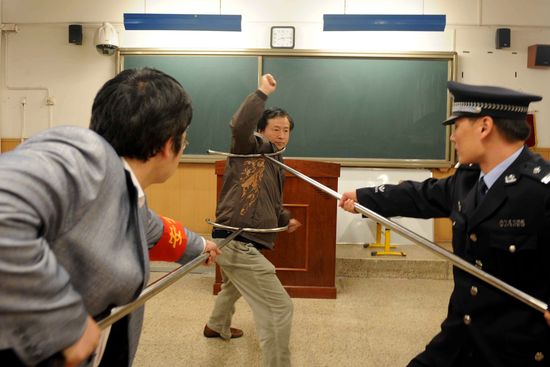
(Photo: Chinese policemen show teachers and school workers how to defend themselves during an attack, at a school in Beijing on April 29, 2010. Authorities across China have ordered stepped-up security at schools and increased police patrols near campuses after a wave of knife attacks targeting children. By Getty Images.)