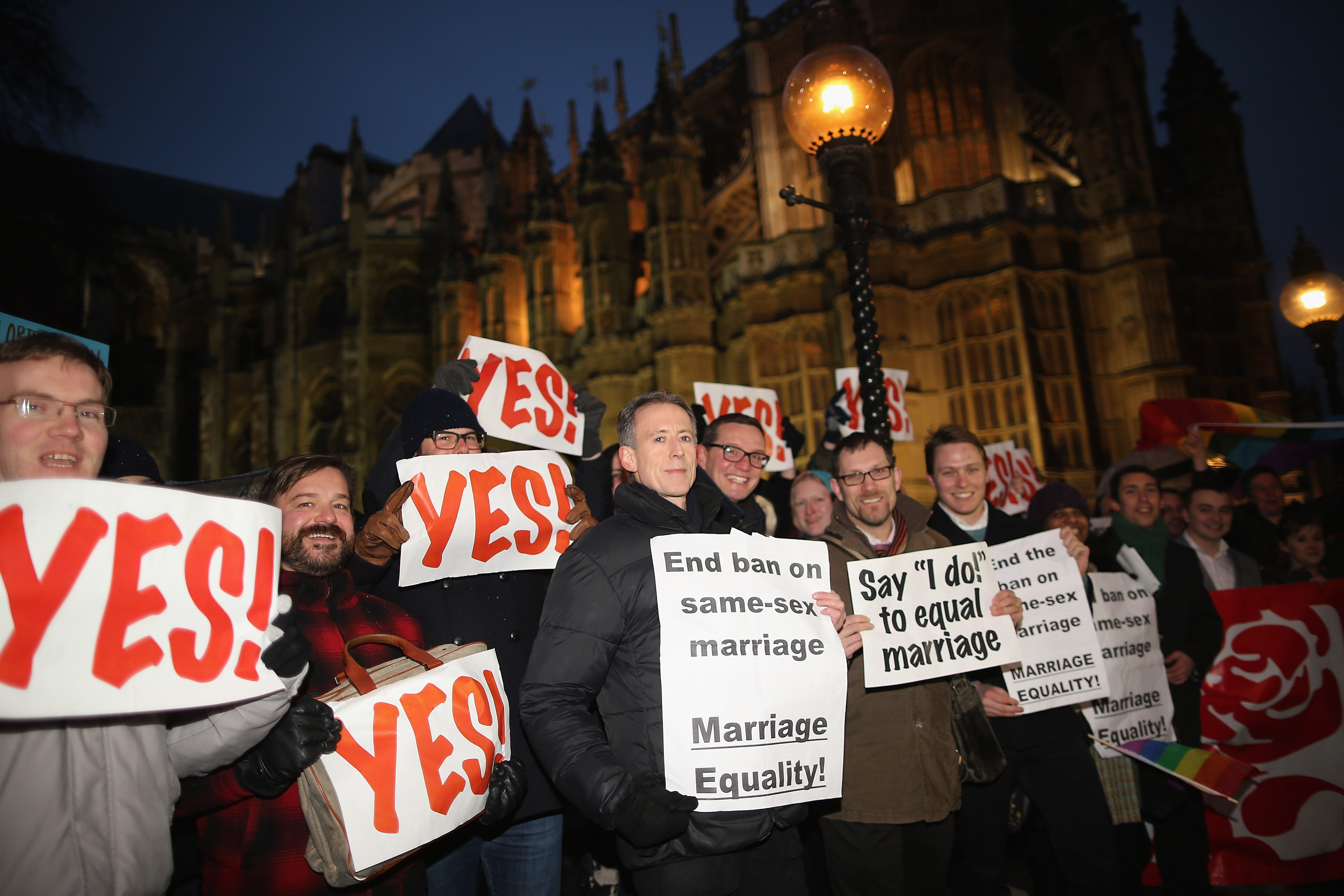
400 – 175 For Marriage Equality In Britain

Parliament Set To Vote On The Government's Contentious Gay Marriage Bill

That was the lop-sided majority in the House of Commons today. The debate allowed for a free vote, meaning no partisan pressure or whip. How civilized – not to turn a question of conscience and prudence into a wedge electoral issue as Karl Rove cynically did in 2004. And it was a largely civil affair that went on for five hours:

Sir Tony Baldry, Tory MP for Banbury, and also Second Church Estates Commissioner, spoke respectfully against the bill. “I am confident that we are all created in the image of God, whether we be straight, gay, bisexual or transsexual. We’re all equally worthy in God’s sight, and equally loved by God, and I’m also sure that we are, and should be, equally welcome at God’s table. But equalness does not always equate with being the same.”

Some speeches were deeply personal. Mike Freer, Tory MP for Finchley and Golders Green, said entering his civil partnership had been the proudest day of his life: “It was our way of saying to my friends and my family, ‘This is who I love, this is who I am, this is who I wish to spend the rest of my life with’.” But he wanted the right to marry, too. “I’m not asking for special treatment. I’m asking for equal treatment.”

Notice the vital presence of openly gay Tory MPs. The bill now goes to the House of Lords, where it will face some resistance – but the fact that the margin was so decisive in the House and that all three party leaders back the measure – means that the UK remains poised to join the many countries and states that allow gay people full and equal citizenship. One Tory MP, Margot James, raised the specter of the US GOP in a warning against Conservative MPs who were opposed:

“I believe my party should never flinch from the requirement that we must continue this progression, otherwise we may end up like the Republican party who lost an election last year that they could have won were it not for their socially conservative agenda.”

It got personal at times:

Stephen Timms, the shadow employment minister, was interrupted by his Labour colleague Lyn Brown when he said that the bill would undermine the central basis for marriage – raising children. Brown, 52, said: “[He] was at my wedding and I was not young when I got married. It was highly unlikely that I was going to be able to, after all that time, procreate. Is he telling me that my marriage is less valid than anybody else’s?”

Timms said: “No, I certainly am not and I was delighted to attend [her] wedding…Children are the reason marriage has always been so important. If it was purely about a loving relationship between two people then it would have been much less important than it has actually been.”

The Tories disappointingly split – with a narrow margin against the bill:

The result meant that the prime minister, who won the support of an estimated 126 Conservative MPs, failed to win over half of his 303 MPs.

Cameron seems to have screwed up the politics of this:

A promised statement by the prime minister was hurriedly recorded for television cameras late on Tuesday afternoon four hours after Maria Miller, the equalities minister, had opened the debate.

One reformer said: “The prime minister couldn’t even be bothered to turn up in the chamber. That is so fucking rude. This will have a corrosive effect. The politics around this have been so bad.” … Tory modernisers were horrified by the speeches by opponents of reform. One minister said: “Yes we can confidently say that the Tory party is divided – and divided right down the middle on this one. And with the help of four or five speeches we have been taken back more than 50 years to the horrors of the 1950s.”

Well, as George Will recently pointed out, those who still harbor the attitudes of the 1950s are literally dying. And this was a momentous day. In the 1950s they were still injecting one of the greatest English minds of all time, Alan Turing, with hormones to cure him of himself. Now, gay Brits will soon have the fundamental non-negotiable right to marry the person they love; and if that person is an American, even live together in the UK. One day, maybe America, where this whole question was kick-started, will catch up. And so will the GOP.
Loving Your Muslim Neighbor

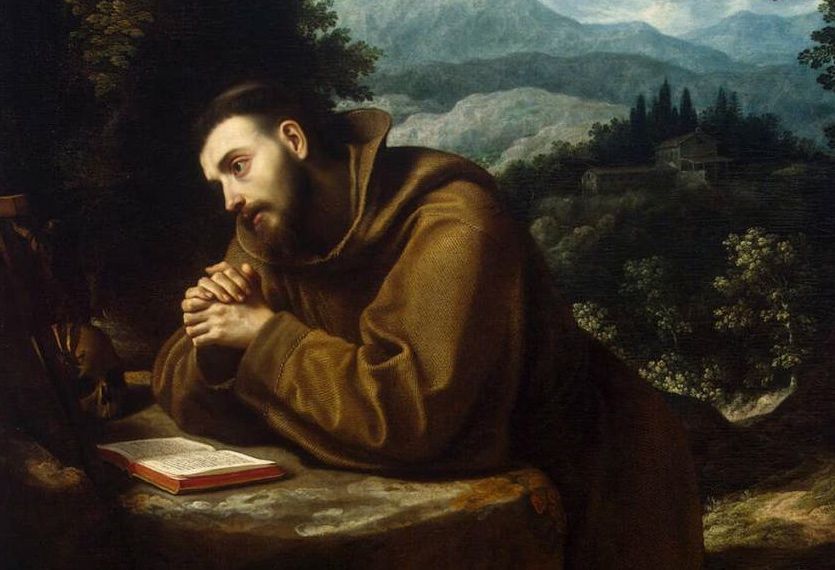
Cigoli,_san_francesco

Recently the Dish noted Joan Acocella’s review of recent biographies of St. Francis of Assisi. Michael Signorelli goes over similar ground, mixing personal reflections with a review of the saint’s life, and points to this arresting story of his interactions with Muslims:

To make his message plain, Francis sought to eliminate the distance between his words and his actions, proposing himself as a model to his order, applying “a hierarchy of example through his own personal witness.” Most famously, in the summer of 1219, the Poor Man of Assisi arrived in Damietta, a crucial port on the Nile Delta, held by the sultan al-Malik al-Kamil. Troops of the Fifth Crusade had been besieging the city for almost a year to no decisive result. After an offensive by the Crusaders ended in bloody defeat, a truce was called. Francis made his move, leaving the Christian camp, approaching enemy lines, calling out the sultan’s name. The sultan granted him an audience and the Poor Man of Assisi remained in the enemy camp for several days. Contemporary sources attest to the historicity of the event. But even they must speculate as to what occurred between the sultan and the monk. Did Francis denounce Islam? Did he try to convert the sultan? Was his holiness tested? Was he tortured? What’s certain is that he wasn’t killed—an astounding feat considering the martial context. One clue to his survival can be found in the Franciscan rule of 1221:

The brothers who go thus [among the Muslims] can envisage their spiritual role … by not making accusations or disputes, but being subject to every human creature for the sake of God and simply confessing they are Christians.

Unlike Mother Church, who viewed Islam as its greatest enemy, Brother Francis approached the other faith in the love of God. But the prescription of respect proved too innovative for the Church and disappeared only two years later in the rule of 1223.

It returned in 1963. In Francis, you find the actual Christian: deeply faithful but also deeply humble and above all, peace-seeking. There was no one more orthodox in theology than Francis. But no one more heterodox in how he lived as a Christian. My take on the saint can be read here.

(Painting by Cigoli)

Student Loans Are Unsustainable

Graduates And Jobs

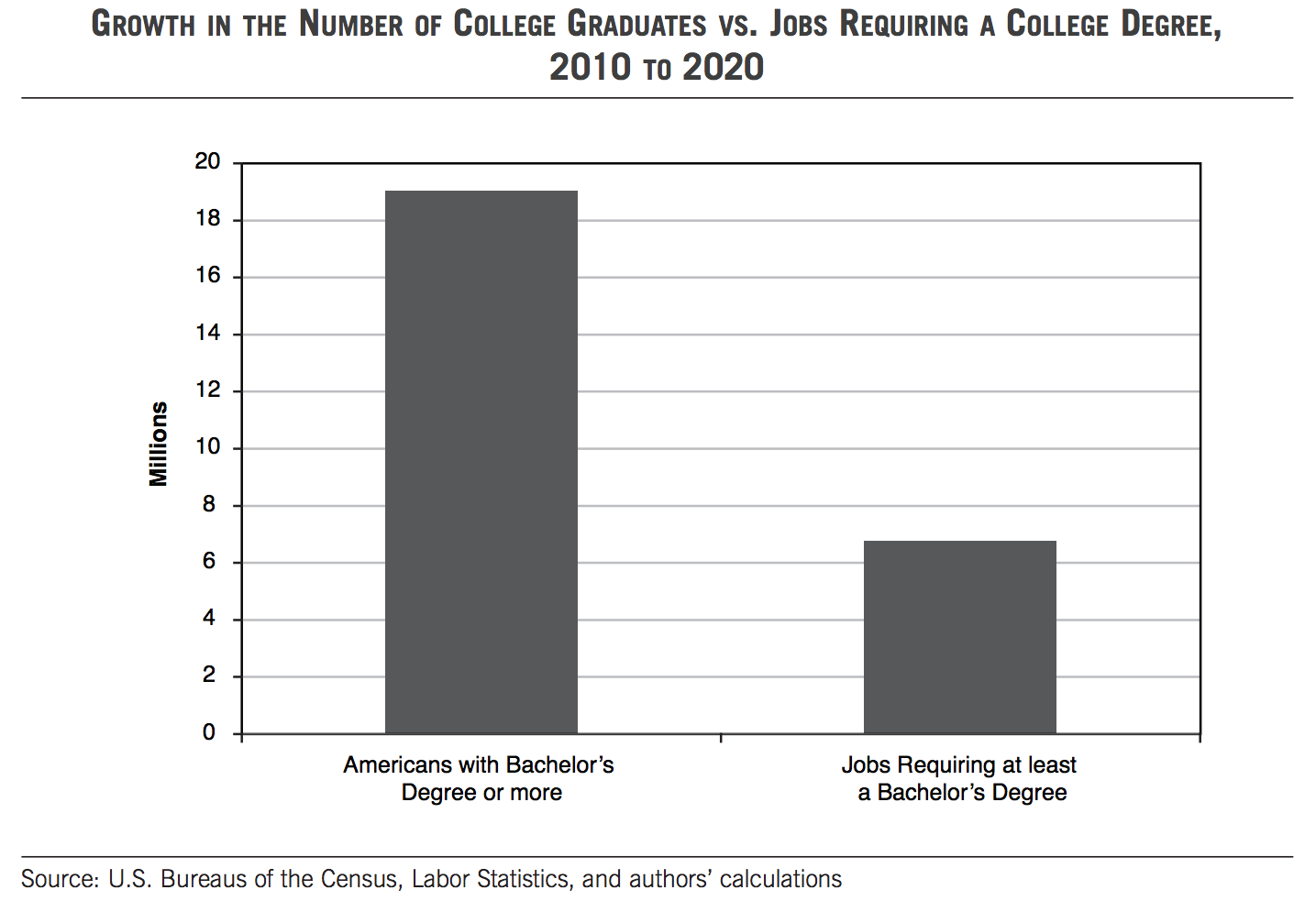
Paul Campos suspects that the student debt bubble will prove worse than the housing bubble:

In effect, the system allows any 22-year-old American University chooses to admit to borrow a sum equal to the average home mortgage, but without a single one of the actuarial controls that are supposed to minimize the risk that homeowners will borrow too much money.

(Chart from (pdf) “Why Are Recent College Graduates Underemployed?”)

Cutting The Episode Count

Ryan McGee wants more short-term TV shows:

There always will be a place for a show that follows a procedural model and can sustain stories for decades on end without worry of running out of criminals to catch, patients to heal, or a family crisis to handle before dinnertime. What follows here isn’t a rallying cry to abandon those types of shows. Nor does this stem from a desire to stop any attempt to unleash a complex, multifaceted story that necessitates years in the telling of it.

However, I would say that those are almost the only two models currently in play, and that’s hurting the medium as a whole.

Nostra Maxima Culpa, Ctd

Alyssa Rosenberg asks Alex Gibney, director of Mea Maxima Culpa, whether he sees “commonalities between the Catholic Church and some of the other institutions [Gibney has] made movies about.” Part of Gibney’s response:

[W]hat’s not unique about the church is they’re so convinced of their own good deeds that they’re blind to the possibility that they could do any wrong. Enron was so convinced that it was on this mission to save capitalism by coming up with this technologically sophisticated, unregulated capitalism that would save the world. If you have to cook the books in order to make Enron look a little bit better to protect the sanctity of that idea, that’s what you have to do. The Boy Scouts are so good you can’t let a few bad apples damage that. Every institution likes to believe it’s not the values of the insitution, but a few bad apples.

Earlier thoughts on the film here and here.

The GOP vs Representative Democracy

Gerry_Mander

Sam Wang recently tackled gerrymandering:

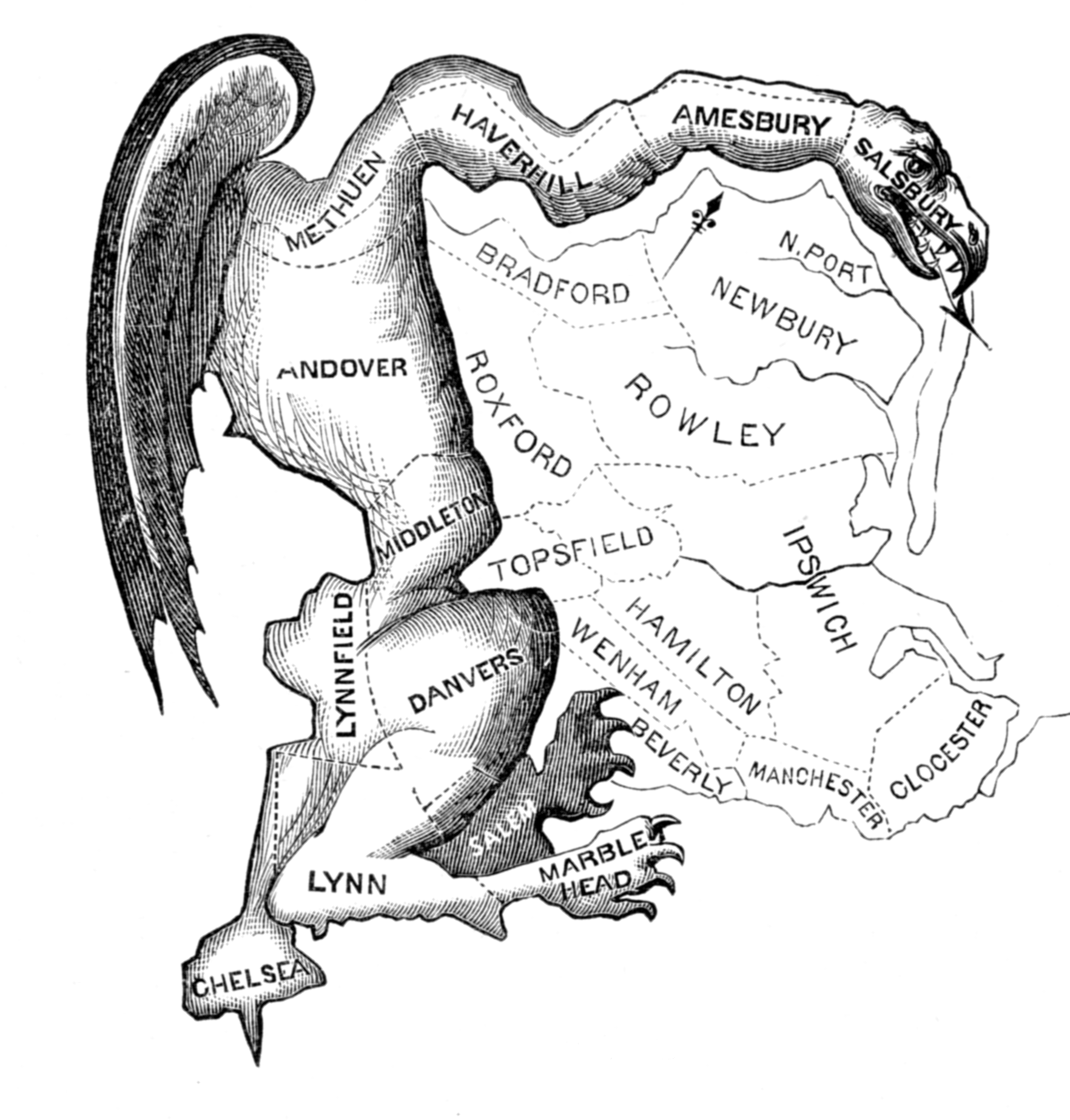
The great gerrymander of 2012 came 200 years after the first use of this curious word, which comes from the salamander-shaped districts signed into law by Governor Elbridge Gerry of Massachusetts. Gov. Gerry’s party engineered its electoral coup using paper maps and ink. But the advent of inexpensive computing and free software has placed the tools for fighting politicians who draw absurd districts into the hands of citizens like you and me.

And we have to use them. The one state which did not have congressional results skewed way out of line with the popular vote was California, which took these decisions out of politicians’ hands and into the California Citizens Redistricting Commission. I say “politicians” in general, because both parties are guilty at times – but it’s striking that by far the most abuse recently has come from Republicans:

In the seven states where Republicans redrew the districts, 16.7 million votes were cast for Republicans and 16.4 million votes were cast for Democrats. This elected 73 Republicans and 34 Democrats… In North Carolina, where the two-party House vote was 51 percent Democratic, 49 percent Republican, the average simulated delegation was seven Democrats and six Republicans. The actual outcome? Four Democrats, nine Republicans — a split that occurred in less than 1 percent of simulations. If districts were drawn fairly, this lopsided discrepancy would hardly ever occur.

Which is not surprising. The Republicans are losing demographically and are responding not by shifting their core positions – because they are effectively a religious organization founded on unalterable doctrines, and not a sane political party – but by rigging the system. Among the most rigged states? Virginia, Ohio and Florida. If this Congress had not been rigged, we would have a House with a GOP majority of only five or so. We’d have something called representative democracy.

(Above image: “Original cartoon of ‘The Gerry-Mander’, this is the political cartoon that led to the coining of the term Gerrymander. The district depicted in the cartoon was created by Massachusetts legislature to favor the incumbent Democratic-Republican party candidates of Governor Elbridge Gerry over the Federalists in 1812.” Cartoon From Wikimedia Commons.)

Face Of The Day

vikingbeard

Participants dressed as Vikings prepare to participate in the annual Up Helly Aa festival in Lerwick, Shetland Islands on January 29, 2013. Up Helly Aa celebrates the influence of the Scandinavian Vikings in the Shetland Islands and culminates with up to 1,000 ‘guizers’ (men in costume) throwing flaming torches into their Viking longboat and setting it alight later in the evening. By Andy Buchanan/AFP/Getty Images.

I pause to note that one Viking is clearly finishing a beer in the foreground. It also appears that there are even more beards per square inch in the Shetland Islands than in Brooklyn.

Happy Meals

This embed is invalid

Timothy Noah questions one restaurant’s approach to customer service:

Pret A Manger—a London-based chain that has spread over the past decade to the East Coast and Chicago—is at the cutting edge of what the Berkeley sociologist Arlie Hochschild calls “emotional labor.” Emotional because the worker doesn’t create or even necessarily sell a product or service so much as make the customer experience a positive feeling. Labor because, as Hochschild wrote in The Managed Heart (1983), the worker must “induce or suppress [his or her own] feeling” to achieve the desired effect in others. Creepy as it sounds, emotional labor is a growing presence in this economy, coming soon to a fast-food outlet near you.

Noah’s reaction:

Why must the person who sells me a cheddar and tomato sandwich have “presence” and “create a sense of fun”? Why can’t he or she be doing it “just for the money”?

Because it makes for a more pleasant customer experience which itself encourages repeat visits. How hard is that to understand? Noah’s piece is riddled with the kind of lefty condescension that drives me up the wall. Take this paragraph:

The more the rich get used to fawning service, the more the rest of us—or rather, the rest of us who can afford to buy a sandwich rather than brown-bag it from home—find we rather like it, too. Eventually everybody will have to act like a goddamned concierge. I don’t want to believe this, but I fear it may be true.

Fear? Fear that consumers might get better service and that corporations actually try to encourage this? Fear that when you are in service jobs, your boss may keep tabs on how well you interact with customers and colleagues? It’s fascism, I tell you. Or some kind of false consciousness. Apparently, Noah wants service that in no way is encouraged to be cheerful. My advice? Visit France.

And this service ethic of fake cheeriness began in the US of A. It was one of those things I noticed and loved immediately arriving here, and over the last quarter century saw spread throughout my country of origin. The service culture – which is indeed a kind of performance – makes everything more pleasant to buy, blends consumerism with entertainment and enjoyment. Wanna scowl with your coffee? Vaughan Bell pushes back some more:

Those of a political bent might notice an echo of Marx’s theory of alienation which suggests that capitalism necessarily turns workers into mechanistic processes that alienate them from their own humanity.  However, the concept of ‘deep emotional labour’ is really where the approach can start becoming unhelpful as it has the capacity to denigrate genuine compassion as ‘required labour’. I doubt many nurses go into their profession intending to ‘monetize their emotions’ or feel they have been ‘alienated’ from their compassion. And as armies are loathe to admit, soldiers serve for their country but fight for their platoon mates. Is this really a form of ‘deep emotional labour’ or it is just another job where emotions are central?

Is Big Football The Next Big Tobacco? Ctd

This embed is invalid


Travis Waldron watched as the National Football League commissioner deflected questions about the links between football and brain injuries:

[T]he NFL has hardly “led the way” into concussion research, as Ta-Nehisi Coates and Malcolm Burnley showed recently in a timeline of the NFL’s response to concussions. The first chair of the league’s concussion task force, formed in 1994, regarded concussions as an “occupational hazard,” and the league rejected the American Academy of Neurology’s guidelines for returning concussed players to competition in 2000. It was still publishing research skeptical of the dangers of concussions in 2005; in 2007, it still claimed that research did not show that “having more than one or two concussions leads to permanent problems if each injury is managed properly,” even though CTE had already been found in multiple dead former football players.

That’s not a history of leading the way. That’s a history of standing in the way. The league and Goodell have plenty of reason to continue standing in the way, given that acknowledging a link between football and brain injuries, as well as the league’s role in obscuring that link in the past, would open it up to legal and medical liabilities it doesn’t want and possibly can’t afford.

Who does Roger Goodell think he is in evading core accountability? The Pope?

(Above: Malcolm Gladwell vividly describes how playing football beats up the brain.)