DC And NYC vs Small Business

Matt Yglesias needed a business license to rent out his old condo. That proved harder than he’d anticipated:

The bureaucratic hassles of entrepreneurship turn out to vary pretty substantially from place to place. The World Bank has a fairly crude measure of how easy it is to start a business in different countries and ranks the United States 13th. North of the border in Canada (ranked third), there’s typically just one “procedure”—a paperwork filing, basically—needed to launch a business. In America, it takes more like six.

There’s also substantial variation within the United States. A survey by Thumbtack and the Kauffman Foundation found that local small-business owners give D.C. an F grade in the ease of starting a business. Unfortunately, many of our largest and most prosperous cities share poor marks on this indicator—New York is an F, Boston and Los Angeles rate Ds, San Francisco gets a D+—while more startup-friendly cities such as Dallas and Indianapolis tend to have lower average incomes and a less promising customer base. Portland, Ore., stands out among affluent coastal cities for its A rating.

You want a cause to reinvigorate the GOP? Make it easier to start a small business in as many parts of the country as possible! Publicize those cities – like DC and NYC – that stymie entrepreneurship. Matt follows up here.

Sully And Hitch After Dark: God And Coffee

DSCN1696

A while back – by which I mean several years ago now – I thought it would be a cool idea to do some post-prandial chats with some of my favorite people. It occurred to me that the best conversations I ever heard in Washington never happened on television or radio. They were always way off the record. But they might occur, I suspected, if we just attached microphones to ourselves, had a bottle of wine or two and just riffed. And who else to start with but Hitch? Alas, the audio was not good enough, we had one big microphone in Christopher’s cavernous dining room, and so our long early morning conversation about God and Iraq and death never got further than my iTunes album.

Until I came across it the other day, realized I had an intern and asked him to transcribe it. It was more coherent than I recall. And I wasn’t as demolished by Hitch’s brain as thoroughly as it felt at the time. Or maybe I’m deluding myself. But see for yourself. I’m going to publish it in manageable excerpts or long posts over the next couple of weeks, before we find a permanent place for it on the Dish. If you want to read it all at once, I’d wait for the full transcript. But for those who prefer reading in shorter, bloggier clips, here’s the first part.

A: That is some strong coffee.

H: You prefer weaker?

A: No, no, I should have some wine as well, or else I’ll be all jacked up.

H: Of course! What color would you like?

A: I’ll have some of this, if this is okay, I’ll just get a glass.

H: Sure.

A: My dissertation, basically, was about [Oakeshott’s] theory of practice. And there were hints and guesses in his early work and his very later work that he viewed religion as a part of practical life—it was philosophy which was the beyond, but religion was actually a way of living in the world.

H: Yes.

A: It was a way of overcoming the “deadliness of doing,” as he put it, and it enables you to have some sublime acquiescence to it. So I read for my dissertation everything he’d ever written. And my fifth chapter I hadn’t written when I went to see him, because I wanted the fifth chapter to be on religion. And this is why this conference is so exciting to me [I was about to attend a conference on Oakeshott’s thought], because almost everything — a lot of what they’ve discovered since he died—is about religion. He just didn’t publish it.

H: Oh, I’d be very interested to know about this.

A: But the reason you reminded me of him was because I said to him—it’s a very difficult subject to bring up with somebody—I said, “you seem to talk of Christianity as one of the critical elements of Western civilization.” He was a big fan of Augustine, hugely interested in and influenced by Augustine. And he said, “Well, my problem with Christianity has always been salvation. After all, who would want to be saved?”

H: Well, that’s very much like [Gotthold Ephraim] Lessing.

A: Right. Yes, exactly.

H: It’s also like being of the devil’s party, all of these things. I mean, what puts one off is the thought that it could be true, which I think is, in a way, the final condemnation of religion. When people contemplate its victory, they can’t stand it; it’s much better as a private consolation or faith against the material world and its misery.

A: That is what Oakeshott’s understanding is.

H: It’s also what Daniel Dennett is effectively saying, is that it has its utility and can’t possibly die out, let alone be repressed. But that the real, the actual claims it makes as a church are not just false but sinister, really.

A: I think that what [Oakeshott] would say, and what I would say, is that what’s sinister is the deployment of dogma as certainty. If one takes Lessing and Oakeshott’s view of Christianity, which is ultimately that God is unknowable—

H: Then don’t pretend to know.

A: Then we cannot know. Or, what we can know, we will hold with a certain humility and provisionality. I mean, one can know, for example, that the Gospels exist and that they represented a human being whose life can be either honored or dishonored.

H: But the further implication of this is that if you admit or concede or even claim that it’s unknowable, then the first group to be eliminated from the argument are those who claim to know.

A: Yes.

H: Because they must be wrong.

A: Yes.

H: Well, that lets off quite a lot of people at the first floor of the argument, long before the elevator has started moving upwards, or downwards. Those who say they know, and can say they know it well enough, what God wants you to eat or whom he wants you to sleep with — they must be wrong.

A: That is proof itself that they are wrong.

H: Yes. As well as being impossibly arrogant, coming in the disguise of modesty, humility, simplicity. “Ah, I’m just a humble person doing God’s work.” No, excuse me, you must be either humble or doing God’s work. You can’t know what God’s work would be, don’t try your modesty on me. And once one’s made that elimination, then everything else becomes more or less simple. My problem only begins there.

A: But it’s still a religion.

H: Or maybe a faith or a cult.

A: Yeah, faith.

H: But my problem begins only when that’s out of the argument and we agree that’s nonsense.

A: That is nonsense.

To be continued …

The Self-Appointed Policemen Of The Israel Debate, Ctd

Weighing in on the debate over the BDS event, Brooklyn College professor Corey Robin showers praise on president Karen Gould:

This morning, Karen Gould, the president of Brooklyn College, issued an extraordinarily powerful statement in defense of academic freedom and the right of the political science department to co-sponsor the BDS event. … In my more than twenty years as a graduate student and professor, I don’t think I’ve ever seen a leader of an educational institution take a more principled and courageous stand than [Gould did]. Under, as we know, the most extraordinary coercion and pressure.

He also remarks upon a notable absence:

Throughout this controversy, there has been one voice that has been conspicuously silent: Mayor Bloomberg. To everyone who is a journalist out there, I ask you to call the Mayor’s office and ask the question: Will he stand with the City Council … threatening the withholding of funds merely because government officials do not like words that are being spoken at Brooklyn College? Or will he stand up to the forces of orthodoxy and insist: an educational institution, particularly one as precious to this city as CUNY, needs to remain a haven for the full exploration of views and opinions, even about—especially about—topics as fraught as the conflicts between the Israelis and the Palestinians.

The Executive As Executioner

Justice Department Memo on Legal Case for Drone Strikes on Americans

This embed is invalid


Greenwald analyzes the Isikoff memo (embedded above):

This is the crucial point: the memo isn’t justifying the due-process-free execution of senior al-Qaida leaders who pose an imminent threat to the US. It is justifying the due-process-free execution of people secretly accused by the president and his underlings, with no due process, of being that. The distinction between (a) government accusations and (b) proof of guilt is central to every free society, by definition, yet this memo – and those who defend Obama’s assassination power – willfully ignore it.

Friedersdorf looks at how the document defines “imminent”:

[T]he part of the memo worth dwelling on most, at least until legal experts offer deeper analysis than I confidently can, is the portion that deals with “an imminent threat of violent attack.” On reading the document, that clause is sort of reassuring. After all, there aren’t that many circumstances when an attack is imminent. It would seem to severely constrain extrajudicial assassinations. As it turns out, however, the memo reassures the reader with the rhetorically powerful word “imminent,” only to define imminence down in a way that makes it largely meaningless — so much so that it’s actually reminiscent of George W. Bush’s misuse of imminent to characterize the threat posed by Iraq.

The ACLU’s Jameel Jaffer makes related points:

The white paper purports to recognize some limits on the authority it sets out, but the limits are so vague and elastic that they will be easily manipulated. The paper initially suggests, for example, that the government’s authority to use lethal force is limited to people who present “imminent” threats, but it then proceeds to redefine the word imminence in a way that deprives the word of its ordinary meaning. The paper does something similar with the phrase “capture is infeasible.” It initially sounds like a real limitation but by page 8 it seems to mean only that the government won’t use lethal force if capture is more convenient. It’s the language of limits—but without any real restrictions.

Ambers adds:

Even if the person is not actively planning terrorist attacks against the U.S., because of the nature of terrorist attacks in general, merely his membership in an organization that is planning those attacks meets the requisite definition of imminence. So, basically, imminence does not mean imminent.

Gerard N. Magliocca would prefer “that Congress create a statutory regime for such decisions that would require the National Security Council to sign off on each of these citizen attacks before the President can proceed”:

First, who counts as a high-level official? The CIA Director? The Ambassador to Pakistan? An analyst at Langley? This is not clear at all. Second, suppose that the majority view in the intelligence community is that someone does not pose an imminent threat. The standard for death, I gather, is met so long as ONE informed, high-level person thinks that a suspect poses an imminent threat. I submit that the President can always find one “senior-enough” person in his Administration with that view, so in reality the DOJ standard just gives the White House carte blanche.

Jacob Sullum puts the executive power grab in perspective:

The problem is that to accept this position, you have to put complete trust in the competence, wisdom, and ethics of the president, his underlings, and their successors. You have to believe they are properly defining and inerrantly identifying people who pose an imminent (or quasi-imminent) threat to national security and eliminating that threat through the only feasible means, which involves blowing people up from a distance. If mere mortals deserved that kind of faith, we would not need a Fifth Amendment, or the rest of the Constitution.

Marcy Wheeler wants other government memos released:

As important as it is to see the white paper DOJ gave Congress to explain its purported legal rationale, it is just as important to make clear what this white paper is not. First, is it not the actual legal memos used to authorize the killing of Anwar al-Awlaki and who knows who else. As Michael Isikoff notes in his story, the Senators whose job it is to oversee the Executive Branch — even the ones on the Senate Intelligence Committee that are supposed to be read into covert operations — are still demanding the memosfor at least the 12th time. The release of this white paper must not serve to take pressure off of the White House to release the actual memos.

Adam Serwer’s bottom line:

The government needs the approval of a judge to detain a suspected terrorist. To kill one, it need only give itself permission.

The View From Your Window Contest: Winner #139

vfyw

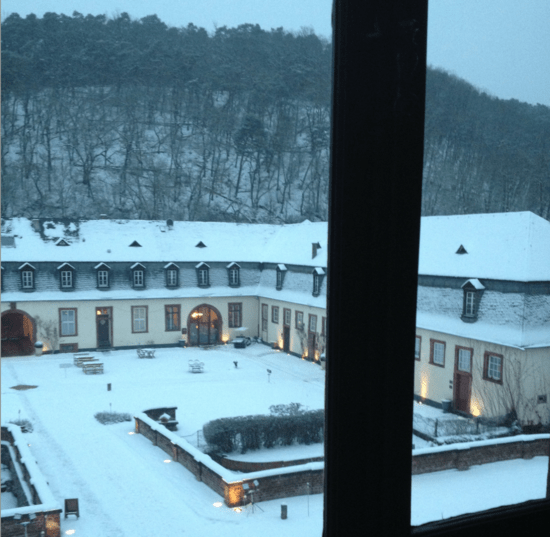
Before we get to the results, this week is a good opportunity to tell new readers about The View From Your Window Game, a brilliant little site created by a Dish reader, Llewellyn Hinkes, that lets you guess the location of contest windows from our archive. To play, you simply zoom in on a global grid square by square until you select the square containing the location of the city. Just check it out to see what I mean. It’s really simple and elegant (and addictive). The VFYW Game has been updated since it was first released a few years ago, so check it out even if you’ve already seen it before. Llewellyn is going to allow us to update the site with every single contest window in the archive, including the current window being contested, so the game will have a permanent place in our weekly results. On to this week’s results:

The architecture, the red sandstone, the deciduous woods on the lower slopes, the snow on the ground: my guess would be somewhere in the southwestern quarter of Mitteleuropa, possibly the Vosges hills of Alsace or the Black Forest in Germany. A very broad-brush guess, I know.

Another:

That picture reminds me of Sweden, as I was just there in December. Dark, dark, dark.

Another:

Easy, pretty sure it’s overlooking the law school in the old city of Salzburg, Austria.  That’s probably the monk’s mountain behind it.

Another:

This looks very much like a view of the old stables/garage area at the Biltmore House in Asheville, North Carolina.  But  you wouldn’t use something so many tourists had been to, would you? So it must be the back side of Downton Abbey.

Another:

Having just visited Vermont for a ski trip, this very much resembles the rolling, forested hills that line both sides of Route 4 as you approach the Killington Mountain Ski Resoirt. I suspect it may be somewhere in either Woodstock or Bridgewater, as you traverse the snaking Ottaquechee River. The felled trees in the background also suggest that this is the same part of Vermont that experienced substantial damage in August of 2011 from Hurricane Irene, which resulted in major flooding in that area of the state.  Nonetheless, Woodstock, VT is my guess.

Another:

Roncesvalles, Navarre, Spain? A blind guess, based on a blurry, possibly fictional image I have in my head from visiting years ago. It’s an incredibly dull town that happens to be historically and religiously notable. If I had to guess, I’d say that the photo is taken from the huge, soulless hostel building in the centre of the town.

Another:

Vaslui, Romania? To commemorate St. Stephen’s victory over the Ottoman Empire in 1475??

Another:

I’ve been reading your blog since the dawn of man (seriously, since it dawned on this man Sullivan to write a blog) and I have written you on numerous occasions. I have never submitted a VFYW guess. I do not have the patience to do more than guess a hemisphere. (Funny though, I did submit a VFYW photo which you made a contest a couple years ago… Casablanca.)

Well, today I saw that and thought, Ifrane, Morocco!  I lived in Germany for many years and it looked like that, but then I remembered a trip last year to Ifrane, which looks like a little French town of chalets. I thought, “I wouldn’t put it past them to do something so mean.” Well, I googled-earthed it and spent 60 long miserable minutes trying to figure it out. I can’t find anything that looks like that building. I give up. I have no patience. So I’m sticking with freaking Ifrane, Morocco.

The reader is going to kick himself when he sees the correct answer:

Clervaux, Luxembourg? I am from Luxembourg and this picture could have been taken in the north of the country, where there are many small but picturesque villages in narrow dales. Architecture and neatness would fit as well.

Getting close. Another:

That’s obviously Bavaria.  We were kicking ourselves for not at least throwing out a guess on the Vietnam window.  We both thought it was Vietnam but couldn’t get anywhere on city so we gave up.  Never again!  In all seriousness, I have no idea where this is (and I don’t think my husband does either …).

The photo is indeed from Germany. Another:

Long time reader, first-time contestant who just subscribed (congrats on the new model.)  I am not one of your readers who ever does the Google map search thing. The only reason I was moved to enter this time is because the View was so evocative of the visit I made to the Dachau concentration camp site about 30 years ago.

On a much brighter note:

The VFYW this week is definitely European.  It looks like the sun has just risen and given the time the photo was taken, that would mean it’s somewhere in Northern Europe.  I’m going with Northern Germany.  No idea where, but I’ll say somewhere near Lubeck.

Now that I’ve answered, I have a request.  I turn 40 today and to balance the side effects of turning the big 4-0 I’ve created a list of 40 mini challenges to accomplish this year – emphasis on the word “mini” –seeing as I’m a mother of toddler twin boys, work part time, have a husband and two big dogs. In other words I have no real free time to take on lots of new and literally challenging adventures.

One of my forty “challenges” is to get the city right in one of the VFYW contests this year.  (And to go along with the forty motif I’ve paid a subscription of $40 to The Dish.)  I’ve actually got the house/street number right twice in the past (Budapest and Cork), but thought aiming to get that specific in future might be a bit unrealistic.  So I’m asking if at some point over the next year you could have a couple of easy contests – ones where us normal people can stand a chance of getting it right, ones for people who can’t spend their whole weekend googling images and map, ones for people with lives outside the internet.  Because if you don’t have an easy one then I won’t be able to achieve my challenge and that would just be very disappointing….

Thanks! (40 times over)

No need for this reader to wait for an easier contest; she wins this week. No one guessed the exact city – Sinzig, Germany – and her guess of Lubeck was the closest German city to Sinzig. From the reader who submitted the photo:

In case anyone gets close on this one, here are the details.  The photo was taken at Schloss Ahrenthal, a castle which has been converted into a business conference center.  It’s about 3 km south of town on the L82, a road for which there is no StreetView – not that that would help, because Streetview from that narrow highway would probably only see the facing wall of the courtyard. Anyway, the view is from the third window from the right on the second floor, from the room called “Wolf”.  All the rooms are named after forest creatures and birds. The view below is pretty much from the opposite angle:

06-02 Exterieur

I was there as faculty for a training my firm gives new hires.  (Nice gig!)  This is the second time you’ve used a picture of mine taken when I was on a business trip; the first one was the back of the Orlando conference center at sunrise.  I guess I’ll keep them coming!

Please do.

(Archive)

Secrecy Schmecrecy

On the eve of the Congressional hearings for John Brennan. Mike Isikoff gets the memo (or a clumsily dumbed down version of the original memo) that describes the process for extra-judicial killing by the US government in a state of war with al Qaeda. Read the memo here (pdf). I’m going to read and think a little more before I post my reaction. But I have one that requires no time. Why on earth should this have been kept so secret for so long? Why does it take a Congressional hearing to see it? All of this is again antithetical to the kind of government Obama promised to give us: as transparent as possible. And if a government cannot be transparent with the rules and procedures it uses to assassinate American citizens, then it is truly out of control.

I want Senators to ask Brennan why this was kept secret for so long, who ordered that secrecy, and what the rationale was for such secrecy. Who does this president think he is?

The Pope?

The Hierarchy: Still Hiding

US-RELIGION-CATHOLIC-ABUSE

If you have any illusions that the culture of self-protection, clerical privilege and contempt for the victims of rape have finally disappeared from the Catholic hierarchy, I’m afraid you have to let go of them. The Los Angeles Archdiocese fought for years to prevent full access to their own documents that prove complicity of many in the hierarchy in the rape of hundreds of children. Now they have released them, guess what’s missing? The names of the bishops and hierarchs who permitted and enabled the abuse. It really is just like the CIA: Lynndie England goes to jail but Dick Cheney, who authorized much of what she did, goes on a book tour:

On many pages it appears that the names of supervisors, like pastors in parishes or the supervisors of religious orders, are missing.

For example, the file on Carlos Rodriguez, a priest serving in a parish in Central Los Angeles, includes a letter to him from his religious order, the Vincentian Fathers and Brothers, informing him that he is being sent to a treatment center in Maryland. Mr. Rodriguez was accused of molesting several teenage boys over the years. But while the letter makes clear that the writer is the priest’s religious superior, the name is redacted. Other documents in the file are similarly missing names of religious order supervisors.

To add to the bizarreness:

At the hearing before Judge Elias on Jan. 7, Mr. Hennigan, the archdiocese’s lawyer, said there were 30,000 pages, arguing that it would take too long for his team to go through and remove the redactions on everything they had already redacted. “We have 30,000 pages,” he said. “Every page has to be gone through. Every redaction has to be examined afresh.”

They finally released 12,000 pages. What happened to the other 18,000 pages?

Mr. Hennigan said the reason for the discrepancy was that the 30,000 number was a “wild guess” he had made based on how many bankers boxes of documents he had.

I don’t trust these criminals an inch. Mercifully, victims’ groups are filing a motion to compel the release of everything they cannot find. And we Catholics need to demand the names of everyone involved in this vast web of corruption and abuse. And Los Angeles can only be the start. What we need, and what we should be demanding in louder and louder voices, is the full release of all files from the Vatican office on these cases, which was run for years by … Pope Benedict XVI. And we need to ask insistently: How much did the Pope know? And who did he allow to rape and rape again?

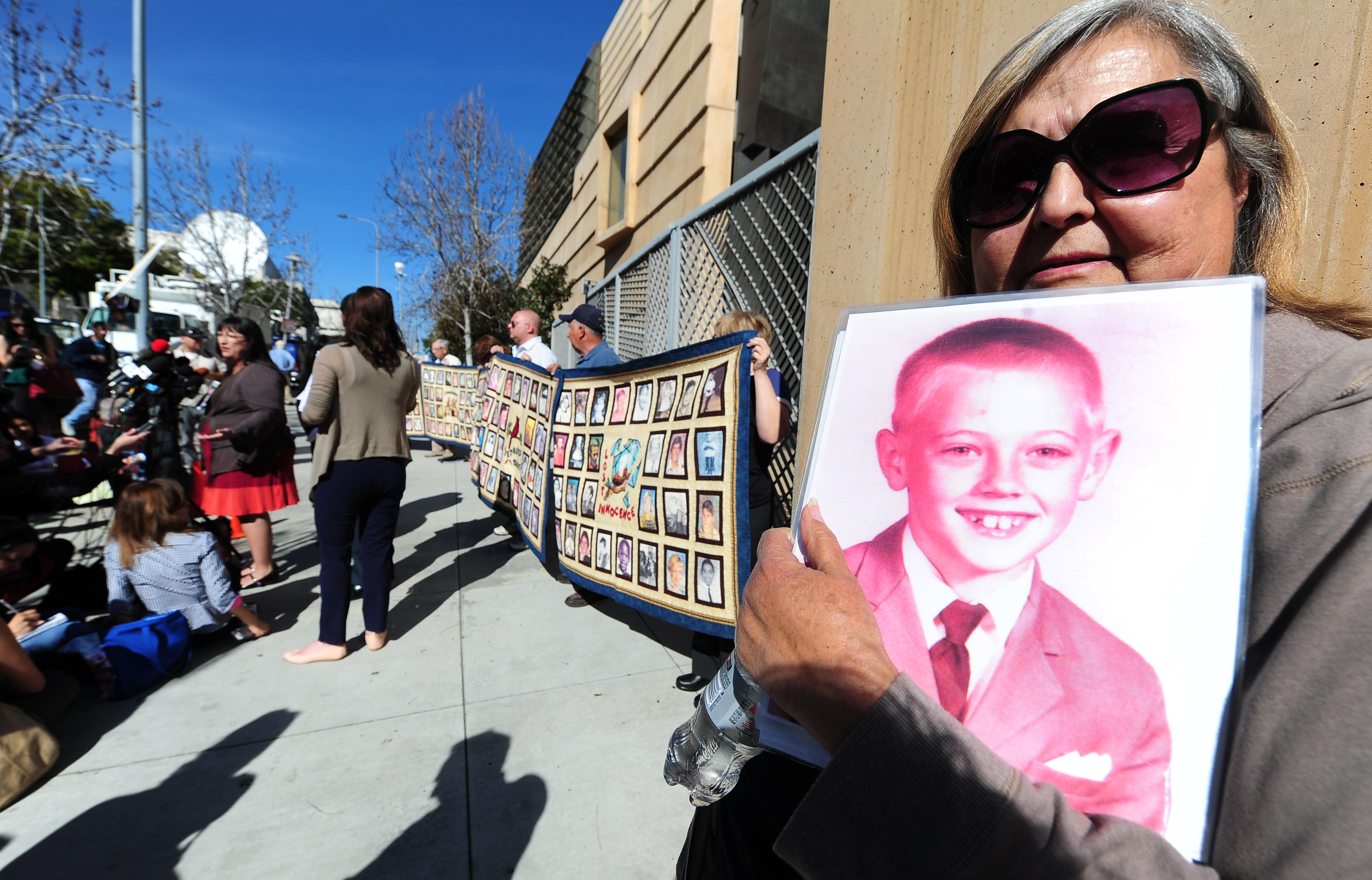
(Photo: Supporter Maggie Storey holds a portrait of a boy called Eric, who went on to commit suicide at an older age, as Esther Miller (L rear) addresses the media outside the Cathedral of Our Lady of the Angels in Los Angeles, where abuse victims and their supporters gathered in Los Angeles, California, on February 1, 2013, one day after the release of personnel files of priests accused of sexual misconduct. By Frederic J Brown/AFP/Getty.)

How To Create Actual Change

After watching How To Survive A Plague, Josh Barro identifies why ACT UP was so successful:

ACT UP activists weren’t just angry about national apathy and inaction on AIDS; they also had specific demands and constructive ideas about how the government and drug companies could do better. Unlike a lot of protest movements, once they got to the stage where the targets of their protests said, “I’m listening. What do you want me to do?” they had concrete answers.

A few things you see ACT UP demanding (and getting) in the movie are: hospital policies that don’t discriminate against AIDS patients; more funding for AIDS research; lower prices for AZT, the first effective anti-AIDS drug; a faster drug approval process, recognizing that 10 years of effectiveness trials didn’t serve the interests of people on the verge of death; and allowing HIV- positive people not enrolled in drug trials to take experimental drugs at their own risk, the so-called parallel track.

Yes, but this somewhat distorts one of the key nuances and virtues of the movie (my review here).

There were two sides to ACT-UP: the drama-laden, spectacle-creating, brilliant rage-filled actions against an indifferent government versus the pragmatic, step-by-step laser-sharp emphasis on actually creating change in the ways Josh describes. The latter group became Treatment Action Group or TAG. The film exposes these rifts – rather subtly (which makes it much more interesting than agit-prop. At the time I feared the over-the-top dramatics could undercut our message; in retrospect, not so much – especially since those protests and the expression of that anger helped keep people alive. But it was the meticulous grasp of the science, the trial process, the FDA and the NIH that really helped accelerate the process and organize it. That was done by often maligned young white males – like Harrington and Staley and Gonzales – and it made a real difference.

What we sometimes forget, however, is that there never was some miracle drug the government had that was somehow being withheld. There never was a chance to launch a Manhattan Project against a retrovirus that had not even been identified when so many started to die. No one had ever stopped a retrovirus in human history before – and HIV remains the only one. This meant really hard research, using fast-accelerating technology to bring about a revolution in treatment and quality of life.

In retrospect, as the film demonstrates, the first wave of anger was totally unjustified and completely pointless. The science simply wasn’t there – and science takes time. The second wave of anger combined with relentless engagement with the drug companies and FDA was what made a difference. Yes; make a stink. But also: be ready to take yes for an answer, to leave grudges behind, to focus almost manically on the prize and do your best to ignore everything else. Not easy. But by some strange alchemy – and the courage that comes out of terror – it was accomplished. Or else that last sentence would never have been written and this blog would not exist.

Netflix Is Watching Back

[youtube http://www.youtube.com/watch?v=yPnufnUeeLI]

Andrew Leonard raises a concern about future programming on the site:

Netflix doesn’t just know that you are more likely to be watching a thriller on Saturday night than on Monday afternoon, but it also knows what you are more likely to be watching on your tablet as compared to your phone or laptop; or what people in a particular ZIP code like to watch on their tablets on a Sunday afternoon. Netflix even tracks how many people start tuning out when the credits start to roll.

He views House of Cards as “one of the first major test cases of this Big Data-driven creative strategy”:

For almost a year, Netflix executives have told us that their detailed knowledge of Netflix subscriber viewing preferences clinched their decision to license a remake of the popular and critically well regarded 1990 BBC miniseries. Netflix’s data indicated that the same subscribers who loved the original BBC production also gobbled down movies starring Kevin Spacey or directed by David Fincher. Therefore, concluded Netflix executives, a remake of the BBC drama with Spacey and Fincher attached was a no-brainer, to the point that the company committed $100 million for two 13-episode seasons. …

We’ve seen what happens when news publications specialize in just delivering online content that maximizes page views. It isn’t always the most edifying spectacle. Do we really want creative decisions about how a show looks and feels to be made according to an algorithm counting how many times we’ve bailed out of other shows?

Previous Dish on the series here.

Will The Cardinals Fight On?

On Friday, I hailed the new compromise compromise on ACA insurance for the pill for women (Catholic and non-Catholic) who work for religiously-run organizations, like schools and hospitals. A fair summary:

Objecting nonprofits will be allowed to offer employees a plan that does not cover contraceptives. Their health insurer will then automatically enroll employees in a separate individual policy, which only covers contraceptives, at no cost. This policy would stand apart from the employer’s larger benefit package. The faith-based employer would not “have to contract, arrange, pay or refer for any contraceptive coverage to which they object on religious grounds.”

E.J. Dionne views this as a win for Catholics, if they can accept it:

The decision ought to be taken by the nation’s Catholic bishops as a victory, because it is. Many in their ranks, including some of the country’s most prominent prelates, are inclined to do just that — even if the most conservative bishops seem to want to keep the battle raging. But more importantly, the final HHS rules are the product of a genuine and heartfelt struggle over the meaning of religious liberty in a pluralistic society. The contraception dispute was difficult because legitimate claims and interests were in conflict.

Yuval Levin disagrees:

[B]asically, the religious institutions are required by the government to give their workers an insurer and that insurer is required by the government to give those workers abortive and contraceptive coverage, but somehow these religious employers are supposed to imagine that they’re not giving their workers access to abortive and contraceptive coverage.

And that’s because they are not. They’re giving their employees work. Because of that work, the government will ensure that they also get a contraception option. If the Bishops think this issue is more important, than, say, releasing all the documents from the Los Angeles Archdiocese on the rape and abuse of children, they are even more out of touch with their parishioners and Christianity than we previously feared.

And remember: the current hierarchy was all picked by John Paul II and Benedict XVI to be supine sheep protecting their own hierarchy. That has been the core criterion of advancement in the church for a couple of generations. So many ortho-bots. So many rapes.