Finally, Some Good News For The ACA

In states with functioning websites, enrollments are picking up:

A number of states that use their own systems, including California, are on track to hit enrollment targets for 2014 because of a sharp increase in November, according to state officials.

“What we are seeing is incredible momentum,” said Peter Lee, director of Covered California, the nation’s largest state insurance marketplace, which accounted for a third of all enrollments nationally in October. California — which enrolled about 31,000 people in health plans last month — nearly doubled that in the first two weeks of this month.

Several other states, including Connecticut and Kentucky, are outpacing their enrollment estimates, even as states that depend on the federal website lag far behind.

Yglesias states the obvious:

[W]here the IT is on track, the enrollments are on track. If they can get the federal exchanges in decent shape, the rest should fall into place. If they can’t, they won’t.

Reliving The Iraq War

A reader writes:

It’s less than a hour since your email alert and I’m already reading I Was Wrong. The first entriesandrew-sullivan-i-was-wrong-cover are scathing. It’s one thing for you to maintain an archive of your Iraq posts on the blog itself; it’s another to compile them for everyone to see. Given how raw and enraged your initial reaction was, it’s a typically ballsy thing for you to do. (For the record, I’m one of the liberal “fifth columnists” you line up in your sights in the early going.) I think your readers are as loyal to you as they are because you do this sort of thing all of the time, only not on this heroic scale. I wrote you once to push back a little on your regard for Hitch by reminding you that he did no such public penance for Iraq, and that his last, loud outburst against religion may have been fairly regarded on some level as a diversionary tactic to regain some street cred on the left. (It worked.) You did not duck when he did, and now you’re doing more than anyone could have been reasonably expected to do.

We now live in a world where what is said by both politicians and politicians is expected to be forgotten by the next news cycle. To jigger the old saying about the Bourbons, you learned everything and have forgotten nothing.

I want to say I’m not doing this to evince professions of admiration for my “courage.” I’m doing it because I severely regret – and in some cases, am ashamed of – many things that I wrote. Since it led to the actual deaths of tens of thousands of people, and the traumatization of countless more on both sides, it’s not courageous to revisit these more excruciating moments. It’s just basic accountability. That’s also why we accompanied this eBook with a podcast with a commander actually tasked with carrying this war out. I wanted to look the man in the eyes and listen.

And, look, I know my deep underlying flaw as a blogger – my passion, for good and, in this case, ill. I can’t help that, but I can learn to restrain it. The Dish has evolved out of this process. It’s because of these failures that I began regularly publishing prominent dissents; that I built a blog that had many checks and balances, not least from its readers, but also from new colleagues, who could push back and rein me in. The book’s initial and final edits were not mine. Chris and Patrick had that authority, and that does not simply apply to the book. Every day on the Dish, they correct for my impulses, and make the Dish something biased but balanced. I learned that separation of powers is not just a good idea in politics.

Another reader isn’t nearly as forgiving:

At first I was pleased at your running parts of your pieces to show how you’d changed your thinking. Though it was sort of late last night when I received your email, I clicked on it and started to read.  You know, I found it profoundly disturbing, even depressing, to read your posts written during the run-up to the Iraq war.  I don’t remember if I was a regular reader of your blog then, but to scan them for 20 minutes made me feel physically ill, at least a little bit.  I remember the kind of rage and hysteria that were in the air from the pro-war people, and they were all – to a man/woman – appalling in almost every way.

So cut to today, and I find myself, overall, less inclined to resubscribe next year than I was yesterday.  I find many things about you admirable, but the single most off-putting trait you have as a journalist and a man is your zealotry, your near-hysteria in putting forth your viewpoints. It’s great that you are admitting in depth that you were wrong.  It’s upsetting to me, though, to deal with it in detail.  I mean, if one doesn’t get going to war right, then what else matters?  On what subject, then, are you trustworthy? In your job as a journalist (and as a man), my advice to you would be to create “more light, less heat.”

I understand my reader’s point. I respect his decision not to re-subscribe, but would simply argue that that is throwing the baby out with the bathwater. No writer is always right. What matters is how he or she grapples with being wrong.

And that is what I have tried to do in grappling with these errors.  Seeing them exposed again so baldly in a daily, hourly blog, is another unsentimental education in my own blind spots. And they were many: acceptance of a neoconservative consensus that I had been marinated in for years and never questioned enough; betrayal of my own conservative principles in neglecting the vital importance of culture and history in reforming the world; impossibly good intentions, fueled by overpowering grief at what had been done to my beloved country, the US; and hubris – because of such a long period of time in which military might had been more successful than not – from the end of the Cold War to Bosnia.

The silver lining is that I learned on the spot, and you can trace, with painful dramatic irony, the scales slowly falling from my eyes. And the point is not just personal. I was not alone. This process of learning from history is a core obligation of any writer who wants to be true to his calling. But it’s also something we need to do as a country as well. Too often, these lessons are buried in partisanship or “moving on” or are inchoately felt without ever being directly expressed. One more reaction:

I’m a subscriber and long-time reader, but not long enough to have read your blog during the run up to the war in Iraq.  I have to commend you for the ambitious project of the Deep Dish and your humility in creating the I Was Wrong piece in particular.  Who is this person, Andrew?  I recognize so little of you in these words, so much rage and vitriol.  As soon as you learned of the torture and abuse of detainees, you shook the cobwebs from your eyes and never looked back. It’s incredible to me how much you’ve changed. There is grace and mercy tempering you now, and it pains me to imagine you any other way.

Heading Back To The Gay Future

gay in the district

I vented a little – well more than a little – in my Sunday Times column last week. It was about the amazement that many New Yorkers have that anyone could even think of moving back to DC once they’ve gotten a taste of the Big Apple. That a gay man would pick DC over NYC seems to strike a particularly raw and incredulous nerve. But, of course, one of the things I miss is the community I grew up in as an adult, the friendships over the decades, and the particular way of gay life that has evolved in DC more potently than in many cities with much stronger gay reputations.

And now it’s not just me saying it … but even the New York Times. Jeremy Peters’ piece is a little over-stated but its core argument is indisputably true. Washington has always been a very gay city, and still is:

Gary J. Gates, who studies census data for the Williams Institute at the University of California, Los Angeles, reports that Washington has 18.1 same-sex couples per 1,000 households. That places it eighth among cities with populations larger than 250,000. Sorry, New York, but you have only 8.75 same-sex couples per 1,000 households. In Manhattan alone, it’s higher, at 16.7, but still not higher than D.C. The top three are San Francisco (30.3 per 1,000), Seattle (23) and Oakland (21). The numbers capture only those who acknowledge being in a same-sex relationship.

What Peters observes – after living in New York for six years – is the gay sophistication of the place. He argues that the stunning success of the civil rights movement, which reached its tipping point under Obama, has eroded the closet to the point of irrelevance, and thereby transformed the place. That’s certainly true, but I knew gay Washington before the Obama era, and it wasn’t ever as uptight as some would have you believe.

There was always a thriving nightlife – from the great old discos, Tracks and Lost and Found to one of the cradles of House music, the Clubhouse. The DC Eagle is as venerable as the New York version. The community’s response to the AIDS crisis was deep and wide. And the military and Congress brought gays from all over the country to the capital – and not simply because they were gay. So there was always a deep bench of gay cultural diversity in DC that was more like the rest of the country than the flypaper destinations like New York or San Francisco or Miami. And if you’ve never two-stepped at a gay country bar, then Remingtons will be a revelation. For me, a little English kid, it was quite simply overwhelmingly wonderful.

In that way, I think DC was ahead of its time as well as behind it. It had the kernel of a really thriving, large, and diverse gay community, but inside a hard shell of fear and the closet. I don’t want to minimize the fear.

When I was openly gay in the late 1980s and early 1990s, it was a real novelty. I could almost feel the tension in some gay social circles as I entered: Would I expose them? Why did I think I could get away with being open in a city whose homosexual presence had always been defined by maximal discretion? When I came out as HIV-positive in the mid-90s, the was another collective dropping of jaws. But over the years, as the gay and (to a much lesser extent) HIV closets eroded, something that had always been there began to breathe and grow into something more mature and more integrated than the beachheads of gay visibility and power. So much so, in fact, that New York today seems a little dated in comparison, even a little stereotypical with its huge fashion and theater scenes.

Then the little things: the gay press in DC is vastly superior to NYC. The infrastructure – from booming 14th Street to Columbia Heights as well as Adams Morgan and Tacoma Park – is often newer and fresher and more modern than New York. A gym like Vida can be a little much – but it no longer has any inferiority complex toward New York. Yes, the white men are, to my mind, simply way hotter in NYC than DC. The DC gays are perfectly formed, but also a little too squeaky clean. A little less deoderant and a little more body and facial hair would be a blessing. But then what does New York have that compares with Bear Happy Hour at Town or a gay sports bar legend called “Nellie’s” that has plastered on its exterior: “Are you Nellie enough?” That kind of edge – integrating mainstream with the subculture and finding a new cultural fusion of the two is something really coming into its own in the nation’s capital. New York, in contrast, seems – dare I say it? – a little played out.

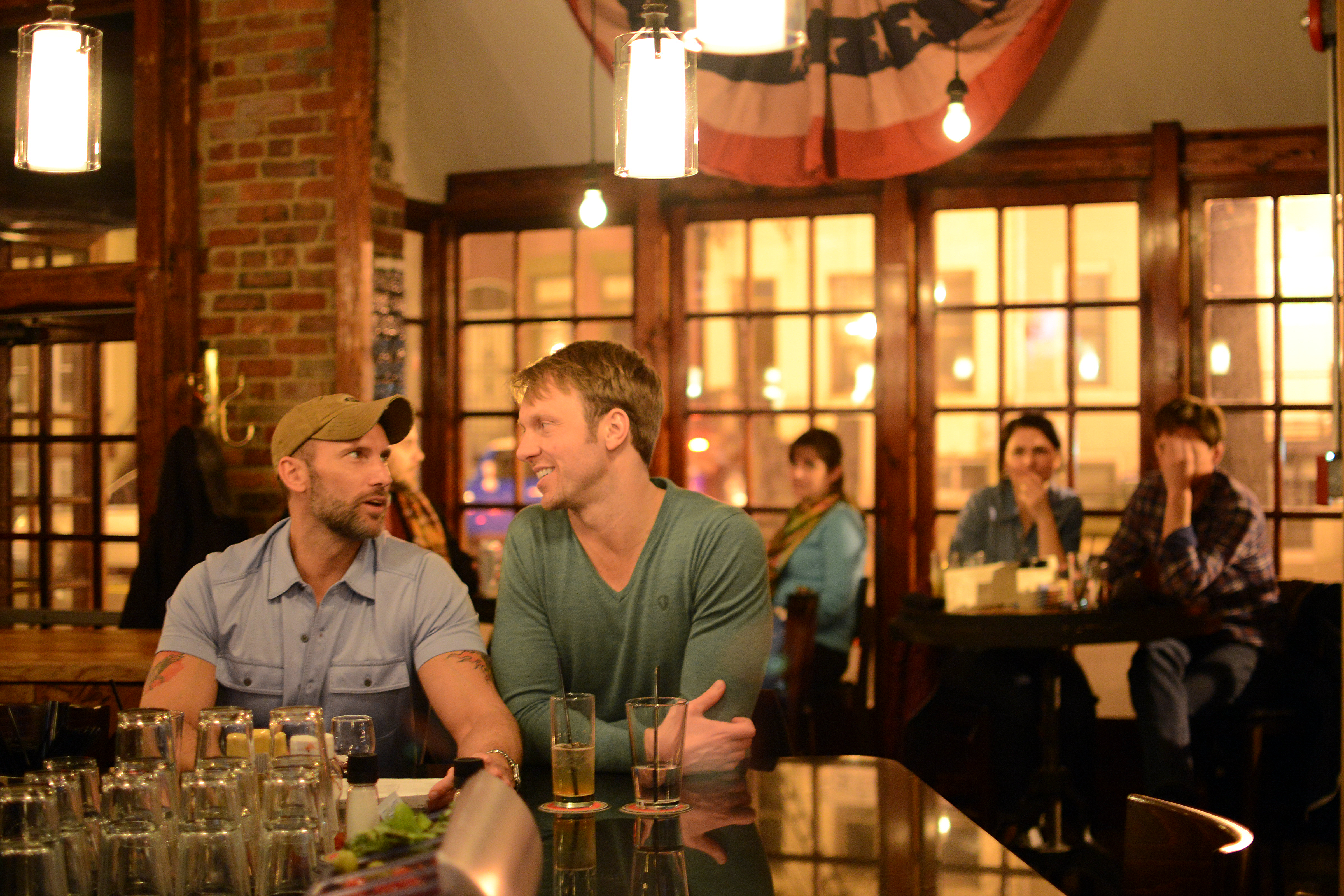
(Photo: Craig Hollander, left, and his partner Gary Unger enjoy the Oscars at Shaw’s Tavern, a DC gastropub managed by a largely gay staff which attracts straight and gay patrons alike. Both men enjoy living openly gay in the district. ‘DC is very much gay-friendly,’ says Gary. ‘You don’t have to look over your shoulders anymore’. By Astrid Riecken/Washington Post/Getty.)
Is 18 Too Young To Smoke?

Screen Shot 2013-11-18 at 2.49.22 PM

John Kruzel hopes other cities follow New York’s lead in banning cigarette sales to anyone under 21:

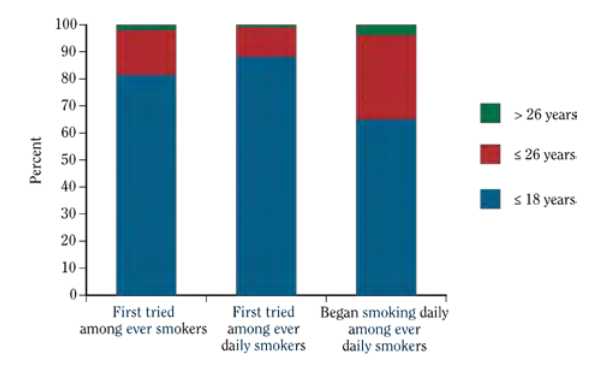
[T]he 18–20 set does more than just supply cigarettes to underage smokers. According to a mix of firm statistics, anecdata, and a damning confession by a Big Tobacco official, this age group also gets addicted to nicotine in big numbers. “A significant number do in fact start between 18 and 21,” John Banzhaf, the executive director of Action on Smoking and Health, told CNN in 2002. Among 18-to-25-year-olds, the average age of first use is 18.9 years old, according to cardiologist Mehmet Oz.

On the retail side, one New York City vendor told a local CBS affiliate that half of his cigarette sales go to people between the ages of 18 and 21. But perhaps the most damning line (and maybe the obvious causal explanation) comes from a 1982 internal memo penned by an employee of the tobacco manufacturer R.J. Reynolds: “If a man has never smoked by age 18, the odds are three-to-one he never will. By age 24, the odds are twenty-to-one.” To put it another way, in the words of Patrick Reynolds, the grandson of R.J. Reynolds who would spurn the family trade to become an anti-smoking advocate, “Once they reach 21, it’s no longer an interesting vehicle for rebellion.”

Four Massachusetts towns have already boosted the smoking age to 21, and similar pushes are underway in UtahHawaii, and Washington, DC.

(Graph: Office of the Surgeon General)

Five-Star Art Criticism

Orit Gat profiles writer and art critic Brian Droitcour, who – after being published by ArtForum and other publications – has taken to posting reviews to Yelp:

Part of the attraction was the ability to adopt a more direct style of critical writing. (Case in point: “There are dozens of places in Chelsea to see decent art in favorable installation conditions. Don’t waste your time here.” [From a review of Family Business, April 2013.]) Droitcour says the more he wrote on Yelp, the more these reviews morphed into a process of questioning the role of the critic and the nature of criticism, and a way to get outside of the process of value-creation that most writing about art participates in. “As an art writer, when you write a review at times you feel like it’s just giving the gallery something to publicize, another page in the binder, another line on the CV for the artist. I was just super frustrated with reviews,” Droitcour explains. Yelp reviews, generally speaking, are not included in such binders.

The Internet Is Undervalued

Standard economic measures don’t account for digital gems:

You may think that Wikipedia, Twitter, Snapchat, Google Maps, and so on are valuable. But, as far as G.D.P. is concerned, they barely exist. The M.I.T. economist Erik Brynjolfsson points out that, according to government statistics, the “information sector” of the economy—which includes publishing, software, data services, and telecom—has barely grown since the late eighties, even though we’ve seen an explosion in the amount of information and data that individuals and businesses consume. “That just feels totally wrong,” he told me.

Brynjolfsson is the co-author, with Andrew McAfee, of the forthcoming book “The Second Machine Age,” which examines how digitization is remaking the economy. “We’re underestimating the value of the part of the economy that’s free,” he said. “As digital goods make up a bigger share of economic activity, that means we’re likely getting a distorted picture of the economy as a whole.” The issue is that, as Kuznets himself acknowledged, “the welfare of a nation . . . can scarcely be inferred from a measure of national income.” For instance, most Web sites are built with free, open-source applications. This makes running a site cheap, which has all sorts of benefits in terms of welfare, but G.D.P. ends up lower than it would be if everyone had to pay for Microsoft’s server software. Digital innovation can even shrink G.D.P.: Skype has reduced the amount of money that people spend on international calls, and free smartphone apps are replacing stand-alone devices that once generated billions in sales. The G.P.S. company Garmin was once one of the fastest-growing companies in the U.S. Thanks to Google and Apple Maps, Garmin’s sales have taken a severe hit, but consumers, who now have access to good directions at no cost, are certainly better off.

This Steampunk Thing Has Gone Too Far

The kids are taking up Victorian martial arts:

Bartitsu was developed by Edward Barton-Wright, a British engineer who moved to Japan in 1895. After returning to London, just before the turn of the century, he created a mixed martial art hybrid, combining elements of judo, jujitsu, British boxing, and fighting with a walking stick. The style was promoted to the middle and upper classes during a time when they were becoming increasingly worried about the street gangs and crime publicized by the tabloid newspapers.

For a brief period, Bartitsu was “all the rage for fashionable ladies and gentlemen” – but the fad soon passed. Now, after a century of dormancy, it’s back:

Tony Wolf, a fight choreographer, martial arts instructor, and self-described ‘walking bartitsu encyclopedia’, serves as editor of EJMAS: Journal of Manly Arts, a scholarly online journal focusing on the martial arts and combat sports of the Victorian and Edwardian eras. As a founding member of The Bartitsu Society, Wolf explains how he and other members spent years researching and compiling archival material of the era in order to “bring bartitsu back to life” and move it online. “Then we created neo-bartitsu, which is really bartitsu as it might have been,” Wolf says.

There is no such thing as an accredited bartitsu instructor, and Wolf says that the group has worked hard to keep the art open-source and apolitical. Each instructor has his own blend of practical self-defense and historical recreation. But they all feature the principles that Barton-Wright explained in 1899:

  1. To disturb the equilibrium of your assailant.
  2. To surprise him before he has time to regain his balance and use his strength.
  3. If necessary, to subject the joints of any parts of his body, whether neck, shoulder, elbow, wrist, back, knee, ankle, etc. to strains that they are anatomically and mechanically unable to resist. …

A Google search brings up dozens of clubs and meetup groups around the country with class titles including “Sparring with Sherlock” and “Kicking Ass in a Corset: Bartitsu for Ladies.”