"I think it was a vote of no confidence. In this town the intimidation was intense. There were a lot of members who wanted to vote no," – Congressman Tim Huelskamp (R-KS) on Boehner's re-election as Speaker.
Year: 2013
Fighting Against Fossil Fuel
Reflecting on Bill McKibben's "Do the Math" tour, which encourages grassroots activism against the influence of the fossil fuel industry, Eric Moll spells out some strategies:
Potential tactics for climate activists fall along a wide spectrum. On one end are safe and legal options: petitions, electoral campaigning, legal obstruction, boycotts, strikes. Then there are peaceful tactics that fall into legal gray areas or unabashedly break the law: sit-ins, blockades, physical obstruction. At the far end is property destruction, sabotage and violence.
McKibben’s tour began the discussion on the "safe and legal" side of the spectrum, with a campaign of divestment called "Fossil Free"—getting universities, pension funds and governments to stop investing in fossil fuel companies. In his video, Archbishop Tutu explained how such a campaign helped end apartheid in South Africa. In one example of the type of activism encouraged by [McKibben's] 350.org, the Mayor of Seattle recently called for the city to "refrain from future investments in fossil fuel companies and begin the process of divesting our pension portfolio from these companies".
See our collection of "Ask McKibben Anything" videos here.
A Few Extra Pounds Are Good For You?
Kent Sepkowitz contemplates a new report on the health implications of an individual's weight:
Compared to people with a normal weight (a BMI less than 25), the overweight (BMI between 25 to 30) had a 6 percent lower mortality rate—and both groups had a rate about 15 percent lower than the obese, especially the very obese (BMI above 35).
The explanation for the finding is uncertain. Perhaps the pleasantly plump but not obese have an extra reserve—a literal spare tire—that confers a survival advantage should they become seriously ill, whereas the lean-iacs do not. Or maybe the thin ones were thin because of a serious illness that, in the course the various studies, killed them. Or maybe the thin ones were thin because they were chain smokers living off Scotch and potato chips. Or just maybe the occasional pig-out does soothe the soul and make for a happier, healthier individual.
Whatever the explanation, the observation—a truly startling one—stands.
Paul Campos adds:
[I]t’s true that the fattest people in this study — those with a BMI of 35 and above — had a 29% higher mortality risk than the “normal weight” (sic) reference group. But what people tend not to take into account about these sorts of statistics is that, for most demographic groups, baseline mortality rates are extremely low, which means a few extra deaths will produce an impressive-sounding spike in relative risk.
For example, if you compare the risk that a 50-year-old man will die within the next five years to that of a 50-year-old woman, you’ll find that the man’s mortality risk is 71% higher. That sounds pretty bad, especially if you happen to be a 50-year-old man, but what this actually means is that the man has a 2.51% chance of dying over that five-year span, rather than a 1.47% chance. And note that this hazard ratio is nearly two and half times higher than that found among the very fattest people. So among the middle-aged, gender correlates far more powerfully with mortality risk than even the highest levels of “obesity.”
An Army Of Djangos
Jelani Cobb reviews Django Unchained:
It seems almost pedantic to point out that slavery was nothing like this. The slaveholding class existed in a state of constant paranoia about slave rebellions, escapes, and a litany of more subtle attempts to undermine the institution. Nearly two hundred thousand black men, most of them former slaves, enlisted in the Union Army in order to accomplish en masse precisely what Django attempts to do alone: risk death in order to free those whom they loved. Tarantino’s attempt to craft a hero who stands apart from the other men—black and white—of his time is not a riff on history, it’s a riff on the mythology we’ve mistaken for history. Were the film aware of that distinction, “Django” would be far less troubling—but it would also be far less resonant. The alternate history is found not in the story of vengeful ex-slave but in the idea that he could be the only one.
The Dish Model, Ctd
Jeff Bercovici reports that The Atlantic is also exploring a meter for its digital content:
“Paid content is going to be a big area of focus for us,” says Scott Havens, The Atlantic’s president. Havens is in the process of putting together a “paid content SWAT team” whose brief will include everything from overhauling The Atlantic’s tablet products to experimenting with a metered pay wall like the one The New York Times implemented two years ago. “It’s not definitely happening, but it’s definitely part of the mix,” Havens says of the metered model. “We’re watching what’s going on out there, and I think the conditions are right for experimentation.”
Mental Health Break
Al Jazeera Comes To America
After spurning Glenn Beck's advances, Al Gore and his partners sold Current TV to Al Jazeera, giving the Qatar-based network a long-sought foothold in the American television market. Alex Weprin explains the logic of the purchase:
Al Jazeera acquired Current primarily for its U.S. distribution, which had been at 60 million homes. After Time Warner Cable dropped the network, the carriage dropped to around 40 million. Smaller, but still an enormous starting point for a new cable channel. … Al Jazeera’s new network could also potentially take advantage of a recent FCC ruling. Bloomberg TV argued that Comcast, the nation’s largest cable provider, had to “neighborhood” all news channels together. So, in theory, Al Jazeera could argue that Comcast (which carries Current) has to place it next to outlets like CNN and Fox News.
Sean O'Neal thinks the predictable outcries of "Terrorist TV" miss the larger picture:
[S]uch sniping ignores the fact that Al Jazeera has long been lauded by newshounds and lawmakers alike for its impressive investigation of international affairs, that its perceived "anti-American bias" is based primarily on secondhand xenophobia handed down from alarmist pundits to the ignorant who have never even watched it, and that its English-language channel is staffed with the same, pleasantly blonde reporters that Americans prefer to see reading their news.
Sixty percent of the new channel's content will be produced here in the US, while the rest will come from sister-network Al Jazeera English. Rory O'Connor points out that Al Jazeera has the financial backbone to take on America's cable news trio:
Political concerns aside, some media observers have questioned whether Al Jazeera has, as [Brian] Stelter phrased it, "The journalistic muscle and the money to compete head-to-head with CNN and other news channels in the United States." What a joke! The last time I checked, Sheikj Hamad bin Khalifa Al Thani, the ruler of Qatar, had more money than Allah.
Michael Wolff pans the move, noting only that the channel's cable contracts could disappear and arguing that the network will be just as boring as Current TV was:
There are probably many reasons that al-Jazeera in English is not very good. It doesn't really seem to have a clear idea of who its audience is. It has often relied on old-time, marginal or unhappy mainstream broadcasters in an effort to gain some legitimacy and recognition. The heavy hand of state ownership is probably not only heavy, but given the particularly internecine politics of Qatar and its ever-expanding commercial and political interests, unfathomable. And, in general, al-Jazeera clearly does not place much of a premium on wit or style.
Crack For Kids, Ctd
A reader writes:
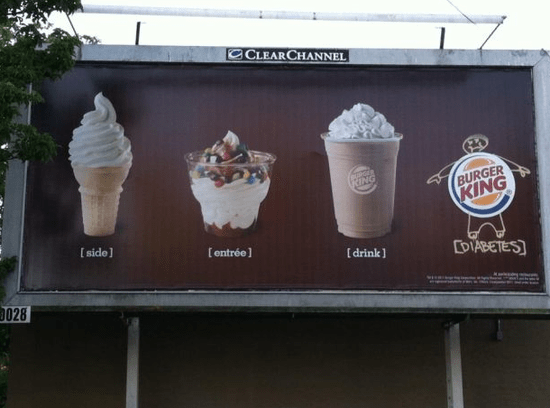
My kid was diagnosed with fructose malabsorption early in 2012. Essentially, any fructose that he eats, in excess of approximately the same amount of glucose, makes him sick. Most fruits are relatively balanced 1:1 with fructose to glucose, so they're okay: pineapples, berries, a lot of citrus fruits. But popular fruits like apples, mangoes and watermelons are screamingly high in fructose relative to glucose. Oh, and wheat. And honey. And agave syrup. Fruit juice is just as bad as Honey Boo Boo's Mountain Dew habit from a metabolic standpoint, but at least it doesn't have the other crap in it.
You'd think such a disorder is rare? It's really common. Estimates are 30-50% of the U.S. population. And they tend to have metabolic syndrome.
Fructose-heavy fruits and grains come from parts of the world where people are better able to tolerate them (warmer parts of Asia, the Middle East – anywhere with a long, warm/hot growing season and/or a lack of seasons). And if you're from an area where those fructose heavy fruits and grains don't grow year round (Northern Europe), you're really screwed, as your body treats fructose differently in the absence of sunlight. The idea is that you'd have gorged on those fruits during the summer months, and depositing that fat around your middle (again, metabolic syndrome) would have been helpful for fertility – hell, survival, in general – during the cold winter months when there's little food.
Metabolic syndrome is really common in my family, as are high triglycerides and pasty white skin. We joke around that my kid's diagnosis of fructose malabsorption and his subsequent avoidance of fructose sources will make him one of the healthiest kids we know, as kids are all on high-fructose corn syrup and fruit juice from an early age. It's no surprise that obesity rates and metabolic syndrome have gone through the roof since the introduction of HFCS in everything.
By the way, in support of Dr. Lustig's argument about the relative perils of fructose, a recent study (subscriber only) in the Journal of the American Medical Association shows how the brain responds differently to different types of sugars:
[Researchers found] an increased sensation of fullness and satiety after glucose, but not fructose, consumption. These findings support the conceptual framework that when the human brain is exposed to fructose, neurobiological pathways involved in the appetite region are modulated, thereby promoting increased food intake.
(Photo by COPCWa)
Cashing In On The Conflict
Jacob Newberry spent a year in Israel and was disturbed by "an unshakable feeling of complicity: with the Occupation, with the whitewashing of conflict, with the culture of triumphant militarism." But his visits to Ramallah were equally conflicted:
You will buy a decently constructed pair of shoes from a very nice shop run by a friendly man who remembers you and your tall, handsome friend. The shoes will say Handmade in Palestine, in English, on the hard black soles. This is not the only reason you have purchased these shoes (think: upward mobility, redistribution of wealth, joblessness), but it is a selling point. The owner of the shop knows this. His shoes are more expensive than those at most stores in the city, and each time you have come to visit, only foreigners have been browsing. Smile when you recognize the shop owner’s cleverness. Feel it warmly as a reverse exploitation, one that benefits everyone. Think of the phrases monetizing the conflict and exploiting Western liberal guilt and be proud of your erudition and sophistication.
A Criminal Environment
Kevin Drum connects crime rates to lead exposure:
We now have studies at the international level, the national level, the state level, the city level, and even the individual level. Groups of children have been followed from the womb to adulthood, and higher childhood blood lead levels are consistently
associated with higher adult arrest rates for violent crimes. All of these studies tell the same story: Gasoline lead is responsible for a good share of the rise and fall of violent crime over the past half century.
Like many good theories, the gasoline lead hypothesis helps explain some things we might not have realized even needed explaining. For example, murder rates have always been higher in big cities than in towns and small cities. We’re so used to this that it seems unsurprising, but Nevin points out that it might actually have a surprising explanation—because big cities have lots of cars in a small area, they also had high densities of atmospheric lead during the postwar era. But as lead levels in gasoline decreased, the differences between big and small cities largely went away. And guess what? The difference in murder rates went away too. Today, homicide rates are similar in cities of all sizes. It may be that violent crime isn’t an inevitable consequence of being a big city after all.
Drum promotes his article over at his blog:
You probably have a lot of questions about all this. What about other countries that eliminated leaded gasoline? Why haven’t I mentioned lead paint in old housing? Don’t things like policing tactics and increased incarceration matter too? And since leaded gasoline has been long since banned, why should you care about this? All these questions and more are answered if you read the full article.
 The Dish