The Dish Model: The Data

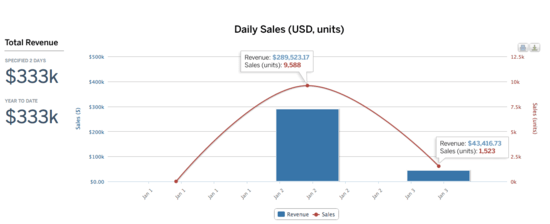
Basically, we've gotten a third of a million dollars in 24 hours, with close to 12,000 paid subscribers (at last count). On average, readers paid almost $8 more than we asked for. To say we're thrilled would obscure the depth of our gratitude and relief.

More details below. All of the graphics can be enlarged by clicking on them. The number of subscribers and the total revenue that has come in as of 1:15 pm ET today (credit card and Tinypass fees take a small bite out of the revenue number) is below:

Daily_Sales

The next graphic breaks down subscription revenue by price paid and shows the number of subscriptions at that price. This includes only the 10 prices that have brought in the most revenue:

Top_Products

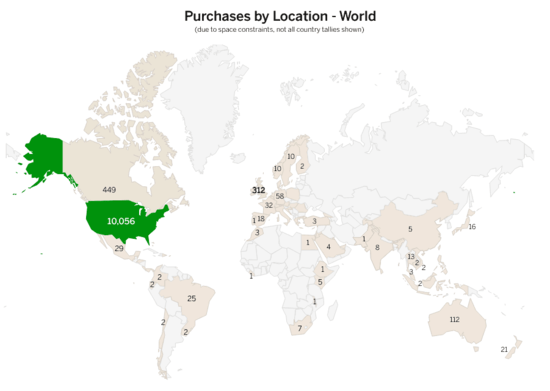
The number of subscriptions in each country:

Dish_World_Map

Go Canada and Britain! The number of subscriptions in each state:

US_Map

If our goal was an annual income of somewhere around $900K (we erred on the safe side), we have gotten a third of the way there in 24 hours, which is why we're all somewhat gob-smacked. We feared it would take far longer for us to get that kind of support. Total number of paid subscribers? Almost 12,000 right now. That's still only 1 percent of our total monthly readership – so we have plenty of room to talk more of you into subscribing before the meter hits. And the current number is misleading because of that. We really won't know how effective this is going to be until we actually have the meter in place. That's the only true measurement of how many readers will eventually pay to read the Dish.

But as a kick-off, this has been, well, words fail. We don't know how to thank you enough. Except to work harder than ever to make the Dish everything it can be in the future.

If you've held off so far, please think about giving it a go. We're still in the foothills of the mountain we need to climb. At the basic price, it's around a nickel a day. Simply as an experiment in figuring out how to make journalism work in the new media world, it's a pretty good investment. In return, we'll stay as transparent as we can (this post is a downpayment) – and answer only to you.

Pre-subscribe here.  My explanation of the move is here. And, er, you rock. But we knew that already.

How Polarization Deceives

104027588

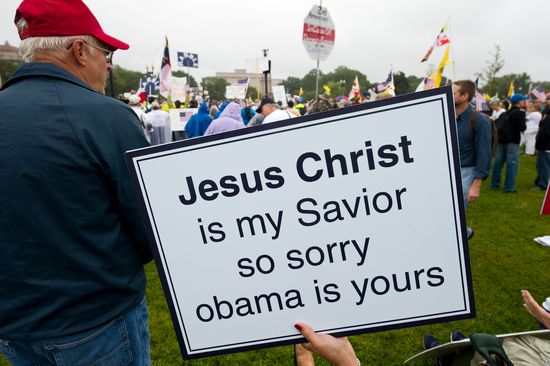
It’s a Malkin-Moore, MSNBC-FOX world. Brian Merchant summarizes a recent study on the “moral stereotypes of liberals and conservatives.” Merchant notes that “that both conservatives and liberals exaggerate not just the shortcomings of the moral views of their political opponents, but those of their own peers as well”:

A Republican, for instance, might end up believing that liberals want to turn the nation into a nonstop San Francisco-style gay sex party. But he’ll also likely think that his fellow GOPers in general are more anti-gay rights than he is. He’ll exaggerate both the moral ideals of his opponents and his own political brethren. However, he’ll correctly intuit the difference between the nature of his and his in-group’s moral priorities from liberals’; he’ll just exaggerate how great those differences are.

What has long struck me is the reification of the enemy – along boomer culture war lines. Political positioning remains overwhelmed by cultural identity in this country, certainly among the over-40s. Obama is not like this, as I noticed more than five years ago now. Most of the next generations aren’t. But the post-Vietnam hippies-vs-squares, protestors vs ‘patriots’ dynamic is alive and well – and is particularly vivid among the self-understood “losers” of the culture wars, who tend to be disproportionately Republican and rural. You see it in places like the New York Post or the O’Reilly Factor. All you need to know for O’Reilly is that someone is “far-left.” Quite what that means in terms of policy is very hard to say on any specific point. But he knows them when he sees them, and vice-versa on the Ed Shultz left. And the visceral hatred for conservative types on the left is just as egregious. The contempt for so many people’s intelligence, people who are far more complex than these caricatures convey, is liberalism’s greatest weakness right now, I’d say.

We’re human, so we’re tribal, and there’s not much we can do about that. But the intensity of the tribalism among some? Perhaps ultimately incompatible with a reasoned liberal democracy.

(Photo: A demonstrator holds a sign near the Washington Monument during a march by supporters of the conservative Tea Party movement in Washington on September 12, 2010. By Nicholas Kamm/AFP/Getty Images.)

Hunters Against The NRA

Ari LeVaux is one of them:

The National Rifle Association claims on its website to be the largest pro-hunting organization in the world. As a hunter, not to mention as a human being, the NRA couldn’t represent me less. The NRA isn’t for hunters any more than AAA is for bicyclists. Sure, some hunters are NRA members, but first and foremost the NRA serves gun fetishists and the firearms industry. … In 2011, nearly 14 million Americans hunted, while NRA members number about four million–fewer than half of whom actually hunt.

The Dish Model

Unlike Mr Morgan (prove him wrong by pre-subscribing here), Felix Salmon likes our new economic model. From his conclusion:

Sullivan is burning no bridges here. If this works, great; if it doesn’t work, I’m sure that there will be a fair few publications out there willing to add their names to the list of places which have hosted the Dish. It’s what the financial types call a free option. And I’m very glad that Sullivan is taking the plunge, to see just how much money is out there for someone looking to make it on subscription revenues alone. I only have one request for him: please be very transparent about the numbers!

We will. We were waiting for a solid 24 hours of data before letting you know (and that is now up). We’re gathering that data as we speak and will report back to you later today. We’ve struggled with the obvious questions of transparency: if the subscriptions come in as a disappointment, would publicizing that become a self-fulfilling prophecy? Or would it help spur more support? If we do really well, would that encourage readers who haven’t subscribed to take a free ride? Would it generate complacency?

Eddy1After some urgent soul-searching, we’ve decided that this is your blog and that you deserve to see as much behind the curtain as possible, without disclosing individual employees’ private information. We just have to trust that the data won’t hurt the site, whatever side of the line we fall. So, as soon as we gather up all the data, we’ll give you our rough calculation of our estimated budget for our first year and data on how much progress we have made so far. Felix isn’t far off with $750,000 – but we were a little more conservative in guessing future unknown technological costs, and so we calculated a slightly higher number, and a steeper hill to climb. I’m a fiscal conservative, remember.

But basically, we think we should be as accountable to our readers as we can, and leave a lot of the financial mystery, spin and secrecy of the old media behind. One other reason we’ve decided to ignore the risks of transparency is because our ambitions are effectively open-ended. Our initial budget is simply for what we currently provide readers. But if we can do better, we will plow the extra money into commissioning long-form journalism, and hire an editor or two to edit it. We would really love to use the Dish’s bloggy base to enrich long-form writing, just as we are trying to support poetry. My own dream is a monthly tablet magazine called Deep Dish, which would have the best of the month’s Dish (with some reader-threads all brought together, a window view gallery, a couple of photos) and two or three really deep dives into subjects that come up in our unending conversation. Getting the blogosphere to bring back long-form is a really subversive idea. But I think we could have a go at it, if you help us by pre-subscribing (do it here! Or the adorable hound gets it!). So even if we were to hit our target, we can still appeal to readers to help us become more ambitious. We will of course hit a limit at some point – and we won’t really have a good grip on what that number is until mid-February at the earliest, after the meter has actually been installed. But we’ve decided to give you the numbers up-front because we trust you get what we’re trying to do. We are resigned to many free riders with a freemium model as open as ours will be. But we figure the more honest we are with you, the more reasoned you can be in your support (or not). Alyssa Rosenberg wants a thousand business models to bloom:

I hope their business model becomes sustainable not because I think we need it as a sole light forward in a dark publishing landscape. Rather, I think we need a lot of models, so new entrants into the market have lots of paths to sustainability. Some products that have been prestige for the entire run of their existence, like The New Yorker, will be able to flourish in their walled gardens without ever venturing out into a more open marketplace. Others, that have both passionate and casual readers, and perform the services both of delivering basic news information and offering up longer, more proprietary analysis, like the New York Times and the Dish will do well with metered models.

Projects like ThinkProgress and Pro Publica, which want a certain amount of independence from corporate interests and protections from the vicissitudes of the advertising marketplace, will successfully justify their necessity to a variety of non-profit funders. Rather than aiming to be among the most privileged and valued of products and individuals from the start—a position that guarantees financial support, but that doesn’t clarify the nature of the product they’re distributing—publications and content distributors would do better to know the fundamental nature of their business, and to choose a revenue support model based on that.

Paul Constant agrees that our model won’t work for everyone:

This will no doubt inspire many bloggers to consider adopting a reader-funded model. Those bloggers should remember that Andrew Sullivan is one of maybe five names that could make a reader-sustained blog financially viable.

Malkin Award Nominee

"And here we are eleven years after the largest and bloodiest Islamic attack on America and Al Jizz is buying Gore TV. This is a major step in the network’s goal of expanding jihad propaganda further into the U.S. cable market and gives it a chance to brainwash millions of Americans. How much did those traitors sell us out for? Al Jazeera is a security threat to America. Demand investigative hearings." – Pamela Geller.

For a glossary of Dish Awards, see here. For 2012's champions, see here.

The Body Count In Syria

Syrian_Soldier_GT

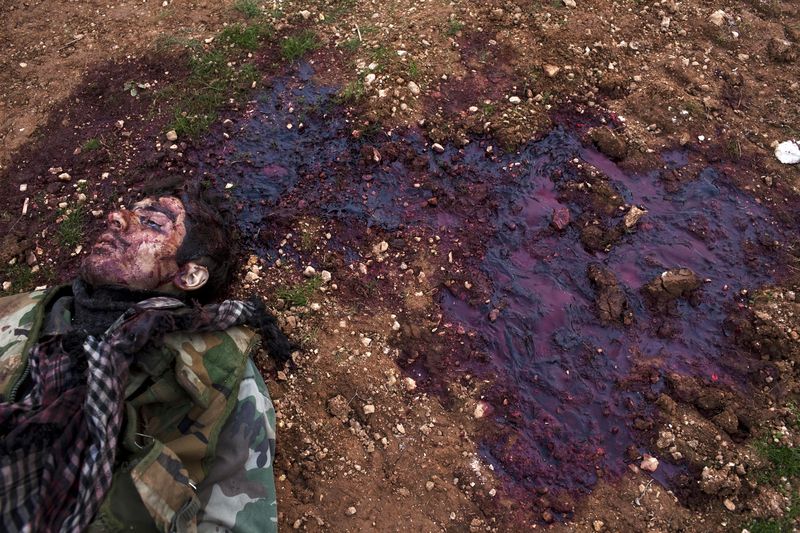
A new report (pdf) estimates it at around 60,000. Ackerman discusses the difficulty of tallying up deaths in wartime:

The brutal truth is that no one really knows how many Syrians have died in dictator Bashar Assad’s brutal crackdown: Warzone death estimates are notoriously imprecise. By its own admission, the death toll compiled by the human rights tech group Benetech, on behalf of the UN, is inaccurate. But its assessment has the virtue of specificity, a factor that preempts some of the doubts raised about mortality estimates in other warzones. The UN High Commissioner for Human Rights, Navi Pillay, called the study  “a work in progress, not a final product.”

(Photo: The body of a Syrian soldier lies outside the infantry academy that was taken over by rebels in the town of Fafeen just north of the city of Aleppo on December 16, 2012. By JM Lopez/AFP/Getty Images)

Dish Independence: Reader Reax II

Dishness-explained-II

A reader writes:

In 19 years of heavy Internet use, I have never – not once – paid money for original written online content. Until now.

Another:

My partner always jokes that we don't pay for anything except food and our mortgage because I pirate everything else – movies, magazines, music, e-books. But you hooked me this time. I subscribed and did so happily. 

Another isn't onboard:

I'm a reader since 2003 who won't be paying. I realize 20 dollars a year is not much. To me it's the principle. For better or worse I like my Internet free. Friends come and go. I'll miss you but with so many other free sites available that void shall be filled elsewhere. Best of luck.

A reminder to our reader and others that the vast majority of Dish content will remain free to non-members. Another is less torn:

So, wait … Andrew moves to New York City, complains about both the cost and the environment for weeks and now wants to charge readers to subsidize him and his staff living in Manhattan? Surely the same talent could be had in DC? 

I probably will join, though. I do think it’s a shame that information and good public discussion is shifting into a "pay-to-play" operation. When I was in college, most news outlets were completely free and I got such a great variety of different perspectives, helping me form a worldview. With individual accounts to pay for each of these voices, it’s going to price a lot of people out of the market.

Another tough sell:

I've been thinking about whether or not I want to subscribe all day, and, right now, I have to say that it's a no. Your blog is compelling, but there are many compelling blogs out there. I don't feel that you ever truly atoned for Betsy McCaughey, and that's pretty hard to ignore. 

People can make decisions about this based on whatever they like. But I hope the criterion is not some sin I have committed in the past or some outrageously dumb thing I will inevitably say in the future. Those can either not be undone or are integral to this blog. Another:

I was pissed when I first saw that you would charge for content. I'm 100% sure there's a way around it – I've gotten around pretty much every paywall on the Internet. So why treat your future one differently?  Well, firstly, I knew an intern of yours from last year and I knew that he was treated fantastically well. This seemed encouraging. But more importantly, I've been a Dish-head for years. I'm probably to the far-left of most readers, and I'm constantly telling my Republican family that if they want to make intelligent right-of-center arguments, to read your blog. I don't particularly like a lot of your politics, but I respect the hell out of them, 98% of the time anyway.

Next, I've had letters put on the blog twice. It was really cool to feel like a part of the team, if only for a fleeting second. A highlight of my week, both times. But lastly, the real conundrum, if not for very long, is the cost. I'm working for a year, in the middle of law school, so I can pay for my last year of law school. I'll graduate with $180K in student loans. I've pretty much maxed out my credit, came up $8000 short for this year, and am literally saving every penny I can, because damnit, I'm going to be an awesome lawyer. 

But even as I say 'no' every time friends or coworkers ask me to go out for drinks or dinner or a movie, I go home and read The Dish. I read many of the linked articles, too. I watch the videos. It's most of my entertainment and intellectual life right now. I spend WAY more than that average 17 minutes on the website every day. So what's it worth to me? A lot more than $20. But that's what I gave (sorry, I promise for more when I get a fancy career somewhere!) and I hope my little portion helps keep the blog afloat.

Another:

I just purchased your $19.99 pass. What I'm most excited about is your decision not to rely on advertising to supplement the subscription income.

I might have bought a pass anyways, since I'm a regular reader and want to support both your work and the decentralization of media, but to me the decision to eschew advertising is the really exciting idea. The standard line about this is that if you're not paying for the product, then you are the product. I know that's simplistic, but I think that being forced to cater to advertisers has all sorts of pernicious effects on privacy, framing, content, and even choices about coverage, and I am eager to see if moving away from that model has some unexpected positive side effects.

Another:

Congrats on the new model, I'm here to help. I signed up for $20.13 this year. Next year it will be $20.14, $20.15 in 2015, etc. That way, your income will rise with inflation, assuming of course inflation is only around 0.05%. Good luck.

Another:

Before I signing up, how much side boob will be featured on the new Dish? 

Sorry, only side beard here. Another:

I laughed when I read the poll question, "Have you gotten your parents to start reading The Dish?"  Not long after you began blogging, I got my then-13-year-old daughter to start reading The Dish.  (She’s 24 now, and still a fan.)  I also make it a point to mention your blog to my 50something peers; when I find a fellow Dishhead, it’s a real treat.  

I was delighted to read your news, I've sent in my subscription (plus a little extra for all the wonderful hours of reading you’ve given me), and wish you many more years of mind-expanding, sometimes exasperating but always interesting (except for the beards), blogging.

Another:

Thank you for not making it $0.99 for the first four weeks and then some hard-to-find amount automatically billed thereafter. I rewarded you a bonus $5.01 just for that. If only the NY Times would treat me so well.

Another:

I have a deeply personal connection to the Dish. This past year I went through a painful divorce that involved sorting out custody for our two kids, setting up a new home, and upending the life I’ve built over the last 14 years. Hands down the worst year of my life. Throughout the year, one of the few daily constants has been the Dish. It’s something I turn to every morning when I wake up alone. I feel like I’m part of a community in a way I don’t as a reader of the NYT or New Yorker – even though I’m a silent reader who has never solved a VFYW content. Thank you and the entire Dish staff for everything. I look forward to many, many more years.

Another:

I'll be subscribing tonight on the home computer (I'm still "old fashioned" that way).  The early rabid passion of Dish-heads will likely lead to many purchases above the $19.99 price, but it's important to note that this isn't a sustainable model. In fact, early comments you've posted indicate that people are paying up for ten years when they've received the Dish for free.  Well, that won't apply next year. 

Here's a thought: the photo of you and the staff celebrating your independence featured you all in the great Dish t-shirts. Take a page from NPR – for a subscription of $50 (you pick the level), you get a Dish t-shirt as well. You can also think about this along the lines of rock music – many musicians look to break even on the concert tickets, and make their money on merchandise. Certainly you could think of other level-based incentives once the initial first year rush to support the subscription model fades.

Earlier feedback here. A lot more to come. To be a part of an independent, ad-free Dish, go here and subscribe. We are incredibly grateful for your support.
How Deep Was The CIA’s Involvement In Zero Dark Thirty?

Zero-Dark-Thirty-01

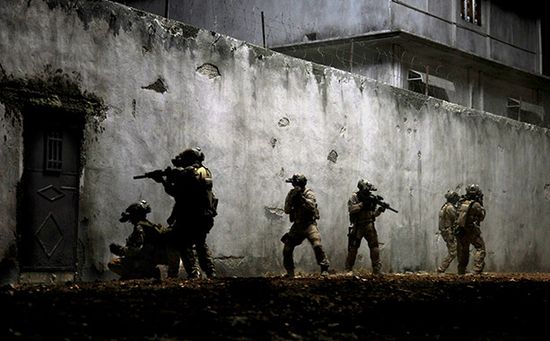
In what is a somewhat delicious irony, the movie that Republicans once denounced as a possible propaganda move for Obama's re-election is now being assailed by the Senate Intelligence Committee as pro-CIA propaganda. Hosenball has the goods:

In the latest controversy surrounding the film, Reuters has learned that the committee will examine records charting contacts between intelligence officials and the film's director Kathryn Bigelow and screenwriter Mark Boal.

Investigators will examine whether the spy agency gave the filmmakers "inappropriate" access to secret material, said a person familiar with the matter. They will also probe whether CIA personnel are responsible for the portrayal of harsh interrogation practices, and in particular the suggestion that they were effective, the person said.

The intelligence committee's Democrats contend that is factually incorrect.

A couple of comments. Not just the Democrats: McCain is very much in the mix. And I very much hope that Bigelow and Boal are in no way investigated for committing a work of art. That would be a horrifying precedent. The Hosenball piece relieves this anxiety a little:

The person familiar with the committee's plan to review administration dealings with the filmmakers said initially this would involve reviewing uncensored copies of CIA records regarding the film. The committee presently does not plan to contact the filmmakers directly, the source said.

I have no problem with an investigation into whether an agency trying to clear its name in public opinion told a movie-maker or screen-writer self-serving lies. The relationship between the CIA and Hollywood bears scrutiny, especially in this case. But I return to a core disagreement with the Senators involved, Feinstein, Levin and McCain, whose integrity on this matter I do not impugn.

They say that the movie "clearly implies that the CIA's coercive interrogation techniques were effective in eliciting important information related to a courier". The trouble is revealed by the language itself: "clearly implies".

An "implication" is rarely that "clear". It requires subjective interpretation. I've only seen the movie once, so maybe I missed something. But to my mind, there is only one scene where torture plays a role in attaining actionable intelligence – and it is indirect. It is a classic intelligence bluff move after a prisoner has been tortured that reveals a small clue.

I agree that this implies that torture played a role in the process, but the movie in no way suggests that this was the only way to get that information. In fact the very scene suggests that simply bluffing may have worked in a humane context far more effectively than torture. I say "suggest" because the movie is infuriatingly opaque about its intent and message – an almost shameless flight from political and moral responsibility – which is why I respect the views of those who think it will encourage undiscerning viewers to draw a damaging and false conclusion about torture. But those critics have to come to terms with the fact that the movie has many, many scenes where torture is shown to be fruitless and barbaric. And by far the bulk of the evidence is shown by the movie to come from relentless traditional ethical intelligence work.

Let's find out if the CIA – including its current acting director, Michael Morell – tried to spin a defense of its own war crimes. Let's find out how credulous or "embedded" Boal became. But let's also note that this is a work of art, open to a variety of interpretations. That artistic freedom – to say things others really don't want to hear – is also critical to defend.

Quote For The Day III

“Do keep in mind that Obama pretty much rolled the Republicans, and he has left them in disarray. Did that mean he was “desperate” to cut a deal? I don’t think so. It means he knew that getting credit for avoiding the cliff was better than letting the Republicans get blamed for going over it–especially if he could portray them as simultaneously craven and incompetent. He did both.

Obama plays a long game, much longer than any of us realize.  I suggest thinking about him with a little more nuance,” – David Gutting, a commenter responding to Paul Krugman’s latest jeremiad.