The Beatle Beginnings

Kitty Empire has high praise for Mark Lewisohn’s meticulous new bio, Tune In: The Beatles: All These Years, the first of three volumes:

We probably all knew the acerbic John Lennon could be a bastard, as cruel as he was witty, but Lewisohn uncovers interesting levels of illegitimacy in many of these often part-Irish Catholic families. In fact, they’re not even called the Beatles until 300 pages in; Ringo doesn’t actually join until around page 700. This is the story of the Beatles as schoolboys, of Lennon and McCartney “sagging off” to write in secret at Aunt Mimi’s, of the latest rock’n’roll and R&B cuts, and of lost virginities, of Stu Sutcliffe and Pete Best and Hamburg, of the “Piedels” – the German mispronunciation of Beatles, the Penises – on “prellies” (Preludin, the upper guzzled by many in the cellar clubs), ripping it up on the Reeperbahn. Sometimes, these famous men really seem like motherless children – both McCartney and Lennon lose their mothers in their teens and this huge, shared loss is given sensitive and apposite emphasis. Deaths, desertions and departures are key to the story.

Liz Thomson is also impressed with the author’s rigorous research:

Lewisohn spent six months living in Liverpool, and you can tell. Not just in the way he traces Beatle forebears but in the way he puts those forebears in their socio-historical context; in his understanding of the city’s psychogeography:

what it meant to grow up in rough-tough Dingle, as Ringo did, or in south-suburban Woolton, as John did, or to experience life like Paul and George, on the council estates created by Liverpool Corporation after the war as it moved people out of the city, leaving its bomb-damaged historic heart to rot until the 1980s renewal. The would-be Beatles criss-crossed its gap-toothed streets, guitars on their backs, in search of new musical experiences. Paul and George once crossed town to meet a stranger who they’d heard knew how to form a B7 chord. Today, you’d Google it.

Colin Fleming commends the book for bringing to life the sense of luck and good fortune that drove the group’s career:

If you know the Beatles’ story arc, you are aware that despite the adulation, the chart-topping, the madcap tours, “We’re more popular than Jesus,” Yoko, the breakup—all of that which occurred between 1963 and 1970—the choicest parts of the band’s story are the early, pre-fame years, culminating with 1962. … In this book, which focuses on 1957 to 1962, Lewisohn picks up on that supernal feel to the Beatles’ success, and at times his own wonder that all of this ever happened, with one amazing coincidence after another, feeds into our own.

For instance, crucial, confidence-building early work—a tour as a backing band in Scotland—comes about “not on merit but because no one else could fill the bill and they shifted everything to make it happen.” A recurring moment, the defining scene of this book, which happens about a dozen times: In doubt, and in the dumps, with ostensibly no prospects to ever get anywhere, one Beatle turns to the others and says, basically, “Something’ll happen.” And then, boom: It does.

He also flags the above recording – from a seven-song set in October, 1963 – as an example of the band’s raw energy in those early days:

They open with Paul McCartney’s “I Saw Her Standing There,” and they immediately make clear that this is going to be a full-speed affair. The sound isn’t just loud; it’s over-loud, possibly the loudest rock and roll anyone had ever cut to date. The guitars distort, adding abraded edges that make the song sound more lascivious than it is, the lines of “She was just 17 / If you know what I mean” now sufficiently scabrous to get the likes of Humbert Humbert up and dancing. The four guys sound thrilled, maybe over the fact that for once hardly anyone is screaming back at them.


A Comedian Born Of The Twitterverse

Katie Rogers reviews prolific Twitter-comic Rob Delaney‘s new book, Rob Delaney: Mother. Wife. Sister. Human. Warrior. Falcon. Yardstick. Turban. Cabbage:

The book – we’ll call it ‘MWSHWFYTC’ – is a speed read that takes the reader from Delaney’s native Marblehead, Massachusetts in the early 1990s to present-day Los Angeles, where he lives with his wife and two sons. The years in between, though, are where Delaney’s prose is at its most powerful. The comical (if dangerous) bouts of binge drinking suddenly crash into Delaney’s rock bottom, which involves a hospital, rehab and a halfway house.

Many pages of his book are strewn with profanity, fart jokes or comments about genitalia; you’ll finish the book knowing more about his personal evolution in masturbatory habits than his courtship with his wife. The language is stronger than the typical memoir of triumph over struggle, but then again, not every writer can weave body fluids and body parts into a touching essay about a battle with depression, or three halfway house buddies who never made it out. Those vignettes bookending his battles are less engaging, but Delaney’s unflinching description of addiction and depression should be required reading for those who’ve ever struggled with either disease.

A sample from the book:

At the end of my freshman year I fell asleep on my roommate’s bed when he was out of town. I’d taken a girl to a screening of The Umbrellas of Cherbourg and I’d struck out. So I convinced my other roommates to drink ten or fifteen beers with me, then passed out in his bed instead of my own and pissed in it thoroughly. When I woke up and realized what had happened, I sprang into action.

I washed his comforter, sheets, and mattress pad. Then I dried them and, in the process, melted his mattress pad. Great holes were seared into it, all over, but I put it on his bed anyway with the sheets and comforter over it. When he got back to the dorms, lay down on his bed, and felt the crunchy mattress pad under him, he pulled the sheets off and asked the heavens, “What the fuck?”

Rather than admit I’d passed out on his bed and irrigated it, I told him, “Sometimes mattress pads melt under your sheets when it gets hot.” I don’t know if he believed this, but we didn’t speak of it again, and we went to our respective homes for the summer a few days later. He’s a bank vice president now, as is another of our suitemates, with whom I smoked pot regularly through a hose that hooked up to a Vietnam-era gas mask that we would take turns strapping to our faces.

In an interview at Slate, Delaney explains why, despite the idea of the tortured artist, “depression itself is not a good thing for comedy”:

I remain under a psychiatrist’s care. I took antidepressants this morning. I’ll take them tomorrow morning. But because I don’t drink, because I take that medication, because I exercise and eat reasonably well and try to live my life and try to be a kind person and a compassionate person and a hardworking person, my base level happiness generally is pretty average to high. I’m still a weirdo. If they did an autopsy on me, it wouldn’t surprise me if parts of my brain they could look at and think, “Whoa … this is … OK, here we are. This explains some things.” Just because I’ve been sober for over 11 years, and just because I don’t put my fist through a wall every other week like I did when I was drinking, and just because I’m not destroying relationships, doesn’t mean that I’m not still in some ways the same nutjob.

It’s OK to be crazy. It’s OK to wrestle with negative urges. I wouldn’t feel guilty if I had the thought, “Hey, I’d love a beer right now.” There’s nothing wrong with me because I feel that way. But if I go have that beer, that would be a problem, because that would likely lead to 23 more and a fireball somewhere. I try to think it through now and weigh the consequences. And I’ve achieved peace with the fact that yeah, I’m a drunk, and that’s OK. The only thing bad about me being a drunk would be not acknowledging it.

Previous Dish on Delaney here, here and here.

Face Of The Day

OPE_0213 016

Pinar captions the above piece by Joe Black:

London-based artist Joe Black uses thousands of tiny objects to create large-scale murals of iconic and historical figures. Each piece features a variety of components ranging from small toys and chess pieces to nuts and bolts. His material choice plays a significant role in portraying his interpretive message, while presenting it in an eye-catching manner. …

Black has his first solo exhibition, titled Ways of Seeing, at the Opera Gallery in London, currently displaying a selection of the artist’s thought-provoking work through November 19, 2013.

A close-up of the Stalin mural:

dish_black2

(Images courtesy of Joe Black)

Of Crisis And Criticism

In an interview with J.C. Hallman, Walter Kirn discusses the current state of literary criticism:

JCH: Are books and literature in a state of crisis these days? If so, does that have anything to do with how we write about literature?

WK: I certainly hope they’re in a state of crisis. The moment they’re not, they’ll probably cease to matter much. Maintaining a state of crisis around matters that many people might considered settled – What is it to be a person? What is it to tell a story? – is the first job of literary art. Nothing keeps the novel livelier and more relevant than those ceaseless “Is the novel dead?” essays, for example. The markets live by the competition of fear and greed, they say, and literature lives by the struggle between hope and despair over certain fundamental concerns such as whether life can be fruitfully represented at all. Crisis and criticism go hand in hand. …

JCH: As you see it, what happened to criticism? That is, how did we move from [Matthew] Arnold and [Walter] Pater and [Oscar] Wilde to the kind of academic criticism produced in English departments?

WK: What happened to criticism is that it became a profession, even a guild, heavy on trade craft and jargon and dedicated to exclusion and self-protection. It became a way of credentialing an insider class and assuring its members of an income inside of the academy. As such, criticism took up a specialized vocabulary whose chief function, as I see it, was to signal loyalty to the executive board of the approved critical class. There are all these words in contemporary criticism – “gendered,” “hegemonic,” “interrogate,” etc. – that strike me as verbal secret handshakes. They might have been meaningful once, but more and more they feel like coded transmissions between the troops and their leaders. And they make for very ugly sentences. Critical prose of the type that includes them is singularly ugly prose, and I’m with Einstein and similar physicists in believing that elegance bears a close relation to truth. …

Writerly criticism uses a personal vocabulary, not a received or assumed one. It sounds, when read, like an actual human being thinking and feeling. It resists theoretical paraphrase. It provokes conversation rather than shutting it down through intimidating, scholastic moves. It gives pleasure. It releases more energy than it traps. And it takes responsibility for its points and statements rather than shifting responsibility to some larger body of expert thought.

Mom And Moore

Reviewing Linda Leavell’s new biography of poet Marianne Moore, Jenny McPhee finds that the book’s “greatest achievement … is [Leavell’s] nuanced, sensitive, and revelatory depiction of surely one of the most intensely destructive/productive mother-daughter relationships in literary history”:

While at Bryn Mawr, Moore discovered she was “possessed to write” and “a demon dish_moore needing wild horses to drag me from the diabolical profession.” A few years after graduation, she and her mother moved to New York City, where they would live together for nearly thirty years until [Moore’s mother] Mary’s death in 1947. Everything Moore did, everything she wrote, was subject to her mother’s intense scrutiny. Mary did all she could to hinder her daughter’s healthy, prolific existence while also devoting herself to Moore’s success in body, soul, and literary vocation. She committed herself so fully to Moore’s thwarting she often became an invalid herself, suffering from “nervous exhaustion,” which forced Moore to become her nurse.

Moore’s only place to be alone was in her poetry: she relentlessly pursued syllabic meter, unsentimental topics, searing irony, quirky stanzas with odd line breaks, and an inscrutable language in an effort to keep her mother out.

“The frailest bit o’ bones that could presume to be ‘a man'” is how Mary described her daughter, and Leavell speculates that Moore’s chronic low weight — she probably suffered from anorexia — may have contributed to her total lack of sexual interest. [Ezra] Pound flirted heavily with her, as did many artists, writers, editors, and patrons both male and female; but Moore’s amorous indifference was profound and unwavering. Besides, as her poem “Marriage” suggests, for all intents and purposes she was already faithfully married to her mother and would do nothing to upset, much less betray, that formidable bond.

This mysterious, uncompromising attachment in which Mary masculinized Moore, at least on a linguistic level, became a source of great power. Throughout her life, in her subversive fashion that at once circumvented and celebrated her mother, she cultivated her own considerable power: “To be understood” is “to be no / Longer privileged.” And in “Marriage”: “men have power / and sometimes one is made to feel it.” In a book review, she wrote, “Love is more important than being in love”; and in her poem “The Paper Nautilus,” she described a mother’s love as “the only fortress / strong enough to trust to.”

(Image of Marianne Moore in 1935 via Wikimedia Commons)

A Short Story For Saturday

A reader writes:

In addition to long-form journalism, I have to admit that I fantasize that one day the Dish will also support long-form fiction – not novels, which still get published in print books, and not short stories, which can get published in lit mags, but long short stories and novellas, which have a really hard time finding a home. Ploughshares recently started publishing long short-stories and novellas as “Solos“, and I would love to see other well-respected online venues publishing them as well – like the Dish! As a fiction writer myself, I’ve been thrilled to see such attention lately to poetry, fiction, craft, and the writing life. I’d love to see you take that support a step further someday.

It’s definitely on our radar. For the time being, we want to draw more attention to short fiction, especially stories of a manageable length accessible online. What better way to spend a Saturday afternoon than reading a short story? Our first selection is an especially short one, Adam Haslett’s “The Act,” recently published in The Baffler. How it begins:

The boy grows up in Toledo in the fifties, where his father works at the tire plant and for the union as a shop steward. He does well in school, studies hard, and on the advice of a teacher applies to a bunch of small, East Coast schools. His father thinks he should go to Ohio University or maybe Michigan. They fight about it, but not much, because when it comes down to it, his father is proud of how well his son has done, and he trusts his wife, who says these other places will give the boy more opportunities.

For the first time, his father skips the Labor Day parade and spends that weekend driving his son eleven hours to the campus and helping him move into his dorm room. They don’t have much to say to each other on the drive or across the table of the various diners they eat in, nor as they arrive at the college. Most of the other kids have come with both parents and more belongings. They are polite to the boy and his father in a way neither of them is used to, more like salespeople at a fancy department store than neighbors. Inevitably, the boy is eager for his father to leave, to get the awkwardness over with, and his father feels much the same. They shake hands in the parking lot, and the boy promises to phone his mother on Sundays.

As he’s unpacking in his room, the boy hears a knock at the door and looks up to see his dad.

Read the rest here. And check out You Are Not a Stranger HereHaslett’s collection of short stories.

The View From Your Window Contest

vfyw__11-9

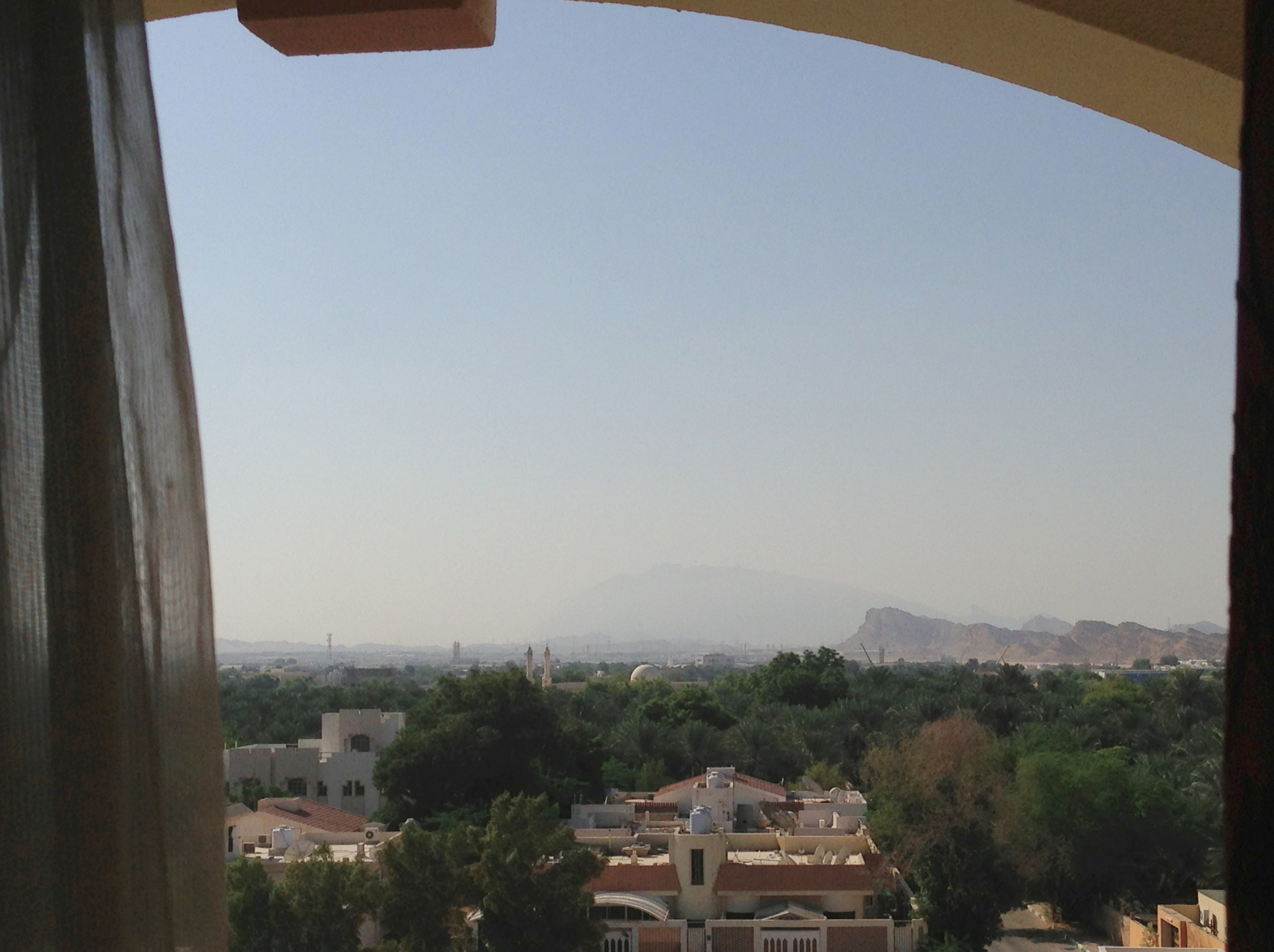
You have until noon on Tuesday to guess it. City and/or state first, then country. Please put the location in the subject heading, along with any description within the email. If no one guesses the exact location, proximity counts.  Be sure to email entries to contest@andrewsullivan.com. Winner gets a free The View From Your Window book or two free gift subscriptions to the Dish. Have at it.

The Reality Of Serious Weight Loss

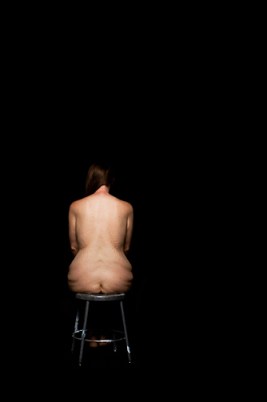
Alexandria Symonds spotlights the work of photographer Julia Kozerski:

For Kozerski and many like her, the experience of significant weight loss is much more psychologically complex than the multi-billion-dollar diet industry, with its beaming “after” photos and promises of a new life, acknowledges. After all that work, it can be a disappointing blow to discover that "Self" bodies that have lost 50-plus pounds simply don’t look like bodies that have maintained a steady weight since reaching adulthood.  (While cosmetic surgeries like those detailed here can treat loose skin, stretch marks, and sagginess, they’re also expensive, invasive, and mostly absent from the fairy-tale weight loss success stories we see depicted so often.)

“You sort of feel like someone shortchanged you on the satisfaction of things,” explains John Janetzko, a Harvard grad student who has lost 120 pounds. “I feel, oddly, more aware of everything – [like] when I lean forward, if I feel like I have any stomach fat that’s there. And it’s strange, because I’m like, ‘Well, how did this not bother me before?’ … It becomes this nagging, incessant reminder of, you did something, but maybe it wasn’t enough, maybe you should keep going.”

Beyond just the surprise of a new body that still may not conform to the social standard of how a beautiful one should look, reaching a goal weight often leaves ex-dieters bewildered as to where to go from here – and upset to find that even after this tremendous accomplishment, they still aren’t completely satisfied with their bodies.

(Image: Self from Kozerski’s series Half. More images from the series can be viewed here (NSFW).)

Update: This post prompted a thread which you can read in its entirety here.

Taking Science Seriously

Science writer John Horgan recently belittled his beat:

I’m struck … by all the “breakthroughs” and “revolutions” that have failed to live up to their hype: string theory and other supposed “theories of everything,” self-organized criticality and other theories of complexity, anti-angiogenesis drugs and other potential “cures” for cancer, drugs that can make depressed patients “better than well,” “genes for” alcoholism, homosexuality, high IQ and schizophrenia.

Gary Marcus takes offense, writing, “The problem with some of these punches is not that they are wrong, but that they are one-sided”:

When Horgan writes that “the biggest meta-story in science over the last few years—and one that caught me by surprise—is that much of the peer-reviewed scientific literature is rotten,” it’s not just that he is arguably overstating things, it’s that he’s missing half the story.

There is a crisis in replicability, as both Horgan and The Economist suggest (and as I noted last December). But there is also a huge, rapidly growing movement to address it. When I revisited the topic a few months later, I reported at least five new efforts focussed on increasing replicability. Since then, the list has continued to grow. … The wholesale shift in the culture of how scientists think about their craft is at least as significant a meta-story as the replicability crisis itself. But the prophets of doom never let their readers in on this happy secret.

His conclusion:

The most careful scientists, and the best science journalists, realize that all science is provisional. There will always be things that we haven’t figured out yet, and even some that we get wrong. But science is not just about conclusions, which are occasionally incorrect. It’s about a methodology for investigation, which includes, at its core, a relentless drive towards questioning that which came before. You can both love science and question it.

Recent Dish on the subject here.