Would You Take A CompSci Course Taught By Matt Damon?

Some MOOC providers hope so:

“From what I hear, really good actors can actually teach really well,” said Anant Agarwal, CEO of EdX, who was until recently a computer-science professor at MIT. “So just imagine, maybe we get Matt Damon to teach Thévenin’s theorem,” he added, referring to a concept that Agarwal covers in a MOOC he teaches on circuits and electronics. “I think students would enjoy that more than taking it from Agarwal.”

Casting Damon in a MOOC is just an idea, for now: In meetings, officials have proposed trying one run of a course with someone like Damon, to see how it goes. But even to consider swapping in a star actor for a professor reveals how much these free online courses are becoming major media productions—ones that may radically change the traditional role of professors.

Jeffrey Young notes that one MOOC provider, Udacity, already employs scriptwriters who turn lecture notes into productions “complete with demonstrations and suggested jokes.” He adds, “At least one long-time distance education expert argues that it makes sense to look for acting talent rather than deep content knowledge to appear on camera”:

“Having people who are really good at explaining ideas and putting the right graphics and videos around them can create a pretty darn good learning experience,” said Russell Poulin, a researcher with the Western Interstate Commission for Higher Education. “I’m assuming Matt Damon wouldn’t be answering the questions from students,” he added.

In fact, he argued that one benefit of online learning is that the various parts of the professor’s role can be “pulled apart.” In an online course, he argued, there’s no reason to have the same person develop the content, deliver it, and run assessments, when people with skills in each of those areas can work together to create clearer and more effective lessons.

That essentially argues for treating the development of a MOOC like a Hollywood production, with long credits at the end of the many specialists who teamed up on a shared vision. There’s a director running the show, but no one expects the same person to also act all the roles.
Previous Dish on MOOCs here, here, and here.

Bionic Baristas

Matt Buchanan explores the challenges inherent in brewing a consistent cup of coffee:

[E]ven the most advanced machines, using the most objective measurements, can only infer how well a cup of coffee is brewed—not how it actually tastes. This is because, as a paper in the peer-reviewed journal Food Science and Management points out, the “chemistry of coffee flavor is highly complex and is still not completely understood.” It’s hard to measure what isn’t known, and coffee is estimated to contain a thousand aroma compounds. Even what can be objectively measured about a cup of coffee, its extraction and strength, “cannot tell you how good the coffee is…you do that by taste,” Vincent Fedele, whose MoJoToGo tools are widely used in the coffee industry, wrote in an e-mail. Also, there are situations where “the numbers look right but the cup can often be less than ideal.”

Last month, Christopher Mims profiled Briggio’s robot coffee kiosk, which company founder Kevin Nater says “is in essence a small food factory that absolutely replicates what a champion barista does.” Will Oremus flagged a problem with it:

Robots may be more reliable than humans, in the sense that they can work around the clock without a break and achieve levels of precision and consistency that no Starbucks employee can match. But when something goes wrong, robotic systems tend to be less resilient than those that include humans, because humans are far better at reacting to novel circumstances—not to mention soothing the feelings of unsatisfied customers.

Researchers are working on ways to allow machines to detect human emotions, but empathy is one of those human traits that is not easily automated. In general, as I’ve argued before, robots come across as clumsy and incompetent when asked to operate autonomously in human environments. That’s why the conventional wisdom is that robots are best used for work that is “dangerous, dull, and dirty, ”—work, in other words, that humans can’t or don’t want to do. The happy corollary to this is that no one complains about sewer robots or bomb-disposal robots stealing people’s jobs.

The Ho-Hum Of Jet Engines

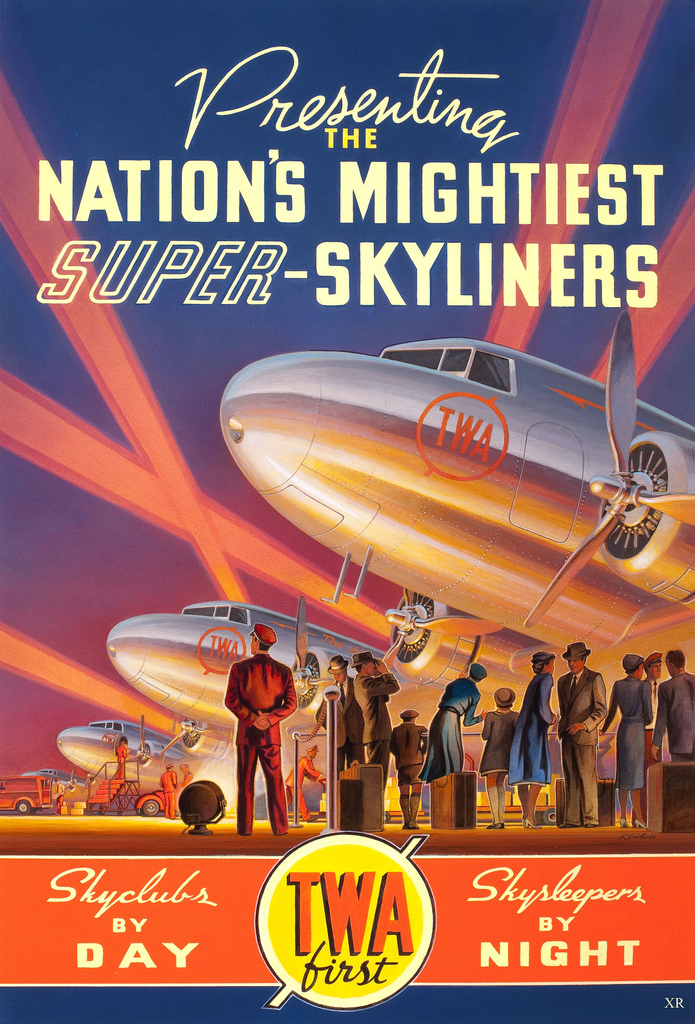
Virginia Postrel believes the airline industry will never recapture the glamour of its early days, no matter how hard it tries:

3910755129_a08527a59b_b“When the jet age was new and exciting, flying was a glamorous and sexy endeavor,” the Virgin Atlantic website declared in 2006, pledging “to bring this glamour back.” It’s a perennial promise in the contemporary airline industry, usually offered along with an announcement of new in-flight luxuries or stylish new crew uniforms. But however nice the amenities or attractive the uniforms, the old glamour never returns, because Jet Age glamour wasn’t about the actual experience of flying. It was about the idea of air travel and the ideals and identity it represented.

Jet Age glamour expressed the longing to experience a world of variety and excitement, a fast-moving, dynamic, and diverse alternative to the familiar and routine. We now inhabit the real version of that world, a world glamour advertised and helped bring about. We can never bring the old illusion back. We can only invent new ones, reflecting new circumstances, new possibilities, new desires, and new versions of yearnings that never go away.

(Image via James Vaughan)

Drones In The Fog

Political scientist Frederik Rosén argues that “if military commanders have drones, then under international humanitarian law they are required to use them to the greatest possible extent” to prevent civilian casualties:

If a state possesses drone technology, and if the deployment of this technology may potentially reduce unnecessary harm from armed attacks, the state is obliged to employ the technology. This is not at all different from the obligation to pick up the binoculars before firing the shells. The obligation to use drones for precaution is logically not limited to drone attacks. It applies across all weapon systems. Even in the near future, ground attacks may no longer be lawful without engaging available drone technology for the purpose of precaution. … It is as if drone technology lifts the “fog of war” from critical aspects of the use of armed force. We therefore need to think through the application of the laws of war in armed conflicts characterized by total visibility. Because drone technology is not only a game changer, it also triggers obligations.

The Problem With Palm Oil

dish_oilpalm

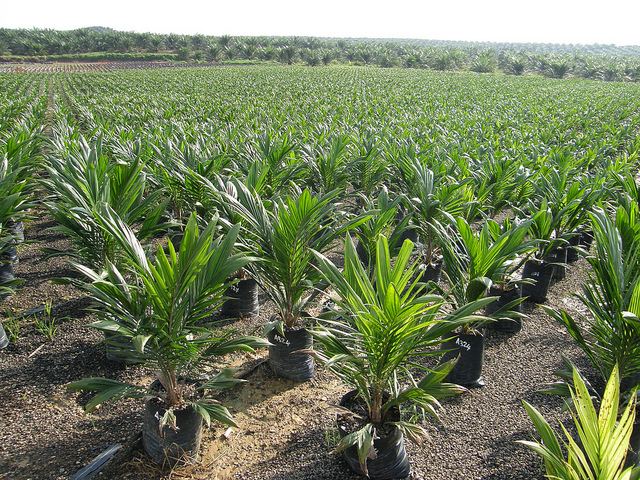
Hillary Rosner warns that “palm oil is one of the planet’s most destructive ingredients”:

It is largely responsible for the massive deforestation of Borneo. As companies slash, burn and bulldoze rain forest to plant uniform rows of oil palm trees, they’re decimating the island’s legendary biodiversity, driving up greenhouse gas emissions and destroying the livelihoods of local subsistence farmers. …

World markets are ravenous for palm oil, and demand shows no sign of waning.

Production doubled in the 2000s and is expected to double again by the end of this decade. In Asia, it’s used for cooking; in Europe, it’s feedstock for biofuel (a particularly egregious example of bad policy-making). In the U.S., it’s an ingredient not just in foods and health and beauty products, but in the ingredients that make up those products — vitamin A palmitate, sodium laurel sulfate, stearic acid. That means palm oil is often absent from the label, leaving consumers in the dark about what they’re actually buying and its impact. …

Today, most consumers remain unaware either that they’re eating palm oil or that there’s anything wrong with it. A recent campaign by talk show host Dr. Oz even encouraged consumers to buy more palm oil, touting its health benefits. Palm oil may be the ultimate icon of globalization — an ingredient directly responsible for some of the world’s most pressing environmental problems that has nonetheless permeated our lives so stealthily we barely noticed.

(Photo of oil palm nursery in Borneo by Flickr user DrLianPinKoh)

Prose In Prison

Andrea Jones provides a collection of interviews and letters from inmates who discovered writing skills once imprisoned.  Here is Seth Ferranti from Forrest City, Arkansas:

I started my sentence in 1993, and was into all types of things—drugs, violence, more crime—all while in prison. I was what they call “in the mix”: self-destructive, looking for drama, and courting chaos. Finally, around 1999, I got a clue and started to write. I took some classes on journalism and I found it was something that interested me very much: the idea of being published, the idea of people reading what I wrote and caring about what I said, the idea that I could make an impact from my prison cell with my words.  I started writing about the circumstances of my case and the injustices of the drug war in general. I then found a niche writing about prison basketball, which evolved from there into documenting prison gangs, life on the inside, hustling, and drug recovery.

When I am released, I plan on doing a documentary series about all the people and gangsters I’ve covered in my work, looking at the failed war on drugs and unnecessary incarceration rates. I plan on being involved in any hearings that take place on the state of incarceration and draconian sentencing in America, and hope that I can shed some light on what’s wrong with our system of justice so that legislators can enact change so others don’t have to endure what I have. I have been buried in prison for twenty years  and am resolute that my voice will be heard and changes will be made.

Previous Dish on prison writing here.

The Best Of The Dish Today

This embed is invalid

Visit NBCNews.com for breaking news, world news, and news about the economy

The president tonight did exactly the right thing. He should have done it sooner. But he did it – and it matters. He’s right to remind us how chaotic and disruptive the market was before the ACA, and right to offer a personal apology for the political obfuscation he repeated far too long. His credibility matters. He made up some ground tonight – in his usual unflappable way.

I argued today that in the long run, the current website fiasco may seem as minor in the backview mirror as it was with the Medicare D rollout. The ACA may work in the long run – both substantively and politically.

Four faves: joy in the face of a mastectomy; an argument against saying “I would argue …”; serious corporate event hathos; and dogs with balloons.

Two outrages: a drug war over-reach so grotesque it reached an innocent man’s upper colon; and a follow-up to our continuing coverage of the hideous torture of farm animals in industrial factory farming.

One essay: on the moral case for marijuana legalization.

The most popular post of the day was “Pope Francis As Saint Francis.”

More thanks for the surge in subscriptions and revenue to get us to make our annual $900K target. As I write this, we’re at $802K with two months to go. For all of you still on the fence, just ask yourselves if what we offer every day is worth $1.99 a month or $19.99 a year to you. If it is, help us out and subscribe. And make the house ads – and these posts asking for subs – go away. Or if you’ve already subscribed, you can give the gift of the Dish to someone you care about.

Thanks again, and see you in the morning. One more update from a new subscriber:

Multiple times a day reader since 2003, so I figured after 10 years it’s finally time to fork over a 20 spot. Keep up the good work, Andrew and company; you’re fighting the good fight and ensuring those within your ecosystem are aware of what’s important, daily.

Quote For The Day

“I have never seen an expression as full of wonder as Lou’s as he died. His hands were doing the water-flowing 21-form of tai chi. His eyes were wide open. I was holding in my arms the person I loved the most in the world, and talking to him as he died. His heart stopped. He wasn’t afraid. I had gotten to walk with him to the end of the world. Life – so beautiful, painful and dazzling – does not get better than that.

And death? I believe that the purpose of death is the release of love,” – Laurie Anderson, on her marriage to Lou Reed.

A Dangerous Mission

Christian evangelists are flocking to a special investment zone in North Korea:

For nearly two years, Kenneth Bae, an undercover missionary from Lynnwood, Wash., safely shuttled groups of Christians in and out of North Korea’s Rason Special Economic Zone. In November 2012, Bae’s crusade ended abruptly. The owner of Nations Tour, a China-based front company he formed as a cover to evangelize in the world’s last Stalinist state, Bae was arrested by North Korean agents as he passed through the Wonjong border crossing with a small group of European travelers. The 44-year-old Korean-American was charged with possession of “anti-DPRK literature,” convicted of encouraging foreigners to  “perpetrate hostile acts to bring down [the] government,” and sentenced to 15 years hard labor.

It is relatively rare that North Korea arrests a foreign national, even rarer when one considers that a company like Nations Tour is hardly unique.

The so-called “Business as Mission” movement, which instructs devout Christians to set up companies as vehicles for spiritual outreach, dates back to the 18th century but found new life at the beginning of the 21st. It’s a missionary model that, by definition, assumes a certain amount of risk for those setting out to reach the “unreached.”

But the risks haven’t dissuaded the faithful from taking up the cause. Today, there is an extensive, well-financed network of for-profit missions, using shadowy front companies to evangelize in North Korea. Though precise numbers are impossible to pin down, missionary-businesspeople have set up a staggering breadth of enterprises, including tour agencies, bakeries, factories, farms, even schools and orphanages, all in the name of spreading the Good Word.

Justin Rohrlich and Chad O’Carroll describe the 300-square-mile Rason Special Economic Zone as “ground zero for these modern apostles”:

Generations of central planning and Soviet-style inefficiencies have left North Korea in dire need of food, fuel, and just about everything else. The nation’s largest trading partner is neighboring China, from whom it buys much and sells little. With no rational person likely to accept Pyongyang’s terms for foreign direct investment, Kim Jong-un’s regime has few options. “The only people willing to do business in North Korea are ones who don’t really care if they make money or not, ones that have other reasons for being there,” says economist and investment strategist Patrick Chovanec, who has visited and analyzed North Korea extensively.

Consuming America’s Scraps

Adam Minter, in an excerpt from his book Junkyard Planet, covers China’s hunger for American scrap metal:

No surprise, China leads the world in the consumption of steel, copper, aluminum, lead, stainless steel, gold, silver, palladium, zinc, platinum, rare earth compounds, and pretty much anything else labeled “metal.” But China is desperately short of metal resources of its own. For example, in 2012 China produced 5.6 million tons of copper, of which 2.75 million tons was made from scrap. Of that scrap copper, 70 percent was imported, with most coming from the United States. In other words, just under half of China’s copper supply is imported as scrap metal. That’s not a trivial matter: Copper, more than any other metal, is essential to modern life. It is the means by which we transmit power and information.

So what would happen if that supply of copper were cut off ? What if Europe and the United States decided to embargo all recycling to China, India, and other developing countries? What if, instead of importing scrap paper, plastic, and metal, China had to find it somewhere else? Some Chinese industries would substitute other metals for the ones that it couldn’t obtain via recycling—that’s technically doable in many cases—but for some applications (like the copper used in sensitive electronics) substitutions are not possible. That leaves mining. To make up the loss of imported scrap metal, there’d need to be a lot of holes in the ground: even the best copper ore deposits require one hundred tons of ore to obtain one ton of the red metal. What would the environmental cost of all that digging be? Would it exceed the environmental cost of recycling the developed world’s throwaways? What’s worse?