“Two Sides Of One Bad Coin”

Yuval Levin reflects on last month’s two big political stories, the populist-fueled government shutdown and the technocrat-led Obamacare roll-out:

If abject populism or gross technocracy were our only options for governing ourselves, the experience of this past month would be enough to leave us in despair. And it does sometimes seem as though we imagine those are our options. But I think the past month should actually be cause for hope that we might see beyond these two dead ends. Not only are technocracy and populism not the only choices we have, they are not really quite alternatives at all: They are in a sense two sides of one bad coin.

In their extreme forms, the forms we have seen this month, both populism and technocracy assume that the answers to our most profound public problems are simple, and are readily available. One assumes that the people possess these answers, and that they are denied the power to put them into effect by some elite that wants to oppress them; the other assumes the experts possess these answers, and they are denied the power to put them into effect by a system that empowers heedless and prejudiced majorities or the venal economic interests of the wealthy over the attainment of the objectively obvious good of the people.

That’s an interesting take, and I largely agree with it. The conservative alternative to today’s Republicanism would be a) never to risk the US and global economy just to make a point – let alone be reckless enough to wait until the very final minutes before possible default to concede, and b) to craft policies that only reform what can practically be done, without any grand scheme of progressive general improvement.

Where I’d differ with Yuval is in his excessive critique of the ACA. Our current healthcare and health insurance market is dreadful. The private sector is grotesquely inefficient and often inhumane. Insurance that can be canceled when you really need it, that screens any sick people out, that costs a fortune compared with other countries, that burdens the economy in ways not seen in our competitors – is not something conservatives should want to conserve.

And any serious reform of it will have to be technocratic.

The ACA, moreover, was not a technocratic dream invented out of the blue. It’s actually a product of federalism in the best sense – it models a successful and existing system in one state, Massachusetts, and attempts to replicate it on a bigger scale. If I had my druthers, I’d favor the states taking the lead on this, rather than the feds. I’d end the employer subsidy and create HSAs and a marketplace not unlike Obamacare’s to empower individual insurance policies. But if I am asked to pick between Obama’s vision and nothing (which is effectively the GOP’s position), I’ll go with Obama’s and aim to amend it as time goes by.

My difference with the GOP is that I do not question the sincerity or legitimacy of this president or the importance of upholding the law. I also favor universal coverage. The president won two elections with this policy out in the open. We should give him the chance to make it work, instead of hurling spitballs, egging on sabotage, and mindlessly piling on. And we should acknowledge that being bankrupted because you are sick is not a good thing. It’s inhumane; it’s cruel; and it’s not like other products that people can do without. “Amend it, not end it” would be my preference. That’s neither technocratic in any overweening sense, nor populist pabulum.

New York I Love You, But

I just want to second everything Kermit sings. I loved New York City with a passion until I tried to live here. It’s been over a year and I am horribly home-sick. So we’re going to move back to DC next month. I miss my DC apartment (1500 square feet of a school classroom I got for a steal in 1991); I miss my friends, many of whom I’ve known for decades, and some of whom I bonded deeply with during the plague years of my 20s and 30s; I miss the relative calm; I miss the green; I miss the increasing vibrancy of the city – which somehow doesn’t make it harder to live in. I miss the oases of quiet and the energy of a new emerging city that is both a second Brooklyn and a global hub of media and politics.

But I’ll be commuting to New York City for up to two weeks a month – as a visitor. So it’s more like finding a home I love while keeping New York close. I realize I’m married to Washington, and it’s best for me to think of New York as a mistress. Besides, I need to be here for the Dish (all my colleagues are New Yorkers), and for AC360 Later. I also have many friends here I think I’m more likely to spend time with if I’m not actually struggling every day to handle the, er, challenges of actually settling into the massive metropolis. And in this experience – to love and yet leave this amazing place – is not new, I’m relieved to say. Eryn Loeb just reviewed a new essay collection Goodbye to All That: Writers on Loving and Leaving New York, an anthology inspired by Joan Didion’s 1967 essay of the same name:

As laid out by Didion and the anthology’s contributors, it happens like this: First there’s anticipation, imagining how your life will finally make sense when you arrive. The actual experience of living here is one of finding your place, followed by an intense feeling of ownership. You can stay at that point for years. But eventually, sometimes without knowing it, you begin the slow slide toward a moment of decisiveness. Sometime after that, there’s the actual leaving. And then, the having left. Living in New York turns out to be a process of earning nostalgia — hoarding enough memories to give you the kind of claim on a place that makes it possible to leave it. When you reach your limit and set out elsewhere, memories are your consolation prize. (Bonus points for writing about them.)

If you’re tired of hearing about how New York is the center of the universe, you’re not alone.

Even those of us who live here and love it get annoyed at the relentless fascination with the city, the way people project so much onto it and then feel betrayed when it doesn’t live up to their expectations. (Emma Straub, who grew up here, captures this tension nicely in her essay, writing, “because my hometown is New York City, everyone else thinks it belongs to them, too.”)

But even in basic ways, the city is still special enough to justify the fixation. It’s concentrated. It’s diverse. It’s where a lot of important things have happened and influential people have lived, and so it is full of history and legend. It’s a place of ideals, “where anything is possible.” And yet it’s also a place of limits, one people leave when their desire for more space or stability — or very often, a family — begins to clash with reality.

Previous Dish on New York and its discontents here, here, here and here. Update from a reader:

I’ve lived in NYC for exactly 11 years as of today. But on Thanksgiving weekend, I’ll be packing up all of my stuff and moving into a home in Vermont that my father left to me after his death this year. My girlfriend and I just got engaged – and she’s converging on VT that weekend as well from Chicago to settle down with me.  I’ll still be working for the same NYC firm up there remotely.  So I’ll have a slim tether keeping NYC in my life – which feels just about right.  I didn’t want to totally break up with this place, despite the fact that it has ground me down into fine powder.  I look forward to missing the city again and coming back to visit it.

I’ll also be running the NYC Marathon on Sunday – which feels like a real nice way to say goodbye to the place that I once deeply loved, but now curse every day.

The World’s Most Powerful Trolling

Earlier this week, Forbes put out a “World’s Most Powerful People” list with Putin at the top. I wasn’t kind. (It’s a bit of an epic smackdown, if you want to watch). Simon Tisdall was also gob-smacked:

[T]he praise for Putin from Forbes, a magazine that supposedly champions individual free enterprise, as a man who “has solidified his control over Russia”, is jaw-dropping. If power is to be measured by the successful imposition of authoritarian governance, then surely Kim Jong-un, North Korea’s dictator, should be Forbes’ No 1? On this basis, Saddam Hussein and Joseph Stalin would qualify for emeritus awards.

In point of fact, Putin’s power is largely illusory – a false idol erected and nurtured by a phalanx of Kremlin cronies, and maintained through control of Russia’s fast-depleting oil and gas revenues and an ever more repressive grip on civil society and the media.

The whole farce was obviously a way to get media attention (success!) but also an obvious product of Obama derangement syndrome. Some people cannot see foreign policy in anything but crude schoolyard terms – in which case, Obama’s willingness to give Putin the Syria WMD brief was clearly a sign of the president’s comparative weakness. This vote was obviously designed to stick the president in the eye. And have you looked at Forbes lately? They make Buzzfeed look like a virgin when it comes to advertorial.

More to the point, we’ve seen that Russia’s oversight has – so far – resulted in an unexpected success in destroying the chemical weapons sites by the deadline, which is today. You won’t hear that on Fox – but it’s a huge success. Obama’s avoidance of getting dragged into Syria’s civil war was obviously a wise move; to get an end to Syria’s WMDs at the same time is pretty damn cool. The outcome was a win-win for both Obama and Putin – and the world. And Obama made it happen. Not so powerless after all.

Dick Morris Award Nominee

“Traffic on the Obamacare sites will settle down pretty quickly, and that will take care of most of the overloading problems. The remaining load problems will be solved with software fixes or by allocating more servers. Bugs will be reported and categorized. Software teams will take on the most serious ones first and fix most of them in short order. Before long, the sites will all be working pretty well, with only the usual background rumble of small problems. By this time next month, no one will even remember that the first week was kind of rocky or that anyone was initially panicked. … I’ll say this: If there are still lots of serious problems with these websites on November 1, I’ll eat crow. But I doubt that I’ll have to,” – Kevin Drum, October 2, 2013.

Retail Politics 101

This Christie speech, given on the anniversary of Hurricane Sandy, is a great demonstration of his political charisma and helps explain why he was seriously considered for VP by the Romney campaign:

Allahpundit puts the clip in greater political context:

How much will Christie’s retail skills matter to the people in the middle (the “somewhat conservative”) who typically decide the nomination? Philip Klein of the Examiner and Jay Cost of the Weekly Standard tweeted in response to the clip that Christie’s New York/New Jersey shtick wears awfully thin very quickly in other parts of the country, which could mean disaster in Iowa and New Hampshire. But there’s no way around the fact that Christie will have sterling “electability” credentials in 2016, such that even people who may find him irritating will force themselves to give him a serious look. It may even be that “somewhat conservative” voters talk themselves into liking his shtick because of his electability; if he can convince you that he’s your best chance to win, you’ll find yourself looking for ways to find him acceptable in other respects. He is, undoubtedly, a stark contrast with Hillary Clinton, who’s 1/100th as effective a retail politician as Bill is.

Obamacare’s Losers, Ctd

Readers push back against this post:

Some people are going to lose, but look at this chart from TPM. Considering all the changes, 3% “losers” is pretty darn good.  Like Gruber said, “… no law in the history of America makes everyone better off”. Indeed.

Josh Barro identified significant problems with that chart. A reader from the 3 percent writes:

I’m one of the people who got a “cancellation” letter. Blue Shield told me the individual policy I have for my healthy 17-year old will end Dec. 31. They said if I do nothing they will enroll my son in a new plan that will be $7 more per month. It is just about equal to the old plan, except the co-pays will double, and vision care has been added. It is November, and my son has had zero visits to the doctor this year, so no co-pays have been shelled out. He has terrible vision and needs an annual eye exam. I figure it will all even-out over the course of the year. Put me in the “no big deal” category of the 3 percent whose individual policies went away.

Another reader:

Mr. Laszewski doesn’t say what “Obamacare rule” purportedly makes his current coverage not “good enough.”  Maybe that’s so, and maybe it isn’t, but it’s hard to evaluate his complaint based on no information.

David Frum apparently found a policy substantially identical to the one he currently has on the D.C. Exchange for $200/month more, and acknowledges that that is the likely cost of community rating.  High income wealthy people who are currently in the individual market are going to pay a bit more under Obamacare – that’s the cost of not quizzing people about preexisting conditions.  In any event, he didn’t lose his coverage.

Another:

Sorry if I cannot muster much sympathy for someone who can afford a Cadillac Plan. After I finished grad school and before I had my first real job, I had to muddle through without health insurance for about 9 months. I got one lousy urinary tract infection (read: INCREDIBLY treatable) and it ended up costing me a little over $800 because the initial antibiotics didn’t work. Oh, and I had a catastrophic plan. Some help those are! So yeah, sorry if I’m not bringing out the violins about some rich dude having to pay more for his extravagant plan.

Another:

I know a lot of people are commenting on the rate shock some people are experiencing when looking on the exchanges for insurance, even those who have very expensive health insurance today. I think there’s a very big piece of the puzzle most people commenting on this rate shock are missing.

Insurance companies on the individual market are in a bit of a fog for next year with pricing their coverage options. Many of them have never had to cover as many benefits as they are now. Many of them have no idea how many claims new people purchasing their coverage will make. They all know for sure that the premium rate review rules will stop them from making up potential losses next year with bigger premium hikes in the future. The confluence of these events has potentially pushed companies to overprice their plans.

What people are forgetting is there is a stopgap that prevents these companies from gouging people if they did end up overpricing. Plans on the exchange must spend at least 80% of their premium on actual health care services; similarly, businesses offering insurance to their employees must spend at least 85% of their premium on actual healthcare services. If they fail to do so, they are legally obligated to send their beneficiaries a rebate check for the difference. That will stop insurance from getting too expensive.

Of course, if it turns out the companies are spending enough on healthcare to avoid sending rebate checks, then the insurance companies will have done their job and actually paid for their beneficiaries’ healthcare! People love getting refunds on their taxes. I presume people will love getting refunds on their health insurance as well.

Another:

It’s worth remembering that Cadillac plans create serious cost problems for our healthcare system.  If they are tax-deductive, then it’s a huge tax expenditure, but even when not, they encourage over-utilization.  There should be cost sharing mechanisms that put a slight disincentive on healthcare spending, especially utilization all over the place, where there are no shared medical records, tests are likely to be duplicated and there is more defensive medicine due to this.

As a physician, I see a lot of patients with disabling neuromuscular conditions.  Many are forced to stop working, and thereby lose their insurance.  I see this over and over again.  There is just no comparison the gain these patients are getting by being able to get insurance, compared to this guy who has to either pay more for a Cadillac plan, or get a more regular plan.

One more:

At the very end of Robert Laszweski’s post he states that he will actually be keeping his Cadillac plan until at least December of 2014. It seems like an important point to make that he left hanging until the 2nd to last paragraph. A lot can change in 14 months …

The Divorce Divide

Divorce Education

Derek Thompson notes that, with divorce, “richer you are, the less likely you are to do it”:

Divorce rates by age 46 are twice as high among high-school dropouts than college grads. The point isn’t that a 30-percent divorce rate among bachelor’s degree holders is low. Divorce is common. But it’s much, much more common for drop-outs and graduates of high school, only. This same point is made more starkly (albeit less colorfully) in new study of divorce trends from Demographic Research. Watch the rising black bars and falling white bars [in this chart]. The story you’re following is that divorce rates among dropouts are going up, up, up, while divorce for bachelor’s holders have fallen to half-century lows.

Are Women More Prone To PTSD?

There is reason to believe so:

Female veterans are already more likely than male veterans to be homeless, divorced, or raising children as single parents. Female vets under fifty are more than twice as likely as their male counterparts to kill themselves. And a growing body of research suggests that female vets may also be more susceptible than men to psychological disorders, including PTSD.

Those facts and new research—indeed, the very discussion of gender differences in the armed forces—are often incendiary, but they should not be taken as an argument against equality in the armed forces. Instead, they should be the catalyst for a worthwhile discussion. After all, we owe it to our veterans to study how some women experience war and homecoming differently, and to determine what can be done to better support female soldiers—women who are now poised, for the first time in history, to be deployed in large numbers in combat positions overseas.

New York Not So Shitty

Zadie Smith compares the American experience of “takeout” with the British version, “takeaway”:

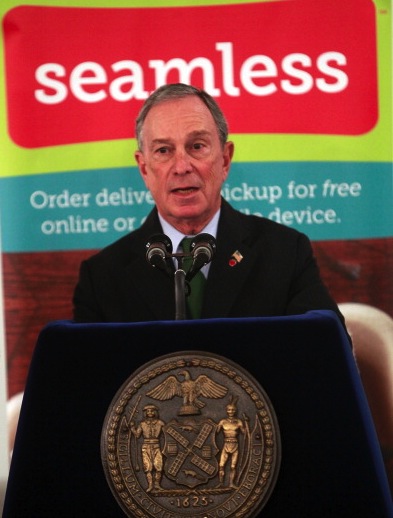
In New York, a restaurant makes some “takeout” food, which it fully intends to take out and Celebrity Sightings In New York City - January 11, 2012deliver to someone. In England, the term is “takeaway,” a subtle difference that places the onus on the eater. And it is surprisingly common for London restaurants to request that you come and take away your own bloody food, thank you very much. Or to inform you imperiously that they will deliver only if you spend twenty quid or more. In New York, a boy will bring a single burrito to your door. That must be why so many writers live here—the only other place you get food delivery like that is at MacDowell. …

I’m not going to complain about Britain’s “lack of a service culture”—it’s one of the things I cherish about the place. I don’t think any nation should elevate service to the status of culture. … In London, I know where I stand. The corner shop at the end of my road is about as likely to “bag up” a few samosas, some milk, a packet of fags, and a melon and bring them to my home or office as pop round and write my novel for me. (Its slogan, printed on the awning, is “Whatever, whenever.” Not in the perky American sense.)

Ah, yes, one of the great miracles of New York City. I’ve never lived in a place where every apartment has room service, and usually delivered more quickly to your door than any hotel restaurant to your room. As a writer who doesn’t cook, it’s one huge benefit of living here.

But Seamless operates in DC as well!

For a comprehensive archive of all my insufferable bitching, whining and moaning about moving to New York, click here.

(Photo: Mayor Mike Bloomberg helps the online lunch ordering business Seamless at their midtown Manhattan headquarters on January 11, 2012. By Aby Baker/Getty Images.)

Trusting Technology Too Much

Nick Carr postulates “that automation, for all its benefits, can take a toll on the performance and talents of those who rely on it”:

Psychologists have found that when we work with computers, we often fall victim to two cognitive ailments—complacency and bias—that can undercut our performance and lead to mistakes. Automation complacency occurs when a computer lulls us into a false sense of security. Confident that the machine will work flawlessly and handle any problem that crops up, we allow our attention to drift. We become disengaged from our work, and our awareness of what’s going on around us fades. Automation bias occurs when we place too much faith in the accuracy of the information coming through our monitors. Our trust in the software becomes so strong that we ignore or discount other information sources, including our own eyes and ears. When a computer provides incorrect or insufficient data, we remain oblivious to the error.

Examples of complacency and bias have been well documented in high-risk situations—on flight decks and battlefields, in factory control rooms—but recent studies suggest that the problems can bedevil anyone working with a computer. … In using e-mail or word-processing software, we become less proficient proofreaders when we know that a spell-checker is at work.