Dish poetry editor Alice Quinn introduces this weekend’s poems:
The Pulitzer-Prize winning poet Mary Oliver has just published a new collection, Dog Songs, celebrating the love we feel for our faithful canine friends and the joy they bring to our lives. A New York Times feature by Dana Jennings this past Tuesday began, “Mary Oliver has spent most of her life with a mind ripe with poems —and with at least one steadfast dog by her side.” Mary is the author of more than twenty collections of poems as well as two books on the art of writing verse, A Poetry Handbook and Rules for the Dance: A Handbook for Writing and Reading Metrical Verse.
Today and over the weekend, we’ll run poems from Mary Oliver’s splendid new book alongside photographs of dogs cherished by Mary, Andrew, and myself.
The first selection is “Little Dog’s Rhapsody In The Night”:
He puts his cheek against mine
and makes small, expressive sounds.
And when I’m awake, or awake enough
he turns upside down, his four paws
in the air
and his eyes dark and fervent.
“Tell me you love me,” he says.
“Tell me again.”
Could there be a sweeter arrangement? Over and over
he gets to ask.
I get to tell.
I think one of your readers missed the point completely. Their example was: “It would not be acceptable for the US to waterboard fewer prisoners, a rapist to target fewer victims, or an abusive father to beat his children less often, and claim to be acting in a morally upright manner.” But we’re not talking about “fewer”; we’re talking about different. So interrogations with a waterboard are unacceptable, but other forms of interrogation are fine. Physically beating a child because they’ve misbehaved is unacceptable but disciplining them is fine.
Now if you have an absolutist view that we can not harm animals for our own needs, all of those absolute examples make sense. Any harm to any animal is unacceptable. If your view is that eating meat is a perfectly normal thing for a human to do, and what you wish is to do is spare animals unnecessary cruelty during their lives, then the “Sully Approach ™” is pitch perfect.
“First reduce or eliminate eggs, chicken, and turkey; and pork, ham, and bacon.”A healthy hen can produce 300-400 eggs in a lifetime, but only 3-4 servings of meat. So it would seem that removing chicken meat is 100x more effective in reducing the number of chickens affected by your consumption than eliminating eggs.
One of many more readers:
Eggs are actually the easiest to procure outside of the factory system. The backyard chicken coop used to be a staple of urban households; it really is not that hard to do.
Plus, besides eggs, chickens provide a good way to recycle kitchen waste, producing valuable fertilizer for the tomato plant. And a chicken is no more of a neighborhood nuisance than the average dog. It isn’t all roses and sunshine: there is still the problem of disposing of excess roosters and old, no-longer-productive hens … you can eat them, but to do that you still have to kill them. But raising chickens does put you in position to make your own moral decisions.
Another:
Don’t forget farmers’ markets whenever possible. We’re able to raise our own chickens and lambs and we barter with others for beef and pork. All of them are humanely (and even lovingly) raised and slaughtered. Those not so lucky should shop at local farmers’ markets and also talk to them about how they raise and dispatch their animals. Even in NYC, humanely raised protein is all around. Just don’t buy it at the supermarkets or in restaurants – especially fast food!
Another:
As a non-vegan, I would only add that more of us should be familiar with the Cornucopia Institute, which audits and rates dairy and egg producers on a wide range of ethical standards. They go far beyond “free range” or “organic” labeling and identify producers that really do avoid some of the worst practices, such as the debeaking of egg-laying hens. It was through them that I learned about Vital Farms, a genuinely sustainable (and national) egg brand that really does make an effort to ensure their hens live a good life. Their eggs are expensive as a result (about twice the going rate compared to typical organic), but I think it’s well worth the price.
Another:
I strongly second your moderate vegan reader’s recommendations on reducing the cruelty footprint of your diet. And whether you want to go vegan or just make reducing your meat consumption easier and tastier, I cannot recommend any vegan chef more highly than Isa Chandra Moskowitz. Her Veganomicon is my bible.
More recommendations:
As background, I have historically been someone who was very health focused, and I have tried various types of diets, including meat-centered ones such as the Paleo Diet. I have also toyed with vegetarianism in the past (mainly for health reasons), and I have read some other books on the broad topic (including Four Fish by Paul Greenberg and In Defense of Food by Michael Pollan, both excellent). But Jonathan Safran Foer’s book Eating Animals had a significant emotional effect on me that the others did not. It gave me the same sense of epiphany on the topic of vegetarianism that I received on the topic of religion from reading The God Delusion, and I felt that I could no longer consciously deny that eating meat led to a moral wrong.
Francine Prose considers the reasons we lose interest or appreciation in the art we once cherished:
We may also lose our early love for works that we only later realize are so marred by clichés, populated by stereotypes, and repulsively bigoted that we can no longer enjoy them, even if we make allowances for the attitudes of the period in which they were created.
Not long ago, I watched the 1943 film version of Somerset Maugham’s The Moon and Sixpence, a novel based loosely on the life of Paul Gauguin. As a child I’d loved the cinematic depiction of the painter’s romantic flight to—and tragic death in—the South Seas; I think it may have been one of the things that made me want to become an artist. But this time I noticed that the tag line on the cover of the DVD was “Women are strange little beasts,” and that the movie suggests that these little beasts need to be kept in line and properly subservient by whatever means necessary. Once our hero arrives in Tahiti, the depiction of the islanders and of the girl who is given to him as a wife is appalling.
I’m reminded of the fact that my enthusiasm for Gauguin crested around the same time as my affection for Magritte, while my admiration for Gauguin’s housemate, Van Gogh, has grown steadily over the years. For reasons I cannot explain—it’s the mystery of art—Van Gogh’s work seems to me more inspired, more beautiful and moving each time I see one of his canvases.
Someone at HHS must’ve been listening to your reader; the healthcare.gov site made a huge improvement today by implementing window shopping – allowing users to see different plans without having to sign up for the cumbersome accounts that have been causing the glitches on the backend. The premium calculator is very easy to use and it certainly looks like most people will see a wide range of options. My guess is that a lot of people will be surprised at the affordability and expect that the targets for enrollment will be hit.
While [the window-shopping feature] does give consumers a bit of new information, it’s still too bare bones to give consumers a sense of how different plans stack up.
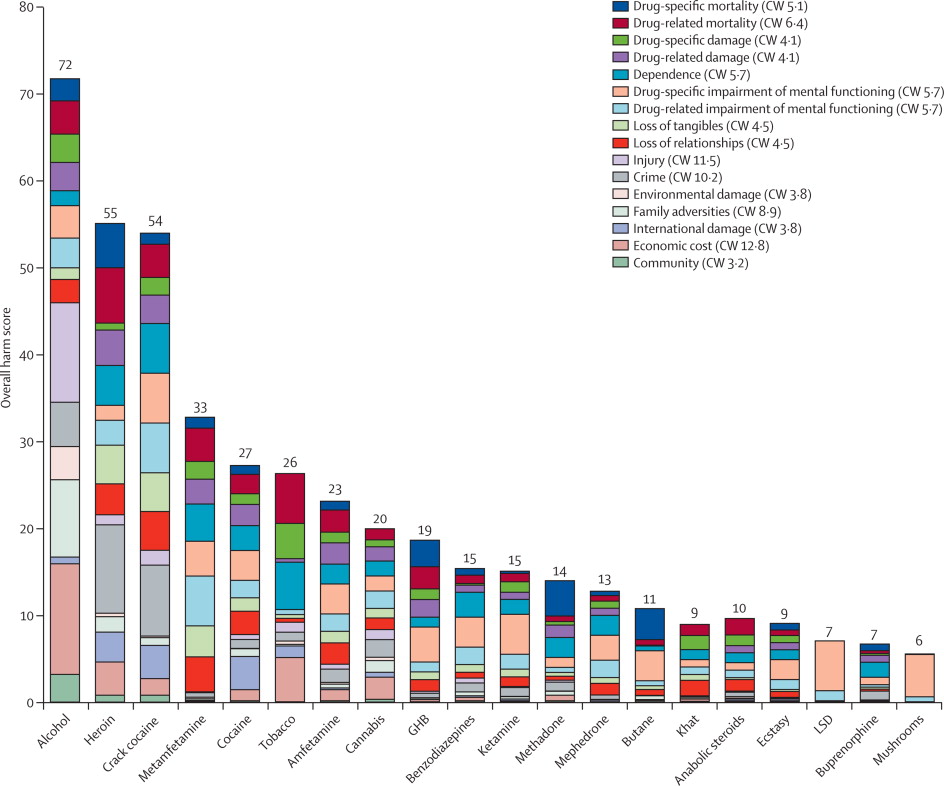
Mark Perry digs up the above chart illustrating the relative harms of various drugs. You will note the drug-specific mortality of marijuana: zero. Notice also how relatively safe steroids and mushrooms are. This debate is all but over.
Perry also flags a fascinating 2010 interview with neuropsychopharmacologist David Nutt about the dangers of various drugs, seen below:
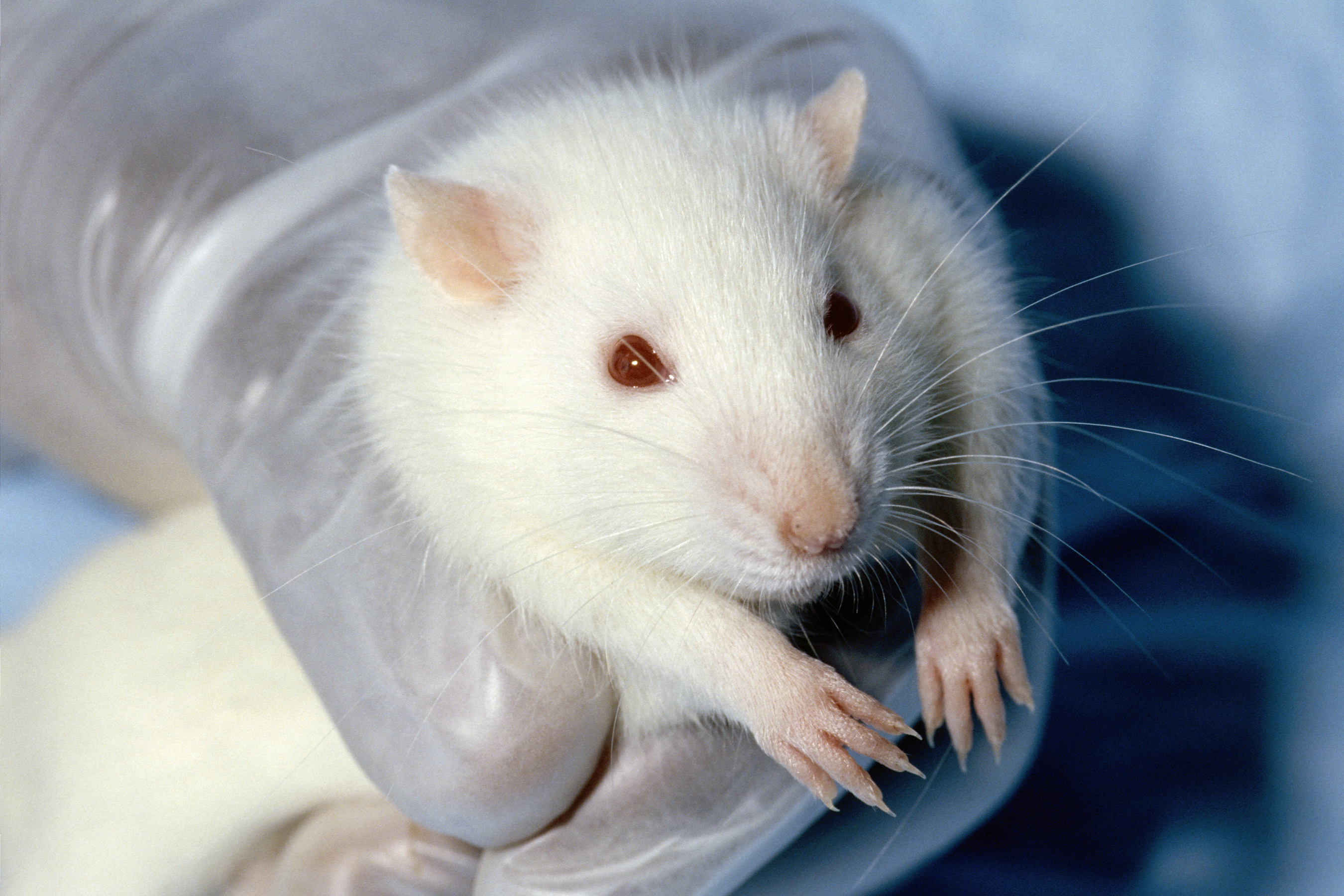
The government shutdown is likely to mean an early death for thousands of mice used in research on diseases such as diabetes, cancer and Alzheimer’s. Federal research centers including the National Institutes of Health will have to kill some mice to avoid overcrowding, researchers say. Others will die because it is impossible to maintain certain lines of genetically altered mice without constant monitoring by scientists. And most federal scientists have been banned from their own labs since Oct. 1.
Under shutdown rules, the animals still get food and water and are kept alive. But because most researchers are forbidden to work with them, the crucial moments for tests and measurements may pass; experimental conditions may change; and in other ways projects that had been months or years in preparing may be interrupted or completely ruined.
Yes, I realize that lab animals’ situation is precarious in the best of circumstances. But their lives and deaths have more purpose as part of biomedical discovery than in their current pointless captivity.
A government scientist, interviewed anonymously in Wired, reports that euthanasia is inevitable:
It’s not a matter of feeding the animals and cleaning their cages. These animals used for research are used in intricate experiments, involving treatments and collection of data performed by hundreds of individual scientists with each project. An animal caretaker can’t continue that.
Given that, you can imagine what has to happen. You cannot maintain colonies for no reason. It’s very expensive — and if they’re useless for research, what are you going to do? And mice and rats breed like crazy. An exponential expansion of the population that will rapidly fill all the cages. Every lab I know already works to maximum capacity. You can’t leave animals for somebody to feed and water.
The researcher adds:
We only take the life of an animal if it’s justified to provide new insight that will lead to basic understandings in science, or new treatments in human disease. We understand and appreciate that. We don’t do it lightly. We do it deliberately. There’s a difference between using an animal to obtain knowledge of human disease, and just having to engage in a mercy killing for no outcome, and with an enormous loss to science and to resources. It’s a waste of money, a waste of time, a waste of people, a waste of animals.
John L. Allen, Jr. argues that “the world is witnessing the rise of an entire new generation of Christian martyrs.” He believes we don’t pay much attention to suffering of these Christians because, in some cases, we don’t recognize the religious backdrop to atrocities:
Discussion is sometimes limited by an overly narrow conception of what constitutes ‘religious violence’. If a female catechist is killed in the Democratic Republic of Congo, for instance, because she’s persuading young people to stay out of militias and criminal gangs, one might say that’s a tragedy but not martyrdom, because her assailants weren’t driven by hatred of the Christian faith. Yet the crucial point isn’t just what was in the mind of her killers, but what was in the heart of that catechist, who knowingly put her life on the line to serve the gospel. To make her attackers’ motives the only test, rather than her own, is to distort reality.
Akiba Solomon is disturbed by a recent profile of Chris Brown, which notes in passing that the performer “lost his virginity” at age 8 to a teenaged girl:
The fact that Brown doesn’t seem to know that he was assaulted doesn’t come as a surprise. It took the FBI 85 years to change the exclusionary definition of forcible rape from “the carnal knowledge of a female, forcibly and against her will” to a male-inclusive one. (“The penetration, no matter how slight, of the vagina or anus with any body part or object, or oral penetration by a sex organ of another person, without the consent of the victim.”) … This culture whispers in our ears that men and boys can’t really be raped by women or girls. To admit to such a violation would suggest femaleness or weakness, which is the worst thing you can be in this sick ecosystem. The bottom line here is that Chris Brown was sexually assaulted as a child – legally and practically speaking. We wish that wasn’t the case. If Chris Brown had been a girl, it’s unlikely that the Guardian or we would publish this information without more comment about the admission.
ey bring to our lives. A New York Times feature by Dana Jennings this past Tuesday began, “Mary Oliver has spent most of her life with a mind ripe with poems —and with at least one steadfast dog by her side.” Mary is the author of more than twenty collections of poems as well as two books on the art of writing verse, A Poetry Handbook and Rules for the Dance: A Handbook for Writing and Reading Metrical Verse.


 The Dish