Assimilating Through The Airwaves

by Matt Sitman

Titi Nguyen, whose family moved from Vietnam to the United States when she was a child, pens a love letter to The Wonder Years, the television show that helped her feel more at home in a strange new land:

The Wonder Years rooted me into my new country’s emotional and ancestral landscape. For better or worse, the show’s historical depictions added to my fuzzy understanding of my own family’s story. Beginning with the pilot, the show became an immediate necessity for me. In the end of that first episode, the Arnolds learn that the Coopers’ nineteen-year-old son, Brian, has died in Vietnam, and Kevin finds a grieving Winnie in Harper’s Woods. There and then they share their first kiss. That the Coopers’ tragedy occurred in my home country at the hands of the Vietnamese surprised me. How, after only thirty minutes on screen, could I possibly feel more empathy for these made-up characters than I had for the real lives of the people of my home country?

Cameron Proves Greenwald Right, Ctd

by Chris Bodenner

Contra Dish readers, Andrea Peterson insists that “no, Glenn Greenwald didn’t ‘vow vengeance'”:

Greenwald’s point seems to have been that he was determined not to be scared off by intimidation. Greenwald and the Guardian have already been publishing documents outlining surveillance programs in Britain, and Greenwald has long declared his intention to continue publishing documents. By doing so, Greenwald isn’t taking “vengeance.” He’s just doing his job.

We linked to Greenwald’s defense here. Ambinder’s take on the detention of Glenn’s partner:

I don’t like how the Guardian put Miranda on its payroll, turning him into a courier of sorts and conferring on him the patina of the legal and traditional protections afforded to journalists. That’s sloppy tradecraft and it’s cruel to Miranda.

Doing journalism makes you a journalist. As Joshua Foust points out, the transitive property does not apply. (I am not a corporate strategy consultant, and I would not be one if my spouse’s company suddenly paid for me to fly stolen documents to my husband somewhere.)

Greenwald is doing real journalism. If extra protections are afforded, they are afforded to him. If extra scrutiny is warranted, he should get it. I know the Snowden case is a boundary case, that it is of an echelon that other leak cases are not and that there are real first amendment equities involved. I also know that the government takes leaks of this magnitude — and consider the totality of what’s been leaked and what precedents it sets, not just the stuff we like (the U.S. stuff), but everything — terribly seriously. As all governments do, and have done, and will do. A separation between spouse and source is a foundational principle of how reporters approach complicated stories involving secrets and classified information. IF you do choose to involve your spouse, or you and your spouse work together, then you cannot reasonably complain that your partner was harassed for no reason whatsoever. Decisions have consequences.

Can Scientists Make It Alone? Ctd

By Tracy R. Walsh

Euny Hong, who wondered if crowd-funding could support a new generation of independent researchers, says she overlooked the importance of salesmanship:

I realized after reading some of [pharmacologist Ethan] Perlstein’s ongoing experiment updates that the open-source analogy is not totally applicable. His way of wording and framing his work is so clever that he can be described as more of an ad man. It occurs to me that a scientist not blessed with the gift of the gab would probably not make it as an independent scientist. … Everything is worded so that even non-scientists like me can not only understand, but find the whole thing engrossing, like his dangling the term “Mystery Psych Drug X.” Why withhold the name? To create suspense, Perlstein says. It’s working.

A reasonable point. Better get with it, Journal of Basic Microbiology:

More Dish on crowd-funding research here and here.

A Year Off From The Internet

by Patrick Appel

Dave Roberts is taking one:

I enjoy sharing zingers with Twitter all day; I enjoy writing long, wonky posts at night. But the lifestyle has its drawbacks. I don’t get enough sleep, ever. I don’t have any hobbies. I’m always at work. Other than hanging out with my family, it’s pretty much all I do — stand at a computer, immersing myself in the news cycle, taking the occasional hour out to read long PDFs. I’m never disconnected.

It’s doing things to my brain.

I think in tweets now. My hands start twitching if I’m away from my phone for more than 30 seconds. I can’t even take a pee now without getting “bored.” I know I’m not the only one tweeting in the bathroom. I’m online so much that I’ve started caring about “memes.” I feel the need to comment on everything, to have a “take,” preferably a “smart take.” The online world, which I struggle to remember represents only a tiny, unrepresentative slice of the American public, has become my world. I spend more time there than in the real world, have more friends there than in meatspace.

Connor Simpson rounds up reaction to Roberts’ decision:

Some people were dismissive to Robert’s plight, calling it as another trend story we’ve seen before. And those notions aren’t exactly wrong. The Verge’s Paul Miller concluded his year-long absence from the ‘net this year, revealing that it’s didn’t make him any happier. He had modest goals of looking at the flowers and reading and writing more, just like Roberts. It didn’t work out that way, though. He ended up slitting his time doing other just-as-meaningless things.

Others were much more sympathetic. “I relate entirely to [Robert’s] story of total internet-writing burn out and have no idea how so many don’t have it,” wrote The Guardian‘s Jim Newell, who then compared the difficulties of quitting to a smack addiction.

What Hookup Crisis? Ctd

by Chris Bodenner

k-bigpic

A reader shifts the focus to South Korea:

Both sides of the dialogue on “hookup culture” start from the assumption that hooking up is inherently wrong. As a US-born, UK-naturalized ethnic Korean who moved to the motherland five months ago to get in touch with my “roots,” I challenge that assumption. Korea lacks a normalized hookup culture, and its societal views on sex can only be described as pathological.

Between Confucianism and Christianity, there is no education in school or open discussion on sex, so the population is astonishingly ignorant of safe sex and contraception.  Even with the 15th largest economy and a fertility rate of 1.24, the overseas adoption rate is the highest in the world. Upon marriage, most women quit work and reduce sex, stopping entirely after childbirth. Husbands sleep in a separate room from their wives, who sleep with the baby.

Not surprisingly, the sex industry is rampant: an estimated 20% of men in their 20s visit a prostitute weekly.

Paradoxically, Korea is both one of the top exporters of prostitutes (they go upscale to Japan, Australia and the US on holiday visas) and of johns (who go down to SE Asia for “golf and business” trips). This helps explain why Korea has the highest rate of plastic surgery in the world.  It’s less to do with generation divide, affluence, distance from the war, etc and simply a matter of economics: whether a woman’s path is marriage or prostitution, a few grand on a nip/tuck is a rational investment.

Now I’m not saying all these problems will miraculously disappear if Koreans start hooking up. But if they had a more relaxed – and more importantly, open – attitude towards sex and equality between the sexes, there might be some chance of restoring sanity.

For more stats on the subject, go here.

(Image via twinkiesandeggs)

“We Can Call Off The Black Helicopters”

By Tracy R. Walsh

That was the wisecrack a British intelligence agent made while destroying journalists’ computers in the basement of The Guardian – one of many strange details in Alan Rusbridger’s surreal account of Snowden-related press intimidationRusbridger says the tactics won’t work:

Whitehall was satisfied, but it felt like a peculiarly pointless piece of symbolism that understood nothing about the digital age. We will continue to do patient, painstaking reporting on the Snowden documents; we just won’t do it in London. …. The state that is building such a formidable apparatus of surveillance will do its best to prevent journalists from reporting on it. Most journalists can see that. But I wonder how many have truly understood the absolute threat to journalism implicit in the idea of total surveillance, when or if it comes–and, increasingly, it looks like “when.”

Ryan Chittum is stunned:

Greenwald’s paper has been threatened by its own government with prior restraint and had its hard drives smashed in its basement to make a (stupid) point. This is police-state stuff. We need to know the American government’s role in these events–and its stance on them–sooner rather than later.

Dan Kennedy thinks the same thing could happen in America:

We are already being told that such thuggery couldn’t happen in the United States because of our constitutional protections for freedom of the press. … But in fact, there is nothing to stop the U.S. government from censoring the media with regard to revelations such as those contained in the Snowden files–nothing, that is, except longstanding tradition. And respect for that tradition is melting away, as I argued recently in this space.

And J.D. Tuccille believes the British government wanted scare reporters across the globe:

That the act was intended as a public message certainly makes more sense than the suggestion that U.K. intelligence authorities are unaware that, in the Internet age, a story reported by an American reporter living in Brazil working with a colleague (Laura Poitras) in Germany, based on information delivered by a whistleblower who has taken refuge in Russia, can be cut off by threatening a single British newspaper. … This wasn’t a serious attempt to stop The Guardian from publishing stories about the intelligence community; it was a baseball bat across the knees as a lesson to all journalists.

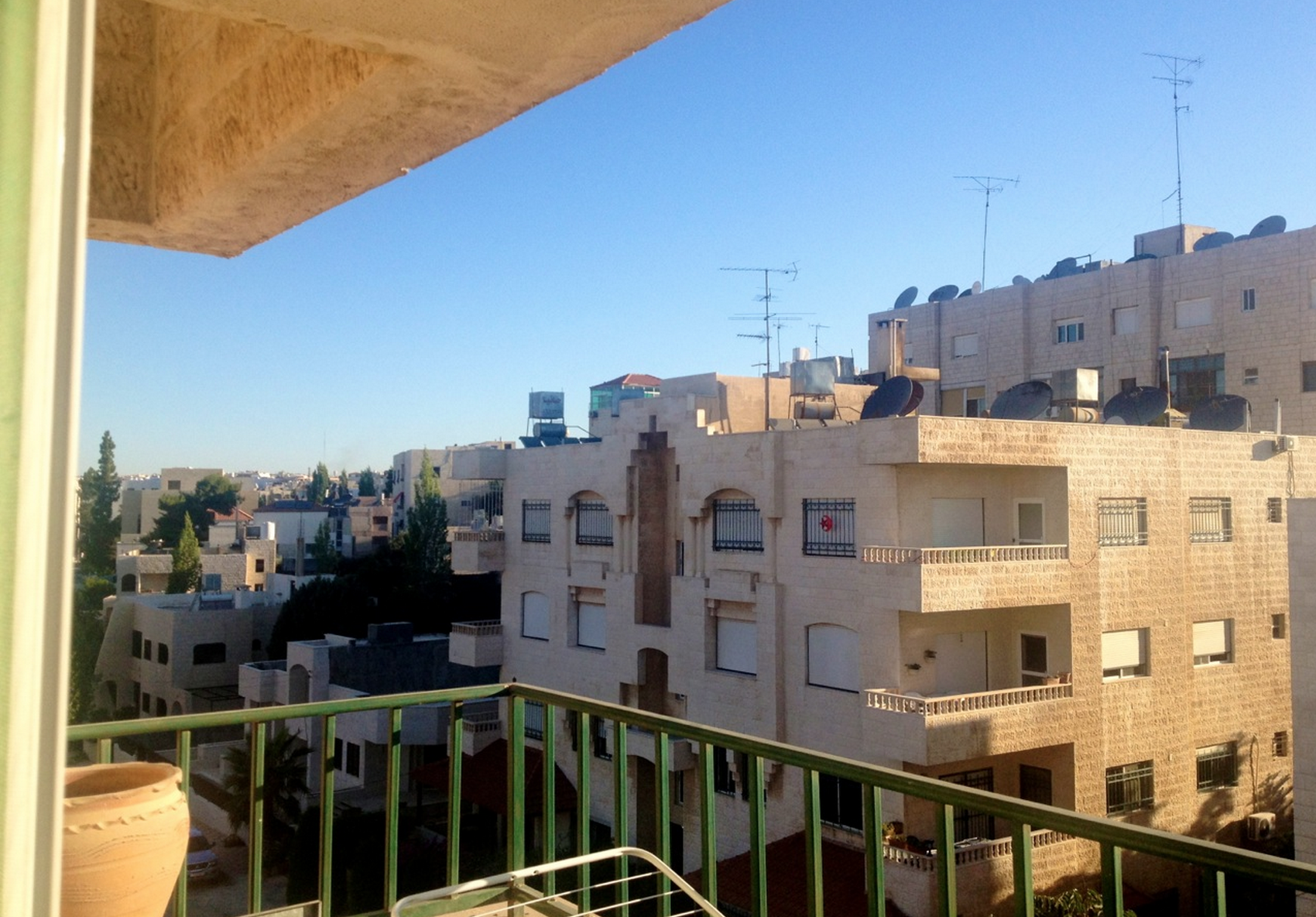
The View From Your Window Contest: Winner #167

by Chris Bodenner

vfyw_8-17

A reader writes:

The architecture and the many satellite dishes and TV antennas are reminiscent of the couple of countries in the Arab world I have visited . The “star and crescent” in one of the windows also suggests that we are in an Arab country. The writing on the water tank could be in Arabic. I assume the location is Egyptian because of the the structure of the number plate of the vehicle; it has a horizontal band running along the top, and a Google image search of “number plate” and various Arab countries suggests that this could be an Egyptian number plate.

While this is not an upscale neighborhood, the buildings look fairly modern and there is a number of ornamental trees. For local standards this is a higher-end neighborhood. According to some Egyptian real estate websites, Zamalek, an affluent district of central Cairo, encompassing the northern portion of Gezira Island, could fit the bill. I have never been in Egypt (other than the Cairo airport), so I am probably off by hundreds or even thousands of miles.

Just hundreds. Another reader:

The red star and crescent in the window of the building and the general Middle Eastern looking buildings led me to Turkey, but the buildings didn’t look quite right.  After looking at photos from Cypress, I am going to guess the location is Nicosia, Cypress.

Another:

The style of the buildings and their stone exteriors (this type of rock is locally called Jerusalem stone) are a clear giveaway that this picture was taken in West Jerusalem.  You can also see water tanks on the roofs with attached solar panels, which are ubiquitous throughout Israel.

Another goes east:

It’s quite obviously Jerusalem, and the Arabic writing on the roof-top water tank puts it in East Jerusalem. Beyond that I’m not sure, so gonna guess somewhere in Sheikh Jarrah, north of Damascus Gate.

Another:

This looks like somewhere in Israel/Palestine. Israel is one of the countries where solar water heaters are commonly used, and the only one of those places (according to Google) where you might expect to find Arabic script. The landscape and architecture confirm this. The stone looks like “Jerusalem stone,” which suggests a locale somewhere in that area. The car has what look like white plates, which indicates an area controlled by the Palestinian Authority, not Israel.

Since the West Bank is basically a blank spot according to Google Maps (few if any street names), it’s hard to get very precise. So I’m going to hazard a guess and say this is Ramallah. The apartments look like recent construction, so I’m going to say specifically the Beytunia neighborhood, which is where a lot of new housing has been built as a result of Ramallah’s building boom. That would make the communication tower on the hill in the distance a part of the Israeli settlement of Psagot, which is built on a mountain overlooking central Ramallah. Fingers crossed!

Another gets a strong feeling:

This street is one of the favorite views of my life. This might sound a bit crazy, but I know this view because I lived in the house where this photo was taken for two years about twelve years ago.

It’s Kuwait City, Kuwait. The neighborhood is a bit more built up than I remember, but I’m sure this is it. This was my window. This was my view. This was our home when my children were babies and toddlers. This is the balcony where I sat with them in the evening. Seeing the image now of the low sun reflecting off the buildings, I can feel the heat and the heavy evening breeze. I can smell the hot dusty sand in the air, and I can see my young daughters’ super wide smiles. And I’m dying right now, because the heavy heat and my daughters’ smiles made those evenings so peaceful. I really miss it too much.

Another is also confident:

I am sure it is Lebanon because of the red roof in the distance behind the building in the front. Those are typical historical Lebanese homes, so it has to be Lebanon. We have got a repeat of the Islamic “muqarna” motif in this photo as well – similar to the recent view from the Al Hambra. The entrance portico of the building in the photo has a modernist architectural approach to a “mihrab” – a feature typical of most mosques oriented in the direction of Mecca. The question is what city. I doubt it’s the capital, Beirut, because there are too many trees. I would have to guess Jbeil, or perhaps Aukar near the American Embassy.

Another Lebanon guesser:

Gonna say Beirut and the neighborhood of Geitawi. Arabic script on that small sign atop the near building and what looks like cypress (?) trees to the left.  I’m guessing Geitawai because when I googled “cypress trees in beirut,” I found this story.

Another:

I was so close but just a bit too far north last week for the Olympia, WA view. Now I feel close but so far! I have been to Tunisia but didn’t get to spend much time in Tunis. The neighborhood looks newer and pretty nice. And are those solar panels? So maybe a more progressive/modern area? My husband thinks Istanbul but that thing on the roof with the tank appears to have Arabic script on it so I decided to rule that out. The Islamic crescent and star on the window is so helpful but so not helpful at the same time! So I’m just going to take a guess of Tunis, Tunisia.

Another nails the right city:

This is my first time guessing for the VFYW contest, and usually my personal guesses are wrong, but I think I know this one.  It’s definitely a Muslim country, with the red crescent and star in the window in the building across the street.  And the white buildings everywhere remind me of Amman, as that certain shade is mandated by law within the city.  There are a few too many trees for me to make this guess entirely comfortably, but they only seem to be in the foreground, and the hill rising in the back doesn’t appear to have any (another indication its Amman, because its a very hilly city).  So that’s my guess.

Correct guess. Another Amman entry:

I lived there for three years. Haven’t quite figured out how to search images/maps and pinpoint the exact location but this is the first VFYW contest where I’ve immediately guessed it. I hope someone gets the precise location – can’t wait to find out what it is. It’s been driving me crazy.

Another:

This has to be Amman.  Probably the Abdoun neighborhood, in the leafy (by Jordanian standards) western reaches of the city. This has been killing me all week, because I suspect the photo was taken within a mile or so of my apartment.  I kept adjusting my route to work, hoping I’d pass by the view in question.  But, alas, no luck.  I’m sure someone cleverer than me has nailed down the exact location …

Here’s Grand Champion Doug Chini’s entry:

With most contests the hard part is finding the right city, while finding the exact address is easier, but this week is a prime example of the opposite situation. We’re almost certainly in the city of Amman, Jordan, but that choice of city means trouble. Amman’s architecture is strikingly uniform, in part due to government edict, and in part because so much of it has been built in just the past few decades. This is especially the case in the newer suburbs to the west of the city’s historical center. A best estimate then for the exact location would be in the Rabiya neighborhood which is bounded by Khalda to the north and Abdoun to the southeast and sits near the sixth of the city’s famous traffic circles.

About a dozen readers correctly guessed Amman, but no one got the exact location, as described by the submitter:

It’s from Amman, Jordan, which isn’t all that thrilling but I don’t think you’ve used one from there in a while. I was recently visiting a friend who is now living in Jordan, starting his own business. This is the view from his balcony in Amman, near 8th Circle (house number 3, Al-Hajil Street). Here‘s the exact location. Despite the fact that it’s the capital of Jordan, Amman only got street names three years ago, so finding things gets a little complicated! I visited my friend during Ramadan, which makes life interesting for California atheist expats such as himself. His requests to me: “real” bacon, glazed donuts, flip flops, aviator sunglasses, rum, tequila, and avocados. (I only brought the shoes and shades.)

None of the Amman guessers correctly answered a difficult view in the past, so the tiebreaker this week goes to the reader who has participated in the most contests overall.  Since all of the Amman guessers but one have participated in just one or two contests, the following reader, who has entered eight, is the winner this week:

THAT is Amman, Jordan. But man, it could be one of many neighborhoods in West Amman. I don’t see a single unique feature in the whole picture. I’ll guess that this is in Shmeisani, just ’cause.

(Archive)

Russia’s Campy Cultural Blind Spot

by Brendan James

This embed is invalid


Olga Khazan puzzles over how Russians enjoy and support flamboyant pop stars despite their society’s widespread homophobia:

One theory holds that the success of such performers in Russia today is an extension of a type of dandyism that’s been prevalent in Russian theater and music for centuries. Popular variety shows feature men (and women) who act out zany, satirical sketches, often with the help of puppets, miming, dancing, and the occasional use of drag for comedic effect. The historic appreciation of these types of colorful displays, combined with Russians’ love of ballet and opera, means effeminate or even drag performances aren’t generally associated with homosexuality, explained Boris Dralyuk, a lecturer in Russian literature at UCLA.

Stephen Amico, who is writing a book about homosexuality and Russian pop, said Russians in smaller cities have told him that they like the pizazz of gender-bending acts, which seem to brighten an otherwise dreary provincial existence. Older women in particular seem to love Moiseev for his emphasis on beauty and tenderness — two aspects that were lacking in Soviet life. Amico’s personal theory, though, is that Russians simply need an outlet to escape the binary heterosexuality that’s been imposed on them. The law says you can’t promote gay rights, but you sure as heck can rock out to a indefatigable drag queen.

Voting Shouldn’t Be A Privilege

by Patrick Appel

Bouie examines the effects of felony disenfranchisement laws:

You can see the effects most clearly in black turnout rates. The nation’s 27 million African American voters are concentrated in the South and in Northern urban centers. Almost two-thirds—66 percent—voted in last year’s presidential election, giving African Americans higher turnout than any other racial group. But unlike with other groups, there was an odd gender gap: While more than 70 percent of black women voted, only 60 percent of black men went to the polls. The difference, according to Bernard Fraga of Harvard University, is explained entirely by the huge number of black men who are disenfranchised.

Supporters of disenfranchisement seek to purify the body politic, to punish wrongdoers who don’t “deserve” to vote. But this desire for punishment sidesteps whether felon disenfranchisement actually accomplishes anything of value. I’ve never seen good evidence that it does. Why the laws have survived legal scruitiny:

Most of the South’s restrictive voting laws were outlawed and overturned by the courts—but for the most part, felony disenfranchisement measures were not. In the 1974 case Richardson v. Ramirez, the Supreme Court ruled that denying felons the right to vote was permitted under Section 2 of the 14th Amendment. Section 2 spells out penalties for states that deny citizens the right to vote for any reason “except for participation in rebellion, or other crime.” Because of that exemption, the Court determined that—unlike with other voting laws—states did not have to prove they had a “compelling interest” in denying felons the vote, making these laws tough to challenge. Six years later, the justices set the bar even higher, ruling that it wasn’t enough for plaintiffs challenging the laws to prove that they had discriminatory results; they also had to prove discriminatory intent.

Meanwhile, Chait argues that voter ID laws, like felony disenfranchisement laws, are aimed at repressing the minority vote:

[I]f voter-I.D. laws were solely designed to prevent fraudulent voting, rather than to winnow minorities and other Democratic-leaning constituencies from the electorate, why would they be paired with a host of other measures that do not prevent voter fraud but do winnow Democrats from the electorate? In addition to imposing a photo-I.D. requirement, North Carolina Republicans reduced early voting periods (which minorities disproportionately use), prohibited voting stations from extending voting hours when lines are too long, prevented voters who mistakenly go to the wrong precinct from casting a provisional ballot, and a host of other measures.

Has Egypt’s Revolution Been Reversed?

by Chas Danner

Many Feared Dead As Egyptian Security Forces Clear Cairo Protest Camps

Adam Shatz believes that the counter-revolution is in full swing:

To each setback they have undergone since the overthrow of Mubarak, Egypt’s revolutionary forces have responded with the reassuring mantra: ‘revolution is a process.’ But so is counter-revolution, which seems to have prevailed for the foreseeable future. It won not only because the army and the feloul (remnants of the old regime) had superior resources at their disposal, but because they had a unified sense of their aims, something the leaderless revolutionaries conspicuously lacked. The revolution has been a ‘process’ in the manner of a 1960s happening, a meeting of different, often bickering forces that shared the stage only to go their own way after Mubarak’s overthrow. While accusing one another of betraying the revolution, both liberals and Islamists, at various intervals, tried to cut deals with the army, as if it might be a neutral force, as if the people and the army really were ‘one hand’, as people had once chanted in Tahrir Square. Neither had the ruthlessness, or the taste for blood, of Khomeini, who began to decapitate the Shah’s army as soon as he seized power. While the old regime reassembled its forces, Egypt’s revolutionaries mistook their belief in the revolution for the existence of a revolution. By the time Abdel Fattah al-Sisi seized power on 3 July, the revolution existed mainly in their imagination.

(Photo: Feet from the bodies of supporters of deposed Egyptian President Mohammed Morsi lie on the floor of the Rabaa al-Adaweya Medical Centre in the Nasr City district on August 14, 2013 in Cairo, Egypt. By Ed Giles/Getty Images)