I wanted to forward you this link to a collection of the overwhelmingly positive response to Darren Young coming out from wrestlers both in and outside the WWE. As a fan of wrestling for over 20 years, I am thrilled to see how positive everyone in the industry is being about this, as well as how relaxed Young was about telling the truth about who he is. There have been other wrestlers who have been out to the locker room (Pat Patterson being the most prominent, having been one of the most important members of WWE’s creative team since the ’80s and a star wrestler before then) and this is a great next step.
Another reader:
The interesting thing about this story is how much of a big deal it seems to be to the non-wrestling world but how minor a story it is to the wrestling world. The basic crux as to why:
1) The #2 guy in the WWE/F for years has been Pat Patterson, who has been known to be openly gay by everyone in the industry and amongst most hardcore fans.
2) Other wrestlers and promoters have been known to be gay for years and no one cares.
3) Young isn’t exactly a top guy in the WWE.
I think the bigger deal is that Linda McMahon – a two-time former GOP Senate candidate, her family and company – are so openly embracing Young. That party affiliation, not wrestling, is the harder nut to crack for gay rights.
Another sends the above recording:
Wrestling has come a long way. Here’s a video for fans of the Attitude Era of WWE: “Stone Cold” Steve Austin both supporting gay marriage and laying into churches who oppose it.
Money quote:
Which one of these motherfuckers talked to God and God said same-sex marriage was a no-no?
Regarding your Email of the Day, my husband serves in the Navy, and we were married nearly one year ago. Naturally, we’re elated that DoD will soon recognize our marriage after a month and a half of silence, but I can’t help but feel indignant that DoD will only recognize our marriage from the date of the SCOTUS decision for the purposes of housing benefits. I’m baffled by DoD’s statement that “Entitlements such as TRICARE enrollment, basic allowance for housing (BAH) and family separation allowance are retroactive to the date of the Supreme Court’s decision. Any claims to entitlements before that date will not be granted.”
Was the SCOTUS opinion not that DOMA is unconstitutional? Shouldn’t that mean that it was unconsitutional for DoD not to recognize our marriage when we exchanged vows last year? How do they expect a statement like that to pass muster? It’s not just the principle of the matter: my husband would stand to receive an additional $7,000+ in housing allowance (here in pricey DC) if they granted him backpay from the time of our marriage last August. There’s not much clearer an example than that of the financial inequality among gay and straight troops, but with this statement on backpay claims, DoD has indicated they just don’t care about righting past wrongs.
(For the record, I fully support housing allowance reform in the military, and I think entitlements are generally out of control. But if everyone else in our situation is getting something, dammit, I want it too!)
Jacob Sullum asks why the president doesn’t pardon more drug offenders:
[Obama] has implicitly acknowledged that many federal prisoners are serving unjustifiably long sentences. In 2010 he signed the Fair Sentencing Act, which reduced the senseless disparity in penalties between snorted and smoked cocaine. That law, which Congress approved almost unanimously, represents a consensus that crack offenders sentenced under the old rules got longer prison terms than they deserved. Yet it did not apply retroactively, meaning that thousands of crack offenders are still serving sentences that Congress, the president, and the attorney general admit are unjust. In his ABA speech, Holder cited the Fair Sentencing Act as evidence that Obama “strongly” believes our penal system is too big, too harsh, and too indiscriminate. If so, why hasn’t he used his clemency power more than once to shorten crack sentences that virtually everyone now agrees are too long?
Bill de Blasio, who has surged in the mayoral polls recently, has a new ad:
Katrina Vanden Huevel sees national implications for the NYC mayoral race:
In the post-collapse, post-Occupy, post-Obama world, Democrats are headed into a fierce battle over the direction of the party. Obama forged his new majority largely on anti-war, socially liberal causes — aided by Republican reaction in contrast. But the Democratic Party’s consensus around social issues and diversity has masked a growing divide on economic issues between the Wall Street wing of the party and a populist wing that is beginning to stir. The mayor’s race in New York City is an early entry in this debate about the future of the party and the country.
I’d guess that before the day is out it’s going to occur to some news-starved Gotham-centric scribbler to do a piece contrasting de Blasio and Cory Booker as the twin poles of debate in this upcoming Struggle for the Soul of the Democratic Party. Or maybe it won’t be written until such time as de Blasio actually wins. Or maybe another New York figure named Hillary Clinton will manage to put off the Struggle for the Soul once again. It’s hard to say right now. But at some point internal differences, real and symbolic, sharp and focused or vague yet pervasive, will boil over into public. After all, conservatives can’t have all the factional fun.
George Packerpraises de Blasio for his focus on NYC’s inequality. David Sirota adds that de Blasio “is not just running on a gauzy rhetorical criticism of inequality, he is running on explicit proposals to use the power of government to combat that inequality.” Yglesias, on the other hand, argues that the mayor’s office has few tools to fight inequality:
Economic inequality is a serious issue and municipal governance is a serious matter, but the fact is that the two have relatively little to do with each other.
All New York City mayoral elections attract disproportionate media attention because so much of the national media is based there. That’s something those of us who live in the rest of the country have learned to deal with. But this disproportionate attention tends not to be paired with any specific focus on what the mayor actually does—which is to say manage city agencies and local regulations within the rather narrow confines of existing state and federal law.
Curbing the most egregious abuses of Wall Street, in other words, isn’t part of the mayor’s job. Even curbing in the most trivial abuses of Wall Street isn’t part of the mayor’s job. The city can’t even really set its own tax policy. Even to the extent that it can tax bank impresarios, it can’t stop them from commuting from New Jersey. The fundamental problems of financial regulation, in other words, need national solutions.
Edward Wyckoff Williams explains how de Blasio’s family informs his politics:
After a recent campaign advert featuring his son, Dante — who sports a big, beautifully bold Afro — African-American and Hispanic voters began to take note. For many New Yorkers who had not been paying much attention to the race — or were distracted by Anthony Weiner’s unfortunate revelations — de Blasio’s fierce criticism of the New York City Police Department’s stop-and-frisk policy suddenly became abundantly clear: This is a man who worries whether his son will be suspected and harassed by police for no other reason than the color of his skin.
Ben Florsheim also focuses on de Blasio’s multi-racial family:
De Blasio lacks the “built-in voter base” enjoyed by his chief rivals for the Democratic nomination, City Council Speaker Christine Quinn (openly gay, female) and former Comptroller Bill Thompson (black). De Blasio’s family buffers this disadvantage. It does so both by appealing to the groups from which Quinn and Thompson hail, but also by offering the de Blasio family as a metaphor for the city’s eclectic racial and social makeup, and giving voters a chance to say that character and lifestyle can outweigh background when it comes to advancing the progressive cause.
But Harry Enten expects Thompson, rather than de Blasio, to make it to a runoff with Quinn:
It’s no accident that in every single Democratic primary since 1989, a minority candidate has placed no lower than second. There’s a reason why the last time a white non-Jewish male won a Democratic mayoral primary was in 1969, when current runoff rules were not in effect. Ethnic politics in New York has always been the name of the game in New York City.
Alec MacGillis thinks “the Quinn campaign does not seem to have fully grasped the lessons of Clinton’s 2008 run”:
One of which was that liberal-leaning Democratic primary voters do not seem to take all that well to women candidates who tuck away their liberal instincts to run an uber-cautious campaign on a platform that amounts to “it’s my turn,” offering themselves as carrying on the legacy of a larger-than-life man who preceded them.
And Dylan Matthews believes that “the biggest repercussion of this year’s race” could be on education policy:
The biggest differences between the candidates appear to be on crime and education, whereas housing and taxes see big points of convergence. And even on crime, there’s a large degree of unity among Democrats; it’s Republicans that are willing to defend stop and frisk. But on education, there’s a real divide between those of a Broader, Bolder temperament like de Blasio and Thompson, who play well with teachers’ unions and emphasize increased services rather than increased accountability, and those of a reformist bent like Quinn or Lhota who want to continue Bloomberg’s approach.
Josie Glausiusz praises biologists who are “designing gentler ways of handling lab mice”:
[Biologist Jane] Hurst found that mice allowed to walk into a clear plastic tunnel—which the handler then lifts, without direct contact with the animal—experience much less anxiety than mice grabbed by the tail. They spend more time interacting with their handler: sniffing, crawling, and peeking inside the tunnel. And they are more likely to enter the open-ended arm of a maze, a standard test of anxiety in lab mice. The decrease in anxiety occurs if they are picked up in a tunnel that is always present in their cage or in a newly introduced tunnel. (Overall, though, they prefer a familiar tunnel.)
Why it matters to scientific progress:
Long-term, recurrent anxiety in mice can have profound effects on experiments designed to test drugs, say, intended for treating anxiety and depression in humans. “If experiments require animals to be anxious (for example, tests of anti-anxiety drugs where we need to see if these reduce anxiety), there could be an advantage in deliberately using tail handling to stimulate background anxiety in the test animals,” Hurst says. But in other areas of research—especially behavioral studies—anxiety in lab mice may compromise results, either because the animal may not show an expected response, or because high anxiety may amplify their reactions.
Update from a reader:
I spent four years working as an animal care technician at the University of Colorado Denver, so I’ve grabbed an awful lot of mouse tails. The post you linked to is neat and all, but it doesn’t address the real problems in the animal care industry.
While it’s true that most researchers don’t much care about animal welfare (or anything else not directly related to their current project; they’re very focused), there are enough people in the industry who do that such issues do get addressed. The real problems are scale and cost.
The facility I worked at had capacity for over 20,000 mouse and rat cages. When I worked there, we were hovering around 10,000. Since we used mechanically ventilated cages rather than static caging, each caging had to be changed every two weeks per NIH requirements. Each technician had a cage load of 100-150 cages per day, which, I was told, is fairly low for the industry. Each of those cages we had to change could have between 1 to 5 mice in it (discounting breeders with litters.), so you’re looking at grabbing, we’ll say 300-400 mouse tails per day on average. You’ll have to trust me when I say that there simply isn’t time to politely usher three or four hundred mice a day into a nice comfortable tube.
Just like in factory farming, changing procedures for greater animal welfare would involve massive increases in costs. Researchers would be against it due to that alone. Most technicians would also probably be against such changes, since no matter how management modified their expectations, I guarantee you they would still be too high. (The drive for cost savings results in lousy human welfare as well as animal welfare, and I was never so happy as when I finally quit that job.)
Grabbing the mice by the tail is the fastest way you can easily catch them, and until the cost issues are confronted directly, it’s going to be extremely difficult to bring in gentler methods.
Three centuries of doctors treated nostalgia as a disease:
Swiss physician Johannes Hofer coined the term in his 1688 medical dissertation, from the Greek nostos, or homecoming, and algos, or pain. The disease was similar to paranoia, except the sufferer was manic with longing, not perceived persecution, and similar to melancholy, except specific to an object or place. Though Hofer is credited with naming nostalgia, it existed prior to that. During the Thirty Years War, at least six soldiers were discharged from the Spanish Army of Flanders with el mal de corazón. The disease came to be associated with soldiers, particularly Swiss soldiers, who were reportedly so susceptible to nostalgia when they heard a particular Swiss milking song, Khue-Reyen, that its playing was punishable by death.
Apparently, almost anything under the sun could cause nostalgia. A too-lenient education, coming from the mountains, unfulfilled ambition, masturbation, eating unusual food, and love (“especially happy love,” Roth’s paper notes) could all bring on the disease. In the 18th and 19th centuries, some doctors were convinced nostalgia came from a “pathological bone” and searched for it to no avail. Some of the symptoms victims presented with are fairly logical – melancholy, sure; loss of appetite, okay; suicide, upsetting but understandable. But many other symptoms that were gathered under the umbrella of nostalgia almost certainly had causes other than homesickness – malnutrition, brain inflammation, fever, and cardiac arrests among them. Some of the early symptoms, according to Dr. Albert Van Holler, were hearing voices and seeing ghosts of the people and places you missed, though whether these were hallucinations or just regular old dreams is unclear.
Hofer’s dissertation is available (in Latin, motherfuckers) here.
[Ridge Diagnostics‘s] test takes measurements of 9 different biomarkers. The measurements are then calculated through a set of proprietary algorithms to produce what the company calls an “MDD Score” – a number from 1 to 9 that rates how likely it is that a person is clinically depressed, and the level of that depression. The cost of the test right now is about $745. …
The next step in the company’s research is developing a way to use their blood tests during ongoing courses of depression treatment. If successful, the company will be able to use that test to guide psychiatrists in modifying treatment using a blood test at a guide.
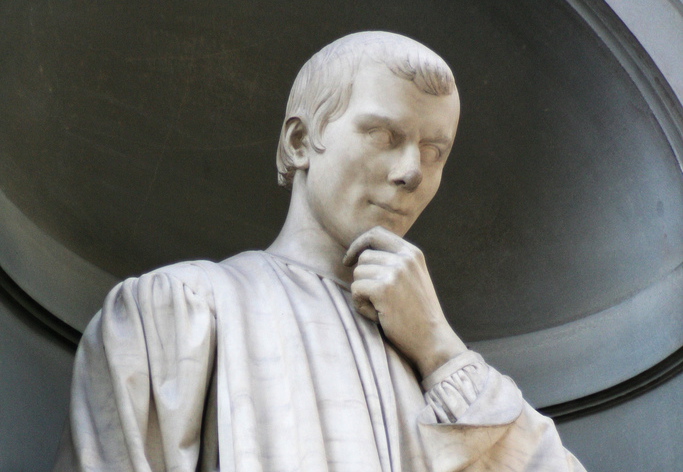
John Gray thinks Machiavelli is “as much of a heretic today as he ever was”:
Resistance to his thought comes now not from Christian divines but from liberal thinkers. According to the prevailing philosophy of liberal legalism, political conflict can be averted by a well-designed constitution and freedoms enshrined in a regime of rights. In reality, as Machiavelli well knew, constitutions and legal systems come and go. According to [legal scholar Philip] Bobbitt, “The lesson of Machiavelli’s advice to statesmen is: don’t kid yourself. What annoyed . . . Machiavelli was the willingness of his contemporaries to pretend that quite simple formulations were adequate to the task of governing in the common interest.” Plainly, the market state is a formula of precisely this kind.
The true lesson of Machiavelli is that the alternative to politics is not law but unending war. When they topple tyrants for the sake of faddish visions of rights, western governments enmesh themselves in intractable conflicts they do not understand and cannot hope to control. Yet if Machiavelli could return from the grave, he would hardly be annoyed or frustrated by such folly. Ever aware of the incurable human habit of mistaking fancy for reality, he would simply respond with a Florentine smile.

 The Dish