Developing Dirty Air

Charles Kenny assesses China’s air pollution:

In part, the pollution problem is connected to a rapidly expanding vehicle fleet—including large diesel trucks burning dirty fuel. Also to blame is China’s coal industry: The country now burns about as much coal as the rest of the world combined. One reason for that is a discontinued policy that gave free coal for fuel boilers to everyone living in the north of China, much of which was consumed in inefficient indoor home heating systems. A paper co-authored by Yuyu Chen of Beijing University estimates that the 500 million residents of northern China lost more than 2.5 billion life years thanks to the free coal policy in the 1990s, and the policy’s impact lingers to this day, with higher levels of air pollution in the north.

Similar challenges afflict much of the developing world—and make air pollution by far the most serious, immediate atmospheric threat to health and welfare in poor countries. Forecasts (PDF) by the think tank DARA suggest that for the next 15 years, 80 percent of carbon-related deaths in the developing world will result not from CO2-related climate change but from local and indoor air pollution.

Relatedly, Fallows passes along a DIY air filter for those struggling to breathe in Beijing.

The Illogic Of Lawn Care

dish_lawn

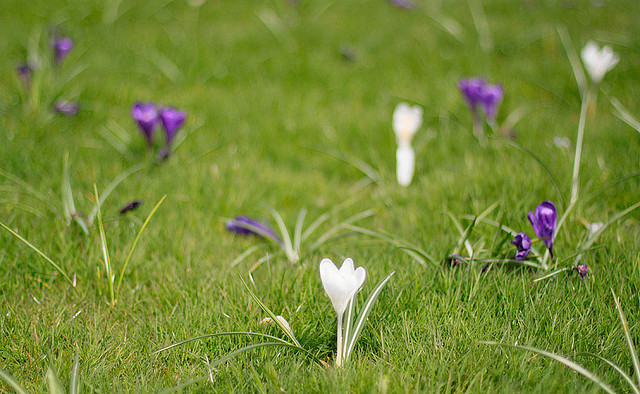
Ferris Jabr suggests that the typical American grass lawn is out of harmony with nature:

A conventional lawn is … a complete perversion of grass’s typical life cycle. Lawn grasses fall into two general categories: cool-season species, such as fescue and bluegrass, and warm-season species, such as Bermuda and zoysia. During the summer, wild cool-season grasses stop photosynthesizing, turn brown and grow far more slowly if at all in order to conserve energy; in the fall, they rebound. Conversely, wild warm-season grasses become dormant in cooler months and flourish in the summer. To keep our grass lawns green year-round, we continuously douse them with water and fertilizer, forcing the plants to grow nonstop.

But we don’t want them to grow too tall, of course. By mowing down grass before it has the chance to produce flowers and seeds, we effectively trap the plants in perpetual sexual immaturity—although many are still able to reproduce asexually, cloning themselves and spreading laterally with creeping roots. Mowing also requires grass to devote a lot of energy and resources to healing itself by sealing off all wounds. The smell of freshly cut grass—so often comforting and nostalgic—is a chemical alarm call: a bouquet of fragrant volatile organic compounds that plants release when under attack.

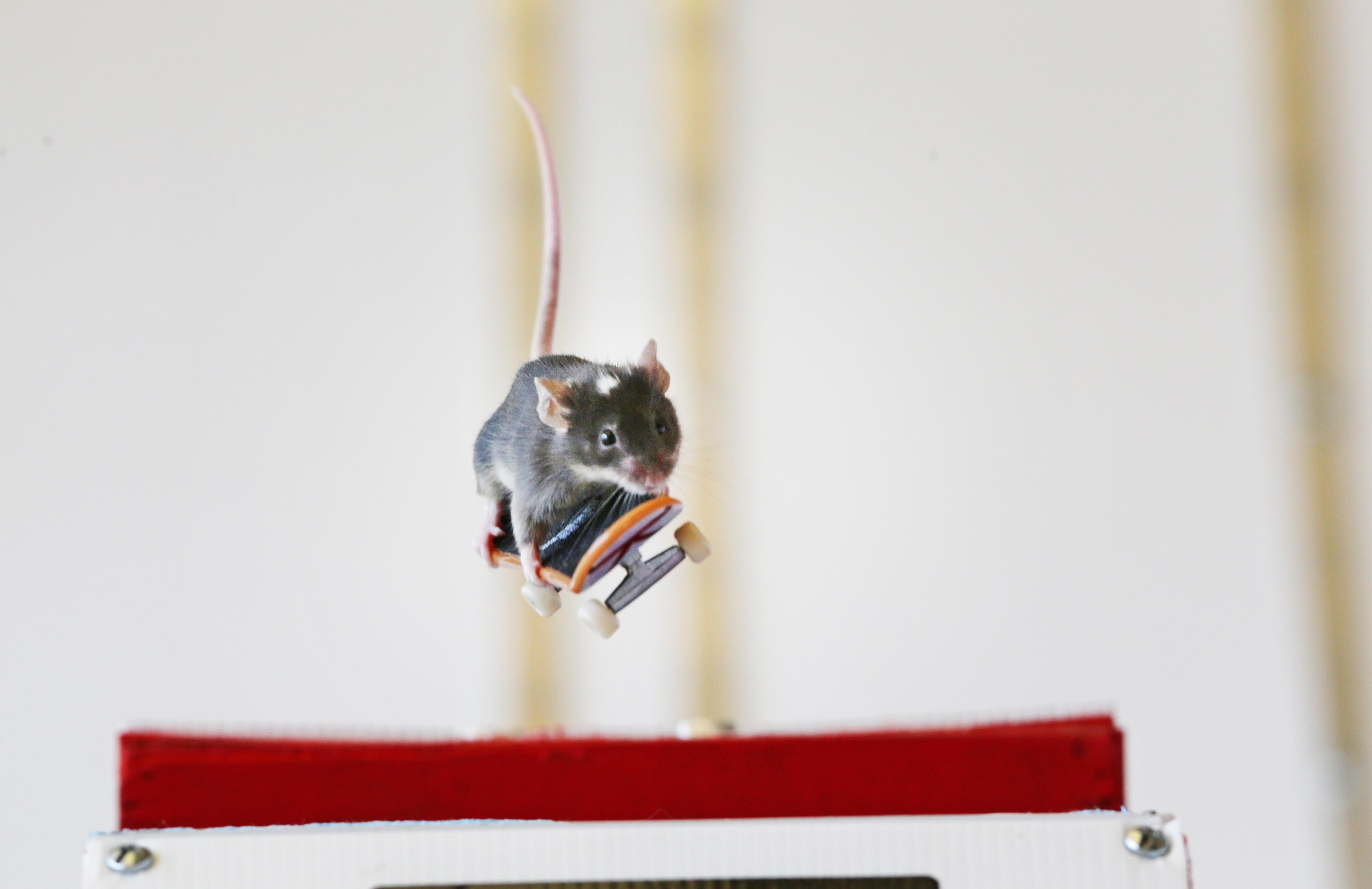
(Photo by Flickr user waferboard)

How Journalism Should Cover Science

Some of Andrew Gelman’s recommendations:

Just as a careful journalist runs the veracity of a scoop by as many reliable sources as possible, he or she should interview as many experts as possible before reporting on a scientific claim. The point is not necessarily to interview an opponent of the study, or to present “both sides” of the story, but rather to talk to independent scholars get their views and troubleshoot as much as possible. The experts might very well endorse the study, but even then they are likely to add more nuance and caveats. …

Just as is the case with so many other beats, science journalism has to adhere to the rules of solid reporting and respect the need for skepticism. And this skepticism should not be exercised for the sake of manufacturing controversy—two sides clashing for the sake of getting attention—but for the sake of conveying to readers a sense of uncertainty, which is central to the scientific process. The point is not that all articles are fatally flawed, but that many newsworthy studies are coupled with press releases that, quite naturally, downplay uncertainty.

Surprised By Grief

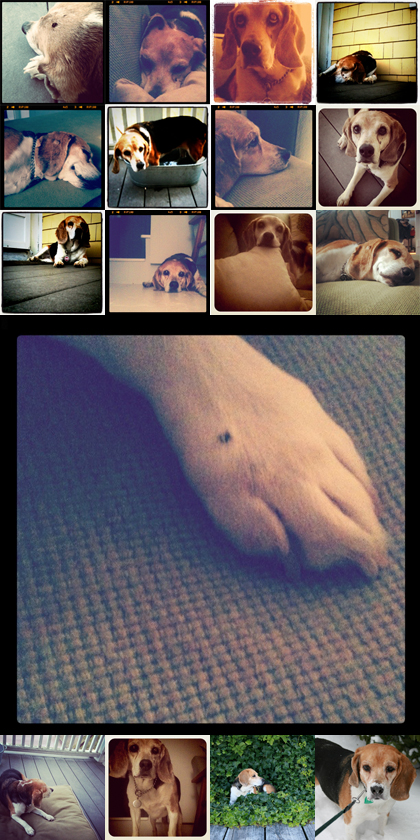
dustymontage3It’s not as if I have any excuse (you warned me plenty of times) but I’m shocked by how wrecked I am right now. Patrick, Chris and Jessie, thank God, have been holding down the fort on the Dish, because otherwise I’m not sure I could think about much else right now. How can the emotions be this strong? She was a dog, after all, not a spouse or a parent.

And yet, today, as I found myself coming undone again and again, I realized that living with another being in the same room for 15 and a half years – even if she was just a mischievous, noisy, disobedient, charming, food-obsessed beagle – adds up to a lot of life together. I will never have a child, and she was the closest I’ll likely get. And she was well into her teens when she died.

She was with me before the Dish; before my last boyfriend, Andy; before I met Aaron. She came from the same breeder as the beagle my friend Patrick got as he faced down AIDS at the end of his life. I guess she was one way to keep him in my life, so it was fitting that his ex-boyfriend drove me to the farm in Maryland to get her. I was going to get a boy and call him Orwell (poseur alert) but there were only girls left by the time we got there. I didn’t know what I was doing but this tiny little brown-faced creature ambled over to me and licked the bottom of my pants. She chose me. On the ride home, I realized I hadn’t thought for a second what to call a girl dog, and then Dusty Springfield came on the radio.

My friends couldn’t believe I’d get a dog or, frankly, be able to look after one. I was such a bachelor, a loner, a workaholic writer and gay-marriage activist with relationships that ended almost as quickly as they had begun. I thought getting a dog would help me become less self-centered. And of course it did. It has to. Suddenly you are responsible for another being that needs feeding and medicine and walking twice a day. That had to budge even me out of my narcissism and work-mania.

But I also got her as the first positive step in my life after the depression I sank into after my viral load went to zero in 1997. I know it sounds completely strange, but the knowledge of my likely survival sent me into the pit of despair. I understand now it was some kind of survivor guilt, and, after so much loss, I had to go through it. I wrote my way out of the bleakness in the end – as usual. But this irrepressible little dog also pulled me feistily out.

She was entirely herself – and gleefully untrainable. I spent a large part of our first years together chasing her around bushes and trees and under wharfs, trying to grab something out of her mouth. She’d find a disgusting rotten fish way underneath a rotting pier, wedge herself in there, eat as much as she felt like and then roll around in ecstasy as I, red-faced, bellowed from the closest vantage point I could get. There was the year that giant tuna carcass washed up on the sand and I lost her for a split second and nearly lost my mind looking for her until I realized she was inside the carcass, rendering herself so stinky it was worse than when she got skunked. But the smile on her face as she trotted right out was unforgettable. It was the same, proud, beaming face that appeared from under a bush in Meridian Hill Park covered in human diarrhea, left by a homeless person. Score!

Good times: the countless occasions she peed in the apartment, always under my blogging chair, driving me to distraction; her one giant chocolate orgasm, when she devoured two boxes of Godiva chocolates left on the floor by a visiting friend, ate every one while we were out at dinner, and then forced me to chase her around the apartment when I got home, as she puked viscous chocolate goo over everything, until I slipped in it too. Yes, she survived. The rug? Not so much.

She was also, it has to be said, always emitting noise. She had a classic howl, and when the two of us lived in a tiny box at the end of a wharf, she would bay instinctively at every person and every dog she saw come near. It’s cute at first. But after a while, she drove most of my neighbors completely potty. I tried the citronella collar, but she found a way to howl that stayed just below the volume that triggered the spray. Howling was what she did. There was no way on earth I was going to stop it.

But there was one exception to this rule. In my bachelor days, I’d stay out late in Ptown, trying to get laid, and often getting to sleep only in the early hours. I installed some floor-to-ceiling window blinds to block out the blinding sun over the water – so I could sleep late (this was before the blog). Dusty – usually so loud and restless – would wait patiently for me to wake up, and wedge herself between the bottom of the fabric of the blind and the glass in the window. That way, she kept an eye on all the various threats, while basking in the heat and light of the morning. And until the minute I stirred, despite all the coming and going around her, she uttered not a peep. In her entire life, she never woke me up. This is the deal, she seemed to tell me. You feed and walk me and house me on a beach all summer long, and I’ll let you sleep in.

It was a deal. She never broke her part of it; and I just finished mine.

(Photo montage by Aaron Tone.)
Soaring Through Our Imagination

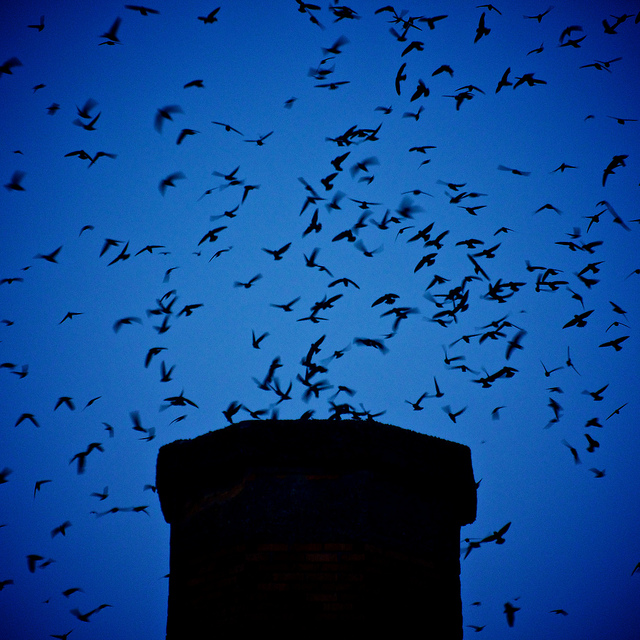
dish_swifts

Mark Cocker contemplates the cultural cachet of birds:

The central symbolic value that birds play in language, literature, art, thought and religion is that of transformation from one state to another. The idea is ancient, visceral and undeniable. Mesolithic infants have been found buried with their heads resting on swans’ wings. The symbol for the Holy Spirit in the Christian faith is a dove. In south-east Asia cranes carried the souls of the dead to heaven. At weddings throughout the western world people release white doves as a symbol of the couple’s love. In Europe white storks bring the spring. Muslims built hospitals to house injured storks and made it an offence to harm them. Traditionally the symbol of homecoming for sailors was the swallow tattooed on their arms.

The examples are innumerable. Central to them all is the idea that birds often express our most cherished ideas and our most exalted values. Look at the spectrum of national flags and other state insignia. Birds, particularly birds of prey, are everywhere – few other creatures feature. It is surely this association with transcendence, or some tiny fragment of it, that is at work in all our encounters with birds. And it is for this reason that they are so crucial to our relationship with all nature.

Jim Crace shares his experience of swifts, “a bird neither friendly nor unfriendly”:

Here, this evening, in Grasse in the Alpes Maritimes of southern France, the noise trapped in the dilapidated, medieval, traffic-free alleyways and courtyards is deafening and eerie. At least a thousand screaming swifts have condescended to spend an hour close to me. I could almost catch one with a butterfly net if I stretched high enough and if they weren’t such whizz-kids of the wing, celebrating every duck and dive and every taken bug with their falsetto palaver. In the final shadows of the evening, these alpine swifts are closer to my head than either starlings or bats would ever dare to come. They are as close as gnats. I’m standing in the eye of the swarm. But still I cannot claim any intimacy with them. Despite this tumultuous proximity, they are not sharing any of their world with me. There is no interface, no common ground. They’re still aloof. My love for them is vain. All they know about is bugs and air, feeding, flying, moving on. They leave me gaping at an empty sky.

Previous Dish on our feathered friends here and here.

(Photo of flying swifts by Robert T. Britt)

Robbed By The Cops

Sarah Stillman spotlights the abuse of civil asset forfeiture laws:

The rise of civil forfeiture has, in some areas, proved of great value. It allows the government to extract swift penalties from white-collar criminals and offer restitution to victims of fraud; since 2012, the Department of Justice has turned over more than $1.5 billion in forfeited assets to four hundred thousand crime victims, often in cases of corporate criminality. Federal agents have also used forfeiture to go after ruthless migrant smugglers, organized-crime tycoons, and endangered-species poachers, stripping them of their illicit gains. Global Witness, the anti-corruption group, recently cheered the Justice Department’s civil-forfeiture action targeting the son of Equatorial Guinea’s dictator, which sought his Malibu mansion, Gulfstream jet, and some two million dollars’ worth of Michael Jackson memorabilia, including a bejewelled white glove.

Yet only a small portion of state and local forfeiture cases target powerful entities.

“There’s this myth that they’re cracking down on drug cartels and kingpins,” Lee McGrath, of the Institute for Justice, who recently co-wrote a paper on Georgia’s aggressive use of forfeiture, says. “In reality, it’s small amounts, where people aren’t entitled to a public defender, and can’t afford a lawyer, and the only rational response is to walk away from your property, because of the infeasibility of getting your money back.” In 2011, he reports, fifty-eight local, county, and statewide police forces in Georgia brought in $2.76 million in forfeitures; more than half the items taken were worth less than six hundred and fifty dollars. With minimal oversight, police can then spend nearly all those proceeds, often without reporting where the money has gone.

Ilya Somin believes that the “best solution is to abolish civil asset forfeiture completely”:

As a practical matter, most of the people victimized by asset forfeiture abuse are poor, lacking in political influence, and unable to bear the expense of prolonged litigation. For these reasons, there is little political pressure to prevent the sorts of abuses documented in Stillman’s article and elsewhere. And there is similarly little incentive for higher officials to monitor police and prosecutors’ use of asset forfeiture to curb this kind of behavior. A categorical ban on civil asset forfeiture would be easier to administer than piecemeal reforms, and therefore more likely to succeed.

“The Dark Stuff Is The Juicy Stuff”

After her five-year-old daughter started reading Roald Dahl, Rebecca Makkai recalls the influence the author had on her own childhood:

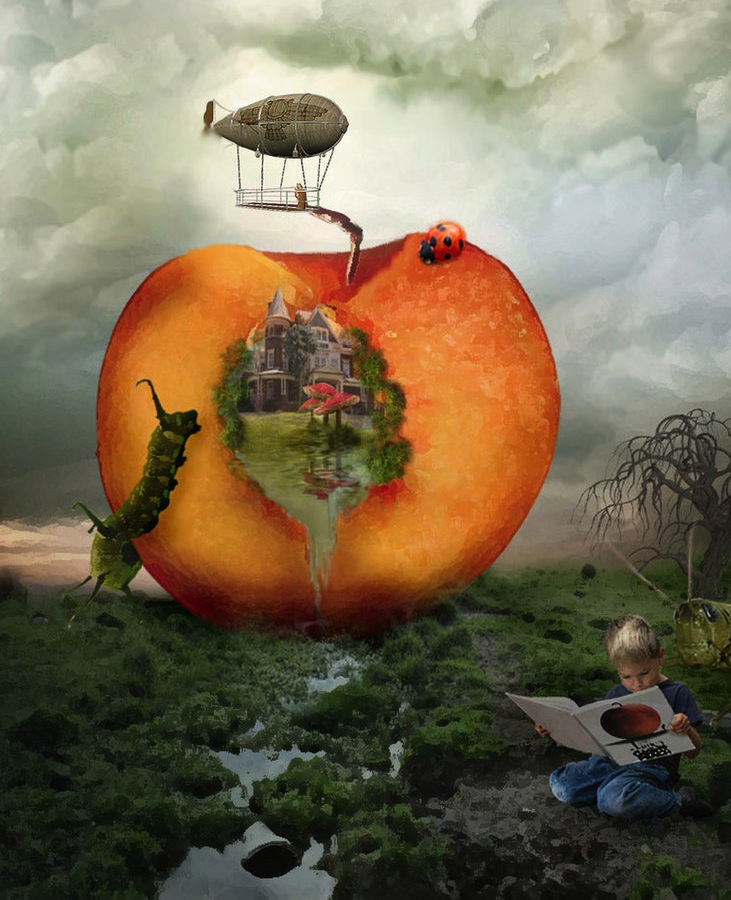
The Twits concerns a husband and wife whose sole mission is to play horrible tricks on eachJames_and_the_Giant_Peach_by_futuregrrl other. I remember, when I first listened to the story, gleefully raising my hand to announce that “This house is just like my house!” I didn’t mean that anyone in my home was gluing furniture to the ceiling—but I saw a dysfunction reflected in this book that I just hadn’t found in Encyclopedia Brown or The Mouse and the Motorcycle.

Of course it’s children’s writers who are most able to ignore the dark side (I’m thinking here of the sweet, simple books for very young children)—and maybe there’s a good reason some of my favorites children’s writers (notably Lemony Snicket and Dr. Seuss, in addition to Dahl) are ones who started off writing gritty things for adults and then moved younger. But we’re sometimes tempted to ignore the dark stuff when we write for adults, too. Our characters are flawed, but only a little bit, ha ha, just kidding, he’s really a good person! She’s going to have an affair, but nooooooo, she’s not, she changed her mind! I’m not arguing that every story has to be The Shining. But if kids can handle Miss Trunchbull’s torture closet, adults can handle the darker spots of the human soul.

(Image by graphic artist futuregrrl, inspired by Dahl’s James and the Giant Peach)

Uncle Sam Loses His Beer Gut, Ctd

Screen Shot 2013-08-06 at 12.52.10 PM

Derek Thompson points out that beer consumption may be seeing some structural decline, but “beer doesn’t deserve our tears”:

If we’re spending more on alcohol but drinking much less beer, what’s going on? Well, we’re spending more for the suds. Beer is getting more expensive on average, due to the rise of craft beers, which account for about 10 percent of the market. In 1980 there were 8 specialty breweries in the United States. Now there are more than 2,000 “Between 1994 and 2011, an average of 97 breweries opened in the United States every year,” consultant David Dworkin pointed out in an email to me. As a result, beer hasn’t lost much ground as a share of total booze-spending at stores. And it is by far the most popular alcoholic drink by volume.

Yes, you point out, it is physically impossible to drink vodka in beer-like quantities. And yes, I’d agree, but on an alcohol basis, holds up well against wine: Beer volume still outsells wine volume by 8.5X despite the fact that a typical beer that’s 4% alcohol is only three or four times weaker than a typical wine.

A Second Chance For Bob Dylan’s Worst Album

In 1970, Dylan released Self Portrait, a notoriously awful album that has confounded many of his fans for decades. When Greil Marcus reviewed it in Rolling Stone, he famously began with the question, “What is this shit?” Now, as part of their “Bootleg Series” that uncovers rarities, outtakes, and unreleased tracks from Dylan’s recording sessions, Columbia Records is releasing Another Self Portrait, offering a fuller picture of what the songwriter was up to at the time. Kevin Courrier thinks we have reason to be optimistic about the album, believing it will show “a man tracing the roots of both his musical path and interests”:

Self Portrait suffers from the sense that Dylan is playing the songs to himself rather than to the listener.

But the samples I’ve heard on Another Self Portrait, from Eric Anderson’s “Thirsty Boots” and Tom Paxton’s “Annie’s Gonna Sing Her Song,” actually reach out to an audience. You hear the threads of what not only came to define the musical territory Dylan had already been mining to that point, but also what would later become the Bob Dylan Theme Time Radio Hour on satellite radio. On that program Dylan, as the host, took us on musical journeys through the history of American music – blues, jazz, show-tunes, rock and folk – using a theme like ‘the weather’ as the clothes line on which he hung the songs. On Another Self Portrait, he also extends to his listeners the country sound he was immersed in with his previous album, Nashville Skyline, by reminding us (as he had on the infamous The Basement Tapes) that his music was not narrowed by the social protests of the topical song. In his mind, the American songbook is an evolving and expanding catalogue tracing a map of the nation’s struggles and triumphs.

Another Self Portrait could very well be the album that Self Portrait wasn’t. It may compare to how Good As I Been to You (1992) and World Gone Wrong (1993) set Dylan up for his series of records (Time Out of Mind, Love and Theft) that brought his voice back to its authentic sound. In those two early Nineties records, Dylan revisited the songs of his youth, earlier versions of the America that would help him come to terms with the country he was living in now. He then set forth to mine his own path with those tracks (“World Gone Wrong,” “Black Jack Davey”) as skeleton keys for his own (“Not Dark Yet,” “High Water (for Charley Patton)”). But we already know that the history that followed those sessions led into the eventual aimlessness that Good As I Been to You got him out of. The only authentic thing about Self Portrait was its portrait of an artist in hiding. What Another Self Portrait might just reveal is more of what Dylan was actually hiding from.