The Tallest Slum On Earth

Vocativ explains:

Welcome to poverty-ridden Venezuela’s Tower of David. Squatters took over this very unfinished 45-story skyscraper in the early 1990s, and they’ve been there ever since. The tower was originally intended to be a symbol of Caracas’ bright financial future, complete with a rooftop helipad, but construction stopped because of a banking crisis and the sudden death of the tower’s namesake, David Brillembourg.

We sometimes think a dystopian future is terrifying without fully absorbing how so many already live in it.

A Party Divided, Still

Nate Cohn sees signs that “the next Republican nominee is screwed”:

[A] new Pew Research survey suggests that Republican presidential candidates won’t find it easy to move toward the center. The poll shows that Republicans recognize the need for change—with 59 percent even suggesting they need to change on the issues. But when it comes to the specifics, most Republicans support maintaining the party’s current positions or even moving further to the right. When asked about the party’s current stance on gay marriage, immigration, government spending, abortion, and guns, at least 60 percent of Republicans said they thought the party was about right or too moderate.

Desire for change was greatest, if still very limited, on cultural conservative issues. On gay marriage, 31 percent of Republicans said they wanted the party to moderate. But 27 percent thought the party wasn’t conservative enough (do they want a return to sodomy laws?) and another 33 percent were satisfied with the party’s current stance. … On immigration, where the party’s current position is potentially less clear to voters, the Republican rank-and-file isn’t itching to get behind a compromise. 17 percent support moving to the left on immigration, compared to 36 percent who want the party to get more conservative.

In a later post, on why Rubio’s 2016 chances are “alive and well” despite his stumbles on immigration, Cohn outlines the kind of Republican that wins nominations:

Yeah, you’d rather be a Tea Party candidate than a dreaded moderate, but the optimum Republican presidential candidate is a mainline conservative—someone who’s conservative enough for the Tea Party, doesn’t scare away the establishment, and doesn’t alienate either the religious or business wing of the party. From there, the candidate either needs to build a critical mass of support within the party (the so-called invisible primary), or go out on the ground and convince voters in Iowa or New Hampshire (while hoping that no other candidate wins the invisible primary). …

[F]or the moment, there isn’t another prominent, active Republican candidate with broad appeal throughout the party. For now, Chris Christie, Rand Paul, and Ted Cruz are best positioned to run as factional candidates. Perhaps one or all will broaden their appeal, especially Christie. They have time, but it hasn’t happened yet. Jeb Bush or Paul Ryan would have broad appeal, but it’s unclear whether they’ll run. Bobby Jindal, John Thune, Scott Walker, and Rob Portman could all run mainline campaigns, but they won’t win the invisible primary and their national electoral appeal is unproven, even compared to Rubio.

A quick review of those Pew numbers on the likely candidates:

Paul Ryan led in favorability among all Republicans, with a 65% favorable rating. Eighty-one percent of Tea Partiers gave that response. Rand Paul was 10 points behind Ryan in favorability among all Republicans. Seventy percent of Tea Party Republicans liked him. Marco Rubio had a 50% favorable rating among all Republicans and Chris Christie a 47% rating. Tea Party Republicans were much higher on Rubio (59%) than they were on Christie (47%). At this point, 53% of Republicans had no opinion of Ted Cruz. Of those who had an opinion, 33% had a favorable view of him and 13% an unfavorable view.

Ask Frederic Rich Anything: Respecting Christianity’s True Message

In today’s video, Fred explains how his Catholic upbringing and subsequent atheism influenced the ideas in his novel Christian Nation:

Frederic Rich is an American lawyer, environmentalist and author. His new book, Christian Nation, is a work of speculative fiction imagining what would have happened if McCain had won the 2008 election and subsequently died, making she-who-will-not-be-named the president and putting America on the path to theocracy. His previous Ask Anything answers are here. Our full AA archive is here.

Cancel That Moscow Summit, Mr President, Ctd

Jacob Heilbrunn observes, as I have, how Putin “has blown a giant raspberry at President Obama”:

The problem is really of [Obama’s] own making. The appropriate response to Snowden would have been to promise him immunity from prosecution and allow him to return to America, where he could have testified to Congress. From a practical standpoint, the administration would have been better off with Snowden in America rather than back in Russia, where he can dribble out embarrassing information. Everything that Snowden has said appears to be accurate. The latest revelation concerns a computer program called XKeyscore that is one more step towards the omnicompetent state.

Leonid Bershidsky wonders why Putin “dragged out the process for so long”:

Some thought the Kremlin was looking for a way to ship Snowden out quietly to one of the three Latin American countries that have publicly agreed to receive him: Venezuela, Bolivia or Nicaragua. Others speculated that Russian counterintelligence needed the time to debrief him. The issuance of the asylum document suggests that the Kremlin has decided it can absorb the unpleasantness of keeping the fugitive — and if its special services did not get enough access to him at Sheremetyevo, they have plenty of time to milk him dry now.

Richard Sakwa insists that Putin’s “hand was forced”:

Offers of asylum in Latin American countries faced the logistical difficulty of getting him out. The forcing down in July of the plane of Bolivian president Evo Morales over European air space, on his way back from the G20 summit in Moscow, can effectively be described as an act of international piracy. As the human rights lawyer Geoffrey Robertson notes about the various conventions defending the freedom to traverse international air space: “America tends to treat international law as binding to everyone except America”.

In that context, there was almost nothing else that Putin could do but offer temporary asylum. The hope will be that after a year some negotiated solution can be found that would rid Russia of its unwelcome guest.

Michael Crowley doesn’t see too many ways in which Obama can “punch back”:

[M]uch like China, Russia simply isn’t a country America can bend to its will. Especially not when oil, one of the country’s prime exports, are well over $100 a barrel, giving Russia the cash and comfort to project. And especially when America’s reputation around the world remains, shall we say, problematic.

As for Snowden, who knows what behind-the-scenes argument played out between Washington and Moscow. It’s possible that the battle for the NSA leaker became a proxy for any number of grievances, from Syria to trade the fate of suspected spies in one or both capitals. It was undoubtedly a fierce tug of war, one that America lost, and one that will send relations into an even deeper frost. Somewhere, Mitt Romney might be chuckling. When it comes to Russia, the joke is no longer on him.

The Binary Mind Of Global Hegemonists

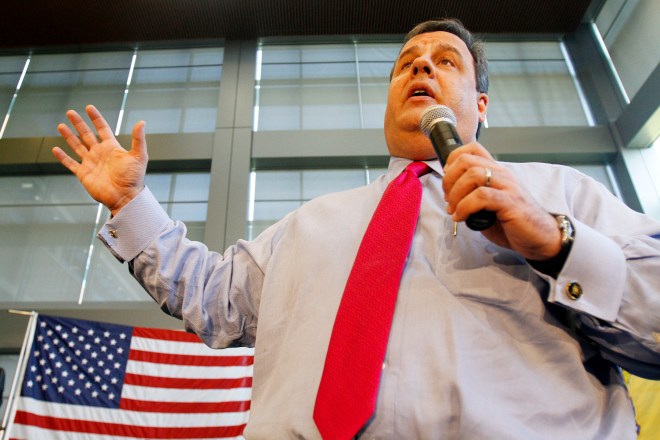
NJ Governor Chris Christie Holds Town Hall Meeting

Charles Krauthammer gives us a worldview this morning unchanged for several centuries – and certainly unaffected by anything that has occurred since 2001. There is either one global hegemon in the world or there is chaos:

The Paulites, pining for the splendid isolation of the 19th century, want to leave the world alone on the assumption that it will then leave us alone. Which rests on the further assumption that international stability — open sea lanes, free commerce, relative tranquillity — comes naturally, like the air we breathe. If only that were true. Unfortunately, stability is not a matter of grace. It comes about only by Great Power exertion.

In the 19th century, that meant the British navy, behind whose protection the United States thrived. Today, alas, Britannia rules no waves. World order is maintained by American power and American will. Take that away and you don’t get tranquillity. You get chaos.

I think that’s wildly simplistic. To note something that any actual observer of the last decade would note: the hegemon can itself create chaos if it uses its force reflexively and for neo-imperial or paranoid reasons. The deaths of tens of thousands and the splintering of any cohesion to the “state” of Iraq was a direct consequence of Krauthammer’s simplistic hegemonism and all the hubris that comes entangled with it. Ditto Afghanstan – where US intervention does not appear to have prompted any long-term stabilization of the region, and, in fact, seems to have accelerated Pakistan’s descent into nuclear-tipped Jihadism (a far, far greater threat than anything the Taliban could muster). The American hegemony that has allowed Israel to invade, bomb and expand with impunity for years has not been a force for tranquility at all. And Krauthammer’s and Netanyahu’s proposal for a third Middle East war –  against Iran – would be equally destabilizing for both the region and the world. In recent history, global hegemony hasn’t maintained tranquility; it has obliterated it in favor of an unpredictable, global religious conflict.

And as a rising power emerges in the East, history teaches us that an attempt to maintain hegemony and restrain that giant from exercizing influence in its own part of the world can be disastrously destabilizing. What Krauthammer misses in his celebration of British imperialism – “Today, alas, Britannia rules no waves” – is that, in the end, its resistance to sharing global influence with a rising Germany caused untold destruction and chaos in the first half of the twentieth century. There’s also a reason Britannia, like Imperial Spain before it, stopped ruling the waves. Because the temptation to hegemony eventually bankrupted it. Have you checked the US balance sheet lately? I thought – foolish me – that the GOP cared about that.

This is not to support what Krauthammer caricatures as “isolationism”.

Of course, the US has a real interest in projecting global force for the purpose of trade, a stable international economic system, and protection against the only foreign force that has even the slightest capacity to harm us: Jihadist terrorism. But in that endeavor, prudence – a concept alien to the former-leftists-turned-militarists like Krauthammer – matters. The Obama foreign policy, in not seeking to make every tension and conflict with any other country into a zero-sum endeavor, or a polarizing moment, has been far more prudent than Bush’s and Krauthammer’s. It has protected us from terrorism while withdrawing from two hopeless wars that Krauthammer backed – and still does. It has shown that you can actually project more power by doing less, and succeeding, than invading countries you have no understanding of and failing to occupy, reform or even govern them competently. And if you maintain a lighter footprint, using drones, surveillance and special forces, you can calm global tensions and increase the chance for global tranquility.

In other words, good, old-fashioned, intelligent realism is a critical central pillar of thinking about foreign policy, but it is one Krauthammer cannot countenance but that Reagan and the first Bush integrated into their interventionism. I cannot really see any solid reason why, except that a realist foreign policy that did not see war and violence as critical tools would lead any sane American president to reassess the fusion of the US and Israel in terms of global interests. And the regional hegemony of Israel is a core priority of the neoconservative mindset – and it is now wedded to the apocalyptic Zionism of the Christianist right. So realism must be tarnished so that the project of Greater Israel can continue with ever-increasing urgency and rigidity.

That’s why the debate between Paul and Christie is a vital one. Because it could expose the difference between realist global tranquility and neocon chaos, between some kind of domestic American revival, or one last act in the bankrupting temptations of late-empires. At some point, the neoconservatives will have to account for the sheer scale of chaos and disorder they have sown in the world, even as they claim, absurdly, to be the guardians of global peace. That reckoning has not fully occurred yet – just as the war crimes of that rogue administration have yet to be punished or accounted for.

But the time is coming. And Rand Paul may be its key precipitant.

(Photo: Jessica Kourkounis/Getty Images)

Cool Ad Watch

A cute campaign to get people to treat stray dogs more humanely:

It was shot in Santiago, Chile:

Created by Violeta Caro Pinda and Felipe Carrasco Guzmán, the dog-centric video follows volunteers as they tie balloons onto strays in the capital city’s La Cisterna area. Each balloon contains phrases (in Spanish), such as “Do not mistreat me,” “Scratch my neck” and “Give me love.”

How To Spin Your Rap Sheet

Convicted murderer Angel Ramos tells Sabine Heinlein how newly released prisoners frame their stories for employers:

“[On the job application, you] put down the penal code of the crime—125.5 for murder, for example,” Angel explained. “Don’t put the crime itself. Write: ‘Will explain further at interview.’ This is a place of business, and you don’t want people to gossip. This shows, ‘I’m looking out for you already.’  That’s a technique. ‘Imagine how I’m going to look out for you once I do work for you.’ It’s great psychology. Plus, people get interested. They want to know, ‘What the hell is 125.5?’ You want the guy to talk to you.

Then it’s your time to sell yourself.

When he asks you about the crime, you go, ‘Well, when I was 18 years old, I got involved with some bad people. Somebody died; I was convicted of murder, and I was given life.’ Not fifteen-to-life. Life! ‘However, I was released for good behavior. While I was in there, I did this and I did that.’ You go through your spiel. You talk about your social skills, your soft skills, your hard skills. You calm that person down. In other words, I went to jail, and it’s not a big deal. You shouldn’t be afraid of me.

Once you see that on his face, it’s no longer an issue. You move on to getting that job. What skills can I bring to this job? What can I do better than the other fifty applicants? I bring a whole different perspective. I think outside the box. I work harder than most guys. I love working. I’ve proved that I’m worthy of work. I can handle difficult people. I’ve been handling difficult people all my life. I have people skills. Then he sees that I’m not typical. I’m already blowing your bubble what prison is all about. It’s all marketing.

How Can The Sea Be “Wine-Dark”?

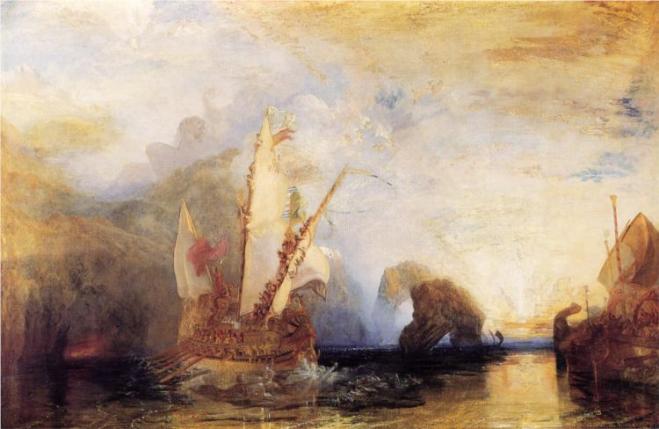
ulysses-deriding-polyphemus-1829.jpg!Large

Caroline Alexander explores the ancient question:

This wine-dark sea has haunted many imaginations. Nineteenth-century British prime minister William Gladstone posited in Studies on Homer and the Homeric Age that the Greeks had a form of color-blindness, their optical palette limited to black and white, and possibly red. Another theory was that a type of algal bloom, red tide, made the Homeric-era Aegean wine-red. In the 1980s, the view was advanced that since the ancient Greeks mixed their wine with water, the alkaline water common to the Peloponnesus would have turned red wine to blue. Another view came from a retired classicist who watched “an unusually vivid sunset” over the sea at the mouth of the Damariscotta River, in Maine, on an evening when the sky was filled with ash that had floated east from the eruption of Mount St. Helens, and was struck by the color of the sea “reflected in the outgoing tide of the dark estuary.” The sea, he said, was the color of Mavrodaphne, a wine of deep purple-brown hue, and the epithet for Homer’s wine colored sea, he speculated, meant “sunset-red.”

Finally, many contend that the phrase is meaningless, an empty expression with a poetic ring whose purpose is only to fill out the metrical requirements of a line of the verse.

Update from a reader:

Of course, one further explanation is that Homer was merely making an allusion to the opaqueness of the sea, not its color per se. He was comparing the inability of light to pass through wine (because of its color) with the similar effect caused by the depth of the sea.

Another:

Radio Lab did a piece on this a while back.  One of the possible explanations is that at that time there was no equivalent word in Greek for blue.

(Painting: Ulysses Deriding Polyphemus by J.M.W. Turner)

Chart Of The Day

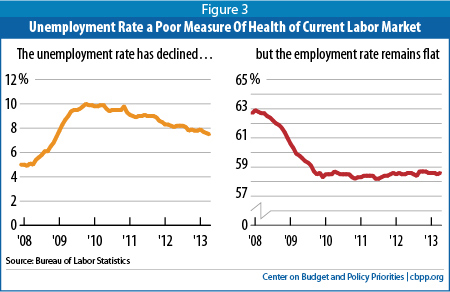
unemployment-vs-share

Ezra Klein declares that the comparison seen above “calls the entire economic recovery into question”:

[T]here are two ways to leave the ranks of the unemployed. One way — the good way — is to get a job. The other way is to stop looking for work, either because you’ve retired, or become discouraged, or begun working off the books. The yellow line on the left shows the official unemployment rate since 2008. It’s fallen from over 10 percent to under 8 percent. But the red line on the right shows the actual employment rate — that is, the percentage of working-age adults with jobs. What should scare you is that the red line has barely budged.

(Chart from the Center on Budget and Policy Priorities)