Quote For The Day

GertrudeStein

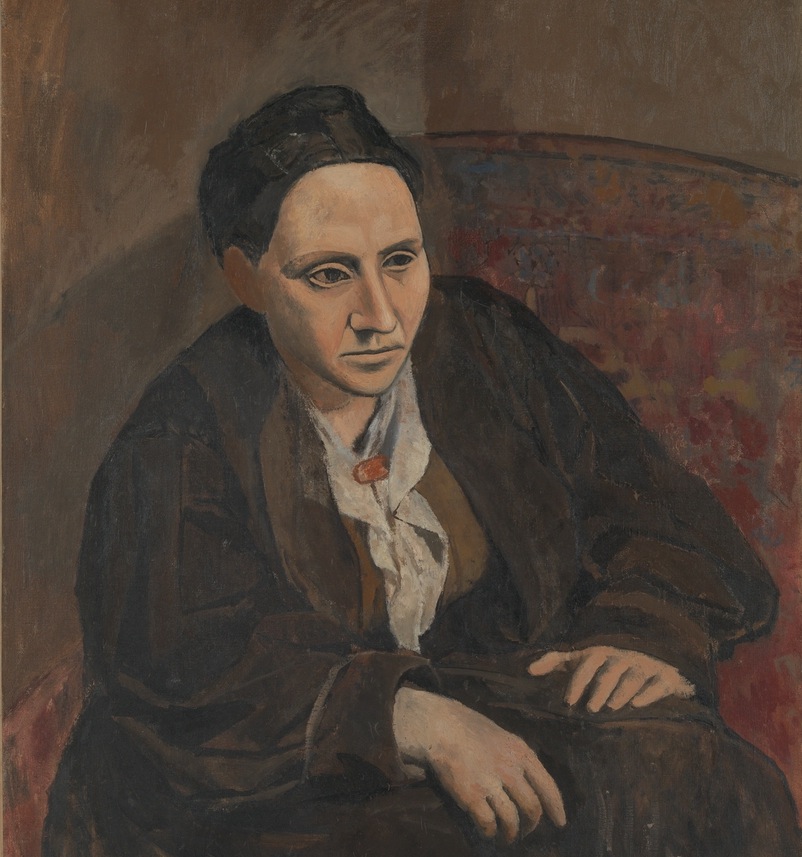
“I don’t try to be prophetic, as I don’t sit down to write literature. It is simply this: a writer has to take all the risks of putting down what he sees. No one can tell him about that. No one can control that reality. It reminds me of something Pablo Picasso was supposed to have said to Gertrude Stein while he was painting her portrait. Gertrude said, ‘I don’t look like that.’ And Picasso replied, ‘You will.’ And he was right.” – James Baldwin.

(Picasso’s portrait of Stein, via Wiki)

Disfiguring Nature

William Hurlbut uses the example of St. Francis of Assisi to question our biotechnological ambitions:

St. Francis’s attentive and appreciative disposition toward the multiplicity of natural forms, even the tiniest and seemingly insignificant, expresses an understanding of the universe as an ordered and intricately interrelated whole. … Recognition of the fragile interdependence of living nature urges us to be cautious — lest we disrupt the basic balance of being and thereby drain the created order of its beauty, vitality, spiritual significance, and moral meaning. We have no license for an attitude of arrogance as masters and possessors of nature. Plants and animals may be used, not as mere raw materials, but with tenderness, compassion, and genuine gratitude. Genetically engineered featherless chickens for cheaper pot pies and leaner pigs with severe arthritis are a violation of basic kindness and courtesy — of the concern that Francis extended to even the lowliest of creatures.

Mad Men’s Melting Pot

Rachel Shukert tracks the rise of Jewish characters in Mad Men as a portrait of cultural assimilation:

[I]t wasn’t until last season that we got Michael Ginsburg, the whiz-kid copywriter. With his thick “regional” accent, Yiddish-accented Old Country father who likes farmers’ cheese and has a dimly remembered tragic early childhood in a concentration camp, Ginsburg is the first Jewish character on Mad Men who isn’t, on some level, trying to hide it. Roger Sterling, ever the gentleman, may have taken it upon himself last season to make sure their client Mohawk Airlines could deal with “working with a Jew,” but the times, they are a changin.’

A Kinder, Gentler Atheism

Theo Hobson profiles the “new new atheists,” who he claims are more nuanced, diplomatic, and “admirably refuse to lapse into a comfortably sweeping ideology that claims the moral high ground for unbelief”:

Crucially, atheism’s younger advocates are reluctant to compete for the role of Dawkins’s disciple. They are more likely to bemoan the new atheist approach and call for large injections of nuance. A good example is the pop-philosopher Julian Baggini. He is a stalwart atheist who likes a bit of a scrap with believers, but he’s also able to admit that religion has its virtues, that humanism needs to learn from it. For example, he has observed that a sense of gratitude is problematically lacking in secular culture, and suggested that humanists should consider ritual practices such as fasting. This is also the approach of the pop-philosopher king, Alain de Botton. His recent book Religion for Atheists rejects the ‘boring’ question of religion’s truth or falsity, and calls for ‘a selective reverence for religious rituals and concepts’. If you can take his faux-earnest prose style, he has some interesting insights into religion’s basis in community, practice, habit.

Justin Hawkins thinks Christians should applaud:

Christians ought to welcome this new development, and not because it signals a softening of opposition to theism. In some ways, this signals an intellectual danger for Christianity. Brash, exhaustive, generalized statements about the nature of reality of the kind perfected by the New Atheists (e.g., “Religion poisons everything”) are always more easily defeated than relatively nuanced, careful positions of the variety advanced by the Newer Atheists. Therefore it is this newer atheism, with its measured and non-dogmatic anti-theism, that poses the larger intellectual challenge to theistic belief.

Nevertheless, the shift away from Dawkins-ism is a welcome one for Christians because it signals a steady and perhaps increasing global interest in religion.

Evangelicalism’s Silent Majority

evangsm

David Sessions speculates about how evangelical Christians under 30 will respond to increasing support for same-sex marriage. He expects the emergence of “something like a bell curve: a large loop of silence and relative apathy with tails of committed support and opposition trailing off each side.” About that middle part of the curve:

The large, complex middle tells the story of the past 15 years. There are lots of different stripes of people who make up this center: some silently supportive of gay marriage, some privately opposed. Probably the largest group is those who feel a unsettled mix of apathy and indecision: their theology is relatively conservative, but the proximity of their gay friends and co-workers and the radical shift in the surrounding culture’s attitude has done its work. Most of all, the legacy of the religious right still haunts; it’s difficult to overstate just how deeply the rejection of the politicized fundamentalism of the past three decades has shaped them. Even if they remain theologically opposed to gay marriage, they are likely to be aware the battle is lost and unsure it’s all that big a deal. I suspect we’ll hear—are already hearing—excuses like, “the government shouldn’t be involved in marriage anyway” or “divorce is worse for marriage than the gays” or “we should focus on religious freedom.” Because of how deep the rejection of and apathy about politics goes among this group, there will be virtually no civic participation in any direction; they’re likely to mostly lay low until this is such a non-issue that no one really talks about it anymore.

(Photo by Brian Petersen)

What Did Jesus Look Like?

Edward J. Blum examines the depictions of Jesus’ race throughout the ages:

Because of America’s history and its contemporary demographics, there is almost no way to depict Bible characters without causing alarm. To call Jesus ‘black’ signals political values that are associated with the radical left. In 2008, President Obama’s pastor Jeremiah Wright almost cost him the Democratic nomination because of his claims that ‘Jesus was a poor black man’. However, to present Jesus as white in a society where African-Americans, Asian-Americans, and Latino Americans make up increasing numbers of the population is quickly understood as a code for a conservative worldview. Little wonder, then, that some Americans are choosing to describe Jesus as ‘brown’ as a way to avoid the white-black binary. If one attends an anti-conservative rally in the US, for instance, one is likely to find a poster that reads: ‘Obama is not a brown-skinned, anti-war socialist who gives away free health care. You’re thinking of Jesus.’

What MLK said on the subject:

In 1957, Martin Luther King Jr’s advice column in Ebony magazine received a letter that asked: ‘Why did God make Jesus white, when the majority of peoples in the world are non-white?’ King answered with the essence of his political and religious philosophy. He denied that the colour of one’s skin determined the content of one’s character, and for King there was no better example than Christ. ‘The colour of Jesus’ skin is of little or no consequence,’ King reassured his readers, because skin colour ‘is a biological quality which has nothing to do with the intrinsic value of the personality’. Jesus transcended race, and he mattered ‘not in His colour, but in His unique God-consciousness and His willingness to surrender His will to God’s will. He was the son of God, not because of His external biological makeup, but because of His internal spiritual commitment.’

The View From Your Window

IMG_0237

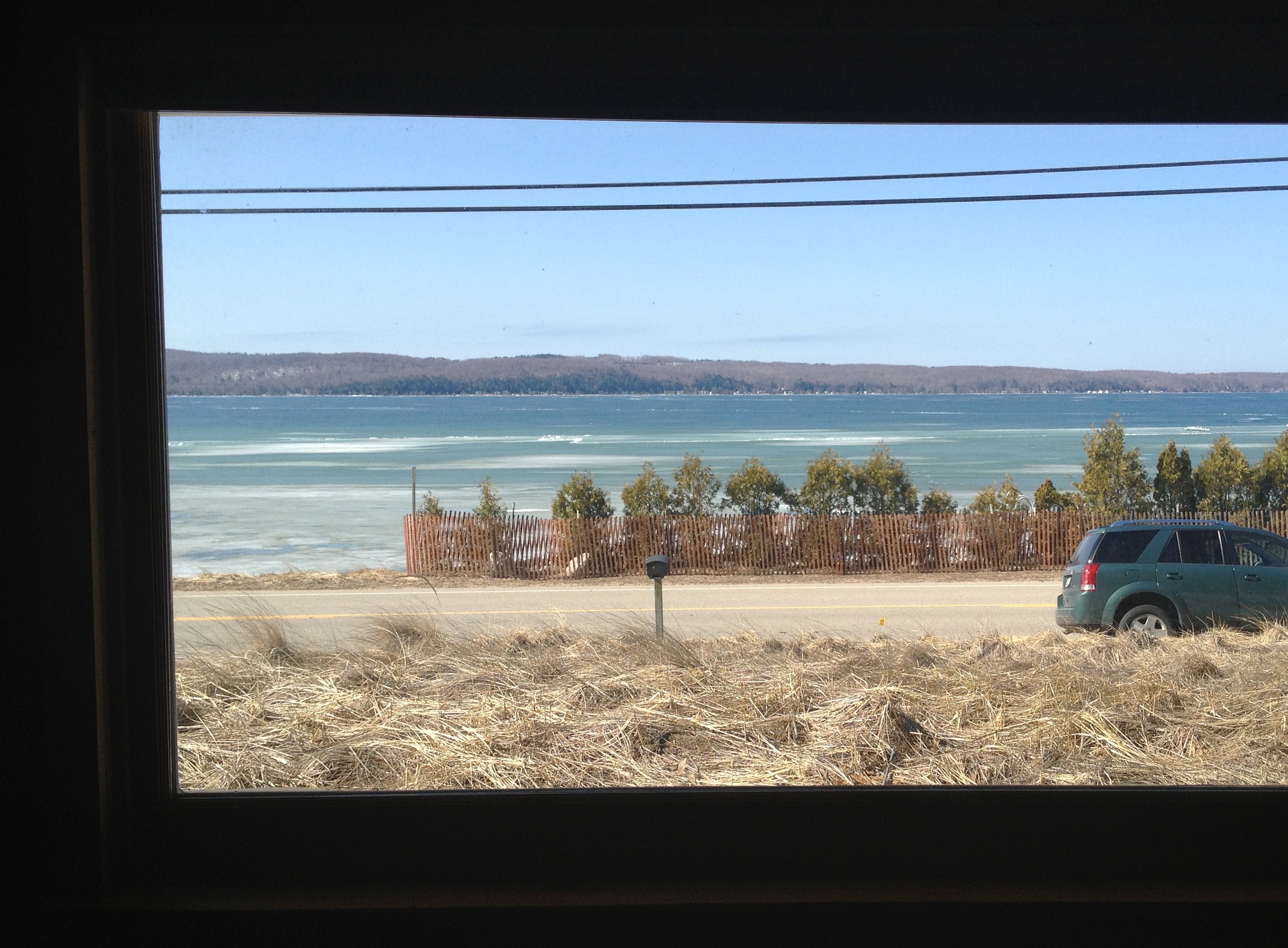
Beulah, Michigan, 10.44 am.

Our reader adds:

Actually this is the view from my dad’s window. Technically it is my window now, though it will never feel that way. My dad unexpectedly passed away on April 11. It has been devastating. When I was there this past weekend, it felt like the spring did not want to come because it knew my dad was not there to fish on the lake or work in his garden. As you can see from the picture, there is still ice on the lake.

My dad was only 70, and is gone far too soon. Here is a link to his obituary.

“A Deeper Kind Of Truth”

In a profile of Christian Wiman, Tom Bartlett unpacks the poet’s complex faith:

Wiman believes that our souls survive our deaths but finds the usual descriptions of heaven absurd. He gets bored in church. He is uncomfortable on his knees. He is uninterested in the noisy, noxious dispute between full-throated fundamentalism and the “clock-minded logic” of the New Atheists. “It’s just not the God I’m wrestling with,” he tells me. “[The atheists] want to prove—what?—that Noah’s ark didn’t happen? That there wasn’t really a garden and a talking snake? Fine.”

For Christians, the resurrection is the climax of the Bible, the hinge that holds it all together. When asked if he believes that the son of God, the Word made flesh, was actually crucified and placed in a tomb only to rise again after three earthbound days, Wiman glances up at the ceiling of the perfectly quiet conference room in the stylish offices he will soon vacate. His eyes close behind his rectangular glasses. It’s probably unfair to ask a poet and a conflicted Christian, a man who writes carefully and slowly and wonderfully, to opine off the cuff about a topic so weighty. He does believe it, he says, though not in the same way he believes in evolution or in the fact that the earth revolves around the sun. It is a different sort of belief, a deeper kind of truth. Finally, he finds the words: “I try to live toward it.”

Read John Williams’ Q&A with Wiman here. Recent Dish coverage of Wiman here.

Face Of The Day

About Face BEST 008

Sage Sohier describes the impetus for her project About Face, portraits of people with facial paralysis caused by either Bell’s palsy, tumors, strokes, accidents, or congenital nerve damage:

Most people I photograph are acutely aware of their imperfections and try to minimize them. Some have confided in me that, in their attempt to look more normal, they strive for impassivity and repress their smiles. They worry that this effort is altering who they are emotionally and affecting how other people respond to them. While most of us assume that our expressions convey our emotions, it seems that the inverse can also be true: our emotions can, in some ways, be influenced by our facial expressions.

(“8-Year Old Girl with Brown Hair” from the show About Face, at the Foley Gallery in New York, April 17 – May 24.)

The Geography Of The Good Life

Damon Linker, in an otherwise glowing review of Rod Dreher’s The Little Way of Ruthie Leming, admits this hesitation about the book’s message:

If you already live in the heartland, the message is to stay. If you come from the heartland and have left, the message is to return. But what if you’re one of the tens of millions of people who can’t stay in or go home to the heartland because your home — your roots — are in the BosWash corridor of the Northeast or the urbanized areas of the West Coast? …

If he’s a consistent localist, he should tell me to put down roots and immerse myself in community where I am — or perhaps in my “hometowns” of New York City and Fairfield County, Conn. But is this even possible in a place where paying my mortgage and other bills requires that my wife and I — like my equally striving neighbors — devote ourselves to high-stress work during nearly every waking hour of our days? If I were independently wealthy, perhaps the good life that Dreher describes would be a possibility in the Philadelphia suburbs. But alas…

Dreher’s response:

[M]aybe the lesson is that the good life is not possible in the Philadelphia suburbs, or any place where in order to keep your head above water, your job has to own you and your wife, and it keeps you from building relationships. There are trade-offs in all things, and no perfect solution, geographical or otherwise. Thing is, life is short, and choices have to be made. It’s not that people living in these workaholic suburbs are bad, not at all; it’s that the culture they (we) live in defines the Good in such a way that choosing to “do the right thing” ends up hollowing out your life, leaving you vulnerable in ways you may not see until tragedy strikes.

The life Ruthie lived is a compelling alternative, the witness of which changed my heart. And like the Good Book says, “Where your treasure is, there will your heart be also.”

Watch Rod’s Ask Anything videos here, hereherehere and here.