The Beginnings Of Upscale Bud, Ctd

Marijuana meets the farmer’s market:

Northern California’s first pot farmers’ market is like most other farmers’ markets, except you buy weed instead of kale and there’s the possibility you’ll go to prison – which gives visits to the Organicann Harvest Market in Sonoma County a bit of an edge this chilly morning.

It’s not the country’s only cannabis market:

[As public policy analyst Dominic] Corva notes, a similar indoor bud market has existed in Tacoma, Washington since 2010. Scattered reports indicate sporadic markets have also been held elsewhere in California and Washington as well as in Arizona– all symptoms of the normalization of the commodity, he said. And part of that normalization includes a new demand for pot grown locally, sustainably, in small batches, outdoors, and rather cheaply; a key draw at the Organicann Market. “Sungrown” or outdoor marijuana, is making something of a comeback in California’s medical scene, watchers say.

Indoor-grown pot has dominated stores for about a decade, because it tends to be more potent, pretty, and fragrant, while outdoor weed is reputedly weaker, weathered and less pungent. But outdoor growers and certain dispensaries have rebranded it, offering “sungrown” cuts that compete with indoor, if not on looks, then on price, potency and carbon footprint.

Previous Dish on the upscale marijuana market here.

Keeping Data On Doctors

Ford Vox wants doctors to embrace technologies, like those in the above video, that encourage hand-washing:

I attend meetings every week, some of which recur on the same day and at the same time. Yet without the beep from my phone’s calendar, I would often be late or absent. Similarly, doctors know what they are looking for in the tests they order for patients, but it still helps when lab reports “red-flag” abnormal results. I’m not insulted when the lab publishes the normal range of creatinine alongside my patient’s value, even though I have many years of experience assessing these numbers. I’m not demeaned when the pharmacist calls to ask about a potential drug interaction in a prescription I have written.

A nudge to remember to wash hands should be equally unobjectionable.

A Natural Solution To Bed Bugs

It’s been rediscovered in pre-war scholarship:

For years, people in Eastern Europe’s Balkan region have known that kidney bean leaves trap bedbugs, sort of like a natural fly paper. In the past, those suffering from infestations would scatter the leaves on the floor surrounding their bed, then collect the bedbug-laden greenery in the morning and destroy it. In 1943, a group of researchers studied this phenomenon and attributed it to microscopic plant hairs called trichomes that grow on the leaves’ surface to entangling bed bug legs. They wrote up their findings in “The action of bean leaves against the bedbug,” but World War II distracted from the paper and they wound up receiving little attention for their work.

After doing new tests based on the old report, researchers have confirmed the leaves’ effectiveness and are already trying to fabricate synthetic surfaces that mimic their entrapping properties. Video demonstration here.

Paintings Get The TSA Treatment

Suspecting that an Italian fresco at the Louvre contained hidden images, art specialists turned to body scanning technology:

To start, the researchers tried several techniques that included X-ray radiography, X-ray fluorescence imaging, infrared photography, infrared reflectometry and UV fluorescence. None of them showed anything unusual. Then they used terahertz spectroscopy, better known as the technology in modern airport body scanners.

“We could not believe our eyes as the image materialized on the screen,” Jackson told the American Chemical Society…. Underneath the folds in one of the men’s tunics the scientists saw an eye, a, nose, and a mouth. They think this mystery man was painted in a Roman fresco that dates back thousands of years. He just happened to be in the wall that was later used for the painting in the 1800s.

Woody Guthrie, Novelist

woody_guthrie

Larry McMurtry reviewsbook written by the legendary folk singer:

House of Earth was completed in 1947 but discovered only recently. It is a novel about farming; there aren’t many such. The one great one, Edith Summers Kelley’s Weeds, was reprinted not long ago by the persistent professor Matthew J. Bruccoli, who was given it by an astute bookseller. It’s a great book, and House of Earth isn’t, though it is powerful. It’s a serious effort to dramatize the struggles of a young couple, Tike and Ella May Hamlin, who try to make a living as farm laborers in the most unforgiving years of an equally unforgiving place: the Texas Panhandle in the 1930s.

His conclusion? Stick with Guthrie’s songs:

Woody Guthrie wrote a fair amount, in letters, diaries, in journals, and on random pieces of paper. But it is not as a writer that we revere him, or that so many of his contemporaries and peers beat a path to his door or to his hospital bed—Bob Dylan, Pete Seeger, Phil Ochs, John Mellencamp, Bruce Springsteen—and my own son and grandson now. His genius was song, and House of Earth is a bit of an oddity, though certainly a readable one. It is the apprentice work of a man who became great in his real calling, his craft, his sullen art, as the poet Dylan Thomas would say. Are we glad to have it? Sure. Would we trade any of the best songs for it? No way.

(Photo: Woody Guthrie in 1943, via Wikimedia Commons)

A Defense Of Vengeance

Multiple People Injured After Explosions Near Finish Line at Boston Marathon

In an NPR interview, Fordham University law professor Thane Rosenbaum elaborated on the thesis of his new book, Payback: The Case for Revenge:

Most people think that eye for an eye suggests bloodthirstiness. What it really means is exactness. What it essentially means – and we get this from the Old Testament and, of course, in Hammurabi’s Code – that when a moral injury is created, a debt is created, and then payback is required, but it has to be specific. It has to be proportionate. And all an eye for an eye means is a way to prevent disproportionate revenge. Disproportionate revenge are blood feuds, recycling of vengeance, the Hatfields versus the McCoys.

Through the natural history of our species, we were able to manage revenge through tribes and individuals because people knew what enough – what was enough to be satisfied. And that means that when one loses an eye, they’re entitled to receive no more than an eye, but also no less than an eye. And in our system, unfortunately, with plea bargains, we’re very often shortchanged, and we’re constantly paying back less than an eye.

In another interview, Rosenbaum argues that to under-punish “is a kind of moral violation that we should find intolerable”:

I write about the woman in Iran who was blinded by a classmate, with acid thrown in her face. Originally the sentence was that a doctor would put acid in the eyes of the person who did that—truly an eye for an eye. This woman has been blinded and disfigured for the rest of her life, and why should the other person not experience the same thing? In the end, both the court and she decided not to go through with that remedy. Some people were relieved. But I think it at least sends a message that she was entitled to that.

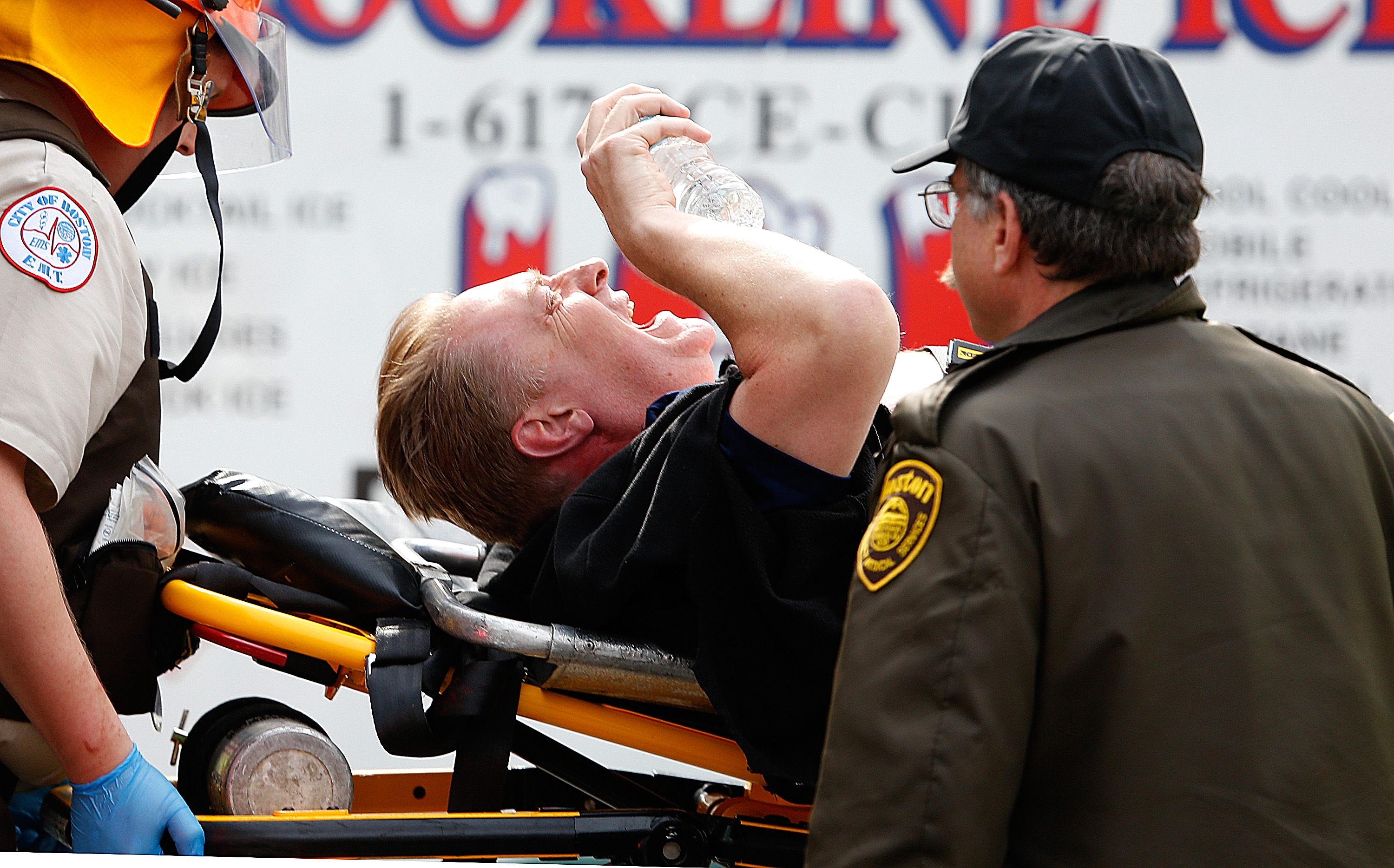
(Photo: A man is loaded into an ambulance after he was injured by one of two bombs exploded during the 117th Boston Marathon near Copley Square on April 15, 2013 in Boston, Massachusetts. Two people are confirmed dead and at least 23 injured after two explosions went off near the finish line to the marathon. By Jim Rogash/Getty Images)

“Why I Might Become A Gay Republican”

A reader vents during tax season:

I’ve always wondered how any self-respecting gay man (or woman) could ever support the Republican Party. But a series of recent events in my personal life momentarily made me think about it. My partner and I have a beautiful baby girl. We begged, borrow and stole (well, not the last thing) to have her via surrogacy, and she is the great joy of our life. We love being dads, and would love to have another child – a little brother and sister for our baby girl.

So, we started the process, which is about 18 months to two years until birth. The financial considerations were a huge part of it. It costs about $160,000 for a surrogacy in California, and one has to pull out all the stops to even have a chance of making it happen.

And unfortunately, our chances appear to have been kaboshed. Two weeks ago I got a call from my accountant. As a self-employed composer and writer, I always pay my estimate tax payments, and I did so last year. But I earned a lot as many of my projects came to fruition, and I unexpectedly have a very big tax bill. Unfortunately paying that bill will completely deplete all of our savings, which were meant for our second surrogacy. I’ve never minded paying tax before, but this time it hit hard. I worked extremely hard to make all that money.

At the same time I had a long chat with my partner’s niece at a family gathering. She is 22 years old, and has three children. The first was born when she was sixteen. She subsequently dropped out of high school. The State of California and the federal government gave her all sorts of benefits because she was a poor single mother, and so she decided to have some more babies.

The father of the second and third is the same, and they have built a nice little family together (he has another daughter too, by another woman). They both work full time jobs but earn very little because neither has a high school diploma. But there’s no ways they’d support their family without those government benefits. That’s what I thought …

I was astonished to learn she recently paid for a boob job, and a new iPad for her son’s birthday, and just bought her mom a TV set. She refers to her partner on Facebook as her husband, but they’re not legally married. I asked why, and she told me many of their single mother benefits would evaporate if they did.

She’s a sweet person and frankly, I don’t think she knows better. In her mind, she’s working hard to support her family. I don’t blame her given her lack of education. I blame the government for setting up benefits in such a way that they create these odd dependencies and actually inspire poor people who can’t afford it to have more children out of wedlock and NOT get married. Most of all, I’m angry because my huge tax bill is going to pay for this type of stuff, when actually I really need the money so I can have another baby in my lovely gay family.

Of course, most of the Republican Party base hates the fact I want to legally marry my partner and have more children with a surrogate. And so yes, right now I’d never ever vote for them. But if they dumped their anti-gay base, and came out with a lower taxes and responsible spending (not necessarily spending cuts) philosophy, I might well find it very tempting.

Yes, Of Course It Was Torture

[Re-posted from earlier today]

Until the CIA hands back its critique of the Senate Intelligence Committee’s report into the war crimes authorized by president Bush, we lack a report that carries institutional bipartisan weight on the interrogation practices in the era of Dick Cheney’s “dark side.” Until now, that is.
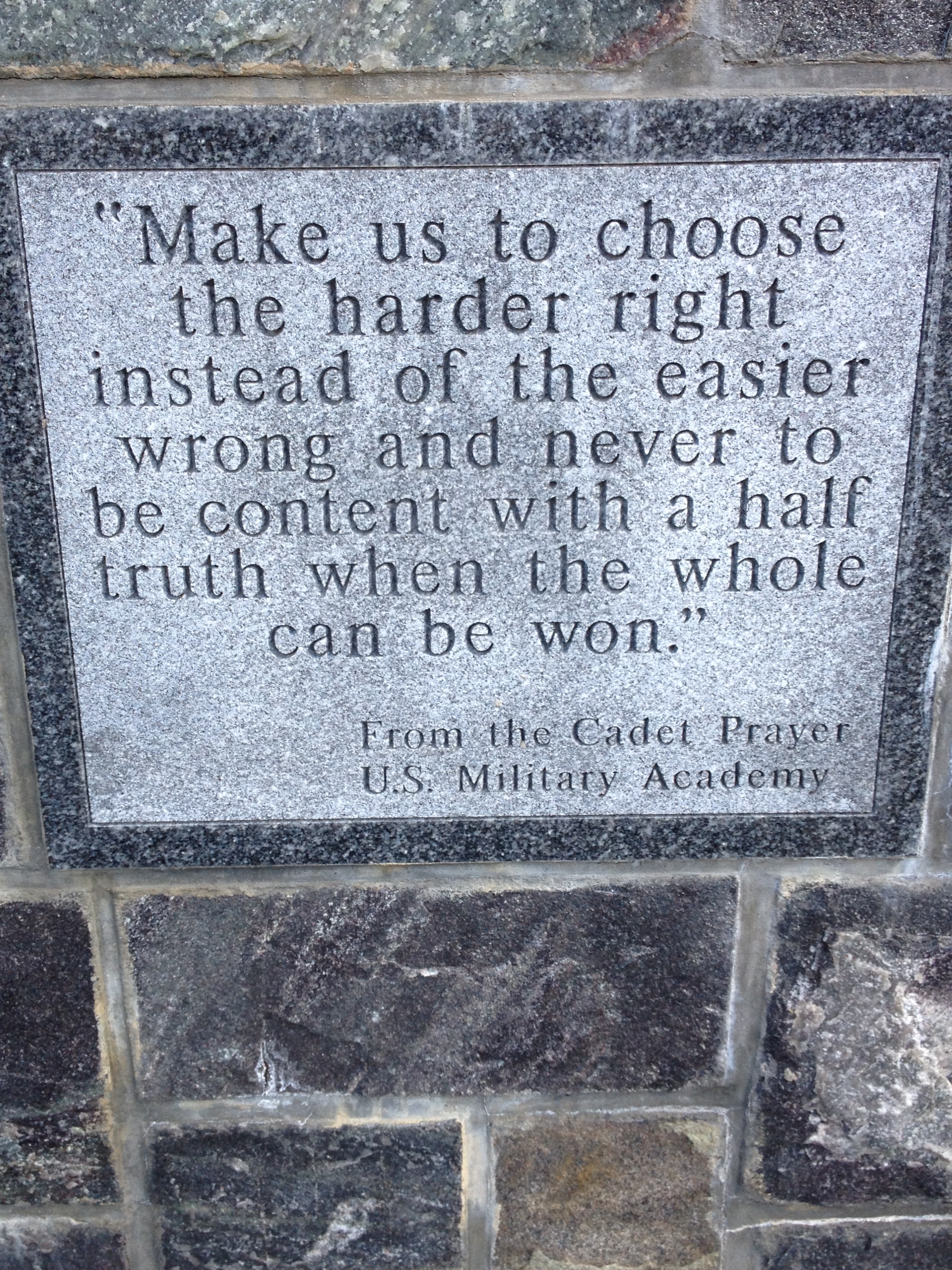
westpointplaqueThe Constitution Project’s non-partisan report on the facts – an exhaustive, yet gripping and lucid 575 pages – puts any lingering doubts to rest.

Some of the participants give it particular credibility: Asa Hutchinson was a key figure in impeaching president Clinton, an Arkansas congressman whose DEA nomination was backed by an overwhelming 98 – 1 in the Senate and who subsequently ran the largest division within Bush’s Department of Homeland Security.  Richard Epstein is one of the most doctrinaire libertarian conservatives you could hope to find. Thomas R Pickering was president George H W Bush’s ambassador to the UN, and American ambassador to both Russia and India. Judge William S. Sessions is the former Director of the FBI, under Reagan and Bush. They all signed off on the Constitution Project’s findings, which are inarguable, given the evidence provided in the report.

Those findings, to put it bluntly, are that for several years, the United States government systematically committed war crimes against prisoners in its custody, violating the Geneva Conventions, US domestic law, and international law. Many of these war crimes were acts of torture; many more were acts of cruel, inhuman and degrading treatment. All are federal crimes. None of those who authorized the war crimes has been prosecuted.

The report – which I urge you to read in full when you get the chance – dispassionately lays out all the possible legal definitions of torture (domestic and international) and then describes what the Bush administration authorized. The case is not a close one. Bush and Cheney are war criminals, as are all those involved in the implementation of these torture techniques. Perhaps the most powerful part of the case is an examination of what the US itself has condemned as torture when committed by other countries. Take one often lightly-dismissed torture technique – stress positions. The Bush administration’s own State Department has called these techniques torture:

The State Department criticized Jordan in its 2006 Human Rights report for subjecting detainees to “forced standing in painful positions for prolonged periods.” In its 2000, 2001 and 2002 reports on Iran, “suspension for long periods in contorted positions” is described as torture. In its 2001 and 2002 Human Rights report on Sri Lanka, “suspension by the wrists or feet in contorted positions” and remaining in “unnatural positions for extended periods” are described as “methods of torture.”

Flash forward to what the Bush administration authorized in one case:

While being held in this position [a prolonged standing stress position involving being shackled to a bar or hook in the ceiling by the detainee’s wrists, typically while naked, for a continual period of time, ranging from two to three days continuously, up to two or three months intermittently] some of the detainees were allowed to defecate in a bucket. A guard would come to release their hands from the bar or hook in the ceiling so that they could sit on the bucket. None of them, however, were allowed to clean themselves afterwards. Others were made to wear a garment that resembled a diaper. This was the case for Mr. Bin Attash in his fourth place of detention. However, he commented that on several occasions the diaper was not replaced so he had to urinate and defecate on himself while shackled in the prolonged stress standing position. When [prisoners fell] asleep held in this position, the whole weight of their bodies was effectively suspended from the shackled wrists, transmitting the strain through the arms to the shoulders.

The Bush administration is on record that this is torture. Now take one of the more famous techniques – waterboarding. Again, the Bush administration itself condemned the use of this barbarism when deployed by others and described it quite simply as torture:

In the section entitled Torture and Other Cruel, Inhuman, or Degrading Treatment or Punishment, the 2003 – 2007 Bush State Department Human Rights report on Sri Lanka described “near-drowning” as “torture and abuse.” In its Human Rights Reports for Tunisia from 1996 to 2004, “submersion of the head in water” is deemed “torture.” In the 2005 and 2006 Human Rights Reports for Tunisia, this practice is considered “torture and abuse.”

Domestic case law universally argues that waterboarding is unequivocally torture – and the report has a comprehensive set of cases to back it up. Dick Cheney has publicly admitted that he authorized this torture technique – and the report documents it occurred much more often than on the oft-cited “rare three” “high-value” prisoners. So Dick Cheney has conceded that he authorized acts which his own administration condemned as torture when committed by other countries, and which all international and domestic legal precedent defines as torture. One prisoner, as we know, was subjected to this torture technique 183 times.

I fully understand the immense difficulty any democracy has in holding its former war criminals to account. When such profound violations of human rights have occurred under the clear authority of the highest elected official in the land – who was re-elected after the torture was as plain as day – it remains very difficult to hold anyone accountable. The report assumes good faith on the part of all involved – and that the resort to torture was a function of a genuine, good faith attempt to keep Americans safe, after a uniquely horrifying act of terror on 9/11.

But none of that matters as a legal or ethical issue. What matters – and the law is crystal clear about this – is that torture and anything even close to torture be prosecuted aggressively. This is true especially when a government is claiming urgent national security in defense of its own crimes. The laws specifically rule out any defense on those grounds. So either we are a republic governed by the rule of law or we are not. Yes, there is discretion as to whether to prosecute any crime. But war crimes are the gravest on the books and have no statute of limitations. Prosecuting them is integral to adherence to Geneva, which itself is integral to the maintenance of the rule of law and of Western civilization itself. Either we set up a Truth Commission and find a way to pardon the war criminals, while establishing their guilt – which would at least give a brief nod to the rule of law. Or we have to take this report and the Senate Intelligence Committee’s findings as a basis for legal action for war crimes.

There is no way forward without this going back. And there is no way past this but through it.

(Photo: a plaque at West Point on the integrity of America’s armed forces through history – grotesquely betrayed by the Bush administration.)

The Daily Wrap

Explosions At 117th Boston Marathon Aftermath

Today on the Dish, Andrew zeroed in on the damning report on the Bush administration’s use of torture and took aim at Obama’s ongoing hypocrisy on Gitmo. He also urged stoicism in the face of tragedy in light of the events in Boston, remembered the skill and bravery in the work of Tim Hetherington, and allowed readers to ask Steve Brill anything.

In further Boston coverage, we heard from longtime residents in the aftermath of the bombing, Madrigal spotted a resource for synthesizing all the home videos of the explosion for evidence, and we found the most affecting images from yesterday and tracked down the status of one victim in particular.

In political news, Seth Stephens-Davidowitz challenged Nate Cohn’s dismissal of racism affecting Obama’s electoral fortunes, we said goodbye to Palestinian PM Salam Fayyad, and checked in with Venezuela after fresh, post-Chávez elections. Ross Pomeroy looked through studies on the psychological effects of terrorism as we pondered why these kinds of attacks are so rare in the US and considered options other than gun control to address violence. As Felix greeted the news of gold’s price drop, we surveyed the unemployment cliff and explored the consequences of an unfortunate Excel error in the Reinhart-Rogoff report. Later, Stephanie Mencimer reported on the LDS Church backing off on LGBT rights, Jonathan Cohn diagnosed the ills of daycare and we shined a light on nonprofit fraud.

In assorted coverage, a reader shared a deep personal narrative on hydrocephalus, we took a second look at the life of Zelda Fitzgerald, and reminisced on Thatcher’s faith. Readers asked Rod Dreher about misconceptions of Dixie, we exalted the many faces of David Bowie, and C. G. P. Grey filmed an explainer of Vatican City. We located a town where WiFi and radio are banned for the sake of the residents, readers shared some expertise on nature’s odder floral fragrances and we revealed last week’s VFYW contest in Karachi, Pakistan. Finally, we gazed into the eyes of a hologram in the Face of the Day, spent a moment in Apex, Nunavut for the VFYW, and received a timely rendition of the Star Spangled Banner in the MHB.

–B.J.

(Photo: A building on the campus of MIT in Cambridge, Mass. was lit up like an American Flag after two explosions went off near the finish line of the 117th Boston Marathon on April 15, 2013. By Matthew J. Lee/The Boston Globe via Getty Images)