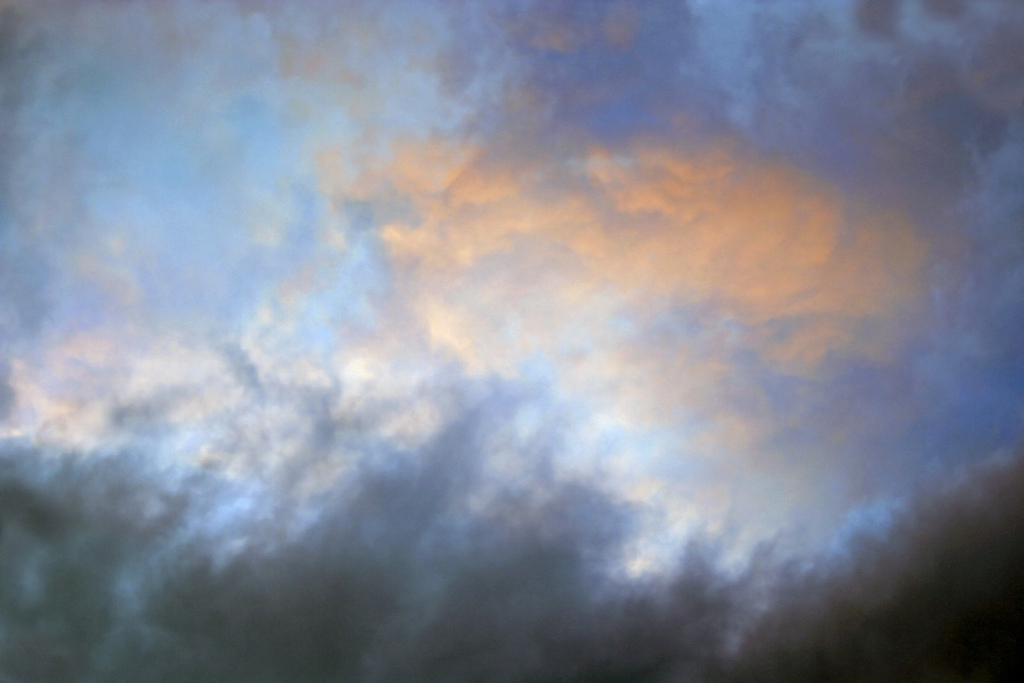
When The Gods Fell Silent

skygods

Rachel Aviv revisits Julian Jaynes’s eccentric, controversial 1976 book on human beings’ interior lives. The basics of Jaynes’s theory:

Jaynes began inspecting the world’s earliest literature for the first signs of human consciousness. “I started off like in a detective story,” he told a reporter for the Princeton radio station. As he moved backward through the centuries, he saw that consciousness, as he had defined it, disappeared somewhere between the Odyssey and the Iliad. Odysseus is a modern hero, introspective and deceptive. In the Iliad, the writing of which scholars date some three hundred years earlier, the characters are passive and mentally inert. They have no concept of a private mental space. The word “psyche” referred only to actual substances in the body, breath, and blood, which leave the warrior’s body as soon as he dies. The gods, emerging from mists or clouds or the sea, handle the warrior’s decisions. When Achilles accuses Agamemnon of stealing his mistress, Agamemnon insists he had no agency. “Not I was the cause of this act, but Zeus,” he explains. “So what could I do? Gods always have their way.”

Why modern understandings of consciousness emerged:

By roughly 1,000 B.C., earthquakes and overpopulation in the Mediterranean led to mass migrations, which caused an unprecedented degree of social upheaval, according to Jaynes’s speculation. The gods, who had provided guidance by transforming habit and intuition into speech, fell silent in the face of novel dilemmas. They retreated to the sky, where they gave ambiguous signs of their watchful presence. Humans were left alone, groping for answers. They still heard a voice, but they knew it was their own: they silently narrated their days, weighing options, imagining what others would think, making sudden pronouncements that they immediately doubted. Jaynes describes the muting of the gods as an excruciating loss from which we still have not recovered. “The mighty themes of the religions of the world are here sounded for the first time,” he writes. “Why have the gods left us? Like friends who depart from us, they must be offended. Our misfortunes are our punishments for our offenses. We go down on our knees, begging to be forgiven.”

(Photo by Flickr user Brenda-Starr)
Quote For The Day

“I’ve never known a writer who didn’t feel ill at ease in the world. Have you? We all feel unhoused in some sense. That’s part of why we write. We feel we don’t fit in, that this world is not our world, that though we may move in it, we’re not of it. Different experiences in our lives may enforce or ameliorate that, but I think if they ameliorate it totally, we stop writing. You don’t need to write a novel if you feel at home in the world. We write about the world because it doesn’t make sense to us. Through writing, maybe we can penetrate it, elucidate it, somehow make it comprehensible. If I had ever found the place where I was perfectly at home, who knows what I would have done? Maybe I would have been a biologist after all,” – Andrea Barrett.

Mumford And The Son

In an interview with Rolling Stone, Marcus Mumford expressed ambivalence about the label “Christian”:

Does he still consider himself a Christian? “I don’t really like that word,” he tells senior writer Brian Hiatt in his band’s first Rolling Stone cover story. “It comes with so much baggage. So, no, I wouldn’t call myself a Christian. I think the word just conjures up all these religious images that I don’t really like. I have my personal views about the person of Jesus and who he was. Like, you ask a Muslim and they’ll say, ‘Jesus was awesome’ – they’re not Christians, but they still love Jesus. I’ve kind of separated myself from the culture of Christianity.” Mumford emphasizes that while his spiritual journey is a “work in progress,” he’s never doubted the existence of God.

Josh Larsen tells the band’s religious fans to relax:

Can believers be too eager to anoint public figures who seem to speak the same language? (Branson Parler wrote about the dangers of this earlier on TC in regard to Denzel Washington.) Does giving a Christian stamp of approval to certain artists limit or diminish their art? If Marcus Mumford’s faith journey is a “work in progress,” as he describes it in the interview, isn’t there value in walking alongside him via his music? Aren’t we on similar journeys ourselves?

Defying Our DNA

David P. Barash outlines the convergences between evolutionary biology and existentialist philosophy. He argues that “science has not completely destroyed our understanding of free will, as so many critics contend”:

As descendants of both existential and evolutionary perspectives, we have the opportunity to assert ourselves as creative rebels. We may elect intentional childlessness. We may choose to be less selfish and more genuinely altruistic than our genes might like. We may decide to groom our sons to be nurses and our daughters to be corporate executives. I would go farther, and suggest that we must do such sorts of things—deny aspects of our own biological heritage—if we want to be fully human. The alternative—to let biology carry us where it will—is to forgo the responsibility of being human …  We cannot assume the lifestyle of honeybees, or Portuguese men-of-war. But such restrictions are trivial and beside the point: Within a remarkable range, our evolutionary bequeathal is wildly permissive.

Religion’s Creation Story

Adam Kirsch reviews Brent Nongbri’s fascinating recent book, Before Religion: A History of a Modern Concept, which argues that the “universality of religion is an illusion, caused by our way of thinking and talking about what are, in reality, vastly different spiritual mind-sets and practices”:

Before the Renaissance, Nongbri shows, Europeans had no concept of the world as divided among different, equivalent religions. Early Christians trying to make sense of Islam categorized it, instead, as a Christian heresy; they could not imagine a rival to Christianity, only a deformation of it. Likewise, ancient Greek and Roman gods were not thought of as comprising a religious system. They were held to be devils and demons, which maliciously led people astray from the worship of the one true God.

This kind of parochialism was shattered, Nongbri writes, by the Reformation, which led to internal divisions within Christianity, and by the Age of Exploration, which brought Christians face to face with radically different conceptions of God. At first, Europeans in South America continued to think of native deities as Christian devils. When Pizarro despoiled the temple of the Incan god Pachacamac, according to a sixteenth-century chronicler, “the Christians explained to the Indians the great error in which they had been enveloped, and that he who was talking in that idol was the devil.” Only gradually did Europeans come to conceive of non-Christian beliefs, including those of ancient Greece, as comprising religions with an integrity of their own.

Seeking A Substantive Spirituality

Andrew Byers reviews Lillian Daniel’s When “Spiritual But Not Religious” Is Not Enough, which makes the case that the spiritual life “gets rich and provocative when you dig deeply into a tradition that you did not invent all for yourself”:

Spiritual But Not Religious” is not a promotion of religiosity, legalism, or institutionalism. Nor is Daniel unworried about a meaningless ritualism that contents itself with going through the motions. Her intention, rather, is to present a spirituality thicker than the euphoric sensation brought on by a lovely sunset or by the smile of a giggling infant. Having labored for years amidst the trenches and pews of pastoral ministry, she knows all too well that a spirituality that can accommodate sunset hues but not cancer, grinning babies but not wails in the night, is woefully inadequate for the realities of an ex-Eden world.

The Spiritual/Not Religious category is not only insufficient for our sin-streaked realm; it is also grossly unoriginal. A spirituality divorced from communal life and eviscerated of a deep tradition is a predictable product of secular American consumer culture. It’s custom-made, says Daniel, for a “bland majority of people who find ancient religions dull but find themselves uniquely fascinating.”

Brushstrokes For A Better Tomorrow

John_Everett_Millais_-_Christ_in_the_House_of_His_Parents_(`The_Carpenter's_Shop')_-_Google_Art_Project

Ed Voves highlights a new exhibit at the National Gallery of Art, Pre-Raphaelites: Victorian Art and Design, 1848–1900, about the innovative painters who “dreamed of reaching a better future by reviving the values of the past, especially of the Middle Ages”:

The three founding Pre-Raphaelites – John Everett Millais, Dante Gabriel Rossetti and William Holman Hunt … , idealistic art students in 1848, watched as political revolutions swept across the continent of Europe. They dreamed of a revolution too, but an aesthetic one inspiring a more equitable society for Britain… The Pre-Raphaelites shared several treasured ideals, but their painting styles varied greatly. The two transcendent themes, especially in their early work, were “truth to nature” and the power of religious faith. They aimed to depict the natural world with great fidelity, while evoking spiritual values as medieval artists had done.

(Image: John Everett Millais, “Christ in the House of His Parents,” 1849, via Wikimedia Commons)

Divisions In The Glass-Half-Empty Crowd

Theodore Dalrymple separates pessimists into two distinct groups:

Pessimists are of two types, the catastrophists, that is to say the types who look up in the starry heavens and see (metaphorically) only asteroids in the sky racing towards us to wipe us out as the dinosaurs were wiped out; and existential pessimists, that is to say those who see dissatisfaction as the permanent condition of mankind because of his inherent makeup, his contradictory desires and emotions, dissatisfaction that is perfectly compatible however with a great deal of enjoyment of life. I am a pessimist of the latter kind.

The former kind of pessimist, those who foresee inevitable universal collapse, destruction, death by epidemic, and so forth, have no sense of humor, or at least of irony. For them, the furrowed brow and the shoulder weighed down by care are signs of intellectual and moral seriousness, the sine qua non genuine concern for humanity and (God preserve us) the planet. Like catastrophe itself, they are not much fun.

The existential pessimist is light-hearted, for he knows that human life is not perfectible, and can therefore enjoy what it has to offer without any sense of guilt that he is not spending his every waking hour averting disaster or bringing perfection about. He does not deny that many diseases currently incurable will one day change their status and that this is a good thing, for taken in the round more life is better than less; but neither does he expect that, when formerly incurable diseases have become curable, human complaint and dissatisfaction will become things of the past.