The Evangelical Who Tackled AIDS

Michael Specter eulogizes C. Everett Koop, the late surgeon general under Reagan:

Koop turned out to be a scientist who believed in data at least as deeply as he believed in God. And he proceeded to alienate nearly every supporter he had on the religious and political right. To fight the growing epidemic of AIDS, Koop recommended a program of compulsory sex education in schools, and argued that, by the time they reached third grade, children should be taught how to use condoms. He did not consider homosexuality morally acceptable—and he never changed his view about that. But he understood that viruses have no religion or sexual orientation and that H.I.V. was a virus. He campaigned vigorously against smoking in public spaces, saying that tobacco should be eliminated from American society by 2000. He was the public official to state categorically that second-hand smoke causes cancer. Tobacco companies—and Jesse Helms, their biggest congressional ally—could hardly believe Koop’s treachery.

Cord Jefferson has more on Koop’s critical approach to AIDS:

In an effort to help cut through a lot of the bigoted nonsense, in 1988 Koop authored an informational pamphlet called “Understanding AIDS” and mailed it to all 107 million households in the United States. Despite his personal Christian conservative beliefs, Koop’s pamphlet dispatched a lot of paranoid misinformation swirling around AIDS in favor of frank talk about sex and prophylactics. For instance, while “Understanding AIDS” advocated abstinence and monogamy as “safe behaviors,” it also heralded condoms, recommended early childhood sex education, and suggested Americans do whatever they could to help AIDS patients in need “without fear of becoming infected.” What’s more, all of this came during a time when President Reagan himself would hardly mention AIDS, let alone say “the rectum is easily injured during anal intercourse,” as “Understanding AIDS” noted.

Are Doctors Overpaid?

Yglesias believes so:

The last time the OECD looked at this (PDF), they found that, adjusted for local purchasing power, America has the highest-paid general practitioners in the world. And our specialists make more than specialists in every other country except the Netherlands. What’s even more striking, as the Washington Post’s Sarah Kliff observed last week, these highly paid doctors don’t buy us more doctors’ visits. Canada has about 25 percent more doctors’ consultations per capita than we do, and the average rich country has 50 percent more. This doctor compensation gap is hardly the only issue in overpriced American health care—overpriced medical equipment, pharmaceuticals, prescription drugs, and administrative overhead are all problems—but it’s a huge deal.

Doctors aren’t as politically attractive a target as insurance companies, hospital administrators, or big pharma, but there’s no rational basis for leaving their interests unscathed when tackling unduly expensive medicine.

In a follow-up, he suggests decreasing the cost of medical school:

Making medical education much cheaper in exchange for pushing doctors’ reimbursement rates down should be a total no-brainer, and the exact level of financial assistance could be tied to assessments of needs of particular kinds of doctors (i.e., more generous terms for GPs than plastic surgeons).

The View From Your Window Contest: Winner #142

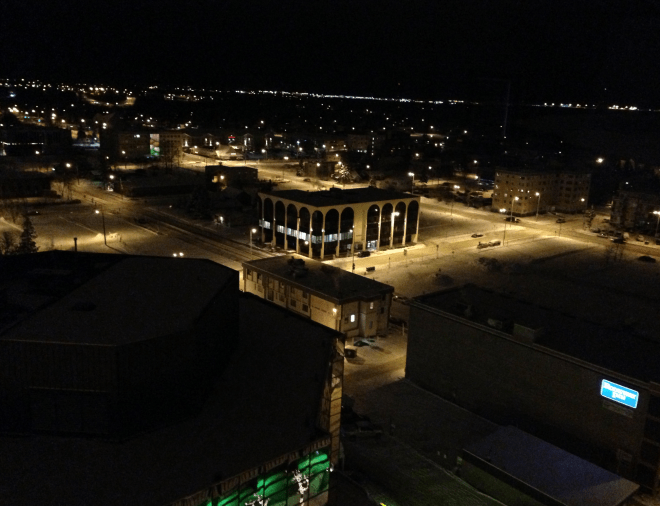
vfyw-ds

A reader writes:

Snow. US. Flat. Midwest-looking. How about Kansas City, MO, post blizzard?  I realize this isn’t precise enough to win in all likelihood, but why not try.

Another writes:

Well this is my first entry in the window contest and pretty sure I am off on the city and most likely the state, but I am sure it is in the northern portion of the United States, as there is snow and pine trees.  Looks like the West, as there seems to be a decent amount of sprawl.  Possibly next to an airport, as there looks to be a Hilton or Marriot in the distance and a Rodeway Inn on the right. So I am going to go with Boise, Idaho.  Hope someone gets this one; it wasn’t easy with a night-time picture.

Another:

This is one of too many grassy knoll cities in the Rust Belt. Grassy knolls replacing older buildings of character knocked down in a thoughtless enthusiasm for the new that never arrived to fill the spaces left behind. So a piece of architectural dreck fills the center of this photo with plenty of parking to spare. Probably isn’t South Bend, but I’ve been there and with the snow and USA cars this week’s VFYW shines as sister city to that strange place, now existing on the crumbs thrown by its neighbor, Notre Dame University.

Another:

Issy-les-Moulineaux, France? I was there for a conference years ago and it was the first place that popped into my head when I saw the photo. Post-industrial suburban Paris. Can’t wait to learn where it really is!

Another:

Your profile caught my mind and heart and i cherish you so much. Please contact me so we can know each other better and i can send you my pictures for you to see more of me. I have something about me i will like to share with you. Distance, religion, skin color or other geographical difference has nothing to do with a sincere heart that seek for love and care. I will be wait you email, till then remain bless and take good care of yourself as i will always think about you because you caught my fantasy and passion.

Nice try, spam bot. Another:

Oh, goodie. It’s dark outside. There goes narrowing it down by landscape. But just because it’s nighttime doesn’t mean it’s impossible. There’s plenty of information to quickly narrow it down to city, state and country, namely the fact that a) there’s snow on the ground and b) there’s a giant Rodeway Inn sign in the lower right-hand corner.

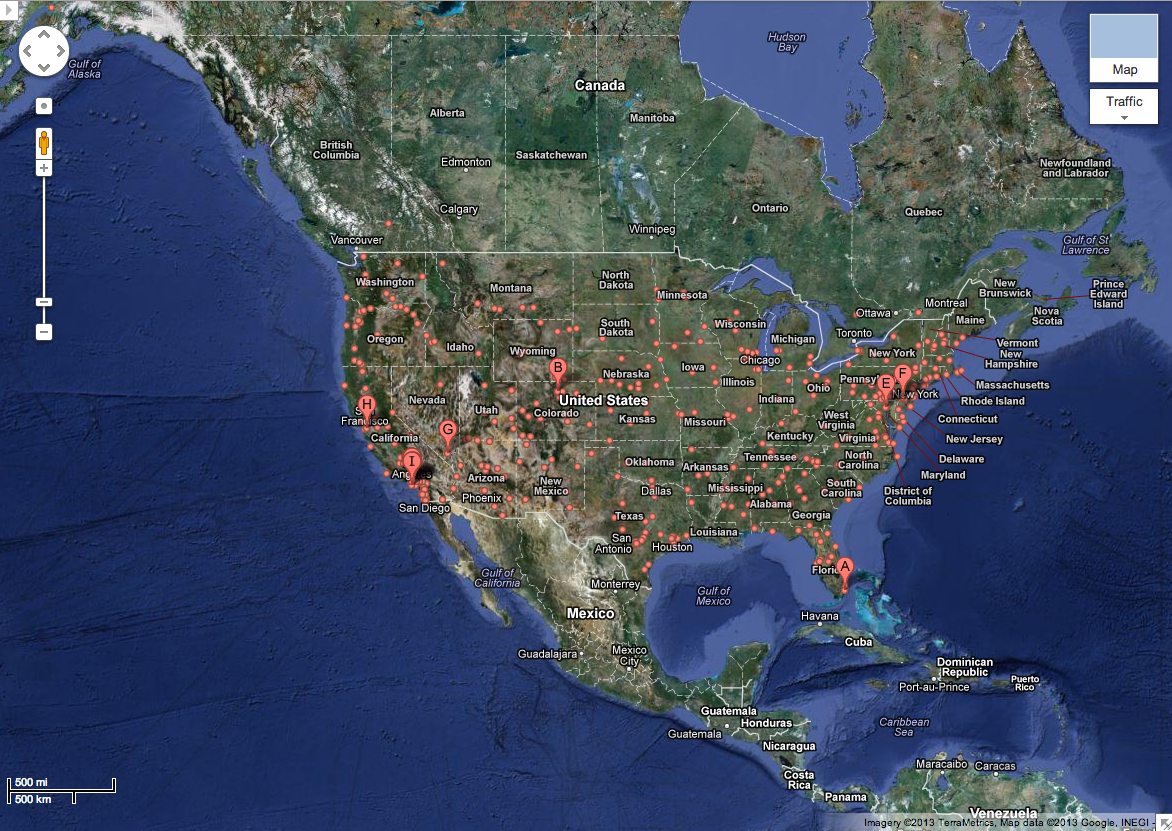
Another lays out all the possible Rodeways:

image

That should make it easy right? Just find the right Rodeway Inn?

Another:

I give up. After looking at dozens of Rodeway Inns via Google Maps, I’m just going to pick one at random that I haven’t looked at yet: Cedar Rapids, Iowa.

Another:

Having just spent half an hour looking at photos of Rodeway Inns across the United States, I have to assume that this week’s VFYW is some very subtle “native advertising.”

He’s onto us. Another nails the right Rodeway:

Woo-hoo! Alaskan here, born and bred (now DC-bound), and first time VFYW contest entrant!

I knew this was Anchorage at first glance – not really sure how. The Rodeway Inn sign was an easy confirmation. The white arched building in the middle is home to the Alaska Legal Services Corporation (ALSC), a “nonprofit law firm established in 1967, that provides free civil legal assistance to low-income Alaskans.” The multi-colored lit stairwell is the home of Anchorage Dept of Health and Human Services, which I’m guessing is to provide some cheer in the dark Alaskan winter. The rest of it just has the look of old-school downtown Anchorage: flat, snowy, uncrowded by either people or buildings.  Across from the Roadway Inn is the backside of the venerable Captain Cook Hotel, where the photo was obviously taken from. This is where my parents stayed in Anchorage when they were feeling flush – we traveled up from Kenai once a month or so. A little history here from the hotel website:

An earthquake in 1964 leveled much of downtown Anchorage, and many in town were hesitant to rebuild. Walter J. Hickel was more optimistic. The Kansas native—who had arrived in Alaska in 1940 at the age of 20, with only 37 cents to his name—had already been investing in Alaska’s future for decades, building hotels and business centers as well as serving as Alaska’s governor, all with an eye to making Alaska the American gateway to the Pacific Rim. The Hotel has prospered and expanded with the times: the first Tower opened in 1965, followed by Tower II in 1972 and Tower III in 1978.

More from another reader:

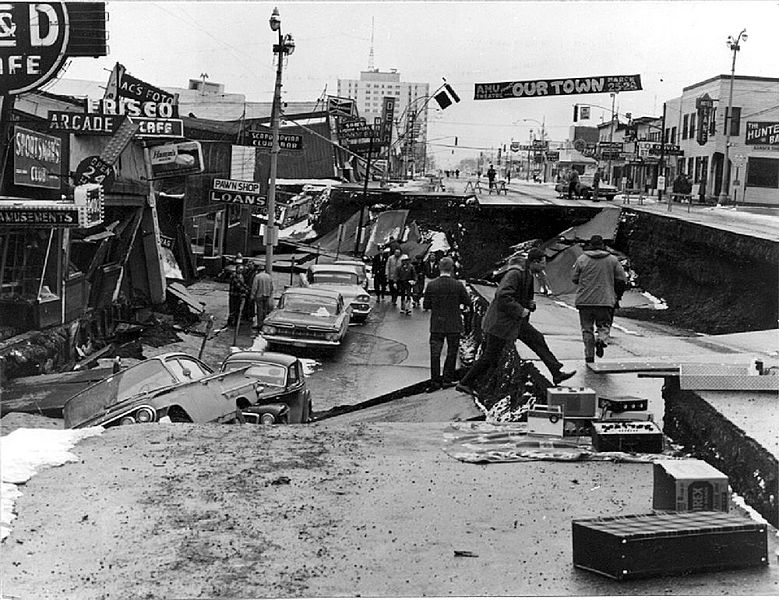
779px-AlaskaQuake-FourthAve

The Captain Cook’s developer built the hotel in 1965, in the wake of the Great Alaskan Earthquake of 1964 (also known as the Good Friday Earthquake) that measured 9.2 on the Richter scale and destroyed much of the city, not to mention other parts of Alaska. The picture from the Wikipedia page was taken a few blocks away from the hotel’s location, to give an idea of the magnitude of the landslides that affected the city.

A lovely view of the restored city today:
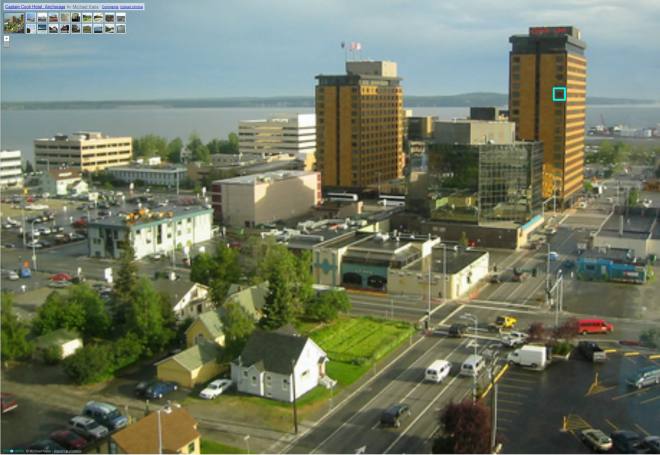
CCHotel1

Another:

Very easy VFYW this week … the Rodeway Inn sign is readable and there are only 150 of them in the world. Not too many of them are located in downtowns, so my wife found the right one quickly by googling “rodeway inn downtown”. Not sure of the exact floor, but we’re guessing 10th, since we’re a few floors above the top of the octagonal building across the street which looks to be about 7 stories. We’ve won before, so this is just for pride.

Another:

I traveled to Anchorage for the first time this past Christmas to visit my sick aunt. The city struck me as strangely empty and quiet, but I assumed this was due to it being a holiday. As the days passed, however, the quietness remained.

Another:

I’ve been showing your VFYW photos to my kids, ages 10 and 5, since the start of the contest.  It’s a great way to expose them to the rest of the world from our living room, and has led to some great discussions.  Unfortunately we haven’t recognized many of them.  However, what a thrill today as they both recognized this one as our hometown, Anchorage, Alaska!  The tip off?  The building in the background with the stairway lit with different colors.  That’s the Federal Building Annex at the corner of 8th and L Street.  The building across the street is the Benihana where we celebrated my daughter’s 10th birthday a few months ago.  The photo was taken from the Hotel Captain Cook, probably from about the 8th floor facing southwest.  The line of lights in the distance is the runway at the Ted Stevens International Airport.

Another gets down to street level:

Slide1

Another:

I have no interesting story about the Hotel Captain Cook or the Rodeway Inn.  I have never been to Anchorage.  I used a little good deduction to trip into the answer early, perhaps because I work in hotels and knew how to search.  I first tried hitting the Rodeway Inn website, but you can’t just pull up a list of all Rodeway Inns.  So after taking a first guess at looking up all Rodeways within 100 miles of Kansas City (snow, grids, open space, and you just posted that window view of Olathe, KS), I hit upon an idea.  I went to Trip Advisor, simply typed in “Rodeway Inn”, and looked at the pictures in the listings that appeared.  They aren’t alphabetical, but the Anchorage Alaska Rodeway came up early (page 2), and it looked about the size of the one in the window view.  Google an address, and that octagonal neighboring building was an immediate giveaway.

Another:

The VFYW was taken from the 10th or 11th floor of the east tower of the hotel Captain Cook looking southwest. The lights in the distance are on Russian soil.

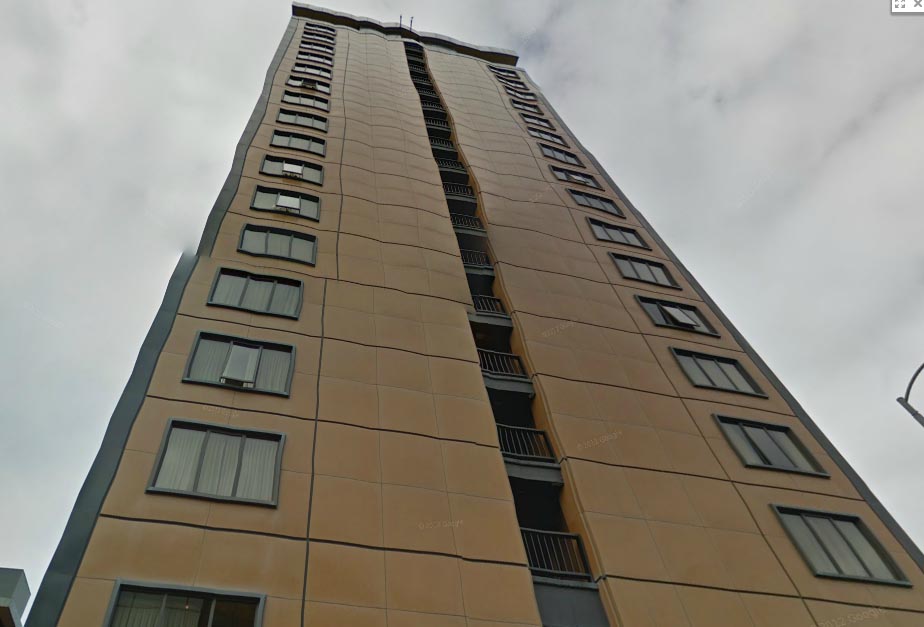
Heh. Another gets up close to the hotel:
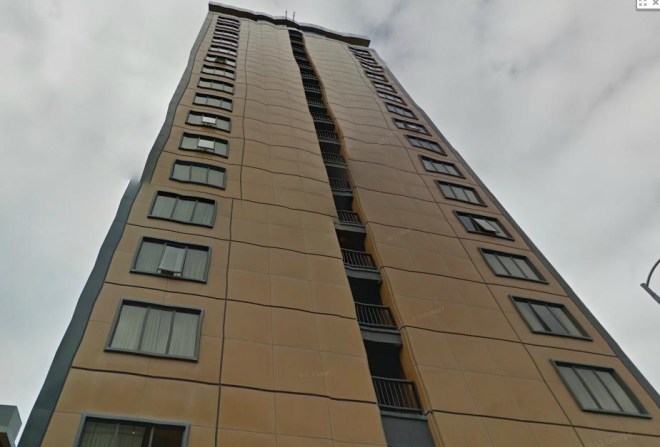
vfyw(2)

Another one of the hundred or so readers who answered Anchorage:

Greetings from Germany. It appears to be the higher of the two towers in the “Captain Cook” hotel. I can only guess as to the correct floor – I’ll go with the 12th floor. I don’t expect to win, as you must have a few readers in Anchorage who will probably have better guesses as to the right floor and/or room. But getting this for the first time ever totally made my day!

Another:

I’m happy just to finally identify a window, but I would be thrilled to win the contest, in part because the VFYW book contains one of my own winter shots. Incidentally, you also recently posted my “View From Your Blizzard” (Kitchener, Ontario). I’m going to try to make sure the next time I participate in any way with VFYW it does not involve snow.

On to the winner – the only reader who nailed the correct floor of the Captain Cook hotel (the actual room was 1778):

Curses, Andrew Sullivan, I have been so good about walking away from the contests in the past few months. But you got me this time with the Rodeway Inn clue. My OCD kicked in, and I was painfully trying to find a Rodeway Inn in one of the Northern states (flat, snow-covered), when my 8 yr old plonked on my lap and suggested Alaska. Smarter than I or kid’s intuition? Probably both.

It’s a view from the Hotel Captain Cook in downtown Anchorage – 939 W 5th Ave, Anchorage, AK  viewer99501. A view looking southwest from a corner room on the 17th floor? The hotel has 3 towers and my guess is attached. The building in the center of the frame is the Alaska Legal Services Building, and the lights on the horizon might be from the Ted Stevens airport.

My husband and I spent our honeymoon in Alaska – camping for 2 weeks in the Alaskan fall 10 years ago. But we just flew in and out of Anchorage without spending any time there. We were fortunate enough to get a cloudless view of Mt. McKinley, we met a bear in downtown Juneau, huffed and puffed on a gruelling hike to the Harding Icefield, watched brilliant blue glaciers cleaving with thunderous roars, and stayed up to catch the Northern Lights but never did. Such fun. This drab night view is such a clever pick for Anchorage, considering the characteristic stunning views one usually associates with the city, and Alaska in general.

This is just the second time in all these years that I have found the contest location. The first was the Balmora Lodge window in New Zealand, but I guess it does not count since I sent the entry to the wrong address.

I’ve still not signed up. It’s one of the first things I will do once I get a job; I now feel like a moocher when I am reading the Dish. Love the new layout, higher resolution VFYW Contest photos and the endless scroll. Good luck to you and the team. And thanks.

(Archive)
How Bad Will The Cuts Be?

Jonathan Cohn expects the sequester to hobble the recovery:

The recovery is already pretty weak. Taking money out of it, which is what the sequester cuts would do, would make it weaker. Non-partisan analysts, including those at the Congressional Budget Office and private firms like Macroeconomic Advisers, predict that the sequester cuts would reduce growth by anywhere from a half to a full percentage point in the next year. That would probably reduce the number of jobs in the economy by a few hundred thousand. The unemployment rate, which has been slowly dropping, would probably remain at around 8 percent.

Sharon Parrott highlights other painful cuts. Alex Koppelman, on the other hand, worries that the sequester won’t be catastrophic:

Obama made much of his reëlection campaign about the necessity of government and the good it does, and his second term will clearly be built on those themes. Important as it is to avoid the sequester going into effect, if he begins his final four years in office by painting doomsday scenarios that don’t actually come true, he may end up undermining everything he has to say about government before he even has time to really get started.

Suderman pounces on this type of argument:

That’s the real fear here: not that sequestration will result in terrible things happening, but that it won’t result in very much at all, that few will notice or be deeply upset by its effects, and that people will learn to live with a government that spends very slightly less than it was planning to over the next ten years (though still far more than it did for the vast majority of the last decade).

Release The Assassination Memos

162132935

I think my patience broke with the revelation that the Obama administration was more willing to give Butters some bullshit info on Benghazi than to give any ground on releasing the full, complete, original memos used to justify the assassination of Americans who have joined the Jihadist enemy. The cynicism was staggering. Those of us who supported Obama need to express our disgust and anger at this – especially those of us who have defended the drone program as, within key judicial and congressional constraints, sometimes the least worst option in keeping us safe.

This cannot be regarded as somehow a state secret. It divulges no plans; it just explains to American citizens the criteria by which their own president can kill them from the sky without any due process. If the torture memos could be released by this administration, as they were, so can these. And not just to some Congressional Committee – to all of us.

Here’s a question Rand Paul has asked of John Brennan and to which the administration has never given an answer:

Do you believe that the President has the power to authorize lethal force, such as a drone strike, against a US citizen on US soil, and without trial?”

What excuse does Brennan have for not answering this? I’m with a recent stellar Greenwald post on this. Until he does, he should be kept from his nominated post at the CIA. This is a core rupture of the Constitution – as core as the rupture of executive torture. It redefines the relationship between the executive and the people he or she serves. It makes our president judge, jury and executioner of any American citizen anywhere in the world, including the US. We already know that the executive seized a US citizen without charges under Bush-Cheney and tortured him into a physical wreck of a broken soul. Torture is always illegal and evil; self-defense in a just war isn’t. But if the war is against your own citizens, then the very least that those citizens deserve is a full accounting of the rationale behind such a disturbing power-grab.

The president promised more transparency on this in his State of the Union. He has not delivered yet. Maybe he will – but I cannot say I’m optimistic with John Brennan potentially running the CIA. But what staggers me is the transition from candidate Obama to president. Many of us thought this one was different; he understood the new era of mass information and social media; he grasped the need to communicate directly to Americans in all sorts of unconventional ways; he pledged to end the abuses of executive power under Bush and he promised to be the most transparent administration in history.

And yet when it comes to how he decides whether to kill you sitting in your living room, he won’t let you know the legal basis for it, or allow a check from another branch of government that is not just a rubber stamp. It’s unacceptable. And this much I know: the CIA has long held presidents hostage and after they literally got away with war crimes, the current CIA appears to be unaccountable to anyone. War criminals who destroyed the evidence of their own crimes, like Jose Rodriguez, strut on the national stage as if they are inviolable, utterly above the law and beyond the public’s scrutiny. Because they are.

It’s time for the president to remind them who pays their salaries. We do. And when the deepest constitutional protections created by the Founding Fathers against the temptation of tyranny are cast casually and arrogantly aside with a “trust us” piece of bullshit, it’s time to get angrier.

(Photo: U.S. President Barack Obama waves after speaking at an event at the Eisenhower Executive Office Building February 19, 2013 in Washington, DC. By Win McNamee/Getty Images)

Leading The Party In The Wrong Direction

Pareene Kornacki bets that Ted Cruz will hold back the GOP:

Cruz is now positioned as a major obstacle to the ideological modernization that the Republican Party is desperately in need of. If his brand of conservatism is treated as the gold standard of purity by the conservative media and conservative activists, Republican leaders will have a hard time moving the party away from its Obama-era orthodoxy. This could affect the calculations of Republican office-holders in the coming months, as Congress tackles immigration, guns and other issues on which the GOP is out of step with mainstream opinion.

Waldman’s take on the controversial new Senator:

A year or two ago, if you asked Republicans to list their next generation of stars Ted Cruz’s name would inevitably have come up. Young (he’s only 42), Latino (his father emigrated from Cuba), smart (Princeton, Harvard Law) and articulate (he was a champion debater), he looked like someone with an unlimited future. But then he got to Washington and started acting like the reincarnation of Joe McCarthy, and now, barely a month into his Senate career, we can say with a fair degree of certainty that Ted Cruz is not going to be the national superstar many predicted he’d be. If things go well, he might be the next Jim DeMint—the hard-line leader of the extremist Republicans in the Senate, someone who helps the Tea Party and aids some right-wing candidates win primaries over more mainstream Republicans. But I’m guessing that like DeMint, he won’t ever write a single piece of meaningful legislation and he’ll give the Republican party nothing but headaches as it struggles to look less like a party of haters and nutballs.

Eisenhower’s Revenge

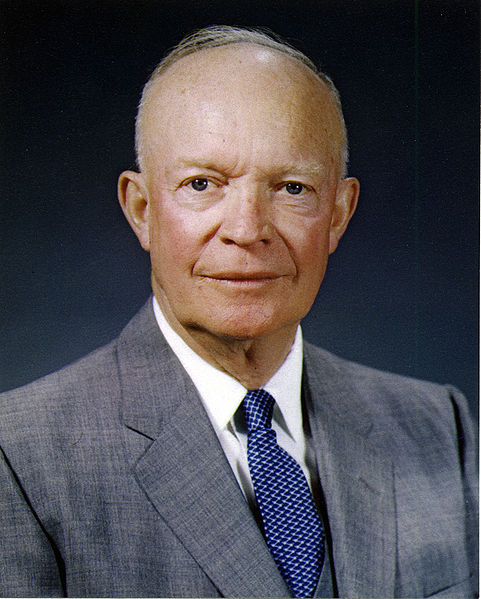
As the sequester looms, I have come to peace with it. It’s dumb, but it’s not a massive cut. It’s $83 billion, and half of it will come from the Pentagon. If you believe, as I do, that “defense” is massively over-funded and may even 481px-Dwight_D._Eisenhower,_official_photo_portrait,_May_29,_1959now be creating its own future enemies in Af-Pak and Africa to sustain its budgetary wants, then any way to bring it back to reasonable, non-hegemonic size is helpful.

More to the point, the Bush-Cheney years have destroyed the notion that the US military never makes mistakes, can never start a new Vietnam, and always has an exit plan if it invades and occupies a country (Bush and Cheney forgot theirs in their rush to find weapons that didn’t exist). Their wars – failed at worst, inconclusive at best, but indisputably budget-breaking – have shifted the country away from neo-imperialism for a while (unless the Greater Israel Lobby really can force the rest of us into a new war to keep Israel’s nukes the only game in the region).

And in a budget crisis, where the GOP is rightly demanding structural spending cuts, we have two big shiny objects to raid: Medicare, and defense. (Social security could be saved with minor tinkering.) Now if Americans were to choose between taking care of granny or policing the entire Pacific ocean for the indefinite future, I have a feeling they’d pick granny. And it turns out I’m not wrong:

In order to reduce America’s debts and deficits, more than twice as many voters said they would support defense cuts as said they would support cuts to social programs.

Forty-nine percent of respondents said they would support cutting military spending, while just 23 percent said they would support slashing Social Security and Medicare. An overwhelming majority, 69 percent, said they would oppose cuts to social programs.

The public wants cuts; and it wants them overwhelmingly from defense, rather than Medicare. So let the sequester begin. It’s the dumbest version of what the American people want – but with this Congress, dumb is as good as we’ll ever get. As for Medicare, it too needs major surgery. But Obama has pledged to cut it by the same amount as Bowles-Simpson over the next ten years. If a Republican president had said that, they’d be giving him a standing O. But this is the moderate Republican Obama – and there’s nothing more that the GOP base hates than a moderate Republican. Eisenhower would have no home in this party. He loathed its core elements more than perhaps any other Republican president apart from George H W Bush.

Green Shoots On The Right, Ctd

Two encouraging developments: the far right social conservative, Ken Cuccinelli, got raked over the coals for his extremism at a recent meeting with northern Virginia business leaders. They fear his Akin-Mourdock style could not just lose elections but scare investors from the state. Then – and yes, I know it’s not exactly ground-breaking – but Daniel Foster at NRO backs including the handful of people who comprise GOProud in the CPAC loony-right gathering. This quote managed to rustle up a smidgen of hope:

[O]ne of conservatism’s great intellectual strengths is that “conservatism” is a contested concept. If confabs like CPAC aren’t going to reflect the robust and vital internal debate about the present and future of conservatism, what are they good for?

It’s Policy, Stupid

Stuart Stevens, lead strategist for Romney’s 2012 campaign, rightly disagrees with the idea that Mitt lost because of social media. His organizational haplessness (yes, he was supposed to be the guy who knew how things worked) didn’t help, but it was his awful 1980s doctrines from a brain-dead party that brought him down:

In this fourth decade of the Internet, one of the original truisms is still true: Content is king. The ugly, clunky Drudge Report site still harvests record numbers of eyeballs because it serves up a hearty meal at a good price: free. The content rule is true across mediums. How many graphic makeovers and relaunches has CNN attempted to arrest its slow slide? …

So it is in politics. A Republican renaissance will inevitably be driven by policy. Parties must constantly reinvent themselves and prove their relevance to voters. Two of the biggest brains — and hearts — of the Bush era, Michael Gerson and Peter Wehner, laid out the challenge brilliantly in an essay in the latest Commentary magazine (“How to Save the Republican Party”). Republican media strategist and commentator Alex Castellanos has launched a search for solutions called New Republican (NewRepublican.org). These efforts are exactly what Republicans need as we regroup and plan for the future.

Justin Green seconds Stevens:

One part of the Obama campaign that drove conservatives – myself included – crazy was “Julia,” a timeline of what a young woman could expect from the government over the course of her lifetime. It was maddening seeing the Obama campaign basically saying: “Hey, government’s got this.”

But what was far more maddening was the utter lack of a concrete response from the Romney campaign. Making fun of “Julia” is one thing. Saying how Republican policies better help women than policies offered by Democrats is quite another. That’s where Romney failed, and it’s why no social media overhaul can compensate for policies that fail to address the basic needs and desires of the American electorate.