
Denver, Colorado, 8.57 am
Denver, Colorado, 8.57 am
Julie Bindel rails against legalized prostitution:
A third of Amsterdam’s bordellos have been closed due to the involvement of organised criminals and drug dealers and the increase in trafficking of women. Police now acknowledge that the red-light district has mutated into a global hub for human trafficking and money laundering. The streets have been infiltrated by grooming gangs seeking out young, vulnerable girls and marketing them to men as virgins who will do whatever they are told. Many of those involved in Amsterdam’s regular tourist trade — the museums and canals — fear that their visitors are vanishing along with the city’s reputation.
Like me, Daniel Nexon has mixed feelings:
This is one of those issues that I can’t sort out of my views on. My inner libertarian tells me that the state does not have the right to prohibit the exchange of money for sex. My inner pragmatists looks at the experience of some European countries and says, more or less, “that’s nice in theory, but in practice legalization just makes things worse.” My inner lefty responds, “but that’s because of inadequate regulation — if the regulators, parliamentarians, and police did their jobs than selling sex would be little different than offering personal training or non-sexual massage services.” My inner old-school feminist chimes in by pointing out that prostitution is the ultimate in objectification. My inner new-school feminist champions sexual autonomy and de-stigmatizing sex work. And on it goes. Of course, the internet isn’t much help in sorting out fact from propaganda.
I can’t help but note that a third of the brothels, as it were, have been closed. So some regulation is clearly going on. And Amsterdam’s problem may be its uniqueness – attracting far more scumbags than would be the case if sex work were more broadly available and legal. But that’s from where I’m sitting. This is a pragmatic decision, it seems to me. The Dutch will figure it out. They are among the sanest people on the planet.
Pivoting off Paul Elie’s recent book, Reinventing Bach, Stefan Kanfer critiques the notion that new ways of listening to music have made the concert hall obsolete:
Within a few decades, recordings have gone from a metal needle in a plastic groove to a laser reading data from a polycarbonate disk to microchips stored in devices like the space-saving iPod and MP3 formats. Each invention made the listener’s life a little easier. Out went the bulky tweeters and woofers, the amplifiers and pre-amps. In their place came noise-canceling headphones. The trouble is, each invention brought with it a lower sound quality. Elie considers this is a small price to pay for progress. Live music, in his view, now “seems insubstantial and elusive, made somewhere once for a little while and then allowed to go away.” Committed concertgoers know that’s not the case. There’s no substitute for authentic in-person performances, whether the music is generated by a rock group on amplified guitars or a classical soloist on a harpsichord.
Elie scores one valid point: technology deserves a standing ovation for making Bach accessible to millions. But a listener content with sonic reductions is like a Rembrandt admirer satisfied with mass-produced miniatures.
Alex Altman previews the cuts, which are scheduled to begin at the end of this week:
We know the sequester would wreak serious damage if allowed to run its course. But its immediate impact could be mild, and almost nobody in Washington knows how it will be managed before Congress musters the will to replace it. That includes the heads of federal agencies, who are warning of closed national parks, 90-minute flight delays and unemployment checks trimmed some 10%. The number of people in the federal government with intimate knowledge of what will happen if the sequester takes effect on March 1 is likely tiny — perhaps as small as three, says Barry Anderson, a former senior official at the Office of Management and Budget (OMB). Anderson knows how complicated the process is to predict because he helped direct the last sequester, in 1991. “I’ve been in therapy for the past 22 years,” he jokes.
Last week, Sprung wondered about the politics of the spending cuts:
In trying to pin the sequester on Obama, Republicans never really say exactly what they’re blaming him for. Is it for actually wanting the savage cuts — a suggestion that doesn’t pass the laugh test? Or for being weak or foolish enough to let them inflict it on him and on the country? That must be it — notwithstanding it doesn’t reflect very well on them. They’re the ones insisting that the meat ax is better than a) simply calling the thing off, since no one intended to enact it, or b) replacing it with a mix of more targeted cuts and modest tax hikes.
Bernstein adds:
[W]hen voters start complaining about specific cuts, Obama can offer to replace them with specific tax increases voters favor. But all Republicans have to offer to replace specific unpopular sequester cuts is … other specific unpopular cuts. This is not a playing field that sets up well for Republicans.
Scott Adams theorizes that an elaborate videogame/exercise hybrid he’s conjured, “Morph Herding,” could boost results at the gym:
We know that people who win competitions experience spikes in testosterone, and that testosterone helps you build muscle faster. And you know that listening to your iPad makes it easier to exercise because it gets you all pumped up. Your brain is continually adjusting your body chemistry to fit the situation. My hypothesis is that the brain distinguishes between important tasks, such as survival (including fictional survival situations), versus unimportant tasks such as yoga. [“Morph Herding”] is designed to mimic the primal urge for hunting. It is also designed to feel like a job that satisfies our need to complete physical tasks. And because one wrong move in an ultra-light means death, the simple act of steering your vehicle will seem important to your brain. Put all of that together and my hypothesis is that your brain would produce an ideal mixture of chemistry in your body to keep you exercising longer and harder, and to build muscles faster. …
With the treadmill, your brain has no reason to juice up your body chemistry so you can perform better in this trivial and boring task.
Sure beats watching CNN with subtitles, while rocking to the PSBs.
GQ just published a long and fascinating piece on the intrigue surrounding the Pope’s butler, who smuggled sensitive documents to the press about corruption in the Vatican. The Italian journalist Gianluigi Nuzzi, who was the butler’s main contact in the media, relays a haunting anecdote about a monsignor within the Vatican walls:
One warm night, when the monsignor had guests for dinner and the window open to catch the breeze, the cats that prowl the tiled roofs were making a racket, howling and mewling in the twilight. The monsignor despised those cats. So he got up from the table, retrieved an antique carbine, and fired a few shots out the window. Then he sat back down as if nothing unusual had occurred.
The next morning, two nuns climbed to the roofs with buckets, into which they deposited a few dead cats. And nothing more was ever said about the incident.
The point, Nuzzi said, the key to understanding everything else, was what never happened: No one suggested taking away the monsignor’s rifle. The real problem was what was left littering the rooftops. And so it was enough, it was proper, to simply cart away the bodies.

First some great news. Tomorrow will be three full weeks since the meter went into effect on the Dish. Too soon for any serious assessment, but soon enough for some analysis – and for the transparency we promised you. In February, through the meter, we have brought in $93,000 or so in subscriptions. When you add that to all the pre-subscriptions, we’ve reached around $611,000 since we announced the new reader-supported Dish. Our goal – to keep up the same standard and pace of content without massive cuts in our salaries – is $900,000 for the year. To be two-thirds of the way there after less than two months (and only three weeks of full independence) is really amazing. We’re truly grateful. We’re also happy to see that our traffic looks set to be about the same as last month – with Facebook now our primary provider of new readers. So the model works: deep dish readers get what they want; we have a chance at a profit; the site remains largely free to others who are mere passers-by.
So check out the numbers above and on the right. You’ll see that in three weeks, we have had 683,000 people visit the site and click not a single read-on. That’s what I think of as the web’s murmuration, what Buzzfeed tracks so  effectively and well. This is the migrating flock of Internet browsers alighting briefly on our page and taking off again – returning with particular viral posts or events, but with little core loyalty.
On the other end of the spectrum, you’ll also see that 17,400 of you have already bought the package and logged in; around 5,000 subscribers have yet to log in. (What’s stopping them? We don’t know. But if you’re one of them, [tinypass_offer text=”log in!”] But from the pie-chart on your right, you’ll see that of all those who have clicked read-ons and started the meter, 7.7 percent of you have signed up. 1.1 percent of you have used up all your read-ons and put off subscribing. 91 percent of you are still in the process and haven’t yet reached the moment when that pop-up will appear asking for a subscription of [tinypass_offer text=”a nickel a day”] for full, complete access to everything we publish or post.
Of that 91 percent, around 7,000 of you have already clicked on seven read-ons – your total free access every month – and not yet encountered a request to contribute. The next time you do, you will. Those who have clicked four times or more over three weeks now number 21,000. The meter ticks for 30 days – which, because February is a short month will take us a few days into March.
So here’s our ask. If you’re reading the Dish, and are part of that 20,000 group who’ve clicked on more than four “read-ons” in three weeks, you’re a real, solid reader of the Dish. You’ve proven it. And we’re thrilled to have you that invested and interested in the site. But here’s the thing: if you all joined when the meter prompts you or before – [tinypass_offer text=”subscribe here!”] – we’d meet our goal, feel totally secure about the long-term and start investing in the future. And we don’t want to nag you or interrupt your reading experience if we can avoid it with those annoying pop-up blocks that every meter needs to have. Of course, nagging is an integral part to pay-meters’ success. They wear you down. If your experience online is anything like mine, I tend to ignore the pay-us boxes until they finally get too annoying. At some point, if what I’m reading is worth it, I say to myself: “Screw it. Just get this over with.”
So that’s what this post is asking for: help us keep you from seeing these pop-up blocks ever again – and [tinypass_offer text=”subscribe”]. 21,000 readers are now on the verge of being nagged – and we’re only asking a nickel a day to stop that from happening. If you all decide to pay, we’re truly off to the races, and making history for old-school, honest, transparent, pay-to-read journalism in new media. If you want to tip the balance against the tide toward sites packed with distracting ads or the creeping corruption of “sponsor content” and “native advertizing”, please consider joining us. If the Dish model works, others may follow. And the tide may turn.
You can subscribe [tinypass_offer text=”here”]. Stop us from nagging you ever again.
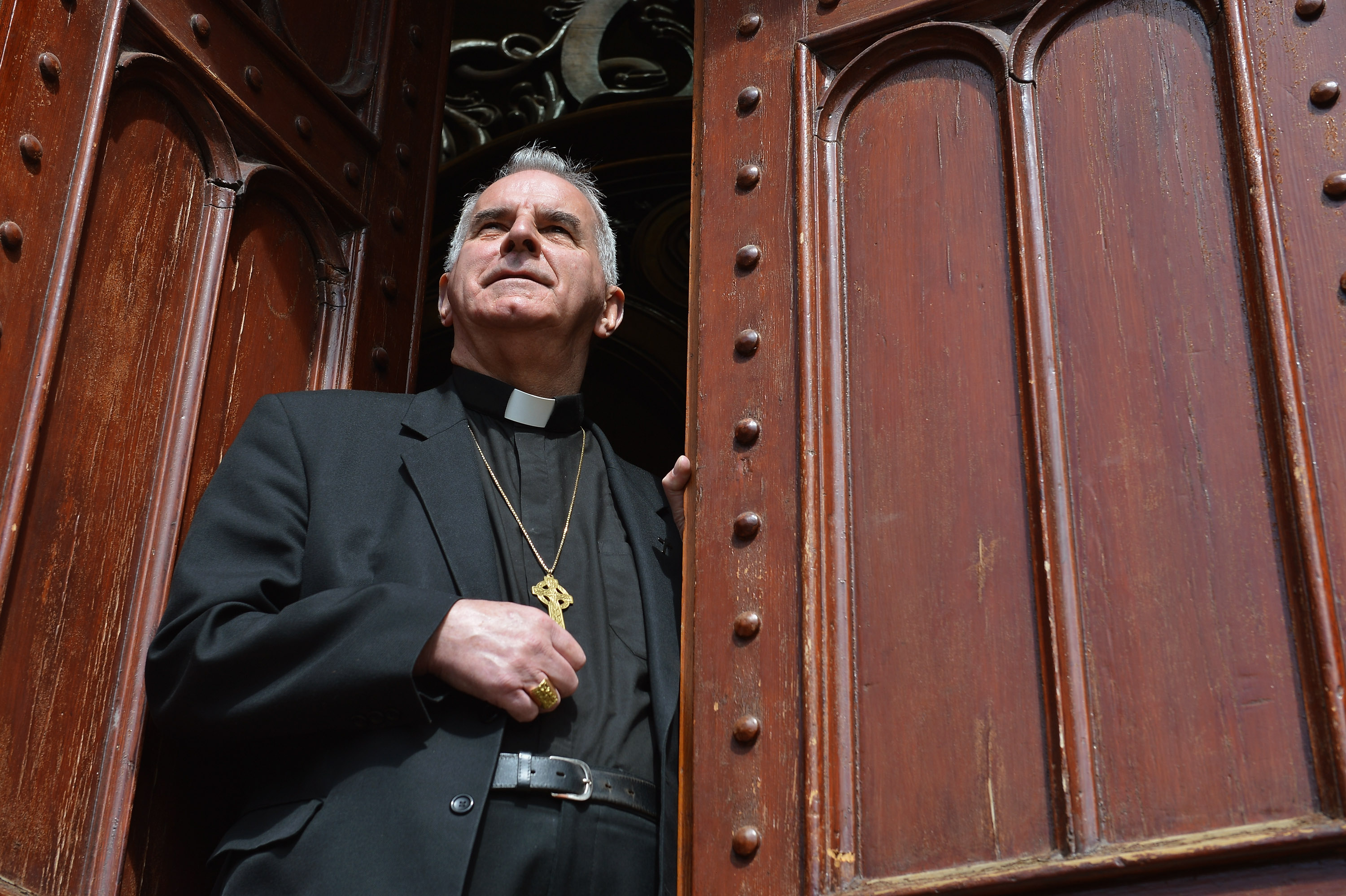
Dreher expects the La Repubblica report—describing a group of gay prelates blackmailed from outside criminal elements—is onto something. Charles P. Pierce derides Dreher’s term, “Lavender Mafia,” and is skeptical of the rumors:
What gives me a little pause is that the “secret gay cabal” theory is an old favorite among those curial powerbrokers for whom Machiavelli was something of a wimp. It also has been a regular trope of conservative Catholics seeking to defend the institutional Church’s inexcusable behavior in the face of the sexual abuse scandal, largely through the rancid technique of implying that being gay and being a pedophile are so closely allied that the former have a reason for covering up for the latter. (The linked piece from the Telegraph makes it clear that “the other side” that so exercised Dreher was not a “Lavender Mafia,” but the usual cast of institutional authoritarians up to and including John Paul II) It also is an old-line reactionary conspiracy theory beloved of, among other people, the late crackpot Malachi Martin.
And it can also be true. Pierce’s detection of the hoary old “lavender mafia” trope is dead-on. Rod’s gay conspiracy-mongering has more than a tinge of sexual panic to it (as does a large amount of Rod’s prose). But nonetheless, this conjecture of Rod’s is of a piece with everything I have heard and seen about the dysfunctional gay men who help run a church dedicated to the marginalization and stigmatization of their fellow homosexuals. Here’s where Rod and I agree:
True, this story is very thinly sourced, which is why I don’t say that I know it’s true. But I expect that it is true because of what I know all too well about the lavender mafia in the US Catholic Church, from things priests in a position to know about the situation in Rome have told me personally, and from situations like the Cardinal Groer debacle.
Where Rod errs, I think, is in believing that covering up child-rape has a direct link to homosexuality.
In some cases, truly fucked-up gay priests may indeed have been involved in the cover-up of child-rape or indeed committed the rapes. But many non-fucked-up gay ones had nothing to do with it and were part of the solution, not the problem. Many straight ones were among the worst conspirators and rapists. (One of the more chilling passages in the psychiatric evaluation of Father Lawrence Murphy, who raped 200 deaf boys in Milwaukee with impunity was about his choice for boys over girls. He said it was because there was no chance of conception if he raped boys.) We’re talking about categories and psyches and pathologies that go far beyond our ideas of gay and straight.
But the high camp sub-culture of the Vatican and large swathes of the Catholic priesthood definitely exists. I’ve seen and heard it with my own eyes and ears. It’s one reason I find the hierarchy so nauseating on this subject. It’s not so much the tortured psyches of these moral leaders, it’s the cynicism that necessarily follows that grieves me. Given the kind of worldly intrigue and politics that practically defines the Vatican, I wouldn’t be in any way surprised that there is a gay faction among the Cardinals; and a gay faction in the Vatican bureaucracy. And it truly saddens me.
The question is whether this faction is for or against reform. I don’t know. But I’ll pause to note that many gay leaders of the church in the past have been among the most conservative. They know their ermined, frilly closets depend upon total secrecy and separation from normal life. So take the latest example – Britain’s Cardinal O’Brien, derailed on his way to Rome because of credible reports of male sexual harassment of his inferiors. He’s no reformer:
O’Brien has been an outspoken critic of gay rights, denouncing plans for the legalisation of same-sex marriage as “harmful to the physical, mental and spiritual wellbeing of those involved”. He was named bigot of the year in 2012 by the gay rights group Stonewall because of his central role in opposing gay marriage laws in Scotland.
I used to think that the gay question was important to me but not that important in the context of the whole church. But as the years have gone by, I wonder if it isn’t actually central to the crisis in Catholicism today. We need honesty – honesty about gay priests who need to come out as a way to buttress their celibacy; honesty about how priests are human beings and can benefit from a stable relationship in ways that enhance rather than detract from their ministry; honesty about the absurdly high proportion of the priesthood that is gay; honesty about the desperate need for wives and daughters to be part of a priest’s life in order to help him understand the flock he is supposed to tend to; honesty about the total arbitrary nature of the ban on women priests; and a recognition that gay priests have been among the greatest leaders of the church and still could be if allowed an option for a loving relationship with another human being – as Cardinal Newman had his whole life.
“Be not afraid!” John Paul II once wrote. “Of what should we not be afraid? We should not be afraid of the truth about ourselves.” This conclave – created by one of the gravest crises in the history of the church – needs to lose fear. It needs to face the truth about itself. And it needs to grasp the opportunity Benedict XVI has given it: the chance for a new birth, a new era, a new broom.
(Photo: Cardinal Keith O’Brien poses for pictures following a conference at Gillis Centre on May 8, 2012 in Edinburgh, Scotland. By Jeff J Mitchell/Getty Images)
Steve Brill’s Time cover story is, to my mind, what journalism should now be doing. There is surely going to be a backlash soon against listicles, GIF-swaps and corrupting “sponsor content” in favor of deep, thoughtful reported journalism. Steve Brill is pioneering the next wave in journalism – the long, deep-dive, debate-shifting essay that addresses our reality in an accessible, clear but compelling way. It pains me that The New Republic didn’t run this as its first cover-piece in its new incarnation. It would have been such a fantastic statement about where they want to go (the return of serious reported journalism) rather than a suck-up interview with the president (a media “get” that is so very last decade).
I have only skimmed it and intend to read the whole thing today, and will write soon about it. But the real beauty of the piece is that all it does is go through various healthcare bills line by line and point out the massive mark-ups hospitals put on routine procedures and various drugs. We all knew this already. But what great journalism does is force us to know it better and definitively. Money quote:
When we debate health care policy, we seem to jump right to the issue of who should pay the bills, blowing past what should be the first question: Why exactly are the bills so high?
What are the reasons, good or bad, that cancer means a half-million- or million-dollar tab? Why should a trip to the emergency room for chest pains that turn out to be indigestion bring a bill that can exceed the cost of a semester of college? What makes a single dose of even the most wonderful wonder drug cost thousands of dollars? Why does simple lab work done during a few days in a hospital cost more than a car? And what is so different about the medical ecosystem that causes technology advances to drive bills up instead of down?
Yglesias wants more radical reforms than Brill proposes:
He wants to alter medical malpractice law, tax hospital operating profits, and try to mandate extra price transparency. That’s all fine, but it’s odd. His article could not be more clear about this—health care prices are high in America because, by law, we typically allow them to be high. When foreigners force prices to be lower, they get lower prices. When Americans force prices to be lower (via Medicare), we get lower prices. If we want lower prices through new legislation, the way to get them is to write laws mandating that the prices be lowered.
Sarah Kliff’s related thoughts:
What sets our really expensive health-care system apart from most others isn’t necessarily the fact it’s not single-payer or universal. It’s that the federal government does not regulate the prices that health-care providers can charge. You can see this in Luxembourg, which had the lowest health-care cost growth — 0.7 percent — of any OECD country in the 2000s. Its system allows patients free choice of what doctor to see or what hospital to visit but has the government set all rates for what doctors get paid for those visits.
Martin Gaynor is unsure about the effects of price controls:
[W]e don’t know what the impact of rate setting (price controls) would be on health care spending in the US. It’s possible that rate setting could prevent some of the most egregious practices recorded in the Brill article, but that depends on what’s enacted and how it’s enforced. Whether rate setting would substantially slow the rate of growth of health care spending isn’t clear. Further, the question that must be asked is what is the alternative? There’s evidence to suggest that robust price competition, such as we had with managed care during the 1990s, can perform very well in controlling costs. Unfortunately there has been a tremendous amount of consolidation in health care markets since the 1990s, raising serious challenges to competition. Whether the US decides to go with competition or with regulation, we have some serious work to do to make the system we choose work effectively.
Felix Salmon’s proposal:
Americans should have access to Medicare’s discounted rates — either by being eligible for Medicare, or else by signing up for health insurance with an insurer who allows Medicare to negotiate on its behalf. All of this would be voluntary, of course. If you want your insurance to cover the kind of things that Medicare won’t pay for, then you can do that. But if you think that Medicare-quality coverage is good enough, then you should be able to get it, at only a modest premium to what Medicare itself pays.
The Bloomberg View editors want more price transparency:
If health-care payers — Medicare, Medicaid, insurance companies, public-employee health-care plans — were to make public the prices that they pay, then maybe fees for services, equipment, facilities and medicines would fall. They could also reveal how much their beneficiaries pay out of pocket. Aetna and the state of New Hampshire have started doing this. It is exactly this kind of transparency that will improve the health-care system. Unfortunately, many contracts between hospitals and insurers contain gag clauses prohibiting the public release of pricing information. These gag clauses should be prohibited.
And, after reviewing the data, Drum wonders why Brill considers doctors underpaid:
The bottom line is that compared to other rich countries—all of which pay Medicare rates or less for medical services—American doctors are pretty well paid. The report also shows compensation as a ratio of the average wage in each country, and the story is similar (though GPs look a little closer to the OECD average when you compare their pay to average wages).
So is this more or less than U.S. doctors “deserve”? On that score, it’s worth pointing out that most American doctors have to pay their own medical school bills, a cost that’s picked up by the government in most other countries. Despite that, it’s a little hard to argue that American doctors, especially specialists, have been squeezed to the breaking point.
My specific thoughts ASAP.
Jaime Weinman explains why Seth MacFarlane was picked to host:
The overall theme of the Oscars, as James Poniewozik noticed when he linked to the promo [above], was that it was supposed to be “an Oscars that guys can enjoy.” MacFarlane is known for his guy appeal, and ABC, the network that broadcast the Oscars this year, is known for having the most heavily female audience on TV. Unfortunately, this wound up coming off as pandering, with the network desperately trying to load the show up with what they consider “guy” stuff like breast jokes and Star Trek. And what was supposed to be their biggest coup, a reunion of all six James Bonds, fell through when one or two of the Bonds refused to do it (and I don’t mean Lazenby). It might be that the desperation to attract men to ABC accounts for some of the mean-spiritedness of the evening, apart from the famous Family Guy tendency toward that type of joke.
Alyssa likewise pans MacFarlane’s performance:
What bothers me more than anything else about these jokes is how boring they are. I’ve heard variations of them countless times from people who think they’re hilarious, and act as if no one has ever unearthed such comedic gems before, and they’re always wrong. They are the scraps of humor actual comics left on the table a decade earlier in their careers after they learned that playing to people’s dumbest, most stereotypical assumptions is not actually the same thing as joke-making. But the laziness of MacFarlane’s brand played particularly poorly at the Oscars given the movie industry’s very real problems with both women and derivativeness, in a celebration of what’s supposed to be Hollywood’s best, the things that the profits of things like The Avengers make it possible to keep in production.
I also tend to think that brutally unfunny “cunt” puns are to humor what sponsor content is to journalism. Yes, the fantastically untalented MacFarlane went there. Jesse Walker is more succinct:
Seth MacFarlane hosted. His manatees didn’t work very hard on his jokes.
Update from a reader: “I don’t recall any “cunt” puns from MacFarlane, but the Onion did post something using that word that they later removed.” Another answers:
The pun that MacFarlane did was in the final song sung over the credits. It referred to Helen Hunt, and the way the song was going, it would have made “sense” for the next line to end with cunt. But he sang “a” but ended with “dorable” thus saving us and the censors.
 The Dish